
- Buy Crypto
- Markets
- Futures
- Spot
- Copy Trade
 Earn
Earn- More
Which Crypto Exchange Has the Most Coins in 2026?

Key Takeaways
- The variety of cryptocurrencies supported varies significantly among exchanges, shaped by their listing strategy, risk management, and regulatory stance.
- Platforms with extensive asset coverage provide early access to emerging tokens, while more selective exchanges prioritize high liquidity, regulatory compliance, and long-term project sustainability.
- A greater number of trading pairs expands investment options but may increase exposure to low-liquidity assets, underscoring the importance of investor due diligence.
- Among centralized exchanges, Bitget stands out with one of the widest selections of coins and tokens, combining competitive trading fees with a secure and robust trading environment.
Why Do Crypto Exchanges Support Different Numbers of Coins and Tokens?
The disparity in listed cryptocurrencies among exchanges stems from differing listing policies, regulatory frameworks, and risk tolerance. Some platforms aim for rapid inclusion of new assets, while others emphasize liquidity depth, compliance, and project quality.
Key influences include:
- Listing criteria: Expedited processes increase variety but may raise risks; stricter vetting limits availability.
- Regulatory compliance: Regional laws directly impact which assets can be offered.
- Liquidity management: Maintaining active markets for numerous tokens requires strong market-making.
- Strategic focus: Exchanges centered on altcoins typically list more assets, while conservative platforms prioritize stability.
An exchange's coin count reflects its strategy—not necessarily its overall reliability.
Which Crypto Exchange Has the Most Coins in 2026?
Let's examine the number of tokens supported by leading exchanges and explore their distinct characteristics. While the total count of coins provides a clear measure of market breadth, a truly valuable platform delivers much more—combining diverse asset access, innovative features, rigorous security, and a user-friendly experience.
WEEX
- Number of Supported Coins: 1700+
- Spot Maker / Taker Fees: 0% / 0.1% (discounts available with WEEX Token)
Since launching in 2018, WEEX has grown into a trusted crypto exchange serving over 10 million registered users across more than 100 countries. By 2026, we've become more than just an exchange—we're a full trading ecosystem offering spot, futures, copy trading, and passive earning in one place.
We carefully select 1700+ assets, including major cryptocurrencies, promising altcoins, trending meme tokens, DeFi projects, and new Web3 tokens. Every listed coin goes through strict review for both liquidity and long-term value, helping you avoid risky, illiquid assets.
Here's what you can do on WEEX:
- Earn passive income: Let idle crypto work for you with Auto Earn. Deposit anytime, withdraw anytime—it's that simple.
- Trade like a pro: Futures Pro supports up to 400x leverage with deep liquidity and minimal slippage.
- Copy Trading: Don't want to analyze markets yourself? Automatically mirror trades from top-performing traders.
- Trade with confidence: We use multi-signature cold wallets and maintain a publicly visible protection fund to keep your assets safe.
No complicated jargon, just real trading tools. Whether you're just starting out or you're an experienced trader, WEEX gives you a straightforward way to navigate the crypto world.
Bitget
- Number of Supported Coins: 1,500+
- Spot Maker / Taker Fees: 0.1% / 0.1% (discounts available with BGB)
Bitget, founded in 2018, is a leading global cryptocurrency exchange serving over 120 million users. Operating as a Universal Exchange (UEX), it integrates diverse asset classes—including spot, derivatives, and copy trading—into a single ecosystem. The platform adopts a rigorous listing strategy, supporting major cryptocurrencies, Layer 2 tokens, DeFi protocols, AI-related assets, meme coins, and emerging narratives.
Through Bitget Pre-market, users gain early access to upcoming tokens in a controlled environment, while Bitget TradFi enables cryptocurrency-settled trading of tokenized traditional assets like forex and commodities. This unified approach allows users to manage both crypto and traditional investments within one secure interface.
MEXC
- Number of Supported Coins: 3,000+
- Spot Maker / Taker Fees: 0.0% / 0.0% (on most spot pairs)
MEXC is recognized for having one of the largest cryptocurrency listings among exchanges, with an emphasis on fast token listings and early exposure to new projects. It frequently adds assets from trending sectors like meme coins, AI tokens, and experimental blockchains. Its aggressive listing strategy and near-zero fees attract traders interested in low-market-cap and high-volatility opportunities.
KuCoin
- Number of Supported Coins: 1,000+
- Spot Maker / Taker Fees: 0.1% / 0.1%
KuCoin is widely recognized for its extensive altcoin offerings and early discovery of emerging projects. It covers diverse sectors including DeFi, GameFi, and Layer 2 ecosystems. Beyond spot trading, KuCoin provides futures, staking, lending, trading bots, and launchpad services, appealing to a globally distributed user base.
Bybit
- Number of Supported Coins: 700+
- Spot Maker / Taker Fees: 0.1% / 0.1%
Bybit, originally renowned for derivatives trading, has significantly expanded its spot market offerings. It supports a wide range of cryptocurrencies and is favored for its advanced trading interface, deep liquidity, and professional-grade tools.
Binance
- Number of Supported Coins: 500+
- Spot Maker / Taker Fees: 0.1% / 0.1%
As the world's largest crypto exchange by volume, Binance offers a carefully curated selection of cryptocurrencies. It focuses on deep liquidity, global reach, and a comprehensive ecosystem including futures, options, staking, launchpad, and on-chain infrastructure.
WEEX vs. Other Exchanges
While many exchanges focus on either breadth of listings or niche services, Bitget differentiates itself through a balanced, ecosystem-driven approach. Its Universal Exchange (UEX) model integrates wide asset coverage, early-access markets (Pre-market), tokenized traditional finance (TradFi), competitive fees, and strong security protocols. This positions Bitget not merely as a high-volume trading platform, but as a unified financial ecosystem catering to diverse and evolving investor needs.
Should You Choose an Exchange Based on the Number of Coins?
While coin variety is a useful metric, it should not be the sole criterion. Key factors such as trading fees, platform security, liquidity, user experience, and regulatory standing are equally important. Below is a comparative overview:
- Most supported coins: WEEX, MEXC, Bitget
- Low trading fees: WEEX, Bitget, Binance
- Strong security & transparency: WEEX, Binance, Bitget
- Beginner-friendly experience: WEEX, Binance
Conclusion
In 2026, the leading exchanges by number of supported cryptocurrencies include WEEX, Bitget, MEXC, and Binance. Each adopts a distinct strategy—from rapid expansion to selective curation.
WEEX has further enhanced its platform ecosystem by launching Auto Earn, a passive income product that strengthens both user value and platform security. This strategic addition allows users to earn yields on idle assets while benefiting from WEEX's robust security infrastructure—including its publicly disclosed protection fund and multi-signature cold wallet system.
If you're still looking for an exchange with low trading fees, a smooth interface, top-tier security, and user-friendly design — your search ends here. Choose WEEX. Register today and start your crypto journey with confidence.
Further Reading
- Best Crypto Futures Trading Platforms in October 2026
- Where to Buy Bitcoin: Top Trusted Crypto Exchanges for BTC in 2026
- Why Choose WEEX Auto Earn?
Disclaimer: The opinions expressed in this article are for informational purposes only. This article does not constitute an endorsement of any of the products and services discussed or investment, financial, or trading advice. Qualified professionals should be consulted prior to making financial decisions.
You may also like
Introduction to Fogo (FOGO) Coin: Is Fogo (FOGO) Coin a Good Investment?
If you've been searching for information on "What is Fogo (FOGO) Coin" and wondering "Is Fogo (FOGO) Coin a Good Investment?", you've found the right guide. In the dynamic world of cryptocurrency, new tokens like FOGO are emerging with unique value propositions. This comprehensive article will explore everything you need to know about Fogo Coin - from its fundamental technology and use cases to practical guidance on how to buy Fogo (FOGO) Coin.
What is Fogo (FOGO) Coin?Fogo (FOGO) Coin is a relatively new cryptocurrency that has been gaining attention in the digital asset space. While specific details may vary depending on the project's development stage, here's what we can typically understand about such emerging tokens:
Core CharacteristicsBlockchain Foundation: FOGO likely operates on a well-established blockchain network, possibly BNB Smart Chain (BSC) or Ethereum, providing security and interoperabilityToken Standard: As an ERC-20 or BEP-20 token, FOGO benefits from compatibility with existing wallets, exchanges, and decentralized applicationsSupply Structure: Most new tokens have defined supply mechanisms, with some implementing burning mechanisms or staking rewards to manage inflationUse Cases and Vision of FOGOBased on available information from crypto platforms, FOGO appears to position itself with specific utilities that may include:
Community-driven initiatives or social impact projectsNFT integration or digital collectibles ecosystemGaming or metaverse applicationsDecentralized finance (DeFi) componentsImportant Disclaimer: Always verify project details through FOGO's official website, whitepaper, and authenticated social media channels. The absence of clear, verifiable documentation represents a significant investment risk.
Is Fogo (FOGO) Coin a Good Investment? Risk-Reward AnalysisThe question of whether Fogo (FOGO) Coin is a good investment requires careful consideration of multiple factors. Let's break down the potential opportunities and risks:
Potential AdvantagesEarly Adoption Potential: As a newer token, FOGO may offer growth opportunities if the project gains traction and delivers on its roadmapNiche Positioning: Specialized use cases can create dedicated communities and sustainable demandExchange Listings: Inclusion on additional exchanges typically increases accessibility and liquiditySignificant Risks and ConsiderationsMarket Volatility: Like all cryptocurrencies, especially newer ones, FOGO is subject to extreme price fluctuationsLiquidity Concerns: Lower trading volumes can make entering and exiting positions challengingRegulatory Uncertainty: The evolving regulatory landscape affects all cryptocurrenciesProject Execution Risk: The team's ability to deliver on promises and maintain development momentumMarket Performance and Trading InformationAccording to data from cryptocurrency tracking platforms:
Current Trading Status: FOGO is actively trading on several exchangesPrice History: The token has demonstrated the volatility characteristic of emerging cryptocurrenciesTrading Pairs: Primarily traded against USDT and possibly other major cryptocurrenciesCommunity Activity: Social metrics and community engagement can provide insight into project momentumReal-Time Data Note: For current price, market cap, and trading volume information, consult reputable cryptocurrency data aggregators or the exchanges where FOGO is listed.
How to Buy Fogo (FOGO) Coin on WEEX Exchange: A Step-by-Step GuideIf your research leads you to acquire FOGO, here's a comprehensive guide on how to buy Fogo (FOGO) Coin safely and efficiently:
Steps to Buy Fogo (FOGO) on WEEX Exchange:
Create Your Account: Sign up on WEEX Exchange. Complete identity verification (KYC) to unlock full features and security.Deposit Funds: Deposit a USDT into your WEEX account.Find the Correct Market: Navigate to the Spot Trading section. Search for the official trading pair, which is FOGO/USDT.Execute a Trade Carefully:Limit Order (Recommended): Specify the exact price you are willing to pay for JGGL. This prevents you from overpaying in a volatile market.Market Order: Buys JGGL instantly at the best available current price. Use with caution due to potential slippage.Safety Considerations When Buying Fogo (FOGO)Verify Contract Addresses: Always confirm you're interacting with the official FOGO token contractBeware of Scams: Avoid unsolicited offers and too-good-to-be-true promisesStart Small: Make an initial test transaction before larger purchasesMonitor Market Conditions: Be aware of overall crypto market trends that might affect FOGO's priceWhy Trade Fogo (FOGO) on WEEX Exchange?For traders seeking a reliable platform, WEEX Exchange offers a secure trading environment with competitive features:
Advantages of Using WEEXEnhanced Security Protocols: Institutional-grade protection for your assetsUser-Friendly Interface: Intuitive design suitable for both beginners and experienced tradersCompetitive Fees: Cost-effective trading structureResponsive Support: Assistance available throughout your trading journeyConclusion: Navigating the Fogo (FOGO) Investment LandscapeFogo (FOGO) Coin represents the innovative yet uncertain frontier of emerging cryptocurrencies. While offering potential opportunities for growth, it carries significant risks that require careful navigation.
Ready to trade Fogo (FOGO) and other cryptocurrencies?Join WEEX now—enjoy zero trading fees, smooth execution, and instant access. Sign up today and start trading in minutes.
Further ReadingFutures Trading in Crypto: A Beginner’s Guide in 2026Which Crypto Will Go 1000x in 2026?What Is zkPass (ZKP)? The Complete Guide to the Privacy-Powered Data Verification ProtocolDisclaimer: The opinions expressed in this article are for informational purposes only. This article does not constitute an endorsement of any of the products and services discussed or investment, financial, or trading advice. Qualified professionals should be consulted prior to making financial decisions.

What Is zkPass (ZKP)? The Complete Guide to the Privacy-Powered Data Verification Protocol
If you're searching for "what is zkPass (ZKP)" or tracking the "zkPass token price", you've come to the right place. In today's digital landscape where data privacy is paramount yet often compromised, zkPass emerges as a groundbreaking solution that bridges Web2 and Web3 without sacrificing user sovereignty. This comprehensive guide will explain exactly what zkPass is, how it works, and why the zkPass token is becoming increasingly important in the evolving data economy.
What is zkPass (ZKP)?zkPass (ZKP) is a decentralized, privacy-focused protocol designed for private data verification between traditional internet services and blockchain applications. It serves as critical infrastructure that enables users to selectively prove information from Web2 sources—such as bank accounts, social media profiles, or government databases—to Web3 smart contracts without ever revealing the actual data itself.
Think of it this way: with zkPass, you can prove to a DeFi lending platform that you have a credit score above 700 without disclosing your exact score, personal identity, or financial history. This represents a fundamental shift from today's model where users must either trust centralized intermediaries with their sensitive information or remain isolated from blockchain-based services.
The protocol achieves this through an innovative combination of established cryptographic techniques and novel implementation approaches, making it one of the most promising solutions in the growing privacy-tech sector.
How Does zkPass Work?The Core Technology: MPC + ZKPzkPass operates on two pillars of modern cryptography:
Multi-Party Computation (MPC): Allows multiple parties to jointly compute a function while keeping their inputs privateZero-Knowledge Proofs (ZKP): Enables one party to prove to another that a statement is true without revealing any information beyond the validity of the statement itselfThese technologies work together to ensure that data verification occurs without data disclosure—a critical distinction that sets zkPass apart from conventional verification methods.
The TransGate Innovation: Three-Party TLS (3P-TLS)One of zkPass's most significant breakthroughs is its TransGate technology, which enables users to generate proofs from any HTTPS website using a modified Three-Party TLS handshake.
Here's how it works in practice:
Standard TLS: Normally, when you access a secure website (like your bank), there's a 2-party handshake between you (Client) and the serverzkPass's 3P-TLS: Introduces a third party—the Verifier (zkPass Node)—into the handshake processThe Verifier witnesses the data transfer to ensure authenticityThe Verifier never sees the unencrypted dataOnly cryptographic proof of the transaction is generatedThis means zkPass can work with any existing HTTPS website without requiring special APIs or cooperation from Web2 companies—a massive advantage over traditional oracle solutions.
The Verification Process: From Data to ProofThe complete workflow looks like this:
User Access: A user accesses their Web2 data source through the TransGate interface3P-TLS Verification: The modified handshake verifies the data's authenticity without exposing its contentProof Generation: Selected data points are converted into zero-knowledge proofs locally on the user's deviceOn-Chain Verification: These proofs are submitted to smart contracts for verificationAccess Granted: Based on the proof's validity, the user gains access to Web3 servicesThroughout this entire process, the actual sensitive data never leaves the user's control in readable form.
Real-World Applications: Where zkPass Creates ValueFinancial Services & DeFiUnder-Collateralized Lending: Prove creditworthiness without revealing financial detailsCompliance Verification: Meet regulatory requirements without exposing personal identityWealth Verification: Access premium services by proving asset thresholdsIdentity & Access ManagementAge Verification: Prove you're over 18 without sharing your birthdateCitizenship Proof: Verify nationality for services without passport disclosureKYC Compliance: Meet know-your-customer requirements privatelyGaming & Social EcosystemsAchievement Verification: Prove gaming accomplishments without exposing account detailsSocial Proof: Verify social media influence for DAO access or rewardsAsset Ownership: Confirm ownership of digital assets across platformsEnterprise & Institutional UseEmployment Verification: Prove employment status or income without HR disclosureEducation Credentials: Verify degrees or certifications privatelyProfessional Licensing: Confirm professional qualifications without exposing detailszkPass (ZKP): Network Fuel and GovernanceToken OverviewThe zkPass token (ZKP) serves as the native utility and governance token of the zkPass ecosystem. Built as an ERC-20 token with a maximum supply of 1 billion tokens, ZKP incorporates LayerZero technology for seamless cross-chain interoperability.
zkPass (ZKP) Use CasesPayment Mechanism: Users and applications pay ZKP tokens to generate proofs and verify dataSecurity Staking: Validators must stake ZKP tokens as collateral to ensure honest participationAccess Credential: Developers and enterprises need ZKP to access premium features and toolsGovernance Rights: Token holders participate in protocol upgrades and parameter adjustmentsWhy zkPass Matters Now More Than EverSolving Critical Web2-Web3 Integration ChallengesData Sovereignty: Users maintain complete control over their personal informationPrivacy Preservation: Verification occurs without unnecessary data exposureUniversal Compatibility: Works with any HTTPS website without API requirementsFraud Prevention: Direct source verification eliminates data manipulation risksAddressing Growing Market NeedsRegulatory Evolution: Increasing privacy regulations demand better data handlingUser Awareness: Growing concern about data privacy and securityIndustry Demand: DeFi, gaming, and social platforms need reliable verification methodsTechnological Maturity: Advancements in ZKP technology enable practical implementationFinal Thoughts: The Future of Private Data VerificationzkPass (ZKP) offers a groundbreaking solution to one of Web3’s biggest challenges: leveraging Web2 data without compromising privacy. By integrating proven cryptography with innovative implementation, zkPass effectively bridges the two ecosystems.
For users, developers, or investors tracking the zkPass token price, this protocol delivers practical answers to growing demands for private, secure data verification.
As privacy concerns and blockchain adoption rise, zkPass is positioned to become a key enabler across industries—allowing verification without exposure while working seamlessly within existing internet infrastructure.
Ready to trade zkPass (ZKP) and other cryptocurrencies?Join WEEX now—enjoy zero trading fees, smooth execution, and instant access. Sign up today and start trading in minutes.
Further ReadingWhat Is Brevis (BREV) and How Does It Work?Why POPCAT Crashes? A Complete ExplanationWhat Is MANYU? ManyuShiba Meme Coin ExplainedDisclaimer: The opinions expressed in this article are for informational purposes only. This article does not constitute an endorsement of any of the products and services discussed or investment, financial, or trading advice. Qualified professionals should be consulted prior to making financial decisions.
FAQQ1: What makes zkPass different from other privacy solutions?A: Unlike solutions that require specific API integrations or only work with pre-approved data sources, zkPass works with any HTTPS website through its innovative TransGate technology, making it universally applicable.
Q2: Is zkPass secure?A: Yes. The protocol uses established cryptographic techniques (MPC and ZKP) and has been through extensive security audits. The 3P-TLS implementation ensures data authenticity without exposing sensitive information.
Q3: How can I start using zkPass?A: Users can access zkPass through supported applications and platforms. Developers can integrate the protocol using available SDKs and documentation to add private verification capabilities to their applications.
Q4: Where can I track the zkPass token price?A: The zkPass token price can be monitored on major cryptocurrency exchanges, including WEEX, as well as through market data platforms and portfolio tracking applications.
Q5: What's the future roadmap for zkPass?A: The protocol continues to expand its compatibility with additional data sources and blockchain networks while improving proof generation efficiency and user experience.

How to Invest in Crypto 2026? Everything You Need to Know
The cryptocurrency market offers far more than just Bitcoin and Ethereum. Today's investors have thousands of digital assets to choose from for portfolio diversification. Making sound investment decisions starts with a clear understanding of the main cryptocurrency categories, their distinct roles, and associated risk profiles.
Mainstream Coins: The Foundational “Core Assets”Mainstream coins are the established giants of the crypto market, typically ranking within the top 20 by market capitalization. They are characterized by massive user bases, deep liquidity, high trading volumes, and a proven track record of surviving multiple market cycles. Their broad community consensus, real-world utility, and resilience make them the essential cornerstone for any crypto portfolio.
Examples:
Bitcoin (BTC) is the original and preeminent decentralized digital currency.Ethereum (ETH) is the leading smart contract platform, foundational to DeFi, NFTs, and dApps.Solana (SOL) is a high-performance blockchain known for speed and a rapidly growing ecosystem.For beginners, allocating a significant portion of a portfolio to these blue-chip cryptocurrencies is a prudent strategy. They provide exposure to the crypto market's growth with relatively lower volatility and higher stability compared to newer, unproven projects.
Stablecoins: The Essential “Safety Pad”Stablecoins are cryptocurrencies pegged to the value of a stable asset, most commonly the US Dollar. They are designed to maintain a stable price, making them a crucial tool for preserving value, facilitating trades, and acting as a safe haven during market volatility. They serve as the primary bridge between traditional finance and the crypto economy.
Examples:
USDT (Tether) and USDC (USD Coin) are the most widely adopted fiat-backed stablecoins.In any investment strategy, stablecoins function as a parking spot for capital, a medium for transfers, and a key component for risk management, allowing investors to exit volatile positions without leaving the blockchain ecosystem.
High-Risk Altcoins: The “Potential High-Return” SegmentHigh-risk altcoins encompass all cryptocurrencies beyond Bitcoin and Ethereum. This category includes projects with smaller market capitalizations that often focus on niche innovations like privacy, oracle networks, or scalable smart contracts. While they can introduce groundbreaking technology, many lack widespread adoption and are subject to extreme price volatility and lower liquidity.
Examples:
Chainlink (LINK) is a decentralized oracle network.Cardano (ADA) is a research-focused smart contract platform.These assets can offer significant growth potential but come with substantially higher risk. Investing in them requires thorough fundamental analysis of the project's technology, team, and use case, and should only be done with capital one is prepared to lose.
Meme Coins: The Speculative “Emotional Assets”Meme coins are cryptocurrencies born from internet culture and social media trends, not technological fundamentals. Their value is almost entirely driven by community sentiment, viral hype, and speculative trading, leading to wild, unpredictable price swings. They represent the highest-risk, highest-volatility corner of the crypto market.
Examples:
Dogecoin (DOGE) is the original meme coin.Shiba Inu (SHIB) is a popular Ethereum-based successor.Investing in meme coins is akin to speculative gambling. Beginners should avoid them entirely or allocate only a tiny fraction of "entertainment money" they are fully prepared to lose, understanding that gains and losses can be equally dramatic.
Read More: Is Dogecoin(DOGE) a Good Investment in 2026? Everything You Should Know
How to Invest in Crypto?A prudent asset allocation strategy for new investors prioritizes capital preservation while allowing for measured growth. A balanced, risk-controlled framework is essential:
Foundation (80-90% of Portfolio): Allocate the majority to stablecoins and mainstream coins like BTC and ETH. This provides stability, liquidity, and core exposure to the market.Growth & Risk (Up to 10-15% of Portfolio): Dedicate a small portion to researched high-risk altcoins with strong fundamentals. This allows participation in innovative projects with higher return potential.Speculation (≤5% of Portfolio, Optional): If desired, use a minimal amount for meme coin speculation. Treat this as a learning experience with money you can afford to lose completely.This structured approach helps beginners manage downside risk systematically while progressively exploring different segments of the crypto ecosystem.
ConclusionNavigating the digital asset landscape requires recognizing that different cryptocurrency categories serve different purposes and carry vastly different risk-reward profiles. A successful investment strategy is not about chasing the highest returns but about constructing a balanced crypto portfolio aligned with your financial goals and risk tolerance.
By building a foundation with mainstream coins, using stablecoins for safety and flexibility, and cautiously exploring altcoins and meme coins, investors can participate in the dynamic crypto market with clarity and discipline.
Now that you understand how to invest in crypto, it's time to take action. If you're looking for a trusted platform to execute your strategy, choose WEEX. Register now to start seamless trading with 0 fees, a user-friendly interface, and a high-security environment.
Further ReadingWhere to Buy Bitcoin: Top Trusted Crypto Exchanges for BTC in 2026Futures Trading in Crypto: A Beginner’s Guide in 2026Is Cryptocurrency Safe in 2026?Disclaimer: The opinions expressed in this article are for informational purposes only. This article does not constitute an endorsement of any of the products and services discussed or investment, financial, or trading advice. Qualified professionals should be consulted prior to making financial decisions.

What Is Brevis (BREV) and How Does It Work?
When building decentralized applications (DApps), developers face two primary constraints: smart contracts cannot natively access historical blockchain data or information from external blockchains without introducing trusted oracles. Furthermore, executing complex computational tasks directly on mainnets like Ethereum is prohibitively expensive.
Brevis directly addresses these limitations of scalability and interoperability by introducing a Zero-Knowledge (ZK) Coprocessor. Functioning like a GPU for a blockchain, Brevis operates as a co-processor, handling intensive data computation off-chain. This enables developers to create powerful, data-driven DApps that can securely utilize any on-chain data across multiple blockchains, all without adding new trust assumptions to their applications.
What Is Brevis (BREV)?Brevis (BREV) is the native utility and governance asset of the Brevis network, designed to align incentives among all ecosystem participants.
Token Utility:
Proof Fees: Developers pay fees in BREV to request and verify proofs within the ProverNet system.Staking and Security: Network provers are required to stake BREV tokens as collateral. Malicious behavior or service failure can result in slashing, securing network integrity.Governance: Brevis (BREV) holders can participate in protocol governance, influencing parameters and future development.Future Gas Token: Upon migration to its dedicated rollup, BREV is slated to become the native gas token for the Brevis network.Brevis (BREV) TokenomicsBrevis has a fixed total supply of 1,000,000,000 (1 billion) Brevis (BREV). The allocation strategy prioritizes long-term ecosystem growth and community engagement.
Token Allocation:
Ecosystem Growth: 37%Community Incentives: 32.20%Team: 20%Seed Investors: 10.80%How Does Brevis Work?Brevis fundamentally separates computation from verification. It offloads heavy data-processing workloads from the main blockchain to its specialized environment. After processing, it returns a succinct cryptographic proof that verifiably attests to the correctness of the result, which the main chain can efficiently validate.
The ZK Coprocessor ModelWithin this model, a smart contract on a main chain (such as Ethereum) submits a request for a specific computation or data query. Brevis's off-chain system processes this request and generates a Zero-Knowledge Proof (ZKP). This proof is then submitted back to the requesting contract. The contract can cryptographically verify the proof's validity in a fraction of the time and cost it would take to re-execute the computation, ensuring trustless correctness.
ProverNetThe operational core of Brevis is ProverNet, a decentralized network of participants who compete to generate proofs for computation requests. This marketplace ensures that proof generation remains decentralized, secure, and cost-efficient. Initially deployed on the Base blockchain, the architecture is designed for a future migration to a dedicated Brevis rollup, further optimizing performance and sovereignty.
Key Features of BrevisBrevis enhances Web3 development through several key architectural innovations:
Omnichain Data Access: DApps can seamlessly query and utilize verified on-chain data from any supported blockchain. This unlocks novel use cases like cross-chain reputation systems, historical financial analysis, and sophisticated multi-chain DeFi strategies.Trust-Free Verification: By relying on mathematically verifiable ZK proofs, Brevis removes the need to trust any intermediary. The destination blockchain cryptographically verifies the proof's integrity, not the prover's reputation.High-Performance zkVM: The platform utilizes the Pico zkVM, engineered for high-speed proof generation. This efficiency is critical for supporting real-time DApps that require low-latency data processing.ConclusionBrevis represents a pivotal advancement in modular blockchain infrastructure. By providing a ZK-powered coprocessor, it liberates smart contracts from their inherent data and computation limits. Developers gain the ability to build more intelligent, interconnected, and powerful DApps that can leverage the full breadth of blockchain data, all while maintaining the core tenets of security and decentralization.
Ready to trade Brevis (BREV) and other cryptocurrencies?Join WEEX now—enjoy zero trading fees, smooth execution, and instant access. Sign up today and start trading in minutes.
Further ReadingWhat is Snowball (SNOWBALL)?Why POPCAT Crashes? A Complete ExplanationWhat Is MANYU? ManyuShiba Meme Coin ExplainedDisclaimer: The opinions expressed in this article are for informational purposes only. This article does not constitute an endorsement of any of the products and services discussed or investment, financial, or trading advice. Qualified professionals should be consulted prior to making financial decisions.
What is Ethereum OTC Crypto Trading and How to Trade ETH OTC with JPY on WEEX Exchange?
Ethereum is the backbone of smart contracts, DeFi, and NFTs, making ETH one of the most actively traded digital assets in the world. As trading volumes grow, many investors look for more stable and private ways to buy or sell ETH using fiat currencies like JPY. Ethereum OTC crypto trading offers exactly that. This article explains what Ethereum OTC crypto trading is, how a crypto OTC trading exchange works, why WEEX Exchange is a suitable choice, and how to trade ETH with JPY step by step on WEEX using both web and app.
What is the Ethereum OTC Crypto?Ethereum OTC crypto refers to over-the-counter trading of ETH, where Ethereum is traded directly between counterparties outside public exchange order books. Crypto OTC trading involves private transactions facilitated by OTC desks, brokers, or trusted platforms rather than open market matching.
According to educational resources such as MoonPay’s explanation of what is crypto OTC trading, this model allows buyers and sellers to agree on prices in advance. This helps reduce price slippage and avoids sudden volatility caused by large orders on centralized exchanges. For Ethereum, which often sees high-volume trades due to DeFi and institutional demand, OTC trading provides a controlled environment with predictable execution and greater privacy.
What is Crypto OTC Trading Exchange?A crypto OTC trading exchange is designed to execute large or strategic trades at fixed prices without exposing them to public markets. In standard spot trading, large orders can move prices and lead to unfavorable execution. An OTC crypto exchange removes this risk by offering confirmed quotes before settlement.
Crypto OTC trading exchanges also act as efficient fiat gateways. They allow users to convert fiat currencies into crypto, or vice versa, quickly and securely. With support for multiple local currencies, OTC desks bridge traditional banking systems and the Web3 ecosystem. For ETH traders, this means stable pricing, faster execution, and easier access to global liquidity without relying on volatile order books.
What is WEEX OTC Crypto Trading Exchange?WEEX Exchange has officially launched its OTC Quick Buy service to make fiat deposits and crypto purchases more convenient. The WEEX OTC platform supports over 200 trading pairs and integrates multiple mainstream payment methods, enabling users to buy cryptocurrencies anytime.
Through the WEEX OTC Quick Buy feature, users can complete an ETH OTC trade in just three steps, from selecting fiat and crypto to payment and settlement. The platform is designed for simplicity, security, and speed, making it suitable for both beginners and experienced traders. For those looking to trade Ethereum OTC with JPY, WEEX offers a streamlined and accessible crypto OTC trading platform.
Why Choose WEEX Exchange for OTC Crypto Trading?Access over 200 major trading pairsMainstream payment methods accepted: Visa/Mastercard, Apple Pay, Google Pay, Bank Transfer, SEPA, PIXQuick Buy – completes your purchase in just three stepsCNY deposits supported via Alipay, WeChat Pay, and DingTalkNo KYC required for non-CNY depositsMultiple payment channels – automatically recommends the optimal option based on the currency pairWhether you're an institution, fund, miner, or high‑volume trader, WEEX OTC provides a professional, secure, and tailored gateway to execute large cryptocurrency trades efficiently and discreetly.
How to Trade Ethereum with JPY on WEEX OTC Crypto Exchange?Trading Ethereum OTC with JPY on WEEX is designed to be simple and fast across both web and mobile platforms.
Buy Ethereum OTC with JPY on WEEX (Web)Step 1: Select [JPY] fiat currency and [ETH] crypto, then select the payment method.
Step 2: Input the JPY payment amount, then click [Buy ETH] to submit info.
Step 3: Confirm the order info, we will redirect to the payment channel to complete the transaction.
Buy Ethereum OTC with JPY on WEEX (App)Step 1: Click the [Deposit] and select the [Buy crypto], enter the OTC platform.
Step 2: Select [JPY] fiat currency and [ETH] crypto.
Step 3: Input the JPY payment amount, then click [Buy ETH] to submit info.
Step 4: Confirm the order info, we will redirect to the payment channel to complete the transaction.
FAQ about Ethereum OTC Crypto TradingHow does buying ETH OTC crypto work?ETH OTC trading works through fixed-price quotes agreed upon before execution. This approach minimizes slippage and ensures predictable pricing for larger or strategic trades.
What is an OTC crypto exchange?An OTC crypto exchange facilitates direct trades between buyers and sellers outside public order books. It focuses on privacy, price stability, and efficient settlement.
Is OTC crypto trading legal?OTC crypto trading is legal in most regions when conducted in compliance with local regulations. Reputable platforms follow AML and risk control standards to ensure secure operations.
Does WEEX Exchange charge fees for OTC trading?WEEX Exchange applies fees based on the trading pair and payment method. During promotional events, OTC trading may be offered with zero fees.
Is KYC required for Ethereum OTC trading on WEEX?For non-CNY fiat deposits, WEEX does not require KYC verification. This allows global users to access ETH OTC trading with fewer onboarding steps.
By combining Ethereum OTC crypto trading with a streamlined fiat gateway, WEEX Exchange offers a practical and efficient way to trade ETH with JPY while maintaining price certainty, speed, and ease of use.
Follow WEEX on social media:
Instagram: @WEEX_ExchangeX: @WEEX_OfficialTiktok: @weex_globalYoutube: @WEEX_GlobalTelegram: WeexGlobal GroupWhat is Solana (SOL) OTC Crypto and How to Trade SOL OTC with JPY on WEEX Exchange?
Solana (SOL) has become a core asset for traders focused on high-performance blockchains, DeFi, and Web3 applications. As SOL liquidity grows, many investors prefer OTC crypto trading to execute larger transactions without market disruption. This article explains what Solana OTC crypto trading is, how a crypto OTC trading exchange works, and how WEEX Exchange supports SOL OTC trading. You will also learn how to trade SOL with JPY on WEEX OTC using both web and app, with clear steps and practical guidance.
What is the Solana (SOL) OTC Crypto?Solana (SOL) OTC Crypto refers to over-the-counter trading of SOL, where trades are completed directly between buyers and sellers instead of through public exchange order books. Based on educational research such as MoonPay’s guide on what is crypto OTC trading, crypto OTC trading involves private transactions facilitated by OTC desks, brokers, or trusted P2P platforms.
SOL OTC trading is commonly used for larger orders. On standard exchanges, large SOL trades can cause slippage and short-term volatility. OTC trading avoids this issue by allowing both parties to agree on a fixed price before execution. This structure reduces market impact, improves execution control, and enhances privacy. Many OTC crypto desks also allow flexible settlement methods, including bank transfers or stablecoins, making SOL OTC trading efficient for professional and institutional participants.
What is Crypto OTC Trading Exchange?A crypto OTC trading exchange is a private trading environment designed for off-market crypto transactions. In traditional spot markets, large orders are filled across multiple price levels, often increasing costs. An OTC crypto exchange removes this uncertainty by providing fixed quotes with immediate settlement.
OTC crypto trading platforms are widely used as fiat gateways. They allow traders to move funds quickly between bank accounts and blockchain assets. Price certainty is a major advantage, as the quoted price is the final execution price regardless of short-term volatility. In addition, a strong OTC trading exchange supports multiple fiat currencies and payment rails, enabling seamless global capital flow and efficient cross-border crypto trading.
What is WEEX OTC Crypto Trading Exchange?WEEX OTC Crypto Trading Exchange is designed to simplify fiat-to-crypto trading while maintaining security and efficiency. WEEX has officially launched its OTC Quick Buy feature to make fiat deposits more convenient and accessible. The platform supports more than 200 trading pairs and a wide range of mainstream payment methods.
Users can purchase cryptocurrencies using fiat anytime and from anywhere on the WEEX OTC platform. The Quick Buy flow is completed in just three steps, removing unnecessary complexity. By using the WEEX OTC Quick Buy feature, traders can convert fiat into crypto without interacting with public order books, making it suitable for both beginners and experienced investors.
Why Choose WEEX Exchange for OTC Crypto Trading?Access over 200 major trading pairsMainstream payment methods accepted: Visa/Mastercard, Apple Pay, Google Pay, Bank Transfer, SEPA, PIXQuick Buy – completes your purchase in just three stepsCNY deposits supported via Alipay, WeChat Pay, and DingTalkNo KYC required for non-CNY depositsMultiple payment channels – automatically recommends the optimal option based on the currency pairWhether you're an institution, fund, miner, or high‑volume trader, WEEX OTC provides a professional, secure, and tailored gateway to execute large cryptocurrency trades efficiently and discreetly.
How to Trade Solana (SOL) with JPY on WEEX OTC Crypto Exchange?Trading SOL with JPY on WEEX OTC is straightforward and efficient, whether you use the web interface or the mobile app.
Buy Solana (SOL) OTC with JPY on WEEX (Web)Step 1: Select [JPY] fiat currency and [SOL] crypto, then select the payment method.
Step 2: Input the JPY payment amount, then click [Buy SOL] to submit info.
Step 3: Confirm the order info, we will redirect to the payment channel to complete the transaction.
Buy Solana (SOL) OTC with JPY on WEEX (App)Step 1: Click the [Deposit] and select the [Buy crypto], enter the OTC platform.
Step 2: Select [JPY] fiat currency and [SOL] crypto.
Step 3: Input the JPY payment amount, then click [Buy SOL] to submit info.
Step 4: Confirm the order info, we will redirect to the payment channel to complete the transaction.
FAQ about Solana (SOL) OTC Crypto TradingHow does buying SOL OTC crypto work?Buying SOL OTC involves requesting a fixed quote from an OTC platform and completing the trade privately. This process reduces slippage and protects pricing for larger transactions.
What is OTC crypto exchange?An OTC crypto exchange is a platform that executes high-volume crypto trades directly between counterparties outside public order books. It offers better price control and privacy.
Is OTC crypto trading legal?OTC crypto trading is legal in most regions when it complies with local regulations. Reputable exchanges follow compliance and risk control standards.
Does WEEX Exchange charge fees for OTC trading?WEEX Exchange applies different fees depending on the trading pair and payment method. The platform automatically recommends optimal channels, and promotional periods may offer zero fees.
Is KYC required for SOL OTC trading on WEEX?For non-CNY fiat deposits, WEEX OTC trading does not require KYC verification. CNY-related transactions may require KYC based on regulatory requirements.
Follow WEEX on social media:
Instagram: @WEEX_ExchangeX: @WEEX_OfficialTiktok: @weex_globalYoutube: @WEEX_GlobalTelegram: WeexGlobal GroupWhat is USDCoin OTC and How to Buy USDC OTC With INR on WEEX Exchange?
For businesses, traders, and investors in India, obtaining significant amounts of USD Coin (USDC) efficiently and compliantly is key to participating in global markets, DeFi, and stable treasury management. USDC OTC (Over-the-Counter) trading provides a direct path for converting Indian Rupees (INR) into this trusted dollar-pegged asset. This guide explains the specific use case for USDC OTC trading, outlines the advantages of using a professional desk, and provides a clear, step-by-step tutorial on how to securely buy USDC with INR on the WEEX exchange.
What is the USDCoin OTC Crypto?USDCoin OTC trading is the direct, negotiated purchase and sale of USDC tokens between two parties, conducted privately outside of public exchange order books. While USDC itself is a stablecoin, its OTC market focuses on efficient, large-scale settlement of stable value rather than avoiding volatility. These transactions are facilitated by OTC desks that connect parties needing to move between local currency and a global digital dollar.
For participants in India's market, the value of USDC OTC is multifaceted. It provides a compliant and efficient on-ramp to dollar-denominated digital assets. A company paying international vendors, an investor allocating to DeFi yield protocols, or a trader seeking a stable base during market uncertainty needs a reliable method to convert INR to USDC. The OTC channel offers execution certainty for large amounts, a fixed, known cost, and transactional privacy. Importantly, when conducted through a platform like WEEX, it ensures the necessary KYC/AML procedures are followed, aligning with India's regulatory expectations for crypto transactions.
What is a Crypto OTC Trading Exchange?A Crypto OTC trading exchange, or OTC desk, functions as a specialized brokerage service for large, negotiated digital asset trades. It operates as a private marketplace, separate from the public order-driven exchanges, designed to handle transactions that are impractical for the spot market due to their size, need for price certainty, or specific settlement requirements.
The strategic benefits of an OTC desk are price certainty, minimized market impact, and regulatory-compliant infrastructure. For a stablecoin like USDC, the emphasis is on the latter two. OTC desks provide a firm quote and handle the entire settlement, bridging local financial systems—like India's INR banking network—with the global crypto economy. Platforms operating in this space must navigate local regulations, such as India's requirement for exchanges to register with the Financial Intelligence Unit (FIU-IND) and enforce KYC, providing users with a structured and compliant path for capital movement.
What is WEEX OTC Crypto Trading Exchange?WEEX Exchange offers an integrated OTC trading solution designed for secure and seamless fiat-to-crypto conversions. The WEEX platform supports a wide range of trading pairs and connects users to multiple payment channels. For Indian users, WEEX facilitates the purchase of cryptocurrencies like USDC through its C2C trading platform, which supports transactions in Indian Rupee (INR). This peer-to-peer model, overseen by the exchange, provides a direct and accessible on-ramp.
Why Choose WEEX Exchange for OTC Crypto Trading?Access over 200 major trading pairsMainstream payment methods accepted: Visa/Mastercard, Apple Pay, Google Pay, Bank Transfer, SEPA, PIXQuick Buy – completes your purchase in just three stepsCNY deposits supported via Alipay, WeChat Pay, and DingTalkNo KYC required for non-CNY depositsMultiple payment channels – automatically recommends the optimal option based on the currency pairWhether you're an institution, fund, miner, or high‑volume trader, WEEX OTC provides a professional, secure, and tailored gateway to execute large cryptocurrency trades efficiently and discreetly.
How to Trade USDCoin with INR on WEEX OTC Crypto Exchange?Buy USDCoin OTC with INR on WEEX (Web)Step 1: Select [INR] fiat currency and [USDC] crypto, then select the payment method.
Step 2: Input the INR payment amount, then click [Buy USDC] to submit info.
Step 3: Confirm the order info, we will redirect to the payment channel to complete the transaction.
Buy USDCoin OTC with INR on WEEX (App)Step 1: Click the [Deposit] and select the [Buy crypto], enter the OTC platform.
Step 2: Select [INR] fiat currency and [USDC] crypto.
Step 3: Input the INR payment amount, then click [Buy USDC] to submit info.
Step 4: Confirm the order info, we will redirect to the payment channel to complete the transaction.
FAQ about Crypto OTC TradingWhat is the purpose of OTC trading for a stablecoin like USDC?OTC trading for USDC focuses on efficient, large-scale conversion of local currency (like INR) into a stable digital dollar. It's used by businesses for international settlements, investors entering DeFi, or anyone needing to move significant, stable value into the crypto ecosystem quickly and with a known cost.
How is USDC OTC different from trading it on a spot exchange?Trading USDC on a spot exchange involves buying from an open order book, which is suitable for smaller, retail-sized orders. USDC OTC is designed for larger transactions, offering a single, negotiated price for the entire block, greater privacy, and often access to deeper liquidity pools through direct counterparty matching.
Is OTC crypto trading legal and taxed in India?OTC crypto trading is legal in India when conducted through platforms compliant with local regulations, such as those registered with the FIU-IND. All crypto profits in India are subject to a 30% tax, and a 1% Tax Deducted at Source (TDS) may apply to certain transactions. It is the investor's responsibility to report and pay applicable taxes.
Does WEEX support INR payments for buying USDC?Yes, WEEX supports Indian Rupee (INR) transactions for purchasing cryptocurrencies like USDC through its C2C (peer-to-peer) trading platform, which connects buyers with verified sellers offering INR payment options.
What are the main risks of OTC trading?Key risks include counterparty risk (mitigated by the platform's escrow service), potential for less price transparency than public markets, and the user's responsibility to ensure all transactions comply with local tax laws and reporting requirements.
Why would an Indian user choose OTC for USDC instead of a bank's forex service?OTC for USDC can be faster, operate outside traditional banking hours, and provide direct access to the cryptocurrency for use in Web3 applications, DeFi, or as a digital dollar holding. It serves a different need than traditional forex for converting INR to physical USD held in a bank account.
Follow WEEX on social media:
Instagram: @WEEX_ExchangeX: @WEEX_OfficialTiktok: @weex_globalYoutube: @WEEX_GlobalTelegram: WeexGlobal Group
The Future of Passive Income in Crypto: Why Auto Earn is Leading the Way in 2026
As we move into 2026, the landscape of cryptocurrency passive income has undergone a significant transformation. Gone are the days when investors had to choose between complex staking procedures, unpredictable yield farming risks, or minimal returns from traditional savings. The future of passive income in crypto has crystallized around one revolutionary concept: Auto Earn. This automated yield-generation mechanism represents the pinnacle of financial innovation, combining security, simplicity, and superior returns in ways previously unimaginable.
At the forefront of this revolution stands WEEX Auto Earn, a platform that has redefined what investors can expect from their digital assets. By analyzing current trends and technological advancements, we can clearly see why Auto Earn platforms like WEEX's are positioned to dominate the passive income space in 2026 and beyond.
What is Auto Earn and How Has It Evolved?WEEX Auto Earn is a digital asset growth tool launched by WEEX, supporting USDT. It allows users to deposit or withdraw funds flexibly with no lock-up period, while the system calculates and distributes daily interest automatically, enabling idle funds to generate continuous returns. With just one click to enable the feature, users can start earning from as little as 0.01 USDT.
How Auto Earn Works?Auto Earn represents the next generation of cryptocurrency yield generation—a fully automated system that eliminates the complexities and manual interventions traditionally associated with crypto investing. Unlike conventional staking or liquidity provision methods, Auto Earn platforms automatically allocate user funds to optimal yield-generating strategies while maintaining flexibility and accessibility.
The WEEX Auto Earn AdvantageWEEX Auto Earn has distinguished itself through several key innovations:
Automated Optimization: The platform continuously scans multiple yield opportunities across various blockchain networks and DeFi protocols, automatically redirecting funds to maximize returns without requiring user intervention.
Flexible Redemption: Unlike locked staking periods, WEEX Auto Earn offers unparalleled flexibility, allowing users to redeem their assets at any time while still earning competitive yields.
Risk-Managed Strategies: By employing sophisticated risk assessment algorithms and diversification across multiple protocols, WEEX minimizes exposure while maximizing potential returns.
Why Auto Earn is Dominating the 2026 Crypto Landscape?The Simplicity RevolutionIn 2026, crypto adoption has reached mainstream levels, bringing millions of new investors who prioritize simplicity and user experience. Auto Earn platforms like WEEX have successfully addressed this demand by eliminating technical barriers. Users no longer need to understand complex concepts like validator selection, slashing risks, or impermanent loss. The entire process has been streamlined into a single click: deposit assets and watch them grow.
Superior Risk-Adjusted ReturnsTraditional yield-generating methods often forced investors to choose between security and returns. WEEX Auto Earn has revolutionized this paradigm through:
Intelligent Diversification: Assets are automatically distributed across multiple yield sources, reducing dependency on any single protocol or platform.
Dynamic Rebalancing: The system continuously adjusts allocations based on real-time market conditions, risk assessments, and opportunity costs.
Institutional-Grade Security: With advanced security protocols and insurance mechanisms, WEEX Auto Earn provides peace of mind that was previously available only to institutional investors.
Unprecedented Flexibility and AccessibilityThe 2026 investor demands flexibility that traditional staking cannot provide. WEEX Auto Earn offers:
Zero Lock-up Periods: Unlike traditional staking that requires fixed commitment periods, Auto Earn allows instant access to funds without sacrificing yield potential.
Multi-Asset Support: From major cryptocurrencies to emerging altcoins, the platform supports a diverse range of assets, each earning optimized yields.
Cross-Chain Integration: Seamless operation across multiple blockchain networks ensures maximum opportunity capture without technical complexity.
Read More: Why Choose WEEX Auto Earn?
Comparative Analysis: Auto Earn vs. Traditional StakingVersus Traditional StakingWEEX Auto Earn overcomes traditional staking limitations through:
Higher Effective Yields: By optimizing across multiple networks and protocolsReduced Technical Risk: Eliminating validator selection and slashing concernsEnhanced Liquidity: No lock-up periods, instant redemption capabilitiesSimplified Management: Automated reward compounding and reinvestmentThe 2026 Investor Profile and Auto Earn AdoptionMainstream User AdoptionBy 2026, Auto Earn has become the default choice for:
First-Time Crypto Investors: Seeking simple, secure entry pointsTraditional Finance Migrants: Expecting professional-grade tools and securityRetirement Planners: Incorporating crypto yields into long-term strategiesInstitutional Entities: Requiring scalable, compliant yield solutionsGlobal Regulatory AlignmentWEEX Auto Earn has pioneered regulatory-compliant features including:
KYC/AML integrationTransparent reporting systemsJurisdiction-specific compliance frameworksInstitutional audit trails2026 and Beyond: What's Next for Auto EarnWEEX is continuously evolving the Auto Earn platform with planned enhancements:
Advanced Personalization: AI-driven strategy customization based on individual risk profiles and financial goals
Cross-Platform Integration: Seamless connectivity with traditional banking and investment platforms
Enhanced Security Protocols: Next-generation encryption and decentralized custody solutions
Sustainable Yield Strategies: Environmentally conscious protocol selection and carbon-neutral operations
Conclusion: Why Auto Earn is the Unquestioned LeaderAs we look toward 2026, the evidence is overwhelming: Auto Earn represents the future of cryptocurrency passive income. Platforms like WEEX Auto Earn have successfully addressed every major limitation of previous yield-generation methods while introducing unprecedented levels of security, simplicity, and sophistication.
The combination of automated optimization, institutional-grade security, flexible accessibility, and superior risk-adjusted returns has created a perfect storm of advantages that traditional methods cannot match. As cryptocurrency continues its march toward mainstream adoption, Auto Earn stands ready to serve as the bridge that brings safe, reliable passive income to millions of new investors worldwide.
For those seeking to maximize their crypto holdings' potential while minimizing complexity and risk, WEEX Auto Earn offers not just a product, but a complete reimagining of what passive income can achieve in the digital age. The future is automated, intelligent, and accessible—and that future is already here.
Don't hesitate any longer. Sign up now and experience Auto Earn instantly, exclusively on WEEX.
Further ReadingWhat is WEEX Auto Earn and How to Participate? A Complete GuideWhat's WEEX Auto Earn and How to Use It?Why Choose WEEX Auto Earn?Disclaimer: The opinions expressed in this article are for informational purposes only. This article does not constitute an endorsement of any of the products and services discussed or investment, financial, or trading advice. Qualified professionals should be consulted prior to making financial decisions.
Top 3 Meme Coins to Watch in 2026
The resilience and cyclical resurgence of meme coins underscore a fundamental market truth: in periods of high liquidity and speculative fervor, narrative and community can temporarily eclipse traditional notions of utility. As sentiment turns bullish, capital increasingly flows toward assets driven by collective psychology and viral momentum.
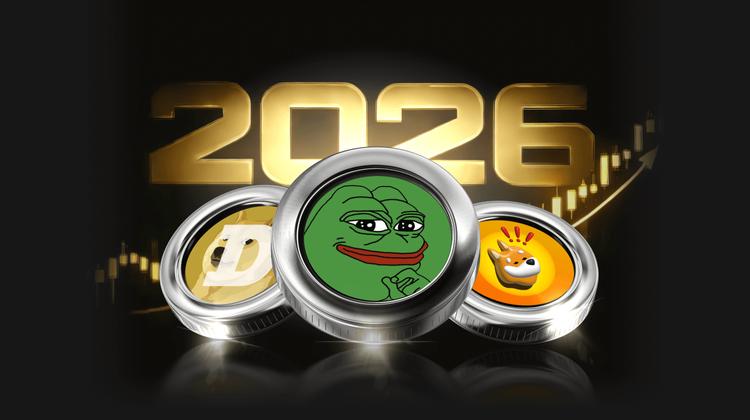
Entering 2026, established tokens like Dogecoin (DOGE), Pepe (PEPE), and Bonk (BONK) are positioned to lead this charge, having cultivated robust communities and deep liquidity. Alongside them, a constant influx of new, low-market-capitalization projects seeks to capture the imagination of risk-tolerant traders, making the meme coin segment a focal point, rather than a sideshow, during market upswings.
Why Meme Coins Thrive During Bull Markets?Meme coins are uniquely suited to bullish environments where optimism and risk appetite are high. Their value proposition is not tied to cash flows or complex metrics, but to social traction, cultural relevance, and the self-reinforcing cycle of attention and price action. Simplified narratives enable rapid dissemination across social platforms, while abundant market liquidity reduces the friction for speculative entry and exit, creating ideal conditions for their growth.
Established Meme Coins With Breakout Potential in 2026Dogecoin (DOGE)Dogecoin(DOGE) maintains its status as the original and most recognized meme coin. Its primary strengths are its unparalleled brand recognition, massive global holder base, and high liquidity across virtually all major exchanges. Historically, DOGE has acted as a sentiment amplifier during late-stage bull runs, often moving in correlation with broader Bitcoin-led rallies. Its longevity and stability provide a relative "safe haven" within the inherently risky meme sector.
Read More: Is Dogecoin(DOGE) a Good Investment in 2026? Everything You Should Know
Pepe (PEPE)Pepe(PEPE) has cemented itself as a leading second-generation meme coin within the Ethereum ecosystem. It appeals to a trader demographic attuned to high volatility and rapid hype cycles. PEPE's strength lies in its strong, recognizable meme identity and its deep integration into Ethereum's DeFi and trading infrastructure, allowing it to quickly capture speculative capital flowing into the ecosystem.
Bonk (BONK)Bonk(BONK) has emerged as the de facto flagship meme coin of the Solana blockchain. Its growth has been intertwined with Solana's own resurgence, benefiting from the network's low fees and high transaction speeds that facilitate frenetic trading activity. BONK often serves as a high-beta proxy for Solana ecosystem sentiment, making it a key asset to watch during altcoin seasons.
The High-Risk Frontier: Low-Cap Meme CoinsBeyond the established leaders lies the volatile world of low-capitalization meme coins. These projects often launch with humorous narratives or minimal utility (like trading bots or community tools), aiming to become the next viral sensation. While they carry exponentially higher risks—including extreme volatility, illiquidity, and potential for abandonment—they represent the purest form of asymmetric bet in the crypto space, capable of delivering outsized returns during peak hype cycles. They should be approached strictly as high-risk speculative instruments, not long-term investments.
How to Identify Meme Coin Breakout Signals?Key metrics can offer clues about building momentum within the meme coin sector:
Whale Accumulation: Sustained buying by large wallets can signal informed positioning ahead of anticipated rallies.Network Activity Spikes: Surges in daily active addresses and transaction counts often precede retail-driven price breakouts.Holder Growth & Derivatives Interest: A rising number of unique holders, coupled with increasing futures open interest, can indicate broadening conviction and speculative interest.ConclusionThe meme coin segment remains a powerful reflection of market psychology, where cultural resonance and community dynamics can drive valuation independently of technical fundamentals. As we look toward 2026, Dogecoin, Pepe, and Bonk are poised to leverage their established communities and liquidity to capitalize on bullish sentiment. Concurrently, the endless cycle of new low-cap projects will continue to offer high-stakes opportunities for speculative traders. Success in this arena demands not belief in any single narrative, but a disciplined understanding of the volatility, timing, and crowd psychology that define it.
Are you ready to join the memecoin revolution in 2026? Sign up now and begin your crypto journey seamlessly on WEEX, featuring smooth trading with 0 fees.
Further ReadingHow to Trade Dogecoin(DOGE) Futures on WEEX?Dogecoin(DOGE) Price Prediction: What's Next for Dogecoin(DOGE)?What Is MANYU? ManyuShiba Meme Coin ExplainedDisclaimer: The opinions expressed in this article are for informational purposes only. This article does not constitute an endorsement of any of the products and services discussed or investment, financial, or trading advice. Qualified professionals should be consulted prior to making financial decisions.
FAQQ1: Which meme coin will boom in the future?A: The top memecoins by market capitalization in 2026 include Dogecoin (DOGE), Shiba Inu (SHIB), PEPE, OFFICIAL TRUMP (TRUMP), and Bonk (BONK). These tokens have shown high liquidity, strong community support, and rising utility, making them stand out in the meme token sector.
Q2: What are the best meme coins to buy in 2026?A: Dogecoin, Pepe, and Bonk are widely viewed as top candidates due to strong liquidity, active communities, and positive on-chain momentum.
Q: Are low-cap meme coins safe investments?A: Low-cap meme coins carry significantly higher risks, including illiquidity and project failure. They are suitable only for high-risk strategies.
What is USDCoin OTC and How to Buy USDC OTC With CAD on WEEX Exchange?
For Canadian institutions, treasury managers, and professional traders, acquiring substantial amounts of stablecoins like USDCoin (USDC) efficiently is crucial for treasury operations and crypto market access. Over-the-counter (OTC) crypto trading is the professional channel for these large-scale, stablecoin transactions. This guide explains the specifics of USDCoin OTC trading and provides a clear, step-by-step walkthrough for trading USDC with Canadian Dollars (CAD) on the WEEX Exchange platform.
What is the USDCoin OTC Crypto?USDCoin OTC Crypto refers to the direct, private trading of USDC tokens between parties, conducted away from public exchange order books. This method is not for retail-sized trades but for negotiated, block-sized transactions typically facilitated by a dedicated OTC desk. For Canadian market participants, it is the optimal route for converting large sums of CAD into a stable digital dollar equivalent without causing market impact.
The core advantage is price certainty and execution efficiency. While USDC is designed to maintain a 1:1 peg with the US dollar, executing a multi-million dollar order on a public exchange could still face minor slippage or liquidity fragmentation. OTC trading provides a single, guaranteed price for the entire order, ensuring precise capital deployment. This is why institutions use OTC desks for treasury management, hedging, and as a gateway to the broader DeFi and crypto ecosystem.
What is a Crypto OTC Trading Exchange?A Crypto OTC trading exchange, or OTC desk, is a specialized service that facilitates private, high-volume digital asset transactions. It acts as a professional intermediary or principal market-maker, connecting large buyers and sellers directly. For stablecoins like USDC, the desk provides deep, immediate liquidity from its reserves to execute trades at the quoted price.
These platforms deliver key institutional benefits. They eliminate slippage risk for block trades, providing a firm quote. They offer direct access to consolidated liquidity pools to fill large orders instantly. Furthermore, they support flexible settlement using various fiat rails, which for Canadian clients may include local Interac e-Transfers or bank wires, enabling seamless cross-border capital movement.
What is WEEX OTC Crypto Trading Exchange?The WEEX OTC Crypto Trading Exchange is the integrated, professional service within the WEEX ecosystem designed for secure and efficient fiat-to-crypto transactions. It simplifies converting local currencies like Canadian Dollars (CAD) into stablecoins such as USDCoin (USDC) through a user-friendly, quote-based interface.
WEEX has officially launched its WEEX OTC Quick Buy feature to streamline this process. Following platform upgrades, WEEX now supports an extensive range of trading pairs, potentially including direct CAD-to-USDC options, allowing Canadian users to access stablecoins quickly. The process is designed for completion in just a few simple steps, whether on web or mobile.
Why Choose WEEX Exchange for OTC Crypto Trading?Access over 200 major trading pairsMainstream payment methods accepted: Visa/Mastercard, Apple Pay, Google Pay, Bank Transfer, SEPA, PIXQuick Buy – completes your purchase in just three stepsCNY deposits supported via Alipay, WeChat Pay, and DingTalkNo KYC required for non-CNY depositsMultiple payment channels – automatically recommends the optimal option based on the currency pairWhether you're an institution, fund, miner, or high‑volume trader, WEEX OTC provides a professional, secure, and tailored gateway to execute large cryptocurrency trades efficiently and discreetly.
How to Trade USDCoin with CAD on WEEX OTC Crypto Exchange?Trading USDCoin with Canadian Dollars on WEEX's OTC desk is a straightforward process designed for clarity and speed. The following outlines the general steps based on typical platform procedures for converting fiat to crypto.
Buy USDCoin OTC with CAD on WEEX (Web)Step 1: Select [CAD] fiat currency and [USDC] crypto, then select the payment method.
Step 2: Input the CAD payment amount, then click [Buy USDC] to submit info.
Step 3: Confirm the order info, we will redirect to the payment channel to complete the transaction.
Buy USDCoin OTC with CAD on WEEX (App)Step 1: Click the [Deposit] and select the [Buy crypto], enter the OTC platform.
Step 2: Select [CAD] fiat currency and [USDC] crypto.
Step 3: Input the CAD payment amount, then click [Buy USDC] to submit info.
Step 4: Confirm the order info, we will redirect to the payment channel to complete the transaction.
FAQ about Crypto OTC TradingWhat is OTC in crypto?OTC stands for Over-the-Counter. It describes a method of trading cryptocurrencies directly between two parties, negotiated privately rather than through a public exchange's order book. This is the standard practice for large transactions that require price stability, privacy, and minimal market disruption.
Why use OTC to trade a stablecoin like USDC?Even stablecoins can experience minor price deviations or liquidity gaps on public exchanges for very large orders. OTC trading guarantees execution at a single, agreed-upon price for the entire order size. This is critical for precise treasury management, institutional arbitrage, and efficiently moving large capital sums into the crypto market as a stable base currency.
Is OTC crypto trading legal in Canada?Yes, trading cryptocurrencies, including via OTC desks, is legal in Canada. The industry operates within a regulatory framework where platforms may need to register as Money Services Businesses (MSBs) with FINTRAC and comply with Anti-Money Laundering (AML) and Know Your Customer (KYC) regulations. It is important for users to verify the compliance status of any platform they use.
What are the main benefits of using an OTC desk?The primary benefits are executing large orders without causing price slippage, achieving guaranteed price certainty, and maintaining transaction privacy. OTC desks provide these advantages by matching large buy and sell orders off the public books and offering negotiated, fixed prices, which is invaluable for professional and institutional trading strategies.
Does WEEX charge fees for OTC Trading?WEEX states that it offers competitive fees across its services. For specific OTC transactions, fees can depend on factors such as the trading pair, selected payment method, and the size of the order. Reputable platforms provide transparent cost breakdowns before the user confirms the transaction.
Is KYC required for trading on WEEX?Yes, identity verification (KYC) is a standard requirement for using licensed cryptocurrency exchanges, including for OTC services. This process is mandated by international anti-money laundering regulations and is essential for platform security, fraud prevention, and regulatory compliance. The requirements and process may vary based on the user's region and the fiat currency involved.
Follow WEEX on social media:
Instagram: @WEEX_ExchangeX: @WEEX_OfficialTiktok: @weex_globalYoutube: @WEEX_GlobalTelegram: WeexGlobal GroupWhat is Ethereum OTC and How to Buy ETH OTC With GBP on WEEX Exchange?
For UK-based investors, funds, and businesses building significant positions in the Ethereum ecosystem, executing large trades on public exchanges is often inefficient and costly. Over-the-counter (OTC) crypto trading provides a professional, private solution for substantial transactions. This guide explains Ethereum OTC trading within the UK's regulatory context and how to securely trade ETH with British Pounds (GBP) on the WEEX Exchange platform.
What is the Ethereum OTC Crypto?Ethereum OTC Crypto refers to the direct, private buying and selling of ETH tokens between two parties, negotiated outside the public order books of a centralized exchange. In the UK, this method is used by institutions, venture capital firms, and sophisticated traders making strategic allocations to Ethereum and its vast Web3 ecosystem. The transaction is facilitated by a dedicated OTC desk, offering a bespoke service.
The primary advantage is price certainty for block trades. A large ETH order on a public exchange could significantly move the market, leading to costly slippage. OTC trading locks in a single, negotiated price for the entire order, protecting capital. This execution stability is crucial for strategic investments in DeFi protocols, NFT projects, or infrastructure built on Ethereum. It also offers greater privacy and flexible settlement terms, aligning with professional requirements.
What is a Crypto OTC Trading Exchange?A Crypto OTC trading exchange, or OTC desk, is a specialized service that facilitates private, high-volume digital asset transactions. It acts as a professional intermediary or principal market-maker. In the UK, firms offering cryptoasset services, including OTC desks, must be registered with the Financial Conduct Authority (FCA) for Anti-Money Laundering (AML) purposes or operate under an exemption.
These platforms provide key institutional benefits. They eliminate slippage risk by offering firm quotes for the entire order. They provide deep, on-demand liquidity to fill large orders immediately. Furthermore, they support flexible settlement using local payment rails like Faster Payments or SEPA transfers, enabling efficient capital movement for UK and European clients investing in the Ethereum network.
What is WEEX OTC Crypto Trading Exchange?The WEEX OTC Crypto Trading Exchange is the integrated, professional service within the WEEX ecosystem designed for secure fiat-to-crypto transactions. It simplifies converting local currencies like British Pounds (GBP) into Ethereum through a user-friendly, quote-based interface.
WEEX has officially launched its WEEX OTC Quick Buy feature to enhance accessibility. The platform supports a wide range of trading pairs, providing UK users a potential direct pathway to purchase ETH with GBP. The process is engineered for simplicity, allowing trades to be completed in just a few steps from either web or mobile, connecting UK capital to the global Ethereum market.
Why Choose WEEX Exchange for OTC Crypto Trading?Access over 200 major trading pairsMainstream payment methods accepted: Visa/Mastercard, Apple Pay, Google Pay, Bank Transfer, SEPA, PIXQuick Buy – completes your purchase in just three stepsCNY deposits supported via Alipay, WeChat Pay, and DingTalkNo KYC required for non-CNY depositsMultiple payment channels – automatically recommends the optimal option based on the currency pairWhether you're an institution, fund, miner, or high‑volume trader, WEEX OTC provides a professional, secure, and tailored gateway to execute large cryptocurrency trades efficiently and discreetly.
How to Trade Ethereum with GBP on WEEX OTC Crypto Exchange?Buy Ethereum OTC with GBP on WEEX (Web)Step 1: Select [GBP] fiat currency and [ETH] crypto, then select the payment method.
Step 2: Input the GBP payment amount, then click [Buy ETH] to submit info.
Step 3: Confirm the order info, we will redirect to the payment channel to complete the transaction.
Buy Ethereum OTC with GBP on WEEX (App)Step 1: Click the [Deposit] and select the [Buy crypto], enter the OTC platform.
Step 2: Select [GBP] fiat currency and [ETH] crypto.
Step 3: Input the GBP payment amount, then click [Buy ETH] to submit info.
Step 4: Confirm the order info, we will redirect to the payment channel to complete the transaction.
FAQ about Crypto OTC TradingWhat is OTC in crypto?OTC stands for Over-the-Counter. It describes a method of trading cryptocurrencies directly between two parties, negotiated privately rather than through a public exchange's order book. This is the standard channel for large transactions that require price stability, privacy, and minimal market disruption.
Is OTC crypto trading legal in the UK?Yes, cryptocurrency trading is legal in the UK. The industry operates within a well-defined regulatory framework overseen by the Financial Conduct Authority (FCA). Firms offering cryptoasset services must be registered with the FCA for AML purposes. It is essential for UK users to verify the regulatory status of any platform they use.
Why would a UK investor trade ETH OTC?A UK investor would use OTC to trade ETH to execute a large order without causing price slippage on public markets, to secure a guaranteed price for a strategic investment in the Ethereum ecosystem, or to maintain transaction privacy. It is the professional method for significant capital deployment into Web3 projects, DeFi, or NFT ventures.
What are the main risks of OTC trading?The primary risks involve counterparty risk (the possibility the other party defaults) and the risk of fraud if using an unverified or disreputable service provider. These risks are mitigated by using OTC desks operated by established, transparent, and compliant platforms with robust security measures and a strong regulatory standing.
Does WEEX charge fees for OTC Trading?WEEX offers competitive and transparent pricing for its services. For OTC transactions, fees may vary based on the specific trading pair, payment method, and order size. The platform provides clear cost disclosure before you confirm any transaction, ensuring full visibility of all charges.
Is KYC required for OTC Trading with GBP on WEEX?To comply with UK and international financial regulations, including strict Anti-Money Laundering (AML) laws enforced by the FCA, identity verification (KYC) is a standard and mandatory requirement for trading cryptocurrencies with fiat currencies like GBP on licensed platforms. This process is essential for platform security and regulatory compliance.
Follow WEEX on social media:
Instagram: @WEEX_ExchangeX: @WEEX_OfficialTiktok: @weex_globalYoutube: @WEEX_GlobalTelegram: WeexGlobal GroupWhat is USDCoin OTC and How to Buy USDC OTC With GBP on WEEX Exchange?
For UK-based institutions, treasury managers, and professional traders, acquiring substantial amounts of stablecoins like USDCoin (USDC) efficiently is a cornerstone of modern crypto strategy. Over-the-counter (OTC) crypto trading provides the private, high-volume channel necessary for these critical transactions. This guide explains USDCoin OTC trading within the UK's regulatory framework and how to trade USDC with British Pounds (GBP) on the WEEX Exchange platform.
What is the USDCoin OTC Crypto?USDCoin OTC Crypto refers to the direct, private buying and selling of USDC tokens between parties, negotiated outside public exchange order books. This method is essential for UK funds, fintech companies, and businesses needing to convert large sums of GBP into a digital dollar equivalent for treasury operations, DeFi participation, or as a stable base currency. The transaction is facilitated by a dedicated OTC desk, offering bespoke service.
The primary advantage is execution efficiency and price certainty. While USDC maintains a 1:1 peg to the US dollar, executing a multi-million pound order on a public exchange could still encounter minor slippage or fragmented liquidity across order books. OTC trading provides a single, guaranteed price for the entire block, ensuring precise capital allocation. This is vital for efficient treasury management and aligns with the Financial Conduct Authority's (FCA) principles of market integrity and consumer protection.
What is a Crypto OTC Trading Exchange?A Crypto OTC trading exchange, or OTC desk, is a specialized service that facilitates private, high-volume digital asset transactions. It acts as a professional intermediary or principal market-maker. In the UK, firms providing cryptoasset services, including OTC trading, must be registered with the FCA for Anti-Money Laundering (AML) purposes or operate under a specific exemption, ensuring a regulated environment for professional participants.
These platforms deliver key institutional benefits. They eliminate slippage risk by providing firm quotes for block trades. They offer direct access to deep liquidity pools to fill large orders instantly. Furthermore, they support flexible settlement using local payment rails like Faster Payments, enabling UK clients to move capital efficiently between traditional banking and the stablecoin ecosystem.
What is WEEX OTC Crypto Trading Exchange?The WEEX OTC Crypto Trading Exchange is the integrated, professional service within the WEEX ecosystem designed for secure fiat-to-crypto transactions. It streamlines converting local currencies like British Pounds (GBP) into stablecoins such as USDCoin through a user-friendly, quote-based interface.
WEEX has officially launched its WEEX OTC Quick Buy feature to enhance accessibility. The platform supports an extensive selection of trading pairs, providing UK users a potential direct pathway to purchase USDC with GBP. The process is engineered for simplicity, allowing trades to be completed in just a few steps from either web or mobile, connecting UK capital to the global digital dollar market.
Why Choose WEEX Exchange for OTC Crypto Trading?Access over 200 major trading pairsMainstream payment methods accepted: Visa/Mastercard, Apple Pay, Google Pay, Bank Transfer, SEPA, PIXQuick Buy – completes your purchase in just three stepsCNY deposits supported via Alipay, WeChat Pay, and DingTalkNo KYC required for non-CNY depositsMultiple payment channels – automatically recommends the optimal option based on the currency pairWhether you're an institution, fund, miner, or high‑volume trader, WEEX OTC provides a professional, secure, and tailored gateway to execute large cryptocurrency trades efficiently and discreetly.
How to Trade USDCoin with GBP on WEEX OTC Crypto Exchange?Buy USDCoin OTC with GBP on WEEX (Web)Step 1: Select [GBP] fiat currency and [USDC] crypto, then select the payment method.
Step 2: Input the GBP payment amount, then click [Buy USDC] to submit info.
Step 3: Confirm the order info, we will redirect to the payment channel to complete the transaction.
Buy USDCoin OTC with GBP on WEEX (App)Step 1: Click the [Deposit] and select the [Buy crypto], enter the OTC platform.
Step 2: Select [GBP] fiat currency and [USDC] crypto.
Step 3: Input the GBP payment amount, then click [Buy USDC] to submit info.
Step 4: Confirm the order info, we will redirect to the payment channel to complete the transaction.
FAQ about Crypto OTC TradingWhat is OTC in crypto?OTC stands for Over-the-Counter. It describes a method of trading cryptocurrencies directly between two parties, negotiated privately rather than through a public exchange's order book. This is the standard channel for large transactions that require price stability, privacy, and minimal market disruption.
Why use OTC to trade a stablecoin like USDC?Even stablecoins can experience minor price deviations or liquidity gaps on public exchanges for very large orders. OTC trading guarantees execution at a single, agreed-upon price for the entire order size. This is critical for precise treasury management, institutional arbitrage, and efficiently converting large fiat sums into a stable digital asset for use in DeFi, payments, or as a hedge.
Is OTC crypto trading legal in the UK?Yes, cryptocurrency trading is legal in the UK. The industry operates within a well-defined regulatory framework overseen by the Financial Conduct Authority (FCA). Firms offering cryptoasset services must be registered with the FCA for AML purposes. It is essential for UK users to verify the regulatory status and FCA registration of any platform they intend to use for OTC trading.
What are the main risks of OTC trading?The primary risks involve counterparty risk (the possibility the other party defaults) and the risk of fraud if using an unverified or non-compliant service provider. These risks are mitigated by conducting OTC trades only through established, transparent platforms that are registered with the relevant authorities, such as the FCA in the UK, and that have robust security measures in place.
Does WEEX charge fees for OTC Trading?WEEX offers competitive and transparent pricing for its services. For OTC transactions, fees may vary based on the specific trading pair, payment method, and order size. The platform provides clear cost disclosure before you confirm any transaction, ensuring full visibility of all charges.
Is KYC required for OTC Trading with GBP on WEEX?To comply with UK and international financial regulations, including strict Anti-Money Laundering (AML) laws enforced by the FCA, identity verification (KYC) is a standard and mandatory requirement for trading cryptocurrencies with fiat currencies like GBP on licensed platforms. This process is essential for platform security, fraud prevention, and regulatory compliance.
Follow WEEX on social media:
Instagram: @WEEX_ExchangeX: @WEEX_OfficialTiktok: @weex_globalYoutube: @WEEX_GlobalTelegram: WeexGlobal GroupWhat is Solana OTC and How to Buy SOL OTC With GBP on WEEX Exchange?
For UK-based investors, venture capital funds, and Web3 developers targeting strategic positions in the high-performance Solana (SOL) ecosystem, public exchange trading can be inefficient and disruptive. Over-the-counter (OTC) crypto trading is the professional solution for substantial, private transactions. This guide explains Solana OTC trading within the UK's regulatory landscape and how to securely trade SOL with British Pounds (GBP) on the WEEX Exchange platform.
What is the Solana OTC Crypto?Solana OTC Crypto refers to the direct, private buying and selling of SOL tokens between parties, negotiated outside public exchange order books. This method is essential for UK institutions, fintech firms, and sophisticated investors making significant capital allocations to the Solana network and its burgeoning ecosystem of DeFi, NFT, and consumer applications. The transaction is facilitated by a dedicated OTC desk.
The key advantage is execution at a guaranteed, negotiated price. A substantial SOL purchase on a public exchange could move the market, leading to costly slippage. OTC trading locks in a single price for the entire block, protecting capital and allowing for precise strategic entry. This price certainty is crucial for long-term investment in a leading layer-1 blockchain and aligns with the Financial Conduct Authority's (FCA) focus on market integrity. It also offers greater privacy and flexible settlement.
What is a Crypto OTC Trading Exchange?A Crypto OTC trading exchange, or OTC desk, is a specialized service that facilitates private, high-volume digital asset transactions. It acts as a professional intermediary or principal market-maker. In the UK, firms offering cryptoasset services, including OTC trading, must be registered with the FCA for Anti-Money Laundering (AML) purposes or operate under an exemption, ensuring a regulated environment.
These platforms provide key institutional benefits. They eliminate slippage risk by offering firm quotes for block trades. They provide deep, on-demand liquidity to fill large orders immediately. Furthermore, they support flexible settlement using local payment rails like Faster Payments or SEPA transfers, enabling efficient capital movement for UK and European clients investing in next-generation blockchain infrastructure.
What is WEEX OTC Crypto Trading Exchange?The WEEX OTC Crypto Trading Exchange is the integrated, professional service within the WEEX ecosystem designed for secure fiat-to-crypto transactions. It streamlines converting local currencies like British Pounds (GBP) into assets like Solana through a straightforward, quote-based interface.
WEEX has officially launched its WEEX OTC Quick Buy feature to enhance accessibility. The platform supports an extensive selection of trading pairs, providing UK users a potential direct pathway to purchase SOL with GBP. The process is engineered for simplicity, allowing trades to be completed in just a few steps from either web or mobile, connecting UK capital to the global Solana market.
Why Choose WEEX Exchange for OTC Crypto Trading?Access over 200 major trading pairsMainstream payment methods accepted: Visa/Mastercard, Apple Pay, Google Pay, Bank Transfer, SEPA, PIXQuick Buy – completes your purchase in just three stepsCNY deposits supported via Alipay, WeChat Pay, and DingTalkNo KYC required for non-CNY depositsMultiple payment channels – automatically recommends the optimal option based on the currency pairWhether you're an institution, fund, miner, or high‑volume trader, WEEX OTC provides a professional, secure, and tailored gateway to execute large cryptocurrency trades efficiently and discreetly.
How to Trade Solana with GBP on WEEX OTC Crypto Exchange?Buy Solana OTC with GBP on WEEX (Web)Step 1: Select [GBP] fiat currency and [SOL] crypto, then select the payment method.
Step 2: Input the GBP payment amount, then click [Buy SOL] to submit info.
Step 3: Confirm the order info, we will redirect to the payment channel to complete the transaction.
Buy Solana OTC with GBP on WEEX (App)Step 1: Click the [Deposit] and select the [Buy crypto], enter the OTC platform.
Step 2: Select [GBP] fiat currency and [SOL] crypto.
Step 3: Input the GBP payment amount, then click [Buy SOL] to submit info.
Step 4: Confirm the order info, we will redirect to the payment channel to complete the transaction.
FAQ about Crypto OTC TradingWhat is OTC in crypto?OTC stands for Over-the-Counter. It describes a method of trading cryptocurrencies directly between two parties, negotiated privately rather than through a public exchange's order book. This is the standard channel for large transactions that require price stability, privacy, and minimal market disruption.
Why would a UK investor trade SOL OTC?A UK investor would use OTC to trade SOL to execute a large order without causing price slippage on public markets, to secure a guaranteed price for a strategic portfolio allocation to the Solana ecosystem, or to maintain transaction privacy. It is the professional choice for significant investment in a high-growth, high-utility blockchain platform.
Is OTC crypto trading legal in the UK?Yes, cryptocurrency trading is legal in the UK. The industry operates within a well-defined regulatory framework overseen by the Financial Conduct Authority (FCA). Firms offering cryptoasset services must be registered with the FCA for AML purposes. It is essential for UK users to verify the regulatory status and FCA registration of any platform they intend to use for OTC trading.
What are the main risks of OTC trading?The primary risks involve counterparty risk (the possibility the other party defaults) and the risk of fraud if using an unverified or non-compliant service provider. These risks are mitigated by conducting OTC trades only through established, transparent platforms that are registered with the relevant authorities, such as the FCA in the UK, and that have robust security measures in place.
Does WEEX charge fees for OTC Trading?WEEX offers competitive and transparent pricing for its services. For OTC transactions, fees may vary based on the specific trading pair, payment method, and order size. The platform provides clear cost disclosure before you confirm any transaction, ensuring full visibility of all charges.
Is KYC required for OTC Trading with GBP on WEEX?To comply with UK and international financial regulations, including strict Anti-Money Laundering (AML) laws enforced by the FCA, identity verification (KYC) is a standard and mandatory requirement for trading cryptocurrencies with fiat currencies like GBP on licensed platforms. This process is essential for platform security, fraud prevention, and regulatory compliance.
Follow WEEX on social media:
Instagram: @WEEX_ExchangeX: @WEEX_OfficialTiktok: @weex_globalYoutube: @WEEX_GlobalTelegram: WeexGlobal Group
Lighter (LIT) Price Prediction 2025–2030: How High Could LIT Go?
Lighter (LIT) enters the crypto market at a moment when speculation alone is no longer enough to sustain valuations. Liquidity is selective, narratives are scrutinized, and DeFi protocols are increasingly judged by what they deliver rather than what they promise.
As a newly launched Ethereum-based token, LIT currently operates in a data-scarce environment with no extended price history, no mature volume profile, and no algorithmic forecasts from major analytics platforms.
Yet, the absence of historical data does not make analysis impossible. It simply requires a different lens. Instead of extrapolating from charts that do not yet exist, this Lighter price prediction relies on scenario-based reasoning, protocol fundamentals, and comparative behavior observed in early-stage DeFi projects.
Looking ahead to 2025–2030, LIT’s trajectory will be shaped by adoption, token utility, and broader crypto market cycles. The question is not whether LIT can move sharply volatility is almost guaranteed but whether it can sustain value as the market matures.
What Is Lighter (LIT)?Lighter (LIT) is a decentralized trading infrastructure project built on the Ethereum blockchain. It aims to provide a non-custodial, capital-efficient environment for traders. The native LIT token is designed to serve as a core component of the ecosystem, with proposed utilities typically revolving around governance, protocol incentives, and aligning the interests of users and developers.
The project's launch context is notable. Emerging after periods of speculative excess, Lighter enters a market that increasingly prioritizes tangible utility and sustainable models over viral hype. This environment sets a higher bar for execution but also creates opportunity for projects that successfully address genuine inefficiencies in on-chain trading.
LIT Token Price Overview and Current Market ContextAs a newly launched asset, LIT is in a phase of initial price discovery. Its valuation can exhibit significant dispersion across different trading venues, a common characteristic for tokens establishing their initial market base. Notably, due to the lack of an extended trading history, mainstream analytics platforms do not provide formal long-term algorithmic forecasts for LIT. This data scarcity underscores that any forward-looking assessment must be framed as a set of probabilistic scenarios rather than definitive predictions.
Key Factors That Will Influence Lighter (LIT) Price (2025–2030)The long-term valuation of LIT will be determined by several interlinked factors:
Protocol Adoption and Utility: The primary driver will be the actual usage of the Lighter platform. Metrics such as consistent trading volume, total value locked, and fee generation are fundamental value indicators, far outweighing transient social media hype.Token Economic Design: The specific mechanisms governing LIT's utility—such as its role in fee capture, staking rewards, governance power, or supply dynamics (e.g., burns, buybacks)—will critically influence its supply-demand equilibrium.Ethereum Ecosystem Traction: As an Ethereum-based application, Lighter's growth is tied to the broader health and scalability of its underlying blockchain. Widespread Layer-2 adoption and lower transaction costs would serve as significant tailwinds.Broader Market Cycles: The crypto market's inherent cyclicality will be a major external force. LIT's ability to maintain development and community engagement through potential bear markets will be as crucial as its performance during bullish periods.Lighter (LIT) Price Prediction (2025–2030)Given the absence of historical precedent, a scenario-based framework is more appropriate than linear predictions.
Lighter (LIT) Price Prediction 2025: The Validation Phase: This period will focus on establishing initial product-market fit. Price action will likely be volatile, driven by launch momentum, early user metrics, and exchange listings. The market will be assessing the project's basic viability.Lighter (LIT) Price Prediction 2026–2027: The Differentiation Phase: By this stage, the initial speculative noise typically subsides. Projects that fail to demonstrate growing utility and a sustainable model often fade, while those with genuine traction begin to stabilize and build a more consistent valuation floor based on fundamentals.Lighter (LIT) Price Prediction 2028–2030: The Maturation Phase: In the long term, LIT's price will reflect its established position within the DeFi landscape. Outcomes will diverge significantly:Conservative Scenario: Limited adoption and niche usage could see the token trade primarily on speculation with modest valuations.Base Case Scenario: Steady growth as a functional trading platform with a dedicated user base could support a valuation reflecting its fee generation and utility.Bull Case Scenario: Should Lighter emerge as a widely adopted core piece of DeFi trading infrastructure, significant value accrual to the LIT token becomes plausible.ConclusionLighter (LIT) represents a nascent thesis in the competitive DeFi trading sector. Its current lack of historical data is not an anomaly but a starting condition. Consequently, its long-term price path is not a pre-determined chart to be read, but a narrative to be written by the project's execution.
Investors and observers should focus less on precise price targets and more on monitoring the fundamental drivers: user growth, protocol utility, and tokenomics efficiency. The project's ultimate value will be determined by its ability to transition from a promising concept to a sustainably used and economically viable protocol within the evolving Ethereum ecosystem. As with any early-stage project, engagement requires an understanding of the high-risk, high-reward paradigm and a commitment to ongoing fundamental analysis.
Ready to trade Lighter (LIT)?Join WEEX now—enjoy zero trading fees, smooth execution, and instant access. Sign up today and start trading in minutes.
Further ReadingWhat is Snowball (SNOWBALL)?What is Clover Finance (CLV)? A Complete GuideWhat Is MANYU? ManyuShiba Meme Coin ExplainedDisclaimer: The opinions expressed in this article are for informational purposes only. This article does not constitute an endorsement of any of the products and services discussed or investment, financial, or trading advice. Qualified professionals should be consulted prior to making financial decisions.

What is Clover Finance (CLV)? A Complete Guide
If you’ve been following the Polkadot ecosystem or cross-chain DeFi projects, chances are you’ve come across Clover Finance and its native token, CLV. But for many newcomers, one big question still remains, what is CLV Coin, and why is it gaining attention in the crypto space?
In this article, we’ll break down everything you need to know about Clover Finance, what makes it unique, how the CLV token works, and a quick look at the current CLV price performance based on the latest market data.
What is Clover Finance?Clover Finance (often referred to as Clover) is a blockchain operating system built using Substrate, designed to integrate seamlessly into the Polkadot ecosystem. Its primary goal is not to offer a single service, but to provide a comprehensive, foundational infrastructure for both developers and end-users.
A key advantage of Clover is its full Ethereum Virtual Machine (EVM) compatibility. This allows developers to port and run Ethereum-based decentralized applications (dApps) efficiently on Substrate-based networks, effectively bridging the Ethereum and Polkadot ecosystems and simplifying cross-chain development. The project was founded in May 2020, with its mainnet launching in July 2021, marking its formal entry into the multi-chain arena.
Key Features of Clover Finance (CLV)Clover distinguishes itself as a multi-layered blockchain operating system rather than a single-purpose protocol. Its architecture comprises several integrated layers:
Storage Layer: For secure and efficient data handling.Smart Contract Layer: For executing application logic.DeFi Protocol Layer: For core financial services.eApp Layer: For deploying advanced decentralized applications.This holistic design supports complex, cross-chain functionalities while aiming to maintain a streamlined user experience. Other notable features include its cross-chain DeFi bridge for simplified asset movement, the introduction of "eApps" (external applications) for potentially higher performance, and a unique, flexible gas fee model. This model allows relayers to pay fees on users' behalf and employs an identity-based fee schedule that can lower costs for active network participants.
What is Clover Finance (CLV)?Clover Finance (CLV) is the native utility and governance token of the Clover Finance ecosystem. It serves multiple critical functions within the network:
Transaction Fees: Used to pay for network operations, with flexible payment options.Staking: Participants can stake CLV to help secure the network and earn rewards.Governance: Token holders can participate in on-chain voting to influence the protocol's future development.Funding & Development: The token is used to fund ecosystem projects through the treasury and to deploy smart contracts.This broad utility framework aims to embed CLV's value deeply within the platform's operations, extending its purpose beyond mere speculation.
Clover Finance (CLV) TokenomicsClover Finance has allocated its token supply to support long-term growth and ecosystem health. The distribution is focused on several key areas:
Ecosystem & Incentives: A significant portion is dedicated to ecosystem development and parachain offerings.Treasury & Staking: Substantial allocations are reserved for the project treasury and for staking rewards to secure the network.Team & Contributors: Allocations are designated for the founding team, early contributors, and community rounds.Initial Funding: Smaller portions were allocated to private, seed, and public sale investors.This structure emphasizes sustainability, community participation, and ongoing development.
ConclusionIn summary, CLV is the foundational token of Clover Finance, a blockchain operating system designed to streamline cross-chain application development and DeFi accessibility. By combining EVM compatibility, a multi-layered architecture, and a user-friendly gas model, Clover carves out a distinct niche in the Polkadot ecosystem. While the CLV token operates in a competitive and volatile segment of the market, its integral role in a protocol focused on solving cross-chain interoperability makes it a noteworthy project for those interested in the infrastructure layer of Web3.
Ready to trade cryptocurrencies?Join WEEX now—enjoy zero trading fees, smooth execution, and instant access. Sign up today and start trading in minutes.
Further ReadingWhat is WOJAK and Why WOJAK Is Trending Again?
Why POPCAT Crashes? A Complete Explanation
What Is MANYU? ManyuShiba Meme Coin Explained
Disclaimer: The opinions expressed in this article are for informational purposes only. This article does not constitute an endorsement of any of the products and services discussed or investment, financial, or trading advice. Qualified professionals should be consulted prior to making financial decisions.

Which 2 Cryptocurrencies Will Hit $100 Billion Market Cap in Q1 2026?
As the cryptocurrency market continues to mature, investors are increasingly focused on identifying assets poised to achieve major valuation milestones. One of the most significant markers of success and mainstream integration is a $100 billion market capitalization—a threshold that signifies substantial adoption, liquidity, and investor confidence.
With the market looking toward 2026, a pressing question emerges: which two cryptocurrencies are most likely to reach this milestone by the first quarter of that year? In this analysis, we’ll explore the contenders best positioned to cross into this elite tier and examine the factors that could propel them forward.
What does $100 Billion Milestone Mean?Before identifying potential candidates, it's important to understand what a $100 billion market cap truly represents. It reflects not only price appreciation but also widespread recognition, robust ecosystem development, and sustained utility. Achieving this level of valuation signals that a cryptocurrency has moved beyond speculative interest into the realm of globally significant digital assets.
Which 2 Cryptocurrencies Will Hit $100 Billion Market Cap in Q1 2026?While Bitcoin remains the undisputed leader in market capitalization, attention is shifting toward other networks with strong fundamentals and accelerating adoption. Based on current trajectories, ecosystem growth, and technological roadmaps, two assets stand out as the most probable to reach the $100 billion milestone in early 2026.
Ethereum (ETH)Ethereum is already the clear leader in smart contract platforms and decentralized application infrastructure. Its path to a $100 billion market cap is supported by several converging factors:
The full rollout of Ethereum 2.0 enhancements, which dramatically improve scalability, reduce energy consumption, and lower transaction costs, is expected to solidify its position as the foundational layer for Web3.Continued dominance in decentralized finance (DeFi), non-fungible tokens (NFTs), and institutional tokenization initiatives ensures sustained network activity and fee demand.Growing institutional adoption through ETFs, staking services, and enterprise blockchain integrations provides a steady inflow of capital and validation.Given these tailwinds, Ethereum reaching a $100 billion market capitalization in Q1 2026 is not only plausible but increasingly anticipated by analysts and investors alike.
Solana (SOL)Solana has distinguished itself as one of the fastest and most scalable smart contract platforms, positioning it as a serious contender for the $100 billion club. Key drivers for its growth include:
Exceptional throughput and low transaction fees, which have attracted a rapidly expanding ecosystem of developers, DeFi protocols, and consumer applications.Strategic partnerships and integrations across payments, gaming, and decentralized infrastructure, which broaden its utility beyond speculative trading.Ongoing network optimizations and a strong focus on user experience, making it accessible to both retail and institutional participants.If Solana maintains its current growth trajectory and continues to capture market share in key verticals, it is well-positioned to achieve a $100 billion valuation in the first quarter of 2026.
Why These Networks Are Poised for Growth
Several macro and ecosystem-specific factors support the potential of both Ethereum and Solana to reach this landmark valuation:
Expanding Real-World Use Cases: From decentralized finance and digital identity to supply chain management and content distribution, blockchain utility is moving beyond speculation. Both networks are at the forefront of these developments.Institutional Participation: Increasing involvement from regulated entities, including asset managers, banks, and corporations, provides stability, liquidity, and long-term credibility.Technological Evolution: Continuous upgrades in scalability, security, and interoperability enhance the value proposition of each network, supporting higher adoption and valuation over time.What's Next for Crypto Market?While market conditions are inherently unpredictable, Ethereum and Solana possess the technological foundations, community support, and real-world traction needed to sustain growth toward a $100 billion market cap. Investors and observers should monitor key developments such as protocol upgrades, regulatory clarity, and ecosystem expansion, which will play critical roles in shaping their paths forward.
ConclusionThe journey to a $100 billion market cap represents more than just price appreciation—it signifies maturation, trust, and functional relevance in the global economy. Ethereum and Solana are currently the strongest candidates to reach this milestone by Q1 2026, thanks to their leading roles in the ongoing evolution of decentralized technology. As the digital asset landscape continues to develop, these networks are likely to remain central to the narrative of blockchain adoption and value creation.
Ready to trade cryptocurrencies?Join WEEX now—enjoy zero trading fees, smooth execution, and instant access. Sign up today and start trading in minutes.
Further ReadingSolana vs Ethereum: Which Blockchain Is Better in 2025?What Is Ethereum(ETH) and How Does It Work?What Is Solana(SOL) and How Does It Work?Disclaimer: The opinions expressed in this article are for informational purposes only. This article does not constitute an endorsement of any of the products and services discussed or investment, financial, or trading advice. Qualified professionals should be consulted prior to making financial decisions.

What is Mango (MNGO)? Is Mango (MNGO) Worth Buying?
Mango (MNGO) is a digital asset that intersects the cultural appeal of meme coins with functional utility in decentralized finance (DeFi). Initially drawing inspiration from the community-driven success of assets like Dogecoin, Mango (MNGO) has evolved beyond a purely social token by integrating with Mango Markets—a decentralized trading platform.
On Mango Markets, the token facilitates liquidity provision, decentralized trading, and governance participation. This dual nature—combining lighthearted meme culture with tangible DeFi utility—sets it apart from many speculative meme tokens and aims to create a sustainable economic model beyond short-term social trends.
Read More: What Are Meme Coins?
Mango (MNGO) Trending Meme CoinThe rise of MNGO reflects a broader trend where assets gain traction through narrative and community while also offering practical use cases. Its momentum is driven by several factors:
Cultural Resonance: Like other successful meme assets, MNGO leverages online communities and viral potential, which can rapidly amplify visibility and speculative interest.Functional Differentiation: Unlike purely cultural meme tokens, MNGO is linked to Mango Markets, a platform offering margin trading, lending, and borrowing services. This provides a foundational use case that extends beyond sentiment-driven trading.Governance Participation: Token holders can influence platform development through decentralized governance, adding a layer of long-term participatory value.This combination allows MNGO to appeal both to participants interested in meme-driven market cycles and to those seeking exposure to DeFi infrastructure development.
Is Mango (MNGO) Worth Buying?Determining whether MNGO represents a suitable investment requires a balanced evaluation of its unique position between meme culture and DeFi utility.
Strengths and Opportunities:Utility Foundation: Its integration with a live DeFi platform provides a clearer value proposition than many meme-only tokens.Community Momentum: Active social engagement can drive short-to-medium term price appreciation during favorable market conditions.Governance Rights: Participation in platform decisions aligns holder incentives with the ecosystem’s health and growth.Risks and Considerations:High Volatility: As with most assets in this category, MNGO is subject to sharp price swings influenced by social sentiment, market trends, and broader crypto volatility.Platform Dependency: Its value is closely tied to the adoption, security, and continuous development of Mango Markets. Any setbacks on the platform could directly impact the token.Competitive Landscape: It operates in a crowded space of both meme coins and DeFi platforms, requiring sustained differentiation to maintain relevance.Should I Invest in Mango (MNGO)?Mango (MNGO) is best understood as a high-risk, high-potential asset that blends speculative and utility-driven characteristics. Investors should:
Assess personal risk tolerance, as meme-adjacent tokens can experience rapid devaluation.Research the Mango Markets platform’s performance, security audits, and roadmap.Consider position sizing—treating it as a speculative allocation rather than a core portfolio holding.Monitor both social sentiment for short-term cues and platform metrics for long-term viability.ConclusionMango (MNGO) represents an experiment in merging meme coin virality with DeFi functionality. While it carries the inherent volatility and sentiment-driven risks common to social tokens, its foundation in a functioning trading platform offers a layer of utility absent in many purely cultural assets.
For investors, MNGO may serve as a tactical allocation for those comfortable with elevated risk and interested in the intersection of community-driven assets and decentralized finance. Success will likely depend on the sustained growth of Mango Markets, continued community engagement, and the token’s ability to balance its dual identity in a rapidly evolving market. As always, thorough independent research and clear risk parameters are essential before engagement.
Ready to trade cryptocurrencies?Join WEEX now—enjoy zero trading fees, smooth execution, and instant access. Sign up today and start trading in minutes.
Further ReadingWhat Is Audiera (BEAT)? Audiera (BEAT) Price Prediction 2025–2030Is This AI Token Worth It? Acet (ACT) Price AnalysisWhat Is Magma Finance (MAGMA) and How Does It Work?Disclaimer: The opinions expressed in this article are for informational purposes only. This article does not constitute an endorsement of any of the products and services discussed or investment, financial, or trading advice. Qualified professionals should be consulted prior to making financial decisions.

Which Crypto Will Go 1000x in 2026?
Examining historical 1000x gainers reveals patterns centered on timing, narrative, and network effects rather than predictable fundamentals. Such extraordinary returns typically emerge from assets that started with low valuations, aligned with powerful cultural or technological shifts, and captured momentum at the right phase of a broader market cycle.
Bitcoin (BTC): Initially valued at pennies, Bitcoin introduced decentralized digital scarcity and established a new asset class. Its growth beyond 1000x was fueled by growing institutional trust, global adoption, and its evolution into a macroeconomic reserve asset over multiple cycles.Ethereum (ETH): Launched as a smart contract platform, Ethereum unlocked decentralized applications, DeFi, and NFTs. Early participants realized exponential gains as its ecosystem became the foundation for Web3 innovation.Dogecoin (DOGE): Originally created as a humorous experiment, Dogecoin leveraged community-driven virality and celebrity endorsement to achieve parabolic returns, demonstrating the power of meme culture in financial markets.Shiba Inu (SHIB): Starting with a micro-cap valuation, SHIB capitalized on meme coin mania and retail frenzy, delivering gains measured in tens of thousands of percent through exchange listings and expanding ecosystem narratives.Pepe (PEPE): A 2023 entrant with no functional utility, PEPE illustrated how internet-native memes can rapidly translate into speculative financial assets, briefly generating multi-billion-dollar valuations purely through social momentum.These cases underscore that 1000x outcomes are less about guarantees and more about early exposure, compelling storytelling, and favorable market psychology.
Top Cryptos With 1000x Potential in 2026Identifying tokens with 1000x potential requires a focus on the high-risk, high-reward segment of the market. The following assets represent speculative narratives that could attract extreme capital flows during aggressive bull phases. All projections are illustrative and assume optimal market conditions.
Bitcoin Hyper (HYPER): Positions as a Bitcoin Layer-2 solution aiming to extend functionality beyond store of value. Benefits from strong Bitcoin-centric narratives during BTC-led market cycles.Dogecoin (DOGE): As one of the most recognized cryptocurrencies globally, DOGE retains potential for resurgence driven by community loyalty, social media trends, and celebrity influence.Pepe (PEPE): A pure meme asset relying entirely on cultural virality and speculative momentum, historically capable of rapid multi-billion dollar valuation spikes.Shiba Inu (SHIB): Evolved from a meme token into an ecosystem with its own Layer-2 network, combining community scale with ongoing development to sustain speculative interest.These tokens are characterized by high volatility, narrative dependency, and sensitivity to broader market sentiment. Position sizing and exit planning are critical when engaging with such assets.
High-Growth Cryptos That Could Still Deliver Significant ReturnsNot all opportunities require extreme risk. Many investors achieve substantial returns through established projects with clearer fundamentals, growing adoption, and ecosystem maturity. While unlikely to deliver 1000x from current valuations, these assets can still produce strong performance in favorable market conditions.
Maverick Protocol (MAV): A decentralized exchange emphasizing capital efficiency for liquidity providers. Positioned to benefit from renewed DeFi activity and trading volume expansion in bull markets.Sui (SUI): A high-throughput Layer-1 blockchain focused on consumer applications like gaming and payments. Gains traction through developer adoption and scalability narratives.Aptos (APT): A scalable Layer-1 with institutional backing, increasingly associated with real-world asset tokenization and enterprise use cases.These projects represent a more balanced risk-return profile, appealing to investors seeking exposure to crypto growth with relatively stronger fundamental grounding.
Can These Cryptos Make You a Millionaire?The possibility exists, but it is contingent on specific and often unforgiving conditions. True millionaire-making outcomes typically require:
Exceptionally early entry before broad recognitionFavorable macro and market cycle timingDisciplined position management and profit-takingMost successful crypto wealth stories involve a portfolio approach, where one or two high-conviction winners offset other positions. Equally important is the discipline to secure gains—many paper millionaires fail to realize profits by holding through volatile downturns.
While the assets discussed could theoretically generate life-changing returns, achieving such results depends far more on strategy, risk management, and emotional control than on merely selecting the "right" token.
Conclusion: Which Crypto Will Give 1000x in 2026?There is no definitive answer, as 1000x returns are inherently unpredictable and historically rare. They tend to emerge from narratives that resonate deeply during specific market phases, often beginning as overlooked or dismissed ideas.
Investors should balance ambition with pragmatism: high-risk meme and narrative-driven tokens offer theoretical upside but come with extreme volatility and failure rates. More established projects provide growth potential with comparatively lower risk.
Ultimately, the search for exponential returns is less about prediction and more about preparation—staying informed, managing exposure, maintaining discipline, and recognizing that in crypto, timing and psychology often outweigh fundamentals in the short to medium term.
Further ReadingWhat Is Dogecoin and How Does It Work?What Is Ethereum and How Does It Work?What Is Shiba Inu and How Does It Work?Disclaimer: The opinions expressed in this article are for informational purposes only. This article does not constitute an endorsement of any of the products and services discussed or investment, financial, or trading advice. Qualified professionals should be consulted prior to making financial decisions.
Introduction to Fogo (FOGO) Coin: Is Fogo (FOGO) Coin a Good Investment?
If you've been searching for information on "What is Fogo (FOGO) Coin" and wondering "Is Fogo (FOGO) Coin a Good Investment?", you've found the right guide. In the dynamic world of cryptocurrency, new tokens like FOGO are emerging with unique value propositions. This comprehensive article will explore everything you need to know about Fogo Coin - from its fundamental technology and use cases to practical guidance on how to buy Fogo (FOGO) Coin.
What is Fogo (FOGO) Coin?Fogo (FOGO) Coin is a relatively new cryptocurrency that has been gaining attention in the digital asset space. While specific details may vary depending on the project's development stage, here's what we can typically understand about such emerging tokens:
Core CharacteristicsBlockchain Foundation: FOGO likely operates on a well-established blockchain network, possibly BNB Smart Chain (BSC) or Ethereum, providing security and interoperabilityToken Standard: As an ERC-20 or BEP-20 token, FOGO benefits from compatibility with existing wallets, exchanges, and decentralized applicationsSupply Structure: Most new tokens have defined supply mechanisms, with some implementing burning mechanisms or staking rewards to manage inflationUse Cases and Vision of FOGOBased on available information from crypto platforms, FOGO appears to position itself with specific utilities that may include:
Community-driven initiatives or social impact projectsNFT integration or digital collectibles ecosystemGaming or metaverse applicationsDecentralized finance (DeFi) componentsImportant Disclaimer: Always verify project details through FOGO's official website, whitepaper, and authenticated social media channels. The absence of clear, verifiable documentation represents a significant investment risk.
Is Fogo (FOGO) Coin a Good Investment? Risk-Reward AnalysisThe question of whether Fogo (FOGO) Coin is a good investment requires careful consideration of multiple factors. Let's break down the potential opportunities and risks:
Potential AdvantagesEarly Adoption Potential: As a newer token, FOGO may offer growth opportunities if the project gains traction and delivers on its roadmapNiche Positioning: Specialized use cases can create dedicated communities and sustainable demandExchange Listings: Inclusion on additional exchanges typically increases accessibility and liquiditySignificant Risks and ConsiderationsMarket Volatility: Like all cryptocurrencies, especially newer ones, FOGO is subject to extreme price fluctuationsLiquidity Concerns: Lower trading volumes can make entering and exiting positions challengingRegulatory Uncertainty: The evolving regulatory landscape affects all cryptocurrenciesProject Execution Risk: The team's ability to deliver on promises and maintain development momentumMarket Performance and Trading InformationAccording to data from cryptocurrency tracking platforms:
Current Trading Status: FOGO is actively trading on several exchangesPrice History: The token has demonstrated the volatility characteristic of emerging cryptocurrenciesTrading Pairs: Primarily traded against USDT and possibly other major cryptocurrenciesCommunity Activity: Social metrics and community engagement can provide insight into project momentumReal-Time Data Note: For current price, market cap, and trading volume information, consult reputable cryptocurrency data aggregators or the exchanges where FOGO is listed.
How to Buy Fogo (FOGO) Coin on WEEX Exchange: A Step-by-Step GuideIf your research leads you to acquire FOGO, here's a comprehensive guide on how to buy Fogo (FOGO) Coin safely and efficiently:
Steps to Buy Fogo (FOGO) on WEEX Exchange:
Create Your Account: Sign up on WEEX Exchange. Complete identity verification (KYC) to unlock full features and security.Deposit Funds: Deposit a USDT into your WEEX account.Find the Correct Market: Navigate to the Spot Trading section. Search for the official trading pair, which is FOGO/USDT.Execute a Trade Carefully:Limit Order (Recommended): Specify the exact price you are willing to pay for JGGL. This prevents you from overpaying in a volatile market.Market Order: Buys JGGL instantly at the best available current price. Use with caution due to potential slippage.Safety Considerations When Buying Fogo (FOGO)Verify Contract Addresses: Always confirm you're interacting with the official FOGO token contractBeware of Scams: Avoid unsolicited offers and too-good-to-be-true promisesStart Small: Make an initial test transaction before larger purchasesMonitor Market Conditions: Be aware of overall crypto market trends that might affect FOGO's priceWhy Trade Fogo (FOGO) on WEEX Exchange?For traders seeking a reliable platform, WEEX Exchange offers a secure trading environment with competitive features:
Advantages of Using WEEXEnhanced Security Protocols: Institutional-grade protection for your assetsUser-Friendly Interface: Intuitive design suitable for both beginners and experienced tradersCompetitive Fees: Cost-effective trading structureResponsive Support: Assistance available throughout your trading journeyConclusion: Navigating the Fogo (FOGO) Investment LandscapeFogo (FOGO) Coin represents the innovative yet uncertain frontier of emerging cryptocurrencies. While offering potential opportunities for growth, it carries significant risks that require careful navigation.
Ready to trade Fogo (FOGO) and other cryptocurrencies?Join WEEX now—enjoy zero trading fees, smooth execution, and instant access. Sign up today and start trading in minutes.
Further ReadingFutures Trading in Crypto: A Beginner’s Guide in 2026Which Crypto Will Go 1000x in 2026?What Is zkPass (ZKP)? The Complete Guide to the Privacy-Powered Data Verification ProtocolDisclaimer: The opinions expressed in this article are for informational purposes only. This article does not constitute an endorsement of any of the products and services discussed or investment, financial, or trading advice. Qualified professionals should be consulted prior to making financial decisions.
What Is zkPass (ZKP)? The Complete Guide to the Privacy-Powered Data Verification Protocol
If you're searching for "what is zkPass (ZKP)" or tracking the "zkPass token price", you've come to the right place. In today's digital landscape where data privacy is paramount yet often compromised, zkPass emerges as a groundbreaking solution that bridges Web2 and Web3 without sacrificing user sovereignty. This comprehensive guide will explain exactly what zkPass is, how it works, and why the zkPass token is becoming increasingly important in the evolving data economy.
What is zkPass (ZKP)?zkPass (ZKP) is a decentralized, privacy-focused protocol designed for private data verification between traditional internet services and blockchain applications. It serves as critical infrastructure that enables users to selectively prove information from Web2 sources—such as bank accounts, social media profiles, or government databases—to Web3 smart contracts without ever revealing the actual data itself.
Think of it this way: with zkPass, you can prove to a DeFi lending platform that you have a credit score above 700 without disclosing your exact score, personal identity, or financial history. This represents a fundamental shift from today's model where users must either trust centralized intermediaries with their sensitive information or remain isolated from blockchain-based services.
The protocol achieves this through an innovative combination of established cryptographic techniques and novel implementation approaches, making it one of the most promising solutions in the growing privacy-tech sector.
How Does zkPass Work?The Core Technology: MPC + ZKPzkPass operates on two pillars of modern cryptography:
Multi-Party Computation (MPC): Allows multiple parties to jointly compute a function while keeping their inputs privateZero-Knowledge Proofs (ZKP): Enables one party to prove to another that a statement is true without revealing any information beyond the validity of the statement itselfThese technologies work together to ensure that data verification occurs without data disclosure—a critical distinction that sets zkPass apart from conventional verification methods.
The TransGate Innovation: Three-Party TLS (3P-TLS)One of zkPass's most significant breakthroughs is its TransGate technology, which enables users to generate proofs from any HTTPS website using a modified Three-Party TLS handshake.
Here's how it works in practice:
Standard TLS: Normally, when you access a secure website (like your bank), there's a 2-party handshake between you (Client) and the serverzkPass's 3P-TLS: Introduces a third party—the Verifier (zkPass Node)—into the handshake processThe Verifier witnesses the data transfer to ensure authenticityThe Verifier never sees the unencrypted dataOnly cryptographic proof of the transaction is generatedThis means zkPass can work with any existing HTTPS website without requiring special APIs or cooperation from Web2 companies—a massive advantage over traditional oracle solutions.
The Verification Process: From Data to ProofThe complete workflow looks like this:
User Access: A user accesses their Web2 data source through the TransGate interface3P-TLS Verification: The modified handshake verifies the data's authenticity without exposing its contentProof Generation: Selected data points are converted into zero-knowledge proofs locally on the user's deviceOn-Chain Verification: These proofs are submitted to smart contracts for verificationAccess Granted: Based on the proof's validity, the user gains access to Web3 servicesThroughout this entire process, the actual sensitive data never leaves the user's control in readable form.
Real-World Applications: Where zkPass Creates ValueFinancial Services & DeFiUnder-Collateralized Lending: Prove creditworthiness without revealing financial detailsCompliance Verification: Meet regulatory requirements without exposing personal identityWealth Verification: Access premium services by proving asset thresholdsIdentity & Access ManagementAge Verification: Prove you're over 18 without sharing your birthdateCitizenship Proof: Verify nationality for services without passport disclosureKYC Compliance: Meet know-your-customer requirements privatelyGaming & Social EcosystemsAchievement Verification: Prove gaming accomplishments without exposing account detailsSocial Proof: Verify social media influence for DAO access or rewardsAsset Ownership: Confirm ownership of digital assets across platformsEnterprise & Institutional UseEmployment Verification: Prove employment status or income without HR disclosureEducation Credentials: Verify degrees or certifications privatelyProfessional Licensing: Confirm professional qualifications without exposing detailszkPass (ZKP): Network Fuel and GovernanceToken OverviewThe zkPass token (ZKP) serves as the native utility and governance token of the zkPass ecosystem. Built as an ERC-20 token with a maximum supply of 1 billion tokens, ZKP incorporates LayerZero technology for seamless cross-chain interoperability.
zkPass (ZKP) Use CasesPayment Mechanism: Users and applications pay ZKP tokens to generate proofs and verify dataSecurity Staking: Validators must stake ZKP tokens as collateral to ensure honest participationAccess Credential: Developers and enterprises need ZKP to access premium features and toolsGovernance Rights: Token holders participate in protocol upgrades and parameter adjustmentsWhy zkPass Matters Now More Than EverSolving Critical Web2-Web3 Integration ChallengesData Sovereignty: Users maintain complete control over their personal informationPrivacy Preservation: Verification occurs without unnecessary data exposureUniversal Compatibility: Works with any HTTPS website without API requirementsFraud Prevention: Direct source verification eliminates data manipulation risksAddressing Growing Market NeedsRegulatory Evolution: Increasing privacy regulations demand better data handlingUser Awareness: Growing concern about data privacy and securityIndustry Demand: DeFi, gaming, and social platforms need reliable verification methodsTechnological Maturity: Advancements in ZKP technology enable practical implementationFinal Thoughts: The Future of Private Data VerificationzkPass (ZKP) offers a groundbreaking solution to one of Web3’s biggest challenges: leveraging Web2 data without compromising privacy. By integrating proven cryptography with innovative implementation, zkPass effectively bridges the two ecosystems.
For users, developers, or investors tracking the zkPass token price, this protocol delivers practical answers to growing demands for private, secure data verification.
As privacy concerns and blockchain adoption rise, zkPass is positioned to become a key enabler across industries—allowing verification without exposure while working seamlessly within existing internet infrastructure.
Ready to trade zkPass (ZKP) and other cryptocurrencies?Join WEEX now—enjoy zero trading fees, smooth execution, and instant access. Sign up today and start trading in minutes.
Further ReadingWhat Is Brevis (BREV) and How Does It Work?Why POPCAT Crashes? A Complete ExplanationWhat Is MANYU? ManyuShiba Meme Coin ExplainedDisclaimer: The opinions expressed in this article are for informational purposes only. This article does not constitute an endorsement of any of the products and services discussed or investment, financial, or trading advice. Qualified professionals should be consulted prior to making financial decisions.
FAQQ1: What makes zkPass different from other privacy solutions?A: Unlike solutions that require specific API integrations or only work with pre-approved data sources, zkPass works with any HTTPS website through its innovative TransGate technology, making it universally applicable.
Q2: Is zkPass secure?A: Yes. The protocol uses established cryptographic techniques (MPC and ZKP) and has been through extensive security audits. The 3P-TLS implementation ensures data authenticity without exposing sensitive information.
Q3: How can I start using zkPass?A: Users can access zkPass through supported applications and platforms. Developers can integrate the protocol using available SDKs and documentation to add private verification capabilities to their applications.
Q4: Where can I track the zkPass token price?A: The zkPass token price can be monitored on major cryptocurrency exchanges, including WEEX, as well as through market data platforms and portfolio tracking applications.
Q5: What's the future roadmap for zkPass?A: The protocol continues to expand its compatibility with additional data sources and blockchain networks while improving proof generation efficiency and user experience.
How to Invest in Crypto 2026? Everything You Need to Know
The cryptocurrency market offers far more than just Bitcoin and Ethereum. Today's investors have thousands of digital assets to choose from for portfolio diversification. Making sound investment decisions starts with a clear understanding of the main cryptocurrency categories, their distinct roles, and associated risk profiles.
Mainstream Coins: The Foundational “Core Assets”Mainstream coins are the established giants of the crypto market, typically ranking within the top 20 by market capitalization. They are characterized by massive user bases, deep liquidity, high trading volumes, and a proven track record of surviving multiple market cycles. Their broad community consensus, real-world utility, and resilience make them the essential cornerstone for any crypto portfolio.
Examples:
Bitcoin (BTC) is the original and preeminent decentralized digital currency.Ethereum (ETH) is the leading smart contract platform, foundational to DeFi, NFTs, and dApps.Solana (SOL) is a high-performance blockchain known for speed and a rapidly growing ecosystem.For beginners, allocating a significant portion of a portfolio to these blue-chip cryptocurrencies is a prudent strategy. They provide exposure to the crypto market's growth with relatively lower volatility and higher stability compared to newer, unproven projects.
Stablecoins: The Essential “Safety Pad”Stablecoins are cryptocurrencies pegged to the value of a stable asset, most commonly the US Dollar. They are designed to maintain a stable price, making them a crucial tool for preserving value, facilitating trades, and acting as a safe haven during market volatility. They serve as the primary bridge between traditional finance and the crypto economy.
Examples:
USDT (Tether) and USDC (USD Coin) are the most widely adopted fiat-backed stablecoins.In any investment strategy, stablecoins function as a parking spot for capital, a medium for transfers, and a key component for risk management, allowing investors to exit volatile positions without leaving the blockchain ecosystem.
High-Risk Altcoins: The “Potential High-Return” SegmentHigh-risk altcoins encompass all cryptocurrencies beyond Bitcoin and Ethereum. This category includes projects with smaller market capitalizations that often focus on niche innovations like privacy, oracle networks, or scalable smart contracts. While they can introduce groundbreaking technology, many lack widespread adoption and are subject to extreme price volatility and lower liquidity.
Examples:
Chainlink (LINK) is a decentralized oracle network.Cardano (ADA) is a research-focused smart contract platform.These assets can offer significant growth potential but come with substantially higher risk. Investing in them requires thorough fundamental analysis of the project's technology, team, and use case, and should only be done with capital one is prepared to lose.
Meme Coins: The Speculative “Emotional Assets”Meme coins are cryptocurrencies born from internet culture and social media trends, not technological fundamentals. Their value is almost entirely driven by community sentiment, viral hype, and speculative trading, leading to wild, unpredictable price swings. They represent the highest-risk, highest-volatility corner of the crypto market.
Examples:
Dogecoin (DOGE) is the original meme coin.Shiba Inu (SHIB) is a popular Ethereum-based successor.Investing in meme coins is akin to speculative gambling. Beginners should avoid them entirely or allocate only a tiny fraction of "entertainment money" they are fully prepared to lose, understanding that gains and losses can be equally dramatic.
Read More: Is Dogecoin(DOGE) a Good Investment in 2026? Everything You Should Know
How to Invest in Crypto?A prudent asset allocation strategy for new investors prioritizes capital preservation while allowing for measured growth. A balanced, risk-controlled framework is essential:
Foundation (80-90% of Portfolio): Allocate the majority to stablecoins and mainstream coins like BTC and ETH. This provides stability, liquidity, and core exposure to the market.Growth & Risk (Up to 10-15% of Portfolio): Dedicate a small portion to researched high-risk altcoins with strong fundamentals. This allows participation in innovative projects with higher return potential.Speculation (≤5% of Portfolio, Optional): If desired, use a minimal amount for meme coin speculation. Treat this as a learning experience with money you can afford to lose completely.This structured approach helps beginners manage downside risk systematically while progressively exploring different segments of the crypto ecosystem.
ConclusionNavigating the digital asset landscape requires recognizing that different cryptocurrency categories serve different purposes and carry vastly different risk-reward profiles. A successful investment strategy is not about chasing the highest returns but about constructing a balanced crypto portfolio aligned with your financial goals and risk tolerance.
By building a foundation with mainstream coins, using stablecoins for safety and flexibility, and cautiously exploring altcoins and meme coins, investors can participate in the dynamic crypto market with clarity and discipline.
Now that you understand how to invest in crypto, it's time to take action. If you're looking for a trusted platform to execute your strategy, choose WEEX. Register now to start seamless trading with 0 fees, a user-friendly interface, and a high-security environment.
Further ReadingWhere to Buy Bitcoin: Top Trusted Crypto Exchanges for BTC in 2026Futures Trading in Crypto: A Beginner’s Guide in 2026Is Cryptocurrency Safe in 2026?Disclaimer: The opinions expressed in this article are for informational purposes only. This article does not constitute an endorsement of any of the products and services discussed or investment, financial, or trading advice. Qualified professionals should be consulted prior to making financial decisions.
What Is Brevis (BREV) and How Does It Work?
When building decentralized applications (DApps), developers face two primary constraints: smart contracts cannot natively access historical blockchain data or information from external blockchains without introducing trusted oracles. Furthermore, executing complex computational tasks directly on mainnets like Ethereum is prohibitively expensive.
Brevis directly addresses these limitations of scalability and interoperability by introducing a Zero-Knowledge (ZK) Coprocessor. Functioning like a GPU for a blockchain, Brevis operates as a co-processor, handling intensive data computation off-chain. This enables developers to create powerful, data-driven DApps that can securely utilize any on-chain data across multiple blockchains, all without adding new trust assumptions to their applications.
What Is Brevis (BREV)?Brevis (BREV) is the native utility and governance asset of the Brevis network, designed to align incentives among all ecosystem participants.
Token Utility:
Proof Fees: Developers pay fees in BREV to request and verify proofs within the ProverNet system.Staking and Security: Network provers are required to stake BREV tokens as collateral. Malicious behavior or service failure can result in slashing, securing network integrity.Governance: Brevis (BREV) holders can participate in protocol governance, influencing parameters and future development.Future Gas Token: Upon migration to its dedicated rollup, BREV is slated to become the native gas token for the Brevis network.Brevis (BREV) TokenomicsBrevis has a fixed total supply of 1,000,000,000 (1 billion) Brevis (BREV). The allocation strategy prioritizes long-term ecosystem growth and community engagement.
Token Allocation:
Ecosystem Growth: 37%Community Incentives: 32.20%Team: 20%Seed Investors: 10.80%How Does Brevis Work?Brevis fundamentally separates computation from verification. It offloads heavy data-processing workloads from the main blockchain to its specialized environment. After processing, it returns a succinct cryptographic proof that verifiably attests to the correctness of the result, which the main chain can efficiently validate.
The ZK Coprocessor ModelWithin this model, a smart contract on a main chain (such as Ethereum) submits a request for a specific computation or data query. Brevis's off-chain system processes this request and generates a Zero-Knowledge Proof (ZKP). This proof is then submitted back to the requesting contract. The contract can cryptographically verify the proof's validity in a fraction of the time and cost it would take to re-execute the computation, ensuring trustless correctness.
ProverNetThe operational core of Brevis is ProverNet, a decentralized network of participants who compete to generate proofs for computation requests. This marketplace ensures that proof generation remains decentralized, secure, and cost-efficient. Initially deployed on the Base blockchain, the architecture is designed for a future migration to a dedicated Brevis rollup, further optimizing performance and sovereignty.
Key Features of BrevisBrevis enhances Web3 development through several key architectural innovations:
Omnichain Data Access: DApps can seamlessly query and utilize verified on-chain data from any supported blockchain. This unlocks novel use cases like cross-chain reputation systems, historical financial analysis, and sophisticated multi-chain DeFi strategies.Trust-Free Verification: By relying on mathematically verifiable ZK proofs, Brevis removes the need to trust any intermediary. The destination blockchain cryptographically verifies the proof's integrity, not the prover's reputation.High-Performance zkVM: The platform utilizes the Pico zkVM, engineered for high-speed proof generation. This efficiency is critical for supporting real-time DApps that require low-latency data processing.ConclusionBrevis represents a pivotal advancement in modular blockchain infrastructure. By providing a ZK-powered coprocessor, it liberates smart contracts from their inherent data and computation limits. Developers gain the ability to build more intelligent, interconnected, and powerful DApps that can leverage the full breadth of blockchain data, all while maintaining the core tenets of security and decentralization.
Ready to trade Brevis (BREV) and other cryptocurrencies?Join WEEX now—enjoy zero trading fees, smooth execution, and instant access. Sign up today and start trading in minutes.
Further ReadingWhat is Snowball (SNOWBALL)?Why POPCAT Crashes? A Complete ExplanationWhat Is MANYU? ManyuShiba Meme Coin ExplainedDisclaimer: The opinions expressed in this article are for informational purposes only. This article does not constitute an endorsement of any of the products and services discussed or investment, financial, or trading advice. Qualified professionals should be consulted prior to making financial decisions.
What is Ethereum OTC Crypto Trading and How to Trade ETH OTC with JPY on WEEX Exchange?
Ethereum is the backbone of smart contracts, DeFi, and NFTs, making ETH one of the most actively traded digital assets in the world. As trading volumes grow, many investors look for more stable and private ways to buy or sell ETH using fiat currencies like JPY. Ethereum OTC crypto trading offers exactly that. This article explains what Ethereum OTC crypto trading is, how a crypto OTC trading exchange works, why WEEX Exchange is a suitable choice, and how to trade ETH with JPY step by step on WEEX using both web and app.
What is the Ethereum OTC Crypto?Ethereum OTC crypto refers to over-the-counter trading of ETH, where Ethereum is traded directly between counterparties outside public exchange order books. Crypto OTC trading involves private transactions facilitated by OTC desks, brokers, or trusted platforms rather than open market matching.
According to educational resources such as MoonPay’s explanation of what is crypto OTC trading, this model allows buyers and sellers to agree on prices in advance. This helps reduce price slippage and avoids sudden volatility caused by large orders on centralized exchanges. For Ethereum, which often sees high-volume trades due to DeFi and institutional demand, OTC trading provides a controlled environment with predictable execution and greater privacy.
What is Crypto OTC Trading Exchange?A crypto OTC trading exchange is designed to execute large or strategic trades at fixed prices without exposing them to public markets. In standard spot trading, large orders can move prices and lead to unfavorable execution. An OTC crypto exchange removes this risk by offering confirmed quotes before settlement.
Crypto OTC trading exchanges also act as efficient fiat gateways. They allow users to convert fiat currencies into crypto, or vice versa, quickly and securely. With support for multiple local currencies, OTC desks bridge traditional banking systems and the Web3 ecosystem. For ETH traders, this means stable pricing, faster execution, and easier access to global liquidity without relying on volatile order books.
What is WEEX OTC Crypto Trading Exchange?WEEX Exchange has officially launched its OTC Quick Buy service to make fiat deposits and crypto purchases more convenient. The WEEX OTC platform supports over 200 trading pairs and integrates multiple mainstream payment methods, enabling users to buy cryptocurrencies anytime.
Through the WEEX OTC Quick Buy feature, users can complete an ETH OTC trade in just three steps, from selecting fiat and crypto to payment and settlement. The platform is designed for simplicity, security, and speed, making it suitable for both beginners and experienced traders. For those looking to trade Ethereum OTC with JPY, WEEX offers a streamlined and accessible crypto OTC trading platform.
Why Choose WEEX Exchange for OTC Crypto Trading?Access over 200 major trading pairsMainstream payment methods accepted: Visa/Mastercard, Apple Pay, Google Pay, Bank Transfer, SEPA, PIXQuick Buy – completes your purchase in just three stepsCNY deposits supported via Alipay, WeChat Pay, and DingTalkNo KYC required for non-CNY depositsMultiple payment channels – automatically recommends the optimal option based on the currency pairWhether you're an institution, fund, miner, or high‑volume trader, WEEX OTC provides a professional, secure, and tailored gateway to execute large cryptocurrency trades efficiently and discreetly.
How to Trade Ethereum with JPY on WEEX OTC Crypto Exchange?Trading Ethereum OTC with JPY on WEEX is designed to be simple and fast across both web and mobile platforms.
Buy Ethereum OTC with JPY on WEEX (Web)Step 1: Select [JPY] fiat currency and [ETH] crypto, then select the payment method.
Step 2: Input the JPY payment amount, then click [Buy ETH] to submit info.
Step 3: Confirm the order info, we will redirect to the payment channel to complete the transaction.
Buy Ethereum OTC with JPY on WEEX (App)Step 1: Click the [Deposit] and select the [Buy crypto], enter the OTC platform.
Step 2: Select [JPY] fiat currency and [ETH] crypto.
Step 3: Input the JPY payment amount, then click [Buy ETH] to submit info.
Step 4: Confirm the order info, we will redirect to the payment channel to complete the transaction.
FAQ about Ethereum OTC Crypto TradingHow does buying ETH OTC crypto work?ETH OTC trading works through fixed-price quotes agreed upon before execution. This approach minimizes slippage and ensures predictable pricing for larger or strategic trades.
What is an OTC crypto exchange?An OTC crypto exchange facilitates direct trades between buyers and sellers outside public order books. It focuses on privacy, price stability, and efficient settlement.
Is OTC crypto trading legal?OTC crypto trading is legal in most regions when conducted in compliance with local regulations. Reputable platforms follow AML and risk control standards to ensure secure operations.
Does WEEX Exchange charge fees for OTC trading?WEEX Exchange applies fees based on the trading pair and payment method. During promotional events, OTC trading may be offered with zero fees.
Is KYC required for Ethereum OTC trading on WEEX?For non-CNY fiat deposits, WEEX does not require KYC verification. This allows global users to access ETH OTC trading with fewer onboarding steps.
By combining Ethereum OTC crypto trading with a streamlined fiat gateway, WEEX Exchange offers a practical and efficient way to trade ETH with JPY while maintaining price certainty, speed, and ease of use.
Follow WEEX on social media:
Instagram: @WEEX_ExchangeX: @WEEX_OfficialTiktok: @weex_globalYoutube: @WEEX_GlobalTelegram: WeexGlobal GroupWhat is Solana (SOL) OTC Crypto and How to Trade SOL OTC with JPY on WEEX Exchange?
Solana (SOL) has become a core asset for traders focused on high-performance blockchains, DeFi, and Web3 applications. As SOL liquidity grows, many investors prefer OTC crypto trading to execute larger transactions without market disruption. This article explains what Solana OTC crypto trading is, how a crypto OTC trading exchange works, and how WEEX Exchange supports SOL OTC trading. You will also learn how to trade SOL with JPY on WEEX OTC using both web and app, with clear steps and practical guidance.
What is the Solana (SOL) OTC Crypto?Solana (SOL) OTC Crypto refers to over-the-counter trading of SOL, where trades are completed directly between buyers and sellers instead of through public exchange order books. Based on educational research such as MoonPay’s guide on what is crypto OTC trading, crypto OTC trading involves private transactions facilitated by OTC desks, brokers, or trusted P2P platforms.
SOL OTC trading is commonly used for larger orders. On standard exchanges, large SOL trades can cause slippage and short-term volatility. OTC trading avoids this issue by allowing both parties to agree on a fixed price before execution. This structure reduces market impact, improves execution control, and enhances privacy. Many OTC crypto desks also allow flexible settlement methods, including bank transfers or stablecoins, making SOL OTC trading efficient for professional and institutional participants.
What is Crypto OTC Trading Exchange?A crypto OTC trading exchange is a private trading environment designed for off-market crypto transactions. In traditional spot markets, large orders are filled across multiple price levels, often increasing costs. An OTC crypto exchange removes this uncertainty by providing fixed quotes with immediate settlement.
OTC crypto trading platforms are widely used as fiat gateways. They allow traders to move funds quickly between bank accounts and blockchain assets. Price certainty is a major advantage, as the quoted price is the final execution price regardless of short-term volatility. In addition, a strong OTC trading exchange supports multiple fiat currencies and payment rails, enabling seamless global capital flow and efficient cross-border crypto trading.
What is WEEX OTC Crypto Trading Exchange?WEEX OTC Crypto Trading Exchange is designed to simplify fiat-to-crypto trading while maintaining security and efficiency. WEEX has officially launched its OTC Quick Buy feature to make fiat deposits more convenient and accessible. The platform supports more than 200 trading pairs and a wide range of mainstream payment methods.
Users can purchase cryptocurrencies using fiat anytime and from anywhere on the WEEX OTC platform. The Quick Buy flow is completed in just three steps, removing unnecessary complexity. By using the WEEX OTC Quick Buy feature, traders can convert fiat into crypto without interacting with public order books, making it suitable for both beginners and experienced investors.
Why Choose WEEX Exchange for OTC Crypto Trading?Access over 200 major trading pairsMainstream payment methods accepted: Visa/Mastercard, Apple Pay, Google Pay, Bank Transfer, SEPA, PIXQuick Buy – completes your purchase in just three stepsCNY deposits supported via Alipay, WeChat Pay, and DingTalkNo KYC required for non-CNY depositsMultiple payment channels – automatically recommends the optimal option based on the currency pairWhether you're an institution, fund, miner, or high‑volume trader, WEEX OTC provides a professional, secure, and tailored gateway to execute large cryptocurrency trades efficiently and discreetly.
How to Trade Solana (SOL) with JPY on WEEX OTC Crypto Exchange?Trading SOL with JPY on WEEX OTC is straightforward and efficient, whether you use the web interface or the mobile app.
Buy Solana (SOL) OTC with JPY on WEEX (Web)Step 1: Select [JPY] fiat currency and [SOL] crypto, then select the payment method.
Step 2: Input the JPY payment amount, then click [Buy SOL] to submit info.
Step 3: Confirm the order info, we will redirect to the payment channel to complete the transaction.
Buy Solana (SOL) OTC with JPY on WEEX (App)Step 1: Click the [Deposit] and select the [Buy crypto], enter the OTC platform.
Step 2: Select [JPY] fiat currency and [SOL] crypto.
Step 3: Input the JPY payment amount, then click [Buy SOL] to submit info.
Step 4: Confirm the order info, we will redirect to the payment channel to complete the transaction.
FAQ about Solana (SOL) OTC Crypto TradingHow does buying SOL OTC crypto work?Buying SOL OTC involves requesting a fixed quote from an OTC platform and completing the trade privately. This process reduces slippage and protects pricing for larger transactions.
What is OTC crypto exchange?An OTC crypto exchange is a platform that executes high-volume crypto trades directly between counterparties outside public order books. It offers better price control and privacy.
Is OTC crypto trading legal?OTC crypto trading is legal in most regions when it complies with local regulations. Reputable exchanges follow compliance and risk control standards.
Does WEEX Exchange charge fees for OTC trading?WEEX Exchange applies different fees depending on the trading pair and payment method. The platform automatically recommends optimal channels, and promotional periods may offer zero fees.
Is KYC required for SOL OTC trading on WEEX?For non-CNY fiat deposits, WEEX OTC trading does not require KYC verification. CNY-related transactions may require KYC based on regulatory requirements.
Follow WEEX on social media:
Instagram: @WEEX_ExchangeX: @WEEX_OfficialTiktok: @weex_globalYoutube: @WEEX_GlobalTelegram: WeexGlobal Group


 App
App