
- Buy Crypto
- Markets
- Futures
- Spot
- Copy Trade
 WE-Launch
The Post-Zero Commission Battlefield: Seizing the Talent of the "Discovery and Discourse Layer" is the New Brokerage

Original Article Title: Why Social Trading Is The New Financial Infrastructure Layer
Original Author: Boaz Sobrado, Forbes
Translation: Peggy, BlockBeats
Editor's Note:
From the retail trading frenzy sparked by GameStop to Robinhood's announcement of a "financial super app" vision, social trading is evolving from a fringe phenomenon to part of the financial infrastructure. They do not replace brokerages but have built a new layer of discovery and discussion on top of them.
This article delves into how emerging platforms like Blossom, AfterHour, Fomo are reshaping the behavior path and market structure of retail investors through real holding data, community interaction, and trade integration. As this infrastructure gradually takes shape, those who understand their users will be able to define the future financial gateway.
The following is the original text:

On January 23, 2025, the dog Achi from the famous "dogwifhat" meme appeared at the opening bell ceremony of the New York Stock Exchange.
Dogwifhat (token code WIF) is a dog-themed meme coin based on Solana, launched in November 2023, with its mascot being a Shiba Inu wearing a knitted hat.
When Benchmark led the $17 million Series A funding round of Fomo in November 2025, the Silicon Valley's most selective venture capital firm made an unusual bet on the crypto space. Benchmark rarely invests in crypto startups. The company had previously invested in Chainalysis in 2018, among a few other projects, but the crypto space was still not part of its typical investment portfolio.
However, Partner Chetan Puttagunta joined Fomo's board. Fomo is a consumer-facing application that supports trading millions of crypto tokens across multiple blockchains.
What Benchmark invested in was not another trading app but social trading infrastructure—a category that is rapidly becoming an essential tool for retail investors, its importance rivaling that of traditional brokerages.
More Than Just a Degen: A Case Study of Blossom Social
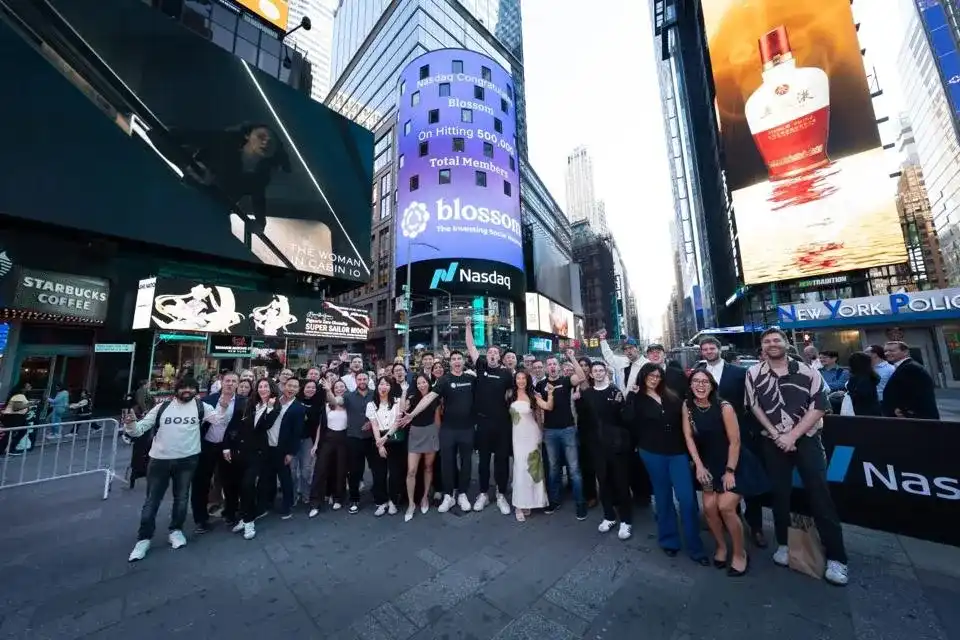
Blossom Social Team Taking a Group Photo with Community Members in Front of the Nasdaq Building
Blossom's CEO Maxwell Nicholson has a deeper understanding of "friction" than most.
When building a social platform, forcing users to link a brokerage account from the outset often creates a significant hurdle at the beginning of the user journey. While most consumer products choose to remove this obstacle, Blossom takes a different approach by making it a mandatory requirement.
At first glance, this decision may seem counterintuitive until you understand what Nicholson is trying to build.
Blossom launched in 2021 amidst the retail trading frenzy sparked by GameStop. At that time, discussions about stocks on Reddit were mostly anonymous—you couldn't see real positions, only various opinions. While StockTwits had a large user base, the shared content was mostly unverified.
Nicholson wanted to build a social network based on real investment behavior. Through APIs like SnapTrade, Blossom could link to brokerage accounts to verify user holdings. The technology was mature, but the question was: Would users be willing to endure this "friction"?
The result was: they were willing.
Today, Blossom has 500,000 registered users, with approximately 100,000 people having linked brokerage accounts, representing nearly $40 billion in assets. On the platform, about half of the holdings are in ETFs rather than individual stocks, with the most popular being the S&P 500 index ETF.
Requiring account linking shaped the platform's culture.
Nicholson observed that while StockTwits later added brokerage linking, it was optional. From a technical standpoint, anyone could integrate through Plaid or SnapTrade, but since linking was not part of the platform's core culture, users did not widely adopt it. In contrast, on Blossom, almost all active users share their real holdings and earn badges through verification. This "friction" filters out those willing to publicly disclose their investment portfolios, thereby creating a unique community atmosphere.
This culture eventually evolved into a business model.
In 2023, Blossom achieved a revenue of $300,000, reached $1.1 million in 2024, and is projected to surpass $4 million this year, with 75% of it coming from partnerships with ETF issuers.
State Street pays Blossom to enhance the awareness of SPY among retail investors, steering them away from defaulting to Vanguard's VOO. VanEck promotes thematic ETFs, Global X advertises its specialty funds. Currently, around 25 issuers are collaborating with Blossom because this platform can precisely target retail investors who are actively selecting funds.
This model is effective because Blossom's users are not day trading but rather building investment portfolios for the next few decades. When they link their accounts and discuss holdings, they not only create content for other users but also generate data on actual retail investor behavior.
Nicholson introduced Blossom's quarterly ETF retail flow report. These data demonstrate how users actually deploy funds, as opposed to their claimed behaviors in surveys. Since the data is validated through brokerage accounts, it is highly reliable and therefore holds commercial value. ETF issuers are willing to pay for this data to understand if their products are genuinely attracting retail investors.
This $4 billion in linked assets represents real funds, making genuine asset allocation decisions based on discussions on the social platform.
For ETF issuers, this is not just a content platform but a new layer of financial infrastructure.
Retail Investors Rule the World, but Which Type of Retail Investor?
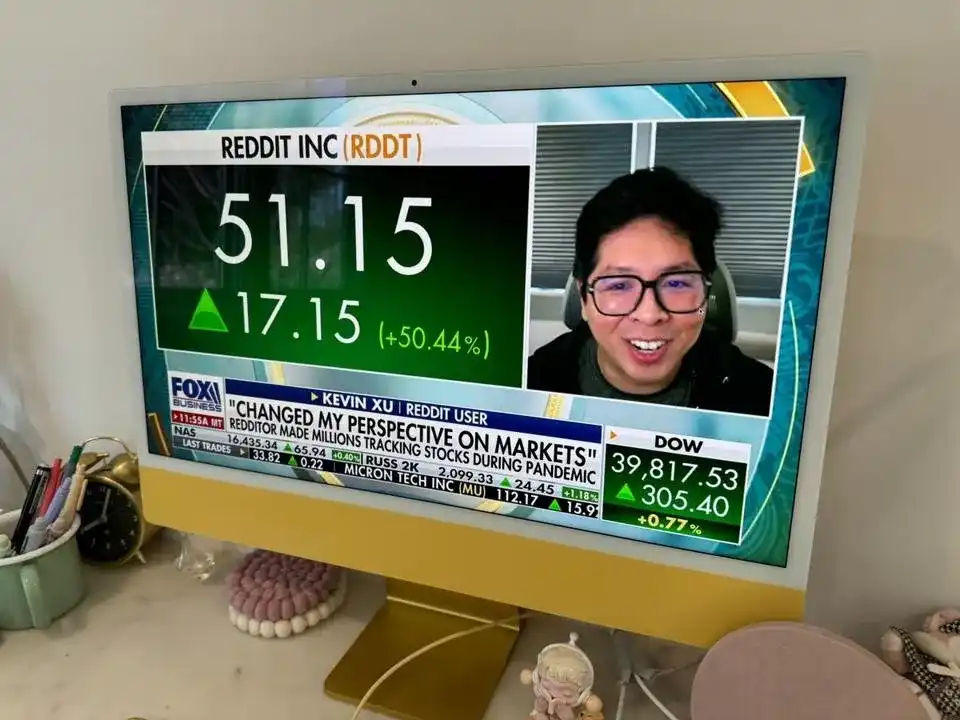
Kevin Xu, a well-known investor on Reddit, is the founder of AfterHour and Alpha Ai
The explosion of social trading has revealed a fact: retail investors are not a homogeneous group. The platforms that have truly emerged in this race serve completely different user groups—their risk preferences, investment horizons, and motivations are all different.
AfterHour is aimed at the WallStreetBets community. Founder Kevin Xu, during the meme stock craze, openly shared every trade on WallStreetBets under the alias "Sir Jack," turning $35,000 into $8 million. He created AfterHour to serve this type of user. The platform allows users to share holdings anonymously but requires verification through a linked brokerage account. Users share specific amounts, not percentages. The stock chatroom atmosphere is more like a trading-oriented Twitch stream.
In June 2024, AfterHour secured a $4.5 million investment from Founders Fund and General Catalyst. The platform is extremely popular, with reportedly 70% of users opening the app every day. They are not passive investors who check a report once a quarter, but rather view the market as entertainment and actively engage with the community. The platform has sent nearly 6 million trade signals to users, with verified holdings exceeding $500 million.
Fomo, on the other hand, targets the "Degens" of the crypto world. This group seeks to trade any token on any blockchain. Fomo's founding team compiled a list of 200 ideal angel investors and leveraged their networks for introductions, ultimately securing 140 of them, including Polygon Labs CEO Marc Boiron, Solana co-founder Raj Gokal, and former Coinbase CTO Balaji Srinivasan.
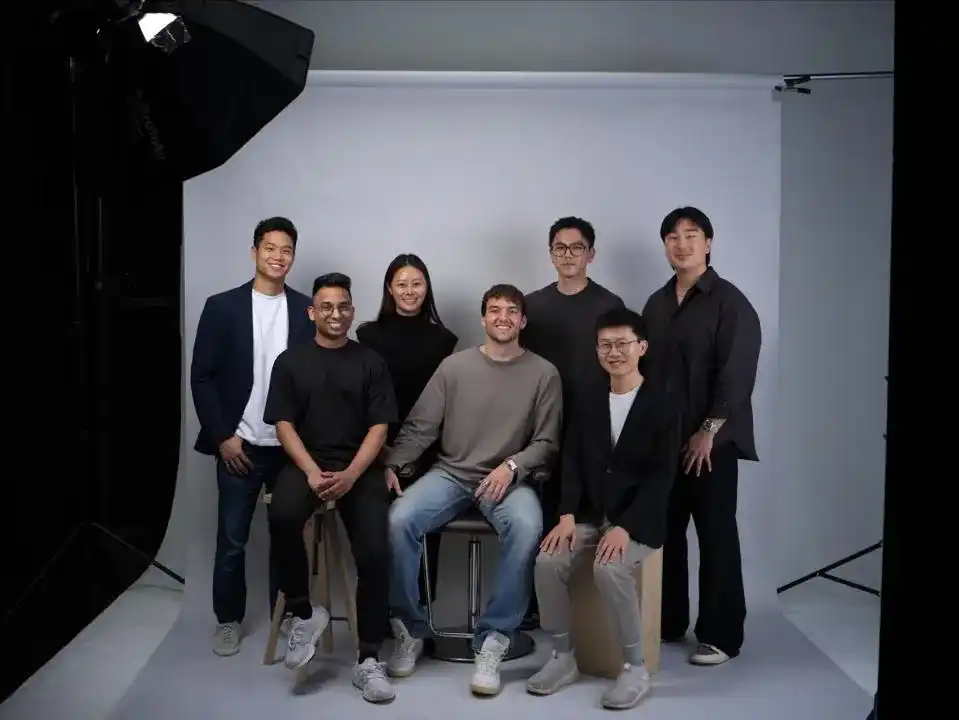
The team behind Fomo, who recently received investment from Benchmark
The opportunity for Benchmark to invest in Fomo arose when three different individuals recommended Fomo's co-founders Paul Erlanger and Se Yong Park to partner Chetan Puttagunta. They had previously worked together at dYdX and shared the vision for Fomo: to create a super app that allows users to trade all crypto assets on any blockchain, with embedded social features to track friends and KOLs' trades in real time.
Fomo targets those who want to trade anytime, anywhere, from Bitcoin to obscure meme coins. The app charges a 0.5% transaction fee but absorbs on-chain gas fees, making it attractive to users focused on mainstream coins. For example, you can trade a Solana token at 3 am on a Sunday without worrying about network fees—the "friction" of traditional markets is particularly evident here.
By June 2025, Fomo integrated Apple Pay, allowing users to start trading immediately upon download. The platform's revenue quickly grew to $150,000 per week, with a daily trading volume of $3 million. By the time the financing was completed in September, the daily trading volume had reached $20-40 million, daily revenue hit $150,000, and user base surpassed 120,000.
This wave of growth has validated Puttagunta's judgment: social trading is no longer just a feature but a new layer of infrastructure. These platforms are building a long-term architecture for retail investor discovery, discussion, and execution of trades.
On the other hand, Blossom aims to attract long-term investors. Users on the platform discuss whether their portfolios should lean towards small-cap value stocks or the international market. Around 37% of the holdings are in the S&P 500 ETF, with the remaining 63% comprising dividend funds, covered call ETFs, crypto ETFs, fixed income products, and sector-specific ETFs. Users generally follow a "core-satellite" strategy, with a broad market base and specific thematic allocations.
These platforms cater to vastly different user bases.
Users discussing the SCHD dividend yield on Blossom are clearly not the same as those on Fomo trading Trump meme coins in the middle of the night. They are both retail investors, but they have different goals, risk appetites, and market attitudes.
The success of these platforms lies in accurately targeting their audiences.
Blossom enforces brokerage account linking, filtering for investors willing to share genuine holdings; AfterHour's anonymous transparency mechanism attracts those seeking to build credibility but unwilling to reveal their identities; Fomo's multi-linking caters to crypto natives accustomed to trading around the clock. In theory, these platforms could serve all retail investors, but they choose not to do so.
Logic of Financial Super Apps

On July 29, 2021, online brokerage Robinhood went public on the New York Stock Exchange.
That day, founders Baiju Bhatt and Vlad Tenev appeared on Wall Street, and Robinhood's stock price fell about 5% on its Nasdaq debut.
By September 2025, Robinhood announced the launch of "Robinhood Social," validating the trend of social trading from an unexpected direction. When a platform that once commodified trading commissions started incorporating social features, it signaled a fundamental shift in the entire brokerage industry's underlying logic.
Robinhood CEO Vlad Tenev stated at an offline event in Las Vegas, "Robinhood is no longer just a trading platform but your financial super app."
This release includes AI-driven custom indicators, futures trading, shorting mechanism, overnight index options, and support for multiple independent brokerage accounts. However, the most core update is Robinhood Social—an in-app trading community that supports real trade validation and verified profiles.
These features almost replicate the core experience of standalone social trading platforms: users can see real-time entry and exit points, discuss strategies, follow other traders, and execute trades directly within the feed. They can view one year of P&L, daily returns, and trade history. Each profile goes through KYC verification to ensure authenticity. Users can even follow politicians, insiders, and hedge funds based on publicly disclosed trading records, even if these individuals are not active on Robinhood.
Robinhood has made social features "invite-only," indicating their awareness of the importance of this track. With 24 million funded accounts, the platform has strong distribution capabilities. It once led zero-commission trading and staunchly defended the "payment for order flow" profit model. Now, it is venturing into the social layer as brokerages themselves face the risk of commoditization.
Zero-commission has become an industry standard, mobile experience is a basic requirement, and fractional share trading is now commonplace. Robinhood's differentiating advantage in 2015 can now be found on Charles Schwab, Fidelity, and TD Ameritrade. The next round of competition will focus on "community" and "conversation."
Robinhood's move proves that social trading is not an add-on feature but foundational infrastructure. When the largest retail brokerage by user count introduces social features, it indicates that this track has been validated by standalone platforms and has proven its value.
The timing of this move also reveals a defensive posture. Blossom, AfterHour, and Fomo are capturing the minds of different types of retail investors. They do not need to be brokerages themselves but connect to existing brokerages via API. However, they control the "discovery" and "discussion" layer—the place where investors decide what to buy. If trading happens on Robinhood while discussion takes place elsewhere, Robinhood might risk becoming just a "pipe."
The user stickiness brought by the social layer is irreplaceable by the execution layer. If your friends are all trading on AfterHour, and the investors you follow on Blossom are not on Robinhood, then the migration involves not only assets but also community, discussion, and the context of decision-making. Robinhood is realizing this and starting to respond, but it is following, not leading, in this track.
Social Media is Becoming Market Infrastructure
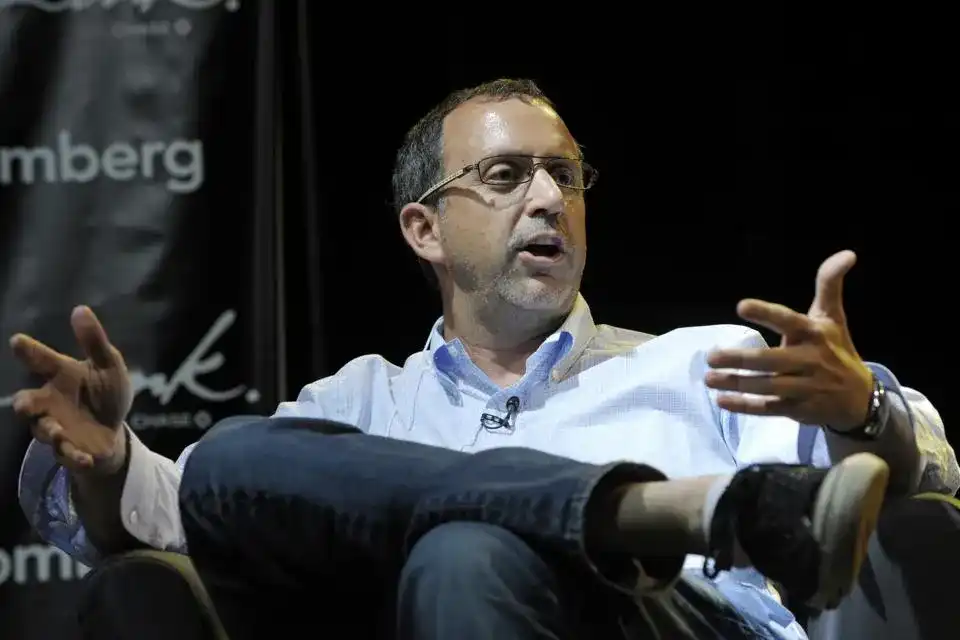
StockTwits CEO Howard Lindzon spoke at the Bloomberg Link Empowered Entrepreneur summit in New York City, USA on April 14, 2011 (Thursday).
The summit brought together the most innovative entrepreneurs to spend a day with other business founders, investors, and potential business partners, engaging in in-depth discussions on entrepreneurship, funding, and corporate growth.
Social trading platforms are integrating two previously separate functions in retail investing: financial media and market infrastructure, creating a unified user experience.
Imagine the workflow of a Wall Street professional. They spend $24,000 a year on a Bloomberg Terminal subscription. The value of the terminal lies not only in its data or trading capabilities, but in its integrated workflow: professionals can view the market, read news, analyze charts, chat with other traders, and execute trades all in one interface. Bloomberg's instant messaging system is still widely used today because it is embedded in the trading process rather than forcing users to switch between different platforms.
Social trading platforms are building a similar experience for retail investors. StockTwits has 6 million users discussing markets in real-time. Founder Howard Lindzon (also the creator of the "Degen Economy Index") launched this platform as early as 2008, long before the retail trading frenzy. This community focuses on "what is happening now" rather than what CNBC reported three hours ago. During the GameStop surge in 2021, discussions took place on Twitter, StockTwits, and Reddit, rather than traditional financial media.
Blossom combines this concept with real holding data. Users link their accounts and discuss their actual positions, creating content that not only serves other users but also becomes a data source for the platform. ETF issuers are willing to pay for exposure because retail investors discover funds in the social information flow rather than through Morningstar ratings or financial advisor recommendations.
AfterHour's mechanism is as follows: when someone you follow makes a trade, the platform instantly sends a trade signal. The urgency brought by this immediacy is unparalleled by traditional media. When an investor you respect buys a stock, you can see it immediately rather than waiting to see the day's highlights on CNBC after the market closes.
Fomo, on the other hand, allows users to trade hundreds of different cryptocurrencies while seeing what assets others are holding. The social feed will display which tokens are gaining attention, sometimes even before mainstream crypto media coverage. The discovery process is community-driven, rather than determined by centralized editors deciding what is newsworthy.
This integration explains why traditional financial media struggles to attract young investors. CNBC still operates in a broadcast model: hosts explain, and viewers passively watch. The disconnect between media consumption and trade execution creates "friction." Young investors don't watch cable TV or wait for market summaries. They consume content in real-time on their phones and make decisions.
Social trading platforms address this issue by making content creation participatory. Users create content through trades and discussions, where the platform serves as both a media company and a community generating user-driven signals. This structure reflects the media consumption habits of the younger generation—they don't differentiate between "creating" and "consuming"; social trading platforms are a manifestation of this behavior in the financial market.
These platforms' business models also reflect the fusion of media and infrastructure. Blossom's revenue comes from ETF issuers purchasing exposure spots, similar to media companies selling advertisements. However, these ads are combined with real holding data, enabling issuers to assess if their product is genuinely engaging users and pay based on actual performance. AfterHour and Fomo, on the other hand, profit from trading fees, akin to brokerage execution revenue, but trades take place in a social context driven by the community's discovery.
These platforms do not seek to replace CNBC or Bloomberg but to replace the "disconnect between media consumption and trade execution" experience. The real innovation lies in integration: when discovery, discussion, and execution are completed within one workflow without switching platforms, the platform itself ceases to be just an app but becomes a new layer of financial infrastructure.
Trade Data, Becoming the Product Itself

Blossom Social once held a 1,400-person offline event at the Toronto Rogers Centre—coincidentally where the Blue Jays lost in Game 7 of the World Series.
Social trading platforms are generating an unprecedented dataset that is the product itself, independent of the social functionalities producing them.
Blossom has currently connected around $4 billion in assets, revealing genuine retail investor behavior, as opposed to their stated preferences. Traditional market research relies on surveys asking investors what assets they hold or plan to buy, but such surveys are often influenced by selection bias, memory errors, and idealized responses. Blossom, however, through brokerage account connections, directly verifies users' actual holdings.
Each quarter, Blossom releases a report on the retail flow of funds to ETFs, revealing which categories are attracting funds and which are experiencing outflows. This data is important because retail trading now holds a significant market share. In 2021, the activity of retail traders forced institutional investors to adjust their strategies, and this level of activity did not disappear with the GameStop saga.
ETF issuers are willing to pay for this data because it can reveal whether their products are truly resonating with retail investors. State Street and Vanguard compete for retail funds in the S&P 500 ETF, while VanEck and Global X vie for traffic in thematic ETFs. They need to know if retail investors are genuinely buying into their funds, not just hearing about them.
Blossom can provide answers. When 37% of connected assets are concentrated in the S&P 500 ETF, it indicates that this category has broad appeal; when covered call ETFs experience strong inflows, it shows a genuine market demand for income-generating products; when crypto ETFs are widely adopted, it suggests that retail interest extends beyond speculative trading on exchanges. This data comes from actual holdings, not surveys or focus groups.
AfterHour's holding validation mechanism reveals the stocks truly being traded by the WallStreetBets community, not just the popular stocks being discussed. Many stocks are highly talked about on social media but have low actual trading volume. AfterHour can differentiate between "noise" and "signal" through users' verified real-time holdings. The $500 million in assets connected to the platform represent real funds that are making trading decisions based on community discussions.
Fomo's trading data, on the other hand, reveals which cryptocurrencies are truly being adopted by retail investors, not just hyped up. The platform promises to support trading of millions of tokens across all blockchains, most of which will ultimately fail. However, which tokens sustain trading volume over time and which are just momentarily popular is crucial for understanding retail investor behavior.
As retail trading's share in the market continues to rise, the value of this data also increases. Social trading platforms are collecting information that traditional data providers find challenging to obtain. Retail investors do not submit 13F filings, nor do they publicly report their holdings. Brokerage data is usually siloed, but social trading platforms break down traditional data silos by aggregating data across brokerages through user connections.
These platforms' business models are also founded on this: they do not profit from trading frequency but from information flow. Blossom does not require users to trade frequently; it only needs them to authentically share their holdings for the data to be valuable. This model differs from the logic of traditional brokerages based on commissions or payment for order flow, and the incentive mechanism is consequently altered.
The data product has also built a moat. Once ETF issuers start relying on Blossom's quarterly reports to formulate strategies, they become dependent on data; once AfterHour shows hedge funds retail investors' actual trading behavior, that information becomes part of their investment process. These platforms are not only the retail investor's infrastructure but are also becoming tools for institutions to understand retail investor behavior.
Trading Has Become a Consumer Behavior
Social trading infrastructure is becoming a permanent fixture in the market. While each platform targets different user bases, they share the same underlying logic: real positions, real-time discussions, and a business model built on transparency rather than trading volume.
The technology underpinning this infrastructure is now irreversible. Brokerage account linking APIs already exist and will continue to be optimized. The ability to verify positions in real-time is accessible to any platform. The question is not whether social trading infrastructure exists but rather which platforms can capture which user bases.
The retail trading frenzy sparked by GameStop has not subsided. Retail investors who opened accounts in 2021 did not close them after meme stocks fell out of favor. Data indicates that they are still actively participating in the market. These investors need infrastructure to support their investment process—a platform that seamlessly integrates discovery, discussion, and execution.
Traditional brokerages can add social features, as evidenced by Robinhood. However, platforms that start from a social perspective and then integrate trading functionality may have a structural advantage. Blossom, AfterHour, and Fomo do not need to become brokerages themselves; they connect to all brokerages via API, allowing users to trade on their familiar platforms while engaging in a social community.
The business models of these platforms also validate their sustainability. Blossom's revenue grew from $300,000 to $4 million within two years, indicating that ETF issuers are willing to pay for reaching retail investors; AfterHour's daily active user data shows that social trading can form user habits; and Fomo's trading volume growth demonstrates that crypto natives crave a social trading experience. These are not products of the moment but infrastructure that serves real needs.
The regulatory environment is also supporting rather than hindering this architecture. Social trading platforms do not hold assets or execute trades; they provide a community and discussions around real positions. This structure avoids most of the regulatory complexities faced by brokerages. The platforms collaborate with compliant brokerages rather than compete with them.
The future development path will involve further segmentation. More platforms will emerge, serving specific retail investor groups: some focus on options trading, some cater to dividend income investors, some target emerging markets. They will build communities around real data and integrate trade execution without needing to become brokerages.
The ultimate winner will be those platforms that truly understand their user base, rather than trying to serve everyone. Retail investors are not a monolithic group, and a successful social trading platform reflects this reality in its product design, business model, and community culture. Benchmark's investment in Fomo validates this logic: they invested not in a platform trying to serve all retail investors, but in one focused on serving crypto natives, supporting them in trading millions of tokens within the community.
Social trading infrastructure doesn't necessarily have to replace brokerages; instead, it adds a layer on top of brokerages—within this layer, community, discussion, and discovery are taking place. This layer is becoming as important as the brokerages themselves. Platforms building this layer are creating a lasting market structure for retail investors.
You may also like

Blockchains Quietly Prepare for Quantum Threat as Bitcoin Debates Timeline
Key Takeaways: Several blockchains, including Ethereum, Solana, and Aptos, are actively preparing for the potential threat posed by…

Three Signs that Bitcoin is Discovering its Market Bottom
Key Takeaways: Indicators suggest the selling pressure on Bitcoin is diminishing, hinting at a potential bottom. With improving…

Trump’s World Liberty Financial Token Ends 2025 Significantly Down
Key Takeaways World Liberty Financial, led by the Trump family, witnessed its token value drop by over 40%…

Former SEC Counsel Explains What It Takes to Make RWAs Compliant
Key Takeaways The SEC’s shifting approach is aiding the growth of Real-World Assets (RWAs), but jurisdictional and yield…

Kraken IPO and M&A Deals to Reignite Crypto’s ‘Mid-Stage’ Cycle
Key Takeaways: Kraken’s upcoming IPO may draw significant interest and capital from traditional finance (TradFi) investors, boosting the…

Extended Crypto ETF Outflows Indicate Institutional Pullback: Glassnode
Key Takeaways: Recent outflows from Bitcoin and Ether ETFs suggest a withdrawal of institutional interest. Institutional disengagement has…

HashKey Secures $250M for New Crypto Fund Amid Strong Institutional Interest
Key Takeaways HashKey Capital successfully secured $250 million for the initial close of its fourth crypto fund, showcasing…

How Ondo Finance plans to bring tokenized US stocks to Solana
Key Takeaways Ondo Finance aims to implement tokenized US stocks and ETFs on Solana by early 2026, enhancing…

JPMorgan Explores Cryptocurrency Trading for Institutional Clients
Key Takeaways JPMorgan Chase is considering introducing cryptocurrency trading services to its institutional clientele, marking a notable shift…
El Salvador’s Bitcoin Dreams Faced Reality in 2025
Key Takeaways El Salvador’s ambitious Bitcoin strategy, introduced in 2021, faced significant challenges and revisions by 2025, particularly…

Price Predictions for 12/22: SPX, DXY, BTC, ETH, BNB, XRP, SOL, DOGE, ADA, BCH
Key Takeaways: Bitcoin’s recovery efforts are met with strong resistance, indicating potential bearish trends at higher levels. Altcoins…

Bitcoin Perpetual Open Interest Surges as Traders Look Forward to Year-End Rally
Key Takeaways Bitcoin perpetual open interest has risen to 310,000 BTC, reflecting a bullish sentiment among traders as…
Web3 and DApps in 2026: A Utility-Driven Year for Crypto
Key Takeaways The transition to utility in the crypto sector has set a new path for 2026, emphasizing…

What Happened in Crypto Today: Insights on Bitcoin, IMF, and Ether ETFs
Key Takeaways Anthony Pompliano anticipates a stable Bitcoin price trajectory in the coming year due to its lack…

December 24th Market Key Intelligence, How Much Did You Miss?

Venture Capital Post-Mortem 2025: Hashrate is King, Narrative is Dead
Are Those High-Raised 2021 Projects Still Alive?

Aave Community Governance Drama Escalates, What's the Overseas Crypto Community Talking About Today?
Blockchains Quietly Prepare for Quantum Threat as Bitcoin Debates Timeline
Key Takeaways: Several blockchains, including Ethereum, Solana, and Aptos, are actively preparing for the potential threat posed by…
Three Signs that Bitcoin is Discovering its Market Bottom
Key Takeaways: Indicators suggest the selling pressure on Bitcoin is diminishing, hinting at a potential bottom. With improving…
Trump’s World Liberty Financial Token Ends 2025 Significantly Down
Key Takeaways World Liberty Financial, led by the Trump family, witnessed its token value drop by over 40%…
Former SEC Counsel Explains What It Takes to Make RWAs Compliant
Key Takeaways The SEC’s shifting approach is aiding the growth of Real-World Assets (RWAs), but jurisdictional and yield…
Kraken IPO and M&A Deals to Reignite Crypto’s ‘Mid-Stage’ Cycle
Key Takeaways: Kraken’s upcoming IPO may draw significant interest and capital from traditional finance (TradFi) investors, boosting the…
Extended Crypto ETF Outflows Indicate Institutional Pullback: Glassnode
Key Takeaways: Recent outflows from Bitcoin and Ether ETFs suggest a withdrawal of institutional interest. Institutional disengagement has…
Popular coins
Latest Crypto News


Customer Support:@weikecs
Business Cooperation:@weikecs
Quant Trading & MM:bd@weex.com
VIP Services:support@weex.com
 App
App