
- Buy Crypto
- Markets
- Futures
- Spot
- Copy Trade
 WE-Launch
The Fintech 4.0 era is approaching, and a deep understanding of users will become a core competitive advantage

Original Article Title: Specialized Stablecoin Fintechs
Original Article Authors: Spencer Applebaum & Eli Qian, Multicoin Capital
Translation: Peggy, BlockBeats
Editor's Note: Over the past two decades, financial technology innovation has largely stayed at the distribution layer, improving user experience without changing the underlying logic of fund movement. This has led to industry homogenization, high costs, and thin profits. The emergence of stablecoins is reshaping this landscape. Through open, programmable on-chain infrastructure, the costs of custody, settlement, credit, and compliance have significantly decreased, allowing fintech companies to build products directly on-chain without relying on banks and card networks.
As infrastructure becomes more affordable, specialization becomes possible. The future of fintech will no longer pursue scale but will instead deeply serve specific groups, creating products that truly meet their needs. The core of Fintech 4.0's competition will shift from "who can reach customers" to "who truly understands customers."
The following is the original article:
Over the past two decades, fintech has changed how people access financial products but has not changed how funds actually flow. Innovation has mainly focused on cleaner interfaces, smoother account opening processes, and more efficient distribution, while the core financial infrastructure has remained largely unchanged. For most of this time, the tech stack has been repackaged rather than rebuilt.
Overall, the development of fintech can be divided into four stages:
Fintech 1.0: Digital Distribution (2000–2010)
The first wave of fintech made financial services more accessible but did not significantly improve efficiency. Companies like PayPal, E*TRADE, and Mint digitized traditional systems (ACH, SWIFT, and card networks established decades ago) through internet interfaces, packaging them into existing products.
Settlements were still slow, compliance still relied on manual processes, and payments were still completed on fixed schedules. This era brought finance online but did not change how funds flowed in a fundamentally new way. What changed was who could use financial products, not how these products operated.
Fintech 2.0: Neo-Banks Era (2010–2020)
The next breakthrough came from smartphones and social distribution. Chime offered early wage access services for hourly workers; SoFi focused on refinancing student loans for upwardly mobile graduates; Revolut and Nubank reached underserved global consumers with a user-friendly experience.
Every company tells a more vivid story aimed at a specific group, but fundamentally sells the same product: checking accounts and debit cards running on the old rails. They rely on sponsor banks, card networks, and ACH, just like their predecessors.
These companies succeed not because they built a new payment rail, but because they better reach customers. Branding, onboarding experience, and customer acquisition capability are their strengths. The fintech companies of this era have become efficient distribution layers stacked on top of banks.
Fintech 3.0: Embedded Finance (2020–2024)
Around 2020, Embedded Finance emerged. APIs allow nearly any software company to offer financial products. Marqeta enables businesses to issue cards through an API; Synapse, Unit, and Treasury Prime offer Banking as a Service (BaaS). Soon, almost every app can provide payment, card, or lending services.
But beneath this abstraction layer, the core remains unchanged. BaaS providers still rely on the same sponsor banks, compliance frameworks, and payment rails. The abstraction layer has shifted from banks to APIs, but economic and regulatory control still flow back to traditional systems.
Commoditization of Fintech
By the early 2020s, the cracks in this model were evident. Almost all major neobanks relied on the same small group of sponsor banks and BaaS providers.
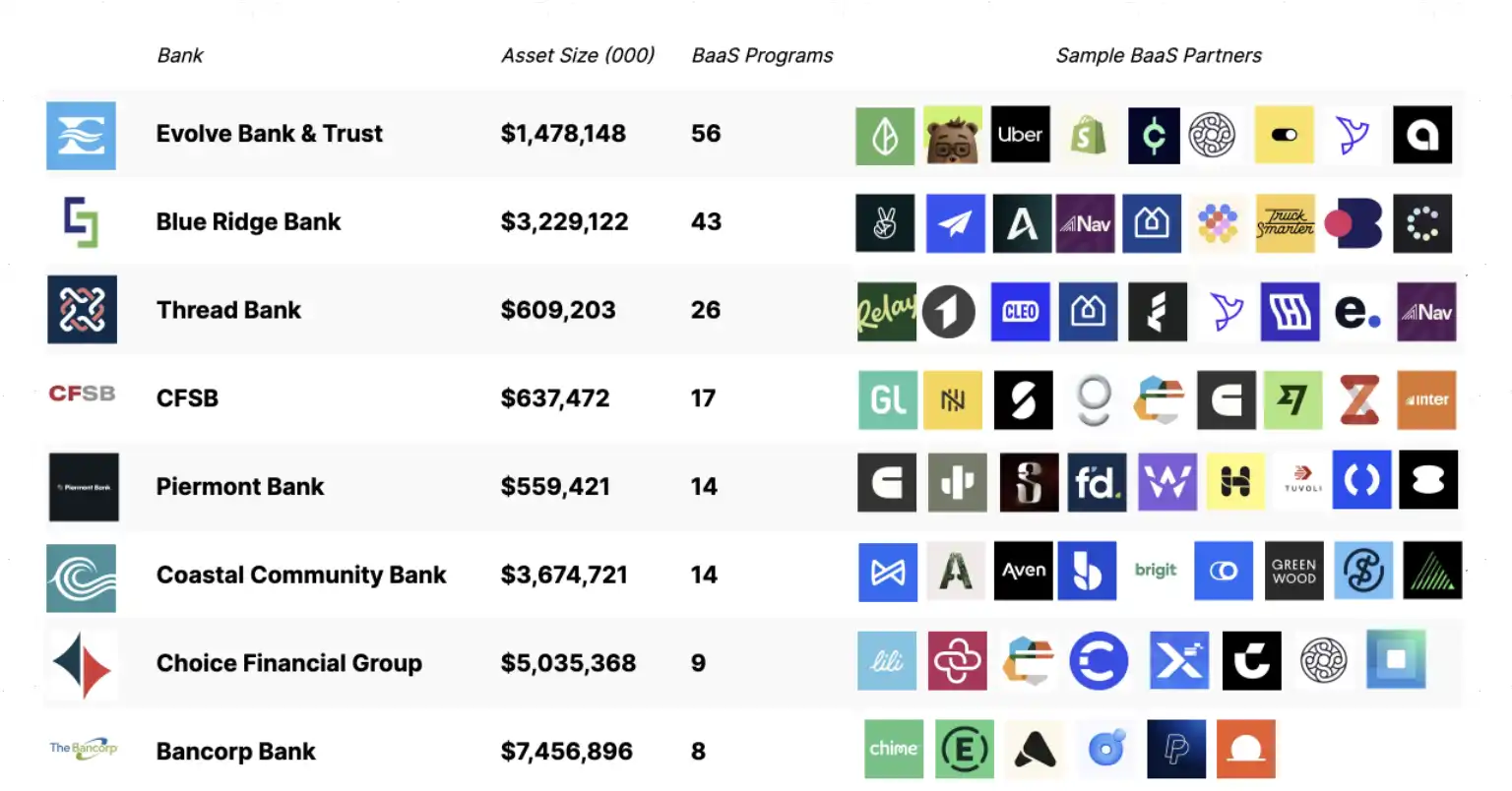
As a result, customer acquisition costs soared, companies engaged in fierce competition through performance marketing, profit margins were squeezed, fraud and compliance costs sharply increased, and infrastructure became nearly indistinguishable. Competition evolved into a marketing arms race. Many fintech companies tried to differentiate themselves through card colors, sign-up bonuses, and cashback gimmicks.
Meanwhile, risk and value capture were concentrated at the banking level. Giant institutions like JPMorgan Chase and Bank of America, overseen by the OCC, retained core privileges: accepting deposits, issuing loans, and accessing federal payment rails (such as ACH and Fedwire). Fintech companies like Chime, Revolut, and Affirm lack these privileges and must rely on licensed banks to provide services. Banks earn from spreads and platform fees; fintech companies rely on interchange fees for profits.
With the surge of FinTech projects, regulatory agencies are increasingly scrutinizing the sponsoring banks behind them. Regulatory orders and higher supervisory requirements are forcing banks to allocate significant funds towards compliance, risk management, and oversight of third-party projects. For example, Cross River Bank signed a regulatory order with the Federal Deposit Insurance Corporation (FDIC), Green Dot Bank faced enforcement action from the Federal Reserve, and the Federal Reserve issued a cease-and-desist order to Evolve.
Banks' response has been to tighten the account opening process, limit the number of supported projects, and slow down product iteration. The once-permitted mode of experimentation now increasingly requires scale to demonstrate the reasonableness of compliance burdens. FinTech has become slower, more expensive, and tends to develop broadly applicable products rather than specialized ones.
In our view, the three main reasons why innovation has remained at the top layer of the technology stack for the past 20 years are:
The funds transfer infrastructure is monopolized and closed. Visa, Mastercard, and the Federal Reserve's ACH network leave little room for competition.
Startups require significant capital to build products core to finance. Launching a regulated banking app requires millions of dollars for compliance, fraud prevention, fund management, etc.
Regulatory restrictions limit direct participation. Only licensed entities can custody funds or transfer funds through the core rails.
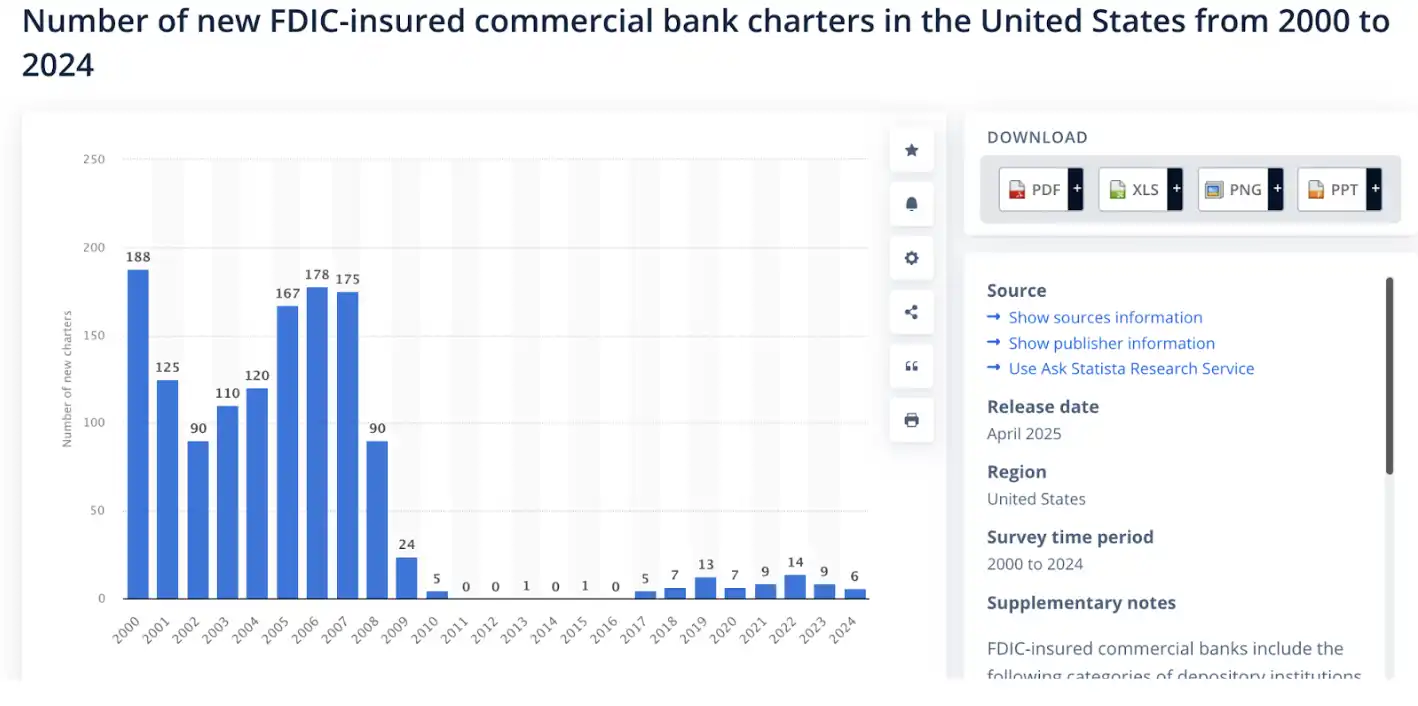
Under these limitations, building products seemed more feasible than challenging the payment rails themselves. The result is that most FinTech companies are merely a sleek packaging of banking APIs. Despite two decades of innovation, this industry has hardly created genuinely new financial primitives. Viable alternatives have been almost absent.
Cryptocurrency, on the other hand, has taken a completely opposite path. Builders initially focused on foundational primitives. Automated market makers, bonding curves, perpetual contracts, liquidity pools, and on-chain credit emerged from the ground up. Financial logic became programmable for the first time.
Fintech 4.0: Stablecoins and Permissionless Finance
While the first three FinTech eras brought a lot of innovation, the underlying pipeline remained largely unchanged. Whether the product is delivered through a bank, neobank, or embedded API, funds still flow on closed, permissioned rails controlled by intermediaries.
Stablecoins have disrupted this pattern. The stablecoin-native systems no longer overlay software on top of banks but directly replace critical banking functions. Builders interact with open, programmable networks. Payments settle on-chain. Custody, lending, and compliance shift from contractual relationships to software logic.
Banking as a Service (BaaS) has reduced friction, but has not changed the economic structure. FinTech companies still need to pay regulatory fees to sponsor banks, settlement fees to card networks, and access fees to intermediaries. The infrastructure remains expensive and limited.
Stablecoins have completely eliminated the need for rented access. Builders no longer make calls to bank APIs, but instead write directly to an open network. Settlements are done directly on-chain. Fees belong to the protocol, not intermediaries. We believe the cost base will significantly decrease: from the millions required to build through a bank, or the hundreds of thousands required through BaaS, to just thousands of dollars to use smart contracts on a permissionless chain.
This shift has already manifested at scale. Stablecoins have grown from nearly zero to around a $300 billion market value in less than a decade, and in terms of processing real economic transaction volume, they have surpassed traditional payment networks (such as PayPal and Visa), even when excluding exchange-to-exchange transfers and MEV. A non-bank, non-card rail has for the first time truly operated globally.

To understand the practical significance of this shift, one must first look at how FinTech is currently built. A typical FinTech company relies on a vast vendor tech stack:
- User Interface / User Experience (UI/UX)
- Banking and Custody Layer: Evolve, Cross River, Synapse, Treasury Prime
- Payment Rails: ACH, Wire, SWIFT, Visa, Mastercard
- Identity and Compliance: Ally, Persona, Sardine
- Fraud Prevention: SentiLink, Socure, Feedzai
- Credit / Lending Infrastructure: Plaid, Argyle, Pinwheel
- Risk and Fund Management Infrastructure: Alloy, Unit21
- Capital Markets: Prime Trust, DriveWealth
- Data Aggregation: Plaid, MX
- Compliance / Reporting: FinCEN, OFAC Checks
Launching a FinTech company on this tech stack means managing contracts, audits, incentives, and failure modes across dozens of partners. Each layer adds costs and delays, with many teams spending nearly as much time coordinating infrastructure as actually building the product.
The native stablecoin system compresses this complexity entirely. What used to require six or seven suppliers to complete can now be converged into a small number of on-chain primitives.
In the world of stablecoins and permissionless finance: banks and custody are replaced by Altitude; payment rails are replaced by stablecoins; identity and compliance are still necessary, but we believe it can be achieved on-chain and kept confidential and secure through technologies like zkMe; credit and lending infrastructure will be restructured and moved to the chain; capital market companies will lose meaning once all assets are tokenized; data aggregation is replaced by on-chain data and selective transparency, utilizing technologies like Fully Homomorphic Encryption (FHE); compliance and OFAC checks are done at the wallet layer (for example, if Alice's wallet is on a sanctions list, she will not be able to interact with the protocol)
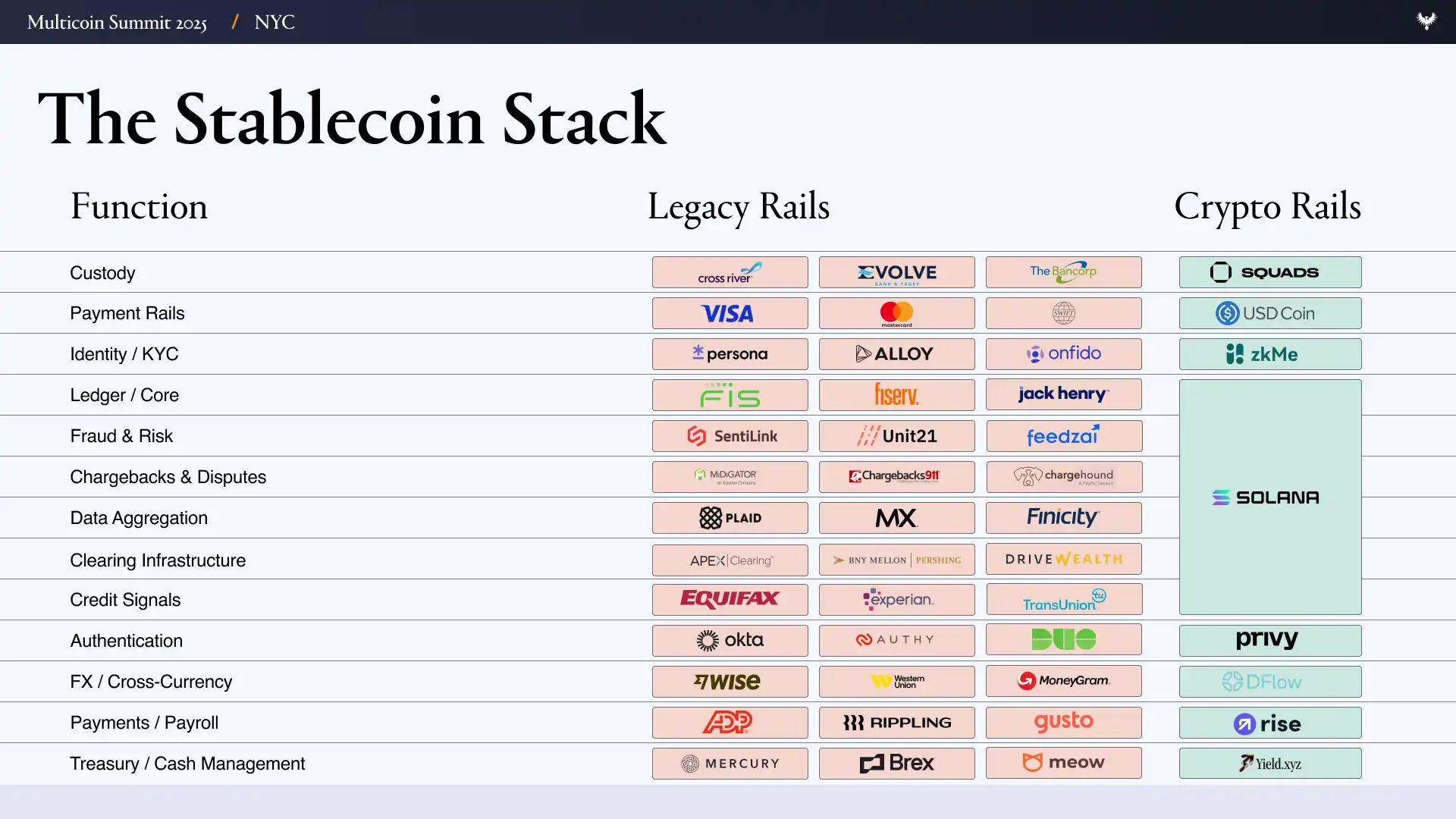
This is the true difference of Fintech 4.0: the underlying pipes of finance are finally changing. People are no longer just building an app that "quietly asks the bank for permission" in the background, but instead replacing large chunks of bank functionality with stablecoins on an open rail. Builders are no longer tenants; they are starting to own "land."
Opportunities for "Specialized Stablecoin Fintech"
The first-order effect of this shift is straightforward: fintech companies can abound. When custody, lending, and fund transfers are almost free and instant, starting a fintech company begins to look like launching a SaaS product. In the stablecoin-native world, there are no sponsor bank integrations, card issuance intermediaries, multi-day settlement windows, or repetitive KYC audits slowing things down.
We believe that launching a "finance-first" product will also see its fixed costs plummet from millions of dollars to thousands. Once infrastructure, customer acquisition costs (CAC), and compliance hurdles vanish, startups will be able to profitably serve smaller, more specific social groups through what we call a "specialized stablecoin fintechs" model.
There is a clear historical analogy here. The previous generation of fintech began by serving specific customer segments: SoFi for student loan refinancing, Chime for early wage access, Greenlight for teen debit cards, Brex for entrepreneurs unable to obtain traditional business credit. However, this specialization did not become a sustainable operating model. Transaction interchange capped revenue, compliance costs grew with scale, and reliance on sponsor banks forced teams to move out of their niches. To survive, they were pushed to expand horizontally, adding products that were not strong user demands but rather to make the infrastructure's scale viable.
Due to the significantly reduced startup costs brought by the crypto space and permissionless financial APIs, a new wave of stablecoin-native banks will emerge—each focusing on specific demographics, akin to early fintech innovators. With markedly lower operational costs, these novel banks can concentrate on narrower, more specialized markets and maintain a niche: such as adhering to Islamic financial principles (Sharia-compliant), catering to the lifestyle of crypto "power users," or serving athletes with unique income and spending patterns.
The second-order effects are even more pronounced: specialization improves the unit economics model. Customer Acquisition Cost (CAC) decreases, cross-selling becomes easier, and Customer Lifetime Value (LTV) increases. Fintech specialization allows products to be precisely aligned with marketing to efficiently convert niche audiences and leverage stronger word-of-mouth to reach specific demographics. These enterprises, by operating with lower overheads, more clearly achieve the path of "more revenue per customer" compared to the previous generation of fintech.
As anyone can launch a fintech company within weeks, the focus of the issue will shift from "who can reach customers?" to "who truly understands them?"
Exploring the Design Space of Specialized Fintech
The most attractive opportunities often arise where traditional rails fall short.
Take adult creators and performers, for example: they generate billions of dollars in revenue annually but are often excluded by banks and card networks due to reputational and chargeback risks. Funds are delayed for days, temporarily withheld due to "compliance reviews," and require payment through high-risk gateways (such as Epoch, CCBill, etc.) with fees of 10–20%. We believe that stablecoin-based payments can offer instant, irreversible settlement and programmable compliance, allowing practitioners to self-custody earnings, automatically route a portion to tax or savings wallets, and receive global payments without relying on high-risk intermediaries.
Now consider professional athletes, especially individual sports players like golfers and tennis players, who face unique cash flow and risk structures. Their income is concentrated in a short career window, often requiring distribution among agents, coaches, and teams; they must pay taxes across multiple states and countries, and injuries may abruptly halt income. A stablecoin-native fintech solution can help tokenize their future income, facilitate team payments through multi-sig wallets, and automatically withhold taxes based on jurisdiction.
Luxury goods and watch dealers represent another market underserved by traditional financial infrastructure. These businesses often conduct high-value cross-border transactions using wire transfers or high-risk payment processors for five- to six-figure deals, awaiting settlement for days. Working capital is often tied up in inventory kept in safes or showcases rather than bank accounts, making short-term financing both expensive and hard to come by. We believe that stablecoin-native fintech can directly address these constraints: instant settlement of large transactions, credit lines collateralized by tokenized inventory, and programmable custody embedded in smart contracts.
When you see enough use cases, you'll notice a recurring constraint: banks are not adept at serving those with globalized, uneven, or unconventional cash flows. Yet these groups can be a lucrative market on the stablecoin track. We believe attractive examples of "specialized stablecoin fintech" theoretical paradigms include:
1. Professional Athletes: Income concentrated in the short term; frequent travel and relocation; may need to declare taxes in multiple locations; team payments involve coaches, agents, trainers, etc.; may wish to hedge against injury risks.
2. Adult Creators and Performers: Excluded by banks and card networks; audience spread globally.
3. Unicorn Company Employees: Cash-strapped, net worth heavily concentrated in illiquid equity; high tax burden on option exercise.
4. On-Chain Builders: Net worth concentrated in highly volatile tokens; challenges with fiat on/off ramps and tax handling.
5. Digital Nomads: No need for traditional passport bank relationships; automatic forex conversion; automated taxation based on location; frequent travel and migration.
6. Remittances for Inmates' Families/Friends: It is difficult and expensive to remit funds to them through traditional channels.
7. Sharia-Compliant Finance Followers: Avoidance of interest.
8. Gen Z: Low-trust bank services; investment through gamification; socially-oriented financial experiences.
9. Cross-Border Small and Medium Enterprises (SMEs): High forex costs; slow settlement; frozen working capital.
10. Crypto Heavy Gamblers (Degens): Payment and credit experiences around high-risk preferences (managing bills with a "gambling table" mentality).
11. Foreign Aid: Slow fund flows, multi-layered and opaque intermediaries; costs, corruption, and misalignment leading to significant "leakage."
12. Tandas / Rotating Savings Groups: Naturally cross-border for global families; collective savings to earn returns; potential to use on-chain records of accumulated income history for credit.
13. Luxury Goods/Watch Dealers: Working capital tied up in inventory; need for short-term loans; frequent high-value, cross-border transactions; often transact through chat apps like WhatsApp, Telegram, etc.
Summary
For much of the past two decades, fintech innovation has focused on the distribution layer rather than infrastructure. Companies compete on branding, account opening experiences, and fee-based customer acquisition, but funds themselves still flow along the same closed loops. While this has indeed expanded financial service accessibility, it has also led to product commoditization, rising costs, and inescapable thin margins.
Stablecoins are poised to reshape the economic logic of financial product construction. By transforming functions such as custody, settlement, credit, and compliance into open, programmable software, they have significantly reduced the fixed costs of launching and operating a fintech company. What once required reliance on the capabilities of sponsor banks, card networks, and a vast vendor stack can now be built directly on-chain, with management costs greatly reduced.
As infrastructure becomes cheaper, specialization becomes possible. Fintech companies no longer need millions of users to be profitable; instead, they can focus on those underserved niche groups that traditional products cannot efficiently serve. Communities such as athletes, adult creators, K-pop fans, or luxury watch dealers already share context, trust, and behavior patterns, making products easier to spread through organic adoption rather than paid marketing.
Equally important, these communities often have similar cash flow characteristics, risk profiles, and financial decision-making processes. This consistency allows products to be designed around how people actually earn, spend, and manage their money, rather than based on abstract demographic categories. Word-of-mouth spreads not just because users know each other, but because the product truly resonates with how that community operates.
If our vision becomes reality, this economic shift will be significant. As distribution becomes community-native, customer acquisition costs decrease; as intermediaries exit, profit margins increase. Markets that once seemed too small or uneconomical will become sustainable, profitable businesses.
In this world, the advantage of fintech will shift from "scale and marketing spend" to "true contextual understanding." The next generation of fintech won't win by trying to serve everyone but by winning through providing exceptional service to a particular group while building infrastructure that aligns with the actual flow of funds.
You may also like

Amplify ETFs for Stablecoins and Tokenization Begin Trading
Key Takeaways Amplify’s newly launched ETFs focus on tracking companies contributing to the development of stablecoins and tokenization…

Hong Kong Moves Forward with Licensing Regimes for Virtual Asset Dealers and Custodians
Key Takeaways Hong Kong’s FSTB and SFC are implementing new licensing requirements for virtual asset dealers and custodians…

Kalshi First Research Report: When Predicting CPI, Crowd Wisdom Beats Wall Street Analysts

Are Those High-Raised 2021 Projects Still Alive?

Understand Tokenization, Differentiating Between the DTCC Model and the Direct Ownership Model

Trapped Between the Government Iron Curtain and the Dark Web Abyss: The East African Mobile Payment Giant

Whale Effect? Stablecoins are Not Really the Enemy of Bank Deposits

Key Market Insights for December 18th, How Much Did You Miss Out On?

TradFi Titan EquiLend Invests in Digital Prime to Connect $40 Trillion Assets with Tokenized Markets
Key Takeaways EquiLend, a major player in securities finance, has made a strategic investment in Digital Prime Technologies…

Selling Assets While Snagging a Banking License: What's PayPal Up To?

Paradigm Bets on Brazil: The New Battlefield for Stablecoins Isn't in the US

Circle's Acquisition of Axelar Sparks Controversy: AXL Plunges 15% as Long as People Don't Want Coin
a16z: 17 Structural Changes Shaping the Crypto Industry

a16z Predicts by 2026, AI Will Restructure Industries, Applications, and Orgs (Part 2)

Bet on LUNA, $1.8 Billion on the Line in Do Kwon's High-Stakes Gamble

How to Use a Trading Bot to Earn Profits on Polymarket?

How is a WeChat Account Stolen and How to Prevent It?
EU Crypto Regulations and Global Concerns: IMF’s Stablecoin Warnings and Market Dynamics
Key Takeaways The European Union is intensifying its regulatory framework for cryptocurrencies, with discussions on expanding the role…
Amplify ETFs for Stablecoins and Tokenization Begin Trading
Key Takeaways Amplify’s newly launched ETFs focus on tracking companies contributing to the development of stablecoins and tokenization…
Hong Kong Moves Forward with Licensing Regimes for Virtual Asset Dealers and Custodians
Key Takeaways Hong Kong’s FSTB and SFC are implementing new licensing requirements for virtual asset dealers and custodians…
Kalshi First Research Report: When Predicting CPI, Crowd Wisdom Beats Wall Street Analysts
Are Those High-Raised 2021 Projects Still Alive?
Understand Tokenization, Differentiating Between the DTCC Model and the Direct Ownership Model
Trapped Between the Government Iron Curtain and the Dark Web Abyss: The East African Mobile Payment Giant
Popular coins
Latest Crypto News


Customer Support:@weikecs
Business Cooperation:@weikecs
Quant Trading & MM:bd@weex.com
VIP Services:support@weex.com
 App
App