
- Buy Crypto
- Markets
- Futures
- Spot
- Copy Trade
 WE-Launch
Balancer Hack Cascading Effect: Why Did XUSD Break the Buck?

Original Article Author: Omer Goldberg, Chaos Labs
Original Article Translation: DeepTech TechFlow
Summary
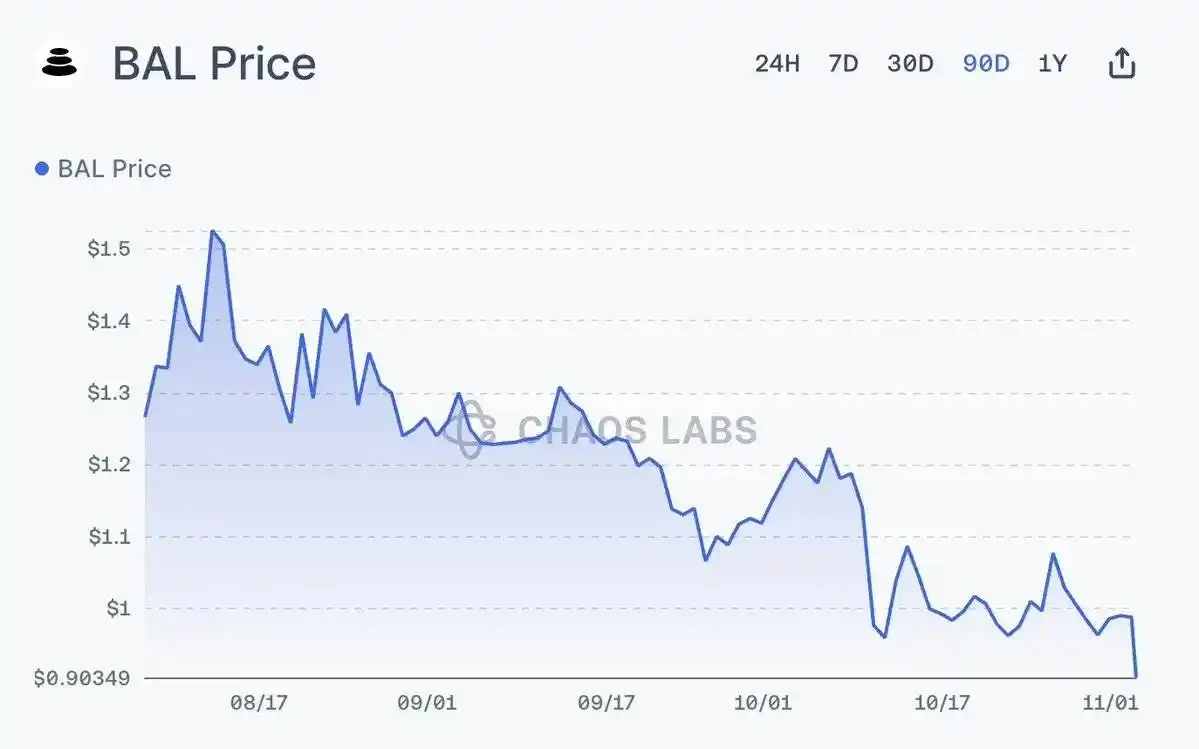
Several hours after the DeFi space experienced widespread uncertainty due to a vulnerability attack on the multi-chain platform @Balancer, @berachain performed an emergency hard fork, and @SonicLabs froze the attacker's wallet.
Subsequently, the price of Stream Finance's xUSD stablecoin significantly deviated from its target range, exhibiting a clear de-pegging event.
Long-Standing Issues Resurface
The long-standing controversies surrounding leverage, oracle reliance, and Proof of Reserves (PoR) transparency once again took center stage.
This is precisely the case of a typical "reflexivity stress event" outlined in our "DeFi's Black Box/Treasury" article last Friday.
What Happened? / Background
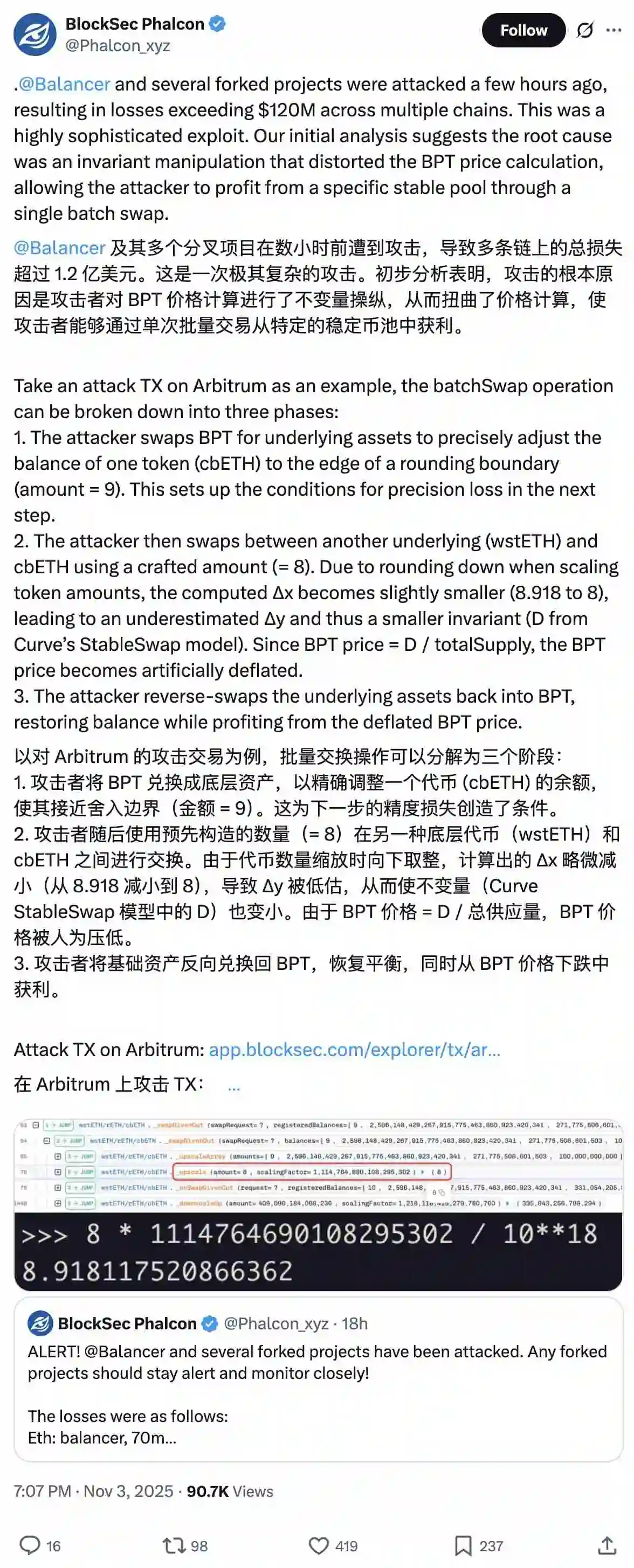
The Balancer v2 vulnerability emerged across multiple chains, and for a considerable amount of time, it was unclear which pools were affected, which networks or integrated protocols were directly exposed to risk.
Capital Panic in an Information Vacuum
In the information vacuum, capital's response was as expected: depositors rushed to withdraw liquidity from anywhere they perceived to be potentially impacted directly or indirectly, including Stream Finance.
Transparency Dispute
Stream Finance currently does not maintain a comprehensive transparency dashboard or Proof of Reserve; however, it does provide a link to the Debank Bundle to display its on-chain positions.
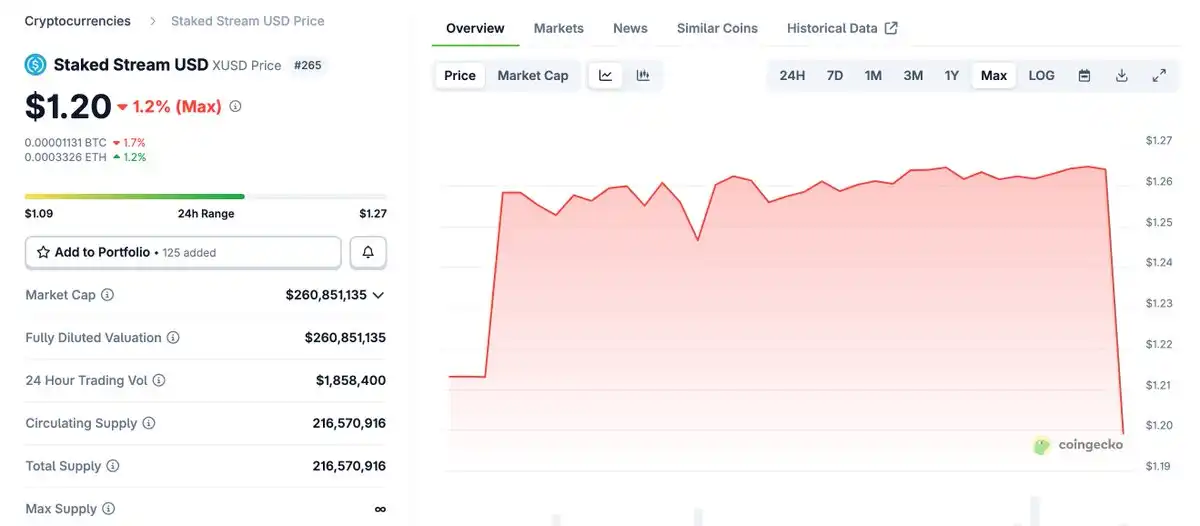
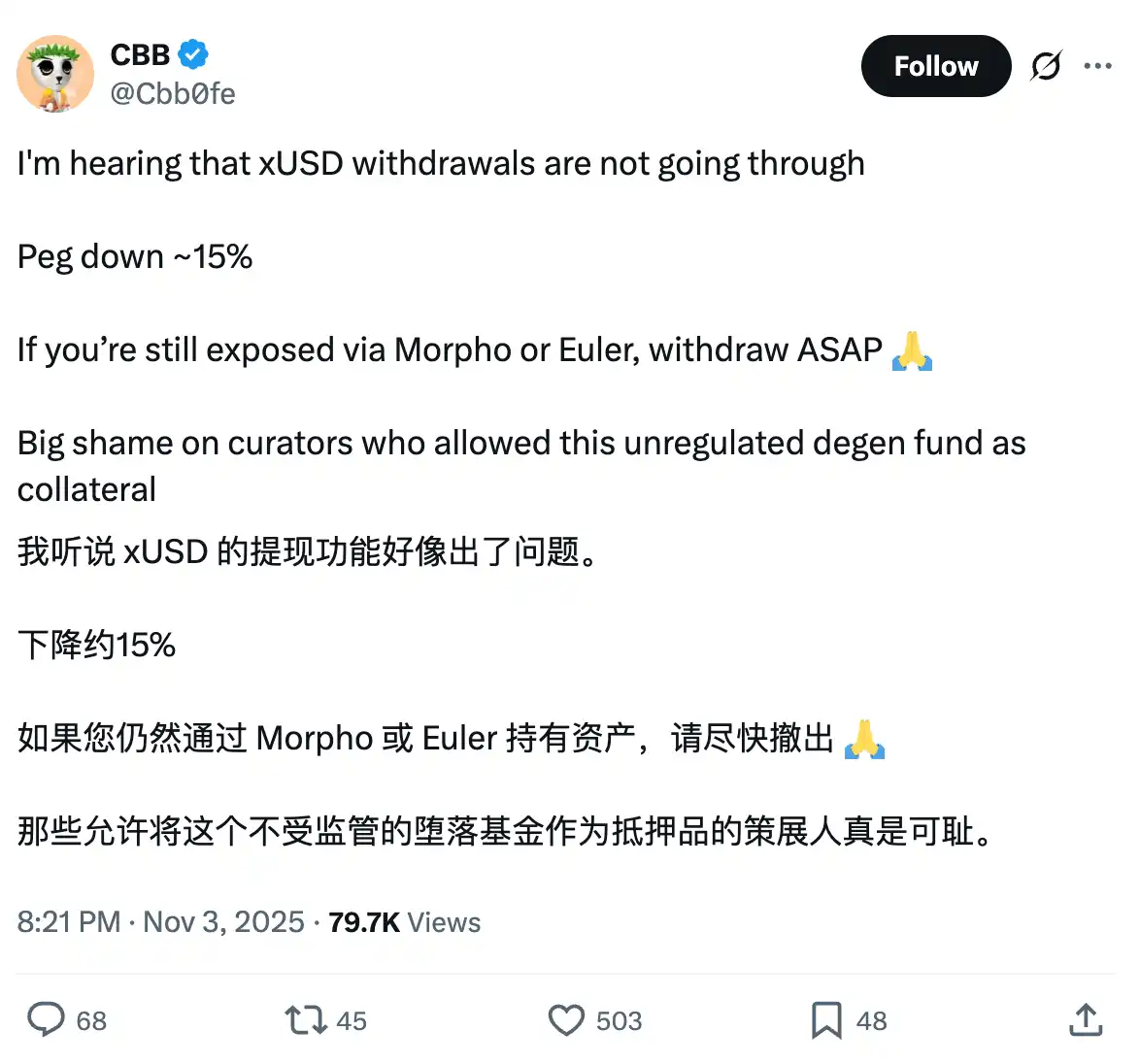
However, following the vulnerability outbreak, these modest disclosures failed to definitively address the risk exposure issue: the price of xUSD (Stream's yield-bearing USD product) dropped from the target price of $1.26 to $1.15, currently rebounding to $1.20, while users reported withdrawal suspensions.
Risks and Controversies of Stream Finance
Stream is an on-chain capital allocation platform that utilizes user funds to implement high-yield, high-risk investment strategies.
Its portfolio construction involves significant leverage to make the system more resilient under pressure. However, the protocol has recently come under public scrutiny due to controversies surrounding a recursive minting mechanism.
While the current situation does not directly indicate a liquidity crisis, it unveils the market's high sensitivity. When negative news emerges and confidence is questioned, the shift from "probably fine" to "immediately redeem" often occurs swiftly.
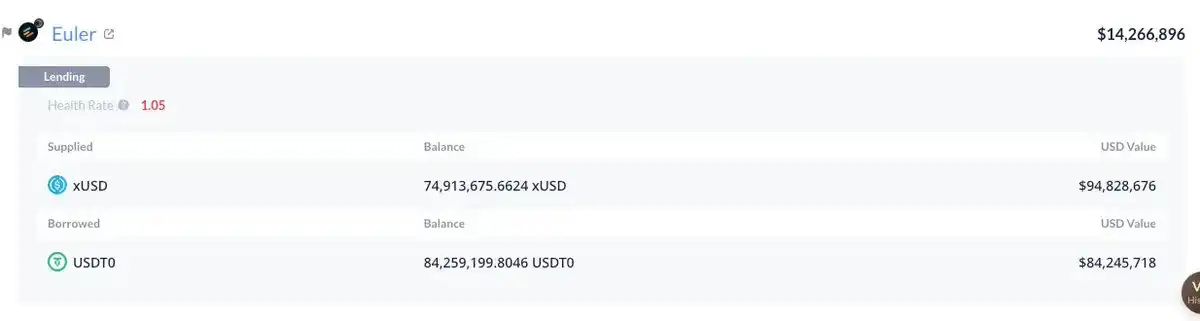
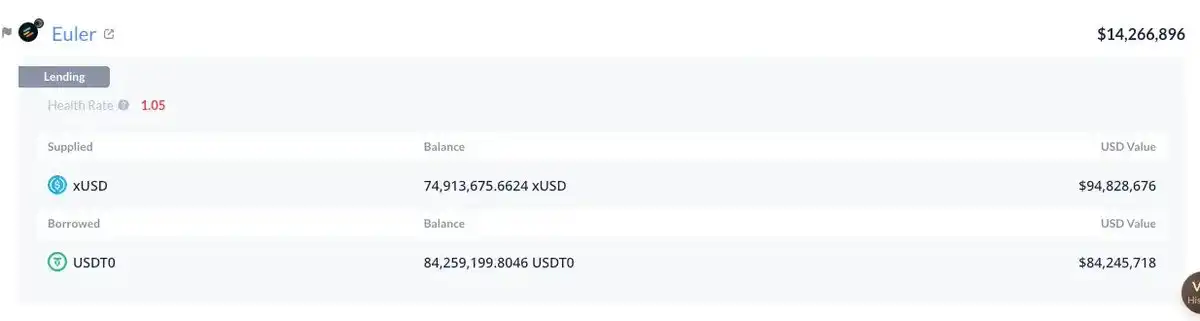
xUSD is used as collateral distributed across curated markets on multiple chains, including Euler, Morpho, and Silo, spanning ecosystems like Plasma, Arbitrum, and Plume.
The protocol itself carries significant risk exposure in these markets, with the largest exposure being $84 million USDT borrowed against xUSD collateral on Plasma.
Collateralization Mechanism and Risk Buffering
When the market price of xUSD falls below its book value, relevant positions are not immediately liquidated. This is because many markets do not peg the collateral's value to the spot AMM price but rely on hardcoded or "base value" oracle feeds that track assets' reported backing rather than current secondary market prices.
During calm periods, this design can help mitigate tail risk liquidation due to short-term volatility, especially in stable products. This is also why DeFi protocols outperformed centralized platforms during the liquidation wave on October 10.
However, this design can also swiftly turn price discovery into trust discovery: selecting a base (or hardcoded) oracle requires thorough due diligence, including the authenticity, stability, and risk characteristics of the asset backing.
In short, this mechanism only applies when full Proof of Reserve is available and redemption can be completed in a reasonable time frame. Otherwise, the risk is that the lender or depositor may ultimately bear the consequences of default.
Stress Test on Arbitrum
Using Arbitrum as an example, the current market price of the MEV Capital Curated xUSD Morpho Market has fallen below the LLTV (Minimum Loan-to-Value). If the anchoring price of xUSD cannot recover, in a scenario where the utilization reaches 100% and the borrowing rate soars to 88%, the market may further deteriorate.
We are not against base layer oracles; on the contrary, they play a crucial role in preventing unfair liquidations caused by short-term fluctuations. Similarly, we are not against tokenization or even centralized yield-bearing assets. However, we advocate for basic transparency and the adoption of modern, systematic, and professional risk management when deploying currency markets around these assets.
Curated Markets can be an engine for responsible growth, but they should not devolve into a race to sacrifice security and rationality for the sake of chasing yields.
If what is built is a "domino-like" complex structure, then the collapse should not be surprising when the first gust of wind blows. As the industry professionalizes and some yield products become more structured (but potentially more opaque to end-users), risk stakeholders must raise the bar.
Although we hope to eventually resolve the issues for affected users properly, this incident should serve as a wake-up call for the entire industry.
You may also like

Aave’s $10M Token Purchase Raises Concerns Over Governance Power
Key Takeaways: Aave founder Stani Kulechov’s $10 million AAVE token purchase sparks debates over governance power concentration. Concerns…

Web3 and DApps in 2026: A Utility-Driven Year for Crypto
Key Takeaways The transition to utility in the crypto sector has set a new path for 2026, emphasizing…
How to Evaluate a Curator?

Base's 2025 Report Card: Revenue Grows 30X, Solidifies L2 Leadership

From Aave to Ether.fi: Who Captured the Most Value in the On-Chain Credit System?

Venture Capital Post-Mortem 2025: Hashrate is King, Narrative is Dead

DeFi Hasn't Collapsed, So Why Has It Lost Its Allure?

NIGHT, with a daily trading volume of nearly $10 billion, is actually coming from the "has-been" Cardano?

2025 Token Postmortem: 84% Peak at Launch, High-Cap Project Turns into a "Rug Pull" Epicenter?
Polymarket Announces In-House L2, Is Polygon's Ace Up?

The Secret Centralization Landscape of Stablecoin Payments: 85% of Transaction Volume Controlled by Top 1000 Wallets

Stability in the Crypto World: Understanding Stablecoin Usage and Its Implications
Key Takeaways Stablecoin use in payments has rapidly increased alongside blockchain technology advancements. Stablecoins USDT and USDC dominate…
Major Cryptocurrency Exchange Updates and Insights
Key Takeaways Cryptocurrency exchanges are continually evolving, adapting to new technologies, and regulatory environments. Decentralized Finance (DeFi) is…

Understand Tokenization, Differentiating Between the DTCC Model and the Direct Ownership Model

Security Tokenization and Prediction Markets: 7 Major Crypto Boons to Watch in 2026

Aave Yield Distribution Dispute, Solana Surpasses Ethereum in Revenue, What's the Overseas Crypto Community Talking About Today?

<h1>The $3 Billion Valuation: Phantom’s Growth Anxiety and Cross-Chain Breakthrough</h1>
Messari 2026 Research Report: Insights into Seven Key Crypto Trends
Aave’s $10M Token Purchase Raises Concerns Over Governance Power
Key Takeaways: Aave founder Stani Kulechov’s $10 million AAVE token purchase sparks debates over governance power concentration. Concerns…
Web3 and DApps in 2026: A Utility-Driven Year for Crypto
Key Takeaways The transition to utility in the crypto sector has set a new path for 2026, emphasizing…
How to Evaluate a Curator?
Base's 2025 Report Card: Revenue Grows 30X, Solidifies L2 Leadership
From Aave to Ether.fi: Who Captured the Most Value in the On-Chain Credit System?
Venture Capital Post-Mortem 2025: Hashrate is King, Narrative is Dead
Popular coins
Latest Crypto News


Customer Support:@weikecs
Business Cooperation:@weikecs
Quant Trading & MM:bd@weex.com
VIP Services:support@weex.com
 App
App