
- Buy Crypto
- Markets
- Futures
- Spot
- Copy Trade
 WE-Launch
BeatSwap's IP RWA, from Chart Topping Economy Monetization to BNB Chain DappBay RWA First

With the development of blockchain technology and the influx of users, RWA tokenization is becoming one of the hottest narratives in today's Web3. However, the mainstream market is more focused on traditional financial assets such as bonds, real estate, and gold. While these assets have brought some incremental value to the crypto industry, their models still rely on traditional systems, making it difficult for ordinary users to participate deeply.
At the same time, the music and intellectual property (IP) fields are experiencing explosive growth. According to Goldman Sachs' prediction, by 2035, the global music industry's scale will double to reach $200 billion. The global IP licensing market is expected to reach around $48.2 billion by 2033 with a compound annual growth rate of 8.5%. However, in this vast market, copyright management remains opaque, settlements are slow, and value is mainly captured by intermediaries. IP Rights RWA holds tremendous potential.
Against this backdrop, BeatSwap has emerged. BeatSwap has chosen a path different from tokenizing traditional financial assets, focusing on building a truly global IP economy-native infrastructure in Web3. This infrastructure transforms content rights into tradable, financeable, and settleable IP Rights RWA and achieves on-chain risk management through patent-grade algorithms.
A Full-Stack RWA Infrastructure for the Global IP Economy
BeatSwap prides itself as the "world's first Web3 full-stack IP rights platform," and its ecosystem consists of four core modules covering the entire lifecycle of IP from creation, rights registration, fan engagement to transactions.
First is the Oracle, which is the core of the BeatSwap ecosystem. The module permanently records metadata of IP works on-chain, including basic work information, songwriters, rights holders' information, daily streaming counts, and royalty settlement history. This trustworthy data not only helps rights holders monitor work usage in real-time but also can be integrated with external streaming platform data to enable automatic royalty settlements.
According to official disclosures, BeatSwap is pioneering a Web3 native DePIN model tailored for the global IP economy. Participants can contribute to existing digital platforms through the integration of their Oracle SDK by creating content without the need for any hardware. This means that BeatSwap will also become a full-stack DePIN network that can verify IP data.
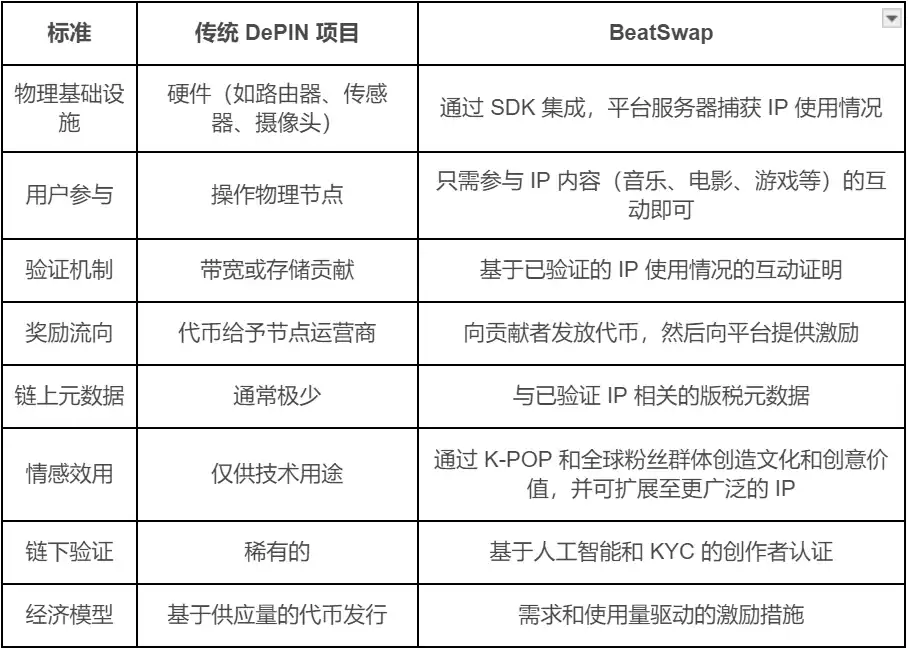
The second core module is the social platform Space, which is a Web3 social space designed by BeatSwap for creators and fans, covering all types of creators such as music, film, gaming, and more. Creators must go through KYC and claim their content rights before they can publish their work, ensuring that all content can be linked to rights data on the Oracle. Fans' interactions with the work in Space, such as likes, comments, follows, are all recorded on-chain and collectively contribute to the creator's Exposure Score. The Exposure Score is calculated based on a 50% Fan Interaction Index and a 50% Creator BTX Staking, reflecting both fan engagement and creator community involvement.
In fact, the "Chart-Topping Economy" has long existed in Web2, where fans engage in various online and offline activities to boost the ranking of celebrities or products on major charts to increase their commercial value. However, these fans are usually driven by passion and do not benefit from the increased commercial value of the celebrity. BeatSwap ties fan behavior to rewards, where participation equals contribution and contribution leads to economic returns.
Additionally, both RWA Launcher and BeatSwap are core modules of BeatSwap, with the former used to convert IP into RWA assets and the latter enabling the trading of IP RWA similar to any on-chain asset.
BNB Chain DappBay RWA Category First Place
The innovation of technology and concepts must ultimately be implemented in specific products. In the process of driving the industrialization of music copyright RWA, BeatSwap's authorized mining product "Licensing to Earn (L2E)" has performed notably well. With its unique economic mechanism and real-world use case, BeatSwap L2E has successfully topped the RWA category list on the BNB Chain DappBay, becoming the most outstanding project in its category.
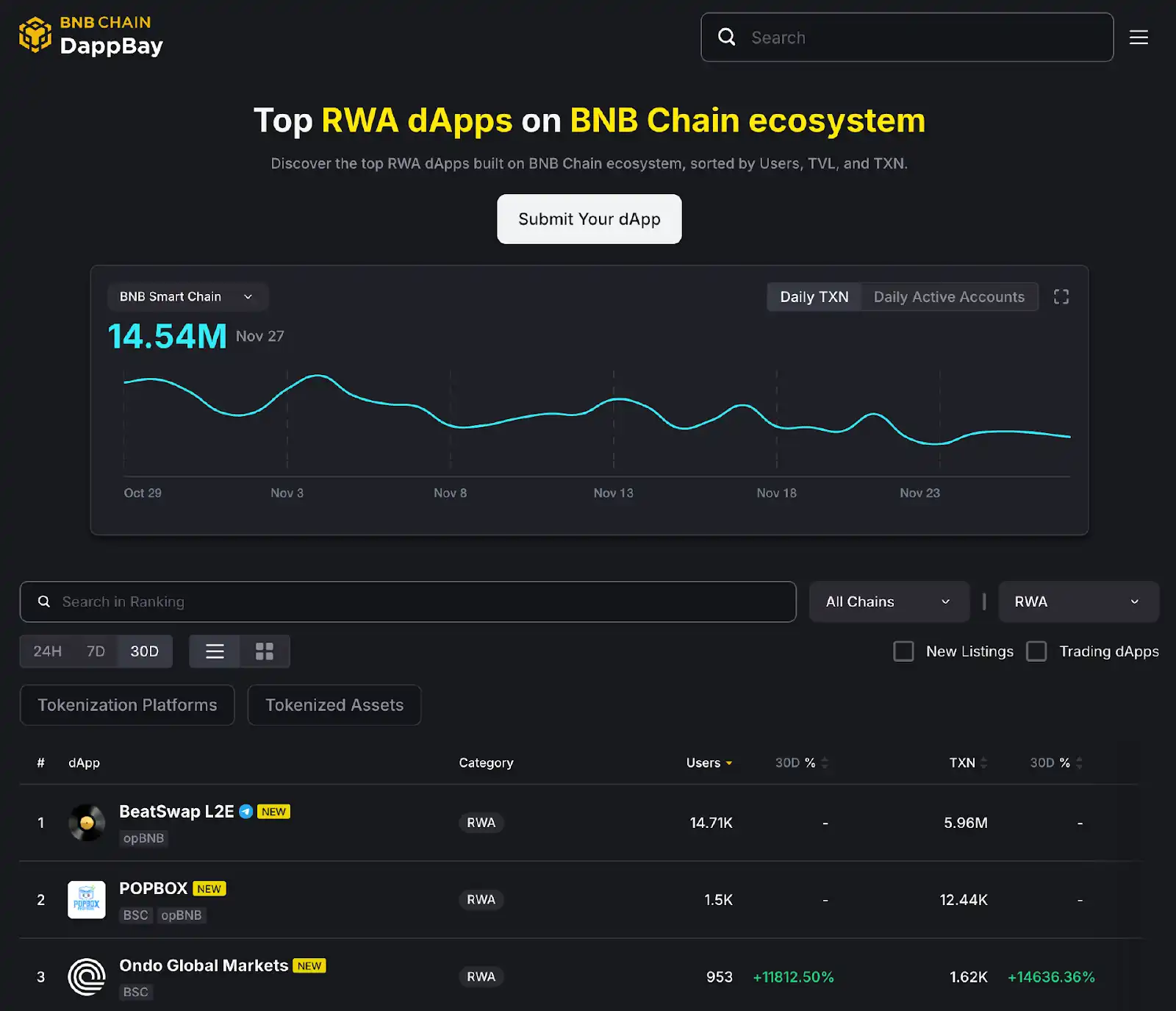
Image Source: BNB Chain
L2E is the authorization mining module of BeatSwap, with its core introducing the IP Authorization Index (IPL), which is a non-transferable, non-redeemable index token minted on the opBNB mainnet. It is used to measure users' genuine contribution to the IP ecosystem, with its issuance entirely linked to user behavior.
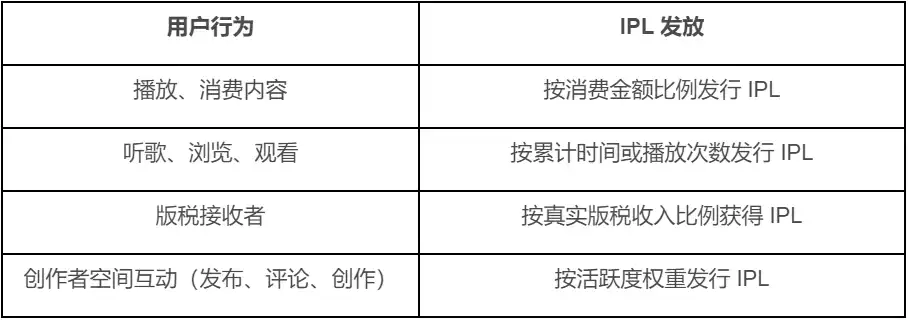
These behaviors are instantly recorded on-chain, with a monthly snapshot taken of all IPL holders. The BTX reward pool is then distributed based on the IPL proportion, achieving a "participate to earn" model. In other words, IPL represents contribution, and contribution determines the BTX reward ratio. Additionally, leveraging the opBNB network's high scalability and low-cost nature, BeatSwap can facilitate smooth execution of massive copyright transactions. Furthermore, its verifiable proof-of-participation system ensures that every reward is transparent, fair, and auditable, enabling "earning rewards while listening to music" to be implemented both technically and economically.
From a macro perspective, BeatSwap's economic model is primarily composed of three parts: RWA tokens, the platform's native token BTX, and IPL, forming a mutually reinforcing value loop.
BeatSwap will standardize each IP work into 2,000 RWA IP tokens, representing the neighboring rights of the work. Among these, half will be publicly sold through the RWA Launcher for work financing and market exposure; 18% will be injected into the protocol by BeatSwap to provide liquidity for initial trades. Within the creator community, composers, lyricists, and singers will respectively hold 6%, 6%, and 8% of RWA tokens, which can be held long-term to share in the work's growth or freely traded on the market. The remaining 12% will be retained by BeatSwap for exclusive rights management and will not enter the public market.
Image Source: BeatSwap
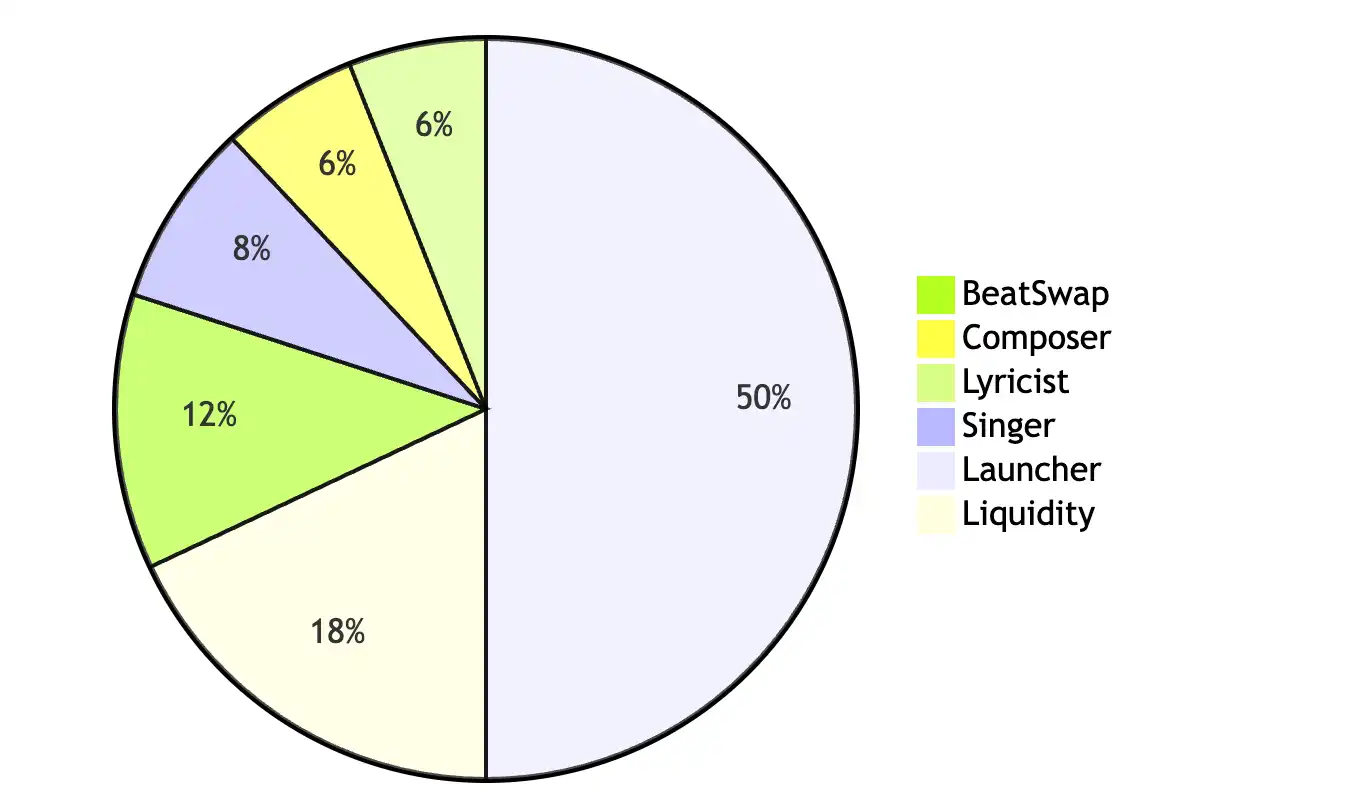
This allocation structure ensures a high degree of alignment among creators, investors, and the platform. Investors are not purchasing mere collectibles but rather "IP equity shares" with actual cash flow. By staking RWA tokens, users can daily receive the real streaming revenue of the corresponding work on global media platforms.
In order to provide continuous liquidity to copyright assets, BTX plays a key driving role in the ecosystem. All RWA token transactions, exchanges, and LP pairings are settled in BTX. As more songs are released and more RWA assets come online, more "RWA-BTX" liquidity pools will be formed on the DEX. The more songs are listed, the larger the liquidity pool, the stronger the demand for BTX transactions, and its value support will also increase. At the same time, a large amount of BTX will be released to key participants such as users listening to songs, music creators, liquidity providers, market participants, and RWA token holders bearing equity risks through platform activities.
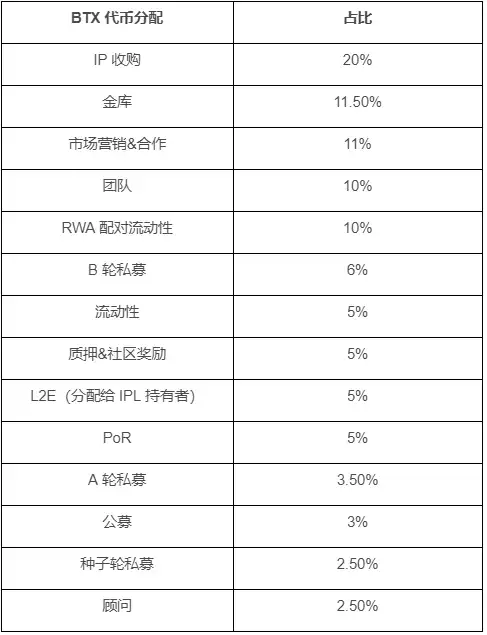
In the overall distribution system of BTX, IPL holders will receive a total of 5% of BTX token distribution. User behaviors on the platform such as playing songs, unlocking paid content, sharing works, participating in endorsements, interacting with creators, etc., can accumulate IPL. This not only records contributions but also determines the BTX reward ratio for each user.
It is because IPL considers each ecological participation behavior as a "contributed asset" that BeatSwap was able to claim the top spot in the BNB Chain DappBay RWA leaderboard. On-chain data shows that BeatSwap's cumulative transaction volume has exceeded 6.4 million transactions, with over 420,000 users, surpassing Ondo in similar projects. In addition, BeatSwap has successfully released 660 songs including K-POP, electronic music, indie music, and experimental music, becoming the most comprehensive and fastest-growing platform in the music copyright RWA track.
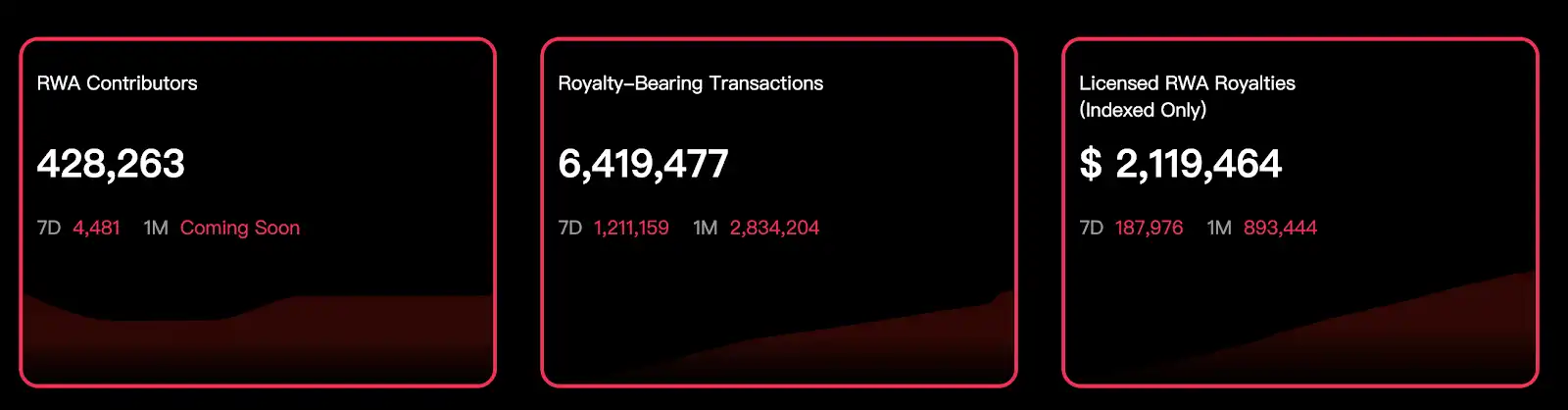
Data Source: beatswap.io/dashboard
International Patents, How to Properly Manage and Trade RWA
In the current narrative, RWA is seen as one of the most promising growth engines. However, when traditional assets, especially assets with real cash flow, are directly introduced to the chain, the limitations of the existing technical system are also exposed. AMM mechanisms designed based on cryptocurrency do not have the ability to handle complex RWA.
In order to enable Real-World Assets (RWA) to be correctly traded on-chain, accurately priced, and ensure secure settlement, BeatSwap has chosen to take an unprecedented path. BeatSwap has submitted an international patent application to the United Nations World Intellectual Property Organization (UN WIPO) titled "Collateralized Liquidity Management System and Method for Real-World Asset Decentralized Exchanges" (International Application No: PCT/KR2025/015673).
BeatSwap's patent application is not for mere positioning but rather for the purpose of building the underlying infrastructure tailored for the RWA era. The traditional Automated Market Maker (AMM) model is designed for high-volatility assets, suitable for typical crypto assets like ETH, DeFi tokens, etc., and can support the market with a simple curve model. However, when applied to RWAs, structural flaws are immediately exposed. RWAs have slow value fluctuation, lack the hourly price volatility characteristic, and the AMM liquidity pool rapidly responds to every transaction, causing the price to deviate from its true value. The real value of an asset like a piece of music may vary minimally, but the AMM mechanism could distort the price instantly due to a few transactions.
More importantly, RWAs have collateral, cash flow, and payment cycles. Once collateral assets depreciate, cash flows delay, and the market experiences redemption pressure, traditional AMMs cannot take any risk management actions. There is no clearing, no penalty mechanism, no price stabilizer, and no dynamic adjustment based on the user's risk exposure. This "risk-free AMM" evidently cannot handle the task of dealing with real-world assets.
BeatSwap has found that in order to truly bring assets such as IP rights into the on-chain financial system, a completely new AMM structure must be created—one that can understand risk, manage collateral, and track cash flows. Therefore, they chose to apply for a patent to solidify this structured mechanism, not only to protect their innovative achievements but also to establish a foundation for the institutionalization of the future industry.
According to the patent description, the BeatSwap AMM is a risk-adjustable hybrid AMM that combines collateral ratio, price volatility, and liquidity slippage, making liquidity no longer passive but dynamically changing based on risk. When the playback data for a particular IP work fluctuates, copyright revenues decline, or collateral assets depreciate, the system will automatically adjust the pool's price curve to bring the price back closer to its real value. The patent also designs a complete risk handling mechanism. When the collateral value falls into a dangerous range, the system triggers automatic penalties, price correction, or even liquidation mechanisms to protect the market from the impact of disorderly trading. Traditional AMMs are helpless in such situations, whereas the BeatSwap system can act as a safety valve like traditional financial clearing institutions, preventing systemic risks in the market.
BeatSwap's patent not only makes IP rights the first RWA type that can truly stably trade in an AMM, but also provides a technical blueprint for future categories of real-world assets.
In the future, when the industry looks back on the history of RWA, this patent will likely be seen as a significant turning point. It marks RWA's transition from being mapped to the chain to taking a crucial step towards being properly tradable and manageable.
You may also like

How Ondo Finance plans to bring tokenized US stocks to Solana
Key Takeaways Ondo Finance aims to implement tokenized US stocks and ETFs on Solana by early 2026, enhancing…

Aave’s $10M Token Purchase Raises Concerns Over Governance Power
Key Takeaways: Aave founder Stani Kulechov’s $10 million AAVE token purchase sparks debates over governance power concentration. Concerns…

Web3 and DApps in 2026: A Utility-Driven Year for Crypto
Key Takeaways The transition to utility in the crypto sector has set a new path for 2026, emphasizing…

Hong Kong Moves Forward with Licensing Regimes for Virtual Asset Dealers and Custodians
Key Takeaways Hong Kong’s FSTB and SFC are implementing new licensing requirements for virtual asset dealers and custodians…
How to Evaluate a Curator?

Base's 2025 Report Card: Revenue Grows 30X, Solidifies L2 Leadership

From Aave to Ether.fi: Who Captured the Most Value in the On-Chain Credit System?

Venture Capital Post-Mortem 2025: Hashrate is King, Narrative is Dead

DeFi Hasn't Collapsed, So Why Has It Lost Its Allure?

The Trillion-Dollar Stablecoin Battle: Binance Decides to Step in Again

NIGHT, with a daily trading volume of nearly $10 billion, is actually coming from the "has-been" Cardano?

2025 Token Postmortem: 84% Peak at Launch, High-Cap Project Turns into a "Rug Pull" Epicenter?
Polymarket Announces In-House L2, Is Polygon's Ace Up?
2 Days 20x, How Big Can the Legendary Golden Dog Snowball's "Auto-Compound" Snowball Grow?

Coinbase Joins Prediction Market, AAVE Governance Dispute - What's the Overseas Crypto Community Talking About Today?
Over the past 24 hours, the crypto market has shown strong momentum across multiple dimensions. The mainstream discussion has focused on Coinbase's official entry into the prediction market through the acquisition of The Clearing Company, as well as the intense controversy within the AAVE community regarding token incentives and governance rights.
In terms of ecosystem development, Solana has introduced the innovative Kora fee layer aimed at reducing user transaction costs; meanwhile, the Perp DEX competition has intensified, with the showdown between Hyperliquid and Lighter sparking widespread community discussion on the future of decentralized derivatives.
This week, Coinbase announced the acquisition of The Clearing Company, marking another significant move to deepen its presence in this field after last week's announcement of launching a prediction market on its platform.
The Clearing Company's founder, Toni Gemayel, and the team will join Coinbase to jointly drive the development of the prediction market business.
Coinbase's Product Lead, Shan Aggarwal, stated that the growth of the prediction market is still in its early stages and predicts that 2026 will be the breakout year for this field.
The community has reacted positively to this, generally believing that Coinbase's entry will bring significant traffic and compliance advantages to the prediction market. However, this has also sparked discussions about the industry's competitive landscape.
Jai Bhavnani, Founder of Rivalry, commented that for startups, if their product model proves to be successful, industry giants like Coinbase have ample reason to replicate it.
This serves as a reminder to all entrepreneurs in the crypto space that they must build significant moats to withstand competition pressure from these giants.
Regulated prediction market platform Kalshi launched its research arm, Kalshi Research, this week, aimed at opening its internal data to the academic community and researchers to facilitate exploration of prediction market-related topics.
Its inaugural research report highlights Kalshi's outperformance in predicting inflation compared to Wall Street's traditional models. Kalshi co-founder Luana Lopes Lara commented that the power of prediction markets lies in the valuable data they generate, and it is now time to better utilize this data.
Meanwhile, Kalshi announced its support for the BNB Chain (BSC), allowing users to deposit and withdraw BNB and USDT via the BSC network.
This move is seen as a significant step for Kalshi to open its platform to a broader crypto user base, aiming to unlock access to the world's largest prediction market. Furthermore, Kalshi also revealed plans to host the first Prediction Market Summit in 2026 to further drive industry engagement and development.
The AAVE community recently engaged in heated debates around an Aave Improvement Proposal (AIP) titled "AAVE Tokenomics Alignment Phase One - Ownership Governance," aiming to transfer ownership and control of the Aave brand from Aave Labs to Aave DAO.
Aave founder Stani Kulechov publicly stated his intention to vote against the proposal, believing it oversimplifies the complex legal and operational structure, potentially slowing down the development process of core products like Aave V4.
The community's reaction was polarized. Some criticized Stani for adopting a "double standard" in governance and questioned whether his team had siphoned off protocol revenue, while others supported his cautious stance, arguing that significant governance changes require more thorough discussion.
This controversy highlights the tension between the ideal of DAO governance in DeFi projects and the actual power held by core development teams.
Despite governance disputes putting pressure on the AAVE token price, on-chain data shows that Stani Kulechov himself has purchased millions of dollars' worth of AAVE in the past few hours.
Simultaneously, a whale address, 0xDDC4, which had been quiet for 6 months, once again spent 500 ETH (approximately $1.53 million) to purchase 9,629 AAVE tokens. Data indicates that this whale has accumulated nearly 40,000 AAVE over the past year but is currently in an unrealized loss position.
The founder and whale's increased holdings during market volatility were interpreted by some investors as a confidence signal in AAVE's long-term value.
In this week's top article, Morpho Labs' "Curator Explained" detailed the role of "curators" in DeFi.
The article likened curators to asset managers in traditional finance, who design, deploy, and manage on-chain vaults, providing users with a one-click diversified investment portfolio.
Unlike traditional fund managers, DeFi curators execute strategies automatically through non-custodial smart contracts, allowing users to maintain full control of their assets. The article offered a new perspective on the specialization and risk management in the DeFi space.
Another widely circulated article, "Ethereum 2025: From Experiment to Global Infrastructure," provided a comprehensive summary of Ethereum's development over the past year. The article noted that 2025 is a crucial year for Ethereum's transition from an experimental project to global financial infrastructure. Through the Pectra and Fusaka hard forks, Ethereum achieved significant reductions in account abstraction and transaction costs.
Furthermore, the SEC's clarification of Ethereum's "non-securities" nature and the launch of tokenized funds on the Ethereum mainnet by traditional financial giants like JPMorgan marked Ethereum's gaining recognition from mainstream institutions. The article suggested that whether it is the continued growth of DeFi, the thriving L2 ecosystem, or the integration with the AI field, Ethereum's vision as the "world computer" is gradually becoming a reality.
The Solana Foundation engineering team released a fee layer solution called Kora this week.
Kora is a fee relayer and signatory node designed to provide the Solana ecosystem with a more flexible transaction fee payment method. Through Kora, users will be able to achieve gas-free transactions or choose to pay network fees using any stablecoin or SPL token. This innovation is seen as an important step in lowering the barrier of entry for new users and improving Solana network's availability.
Additionally, a deep research report on propAMM (proactive market maker) sparked community interest. The report's data analysis of propAMMs on Solana like HumidiFi indicated that Solana has achieved, or even surpassed, the level of transaction execution quality in traditional finance (TradFi) markets.
For example, on the SOL-USDC trading pair, HumidiFi is able to provide a highly competitive spread for large trades (0.4-1.6 bps), which is already better than the trading slippage of some mid-cap stocks in traditional markets.
Research suggests that propAMM is making the vision of the "Internet Capital Market" a reality, with Solana emerging as the prime venue for all of this to happen.
The competition in the perpetual contract DEX (Perp DEX) space is becoming increasingly heated.
In its latest official article, Hyperliquid has positioned its emerging competitor, Lighter, alongside centralized exchanges like Binance, referring to it as a platform utilizing a centralized sequencer. Hyperliquid emphasizes its transparency advantage of being "fully on-chain, operated by a validator network, and with no hidden state."
The community widely interprets this as Hyperliquid declaring "war" on Lighter. The technical differences between the two platforms have also become a focal point of discussion: Hyperliquid focuses on ultimate on-chain transparency, while Lighter emphasizes achieving "verifiable execution" through zero-knowledge proofs to provide users with a Central Limit Order Book (CLOB)-like trading experience.
This battle over the future direction of decentralized derivatives exchanges is expected to peak in 2026.
Meanwhile, discussions about Lighter's trading fees have surfaced. Some users have pointed out that Lighter charged as much as 81 basis points (0.81%) for a $2 million USD/JPY forex trade, far exceeding the near-zero spreads of traditional forex brokers.
Some argue that Lighter does not follow a B-book model that bets against market makers, instead anchoring its prices to the TradFi market, and the high fees may be related to the current liquidity or market maker balance incentives. Providing a more competitive spread for real-world assets (RWA) in the highly volatile crypto market is a key issue Lighter will need to address in the future.

The Secret Centralization Landscape of Stablecoin Payments: 85% of Transaction Volume Controlled by Top 1000 Wallets

Audiera Sees Massive Price Surge – Key Cryptocurrency Updates
Key Takeaways Audiera (BEAT) has witnessed significant growth, experiencing a 70.10% increase in the past week. Despite the…

In Vietnam, USDT’s Use and the Reality of Web3 Adoption
Key Takeaways Vietnam has emerged as a leading nation in the adoption of cryptocurrencies, despite cultural and regulatory…
How Ondo Finance plans to bring tokenized US stocks to Solana
Key Takeaways Ondo Finance aims to implement tokenized US stocks and ETFs on Solana by early 2026, enhancing…
Aave’s $10M Token Purchase Raises Concerns Over Governance Power
Key Takeaways: Aave founder Stani Kulechov’s $10 million AAVE token purchase sparks debates over governance power concentration. Concerns…
Web3 and DApps in 2026: A Utility-Driven Year for Crypto
Key Takeaways The transition to utility in the crypto sector has set a new path for 2026, emphasizing…
Hong Kong Moves Forward with Licensing Regimes for Virtual Asset Dealers and Custodians
Key Takeaways Hong Kong’s FSTB and SFC are implementing new licensing requirements for virtual asset dealers and custodians…
How to Evaluate a Curator?
Base's 2025 Report Card: Revenue Grows 30X, Solidifies L2 Leadership
Popular coins
Latest Crypto News


Customer Support:@weikecs
Business Cooperation:@weikecs
Quant Trading & MM:bd@weex.com
VIP Services:support@weex.com
 App
App