
- Buy Crypto
- Markets
- Futures
- Spot
- Copy Trade
 WE-Launch
From Decentralized Utopia to Speculator's Den, Why Has Capital Become the Ruler of Web3?

Original Article Title: Capitalism is killing the soul of web3 everyday
Original Article Author: hmalviya9, Founder of @dyorcryptoapp
Original Article Translation: Translated by Deep
Editor's Note: The article explores the process of Web3's decentralized ideal being gradually eroded by capitalism: initially established by freedom-seeking pioneers, Web3 attracted capitalists due to scarce block space like Bitcoin, then the expansion of new territories like Ethereum and technologies like Layer-2 caused block space to become saturated and value to decline; despite new lands emerging continuously, Web2 users hesitate to migrate due to complexity and risks, while exchanges, market makers, and other major players profit by manipulating the market, ultimately leading Web3 astray from its original purpose and becoming a capital-driven speculative playground.
Below is the original article content (restructured for better readability):
We inhabit two digital planets: Web2 and Web3.
The Web3 planet is quite novel — initially established by pioneers who believed in decentralization, freedom, and self-governance. In its early days, this was a wild, uncharted land with no rulers, only builders.
However, a bridge between Web2 and Web3 was later established. Initially, only a few capitalists from Web2 arrived, drawn by the raw potential of this new world. They stood on the sidelines, observing, analyzing the terrain, understanding the rules, identifying the most valuable territories.
The first large-scale colonization wave began with Bitcoin — the most precious nation on the Web3 island. This was scarce land with clear ownership, where power belonged to those who understood its fundamental principles.
But once the initial settlers took control and accumulated wealth, they began to expand. They realized that Web3 was more than just Bitcoin. There was vast uncharted land waiting to be shaped. Soon, they moved beyond Bitcoin, establishing new territories — Ethereum, Solana, Polkadot, and countless others.
As more land was discovered, the race to claim new nations intensified. Initially, block space was scarce. The earliest blockchains operated under strict constraints — each transaction required space, and space was limited. This scarcity gave block space immense value. Owning a small piece of block space meant having a place in the new digital economy. However, with increased competition, innovation followed.
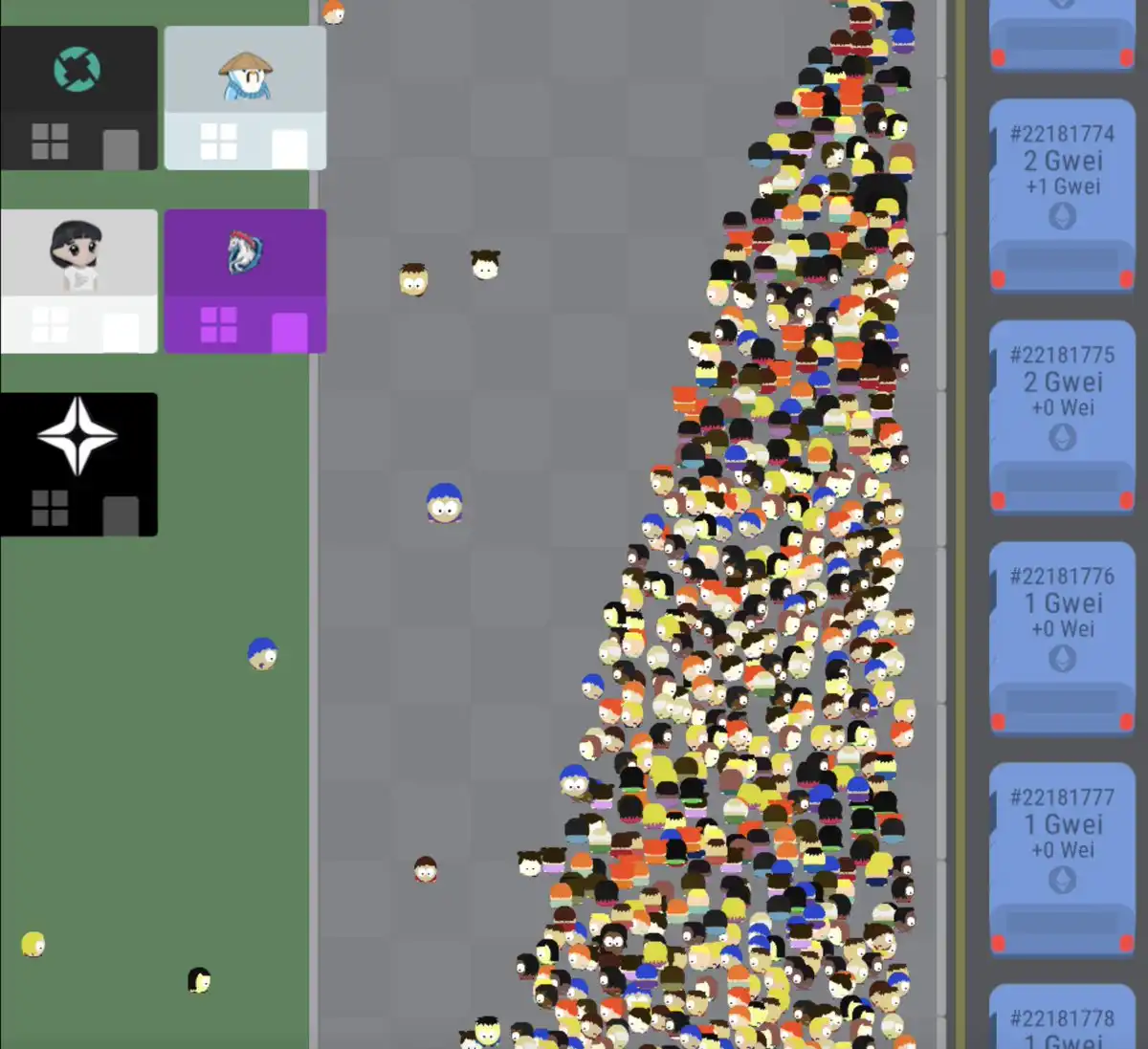
Ethereum Transaction Visualization
More efficient ways of creating block space emerged. Layer 2 solutions, Rollups, sidechains — each brought vast new lands to the Web3 planet. Goods that were once scarce became abundant.
Builders no longer fight for limited space; instead, they have created endless new land to meet the growing settlement demand. However, the proliferation of block space has brought unforeseen consequences.
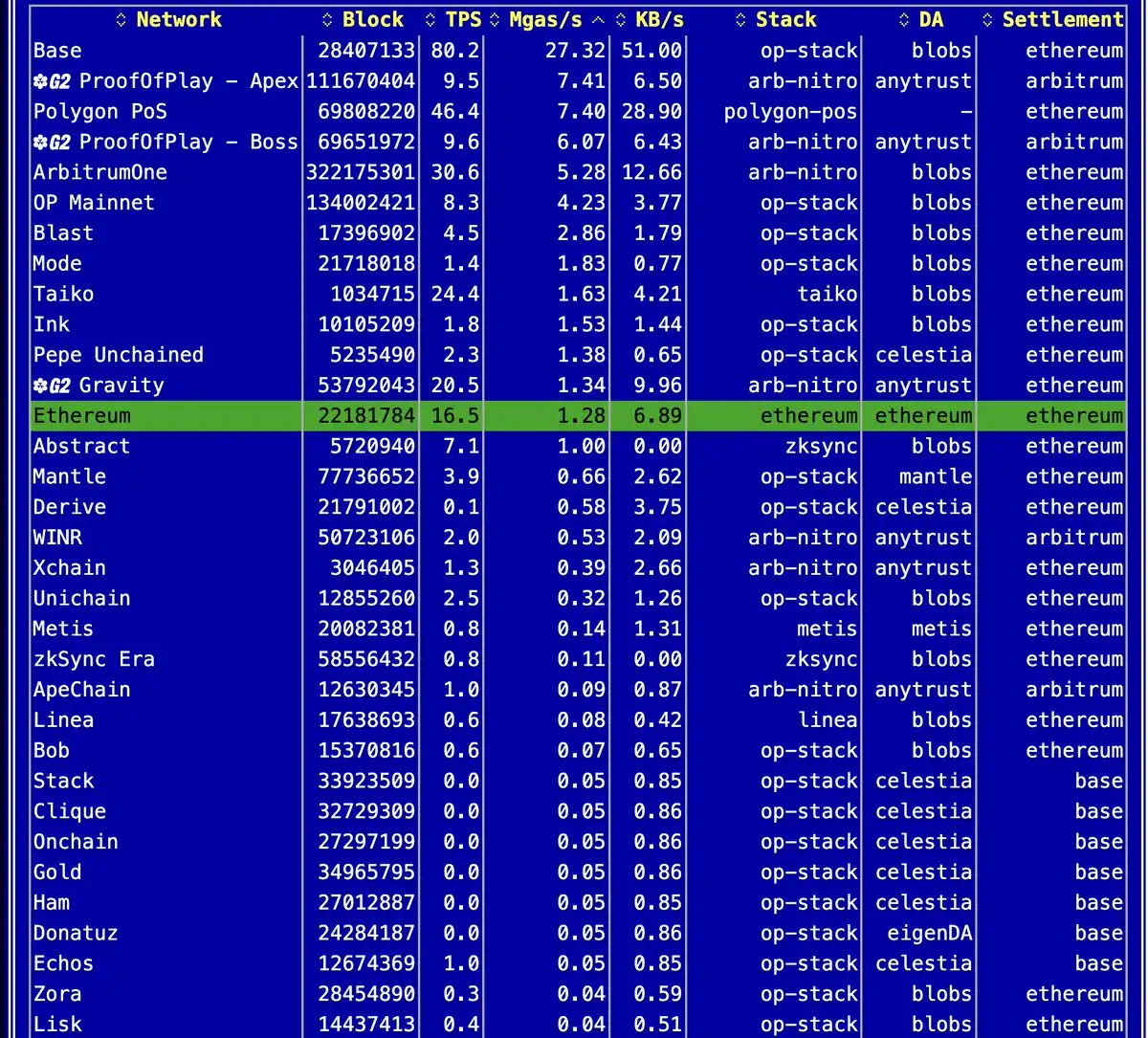
Image Source: rollup.wtf
Once valuable things have become cheap. The cost of storing transactions — once a key economic force — has plummeted. The promise of cheap block space has attracted millions of Web2 settlers, but reality has proven otherwise.
People from Web2 hesitated.
They heard stories of adventurers entering Web3, lured by the promise of wealth, only to be devoured by predators. Some Web2 residents did take the step, drawn to the legend of overnight riches.
They entered Web3, hoping to carve out a place in the new economy. Many started by purchasing small plots of land — various tokens, each promising future value. They traded, speculated, and started businesses, believing they were in the early days of the next great revolution.
But they did not realize that Web3 had long been structured by the earliest settlers and the most powerful capitalists. While the rules of the game were not explicitly stated, those who controlled this land knew it well. As more Web2 people moved in, they unwittingly found themselves in a predicament. The complexity of Web3 is daunting.

There are too many new nations, each with its own rules, and scams disguised as opportunities abound. The big players control the flow of information, manipulate the market, inflate values, and pull the rug out from under unsuspecting settlers' feet.
The Web3 world has become a playground for those who know how to extract wealth from the ignorant. Even though block space is cheaper than ever, adoption remains slow. The dream of a mass migration from Web2 to Web3 is crumbling.
The new land promised a seamless user experience but never reached the level of familiarity and convenience that Web2 offered. The additional promise of quick rewards is not enough to impress people — Web2 individuals have seen too many compatriots get burned.
They watched as entire nations in Web3 rose and fell overnight, wealth changing hands in the blink of an eye. Ordinary people hesitated, unable to see through the chaos. However, in the turmoil, a thriving marketplace emerged.
Web3's real estate — tokens — became the lifeblood of its economy. Everything is up for sale. Every nation has its own assets, unique value, and promises for the future. The trading floor never closes, driven by speculation, manipulation, and greed.
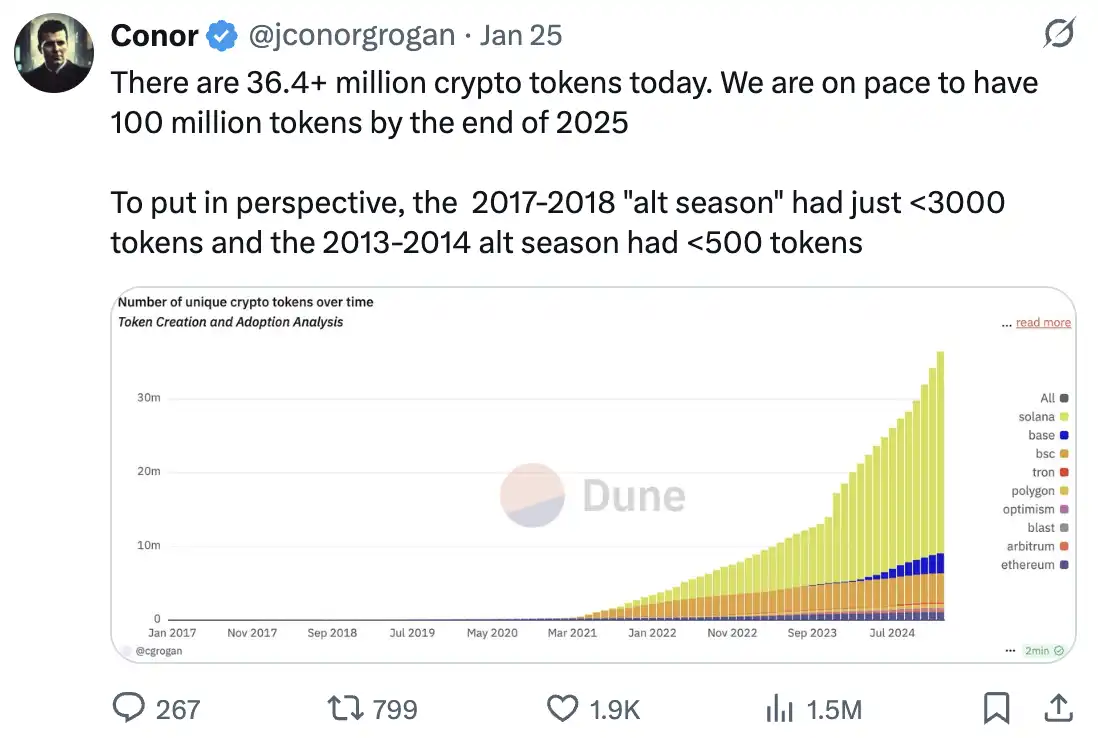
Some countries experience temporary prosperity, only to decline as attention shifts. New land is minted daily, sold to the highest bidder for a quick flip profit. The cycle continues endlessly. And as settlers struggle, the true beneficiaries of Web3 thrive.
Bridge operators — exchanges — act as gatekeepers, controlling the flow of assets between Web2 and Web3.
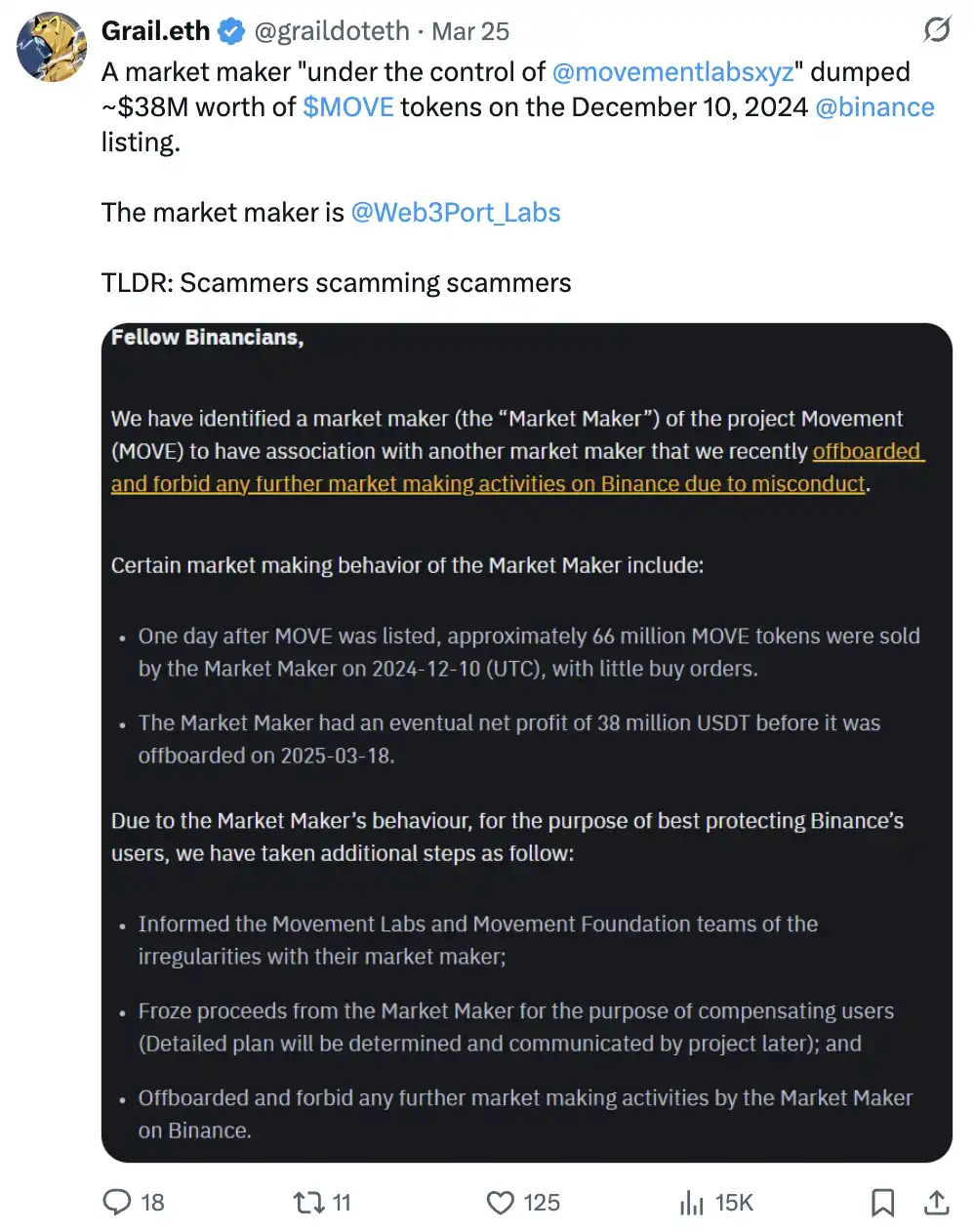
In short: scammers scamming scammers.
They profit with each entry and exit. Market makers — the hidden force managing liquidity — ensure every transaction is watched and taxed. Developers build continuously, not always for innovation, but to create more sellable land. And what of the marketers? They weave stories, craft narratives, selling dreams to the next hopeful settlers.
The dark side of Web3 is that it is no longer truly decentralized. The early vision of a freely open digital frontier has been replaced by the harsh reality of capital.
The same forces that dominated Web2 have infiltrated Web3. They settle not just inhabit but reshape this planet to suit their needs. Thus, the Web3 world expands, becoming an endless frontier of digital land, speculation, and fleeting opportunities.
The dream of true decentralization still exists. Settlers continue to arrive, hoping to strike it rich, but in the end, most leave poorer than they arrived.
Meanwhile, those who hold the system continue to extract, build, and control, ensuring this planet remains shaped by them.
You may also like

World Cup of 'Oracles': How to Interpret Next Year's Prediction Market Growth Prospects?

2025 Crypto Rich List: 12 Big Winners, Who Bet on the Money Maker?

「Macro Master」 Raoul Pal on 30x Growth Under Indexation: Bitcoin Will Eventually Surpass Gold

Base App is now fully open! How was your experience?

Uniswap Pay Dispute Escalates, Maple Finance Loan volume Hits All-Time High, What's the Overseas Crypto Community Talking About Today?

Why is the U.S. Embracing Crypto? The Answer May Lie in $37 Trillion Debt

Galaxy's 26 Predictions for Next Year: Bitcoin to Reach New ATH, Stablecoin Transaction Volume to Surpass ACH System

Key Market Information Discrepancy on December 25th - A Must-See! | Alpha Morning Report

Blockchains Quietly Prepare for Quantum Threat as Bitcoin Debates Timeline
Key Takeaways: Several blockchains, including Ethereum, Solana, and Aptos, are actively preparing for the potential threat posed by…
Three Signs that Bitcoin is Discovering its Market Bottom
Key Takeaways: Indicators suggest the selling pressure on Bitcoin is diminishing, hinting at a potential bottom. With improving…

Trump’s World Liberty Financial Token Ends 2025 Significantly Down
Key Takeaways World Liberty Financial, led by the Trump family, witnessed its token value drop by over 40%…

Former SEC Counsel Explains What It Takes to Make RWAs Compliant
Key Takeaways The SEC’s shifting approach is aiding the growth of Real-World Assets (RWAs), but jurisdictional and yield…

Kraken IPO and M&A Deals to Reignite Crypto’s ‘Mid-Stage’ Cycle
Key Takeaways: Kraken’s upcoming IPO may draw significant interest and capital from traditional finance (TradFi) investors, boosting the…

Extended Crypto ETF Outflows Indicate Institutional Pullback: Glassnode
Key Takeaways: Recent outflows from Bitcoin and Ether ETFs suggest a withdrawal of institutional interest. Institutional disengagement has…

HashKey Secures $250M for New Crypto Fund Amid Strong Institutional Interest
Key Takeaways HashKey Capital successfully secured $250 million for the initial close of its fourth crypto fund, showcasing…
Crypto Market Slump Unveils Disparity Between VC Valuations and Market Caps
Key Takeaways Recent market downturns highlight discrepancies between venture capital (VC) valuations of crypto projects and their current…
How Ondo Finance plans to bring tokenized US stocks to Solana
Key Takeaways Ondo Finance aims to implement tokenized US stocks and ETFs on Solana by early 2026, enhancing…
Philippines Cracks Down on Unlicensed Crypto Exchanges: Coinbase and Gemini Blocked
Key Takeaways The Philippine government is increasing regulatory oversight on cryptocurrency exchanges, requiring local licenses for operations. Internet…
World Cup of 'Oracles': How to Interpret Next Year's Prediction Market Growth Prospects?
2025 Crypto Rich List: 12 Big Winners, Who Bet on the Money Maker?
「Macro Master」 Raoul Pal on 30x Growth Under Indexation: Bitcoin Will Eventually Surpass Gold
Base App is now fully open! How was your experience?
Uniswap Pay Dispute Escalates, Maple Finance Loan volume Hits All-Time High, What's the Overseas Crypto Community Talking About Today?
Why is the U.S. Embracing Crypto? The Answer May Lie in $37 Trillion Debt
Popular coins
Latest Crypto News


Customer Support:@weikecs
Business Cooperation:@weikecs
Quant Trading & MM:bd@weex.com
VIP Services:support@weex.com
 App
App