
- Buy Crypto
- Markets
- Futures
- Spot
- Copy Trade
 WE-Launch
New York Times: Crypto ATM Fraud Rampant, $240 Million Stolen in Six Months

Original Article Authors: Cameron Fozi, Chloe Rosenberg, and Reeno Hashimoto, The New York Times
Original Article Translation: Chopper, Foresight News
Cryptocurrency ATMs, found in convenience stores and gas stations, appear to be convenient cash-to-coin terminals but have actually become a goldmine for scammers targeting the elderly. Behind the disappearing deposits lies a series of carefully orchestrated scams.
Mary Handeland, a real estate agent in Grafton, Wisconsin, last year met a match on a dating app. The person, who identified as Mike, claimed to be an engineer at a defense contractor in Texas.
After two months of texting and phone calls, the 71-year-old Handeland received a confession of love from Mike. Shortly after, Mike asked her for a loan.
Handeland was instructed to deposit cash into a device called a "cryptocurrency ATM." These self-service terminals are commonly found in grocery stores, gas stations, and tobacco shops, resembling traditional ATMs but capable of converting cash into cryptocurrency.
Starting in October last year, Handeland made 19 transactions depositing a total of $98,300 into these machines. Eventually, all the money disappeared, Mike vanished, and the entire identity was fabricated from start to finish.
"I still don't know what came over me at the time," Handeland said. "That feeling of being manipulated, like being caught in a whirlpool."
Handeland's experience has put the spotlight on cryptocurrency ATMs. These devices have rapidly proliferated across the United States but are now under close scrutiny for turning into tools for scams. Data from the U.S. Treasury Department's Financial Crimes Enforcement Network shows that the number of cryptocurrency ATM operating locations has reached at least 28,000, more than double the number of Bank of America ATMs.

In 19 transactions, Mary Handeland deposited $98,300 into cryptocurrency ATMs, all of which disappeared in the end.
These self-service terminals operated by companies like Bitcoin Depot, CoinFlip, and Athena Bitcoin help individuals convert cash to cryptocurrency at physical locations. After users deposit cash, the operator transfers the corresponding amount of cryptocurrency to the user's cryptocurrency account and charges a transaction fee.
However, law enforcement officials have stated that these self-service terminals have become a hotbed for financial crimes. Last year, the FBI's Internet Crime Complaint Center received nearly 11,000 complaints related to such devices, with total losses reaching $2.467 billion. The FBI estimates that in the first 7 months of this year, fraud involving cryptocurrency ATMs has caused losses of around $240 million.
The cryptocurrency industry has long been embroiled in money laundering and fraud scandals, with ATM-related crimes being just one aspect. However, Aidan Larkin, CEO of asset tracing company Asset Reality, pointed out that the specificity of these devices lies in their ease of access and their targeting of vulnerable groups.
"For victims with lower technical skills and lack of experience using technology products, cryptocurrency ATMs are the fraudsters' easiest way to extract their assets," he said.
Data from cryptocurrency analytics company TRM Labs shows that from 2024 to the first half of 2025, the proportion of illegal transactions involving cryptocurrency ATMs is more than 17 times the industry average across the entire cryptocurrency sector.
Since the birth of Bitcoin in 2009, these devices have started appearing in coffee shops, convenience stores, and gas stations. Bitcoin Depot was founded in 2016 by Brandon Mintz, who had just graduated from college at the time. He once stated that the company's founding purpose was to build a network of cryptocurrency ATMs to allow those without bank accounts or those finding it difficult to buy cryptocurrency through other channels to access Bitcoin.
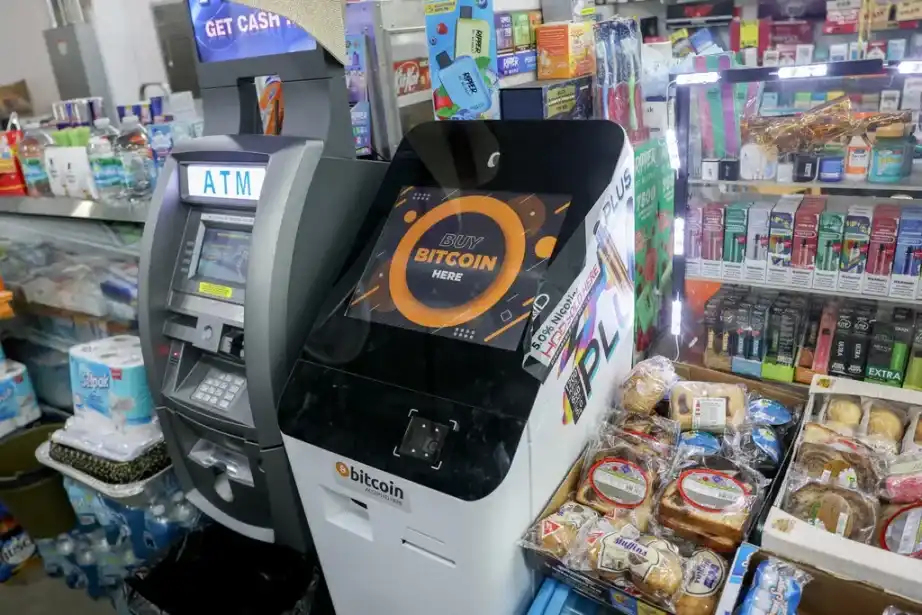
A Bitcoin ATM inside a convenience store in Miami. According to U.S. Treasury Department data, cryptocurrency ATM operators are present in at least 28,000 locations.
In 2023, Bitcoin Depot went public through a merger with a special purpose acquisition company (SPAC). The company stated that it operates over 9,000 ATMs, making it the largest cryptocurrency ATM network in North America. Since its inception, the company has processed 4 million transactions with a total volume of $3.3 billion.
However, law enforcement agencies have indicated that once cash is exchanged for cryptocurrency through these machines, fraudsters can move these cryptocurrencies to jurisdictions beyond the reach of U.S. law enforcement, making it nearly impossible to recover victims' losses.
Several states, including California and Illinois, have started to restrict the use of cryptocurrency ATMs, with some states setting limits on transaction amounts and fees charged by operators.
When discussing whether to restrict cryptocurrency ATMs in 2023, Alexander Gammelgard, then Chairman of the California Police Chiefs Association, warned of the risks of such devices in a letter to state lawmakers and supported related regulatory proposals.
In his letter, he wrote, "These devices allow international criminal organizations to steal funds from California residents without the need for any involvement of banks or financial institutions, which could otherwise assist law enforcement in apprehending criminals and recovering stolen property."
That same year, California passed a series of regulations, limiting individual daily transactions through cryptocurrency ATMs to $1,000, with a fee cap set at $5 or 15% of the transaction amount (whichever is higher).
Many cryptocurrency ATM operators have stated that fraudulent transactions account for a very small percentage. Chris Ryan, Chief Legal Officer of Bitcoin Depot, testified to Texas lawmakers this year that fraudulent transactions make up 2% to 3% of the company's total U.S. transactions in the area. In a statement, the company said that consumer protection is its top priority and that it has one of the most comprehensive compliance plans in the industry.
Byte Federal, operating more than 1,200 cryptocurrency ATMs, stated that from July 2024 to the first half of 2025, fraudulent victim transactions accounted for only 1.2%. The company's CEO, Paul Tarantino, stated that for registered users aged 60 and above, the company proactively calls to alert them to potential fraud risks, successfully preventing over 80% of suspicious transactions.
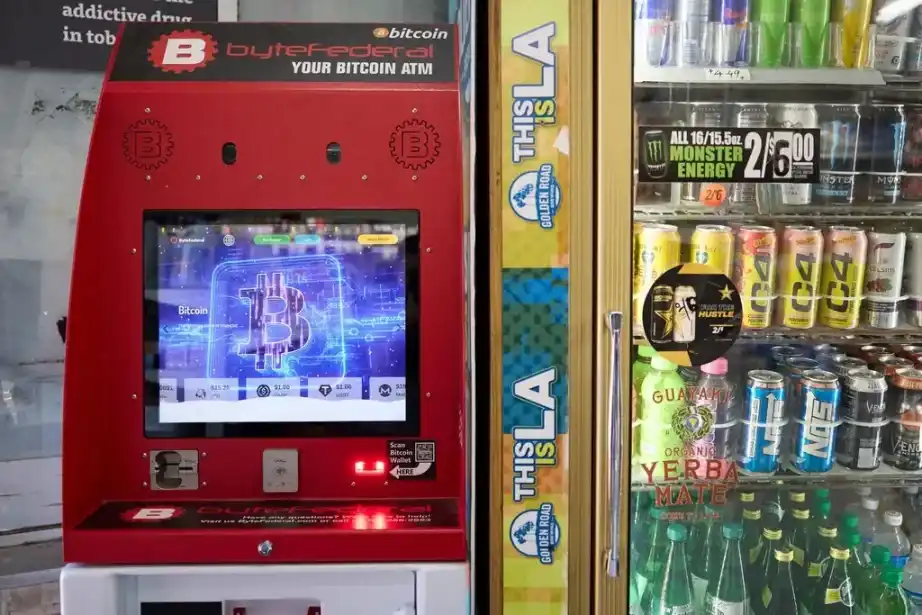
Paul Tarantino, CEO of cryptocurrency ATM operator Byte Federal, stated that the company calls registered customers aged 60 and above to alert them to potential fraud.
Many cryptocurrency ATM operators have also posted fraud alerts on their devices, requiring users to confirm that the funds being deposited are going to their own cryptocurrency accounts rather than an account managed by others. They also stated that they cooperate with law enforcement agencies.
The Chief Operating Officer of Coinme, the company that provides software support for ATMs, Sung Choi, stated that the Seattle-based company continues to improve in identifying and preventing potential fraudulent transactions. However, fraudsters are still able to find ways to circumvent anti-fraud measures.
"No matter how hard we try, fraudsters' methods are quite sophisticated, and they always seem to be one step ahead," Sung Choi said.
Athena Bitcoin stated that they strive to prevent fraud but cannot control users' decisions, similar to how banks are not responsible for users' actions after withdrawing money and transferring it to others. CoinFlip also mentioned their commitment to anti-fraud efforts and their high standards for compliance and transparency.
For fraud victims who are deceived into using such devices, the consequences can be devastating. In 2022, Connie Ruth Morris, a retired nurse from Amarillo, Texas, joined an online fan group of Brazilian actor and singer Daniel Boaventura and started receiving text messages from someone claiming to be Boaventura.
After several days of texting, the person confessed his love to the 72-year-old Morris and asked her to transfer money via a cryptocurrency ATM to help him pay off personal debts so they could jointly purchase real estate.
Having been married for over 45 years, Morris agreed to the request. She said that over about six months, she deposited around $300,000 through a cryptocurrency ATM and also sent four iPhone phones and a $200 gift card.
In May 2023, Morris informed her husband that she was leaving him to be with Boaventura. Her son told her that she had been scammed.
By then, most of the family's savings had vanished. Morris and her husband later divorced.
"I was brainwashed too heavily at that time and had lost touch with reality," she said. "I used to be able to help my son and grandchildren, but now I can't."
You may also like

30 Predictions, Filtered for Five 2026 Crypto Consensus

Countdown to Midterm Elections: Will the US Crypto Bill Pass the Test?

2025 Crypto Rich List: 12 Big Winners, Who Bet on the Money Maker?

「Macro Master」 Raoul Pal on 30x Growth Under Indexation: Bitcoin Will Eventually Surpass Gold

Why is the U.S. Embracing Crypto? The Answer May Lie in $37 Trillion Debt

Galaxy's 26 Predictions for Next Year: Bitcoin to Reach New ATH, Stablecoin Transaction Volume to Surpass ACH System
Key Market Information Discrepancy on December 25th - A Must-See! | Alpha Morning Report

Blockchains Quietly Prepare for Quantum Threat as Bitcoin Debates Timeline
Key Takeaways: Several blockchains, including Ethereum, Solana, and Aptos, are actively preparing for the potential threat posed by…
Three Signs that Bitcoin is Discovering its Market Bottom
Key Takeaways: Indicators suggest the selling pressure on Bitcoin is diminishing, hinting at a potential bottom. With improving…

Trump’s World Liberty Financial Token Ends 2025 Significantly Down
Key Takeaways World Liberty Financial, led by the Trump family, witnessed its token value drop by over 40%…

Kraken IPO and M&A Deals to Reignite Crypto’s ‘Mid-Stage’ Cycle
Key Takeaways: Kraken’s upcoming IPO may draw significant interest and capital from traditional finance (TradFi) investors, boosting the…

Extended Crypto ETF Outflows Indicate Institutional Pullback: Glassnode
Key Takeaways: Recent outflows from Bitcoin and Ether ETFs suggest a withdrawal of institutional interest. Institutional disengagement has…

HashKey Secures $250M for New Crypto Fund Amid Strong Institutional Interest
Key Takeaways HashKey Capital successfully secured $250 million for the initial close of its fourth crypto fund, showcasing…

JPMorgan Explores Cryptocurrency Trading for Institutional Clients
Key Takeaways JPMorgan Chase is considering introducing cryptocurrency trading services to its institutional clientele, marking a notable shift…
El Salvador’s Bitcoin Dreams Faced Reality in 2025
Key Takeaways El Salvador’s ambitious Bitcoin strategy, introduced in 2021, faced significant challenges and revisions by 2025, particularly…

Price Predictions for 12/22: SPX, DXY, BTC, ETH, BNB, XRP, SOL, DOGE, ADA, BCH
Key Takeaways: Bitcoin’s recovery efforts are met with strong resistance, indicating potential bearish trends at higher levels. Altcoins…

Bitcoin Perpetual Open Interest Surges as Traders Look Forward to Year-End Rally
Key Takeaways Bitcoin perpetual open interest has risen to 310,000 BTC, reflecting a bullish sentiment among traders as…

What Happened in Crypto Today: Insights on Bitcoin, IMF, and Ether ETFs
Key Takeaways Anthony Pompliano anticipates a stable Bitcoin price trajectory in the coming year due to its lack…
30 Predictions, Filtered for Five 2026 Crypto Consensus
Countdown to Midterm Elections: Will the US Crypto Bill Pass the Test?
2025 Crypto Rich List: 12 Big Winners, Who Bet on the Money Maker?
「Macro Master」 Raoul Pal on 30x Growth Under Indexation: Bitcoin Will Eventually Surpass Gold
Why is the U.S. Embracing Crypto? The Answer May Lie in $37 Trillion Debt
Galaxy's 26 Predictions for Next Year: Bitcoin to Reach New ATH, Stablecoin Transaction Volume to Surpass ACH System
Popular coins
Latest Crypto News


Customer Support:@weikecs
Business Cooperation:@weikecs
Quant Trading & MM:bd@weex.com
VIP Services:support@weex.com
 App
App