
- Buy Crypto
- Markets
- Futures
- Spot
- Copy Trade
 Earn
Earn- More
RIF and URO Surging: The Rise of Molecule's Three Major Engines?

Original Article Title: "DeSci Mining | RIF, URO Surge, Behind the Rise of Molecule's Three Engines?"
Original Author: KarenZ, Foresight News
In mid-November, within just a few days, RIF and URO experienced astonishing thousand-fold increases, leading the DeSci market into a phase of consolidation and pullback. Notably, over the past weekend, URO saw a strong rebound, with gains approaching 200%. This led us to delve into the identity of the platform pump.science driving these movements. At the same time, Molecule, part of the same team behind pump.science and Bio Protocol, plays what role?
What Is Molecule?
Molecule aims to advance scientific research through democratized funding and IP tokenization, converting IP into liquid on-chain assets to incentivize collaboration between researchers and funders, cultivating a more collaborative and efficient scientific research ecosystem.
Molecule is leveraging three main modules – Catalyst, a scientific project fair launch platform, Bio, a bottom-up DeSci new financial layer, and Pump.science, a no-barrier scientific experimentation and fundraising platform – to strengthen the bridge between infrastructure, financial layers, and research projects and users.
In terms of background, in June 2022, Molecule completed a $13 million seed round, led by Northpond Ventures, with participation from Backed VC, Shine Capital, Speedinvest, and former Coinbase CTO Balaji Srinivasan. In December 2023, Molecule secured a $1 million investment from Sora Ventures. As mentioned in the "DeSci Mining | Leading Longevity Research with VitaDAO" article, Paul Kohlhaas, the whitepaper author of VitaDAO, is also the founder and CEO of DeSci projects Molecule and BIO Protocol, with previous experience at Consensys. Tyler Golato is a co-founder of VitaDAO, Molecule, and BIO Protocol.
Catalyst – Scientific Project Fair Launch Platform
Catalyst is one of Molecule's core platforms, enabling the tokenization and issuance of IP through IP-NFT and IP Token (IPT). When discussing Catalyst, we must first touch on Molecule's IP-NFT and IP Token (IPT). Specifically, an IP-NFT bundles the potential intellectual property of a research project into a single IP-NFT. The project can then tokenize the IP-NFT into an IP Token (the governance token of the IP-NFT), decentralizing the IP directly to individuals (IP Token holders) to raise funds. Holders of the IP Token have partial governance rights over the IP.
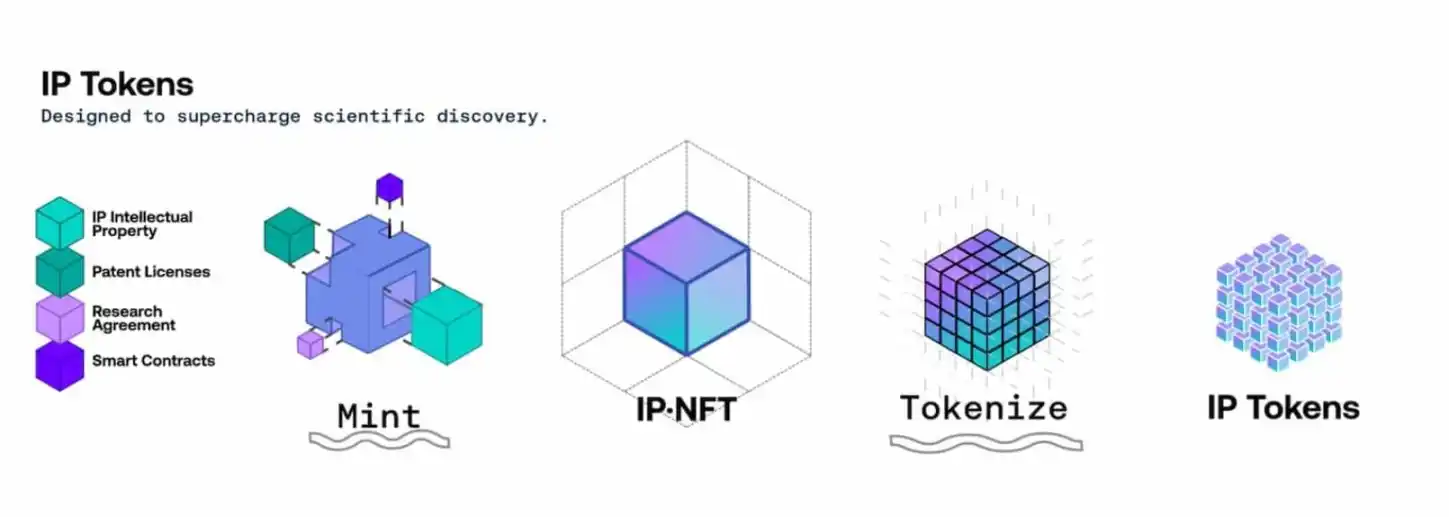
More precisely, an IP-NFT combines two legal agreements with a smart contract to achieve on-chain registration and management of IP and research data rights. On the other hand, the IPT represents partial governance rights over the resulting IP. Holders have governance rights, knowledge of research and development progress updates, detailed reports, among other rights. However, it does not guarantee holders a financial return or revenue share from the commercialization of these assets.
Through Catalyst, funding can be provided by contributing ETH to a project on Base, with the price following a bonding curve. Once the funding goal for the selected project is met, the negotiation phase begins (lasting a maximum of 12 weeks). During the negotiation phase, funds are locked in the project's wallet. Upon completion, the project's IP-NFT is minted, and IP Tokens are issued. In the event of a successful crowdfunding, users receive a proportionate amount of IPT. It is worth noting that both the purchased IP Tokens and the excess ETH contributed are locked for a period before being released.
Of course, if a project does not reach its funding target before the deadline or if negotiations fail, the funder will receive a full refund of the contributed ETH. However, a 5% fee will be deducted if funds are withdrawn during the fundraising process.
On the Molecule Catalyst platform, ongoing research projects exploring token issuance include research on Alzheimer's antibodies, restoring brain function through transplantable tissue, engineering fibers, enamel erosion, and enzymes associated with inflammation and aging.
BIO Protocol——The Bottom-Up DeSci New Finance Layer
As a governance and liquidity protocol within the DeSci field, BIO Protocol aims to accelerate the development of biotechnology, allowing global patients, scientists, and biotechnology professionals to collectively fund, develop, and own tokenized biotech projects and IP.
errorBIO Total Supply is 3.32 Billion, with no maximum supply (determined by BIO governance vote) and currently in a non-transferable state on Ethereum. In terms of token distribution, Ecosystem Incentives account for 25%, Community Auction accounts for 20%, Molecule Ecosystem Fund accounts for 5%, Community Airdrop accounts for 6%, Investors account for 13.6%, Core Contributors account for 21.2%, and allocated to Molecul 5%. The airdrop targets include BioDAO token holders, early supporters of BIO from concept to launch, including core contributors to Cohort 1 BioDAO from bio.xyz by Molecule, and others.
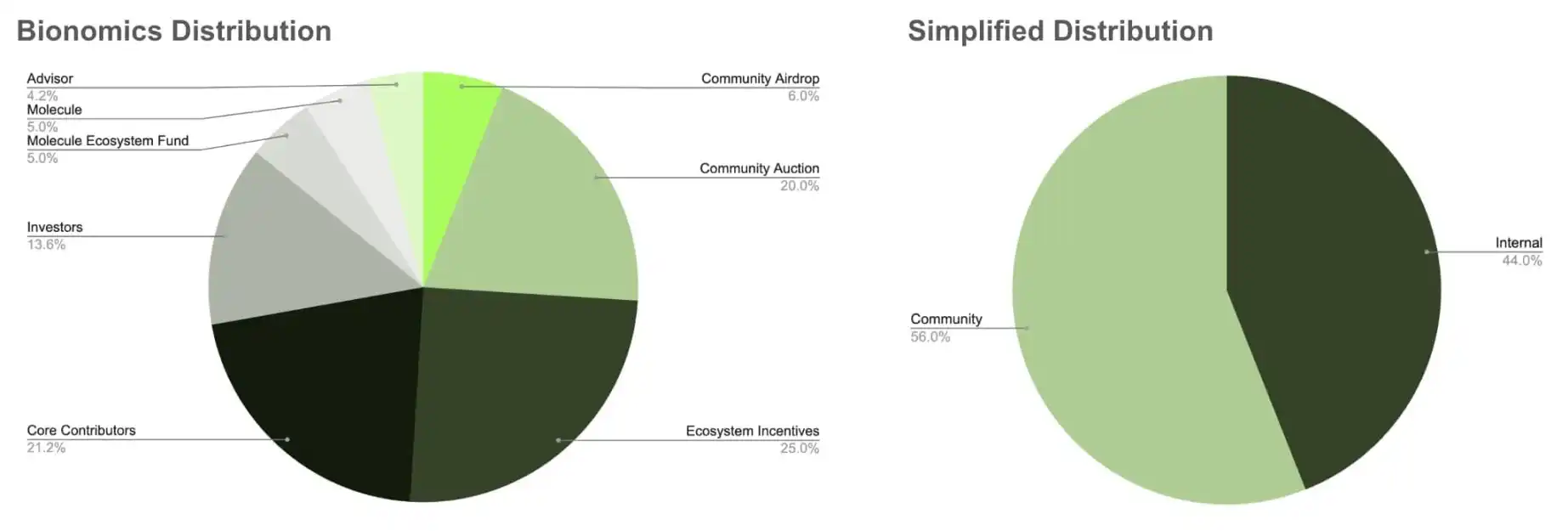
The BIO ecosystem is made up of multiple BioDAOs, each BioDAO specifically developing research and products in a particular scientific field.
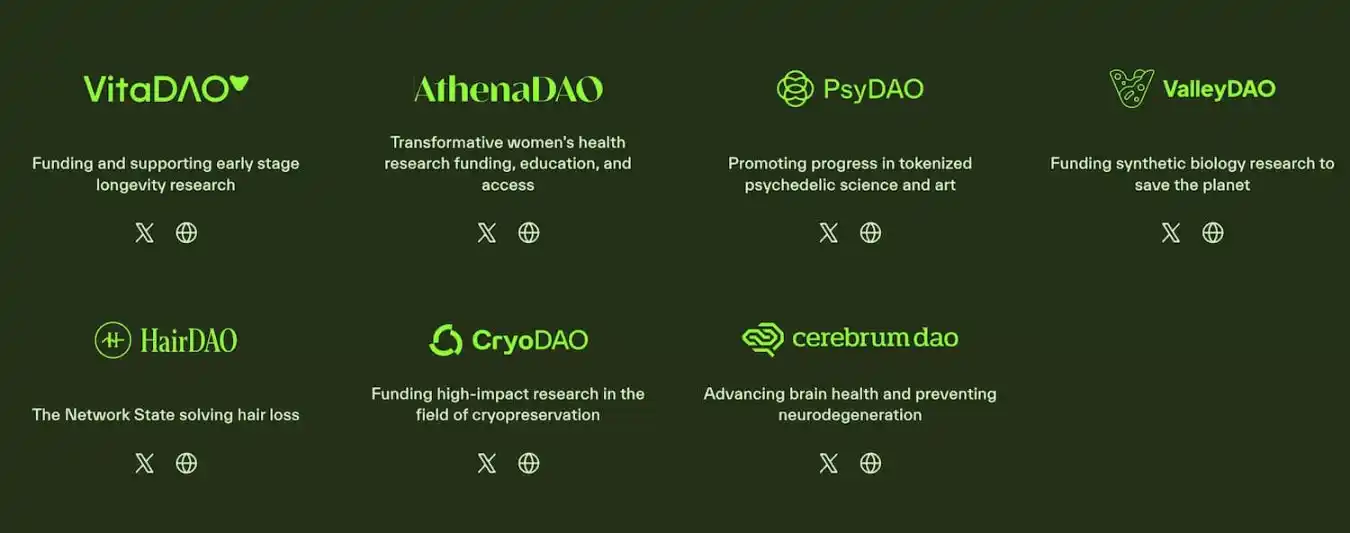
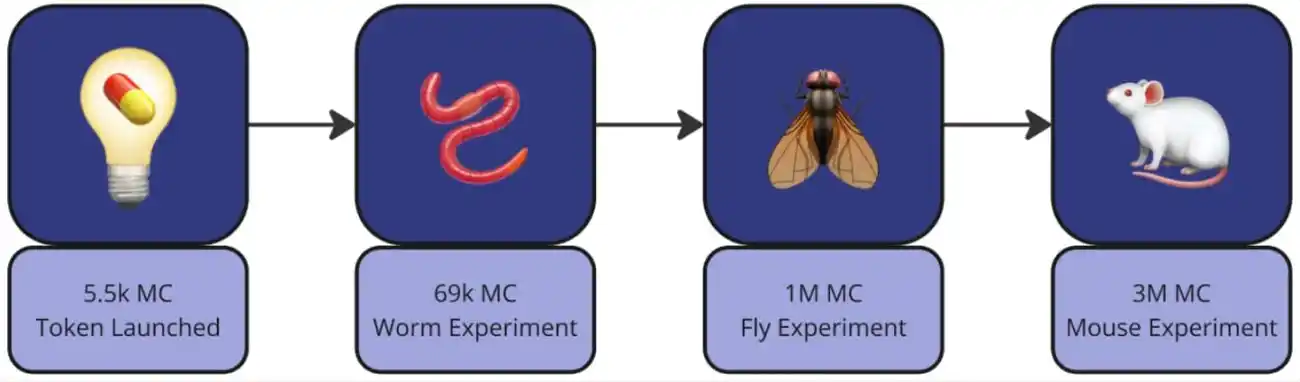
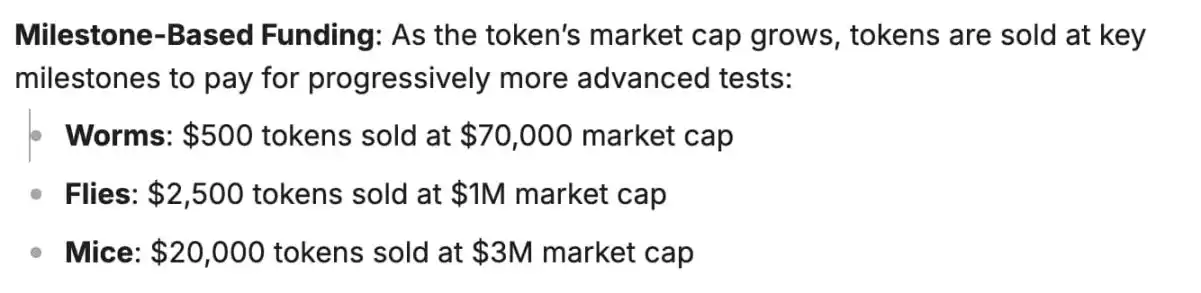
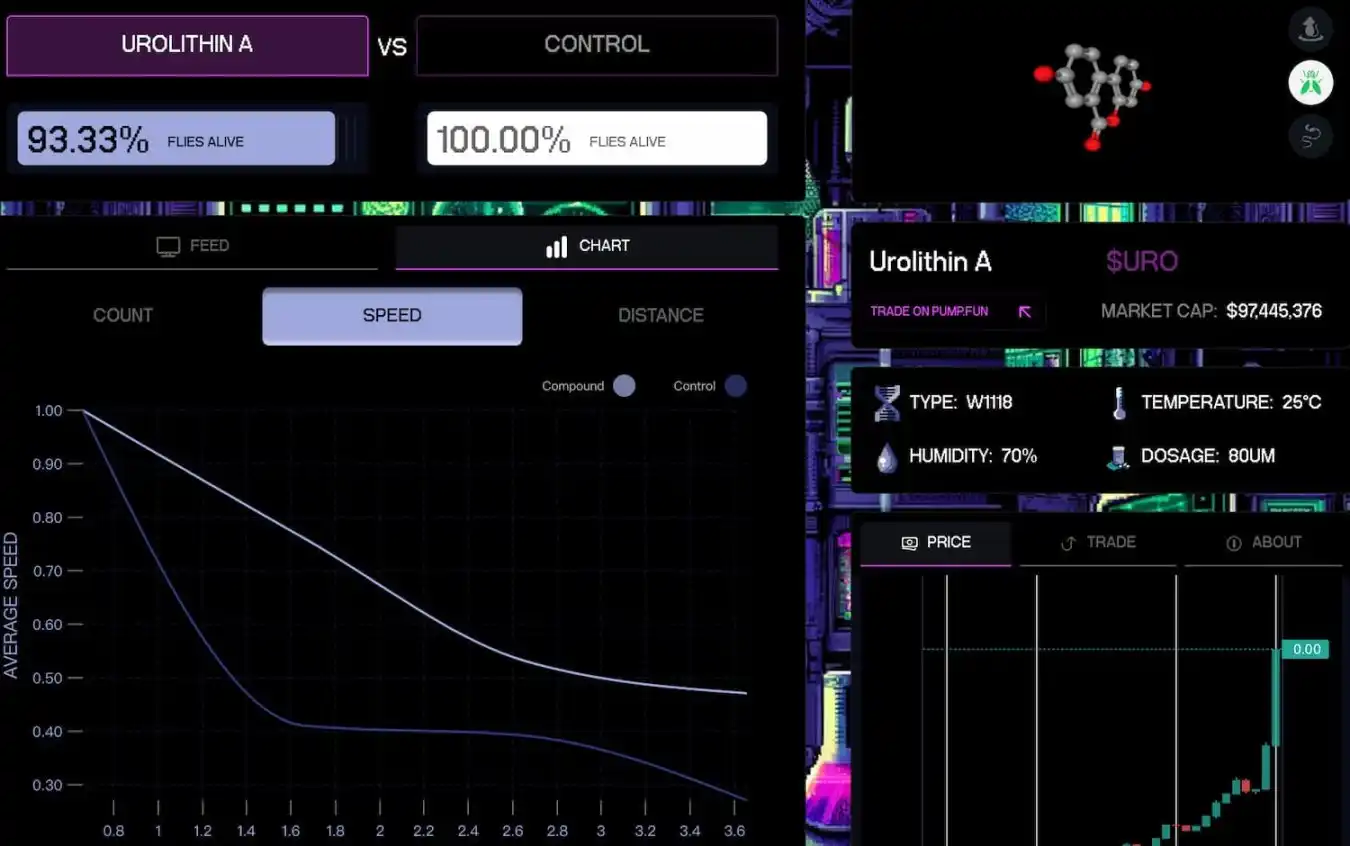
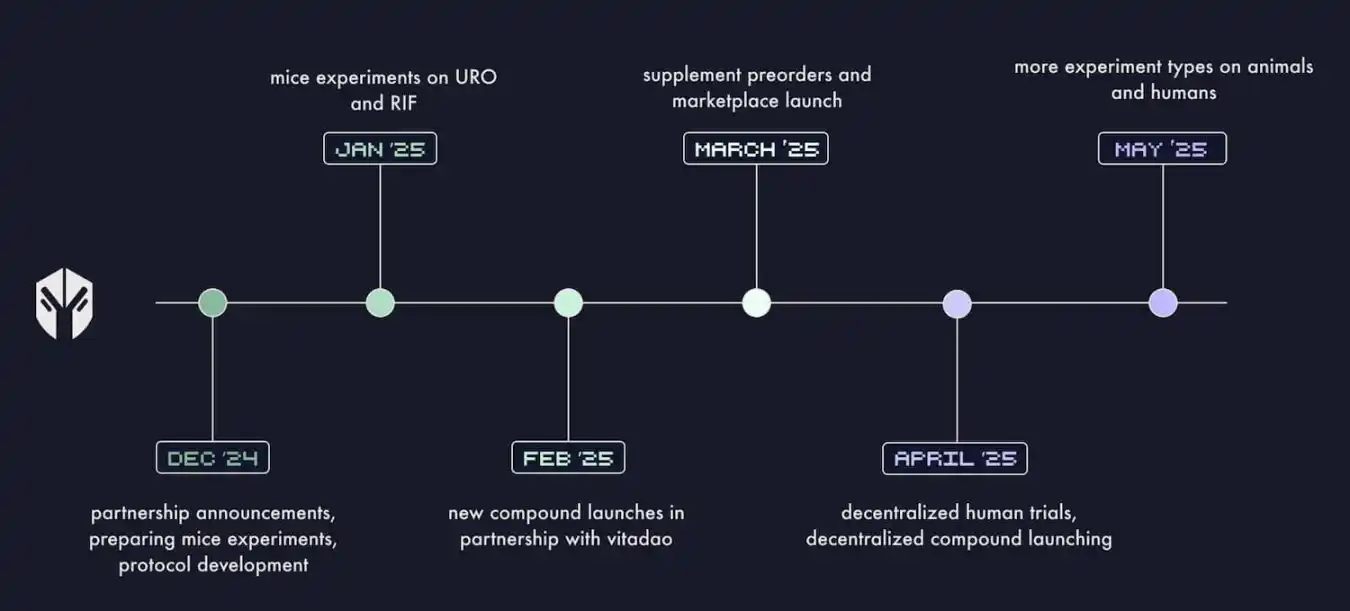
· VitaDAO (token VITA, $130 Million market cap): See " · AthenaDAO (ATH, $9.7 Million market cap): Dedicated to advancing research, education, and funding in women's health, starting from women's reproductive health. · PsyDAO (PSY, $4.7 Million market cap): Focused on psychedelic science research, completed its first PSY token sale in mid-November 2024, raising $2 million. · ValleyDAO (GROW, $9 Million market cap): Focuses on synthetic biology, having raised over $2 million and partnered with Imperial College London. · HairDAO (HAIR, $70 Million token market cap): Aims to address hair loss, has launched Follicool shampoo products free from harmful parabens or sulfates (including SHAMPOO membership), officially designed to clean and nourish follicles for all hair and skin types. Consumers receive 1 million POO tokens with the purchase of each FolliCool ($49.95). POO manages the future development of HairDAO shampoo product catalogue, including all sales revenue. HairDAO also advocates for more use of human hair follicle organ culture (HFOC) models by human biologists in preclinical research. However, the research costs for HFOC are too high for mainstream adoption, so HairDAO plans to expand HFOC over the next year, reducing the cost of each study by 60 times. · CryoDAO (CRYO, $16 million market cap): Dedicated to advancing cryopreservation research. · CerebrumDAO (NEURON, $11 million market cap): Focused on promoting brain health, raising over $1.5 million. CerebrumDAO has entered into an agreement with Fission Pharma to address mitochondrial dysfunction in neurodegenerative diseases. The above 7 BioDAOs are the first batch of BioDAOs for the BIO Incubator, and the following three BioDAOs are the early-batch projects for the second round of BIO: · Long COVID Labs: Founded by serial healthcare entrepreneur Rohan Dixit, aiming to incentivize collaboration and data sharing among scientists, patients, and supporters. The first candidate therapeutic is a combination of long-acting monoclonal antibodies and a viral replication inhibitor. · Curetopia: Focused on rare long-tail diseases. · Quantum Biology DAO: Building a quantum microscope to observe quantum phenomena in real-time, supporting research in the field of quantum biology (this project has initiated a token auction on Bio). Quantum Biology DAO is founded and led by quantum engineer Clarice D. Aiello. In September of this year, the Solana Foundation granted Molecule funding to build the Solana-native DeSci funding platform pump.science. pump.science is built on top of Pump.fun. In contrast to Catalyst, pump.science is an almost frictionless research experiment and funding platform. On pump.science, anyone, including drug developers, scientists, and others, can submit ideas for longevity and wellness, drug strategies, and raise funds for their experiments. Others can bet on which interventions will extend the lifespan of the different model organisms being tested and support promising ideas. On Pump.science, drug developers and scientists submitting test interventions are required to pay a certain amount of SOL as an experimental fee. This SOL will be used to purchase the initial batch of tokens, and once the program reaches a certain market value threshold, experiments will be conducted on the Wormbot platform. Speaking of Wormbot, it is a low-cost, rapid experimentation platform designed to test a large number of potential longevity therapies inexpensively. When this scheme is tested on real nematodes, the experiment data flow can be observed. The data is regularly transmitted to the user for the user to evaluate the value of intervention measures. Of course, further testing will be conducted on fruit flies and mice to collect more expensive, time-consuming, but more human-relevant data. After the relevant intervention measures are approved, they can be sold as supplements or research chemicals. Of course, as the token's market value grows, the token will be sold at key milestones (at $70,000 market cap, $1 million market cap, and $3 million market cap) to cover the progressively higher testing costs. Currently, there are only two experiments on pump.science, Rifampicin (RIF) and Urolithin A (URO), both in the fruit fly testing stage, with a market cap of $190 million and $97 million, respectively. The completion progress of both experiments is 2.74%. Rifampicin is an antibiotic used to treat various types of bacterial infections, including tuberculosis, leprosy, and Legionnaires' disease (according to Wikipedia), and has been shown to activate cells' natural defense mechanisms against stress and damage in tiny organisms like C. elegans. Urolithin A is a compound produced by the body when consuming foods rich in ellagitannins, such as pomegranates, and helps drive the process of mitochondrial autophagy, clearing out old, dysfunctional mitochondria to make way for new, healthy mitochondria. In human studies, Urolithin A has shown promising results in promoting muscle health and energy. Both experiments on pump.science test the longevity of fruit flies by comparing them with control compounds and placebos without active drug treatment. Each test tube containing either the compound or placebo has 15 fruit flies, and the fruit fly monitoring data is regularly uploaded to the platform for evaluation. It is worth noting that the lifespan of nematodes in the experimental environment is limited to 20 to 30 days, and the cost of conducting such an experiment is approximately between $300 and $500. In comparison, the lifespan of fruit flies is slightly longer, about 3 months, but the corresponding experimental cost is around two to three thousand dollars. The cost of each mouse experiment ranges from $30,000 to $60,000, with a lifespan of up to 2 to 3 years. Therefore, when it comes to subsequent stage testing, the accumulated time costs bring a high level of uncertainty. According to the pump.science roadmap, on January 25, 2025, mouse trials will be conducted using Rifampicin (RIF) and Urolithin A (URO), on February 25, 2025, a collaboration with VitaDAO will be initiated to launch a new compound, on March 25, supplement reservations will be open and the market will be launched, and human trials will take place in April. In early December, Molecule also announced several recent plans, including pump.science's collaboration with Bio Protocol to advance BioDAO research, at the beginning of 2025, VitaDAO acquiring longevity compounds from Pump Science's The Longevity Prize and developing them into supplements; launching the DeSci ecosystem fund, providing half of Molecule's BIO allocation (166 million BIO) to drive groundbreaking science; and conducting buybacks of RIF and URO tokens worth $100,000 each to reaffirm its support commitment to pump.science and PhDegen. Currently, the DeSci track is still in a very early stage and has shown immense potential for development. This potential is expected to stem from the recognition of its potential to address transparency, funding, and collaboration issues in traditional scientific research. However, DeSci still faces challenges, including but not limited to technology adoption, regulatory issues, and how to maintain a balance between the rigor and transparency of scientific research.pump.science –– Frictionless Science Experiment and Funding Platform
You may also like

Alibaba Backed Latin America Stablecoin Company, Why VelaFi?

AI Crypto Trading in 2026: How AI Agents Use Stablecoins for Capital Management and Settlement
Learn how AI agents use stablecoins for crypto trading in 2026 — managing capital, settling transactions, and operating across exchanges and DeFi protocols.

US Senate Agriculture Committee Schedules January 27 for Crypto Market Structure Hearing
Key Takeaways The Senate Agriculture Committee will release its crypto market structure bill on January 21, followed by…

Key Market Information Discrepancy on January 14th – A Must-See! | Alpha Early Report
Key Takeaways Bitcoin reached a new milestone, hitting $96,000, while Ethereum surpassed $3,300. Privacy coins such as ORDI…

Tether Freezes $182 Million in Assets in a Day: Is USDT Still a Neutral Coin?
Key Takeaways Tether recently froze $182 million in USDT across five wallets on the Tron blockchain, raising questions…

A Developer’s Three-Year Gamble on Base and the Turn Towards Solana
Key Takeaways: Base’s promise to support developers fell short, leading many to seek more supportive ecosystems. Developer frustration…

ETHGas Foundation Coin Issuance: Examining the Emotional Transaction Mechanism and Global Insights
Key Takeaways Zama’s token auction on CoinList is polarizing, showcasing potential for future applications amidst short-term market skepticism.…

a16z Secures $15 Billion: Redefining Venture Capital Through Visionary Storytelling
Key Takeaways a16z Raises Capital: The firm has raised an astronomical $15 billion, marking a significant point in…

Founder of DeepSeek’s Magic Square Quantitative Strategy Achieved a 56.55% Return in 2025
Key Takeaways Huansquare Quant, led by Liang Wenfeng, achieved a 56.55% return in 2025. The fund’s assets under…
Analyst: MSTR is the “Mullet” of this Bitcoin Bull Cycle, Acting as a Bitcoin Pressure Relief
MSTR absorbed significant volatility in this Bitcoin cycle, easing potential pressure on Bitcoin itself. Michael Saylor’s strategic issuance…

XMR Surges Over 50% in One Week: Who’s Buying?
Key Takeaways Monero (XMR) defies regulatory pressures, marking a 262% increase since January 2025, reaching an all-time high…

BitGo’s Revenue Surges with Upcoming IPO as Institutional Interest Grows
Key Takeaways BitGo, a major player in cryptocurrency custody, aims to raise $201 million through a U.S. IPO…
The New Era in Bitcoin Core Development: The Rise of Core Maintainer TheCharlatan
Key Takeaways Integration of a New Maintainer: For the first time in three years, a new Bitcoin Core…

Bitwise CIO Predicts Parabolic Bitcoin Surge with Sustained ETF Demand
Key Takeaways Prolonged demand for Bitcoin ETFs may lead to a parabolic rise in Bitcoin’s price, drawing parallels…

Binance Alpha to Launch Empire of Sight (Sight) on January 14
Key Takeaways Binance Alpha will kick off the trading of Empire of Sight (Sight) at 16:00 (UTC+8) on…
Today’s Trump Tariff Decision and Economic Data Releases
Key Takeaways The U.S. Supreme Court is set to rule on a significant Trump tariff case that could…

Binance Wallet Partners with Aster, Launches Seamless On-chain Perpetual Contract Trading
Key Takeaways: Binance Wallet has integrated with Aster to offer a streamlined and stable perpetual contract trading feature…
Final Federal Reserve Chair Candidate Rick Rieder, How He Views Cryptocurrency
Key Takeaways Rick Rieder stands out among the Federal Reserve Chair candidates due to his strong pro-crypto stance,…
Alibaba Backed Latin America Stablecoin Company, Why VelaFi?
AI Crypto Trading in 2026: How AI Agents Use Stablecoins for Capital Management and Settlement
Learn how AI agents use stablecoins for crypto trading in 2026 — managing capital, settling transactions, and operating across exchanges and DeFi protocols.
US Senate Agriculture Committee Schedules January 27 for Crypto Market Structure Hearing
Key Takeaways The Senate Agriculture Committee will release its crypto market structure bill on January 21, followed by…
Key Market Information Discrepancy on January 14th – A Must-See! | Alpha Early Report
Key Takeaways Bitcoin reached a new milestone, hitting $96,000, while Ethereum surpassed $3,300. Privacy coins such as ORDI…
Tether Freezes $182 Million in Assets in a Day: Is USDT Still a Neutral Coin?
Key Takeaways Tether recently froze $182 million in USDT across five wallets on the Tron blockchain, raising questions…
A Developer’s Three-Year Gamble on Base and the Turn Towards Solana
Key Takeaways: Base’s promise to support developers fell short, leading many to seek more supportive ecosystems. Developer frustration…


 App
App