
- Buy Crypto
- Markets
- Futures
- Spot
- Copy Trade
 WE-Launch
Technical Analysis: How was Balancer Hacked for $120 Million, and Where was the Vulnerability? On [date], Balancer, a popular decentralized exchange (DEX), was hacked for $120 million in a sophisticated attack. The vulnerability exploited in this atta...

Original Article Title: "Balancer $120M Hack Vulnerability Technical Analysis"
Original Source: ExVul Security
Foreword
On November 3, 2025, the Balancer protocol was attacked on multiple chains including Arbitrum and Ethereum, resulting in a $120 million asset loss. The attack was primarily due to a dual vulnerability involving precision loss and Invariant manipulation.
Chainlink's infrastructure has long maintained the highest standards in the Web3 space, making it a natural choice for X Layer, which is dedicated to providing institutional-grade tools for developers.
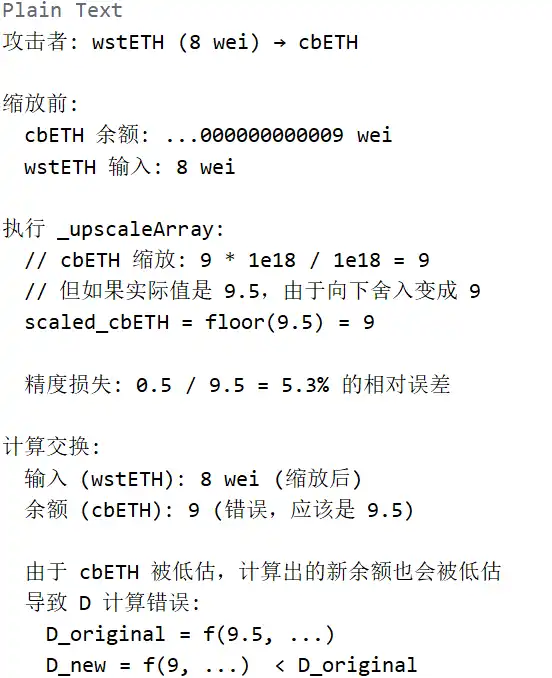
The key issue in this attack lies in the protocol's logic for handling small transactions. When users conduct exchanges with small amounts, the protocol invokes the _upscaleArray function, which uses mulDown for rounding down values. When the balance in the transaction and the input amount both hit a specific rounding boundary (e.g., the 8-9 wei range), a noticeable relative precision error occurs.
This precision error is propagated to the calculation of the protocol's Invariant value D, causing an abnormal reduction in the D value. The fluctuation of the D value directly lowers the price of the Balancer Pool Token (BPT) in the Balancer protocol. The hacker exploited this suppressed BPT price through a premeditated trading path to conduct arbitrage, ultimately leading to a massive asset loss.
Exploited Transaction:
https://etherscan.io/tx/0x6ed07db1a9fe5c0794d44cd36081d6a6df103fab868cdd75d581e3bd23bc9742
Asset Transfer Transaction:
https://etherscan.io/tx/0xd155207261712c35fa3d472ed1e51bfcd816e616dd4f517fa5959836f5b48569
Technical Analysis
Attack Vector
The entry point of the attack was the Balancer: Vault contract, with the corresponding entry function being the batchSwap function, which internally calls onSwap for token exchanges.
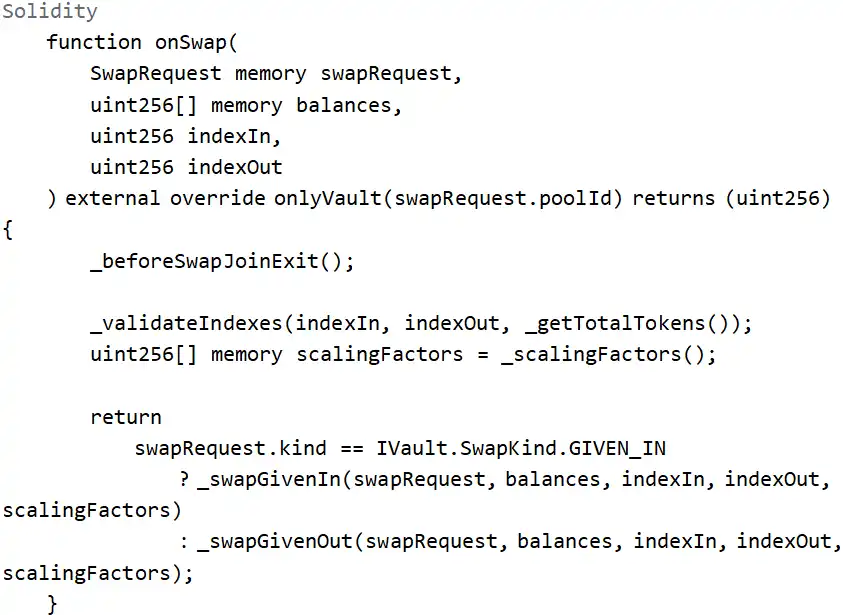
From the perspective of function parameters and restrictions, several pieces of information can be obtained:
1. The attacker needs to call this function through the Vault and cannot call it directly.
2. The function will internally call _scalingFactors() to get the scaling factor for scaling operations.
3. The scaling operation is concentrated in either _swapGivenIn or _swapGivenOut.
Attack Pattern Analysis
BPT Price Calculation Mechanism
In Balancer's stable pool model, the BPT Price is a crucial reference point that determines how much BPT a user receives and how much each BPT receives in assets.

In the pool's exchange calculation:
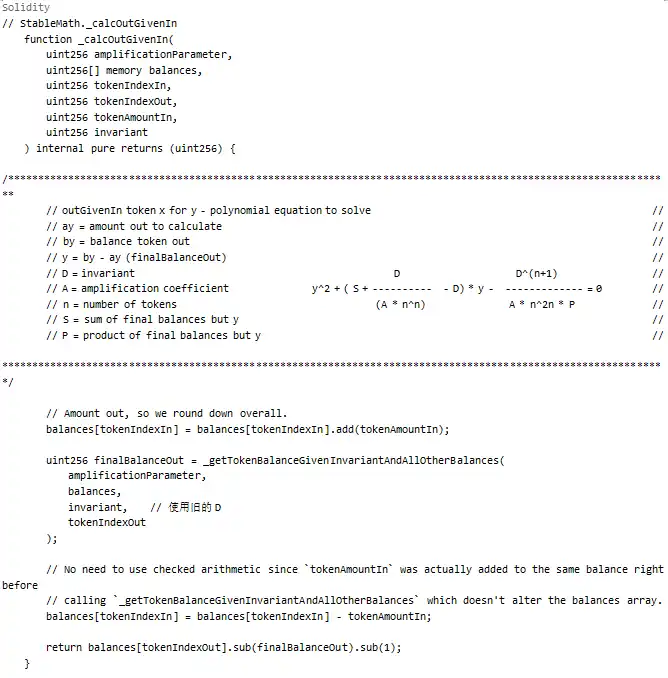
Where the part acting as the BPT Price anchor is an immutable value D, which means controlling the BPT Price requires controlling D. Let's analyze the calculation process of D further:
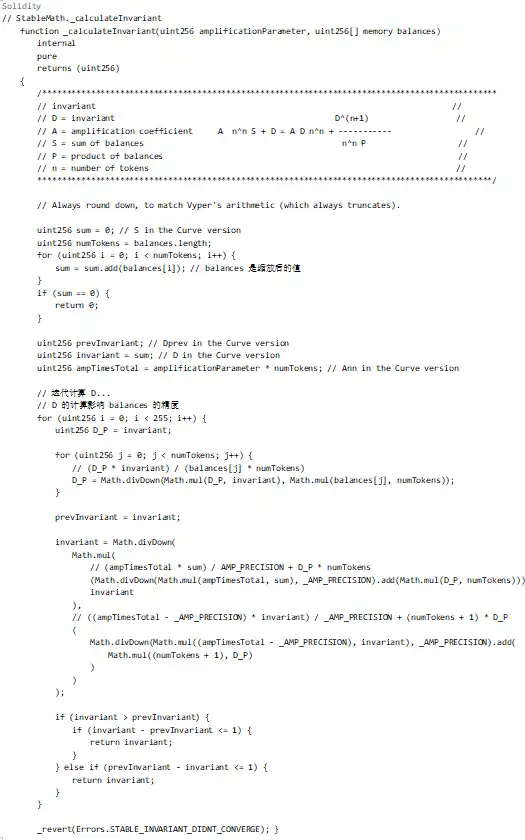
In the above code, the calculation process of D depends on the scaled balances array. This means that an operation is needed to change the precision of these balances, leading to an incorrect D calculation.
Root Cause of Precision Loss
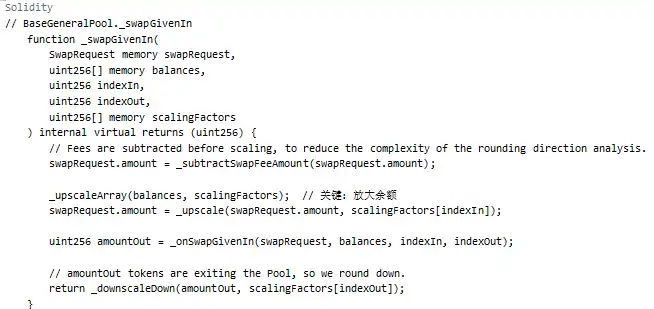
Scaling Operation:
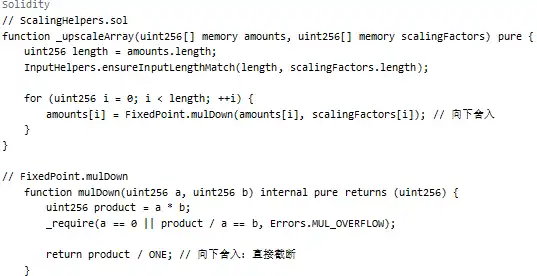
As shown above, when passing through _upscaleArray, if the balance is very small (e.g., 8-9 wei), the rounding down in mulDown will result in significant precision loss.
Attack Process Detailed
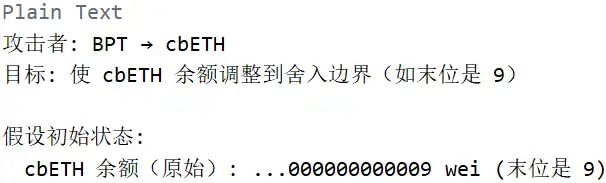
Phase 1: Adjustment to Rounding Boundary
Phase 2: Trigger Precision Loss (Core Vulnerability)
Phase 3: Exploiting Depressed BPT Price for Profit
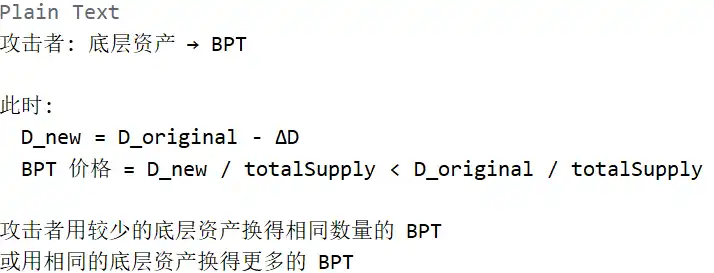
Above, the attacker uses Batch Swap to perform multiple exchanges in one transaction:
1. First Exchange: BPT → cbETH (balance adjustment)
2. Second Exchange: wstETH (8) → cbETH (trigger precision loss)
3. Third Exchange: Underlying Asset → BPT (profit-taking)
All these exchanges occur in the same batch swap transaction, sharing the same balance state, but each exchange calls _upscaleArray to modify the balances array.
Lack of Callback Mechanism
The main process is initiated by the Vault. How does this lead to accumulating precision loss? The answer lies in the passing mechanism of the balances array.
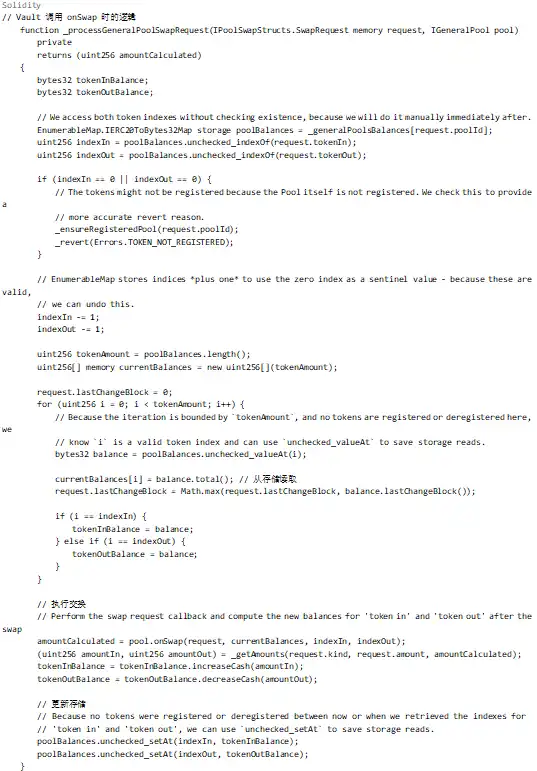
Looking at the above code, although Vault creates a new currentBalances array each time onSwap is called, in Batch Swap:
1. After the first swap, the balance is updated (but due to precision loss, the updated value may be inaccurate)
2. The second swap continues the calculation based on the result of the first swap
3. Precision loss accumulates, eventually causing the invariant value D to significantly decrease
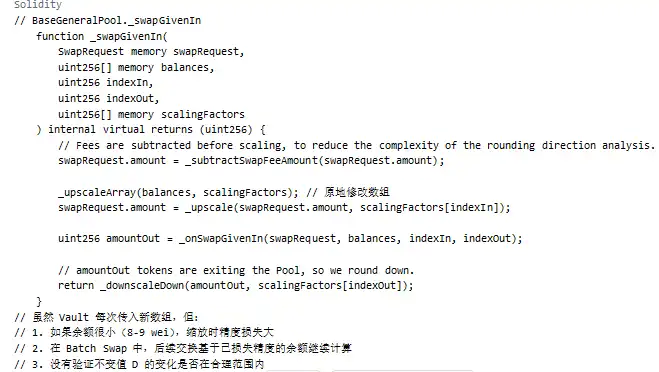
Key Issue:
Summary
The Balancer attack can be summarized for the following reasons:
1. Scaling Function Uses Round Down: _upscaleArray uses mulDown for scaling, which results in significant relative precision loss when the balance is very small (e.g., 8-9 wei).
2. Invariant Value Calculation Is Sensitivity to Precision: The calculation of the invariant value D relies on the scaled balances array, and precision loss directly affects the calculation of D, causing D to decrease.
3. Lack of Invariant Value Change Validation: During the swap process, there was no validation to ensure that the change in the invariant value D was within a reasonable range, allowing attackers to repeatedly exploit precision loss to suppress the BPT price.
4. Accumulation of Precision Loss in Batch Swaps: Within the same batch swap, the precision loss from multiple swaps accumulates and eventually leads to significant financial losses.
These two issues—precision loss and lack of validation—combined with the attacker's careful design of boundary conditions, resulted in this loss.
This article is a contribution and does not represent the views of BlockBeats.
You may also like

Blockchains Quietly Prepare for Quantum Threat as Bitcoin Debates Timeline
Key Takeaways: Several blockchains, including Ethereum, Solana, and Aptos, are actively preparing for the potential threat posed by…

Former SEC Counsel Explains What It Takes to Make RWAs Compliant
Key Takeaways The SEC’s shifting approach is aiding the growth of Real-World Assets (RWAs), but jurisdictional and yield…

Trend Research Quietly Becomes One of Ethereum’s Largest Whales with Major ETH Acquisition
Key Takeaways Trend Research has acquired 46,379 ETH, boosting their total holdings to about 580,000 ETH. The company,…

Web3 and DApps in 2026: A Utility-Driven Year for Crypto
Key Takeaways The transition to utility in the crypto sector has set a new path for 2026, emphasizing…

Base's 2025 Report Card: Revenue Grows 30X, Solidifies L2 Leadership

Venture Capital Post-Mortem 2025: Hashrate is King, Narrative is Dead

Are Those High-Raised 2021 Projects Still Alive?

Aave Community Governance Drama Escalates, What's the Overseas Crypto Community Talking About Today?
Polymarket Announces In-House L2, Is Polygon's Ace Up?

Ether pumps to outsiders, dumps in-house. Can Tom Lee's team still be trusted?

The Secret Centralization Landscape of Stablecoin Payments: 85% of Transaction Volume Controlled by Top 1000 Wallets

Audiera Sees Massive Price Surge – Key Cryptocurrency Updates
Key Takeaways Audiera (BEAT) has witnessed significant growth, experiencing a 70.10% increase in the past week. Despite the…

Market Outlook: The Future of Cryptocurrency by 2026
Key Takeaways The report focuses on the impact of critical factors like Bitcoin, Ethereum, and Solana, alongside regulatory…

Stability in the Crypto World: Understanding Stablecoin Usage and Its Implications
Key Takeaways Stablecoin use in payments has rapidly increased alongside blockchain technology advancements. Stablecoins USDT and USDC dominate…
Trump’s World Liberty Financial Token Ends 2025 Down Over 40%
Key Takeaways World Liberty Financial, a Trump family crypto project, faces substantial losses in 2025. The project initially…
Blockchains Quietly Prepare for Quantum Threat Amid Bitcoin’s Debate Over Timeline
Key Takeaways Many blockchains are preparing for potential threats from quantum computing by integrating post-quantum technologies. Ethereum views…
Ronin and ZKsync’s Onchain Metrics Experienced Notable Declines in 2025
Key Takeaways Some of the major blockchain networks, including Ronin and ZKsync, saw a significant reduction in onchain…

Stablecoin Weekly Report | Decrypting How Crypto is Reinventing the Internet's Killer Apps through Coinbase's System Upgrade
Blockchains Quietly Prepare for Quantum Threat as Bitcoin Debates Timeline
Key Takeaways: Several blockchains, including Ethereum, Solana, and Aptos, are actively preparing for the potential threat posed by…
Former SEC Counsel Explains What It Takes to Make RWAs Compliant
Key Takeaways The SEC’s shifting approach is aiding the growth of Real-World Assets (RWAs), but jurisdictional and yield…
Trend Research Quietly Becomes One of Ethereum’s Largest Whales with Major ETH Acquisition
Key Takeaways Trend Research has acquired 46,379 ETH, boosting their total holdings to about 580,000 ETH. The company,…
Web3 and DApps in 2026: A Utility-Driven Year for Crypto
Key Takeaways The transition to utility in the crypto sector has set a new path for 2026, emphasizing…
Base's 2025 Report Card: Revenue Grows 30X, Solidifies L2 Leadership
Venture Capital Post-Mortem 2025: Hashrate is King, Narrative is Dead
Popular coins
Latest Crypto News


Customer Support:@weikecs
Business Cooperation:@weikecs
Quant Trading & MM:bd@weex.com
VIP Services:support@weex.com
 App
App