
- Buy Crypto
- Markets
- Futures
- Spot
- Copy Trade
 WE-Launch
Uncovering the USDE Crash: Exclusive Orderbook Insights Reveal Oracle Flaws and Market Chaos

Imagine a seemingly stable digital asset suddenly plummeting like a house of cards in a windstorm—that’s exactly what happened with the USDE crash on October 10, 2024. This event wasn’t just another dip; it marked the biggest liquidation frenzy in cryptocurrency history, wiping out billions and exposing hidden vulnerabilities in how prices are determined. Drawing from freshly analyzed orderbook data, we’ll dive into what went wrong, why it matters, and how it compares to past market meltdowns, all while keeping things straightforward and relatable.
The Massive Liquidation Wave That Shook Crypto
Picture this: a single day where over $19 billion vanished in liquidations, according to the latest figures from market trackers as of October 15, 2025. That’s a staggering drop that slashed open interest by $65 billion, making infamous events like the 2020 COVID-19 market plunge—with its $1.2 billion in losses—or the 2022 FTX fallout at $1.6 billion seem tame by comparison. Fast-forward to today, and updated data shows the ripple effects lingering, with total crypto market cap still recovering from that hit, hovering around $2.5 trillion per CoinMarketCap’s most recent reports.
What sparked this chaos? Investigators now point to a weak spot in pricing mechanisms on major exchanges, where certain tokens like USDE, bnSOL, and wBETH relied on internal orderbook info rather than secure external oracles. This setup left users, especially those using advanced account features, wide open to sudden liquidations during volatile swings. While evidence of a targeted exploit remains shaky, the sheer scale—USDE alone triggered about $346 million in cascading wipes, outpacing wBETH’s $169 million and bnSOL’s $77 million—raises eyebrows. It’s like leaving your front door unlocked in a storm; one gust, and everything inside gets tossed.
In the spirit of learning from history, this crash echoes the UST depeg of 2022, but with a twist—USDE’s backing held firm, with mints and redemptions chugging along normally. Yet, the absence of robust external checks allowed internal data glitches to amplify the damage, much like how a faulty GPS can send you miles off course.
Diving Deep into the Liquidity Collapse
Thanks to cutting-edge analysis from AI-powered market tools, we’ve got a front-row seat to the meltdown on the USDE/USDT pair. Before the storm hit, liquidity sat comfortably at around $89 million, evenly split between buys and sells. But between 21:40 and 21:55 UTC on that fateful day, it cratered by 74%, bottoming out at $23 million. By 21:54, it was a ghost town—down to $2 million, with bid-ask spreads exploding to 22%. Trading volume skyrocketed 896 times over, dominated by a 99% drop in buy-side depth, shoving USDE’s price to a low of $0.68 while it stayed pegged elsewhere.
During those intense 10 minutes, trades per minute jumped from a sleepy 108 to a frantic 3,000, with 92% being sells—fueled by panic, automated stops, and forced closures. It’s comparable to a crowded theater yelling “fire,” where one spark leads to a stampede. Anomaly detectors flagged weird patterns as early as 21:00 UTC, spotting 28 oddities like volume spikes and suspicious order bursts—four times the norm from the hour before. Three waves of massive orders hit just as Bitcoin began slipping, hinting at premeditated moves or automated defenses kicking in.
This fragility underscores crypto’s high-leverage tightrope walk. Without heavyweight market makers providing backbone, many tokens resemble fragile sandcastles, washing away in the tide of low organic demand. Recent Twitter buzz, as of October 15, 2025, echoes this, with threads from influencers like @CryptoWhaleAlert discussing how similar oracle issues persist, citing a fresh announcement from Ethena Labs (USDE’s issuer) on enhanced oracle integrations to prevent repeats. Popular Google searches like “What caused the USDE depeg?” and “How to avoid liquidation in crypto crashes?” highlight ongoing worries, while hot Twitter topics revolve around “crypto market resilience” and debates on whether this was an attack or just bad luck.
Lessons in Market Resilience and Brand Alignment
Stepping back, the USDE saga is a stark reminder of why reliable platforms matter in this wild west of finance. It’s like choosing a sturdy ship for stormy seas versus a leaky boat. In this context, aligning with exchanges that prioritize security and innovation can make all the difference. Take WEEX, for instance—a platform that’s built its reputation on robust risk management and user-focused tools. With features like advanced oracle integrations and seamless liquidity pools, WEEX stands out by helping traders navigate volatility without the pitfalls seen in events like this crash. Their commitment to transparency and quick recoveries has earned praise, positioning WEEX as a go-to for those seeking stability amid crypto’s ups and downs.
Ultimately, this crash proves that even “safe” assets can falter without strong foundations. Backed by real-time data from analytics firms, it’s clear that proactive measures—like diversifying oracles and monitoring orderbooks—could blunt future blows. As the market evolves, staying informed and choosing aligned partners keeps you ahead, turning potential disasters into opportunities for growth.
FAQ
What exactly triggered the USDE crash on October 10, 2024?
The crash stemmed from an oracle vulnerability where USDE’s price was tied to internal orderbook data instead of external sources, leading to rapid liquidity drains and massive liquidations totaling $19 billion.
How does this event compare to previous crypto crashes?
Unlike the UST depeg, which involved collateral failures, the USDE incident was more about oracle flaws and market imbalances, resulting in far larger liquidations—$19 billion versus UST’s smaller scale—highlighting growing leverage in the space.
What can traders do to protect against similar liquidation events?
Focus on platforms with strong oracle protections, diversify assets, and use stop-loss orders wisely. Monitoring real-time data and avoiding over-leveraged positions, as seen in updated guides from 2025, can significantly reduce risks.
You may also like

Cryptocurrency people who use candlestick charts for fortune telling
When fortune telling is depicted on candlestick charts and placed within the context of the cryptocurrency world, its explosive popularity stems not from the accuracy of its mystical claims, but from the fact that traders' collective anxiety about uncertainty has finally found an outlet.
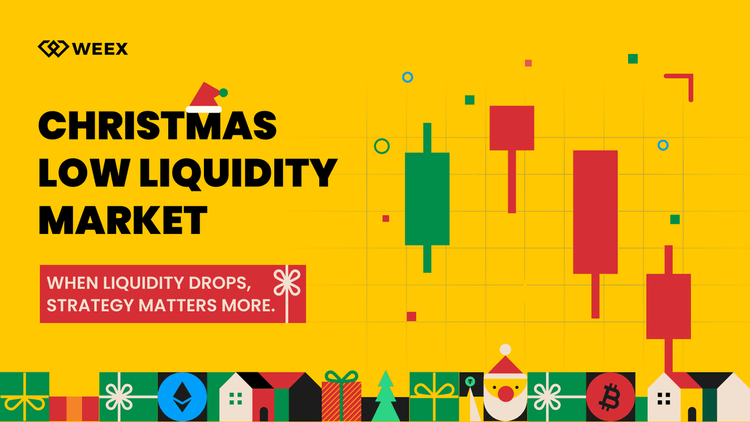
Holiday Season Markets: Understanding Low Liquidity and Trading Conditions
At WEEX, we recognize that the holiday season often brings a different trading experience for many users. As market participation slows, price behavior can feel less predictable and familiar trading rhythms may shift. For traders following AI news today or using AI trading tools, this period often highlights how market structure can influence model performance and short-term signals. Approaching these periods with clear expectations and a disciplined mindset can help traders better navigate seasonal market conditions.

Hyperliquid Whales Shift Strategies: BTC Longs Decline, ETH Shorts Dominate
Key Takeaways A significant reduction in Bitcoin long positions has been observed on Hyperliquid, with large holders decreasing…

Crypto Christmas Heist: Over $6 Million Lost, Trust Wallet Chrome Extension Wallet Hacked Analysis

Trust Wallet Browser Extension Security Incident Leads to Losses
Key Takeaways Trust Wallet identified a significant security breach in its browser extension version 2.68. Approximately over $6…
Bitcoin Surges Toward $90,000 as $27 Billion Crypto Options Expire
Key Takeaways Bitcoin’s price is nearing the $90,000 mark amid increased market activity following the holiday lull. The…

Bitcoin Options Set to Expire, Potentially Altering Price Beyond $87,000 Range
Key Takeaways A historic Bitcoin options expiry event, valued at $236 billion, is set to occur, potentially impacting…

Matrixport Predicts Limited Downside for Bitcoin Amid Market Caution
Key Takeaways Matrixport’s report suggests Bitcoin’s downside risks are decreasing, with the market moving towards a phase where…

Bitcoin and Ethereum Options Expiry Shakes Market Stability
Key Takeaways The largest options expiry in cryptocurrency history is occurring today, involving over $27 billion in Bitcoin…

Trust Wallet Hack Results in $3.5 Million Loss for Major Wallet Holder
Key Takeaways A significant Trust Wallet hack led to the theft of $3.5 million from an inactive wallet.…

BDXN Wallets Deposit $400,000 in Tokens to Multiple Exchanges
Key Takeaways BDXN project wallets have transferred approximately $400,000 worth of tokens to various exchanges. The transfers involve…

Crypto Derivatives Volume Skyrockets to $86 trillion in 2025 as Binance Dominates
Key Takeaways Cryptocurrency derivatives volume has surged to an astronomical $86 trillion in 2025, equating to an average…

Social Engineering in the Crypto Universe: Safeguarding Your Assets in 2025
Key Takeaways Social engineering, a psychological manipulation tactic, has been the leading cause of crypto asset theft in…

Kraken IPO to Rekindle Crypto’s ‘Mid-Stage’ Cycle: A Comprehensive Analysis
Key Takeaways: Kraken’s anticipated IPO in 2026 could significantly attract fresh capital from traditional financial investors, marking a…
Fed Q1 2026 Outlook: Potential Impact on Bitcoin and Crypto Markets
Key Takeaways: Federal Reserve’s policies could exert significant pressure on cryptocurrencies if rate cuts halt in early 2026.…

Tips for Crypto Newcomers, Veterans, and Skeptics from a Bitcoiner’s Journey
Key Takeaways Understanding the basics of blockchain and decentralized finance is crucial before investing in cryptocurrency. Newcomers should…
Quantum Computing in 2026: No Crypto Doomsday, Time to Prepare
Key Takeaways: Quantum computing still poses a theoretical risk to cryptocurrency security, but immediate threats are minimal due…

Trust Wallet to Reimburse $7 Million Lost in Christmas Hack: An Inside Job?
Key Takeaways Trust Wallet’s browser extension was compromised, leading to a $7 million loss on Christmas Day. The…
Cryptocurrency people who use candlestick charts for fortune telling
When fortune telling is depicted on candlestick charts and placed within the context of the cryptocurrency world, its explosive popularity stems not from the accuracy of its mystical claims, but from the fact that traders' collective anxiety about uncertainty has finally found an outlet.
Holiday Season Markets: Understanding Low Liquidity and Trading Conditions
At WEEX, we recognize that the holiday season often brings a different trading experience for many users. As market participation slows, price behavior can feel less predictable and familiar trading rhythms may shift. For traders following AI news today or using AI trading tools, this period often highlights how market structure can influence model performance and short-term signals. Approaching these periods with clear expectations and a disciplined mindset can help traders better navigate seasonal market conditions.
Hyperliquid Whales Shift Strategies: BTC Longs Decline, ETH Shorts Dominate
Key Takeaways A significant reduction in Bitcoin long positions has been observed on Hyperliquid, with large holders decreasing…
Crypto Christmas Heist: Over $6 Million Lost, Trust Wallet Chrome Extension Wallet Hacked Analysis
Trust Wallet Browser Extension Security Incident Leads to Losses
Key Takeaways Trust Wallet identified a significant security breach in its browser extension version 2.68. Approximately over $6…
Bitcoin Surges Toward $90,000 as $27 Billion Crypto Options Expire
Key Takeaways Bitcoin’s price is nearing the $90,000 mark amid increased market activity following the holiday lull. The…
Popular coins
Latest Crypto News


Customer Support:@weikecs
Business Cooperation:@weikecs
Quant Trading & MM:bd@weex.com
VIP Services:support@weex.com
 App
App