
- Buy Crypto
- Markets
- Futures
- Spot
- Copy Trade
 Earn
Earn- More
Wintermute's 28-Page Report Unveils the Inner Workings of Off-Chain Liquidity

Original Title: Digital Asset OTC Market 2025
Original Source: Wintermute
Original Translation: Azuma, Odaily Planet Daily
Editor's Note: On January 13, Wintermute released an analysis report on the 2025 cryptocurrency over-the-counter market. As a leading market maker in the industry, Wintermute is undoubtedly very sensitive to market liquidity trends. In this 28-page report, the organization reviews the liquidity changes in the 2025 cryptocurrency market and concludes that the market is transitioning from a clear, narrative-driven cyclical volatility to a more structurally constrained, execution-driven mechanism. Based on this conclusion, Wintermute also postulated three key scenarios necessary for the market to achieve recovery in 2026.
The following is the original content of Wintermute's report, translated and organized by Odaily Planet Daily (with some content omitted).

Report Summary
2025 marks a fundamental shift in the cryptocurrency market liquidity mechanism. Capital is no longer widely dispersed throughout the market, with liquidity becoming more concentrated and unevenly distributed, leading to increased differentiation between returns and market activities. As a result, a large amount of trading volume is limited to a few tokens. The duration of price rallies is shorter, and price performance is more reliant on the channels and deployment methods of liquidity entering the market compared to previous years.
The following report summarizes the key changes in liquidity and trading dynamics observed by Wintermute in 2025:
· Trading activity focused on a few large tokens. BTC, ETH, and select altcoins account for the majority of trading activity. This reflects the gradual expansion of ETFs and Digital Asset Treasury (DAT) products to a broader range of altcoins, as well as the waning of the Meme coin cycle in early 2025.
· The decline in narrative belief accelerates, and the altcoin market weakens twice as fast. Investors no longer follow narratives with sustained belief but engage in opportunistic trading around themes such as Meme coin launch platforms, perpetual contract trading platforms, emerging payment, and API infrastructure (such as x402), with limited follow-up momentum.
· As the influence of institutional counterparties strengthens, transaction execution tends to be more prudent. This is manifested in a more cautious approach to periodic trade execution (breaking away from the previous four-year fixed cycle), the broader use of leverage in over-the-counter trading products, and the diversified application of options as a core asset allocation tool.
· The manner in which capital enters the crypto market is equally important as the overall liquidity environment. Capital is increasingly flowing through structured channels such as ETFs and DAT, influencing the direction of liquidity in the market and the ultimate aggregation areas.
This report is primarily based on Wintermute's proprietary over-the-counter trading data to interpret the above market developments. As one of the industry's largest over-the-counter trading platforms, Wintermute provides liquidity services to cross-regional, cross-product, and diverse counterparties, thus offering a unique and comprehensive off-chain crypto over-the-counter trading perspective. Price trends reflect market outcomes, while over-the-counter trading activity reveals how risk is deployed, how participant behavior is evolving, and which parts of the market remain actively traded. From this perspective, the market structure and liquidity dynamics in 2025 have undergone a significant transformation compared to the early cycles.
Part 1: Spot
Wintermute's over-the-counter trading data shows that by 2025, trading activity has shifted from being purely volume-driven to a more mature, strategic trading environment. Trading volume continues to grow, but trade execution has become more planned, with over-the-counter trading increasingly favored for its ability to handle large trades, privacy, and controllability.
Market position deployment has also shifted from simple directional trades to more customized execution plans and the wider use of derivatives and structured products. This indicates that market participants are becoming more experienced and disciplined.
In Wintermute's spot over-the-counter trading activity, the aforementioned structural shift is mainly reflected in the following three aspects:
· Volume Growth: Over-the-counter trading volume continues to grow, highlighting the market's persistent demand for off-chain liquidity and efficient execution of large trades (while simultaneously mitigating market impact).
· Counterparty Growth: The range of participants is further expanding, driven by factors such as venture capital funds shifting from purely private placements to the liquidity market; corporations and institutions executing large trades through over-the-counter channels; and individual investors seeking alternatives to traditional venues beyond centralized exchanges and decentralized platforms.
· Token Landscape: The overall token activity has surpassed BTC and ETH, with funds flowing into a broader range of altcoins through DAT and ETF. However, year-to-date position data shows that after the major liquidation on October 11, 2025, both institutions and retail have reallocated back to major tokens. Altcoin price action has been shorter-lived and more selective, reflecting the fading of the Meme coin cycle and an overall market breadth contraction as liquidity and venture capital selectivity increase.
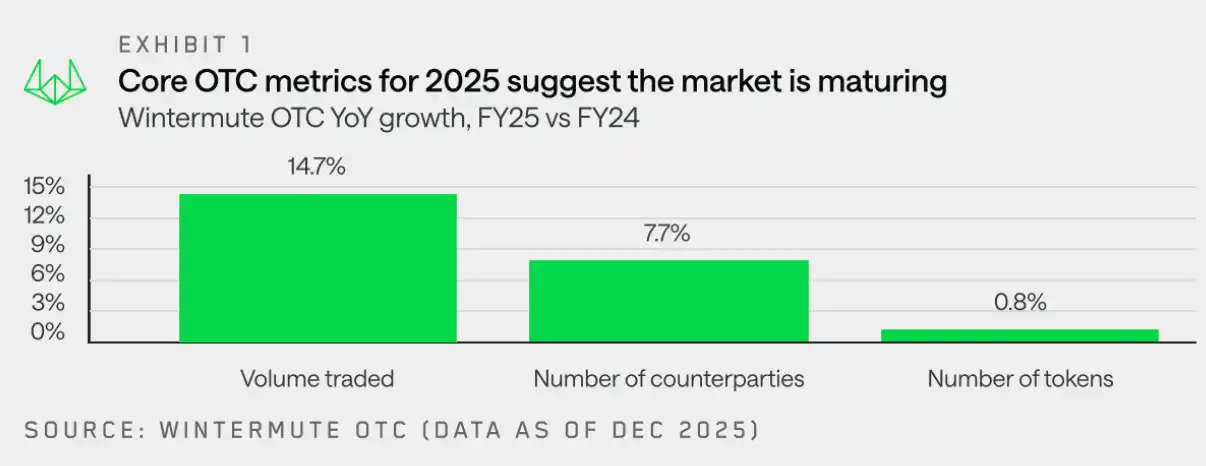
Next, Wintermute will provide a further in-depth analysis of these three aspects.
Volume Growth: Cyclical Patterns Replaced by Short-Term Volatility
“The market characteristic of 2025 is oscillating trends, where price fluctuations are mainly driven by short-term trends rather than longer-term seasonal changes.”
Wintermute over-the-counter trading data shows that the trading activity in 2025 exhibits a significantly different seasonal pattern compared to previous years. The market's optimism towards the newly crypto-friendly U.S. government quickly dissipated, and as Meme coins and AI Agent narratives cooled off towards the end of the quarter, risk sentiment sharply deteriorated by the end of the first quarter. On April 2, 2025, Trump's announcement of tariffs and other top-down negative news further pressured the market.
Therefore, the market activity in 2025 was concentrated in the first half of the year, with a strong start to the year followed by a widespread weakening in the spring and early summer. The year-end rally seen in 2023 and 2024 did not repeat, breaking the seemingly established seasonal pattern—often reinforced by narratives like “October Surge.” In fact, this was never a true seasonal pattern but year-end rallies driven by specific catalysts, such as the ETF approval in 2023 and the new U.S. government in 2024.
Following the fourth-quarter rally of 2024, the momentum was never fully regained in the first quarter of 2025. Market volatility increased, and with macro factors dictating market direction, price movements were more characterized by short-term fluctuations rather than sustained trends.
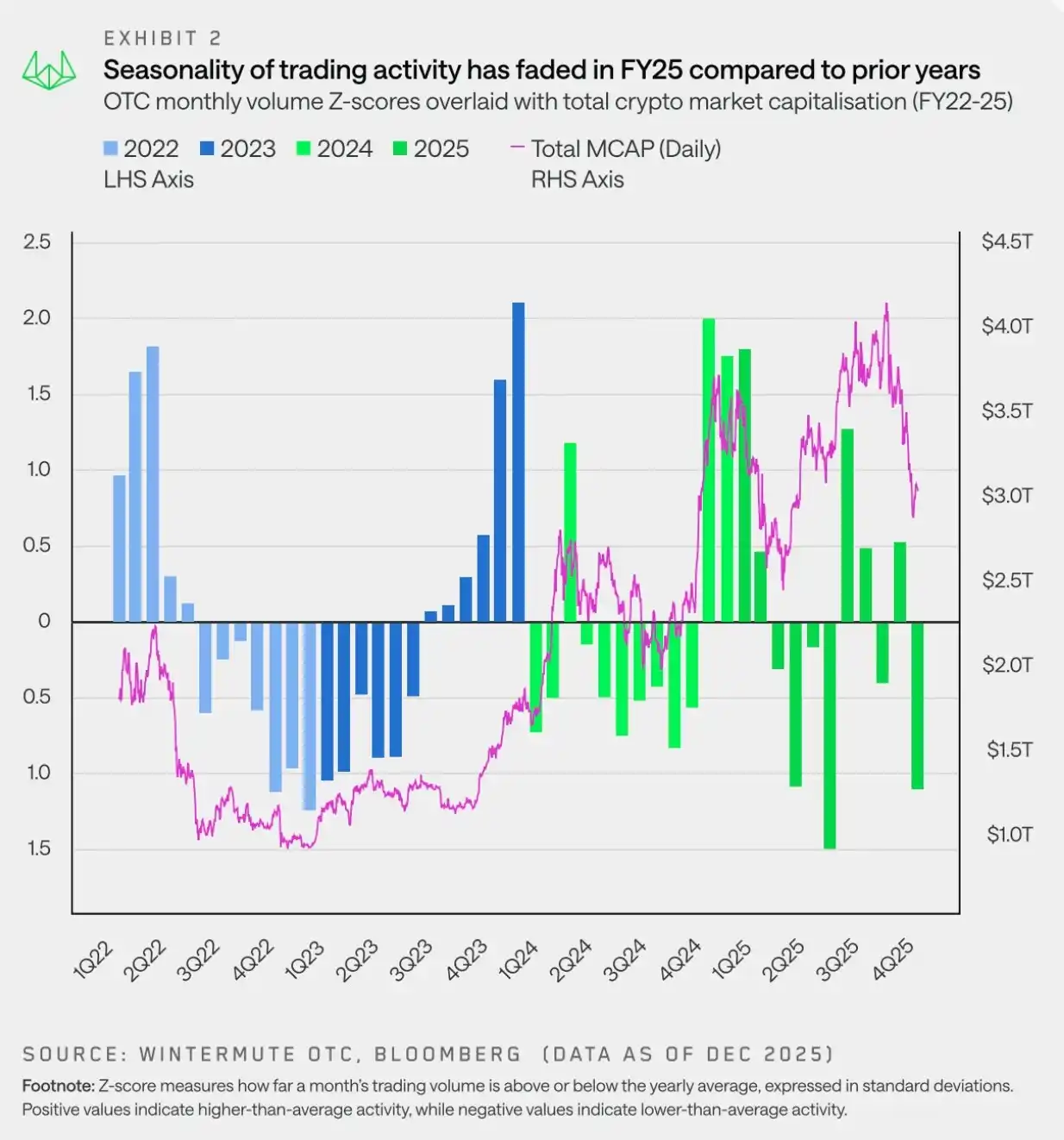
In summary, fund flows have become passive and intermittent, exhibiting pulse-like fluctuations around macro headline news but showing no sustained momentum. In this oscillating environment, as market liquidity thins and execution certainty becomes increasingly critical, over-the-counter trading continues to maintain its status as the preferred execution method.
Counterparty: Institutional Footprint Deepens
“Despite the price action being flat in 2025, institutional counterparties have taken root. ”
Wintermute observed robust growth across most counterparty types, with institutions and retail brokers experiencing the largest increase. Within the institutional category, while the growth of traditional financial institutions and corporations has remained moderate, their involvement has significantly deepened—activity has become more sustained and increasingly focused on prudent execution strategies.
Despite the flat market performance in 2025, institutions have clearly established themselves. Compared to the more exploratory and sporadic participation seen last year, 2025 is characterized by deeper integration, larger trading volumes, and more frequent activity. All of these are constructive and positive signals for the industry's long-term future.

Token Landscape: Top Markets Increasingly Diversified
“Trading volume is increasingly flowing to large-cap tokens beyond BTC and ETH, a trend driven jointly by DAT and ETF.”
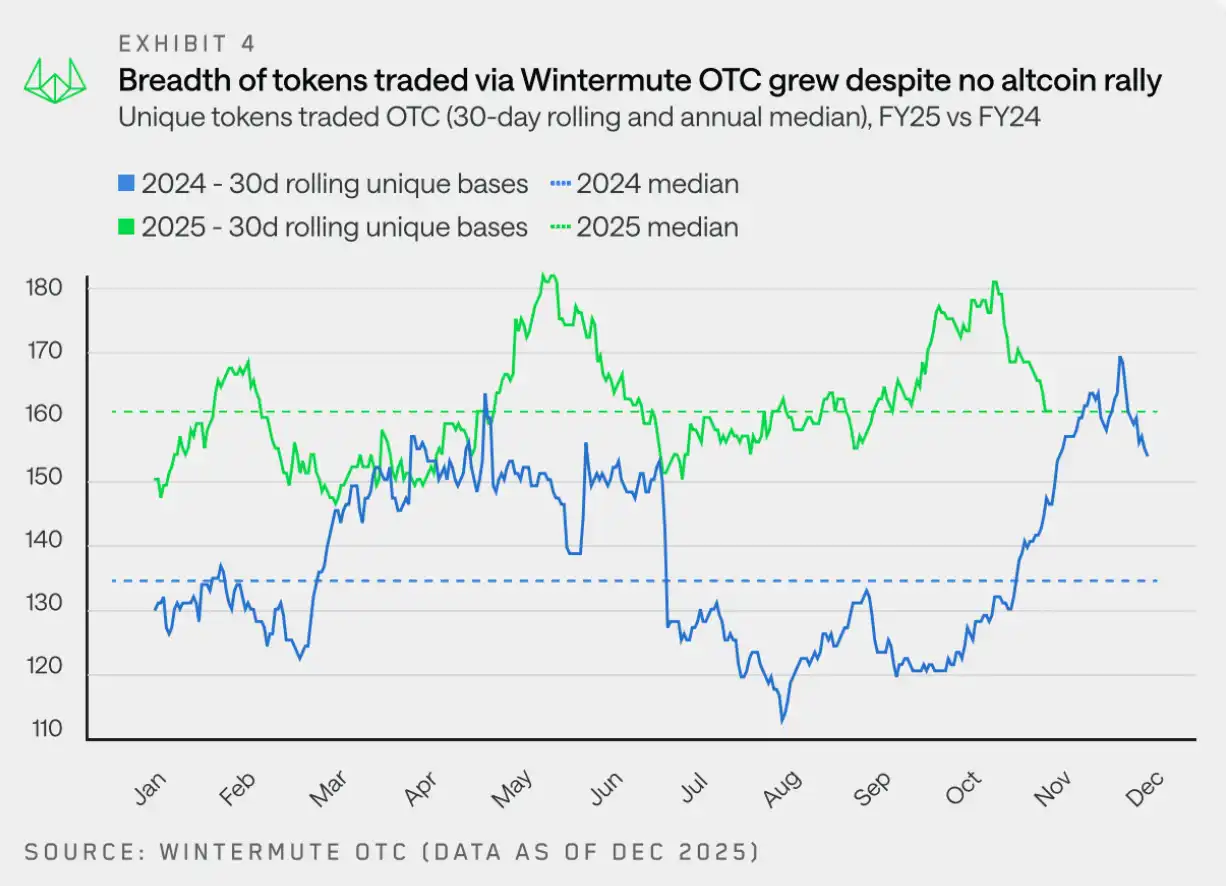
In 2025, the overall number of tokens traded remained steady. However, when looking at 30-day rolling data, Wintermute traded an average of 160 different tokens, up from 133 in 2024. This indicates that off-exchange trading activity has expanded to a broader and more stable range of tokens.
The key difference from 2024 is: the reduced speculative cycle driving token activity in 2025—trading token diversity remained relatively stable throughout the year, rather than experiencing a sharp surge in token breadth around specific themes or narratives.
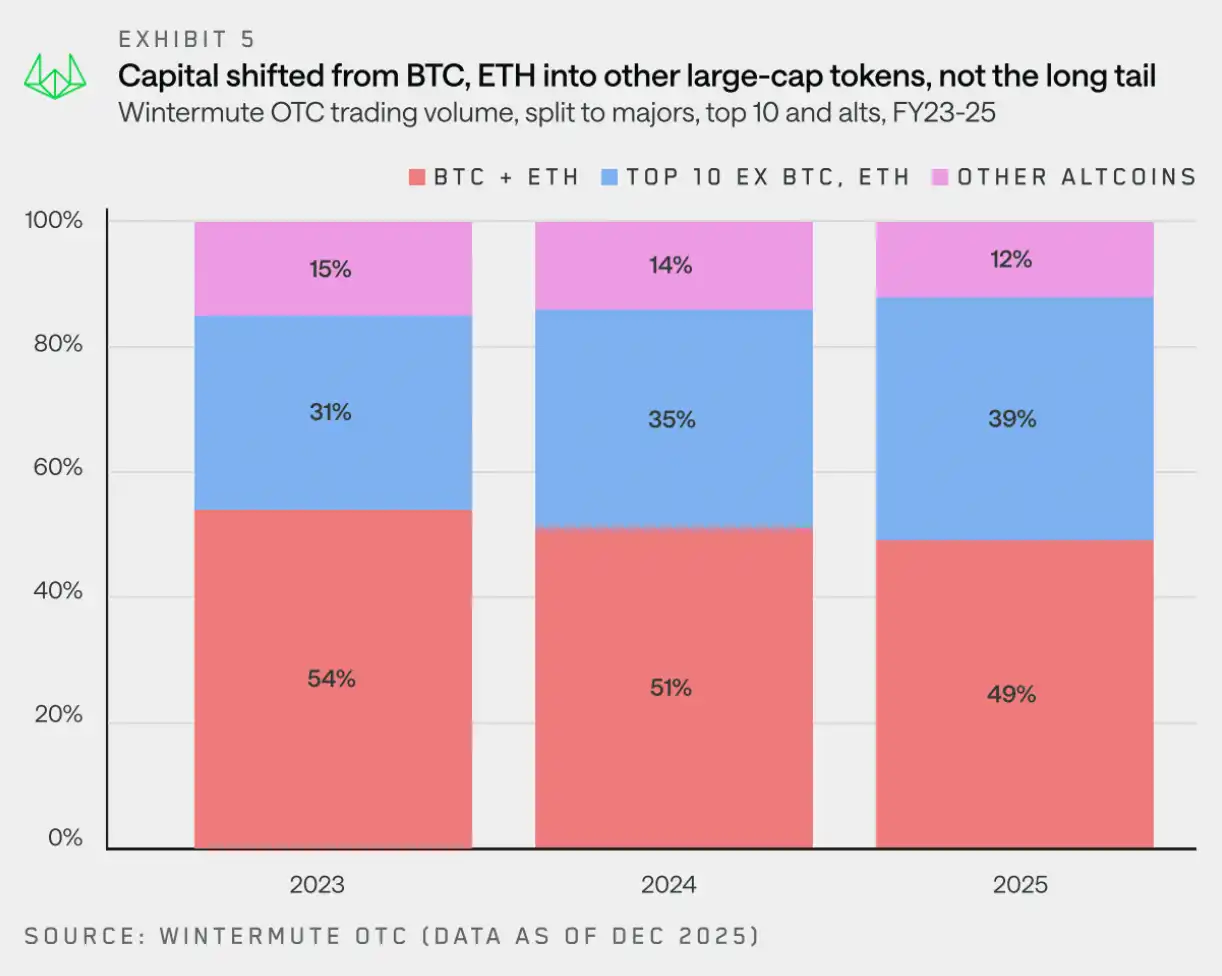
Since 2023, Wintermute's total nominal trading volume has become increasingly diverse, with other parts of the volume surpassing the total volume of BTC and ETH. While BTC and ETH still play a significant role in the flow of trades, their total volume share has decreased from 54% in 2023 to 49% in 2025.
Of note is where these funds are flowing—although long-tail tokens continue to decrease in volume share, blue-chip assets (assets in the top 10 market cap excluding BTC, ETH, wrapped assets, and stablecoins) have increased their share of the total nominal trading volume by 8 percentage points over the past two years.
Despite some concentration of funds and individuals into large-cap tokens this year, the growth in trading volume has also benefited from ETFs and DAT expanding their investment scope beyond mainstream assets. DAT has been authorized to invest in these assets, while ETFs are also expanding their investment scope, including the launch of staking ETFs (such as SOL) and index funds.
These investment tools continue to lean towards over-the-counter (OTC) trading rather than exchange trading, especially when the required liquidity is not available on trading platforms.
Analysis of Various Token Spot Fund Flows
Major Coins: Funds Gradually Flowing Back by Year-End
“By the end of 2025, both institutional and retail investors are realigning back to major coins, indicating their anticipation that major coins will rebound ahead of altcoins. ”
As the altcoin narrative gradually fades and macro uncertainty resurfaces in early 2025, fund allocation is shifting back to BTC and ETH. Wintermute's OTC flow data shows that since the second quarter of 2025, institutional investors have consistently maintained an overweight position in major coins; however, retail investors shifted to altcoins in the second and third quarters of 2025, expecting a resurgence in the altcoin market. Still, after the deleveraging event on October 11, they quickly switched back to major coins.
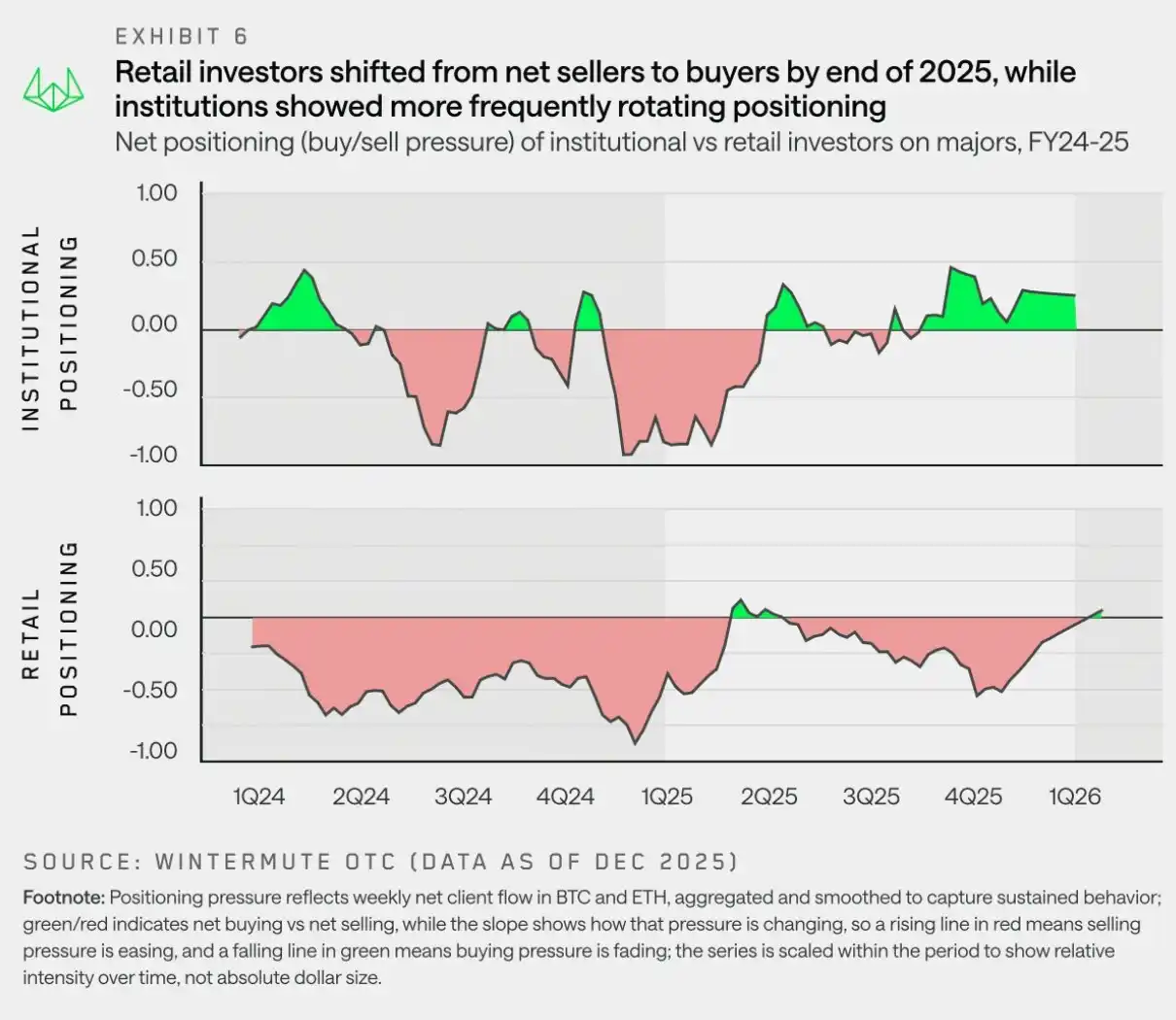
The trend of funds flowing back to major coins is driven by market fatigue, as the ‘alt season’ has never truly ignited, gradually leading to market disappointment. This trend was initially led by institutions (which have long been net buyers of major coins), but by year-end, retail investors also turned into net buyers.
This position alignment is consistent with the current prevailing market view: BTC (and ETH) need to lead the market first for risk appetite to return to altcoins. Retail investors seem increasingly aligned with this view nowadays.
Altcoins: Bull Market Becoming More Short-Lived
“In 2025, the average duration of altcoin narrative-driven bull market rallies is around 19 days, significantly shorter than the previous year's 61 days, indicating that the market has shown signs of fatigue after last year's excessive rally.”
In 2025, altcoins performed significantly poorly overall, with the annualized return seeing a sharp decline. Except for brief rebounds, they failed to achieve any meaningful sustained recovery. While individual narratives may attract attention periodically, these narratives consistently struggle to gain momentum or translate into broader market participation. From a fund flow perspective, this is not due to a lack of narrative, but rather the market showing clear signs of exhaustion—bullish trends are repeatedly tested but quickly fade as conviction fails to solidify.
To understand this dynamic, we go beyond price action and focus on sustainability analysis. Here, "sustainability" is defined as the duration in which altcoins' participation in off-exchange trading activity remains above recent normal levels. In practical terms, the sustainability metric is used to gauge whether a bull market cycle can attract ongoing participation or if market activity quickly dissipates after initial volatility. This perspective allows us to distinguish between bull trends in altcoins that are sustainable versus those that are only characterized by intermittent, rotational spikes that fail to evolve into broad trends.
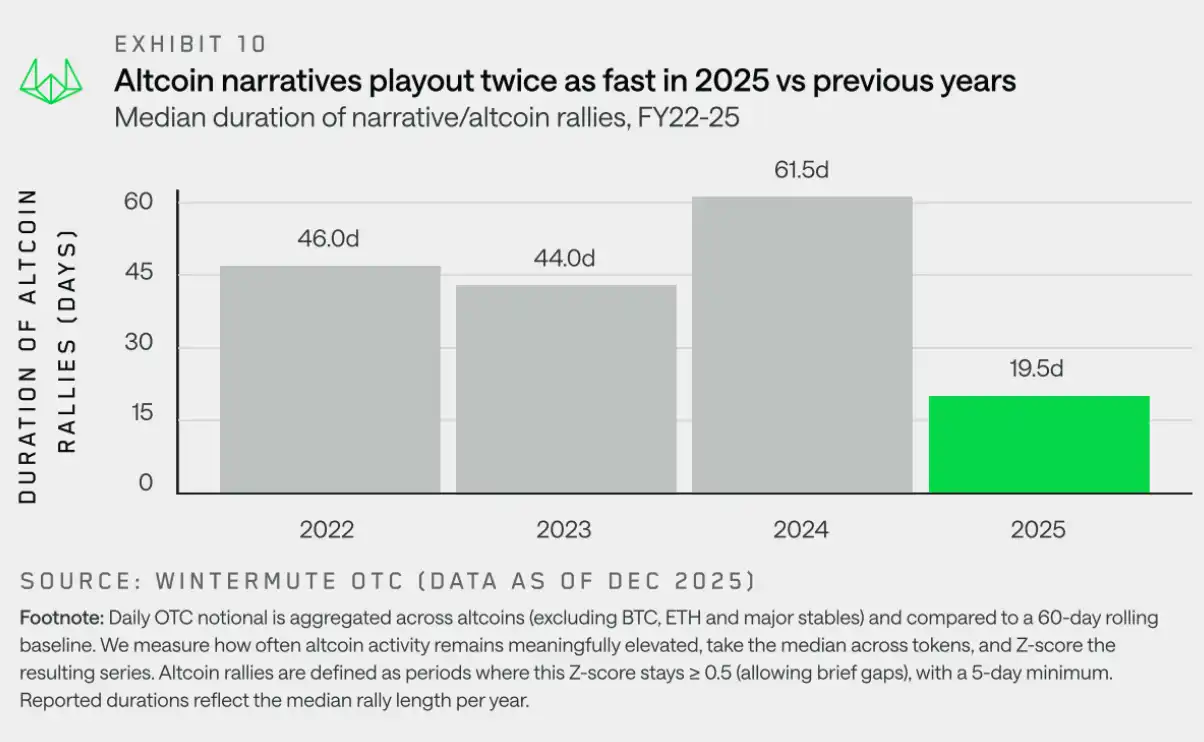
The chart above illustrates a significant shift in altcoin uptrends. Between 2022 and 2024, altcoin bull markets typically lasted around 45 to 60 days, with 2024 being a strong year for BTC, driving a wealth effect rotation into altcoins and maintaining the hype around narratives like Meme coins and AI. In 2025, despite the emergence of new narratives including Meme coin launchpads, Perp DEX, and x402 concepts, the median sustainability plummeted to around 20 days.
While these narratives can trigger short-term market activity, they have failed to develop into enduring, broad-based bull trends. This reflects macroeconomic volatility, market fatigue following last year's excessive rally, and altcoin illiquidity that is insufficient to support narrative breakthroughs in the early stages. Consequently, altcoin trends have become more akin to tactical trading rather than high-confidence trend-following.
Meme Coins: Narrowing Activity Scope
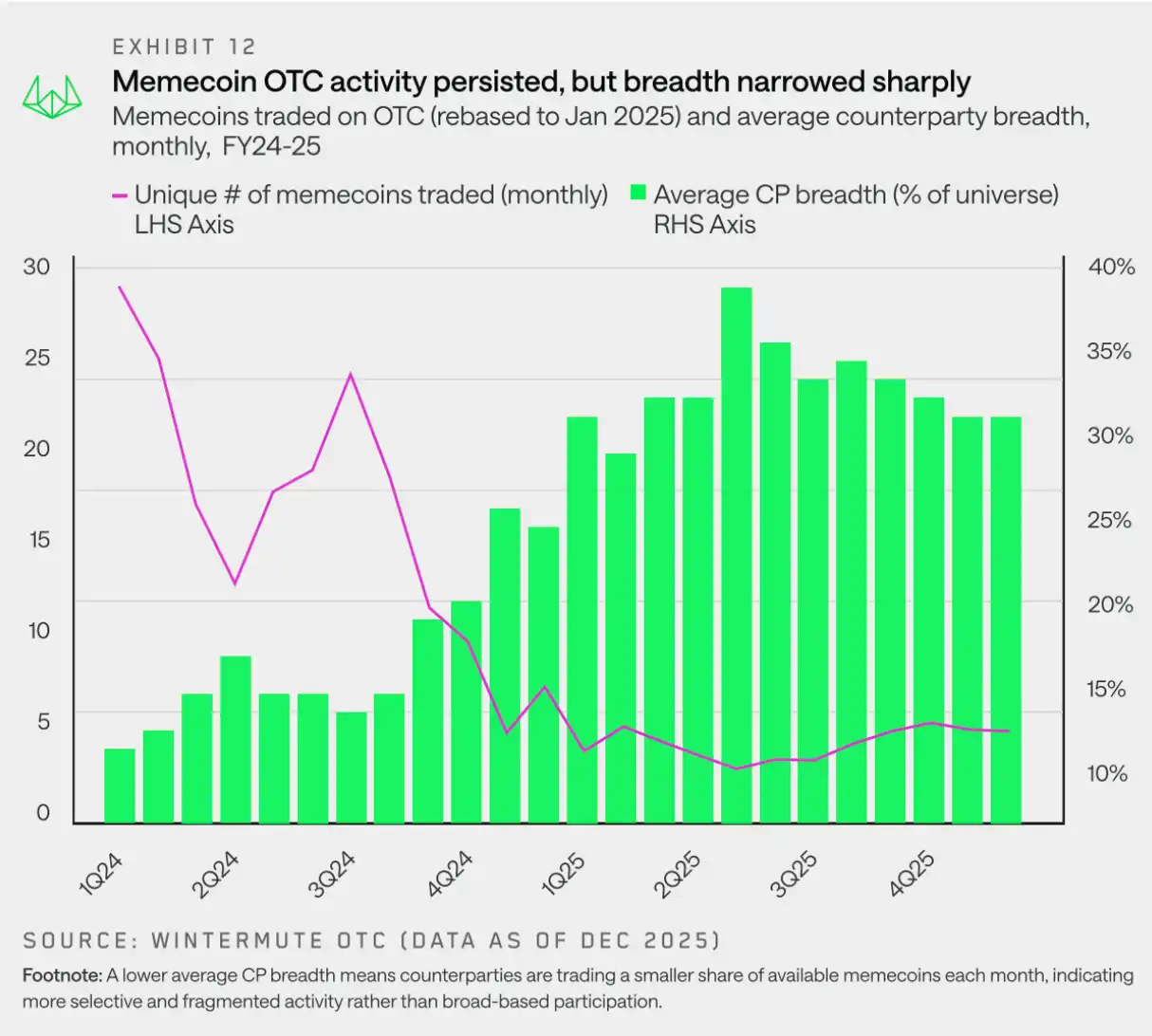
"After peaking in Q1 2025, Meme coins failed to recover due to decentralized and narrowing trading, unable to regain support."
Meme coins entered 2025 in a state of maximum market crowding, characterized by intense issuance, sustained bullish sentiment, and price action reinforcing the narrative. However, this state came to an abrupt halt. Unlike other sectors with higher Beta coefficients, meme coins made an earlier and more decisive downward turn, failing to rebuild upward momentum.
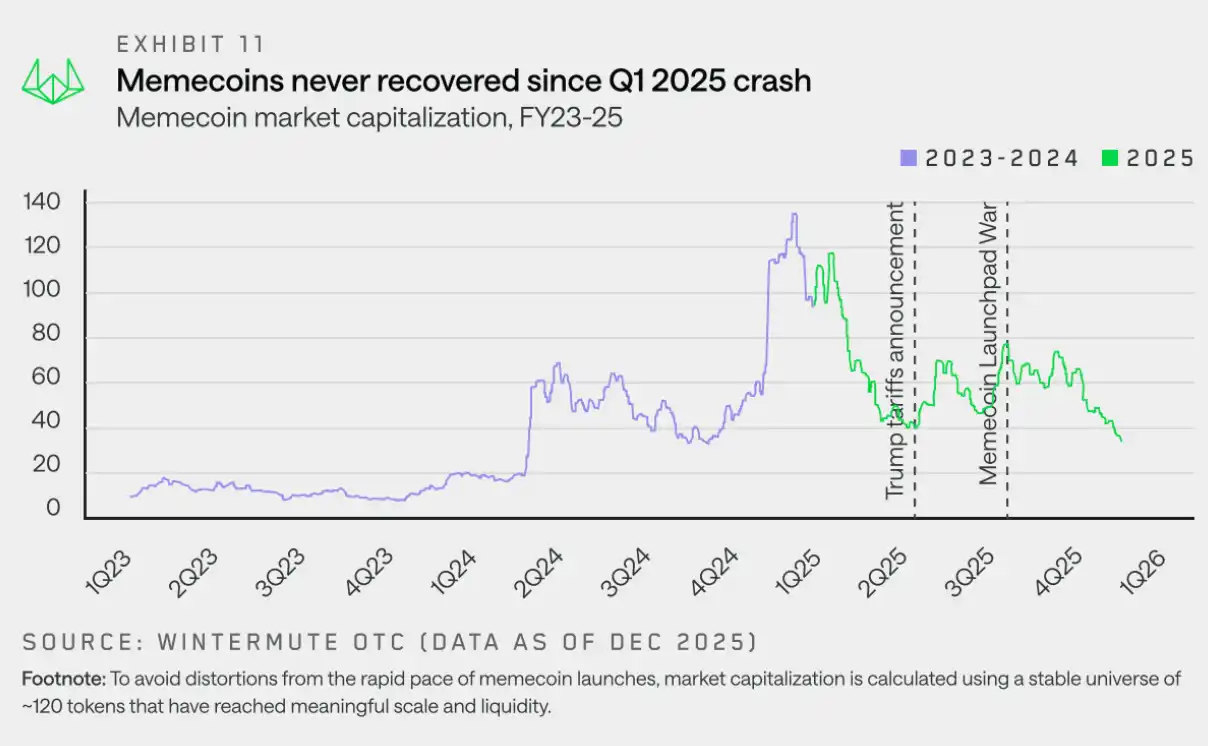
During significant price retracements, the absolute number of off-exchange trades in Meme coins remains healthy at any given point. Even by the end of 2025, the monthly traded token count remains at over 20, indicating that trading interest has not disappeared. The change lies in how this activity is manifested. In practice, this means that the number of coins involved in counterpart monthly trades has significantly decreased, with activity concentrated on specific tokens rather than widespread trading across the entire Meme coin sector.
Part 2: Derivatives
Wintermute OTC Derivatives Data shows strong growth as OTC trading becomes the preferred venue for executing complex, capital-efficient structured products due to increased market volatility and large trades, offering price certainty and operational privacy.
Spread Contracts: Expanded Underlying Asset Scope
"By 2025, the underlying assets of spread contracts have further expanded, with futures increasingly favored as a capital-efficient way to gain market exposure."
Wintermute's OTC trading desk saw a doubling in the number of tokens serving as underlying assets for spread contracts, increasing from 15 in Q4 2024 to 46 in Q4 2025. This continuous growth reflects the market's increasing adoption of spread contracts as a capital-efficient way to gain exposure to a broader range of assets, including long-tail tokens.
The growing demand for spread contracts reflects a broader market trend towards gaining capital-efficient exposure through futures. Open interest in perpetual contracts increased from $120 billion at the beginning of the year to $245 billion in October, only to sharply retreat in a liquidation event on October 11, as market risk appetite diminished.

Options: Continued Elevation of Strategy Complexity
"With systematic strategies and yield generation becoming the main drivers of trading volume, the options market is rapidly maturing."
Building on the prior surge in spread contracts and futures activity, Wintermute's OTC data shows that counterparties are increasingly turning to options to construct more customized and complex crypto asset exposures.
This shift has propelled a sharp increase in options market activity: from Q4 2024 to Q4 2025, both nominal trading volumes and the number of trades saw approximately 2.5x year-on-year growth. This is largely driven by more counterparties—especially crypto funds and digital asset treasuries—adopting options strategies to earn passive income.
The chart below tracks quarterly OTC options activity relative to Q1 2025, clearly illustrating the growth trend throughout 2025. By Q4, nominal trading volume was 3.8x Q1, and the number of trades was 2.1x, highlighting the ongoing growth in trade sizes and frequencies.
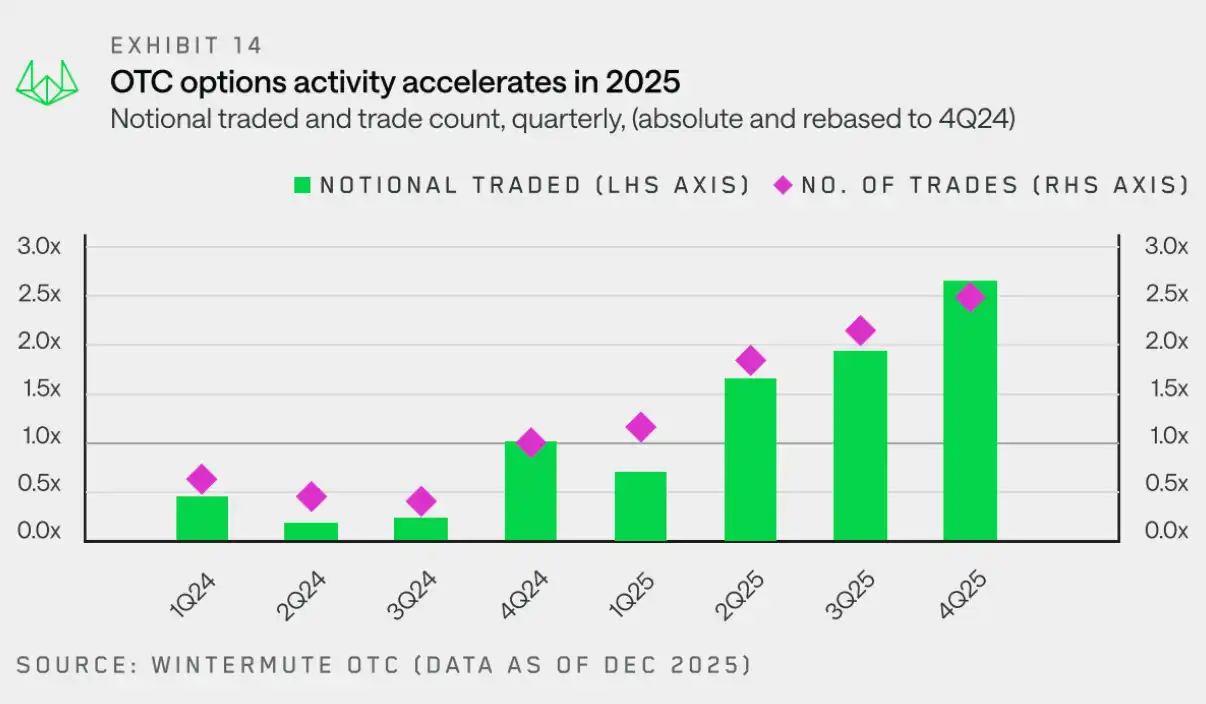
A portion of the nominal trading volume growth can be attributed to the rise of systematic options strategies, which involve maintaining continuous exposure and rolling positions over time. This marks a significant shift compared to previous years—options were previously more commonly used to express purely directional views.
To understand the evolution of options flow, we further examined BTC (which still accounts for a significant portion of the 2025 nominal trading volume). The graph below shows the quarterly distribution of call/put option longs and shorts.
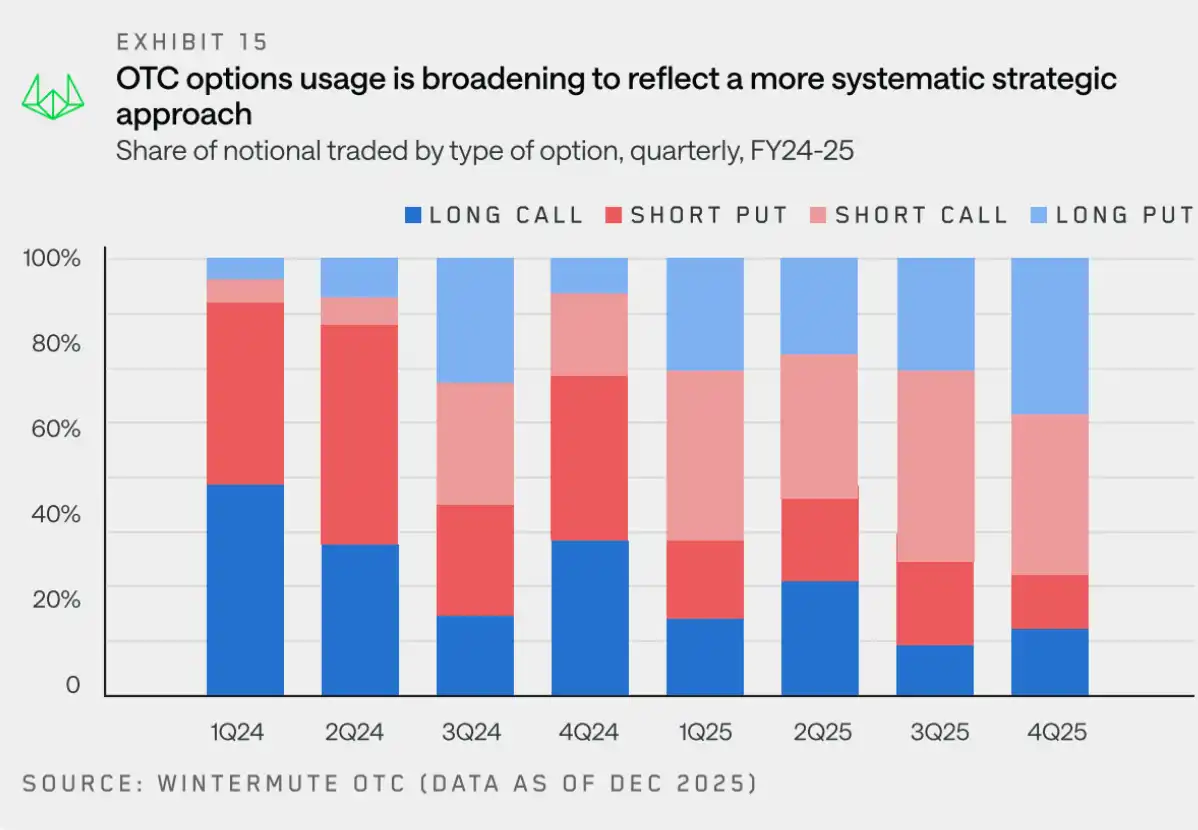
The composition of the 2025 BTC options flow reflects a clear shift: from focusing on bullish call option buying to a more balanced use of call and put options, with activity increasingly oriented towards income generation and structured, replicable strategies. Income strategies have become more prevalent, with investors earning income through selling put options and covered call options, increasing stable option supply and reducing volatility. At the same time, due to BTC's failure to break previous highs, the demand for downside protection remains strong, and put option longs continue to be used. Overall, the market is more focused on income generation and risk management rather than betting on further upside.
Naked call option buying has decreased, further confirming that options are less used for directional upside exposure and more for systematic strategy execution. These dynamics together indicate that compared to previous years, the 2025 options market is maturing and its user base is more professional.
Part 3: Liquidity
Cryptocurrency has always been an outlet for excess risk appetite. Due to weak valuation anchors, embedded leverage, and heavy reliance on margin flows, cryptocurrency prices are extremely sensitive to changes in the global financial landscape. When liquidity is ample, risk tolerance rises, and capital naturally flows into the crypto space; however, when conditions tighten, the issue of structural buy-side liquidity quickly emerges. Therefore, cryptocurrency has historically and will continue to fundamentally rely on global liquidity.
In 2025, the macro environment is a key driver of cryptocurrency prices. Despite the current backdrop of easing rates, improved liquidity, and economic strength—factors that typically support risk asset prices—the performance of the crypto market remains weak. We believe there are two key reasons behind this disconnect: retail attention and new liquidity channels.
Retail Attention: Cryptocurrency is no longer the "go-to" risk asset
「By 2025, cryptocurrency had lost its status as the preferred high-risk asset for retail investors.」
Although institutional participation had increased, retail investors remained the cornerstone of the crypto market. A key reason for the poor market performance in 2025 was the decentralization of retail attention and the weakened rotation effect of crypto assets as the preferred high-risk asset.
Despite numerous influencing factors, the following two points were most prominent: Technological advancements lowered the market entry barrier, making other investment opportunities (especially in fields like AI) more accessible. These assets provided similar risk characteristics, narrative logic, and return potential, thus diverting attention from the crypto space. Meanwhile, we are experiencing a return to normalcy post-2024 — a year characterized by high retail participation, initially heavily focused on meme coins, shifting to the AI proxy space by the year's end. The return of market heat to normalcy is an inevitable trend.
Therefore, retail investors favored stock market themes such as AI, robotics, and quantum tech, while BTC, ETH, and most altcoins lagged behind in the major high-risk asset category. Cryptocurrency was no longer the default exit for excess risk-taking.

Liquidity Channels: ETF and DAT Emerge as New Pathways
「Today, ETFs and DAT, along with stablecoins, have become significant channels driving capital inflows into the crypto market.」
Although BTC and ETH prices saw slight declines, the most significant relative weakness appeared in the altcoin space. Besides soft retail participation, a key factor was a shift in liquidity and capital entry into the market.
Until two years ago, stablecoins and direct investments were still the primary channels for capital entering the crypto market. However, ETFs and DAT have structurally altered the pathways of liquidity injection into the ecosystem.
Earlier this year, we categorized crypto liquidity into three core pillars: stablecoins, ETFs, and DAT. Together, they form the primary channels for capital inflow into the crypto market.
· Stablecoins are one of the many entry points: They remain crucial in settlement and collateral, but now only play a role in capital inflows rather than a dominant position.
· ETFs steer liquidity towards the top two assets: Funds flowing in under investment scope constraints enhance the depth and resilience of major assets but have limited spillover effects beyond BTC and ETH.
· DAT introduces stable and non-cyclical demand: Treasury fund allocations further strengthen the concentration on major assets, absorbing liquidity while failing to organically broaden risk preferences.
Liquidity is not only flowing in through ETFs and DAT, but the above chart shows how important these channels have become. As mentioned earlier, their investment scope is expanding and starting to allow exposure beyond BTC and ETH, mainly involving other blue-chip tokens. However, this process is gradual, so the benefits to the altcoin market will take time to materialize.
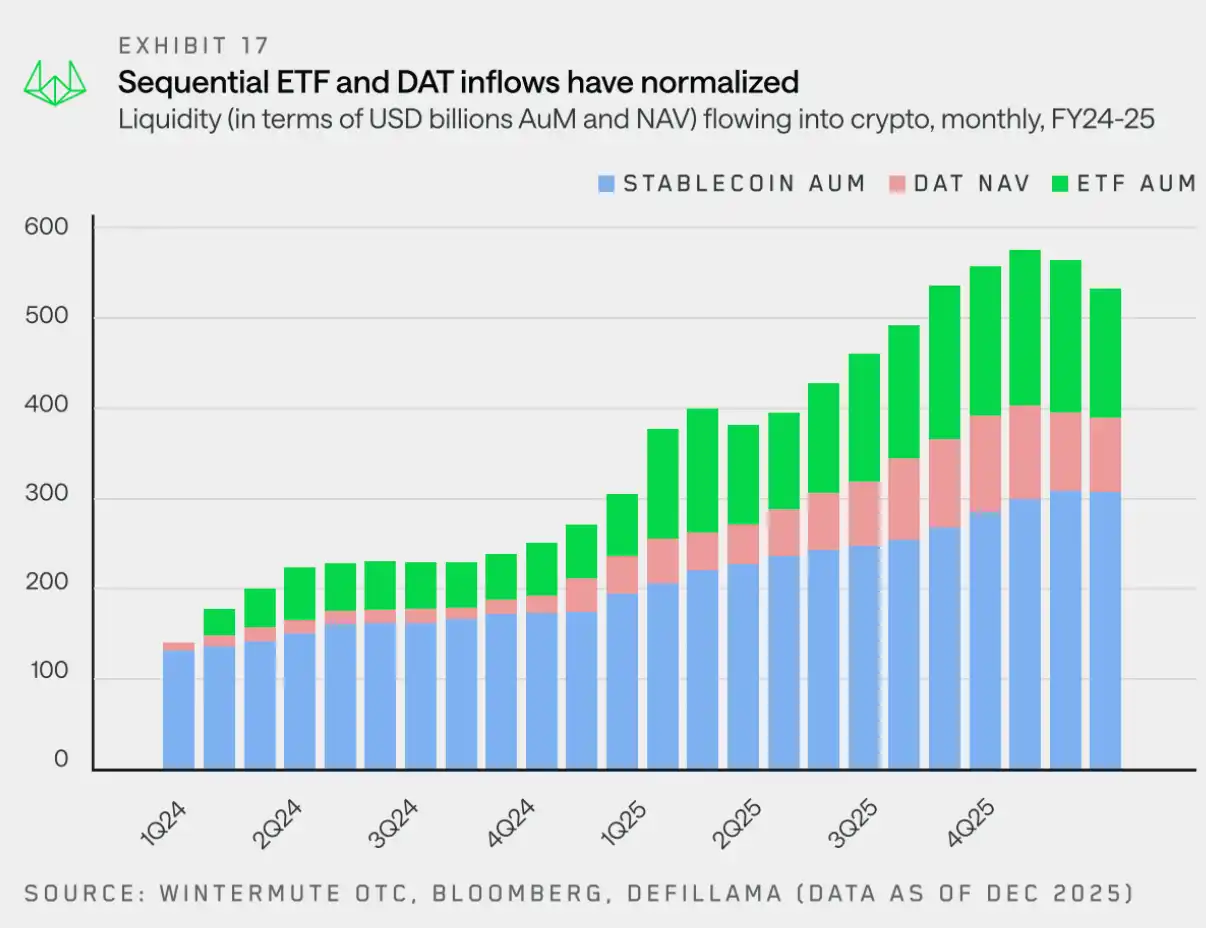
By 2025, the cryptocurrency market is no longer being primarily driven by broad market cycles. Instead, bullish trends are limited to a few assets with concentrated liquidity, while much of the market underperforms. Looking ahead to 2026, the market's performance will depend on whether liquidity spreads to more tokens or continues to concentrate on a few large tokens.
2026 Market Outlook: Farewell to Pure Cycle Patterns
“The market's failure to deliver the expected bullish trend in 2025 may signal that cryptocurrencies are beginning to transition from speculative assets to a mature asset class.”
The market performance in 2025 has shown that the traditional four-year cycle pattern is gradually losing relevance. Our observations indicate that market performance is no longer dominated by a self-fulfilling four-year narrative but is determined by the flow of liquidity and investor focus.
Historically, cryptocurrency native wealth acted as a single, interchangeable funding pool, where Bitcoin's gains naturally spilled over to mainstream coins and then trickled down to altcoins. Wintermute OTC trading data shows that this transmission effect has significantly weakened. New capital tools—especially ETFs and DAT—have evolved into a “closed ecosystem.” While they provide sustained demand for a few blue-chip assets, funds do not organically rotate to a broader market. With retail interest shifting significantly to stocks and prediction markets, 2025 became an extremely concentrated year—where a few mainstream assets absorbed the vast majority of new funds, leaving the rest of the market struggling to maintain sustainable growth.
Three Possible Paths for 2026
2025 was a year of significant market breadth narrowing. As mentioned earlier, the average bullish trend duration for altcoins has decreased from about 60 days last year to around 20 days this year. Only a few select tokens have shown outstanding performance, while the broader market has continued to decline under selling pressure.
To reverse this trend, at least one of the following three conditions needs to occur:
· ETFs and DAT Expand Investment Scope: Currently, most of the new liquidity is still constrained to institutional channels like ETFs and DAT. A broader market recovery requires these institutions to expand their investment scope, with initial signs already emerging as more ETF applications for SOL and XRP have been steadily filed.
· Mainstream Coin Leading the Market: Similar to 2024, if Bitcoin (and/or ETH) can experience a strong uptrend, it is expected to generate a wealth effect spilling over into a broader market. However, the extent to which funds will ultimately flow back into the digital asset space remains to be seen.
· Market Attention Returning: Another less likely scenario is a significant return of retail investor attention from the stock market (including AI, rare earth themes, etc.) to the crypto space, bringing new capital inflows and stablecoin issuance.
The market trend in 2026 will depend on whether: at least one of the above catalysts can effectively drive liquidity to spread beyond a few mainstream assets; otherwise, the market's concentration will continue.
You may also like

Alibaba Backed Latin America Stablecoin Company, Why VelaFi?

AI Crypto Trading in 2026: How AI Agents Use Stablecoins for Capital Management and Settlement
Learn how AI agents use stablecoins for crypto trading in 2026 — managing capital, settling transactions, and operating across exchanges and DeFi protocols.

Key Market Information Discrepancy on January 14th – A Must-See! | Alpha Early Report
Key Takeaways Bitcoin reached a new milestone, hitting $96,000, while Ethereum surpassed $3,300. Privacy coins such as ORDI…

Tether Freezes $182 Million in Assets in a Day: Is USDT Still a Neutral Coin?
Key Takeaways Tether recently froze $182 million in USDT across five wallets on the Tron blockchain, raising questions…

Analyst: MSTR is the “Mullet” of this Bitcoin Bull Cycle, Acting as a Bitcoin Pressure Relief
MSTR absorbed significant volatility in this Bitcoin cycle, easing potential pressure on Bitcoin itself. Michael Saylor’s strategic issuance…
The New Era in Bitcoin Core Development: The Rise of Core Maintainer TheCharlatan
Key Takeaways Integration of a New Maintainer: For the first time in three years, a new Bitcoin Core…

Bitwise CIO Predicts Parabolic Bitcoin Surge with Sustained ETF Demand
Key Takeaways Prolonged demand for Bitcoin ETFs may lead to a parabolic rise in Bitcoin’s price, drawing parallels…

Final Federal Reserve Chair Candidate Rick Rieder, How He Views Cryptocurrency
Key Takeaways Rick Rieder stands out among the Federal Reserve Chair candidates due to his strong pro-crypto stance,…
ASTER’s Largest Long Position on Hyperliquid Faces Significant Challenges
Key Takeaways A significant long position on ASTER is experiencing notable floating losses, revealing the volatility of crypto…

A Trader Closes a 20-Day Short in PAX Gold, Faces $46,000 Loss
Key Takeaways: A trader concluded a 20-day short position in PAX Gold, incurring a $46,000 loss. Current market…

XRP Price Forecast: ETFs Witness $4.9 Million Increase with $3 Target in Focus
Key Takeaways XRP ETFs have attracted significant institutional interest, registering a $4.9 million inflow after a substantial outflow.…

XRP Price Analysis and Outlook: Unpacking the Gravestone Doji
Key Takeaways The gravestone doji, a rare chart pattern, has recently appeared on XRP’s weekly chart, indicating potential…

Crypto Price Forecast Today 12 January—XRP, Solana, Maxi Doge
Key Takeaways: XRP illustrates strong potential in 2026 with ecosystem growth and stablecoin expansion despite recent challenges. Solana…

Solana Price Forecast: The Impact of its Integration into Elon’s X (Twitter)
Key Takeaways: Solana’s speculated integration into X (formerly Twitter) could amplify its recognition across X’s extensive user base…

Kaspa Price Prediction – KAS Price Estimated to Drop to $ 0.038116 By Jan 17, 2026
Key Takeaways Kaspa is trading at $0.048316, showing a 3.06% decrease over the past 24 hours and a…

Story is Trading 33.03% Above Our Price Prediction for Jan 17, 2026
Key Takeaways Current Market Positioning: Story is trading at $2.58, significantly above the predicted price of $1.94 for…

Sky Price Prediction – SKY Price Estimated to Decline to $ 0.042476 By Jan 17, 2026
Key Takeaways Short-term Decline Expected: The price of SKY is currently predicted to decrease by 23.14% within the…
Pepe Coin Price Prediction – Anticipated Drop to $ 0.000005 by Mid-January 2026
Key Takeaways: Pepe Coin is currently valued at $0.000006, with an expected decline to $0.000005 by January 15,…
Alibaba Backed Latin America Stablecoin Company, Why VelaFi?
AI Crypto Trading in 2026: How AI Agents Use Stablecoins for Capital Management and Settlement
Learn how AI agents use stablecoins for crypto trading in 2026 — managing capital, settling transactions, and operating across exchanges and DeFi protocols.
Key Market Information Discrepancy on January 14th – A Must-See! | Alpha Early Report
Key Takeaways Bitcoin reached a new milestone, hitting $96,000, while Ethereum surpassed $3,300. Privacy coins such as ORDI…
Tether Freezes $182 Million in Assets in a Day: Is USDT Still a Neutral Coin?
Key Takeaways Tether recently froze $182 million in USDT across five wallets on the Tron blockchain, raising questions…
Analyst: MSTR is the “Mullet” of this Bitcoin Bull Cycle, Acting as a Bitcoin Pressure Relief
MSTR absorbed significant volatility in this Bitcoin cycle, easing potential pressure on Bitcoin itself. Michael Saylor’s strategic issuance…
The New Era in Bitcoin Core Development: The Rise of Core Maintainer TheCharlatan
Key Takeaways Integration of a New Maintainer: For the first time in three years, a new Bitcoin Core…


 App
App