
- Buy Crypto
- Markets
- Futures
- Spot
- Copy Trade
 WE-Launch
Advocacy Groups Urge Presidential Intervention in Roman Storm’s Retrial

Key Takeaways
- Over 65 cryptocurrency advocacy groups call for presidential intervention in the Roman Storm case, citing concerns over regulatory fairness.
- Storm’s conviction for unlicensed money transmission sparks debate over code as protected speech.
- The role of regulations on DeFi platforms and how their clarity affects innovation is under scrutiny.
- The potential impacts of legal interpretations on the future of developers creating open-source software.
Introduction
The complex landscape of cryptocurrency and blockchain technology has brought significant legal debates to the forefront, one of which centers around Roman Storm, co-founder of Tornado Cash. In light of his legal battles, more than 65 cryptocurrency and blockchain advocacy groups have issued a plea to President Donald Trump to step in and possibly alter the course of the proceedings. This article delves into the multifaceted issues surrounding Storm’s case, the advocacy for clearer crypto-related policies, and the broader implications for the future of digital innovation.
Roman Storm’s Legal Tribulations
Roman Storm’s journey through the U.S. legal system is emblematic of the challenges faced by those pioneering in the world of blockchain technology. Convicted on one count of running an unlicensed money transmitting business, the Tornado Cash co-founder finds himself on the cusp of a potential retrial for additional charges. The digital rights and cryptocurrency communities have raised concerns about the impact of these proceedings on the broader developer ecosystem.
Legal Charges and Advocacy Response
The conviction arose from allegations that Storm operated an unlicensed money transmission service, a charge that has prompted significant backlash from the blockchain community. Notably, Jay Clayton, the interim U.S. attorney for the Southern District of New York, has opposed Storm’s motion for acquittal, indicating a steadfast prosecutorial stance. Conversely, advocacy groups are emphasizing that writing code should not be conflated with criminal intent—a notion underscored by acting assistant attorney general, Matthew Galeotti, who acknowledged the complexity of these issues in a recent summit.
The Push for Presidential Clemency
The request for presidential intervention underscores a significant moment in the crypto policy debate, where more than 65 companies and advocacy organizations have united in their stance. Their collective letter implores the president to urge the Department of Justice to dismiss the charges against Storm. The organizations argue that his work on Tornado Cash, essentially the publication of open-source software, does not constitute a financial crime. They propose that dropping the charges could bolster the belief that “code is speech” and affirm the administration’s commitment to safeguarding innovation.
The Intersection of Regulation and Innovation
The controversy surrounding Storm’s conviction echoes broader concerns about the regulatory environment faced by blockchain innovators. Advocacy groups are not only focused on individual cases like Storm’s but are also rallying for structural changes in the approach to digital assets.
Regulatory Clarity for DeFi and Beyond
A central theme in the advocacy efforts is an appeal for regulatory clarity. Groups like the Solana Policy Institute and the Blockchain Association have urged the president to direct federal agencies such as the IRS and the US Treasury to clarify tax policies concerning digital assets. In addition, they emphasize the need to protect decentralized finance (DeFi) platforms from overbearing regulation that could stifle innovation.
Code as a Form of Expression
The legal acceptance and protection of code as a form of speech under the First Amendment are pivotal to the case. Success in this argument could set a precedent that would influence how developers go about creating open-source software, potentially shielding them from similar charges. This case serves as a litmus test for future interactions between innovative technologies and traditional legal frameworks.
Looking Ahead: Implications for Developers and the Crypto Industry
The outcome of the Roman Storm case and the advocacy groups’ efforts could have lasting impacts on how blockchain technology evolves within the legal boundaries of the United States. A favorable outcome for Storm could reinforce the notion that developers should not face legal jeopardy for innovating in ways that challenge conventional norms.
WEEX’s Role in the Evolving Landscape
In this rapidly changing environment, platforms like WEEX are positioned to benefit from regulatory clarity and protection for developers. By fostering an ecosystem that supports open source distribution and innovation, WEEX aligns itself with the principle of safeguarding digital expression while navigating the legal complexities of cryptocurrency markets.
FAQs
What are the charges against Roman Storm?
Roman Storm was convicted for running an unlicensed money transmitting business. He is facing a potential retrial on two other charges related to conspiracy for money laundering and violating sanctions.
Why are advocacy groups asking the president to intervene?
Advocacy groups believe the charges against Storm could unfairly criminalize the work of developers who are merely publishing open-source software. They argue that this sets a dangerous precedent for innovation and free speech in code.
How does this case affect the perception of code as free speech?
The case highlights a pivotal issue—whether code can be considered a form of protected speech under the First Amendment. A positive ruling for Storm could bolster this notion, influencing future legal interpretations.
Why is regulatory clarity important for DeFi and crypto?
Regulatory clarity is crucial as it provides a predictable framework under which developers and companies can operate. This prevents stifling innovation with ambiguous or overly burdensome regulations.
How does WEEX fit into this regulatory landscape?
WEEX, by supporting open development and embracing regulatory clarity, seeks to position itself as a pivotal player in the crypto space. It aims to balance compliance with fostering technological innovation and user freedom.
You may also like

Key Market Intelligence on December 30th, how much did you miss out on?

Matrixdock 2025: The Practical Path to Sovereign-Grade RWA of Gold Tokenization

Without Narrative Power, Web3 Will Not Tap into the Vastness

Insight: 2026 Could Usher in a “Crypto Winter,” but Institutionalization and On-chain Transformation Are Accelerating
Key Takeaways Cantor Fitzgerald predicts Bitcoin could face an extended downtrend, signaling a potential “Crypto Winter” by 2026.…

From Failures to Success: Building Crypto Products That Truly Matter
Key Takeaways Building infrastructure in crypto doesn’t guarantee success; understanding user needs is critical. Products aimed at younger…

Lighter Founder’s Latest Response on Token Launch Progress, What Was Said
Lighter’s Founder, Vladimir Novakovski, clarifies key concerns in an AMA, focusing on detecting and resolving bot account manipulations…

Cryptocurrency Trends and Insights: Navigating the 2025 Landscape
Key Takeaways Cryptocurrency continues to evolve rapidly, with new trends reshaping the market. Blockchain technology’s applications extend beyond…

UNI Burn Arbitrage Opportunity, Ondo Tokenized Stock Liquidity Debate, What’s the Overseas Crypto Community Talking About Today?
Key Takeaways The crypto market is buzzing with multi-threaded discussions, from macro trends to specific protocols and scams.…
“Elon Musk’s Nemesis Trade” Colossal ETH Short Sparks Debate in Crypto Circles
Key Takeaways A colossal short position was secured against Ethereum (ETH) worth approximately $106 million by a single…

Dragonfly Partner Foresees BTC Surpassing $150K by 2026 but Market Share Decline
Key Takeaways Bitcoin is anticipated to climb over $150,000 by the end of 2026, although its market dominance…

Elon Musk Liquidation Wall: Liquidates $106M Short Position, Faces $479K Loss
Key Takeaways A $106 million ETH short position was liquidated after just 15 hours, resulting in a $479,000…
After 500 Rejections, I Started Building a Product People Actually Use

UNI Burn Arbitrage Opportunity, Ondo Tokenized Stock Liquidity Debate, What's the Overseas Crypto Community Talking About Today?

Will Ethereum See a Strong Breakout After the End of the Staking Net Outflow?

December 29th Market Key Intelligence, How Much Did You Miss?
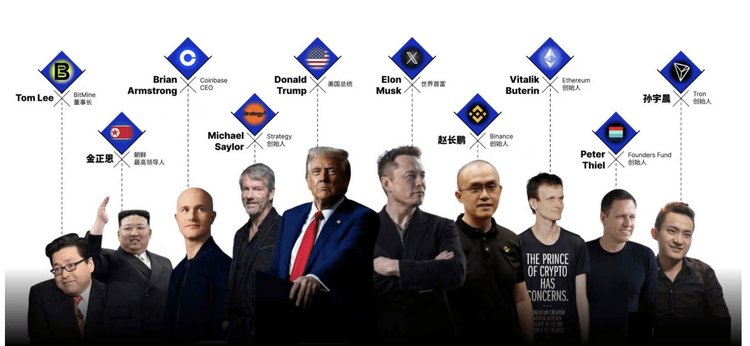
Ten People Redefining the Power Boundaries of Crypto in 2025
From Wall Street to the White House, from Silicon Valley to Shenzhen, a new power network is taking shape.
Lighter Founder's Latest Response on Token Launch Progress, What Was Said

Top US Journalist Minting on Base, Attention Completes Monetization Loop
Key Market Intelligence on December 30th, how much did you miss out on?
Matrixdock 2025: The Practical Path to Sovereign-Grade RWA of Gold Tokenization
Without Narrative Power, Web3 Will Not Tap into the Vastness
Insight: 2026 Could Usher in a “Crypto Winter,” but Institutionalization and On-chain Transformation Are Accelerating
Key Takeaways Cantor Fitzgerald predicts Bitcoin could face an extended downtrend, signaling a potential “Crypto Winter” by 2026.…
From Failures to Success: Building Crypto Products That Truly Matter
Key Takeaways Building infrastructure in crypto doesn’t guarantee success; understanding user needs is critical. Products aimed at younger…
Lighter Founder’s Latest Response on Token Launch Progress, What Was Said
Lighter’s Founder, Vladimir Novakovski, clarifies key concerns in an AMA, focusing on detecting and resolving bot account manipulations…
Popular coins
Latest Crypto News


Customer Support:@weikecs
Business Cooperation:@weikecs
Quant Trading & MM:bd@weex.com
VIP Services:support@weex.com
 App
App