
- Buy Crypto
- Markets
- Futures
- Spot
- Copy Trade
 Earn
Earn- More
For the first time in three years, a new Bitcoin Core maintainer has been added to the ranks,

Original Title: "For the First Time in Three Years, Bitcoin Welcomes 6th Core Maintainer"
Original Author: Golem, Odaily Planet Daily
On January 8, the Bitcoin Core team promoted developer TheCharlatan (X: @sedited) to a Core Maintainer, making them the sixth member holding Trusted Keys. The other five Core Maintainers holding Trusted Keys are: Marco Falke (promoted in 2016), Gloria Zhao (promoted in 2022), Ryan Ofsky (promoted in 2023), Hennadii Stepanov (promoted in 2021), and Ava Chow (promoted in 2021).
This appointment marks the first addition of a Trusted Key holder since 2023. In the past decade, only 13 people have been granted this permission, underscoring its importance and the strictness of the selection process.
Bitcoin Core Core Maintainers: The "Editors" of Bitcoin Developers
Bitcoin Core is currently the most significant development and maintenance team for the Bitcoin mainnet. It is responsible for writing, maintaining, testing, and releasing the majority of the full-node software, as well as related tools and documentation. Bitcoin Core operates on a non-profit basis, relying mainly on external company funding.
The Bitcoin Core development team consists of 41 members, who have contributed the vast majority of the project's code. Among them, only 6 developers have been granted the title of "Core Maintainer," who are the only 6 people in the world authorized to merge code into Bitcoin Core, sign the released binaries, and sign.
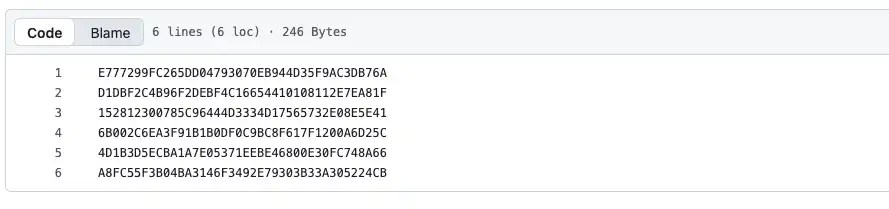
6 Core Maintainers' Signatures
By analogy, Bitcoin Core Core Maintainers are like the "editors" of Bitcoin network developers; everyone can contribute code to the codebase and submit pull requests, but only Core Maintainers have the authority to merge code into the official codebase and sign releases, similar to editors reviewing and deciding whether developers' code should be accepted for release or sent back for revisions.
The signature of Bitcoin Core Core Maintainers ensures security, allowing all nodes and users to trust that this is an "official, untampered" release. However, Bitcoin Core Core Maintainers do not have the direct authority to trigger on-chain rule changes, For example, Bitcoin Core Core Maintainers have signed and released program files for Bitcoin network upgrades through soft or hard forks, but whether the upgrade can be successful ultimately depends on the adoption and consensus of users and miners, rather than being solely determined by the signature of Bitcoin Core Core Maintainers.
When Bitcoin was first created, Satoshi Nakamoto was the sole Core Maintainer, with the exclusive right to alter the core codebase. Later, Satoshi Nakamoto passed this privilege to Gavin Andresen, who then passed it on to Wladimir van der Laan. This means that for a long time, the power to maintain/change the Bitcoin network code was in the hands of one person. It wasn't until 2022 when Wladimir van der Laan stepped down and got embroiled in a lawsuit with Fake Satoshi (Craig Wright claiming to be Satoshi) that this power started to decentralize.
Nevertheless, even now, Bitcoin Core Core Maintainers continue to play a crucial role. Those who become Core Maintainers usually have a high level of trust and reputation in the community or have made significant contributions to the Bitcoin network.
For instance, one of the Core Maintainers, Ava Chow, a transgender female developer, in 2024, when one of the Bitcoin Core developers, Luke Dashjr, proposed to restrict Ordinals transactions at the consensus level, he/she rejected Luke Dashjr's pull request citing "lacks consensus and creates noise," thereby preventing a potential major Bitcoin network consensus split and becoming an unsung hero.
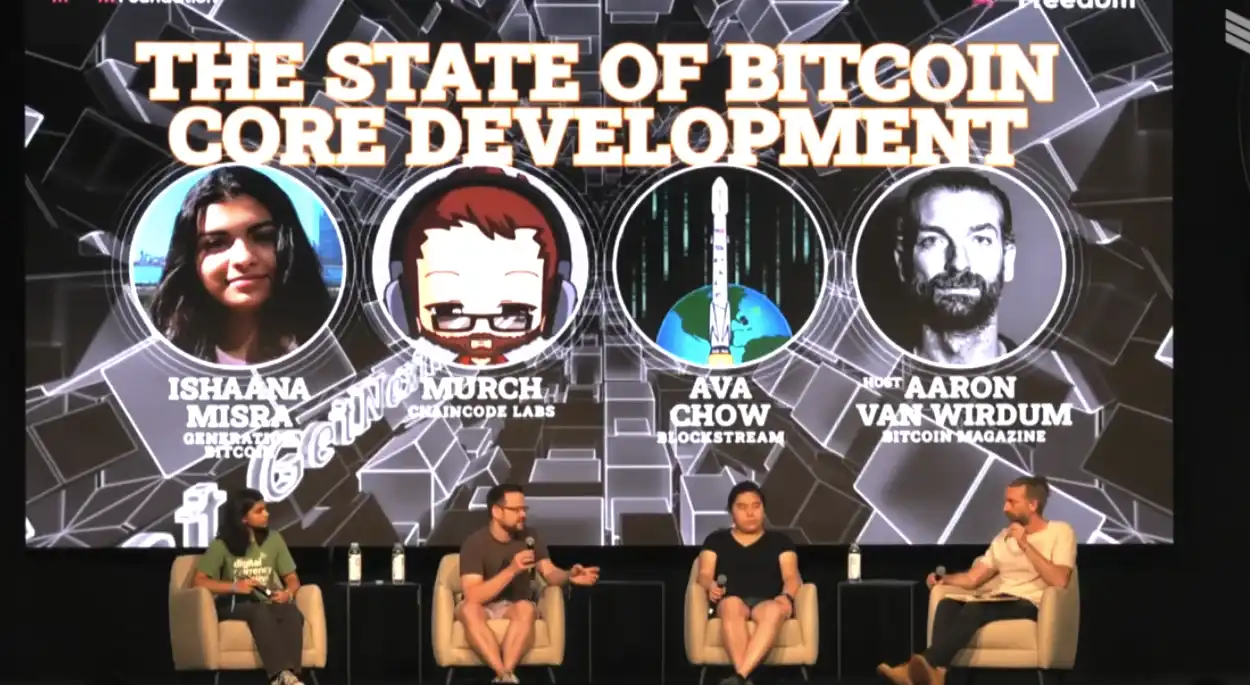
Ava Chow attended Bitcoin 2024 event
For introductions and contributions of other Core Maintainers, refer to the previous article (Related Reading: Who is safeguarding Satoshi Nakamoto's legacy? Insights into the legion of 41 behind Bitcoin's trillion-dollar market cap). Next, we will introduce why TheCharlatan became the 6th Core Maintainer.
TheCharlatan: A Decade of Cryptographic Development Experience
TheCharlatan graduated from the University of Zurich with a degree in Computer Science, hailing from South Africa, focusing on reproducibility and Bitcoin Core's validation logic, claiming in a 2024 blog post to have been developing this project for over two years. TheCharlatan's work systematically breaks down, organizes, and modularizes Bitcoin Core's validation logic, allowing other users to safely reuse it.

TheCharlatan
TheCharlatan is well-regarded among Bitcoin Core core developers, with at least 20 members expressing their agreement during this promotion to core maintainer. When nominated by glozow, it was praised: "He is a reliable reviewer with extensive experience in critical areas of the codebase, thoughtful about what we deliver to users and developers, and very knowledgeable about the technical consensus process."
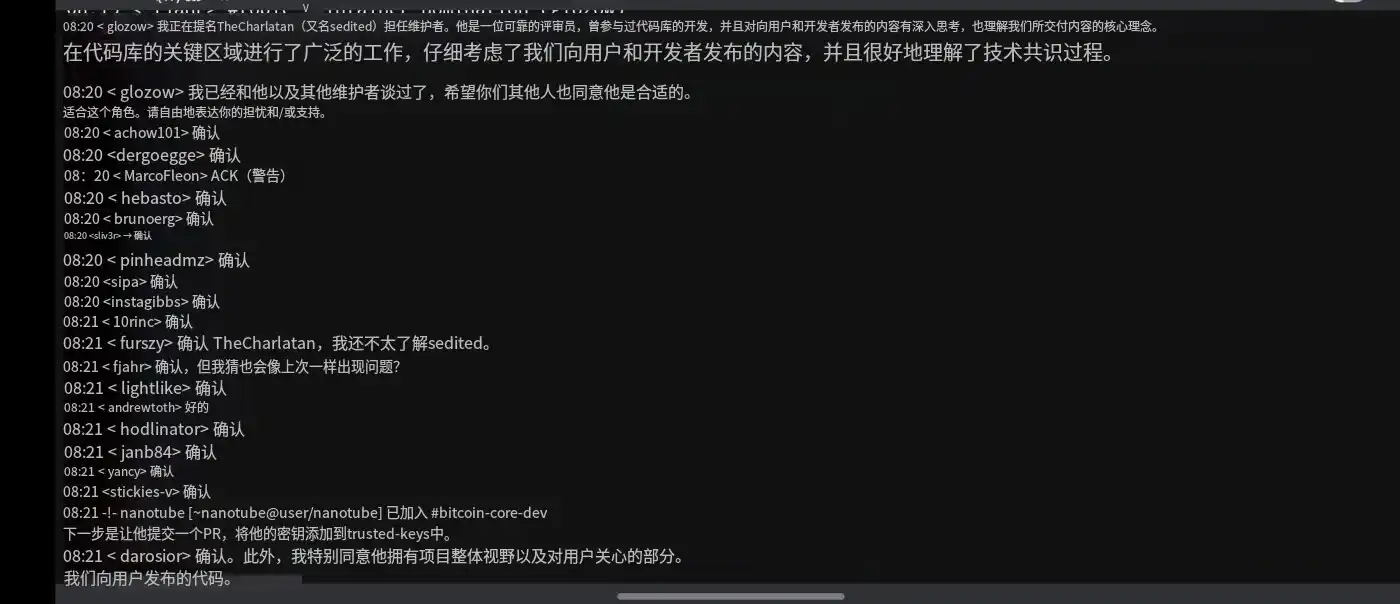
Bitcoin Core Core Developer Group Chat Content (Translated)
According to his Github account information, TheCharlatan started his encryption development in 2015 by creating a cryptocurrency price ticker tool, which was a simple Linux desktop widget with built-in price alert functionality that triggers when a set threshold is reached. After 2017, his encryption development activities became more frequent, officially contributing code to Bitcoin Core starting in 2018, suggesting that TheCharlatan first interacted with Bitcoin Core 8 years ago, making him a seasoned developer.
It is also worth noting that in 2021-2022, TheCharlatan contributed to a Farcaster project's codebase. The project enables people to exchange Bitcoin and Monero peer-to-peer with anyone running a Farcaster node.
TheCharlatan does have a fondness for Monero, having researched in 2020 the burn issue that could arise from transferring Monero using a hardware wallet, as well as discussing Monero's timelock vulnerability.
Of course, a true tech geek may be somewhat inscrutable. TheCharlatan on the X platform often retweets other technical tweets but rarely expresses his own views (in May 2025, he posted that he disliked NFTs even more), but starting from June 2025, every month he repeats a tweet with the content "Cash on the internet. No auto-updates."

I'm afraid this might be some kind of inside joke among Bitcoin tech geeks, or a cultural slogan that I'm unaware of, so I asked AI to help me understand the meaning of these two sentences. The AI said that these two sentences actually express a very extreme form of Bitcoin maximalist view:
“True internet-native cash should be as simple and brutal as cash, and tamper-proof. Once you start doing automatic upgrades, governance voting, and frequent rule changes, it's no longer cash; it becomes another centralized/semi-centralized/controllable 'digital bank account.'”
You may also like

Wintermute's 28-Page Report Unveils the Inner Workings of Off-Chain Liquidity

XMR Surges Over 50% in One Week: Who's Buying?

Primitive Ventures Founder Dovey Wan: Who Is Footing the Bill for This Crypto Bull Market Cycle?

Tether Freezes $182 Million in Assets in One Day, Is USDT Still a Neutral Coin?

Final Federal Reserve Chair Candidate Rick Rieder, How Does He View Cryptocurrency?
Key Market Information Discrepancy on January 14th - A Must-See! | Alpha Early Report

Ethereum Experiences Price Drop Amid Broader Crypto Sell-Off
Key Takeaways Ethereum recorded a less severe price drop than other cryptocurrencies during a recent market sell-off. Analysts…

Cryptocurrency Trading and Market Trends
Key Takeaways Current cryptocurrency trading landscape offers diverse opportunities for investors. Technological innovations continue to drive market evolution,…
Cryptocurrency Exchange Security and Trends
Key Takeaways Cryptocurrency exchanges have increasingly become targets of cyber-attacks, necessitating robust security measures. Market trends indicate a…

Justin Sun Withdraws 200 Million USDC from HTX
Key Takeaways Blockchain entrepreneur Justin Sun has withdrawn a significant amount of 200 million USDC from the HTX…

Bitcoin Surges Past $92,000 Amid Fed Turmoil and Geopolitical Tensions
Key Takeaways Bitcoin’s price increased by 1.5%, surpassing $92,000 as geopolitical and financial narratives impact the market. Increased…

BlackRock Transfers BTC and ETH to Coinbase
Key Takeaways BlackRock has recently conducted a significant transaction involving cryptocurrency deposits into Coinbase. The transaction included the…

a16z raised $15 billion, saying they wanted America to win
Invest when others are hesitant, then wait for the cycle to turn around and reap the rewards of their trust.

AI Crypto Trading in 2026: How AI Assistants Are Reshaping Trading Platforms and Strategies
Learn how AI assistants support crypto trading decisions, improve risk awareness, and are becoming part of modern trading platforms and exchanges.

Fogo Launches on Binance Exchange Countdown, Can FDV Reach $300 Million Market Cap?
Dissecting the South Korean Crypto Market: Behind 16 Million Users, Who Is Dominating Trading and Narrative?

Bitfinex Report Highlights Potential Bitcoin Break-Even Pressure
Key Takeaways Bitfinex’s report indicates Bitcoin’s cost basis is between $92,100 and $117,400, suggesting possible break-even selling pressure.…

Bitcoin Drops Below $91,000 as Market Gains Diminish
Key Takeaways Bitcoin’s price has declined to $90,998.63, with its recent 24-hour gain narrowing to 0.24%. The price…


 App
App