
- Buy Crypto
- Markets
- Futures
- Spot
- Copy Trade
 WE-Launch
Bitcoin’s Evolving Market Cycle: Embracing a Predictable Two-Year Rhythm

Key Takeaways:
- Bitcoin is shifting from the traditional four-year cycle to a more predictable two-year cycle influenced by institutional factors and ETF behavior.
- The two-year cycle is shaped by fund managers’ economics and collective investor behavior, indicating an evolved market perspective.
- ETF-driven liquidity is becoming a crucial determinant of Bitcoin’s price movements with fund managers evaluating their positions within shorter time frames.
- Understanding the dynamics of fund flows and liquidity pressures is essential for navigating the current Bitcoin market landscape.
WEEX Crypto News, 2025-11-28 10:00:13
Introduction: An Era of Change
In the dynamic world of cryptocurrency, Bitcoin has traditionally been governed by a well-recognized four-year cycle. This cycle was largely attributed to the “halving” events, demarcating a decline in block rewards for miners and resulting in profound effects on supply and miner profitability. A stark transformation seems to be underway; experts are observing an evolution towards a more anticipated and arguably manageable two-year cycle. This shift invites investors to new strategies, exploring liquidity’s dance to profit from Bitcoin’s rhythmic rise and fall.
Traditional Four-Year Cycle: A Historical Perspective
Historically, Bitcoin’s market dynamics revolved around its halving events, occurring approximately every four years. These events mechanically slashed new Bitcoin supply, tightening market conditions and driving a significant psychological narrative of scarcity and potential profitability. The predictable cycle fueled speculative investment, leading to hyperactive price rallies often capped with a frenzy-driven collapse. This mechanically-induced cycle of anticipation and subsequent rush formed the backbone of investor behavior, essentially tethering the cryptocurrency’s fate to these periodic halvings.
Transition to a Two-Year Cycle
As the crypto landscape matures, the narrative surrounding Bitcoin is shifting from halving-centric to a broader investment context. The evolving market now gravitates towards a two-year cycle intricately tied to fund managers’ strategies and the flow of institutional investments, particularly through Exchange-Traded Funds (ETFs). This newer cycle is characterized by economic decisions made within fund management timelines typically spanning one to two years.
The Role of Institutional Investments
A critical driver of the two-year cycle is the behavior of institutional investors, who traditionally from a backdrop of greater resources, dominate the market narrative. Their decisions are increasingly shaped by liquidity inflows via ETFs, creating a new market rhythm detracting from the previous supply-oriented perspective. In such a scenario, ETF behavior becomes a vital indicator, providing a nuanced view of Bitcoin’s financial trajectory.
Critical Assumptions Under this New Paradigm
The current shift is predicated upon some key assumptions: fund managers evaluate investments within a one to two-year scope; ETFs significantly oversee Bitcoin liquidity; and “whale” movements remain outside primary consideration, despite their impact on supply. Fund flows become intertwined with psychologists of investment behavior, collectively steering the cryptocurrency’s fate.
Dynamics of Fund Management: Navigating Two-Year Evaluations
Investment managers operate within tight frameworks, marked by fiscal calendars and profitability thresholds. Year-to-date performance and collective holding risks heavily influence trading strategies, especially in high-risk assets like Bitcoin. By monitoring these elements, it becomes apparent that Bitcoin’s price movements are increasingly tied to these shorter cycles rather than episodic halving events.
Exploring Common Risks and Returns
Professionals in asset management evaluate potential pitfalls associated with heavy asset co-holdings and the resultant synchronized mass actions this might incite. Application of similar evaluative measures on Bitcoin highlights how its price adjustments synchronize with broader market trends, with substantial losses or gains often driven by fund manager actions responding to annual fiscal requirements.
Moreover, yearly stabilization of fund performances remains crucial. As the year draws to a close, rising volatility and the need to secure annual returns make fund managers more prone to offload high-risk positions, markedly affecting Bitcoin’s pricing strategies short-term.
Bitcoin’s New Performance Metrics: Institutional Perspectives
In the new two-year paradigm, performance metrics derived from vertical movements in Bitcoin must hinge on institutional calculations of compound annual growth rates (CAGR) and relative market indices. A pivotal analytical lens includes assessing significant inflow months, with performance goals projected over bi-annual periods, identifying thresholds that mark success or signal reevaluation strategies.
For instance, Bitcoin’s hypothetical growth from an established point in a year calculates a degree of accomplishment or setback, compelling fund managers to take necessary action. The implications of maintaining or disposing of their investment hold immense consequence, influencing market behavior at large.
Analysis of Current Trends and Future Outlook
Current market observations ascertain that Bitcoin’s ETF holdings illuminate stark fiscal thresholds. For instance, substantial inflows typically align with surges in pricing, indicating a response not attributed to underlying strategic value but investor psychology and compressed fiscal deadlines.
Price Trajectories and Market Nervousness
As per existing data, Bitcoin nears a benchmark price that reflects ETF investors’ aggregated entry cost. Persistent analysis of historical inflows vs. sought-after price points reveals a market underlined by cautionary attitudes. Those who procured Bitcoin at elevated levels face decisive choices at these critical junctures, particularly as significant fiscal periods conclude.
Engaging in such market requirements proves essential, revealing an inventory of sentiments influencing decision-making. Market reactions to these key events often manifest in volatility, as fund managers safeguard year-end certifications with profit-taking or loss-cutting maneuvers.
Implications: Strategic Adaptation for Continuing Profitability
To navigate this updated Bitcoin landscape successfully, a thorough understanding of liquidity constraints and fund manager behavior underlies effective market strategies. As such, the relevance of traditional four-year cycles wanes in favor of a responsive, dynamic approach, centering around predictable investor behaviors and institutional frameworks.
Conclusion: A New Dawn for Bitcoin Investments
Bitcoin’s evolutionary stage into a two-year predictive cycle demands a reevaluation of established notions tethering its rise and fall to historical events. Crucial to success is anticipating institutional motives, harnessing liquidity’s tidal movements and pinpointing derived investor action wavelengths. The market’s inclination towards predictable psychological patterns urges enthusiasts to focus on managing risks and seizing opportunities within this adapted context skillfully.
FAQs
What led to the shift from Bitcoin’s traditional four-year cycle to a two-year cycle?
The emergence of institutional investors and ETF-driven liquidity, alongside a newfound emphasis on short-term performance metrics, have contributed significantly to the evolution of Bitcoin’s market cycles. Open positions evaluated on shorter timeframes and fund managers’ strategic alignments have played primary roles in establishing this shift.
How do institutional investors influence Bitcoin’s two-year cycle?
Institutional investors operate under set fiscal constraints and timelines, leading them to execute equivalently planned investment decisions. Their emphasis on ETFs for liquidity, heightened scrutiny of risk factors, and fiscal year thresholds produce substantial short-term pressures reshaping Bitcoin’s price movements.
Why is Bitcoin’s current price aligning closely with ETF investors’ costs considered important?
Price equalization to investors’ cost bases typically precedes corrective market behavior leading to increased volatility. It reflects heightened pressure on fund managers to meet requisite performance metrics, leading to sell-off or intensified buying based on competitive fund flows and price attainment.
What are the anticipatory strategies for Bitcoin investors in light of market cycle changes?
Investors must closely monitor ETF behavior, track fund inflows and outflows, and understand institutional fiscal strategies. Profiting from the two-year cycle demands refined strategies attuned to liquidity constraints, hedging techniques, and aligning with institutional fund managers’ expectations.
How does WEEX’s role in this new cycle impact investors?
WEEX, as a streamlined and user-focused platform, supports investors by providing critical insights and tools suited to navigating these emerging cycles. Its emphasis on real-time analytics and market trends fosters informed decision-making, aiding investors in successfully adapting to Bitcoin’s evolving structures.
You may also like

Can't Beat the Stock Market, Can't Outdo Precious Metals, Is Crypto Really Becoming the Bull Market for "Outsiders"?

Key Market Intelligence on December 30th, how much did you miss out on?

Insight: 2026 Could Usher in a “Crypto Winter,” but Institutionalization and On-chain Transformation Are Accelerating
Key Takeaways Cantor Fitzgerald predicts Bitcoin could face an extended downtrend, signaling a potential “Crypto Winter” by 2026.…

Caixin: Digital RMB Wallet Balances to Begin Earning Interest in 2026
Key Takeaways: Starting January 1, 2026, digital RMB wallets will earn interest on balances. The operational structure will…

Cryptocurrency Trends and Insights: Navigating the 2025 Landscape
Key Takeaways Cryptocurrency continues to evolve rapidly, with new trends reshaping the market. Blockchain technology’s applications extend beyond…

Lighter: Airdrop Successful and Token Trading Imminent
Key Takeaways: The Lighter Discord community recently announced the successful distribution of LIT tokens, marking the beginning of…
UNI Burn Arbitrage Opportunity, Ondo Tokenized Stock Liquidity Debate, What’s the Overseas Crypto Community Talking About Today?
Key Takeaways The crypto market is buzzing with multi-threaded discussions, from macro trends to specific protocols and scams.…

Announcement: The Fed to Release Minutes of its Monetary Policy Meeting Soon
Key Takeaways The Federal Reserve is anticipated to disclose the minutes from its latest monetary policy meeting, offering…

The Fed’s Monetary Policy Minutes and the Crypto Trading Insights
Key Takeaways The Federal Reserve is set to disclose the minutes from its recent monetary policy meeting, highlighting…
“Elon Musk’s Nemesis Trade” Colossal ETH Short Sparks Debate in Crypto Circles
Key Takeaways A colossal short position was secured against Ethereum (ETH) worth approximately $106 million by a single…

Dragonfly Partner Foresees BTC Surpassing $150K by 2026 but Market Share Decline
Key Takeaways Bitcoin is anticipated to climb over $150,000 by the end of 2026, although its market dominance…

Elon Musk Liquidation Wall: Liquidates $106M Short Position, Faces $479K Loss
Key Takeaways A $106 million ETH short position was liquidated after just 15 hours, resulting in a $479,000…
Unstable Stablecoins: Understanding the Market’s Concerns and Dynamics
Key Takeaways Recent financial reports indicate concerns and instability in the stablecoin market. Circle, a leading stablecoin issuer,…

Market Update — December 30
Brevis opens airdrop tracking; Trend Research adds over 46,000 ETH in a single day.

BlockBeats 2025: Enabling 15 Million People to Witness Bitcoin's New All-Time High
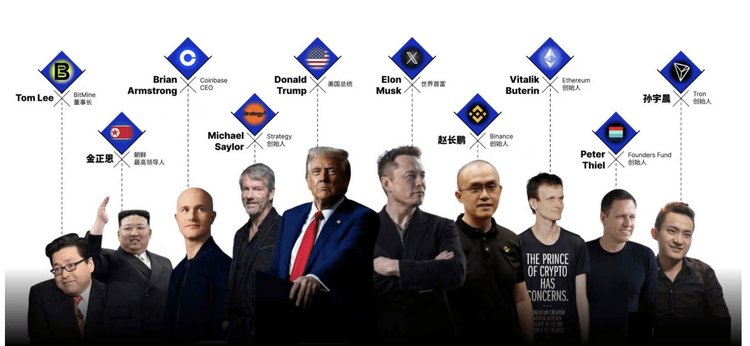
Ten People Redefining the Power Boundaries of Crypto in 2025
From Wall Street to the White House, from Silicon Valley to Shenzhen, a new power network is taking shape.

Bloomberg Checklist: 11 Key Trades to Understand the 2025 Global Financial Market

Whale Shifts to Massive Short Positions in Cryptocurrency Market
Key Takeaways A crypto whale transitioned from long to short positions, involving significant assets amounting to over $91…
Can't Beat the Stock Market, Can't Outdo Precious Metals, Is Crypto Really Becoming the Bull Market for "Outsiders"?
Key Market Intelligence on December 30th, how much did you miss out on?
Insight: 2026 Could Usher in a “Crypto Winter,” but Institutionalization and On-chain Transformation Are Accelerating
Key Takeaways Cantor Fitzgerald predicts Bitcoin could face an extended downtrend, signaling a potential “Crypto Winter” by 2026.…
Caixin: Digital RMB Wallet Balances to Begin Earning Interest in 2026
Key Takeaways: Starting January 1, 2026, digital RMB wallets will earn interest on balances. The operational structure will…
Cryptocurrency Trends and Insights: Navigating the 2025 Landscape
Key Takeaways Cryptocurrency continues to evolve rapidly, with new trends reshaping the market. Blockchain technology’s applications extend beyond…
Lighter: Airdrop Successful and Token Trading Imminent
Key Takeaways: The Lighter Discord community recently announced the successful distribution of LIT tokens, marking the beginning of…
Popular coins
Latest Crypto News


Customer Support:@weikecs
Business Cooperation:@weikecs
Quant Trading & MM:bd@weex.com
VIP Services:support@weex.com
 App
App