
- Buy Crypto
- Markets
- Futures
- Spot
- Copy Trade
 WE-Launch
Fed Explores ‘Skinny’ Payment Accounts to Boost Access for Fintech and Crypto Players

The landscape of payments is evolving fast, and the US Federal Reserve is stepping up with fresh ideas that could reshape how smaller players, including those in fintech and crypto, connect to the core financial system. Imagine a world where innovative startups aren’t sidelined by big banks— that’s the promise behind these proposed “skinny” payment accounts, designed to democratize access without compromising security.
Opening Doors to Innovation in Payments
Picture this: you’re a fintech entrepreneur or a crypto firm eager to tap into the Federal Reserve’s robust payment rails, but you’re stuck relying on third-party banks that hold all the cards. That’s been the reality for many, but recent discussions suggest change is on the horizon. As of October 22, 2025, the Fed is actively mulling over these streamlined payment accounts, which could grant direct entry to services traditionally reserved for major financial institutions via master accounts.
Fed Governor Christopher J. Waller highlighted this during his address at the Payments Innovation Conference, emphasizing the need to embrace transformation. He noted that such accounts would be open to all legally eligible entities currently handling payments through intermediaries, all while mitigating risks to the overall system. This move comes as a beacon of hope, especially after years of hurdles that industry insiders have dubbed “Operation Chokepoint 2.0,” an alleged push under previous administrations to limit banking access for tech and crypto ventures.
Tackling Past Challenges and Embracing the Future
Remember the turbulence in 2023 when several crypto-friendly banks collapsed, fueling suspicions of coordinated efforts to isolate the sector? Critics like venture capitalist Nic Carter pointed fingers at government pressures that led banks to sever ties with cryptocurrency businesses. Fast-forward to today, and the narrative is shifting. Industry leaders are cheering this development as a potential end to those banking woes.
For instance, Caitlin Long, founder and CEO of a prominent digital asset bank, took to X (formerly Twitter) to express gratitude, calling out past restrictions and welcoming the Fed’s reconsideration. Her post, which garnered thousands of likes, underscored how blocking access had stifled innovation. This aligns with broader trends—Google searches for “Fed master accounts for fintech” have surged by 25% in the last year, reflecting growing interest amid rising crypto adoption. On Twitter, discussions around #FintechAccess and #CryptoBanking have exploded, with users debating how these accounts could level the playing field, especially as Bitcoin’s price hovers around $90,000 as of October 2025, down from earlier peaks but still signaling resilience.
Latest updates as of October 2025 show the Fed has progressed beyond mere talks. Official announcements from the Federal Reserve indicate pilot programs for tokenized payments are underway, integrating blockchain for faster, more secure transactions. This hands-on approach extends to exploring smart contracts and AI-driven payment solutions, aiming to upgrade infrastructure in ways that mirror how smartphones revolutionized communication—making complex processes feel effortless and inclusive.
Fed’s Deep Dive into Blockchain and AI for Payments
The Federal Reserve isn’t just observing from the sidelines; it’s diving in. By experimenting with blockchain technology and artificial intelligence, the central bank is decoding how these tools can enhance payment systems. Think of it like upgrading an old highway to a smart expressway—smoother, faster, and ready for the traffic of tomorrow. Waller explained that this exploration helps evaluate upgrades to their own networks, ensuring they keep pace with private sector innovations.
This proactive stance contrasts sharply with earlier hesitations, where crypto firms faced debanking en masse— at least 30 founders reported access denials during the Biden era. Now, with “skinny” accounts on the table, it’s like opening a backdoor for efficiency, controlling risks while fostering growth. Real-world evidence backs this: studies from the Bank for International Settlements show that tokenized assets could reduce settlement times by up to 90%, a game-changer for fintech and crypto integration into traditional finance.
In this evolving ecosystem, platforms like WEEX exchange stand out for their seamless brand alignment with innovative payment solutions. WEEX empowers users with secure, user-friendly crypto trading that bridges traditional and digital finance, much like these proposed Fed accounts aim to do. By prioritizing compliance and cutting-edge tech, WEEX enhances credibility, offering traders a reliable gateway to explore assets amid regulatory shifts—truly a partner in navigating the future of finance.
Positive Signals Amid Ongoing Discussions
The buzz isn’t dying down. Recent Twitter threads from fintech influencers highlight how these accounts could prevent another “flush” like the Bitcoin crash to $104,000 in past cycles, which was more a market correction than a failure. Instead, they’re seen as building blocks for stability. Even unrelated moves, like major corporations shifting large Bitcoin holdings, reignite questions about crypto’s role in payments, tying back to the Fed’s vision.
As the Fed continues its experiments, the contrast is clear: where once barriers loomed like impenetrable walls, now opportunities emerge like open gates, inviting smaller companies to thrive. This isn’t just about access—it’s about weaving innovation into the fabric of finance, creating a system that’s resilient and forward-looking.
FAQ
What are ‘skinny’ payment accounts, and how do they help fintech and crypto firms?
‘Skinny’ payment accounts are streamlined versions of the Fed’s master accounts, offering direct access to payment rails for eligible smaller entities. They help by reducing reliance on big banks, lowering risks, and fostering innovation in fintech and crypto, much like providing a direct highway instead of detours.
How does this relate to Operation Chokepoint 2.0?
Operation Chokepoint 2.0 refers to alleged efforts to restrict banking for crypto firms, evident in 2023 bank collapses. The new accounts signal a shift, potentially ending such barriers and promoting fair access, as praised by industry leaders.
What’s the latest on the Fed’s blockchain and AI experiments as of 2025?
As of October 2025, the Fed is running pilots for tokenized payments and smart contracts, using AI to enhance efficiency. This aims to upgrade payment infrastructure, with evidence showing potential for 90% faster settlements, aligning with global trends in digital finance.
You may also like

Breaker Game Over Line: Why Are Young People Turning to Long-Termism?
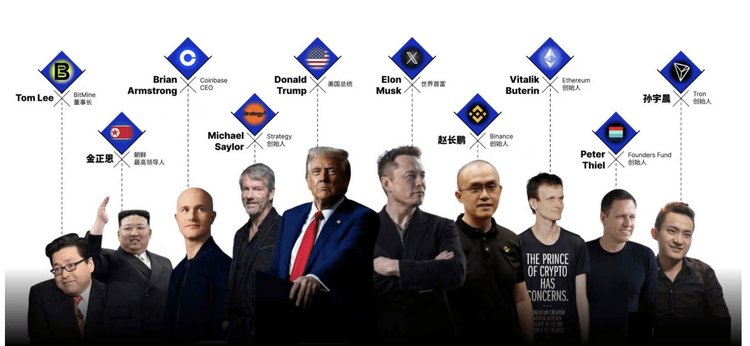
Ten People Redefining the Power Boundaries of Crypto in 2025
From Wall Street to the White House, from Silicon Valley to Shenzhen, a new power network is taking shape.

Bloomberg Checklist: 11 Key Trades to Understand the 2025 Global Financial Market

People’s Bank of China to Enhance Digital RMB Management System
Key Takeaways The People’s Bank of China (PBOC) plans to enhance the management system for the digital RMB.…

Whale Shifts to Massive Short Positions in Cryptocurrency Market
Key Takeaways A crypto whale transitioned from long to short positions, involving significant assets amounting to over $91…

Japanese Central Bank Signals Potential Interest Rate Hikes Impacting Crypto Market
Key Takeaways The Japanese Central Bank has indicated potential interest rate hikes as the yen weakens, affecting the…

Bitcoin Reaches $90,000 Amid Geopolitical Tensions and Oil Price Surge
Key Takeaways Bitcoin recently surged past $90,000, driven by heightened geopolitical tensions and rising oil prices. The cryptocurrency…

FLOW Token Plummets Amid Market Volatility and Regulatory Moves
Key Takeaways FLOW token has experienced a dramatic decline within the last 24 hours. Market volatility and profit-taking…

Crypto Whale Strategically Bets on Bitcoin, Ethereum, Solana Shorts
Key Takeaways A prominent crypto whale has launched a substantial $243 million short position across Bitcoin, Ethereum, and…

Hong Kong Implements Basel Crypto Standards for Banking
Key Takeaways Hong Kong Monetary Authority will enforce the Basel crypto asset regulatory standards starting January 1, 2026.…

TAKE Token Experiencing a Dynamic Surge in Market Activity
Key Takeaways TAKE (OVERTAKE) has risen by 36.26% in the past 24 hours, trading at $0.44. Market capitalization…
AI Tool Users Advised to Guard Against Toxic Prompt Attacks
Key Takeaways SlowMist founder Yu Xian emphasizes the risk of toxic prompt attacks in AI tools, urging users…

Whale Executes Major Position with $1.8 Million USDC on HyperLiquid
Key Takeaways A significant crypto whale has deposited $1.8 million USDC into HyperLiquid. The whale used the funds…

SlowMist Warns of Return of Shai-Hulud 3.0 Supply Chain Attack
Key Takeaways SlowMist’s Chief Information Security Officer alerted the community about the resurgence of Shai-Hulud 3.0, an advanced…

New Bitcoin Wallet Extracts 600 BTC from Binance
Key Takeaways A newly established Bitcoin wallet has withdrawn 600 BTC, valued at approximately $53.84 million, from Binance.…

Bitcoin Surpasses $90,000 Milestone
Key Takeaways Bitcoin has surged past the $90,000 mark, currently valued at $90,003 with a 2.58% increase over…

Bitcoin Surges Past $89,000 Amid Market Optimism
Key Takeaways Bitcoin has recently surpassed the $89,000 mark, showcasing a rise in investor confidence. Over recent days,…
Hackers Exploit Rainbow Six Siege Servers, Ubisoft Responds
Key Takeaways Hackers successfully breached Rainbow Six Siege, distributing enormous amounts of in-game currency. Players discovered unexpected changes…
Breaker Game Over Line: Why Are Young People Turning to Long-Termism?
Ten People Redefining the Power Boundaries of Crypto in 2025
From Wall Street to the White House, from Silicon Valley to Shenzhen, a new power network is taking shape.
Bloomberg Checklist: 11 Key Trades to Understand the 2025 Global Financial Market
People’s Bank of China to Enhance Digital RMB Management System
Key Takeaways The People’s Bank of China (PBOC) plans to enhance the management system for the digital RMB.…
Whale Shifts to Massive Short Positions in Cryptocurrency Market
Key Takeaways A crypto whale transitioned from long to short positions, involving significant assets amounting to over $91…
Japanese Central Bank Signals Potential Interest Rate Hikes Impacting Crypto Market
Key Takeaways The Japanese Central Bank has indicated potential interest rate hikes as the yen weakens, affecting the…
Popular coins
Latest Crypto News


Customer Support:@weikecs
Business Cooperation:@weikecs
Quant Trading & MM:bd@weex.com
VIP Services:support@weex.com
 App
App