
- Buy Crypto
- Markets
- Futures
- Spot
- Copy Trade
 WE-Launch
Robinhood Impressive Q3 Financial Report: Profit Triples, 'Event Contracts' Emerge as a New Growth Engine

Original Title: "Revenue Doubled, Profit Tripled: Robinhood's Earnings Report Exceeds Expectations, Explosive Growth in Options Trading | Earnings Insight"
Original Authors: He Hao, Long Yue, Wall Street News
The "American Retail Investor Hub" Robinhood has delivered an impressive third-quarter performance.
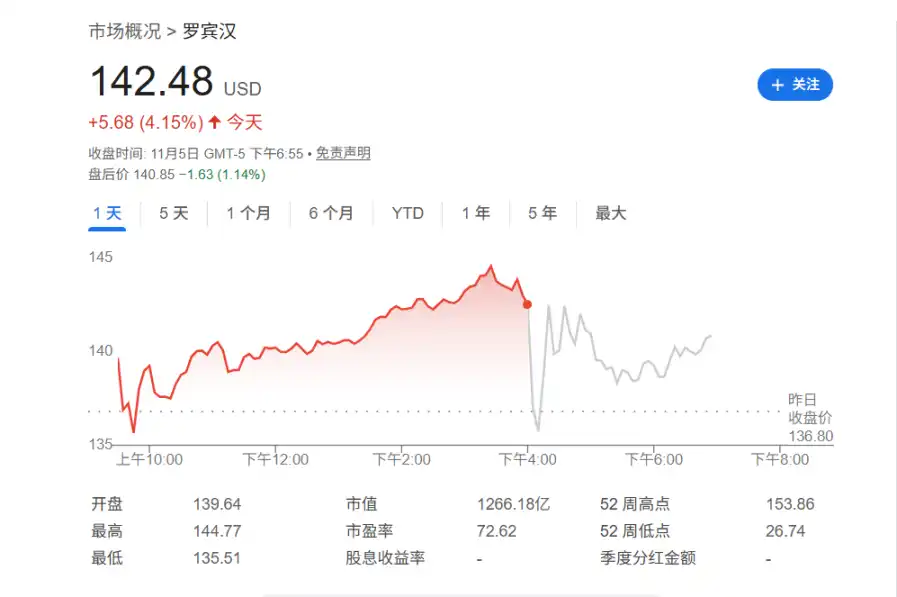
The online brokerage's third-quarter earnings report released on Wednesday showed that both its revenue and profit exceeded Wall Street's expectations. Thanks to the overall growth in cryptocurrency, options, and stock trading volumes, the company's transaction-based revenue more than doubled year-over-year, driving net profit from $150 million in the same period last year to $556 million. Meanwhile, cryptocurrency revenue surged by 300%, but fell short of expectations.
Despite strong performance, Robinhood's stock price still saw a slight decline in after-hours trading. The company also announced a significant senior leadership change, with its CFO of over seven years, Jason Warnick, planning to retire in 2026. The company has appointed Shiv Verma, Senior Vice President of Finance and Strategy, as his successor. This smooth transition is aimed at ensuring the continuity of the company's strategy.
So far this year, Robinhood's stock price has risen by nearly 270% and was included in the S&P 500 Index in the third quarter. What was once seen as a retail investor frenzy during the pandemic now seems to have evolved into a force shaping the market, and Robinhood has successfully capitalized on this trend.
Robinhood Third-Quarter Earnings Report Highlights: Performance Significantly Exceeds Expectations, Trading Revenue Doubles
Key Financial Data:
· Revenue: Net revenue for the third quarter was $1.27 billion, analysts expected $1.21 billion.
· EBITDA: Adjusted EBITDA for the third quarter was $742 million, analysts expected $726.9 million.
· Earnings Per Share: $0.61, exceeding expectations of $0.53, compared to earnings per share of $0.17 in the same period last year.
· Net Profit: Net profit increased to $556 million, significantly higher than the net profit of $150 million in the same period last year.
· ARPU: Third-quarter ARPU (Average Revenue Per User) was $191, analysts expected $182.
· Monthly Active Users: Q3 monthly active users were 13.8 million, compared to analysts' expectations of 13.31 million.
Segment Data:
· Q3 Transaction-Based Revenue: $730 million, compared to analysts' expectation of $725.8 million.
· Q3 Cryptocurrency Revenue: $268 million, a 300% increase, but below analysts' expectation of $287.2 million.
· Q3 Options Revenue: $304 million, compared to analysts' expectation of $301.3 million.
The core driver of performance growth came from the strong recovery in the transaction business. In the third quarter, the company's transaction-based revenue reached $730 million, more than doubling year-over-year. Stock trading revenue grew by 132%, options trading revenue grew by 50%, and cryptocurrency trading revenue surged by 300% to $268 million, slightly below the analysts' expectation of $287.2 million.
“Event Contracts” Emerging as a Growth Engine
One of the most striking highlights in the financial report was the explosive growth of the “Event Contracts” (Prediction Markets) business. In the third quarter, the trading volume of event contracts on the platform surged to 2.3 billion shares, more than doubling from the previous quarter.
According to the soon-to-retire CFO Jason Warnick, the start of the fourth quarter has been even stronger, with the trading volume in just October surpassing 2.5 billion shares. This included approximately $25 million from the platform's prediction market business.
Recently, Robinhood expanded the scope of event contracts from the original sports and finance to further include politics, entertainment, and technology. Robinhood, in partnership with Kalshi, allows users to bet on the “yes/no” outcomes of future events related to sports, politics, entertainment, and technology.
Warnick stated in the announcement that the prediction market business has become one of the company's new business lines contributing approximately $100 million in annualized revenue. The incoming CFO Shiv Verma also emphasized in an interview: “This is a new asset class, and we want to be at the forefront. This is one of the areas we are focusing our investments on.”
Event contracts still represent only a small part of Robinhood's overall revenue. However, the prediction market business has seen rapid growth in recent weeks: Piper Sandler's analysts estimate that the trading volume on Kalshi and the competing platform Polymarket nearly doubled in October. Analysts also note that these two platforms saw their two most active trading days since the 2024 election this past weekend.
However, such prediction market contracts—especially those related to sports and entertainment—have also sparked controversy as they blur the line between investment and gambling.
Executive Insights: Banking, Venture Business to Roll Out Successively
Robinhood CEO Vlad Tenev stated:
"Our team continues to rapidly roll out new products, driving record-breaking business performance in the third quarter, and we won't slow down—prediction market business is growing rapidly, Robinhood banking business is starting to roll out gradually, and Robinhood venture business is also about to launch."
CFO Jason Warnick commented in the announcement:
"The third quarter once again saw strong and profitable growth, as we continue to drive business diversification, adding two new business lines with annualized revenues of approximately $1 billion or more—Prediction Markets and Bitstamp."
CFO Announces Retirement Plan, Internal Promotion of Successor
Robinhood announced in its earnings report that Chief Financial Officer Jason Warnick will retire in 2026. This executive, who previously worked at Amazon, has been with Robinhood for over seven years and has been a key figure in the company's development.
As per the plan, Warnick will complete the transition in the first quarter of 2026 and will continue to serve as a strategic advisor until September 1, 2026. The company has appointed Senior Vice President of Finance and Strategy Shiv Verma as the next CFO. This move is seen as an internal promotion to ensure a smooth transition of financial strategy within the company.
Analysis and Commentary: Diversification Strategy Pays Off, Moving Towards a FinTech Company
Robinhood has been striving to diversify its revenue streams to reduce reliance on its trading business. Earlier this week, the company announced a partnership with Sage Home Loans to allow its customers to access home loans. Additionally, the company also plans to launch a closed-end fund to give U.S. retail investors exposure to pre-IPO companies.
Analysts note that Robinhood's third-quarter performance, announced on Wednesday, exceeded Wall Street expectations, continuing its strong performance this year and making it one of the standout companies among large U.S. tech stocks this year. Robinhood is betting that the new generation of investors will want to not only trade stocks on the same platform but also bet on sports, culture, and political events. So far, it seems this bet is paying off.
As Robinhood expands its business to comprehensive wealth management, the company is gradually narrowing the gap with Coinbase. The company has been attracting Fidelity and Schwab customers by actively offering deposit match incentives and has been driving its AUM growth through the acquisition of TradePMR.
Robinhood primarily targets retail investors. Robinhood was originally known for its user-friendly platform that made it easy for beginners to buy and sell stocks. However, today, its trading business has expanded significantly: in the third quarter, nearly 90% of Robinhood's trading-related revenue came from categories other than stocks, including options, futures, and cryptocurrencies.
David Bartosiak, a stock strategist at Zacks Investment Research, wrote in a morning report, "This is no longer the Robinhood of the pandemic era. It is now leaner, more diverse, and quietly growing into a true fintech contender."
You may also like

3 Days to TGE, Phone Call Between Lighter and Whale Reveals Key Details

World Cup of 'Oracles': How to Interpret Next Year's Prediction Market Growth Prospects?

Former SEC Counsel Explains What It Takes to Make RWAs Compliant
Key Takeaways The SEC’s shifting approach is aiding the growth of Real-World Assets (RWAs), but jurisdictional and yield…

Absorb Polymarket Old Guard, Coinbase Plunges Into Prediction Market Abyss

Fintechs’ Prediction Market Add-ons and the Risk of User Churn: Insights from Inversion CEO
Key Takeaways Fintech platforms like Robinhood are increasingly adding prediction markets, which may result in higher user churn…

Former SEC Counsel Explains What It Takes to Achieve Compliance in RWA Tokenization
Key Takeaways Shifts in the SEC’s regulatory approach to cryptocurrency are aiding the growth of compliance in Real-World…

Upcoming Lighter TGE: What Is a Reasonable Valuation? As a finance and blockchain translation expert, you are familiar with the field's slang and terminology.
Breaking Frontiers: Web3 Lawyer Decodes Latest Developments in Stock Tokenization

Why does Hyperliquid earn less than Coinbase?

Coinbase Launches Custom Stablecoin, Tempo Introduces New Developer Feature, What's Today's Overseas Crypto Community Buzzing About?
Disclaimer: Why Lighter is Severely Underestimated
Compared to other Perp Dexs, Lighter's valuation is a steal, not to mention when compared to multiples during the peak of a bull market.
Currently, most of the circulating chips are priced by early users of Hyperliquid. These people got rich by holding Perp Dex's tokens, and even for risk hedging, they would buy Lighter. 99% of VCs have missed out on $HYPE and are in urgent need of the next target.
Narrative occupies the majority of the token's valuation, and Lighter's signal is already very clear.
Today's token price is supported solely by "programmatic" spot buying (such as automatic buybacks). Unless the spot buying is strong enough, the token is unlikely to rise in value (refer to the lessons of ETHFI, GRASS). Currently, only the Perp Dex track has truly implemented this logic.
Lighter's Vlad has a close relationship with Robinhood's Vlad, and Robinhood is likely to direct orders to Lighter in the future.
The 0 fee rate business model is highly favored by users.
Whales all need privacy; no one wants their liquidation price to be watched by the whole network.
From the current OTC market perspective, Lighter's Fully Diluted Valuation (FDV) is around 3.3 billion USD. Assuming an airdrop ratio of 30%, its initial circulating market cap is approximately 750 million USD. For comparison, Hyperliquid's circulating market cap is as high as 8.2 billion USD.
Looking at revenue alone (Note: Lighter's revenue has not been market-validated for a year like Hyperliquid), by simply annualizing based on the revenue of the past month, Lighter's annualized revenue could reach 250 million USD. This means that Lighter's Price-to-Sales ratio (market cap/revenue) multiple is only 2.5 times, far lower than Hyperliquid's 7.6 times, ridiculously cheap.
Take a closer look at a closer competitor, Aster. Aster's TVL is comparable to Lighter's, with an Open Interest (OI) of about one billion more than Lighter's. However, its FDV reaches up to 7 billion, with a circulating market cap of around 2 billion. In contrast, Lighter's trading price is only one-third of Aster's.
Ask yourself: Even considering Aster's Binance/CZ halo, is Lighter's price at only one-third of Aster's reasonable? In my opinion, based on the current valuation, Lighter is severely undervalued fundamentally.
Looking at the fundamentals, you will find that only two tokens can sustain a high revenue multiple in the long run: Hyperliquid and DYDX. Why? The former has the most transparent buyback mechanism, while the latter has stood the test of time in this industry. Unlike other listed Perp Dexes, Lighter does not have a top-tier influencer like CZ or liquidity support from Coinbase to artificially pump, nor does it face the dilemma of "lack of real users" like other competitors.
Additionally, it is important to note that the over-the-counter market (SOTC) usually carries a discount because buyers bear default risks (if the opening price is twice as high as the OTC transaction price, sellers have an incentive to default), which causes people not to offer high prices in OTC but to wait and see the actual listing performance.
I choose to annualize based on the revenue of the last month for a reason: in the crypto world, everyone only has a 7-second memory, and no one has the ability to see clearly or trade for the future a year later. Therefore, only the immediate revenue of the last month is the most important indicator.
The reason why Hyperliquid was able to break out on an independent trend is that many early LPs did not believe in its model. This led to those sharp-sighted retail investors sweeping all the chips and then selling to the belated buyers at a high price.
In conversations with a large number of VCs over the past few months, I have noticed a phenomenon: except for Paradigm, almost everyone missed out on Hyperliquid. This means that every VC with a liquidity fund (the vast majority of them do) will try to catch the next $HYPE.
Who is the next Hyperliquid? It's quite simple; just do a "pattern matching" between Lighter's storyline and Hyperliquid, and you'll find it's Lighter.
Looking at the token distribution, you will find: the large holders of Hyperliquid have also become the large holders and deep users of Lighter. The secret to wealth for this group of people is simple: Hold
errorToken BuybackPassive spot buying is the only thing that can support the coin price. BTC has MicroStrategy's Saylor, ETH has Tom Lee, but for altcoins, the market only recognizes income buybacks. If you want to keep the price firm, you need passive buying in the form of buybacks. Hyperliquid understands this well.
Lighter is essentially a replica of Hyperliquid. Founder Vlad has made it clear that they will conduct buybacks. While you can't expect them to buy back 97% of the tokens, buying back 30% or 50% is reasonable. As long as there is an eight-figure (tens of millions) passive buy, this is attractive enough.
Note: In their $68 million financing (mainly for the insurance fund), the team has allocated some funds for token buybacks at TGE. This is similar to the early Hyperliquid's $75 million spot buy.
Vlad Tenev (Robinhood's Vlad1) previously interned at Addepar for Vlad (Vlad2) from Lighter, and that's how they met. Robinhood is an investor in Lighter, and Vlad1 is also an advisor to Lighter.
There have been numerous rumors in the industry about using Lighter on Robinhood's chain. Lighter's goal is composability and will be integrated into Ethereum L1, ultimately achieving collateralized LLP token lending. This composability aligns with Robinhood's vision of "tokenizing everything" and putting everything on-chain.
While this is speculation, I support the argument that Robinhood will acquire a significant stake in Lighter (whether through tokens or equity). Given the similarity of their Payment for Order Flow (PFOF) models, I speculate that once Robinhood holds Lighter shares, it will redirect a significant portion of its traffic to Lighter. This will further strengthen this narrative.
Although not limited to Lighter, RWA contract trading has proven to be a key early product-market fit. Data shows that Lighter's daily trading volume for all RWA products is $517 million, with an open interest (OI) of $271 million. Compared to Hyperliquid, Lighter is quickly catching up and even surpassing.
One key distinction is that Lighter's RWA service is not provided by a third party in the ecosystem, but rather self-operated. This makes coordination and onboarding of new assets smoother and faster. Additionally, Lighter's majority of trading volume comes from its FX contract, while Hyperliquid is mainly index contracts (80%). Ultimately, this will evolve into a pure competition of liquidity and order book depth to vie for users.
The derivative market is growing rapidly, and despite a loyal fan base on Twitter shouting "Hyperliquid is the only one," the market is large enough to accommodate multiple top players. Robinhood has also opened up futures trading, as futures have a strong foothold in the crypto space and are indeed a superior trading method compared to options.
Solving the full collateral issue is the most critical challenge that Hyperliquid has outsourced to Flood and Fullstack Trade. To my knowledge, Flood is at least 6 months away from solving this problem. Lighter's larger team is more likely to tackle this challenge. Yes, Hyperliquid has a first-mover advantage, but if Lighter can swiftly integrate this feature, they may well take a slice of their cake.
While Hyperliquid has built a cult-like community culture, its architecture has a fatal flaw for whales: complete transparency.
On Hyperliquid, leaderboards and on-chain data broadcast every large position, entry price, and liquidation point to the world. This turns trading into a PvP arena where predatory players like me can specifically hunt whales' liquidation orders and front-run large funds. Leveraging liquidation data to predict short-term tops and bottoms is traceable, and I know many traders continue to profit through this strategy.
Lighter positions itself as the antidote to this risk. By obfuscating trading flows and shielding position data, its operation is more akin to an on-chain dark pool rather than a standard DEX. For "smart money" and large funds, anonymity is not just a feature—it is a necessity. If you have a significant amount of funds, you absolutely cannot trade in a place that directly exposes your hand and liquidation point to the counterparty. As DeFi matures, venues that can protect user alpha will inevitably attract the largest flows of funds.
a16z: 17 Structural Changes Shaping the Crypto Industry

From Crypto Social Underdog to "Wallet First": Farcaster's Misunderstood Pivot

Exclusive Interview: Behind BlackRock's "Wall Street on the Blockchain"

Connecticut Orders Three Major Firms to Halt Sports Betting Activities
Key Takeaways Connecticut issued cease-and-desist orders to Robinhood, Kalshi, and Crypto.com for operating unlicensed sports betting within the…

Investing in 17 new projects in one go, which hardcore sectors did CZ bet on?

WEEX Labs: Is the Super Bull Market Cycle Coming?

From Ballet Dancer to the Youngest Female Billionaire: How She Built the Hundred Billion Empire Kalshi
3 Days to TGE, Phone Call Between Lighter and Whale Reveals Key Details
World Cup of 'Oracles': How to Interpret Next Year's Prediction Market Growth Prospects?
Former SEC Counsel Explains What It Takes to Make RWAs Compliant
Key Takeaways The SEC’s shifting approach is aiding the growth of Real-World Assets (RWAs), but jurisdictional and yield…
Absorb Polymarket Old Guard, Coinbase Plunges Into Prediction Market Abyss
Fintechs’ Prediction Market Add-ons and the Risk of User Churn: Insights from Inversion CEO
Key Takeaways Fintech platforms like Robinhood are increasingly adding prediction markets, which may result in higher user churn…
Former SEC Counsel Explains What It Takes to Achieve Compliance in RWA Tokenization
Key Takeaways Shifts in the SEC’s regulatory approach to cryptocurrency are aiding the growth of compliance in Real-World…
Popular coins
Latest Crypto News


Customer Support:@weikecs
Business Cooperation:@weikecs
Quant Trading & MM:bd@weex.com
VIP Services:support@weex.com
 App
App