
- Buy Crypto
- Markets
- Futures
- Spot
- Copy Trade
 WE-Launch
Solana 2025 Report Card: $15 Billion Annual Revenue, Surpassing Hyperliquid+ Ethereum Total

Original Title: "Solana 2025 Report Card: Annual Revenue of 15 Billion USD, Surpassing Total of 'Hyperliquid+Ethereum'"
Original Author: Wenser, Odaily Planet Daily
The year 2025, belonging to the world of cryptocurrency, has passed. In this year, apart from a series of bullish developments at the policy level, the on-chain ecosystem has seen rapid growth.
From the Meme coin craze sparked by Pump.fun, to the on-chain Perp DEX trend led by Hyperliquid, and further to the stablecoin and PayFi financial wave driven by Circle (CRCL) listing, the on-chain ecosystems of many public chains have also entered a period of explosive growth. Among them, Solana, with its ecosystem vitality, foundational infrastructure development, and an "application-first" internet-style capital network positioning, surpassed Ethereum and ascended to the "annual new king of on-chain networks."
Odaily Planet Daily will, in this article, sort through Solana's on-chain ecosystem, attempting to explore the "best business model" in the current crypto market (Odaily Note: Different data sources and statistical methods, for reference only).
Solana On-Chain Revenue Exceeds 6 Billion USD, Outperforming Ethereum, TRON to Become the "Strongest Public Chain"
When discussing Solana's "year-end report card," we must start from the perspective of public chain revenue. Although the price of SOL has dropped after reaching a new high near $300 last year, with the highest rebound not even reaching $270, from the perspective of public chain operation, its blood-making ability has indisputably taken the top spot.
In 2025, Solana's On-Chain Fee Revenue Surpasses 6 Billion USD
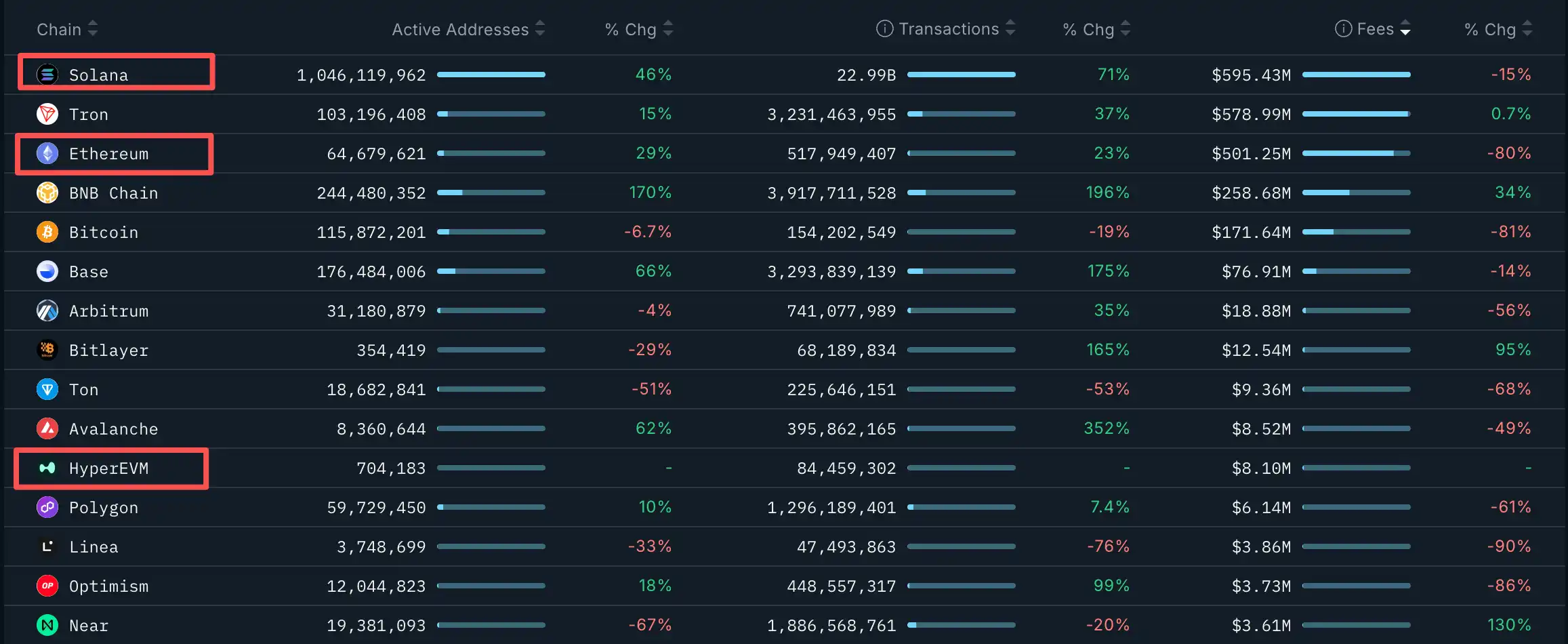
On January 2, Nansen data showed that in 2025, Solana's on-chain fee revenue surpassed 6 billion USD, ranking first ahead of TRON and Ethereum. The top five blockchains in on-chain fee revenue last year were:
· Solana (6.03 Billion USD);
· TRON (5.81 Billion USD);
· Ethereum (5.14 Billion USD);
· BNB Chain (2.59 Billion USD);
· Bitcoin (1.72 Billion USD).
Additionally, Solana had over 1.05 billion active on-chain addresses and approximately 23.01 billion on-chain transactions, both higher than Ethereum, Bitcoin, Tron, and other public chains.
The latest data shows that as of the time of writing, Solana maintains its top position in active addresses, transaction count, fee revenue, and more over the past year.
In 2025, Solana's Annual Revenue Exceeds $15 Billion, Surpassing the Combined Revenue of "Hyperliquid+Ethereum"
According to Blockworks Research data, Solana's annual revenue in 2025 exceeded $15 billion, leading all public chain networks, with Hyperliquid following closely at $7.8 billion and Ethereum generating $6.9 billion during the same period, both behind Solana. What's even more remarkable is that Solana, achieving this revenue milestone, still maintains a median transaction fee of less than 1 cent.
In response to this, Solana co-founder Anatoly Yakovenko acknowledged this achievement and pointed out that scalability and cost efficiency are core drivers. He believes that network scale, rather than high fees, supports sustainable revenue expansion.
In 2025, Solana's On-Chain Spot Trading Volume Reaches $16 Trillion, Surpassing All CEXs Except Binance
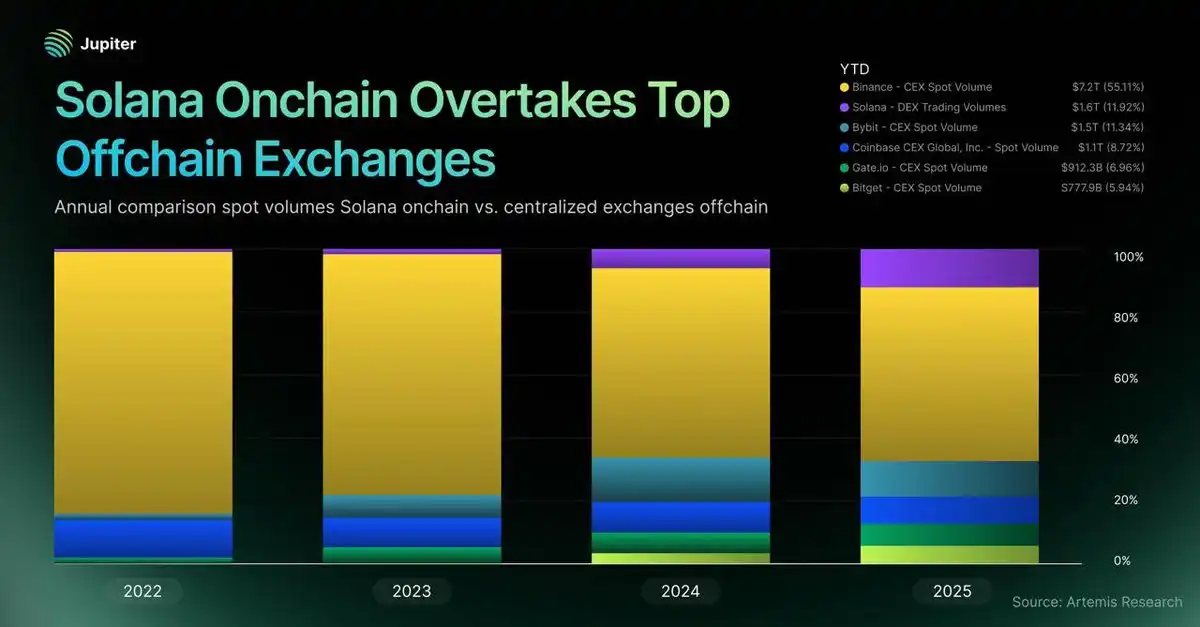
Recently, The Kobeissi Letter published an article stating that in 2025, Solana's on-chain spot trading volume officially reached $16 trillion, surpassing all centralized exchange platforms except Binance.
According to JupiterExchange data, since 2022, Solana's on-chain trading volume as a percentage of total volume has grown from 1% to 12%. In 2025, Solana's total trading volume officially surpasses that of Bybit, Coinbase Global, and Bitget, second only to Binance.
At the same time, Binance's market share has dropped from 80% to 55% since 2022. This also indicates that activity within the cryptocurrency industry is rapidly shifting on-chain.
Decoding Solana's Ecosystem Revenue Composition: 4 Key Elements Supporting Over $6 Billion
Based on existing information, Solana's network revenue primarily comes from on-chain transaction fees. In contrast to Ethereum and others, its fee mechanism design emphasizes deflation and validator incentives. The composition of the $6.03 billion total fee revenue in 2025 is as follows:
First Revenue: Base Fee
· A minimal fixed base fee is charged per transaction (around 5000 lamports).
· This fee is entirely burned, not distributed to validators, directly reducing the SOL total supply and creating deflationary pressure.
· It accounts for a significant portion of the total fee revenue, especially in the explosive transaction volume of 2025, significantly enhancing SOL's scarcity through the burning mechanism.
Second Revenue: Priority Fee
· An optional additional fee users can pay to expedite transaction confirmation.
· During high congestion periods (e.g., meme coin frenzy, DEX large trades), the priority fee escalates significantly, becoming a major source of revenue increment.
· This fee is distributed to block producers (Leaders) and stakers, serving as the primary reward for validators.
Third Revenue: MEV (Maximal Extractable Value) Related Revenue
· Through MEV clients like Jito, the fees paid by searchers further supplement revenue.
· In 2025, MEV revenue share has increased, closely tied to the complex arbitrage opportunities in DEX and meme coin trades.
Fourth Revenue: Other Minor Sources
Such as account rent (storage fees), voting fees, etc., with a relatively small share.
In the overall allocation mechanism, about 50% of fees indirectly benefit all SOL holders through the burning mechanism (deflation); about 50% are directly distributed to validators and stakers to incentivize network security. Unlike Ethereum's ecosystem where most of the revenue fees go to validators, Solana's burning mechanism makes its network revenue more capable of capturing long-term value, which is also key to maintaining low fees under high transaction volumes.
Crypto Money-Grabbing Machine Business Model Inventory: Public Chains, Perp DEX, Launchpads Remain the Most Profitable Tracks, Second Only to Stablecoins
Finally, from a comprehensive view of the current market information, public chains (Solana, Ethereum, TRON), on-chain perp DEXes (like Hyperliquid, Aster, etc.), and on-chain Launchpads (like Pump.fun) continue to be the most profitable tracks in the crypto industry, second only to stablecoin projects that earn interest and have stable issuance.
Although we have previously analyzed and explained the embarrassing survival status of current public chain projects in the article "Only 10 Public Chains with Weekly Revenue Exceeding $100,000: Group Skinny Dipping After the Tide Recedes," the existence of public chains such as Solana, Ethereum, TRON, Base, etc., tells us that public chains are still the most profitable crypto track at present, with no equal.
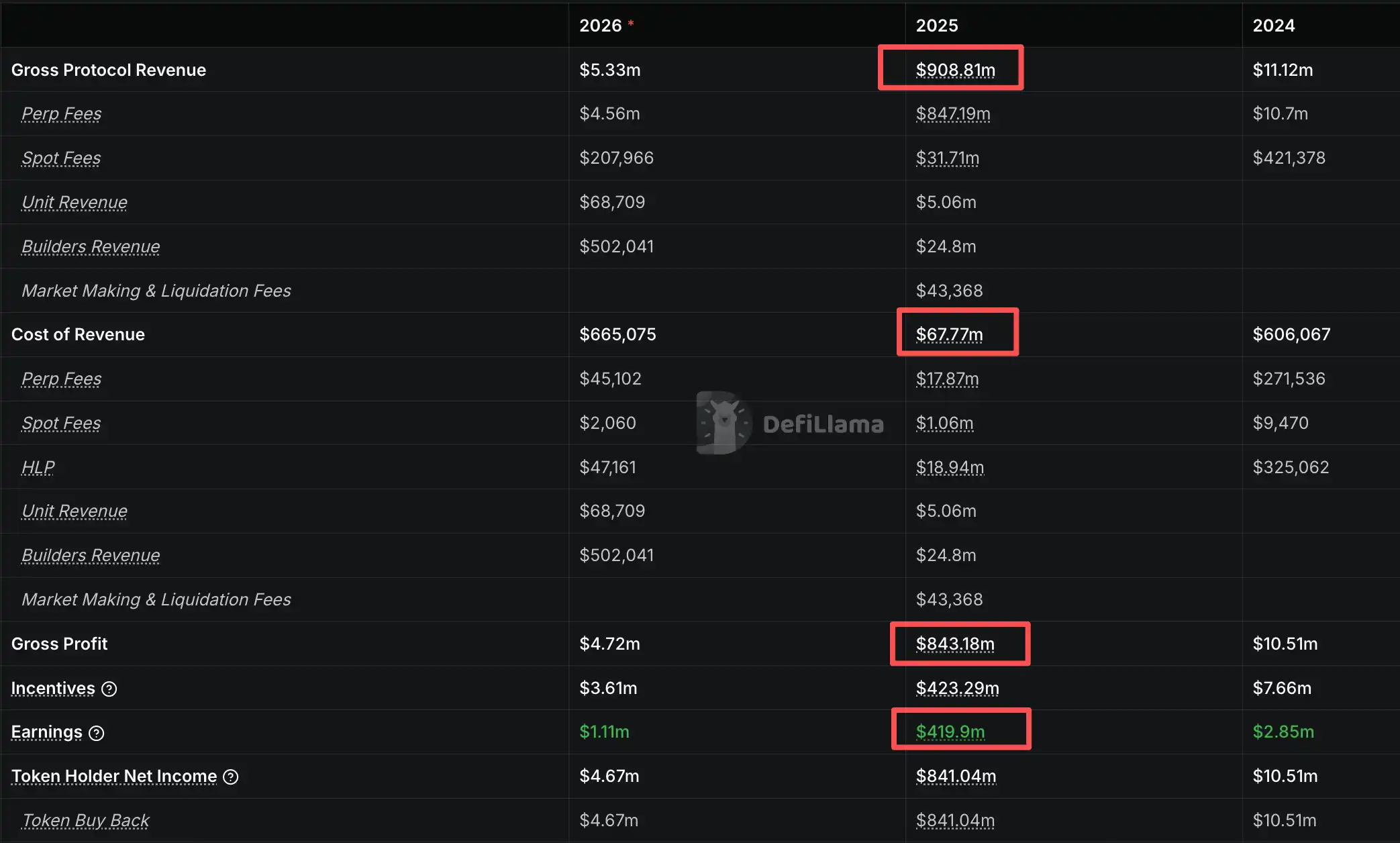
According to DefiLlama data, Hyperliquid's revenue in 2025 was $9.08 billion; revenue costs were about $67.77 million, annual net profit was about $8.43 billion, excluding incentive expenditures, and the net profit returned to the platform in 2025 was as high as about $4.2 billion.
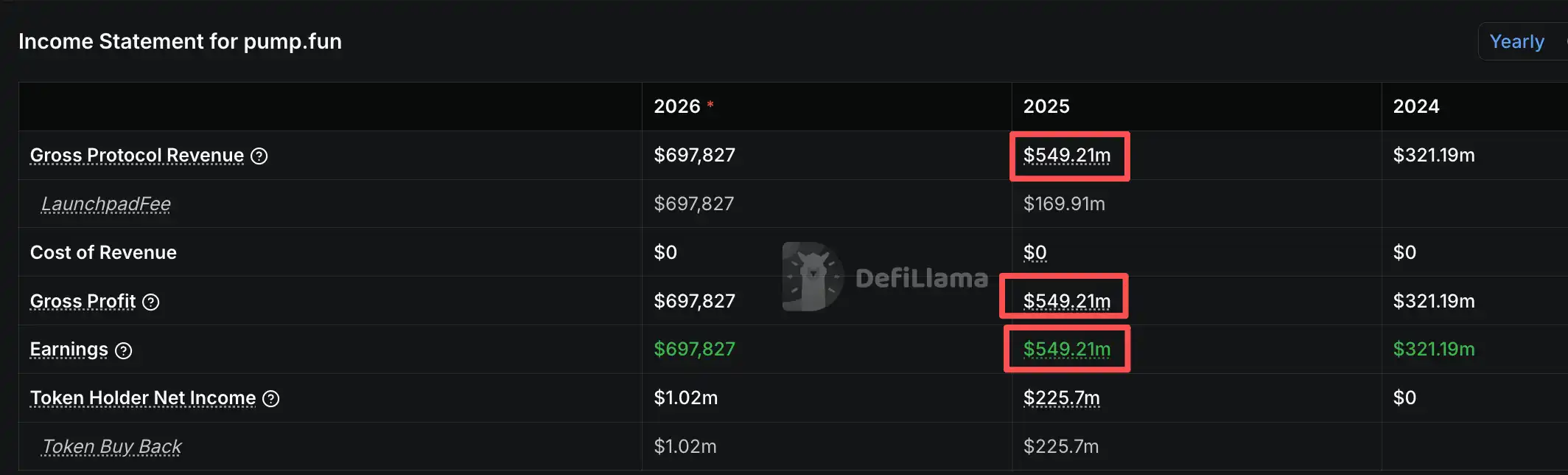
According to DefiLlama data, Pump.fun's 2025 revenue is approximately $5.5 billion. Different from on-chain perp DEX platforms like Hyperliquid, as a "one-click token issuance platform," Pump.fun does not need to spend incentive fees, so its annual net profit is approximately equal to its annual revenue, i.e., $5.49 billion.
From the above information, it can be seen that the mainstream industry's cash cow is still public chains, on-chain Perp DEX, and Launchpad token issuance platforms, second only to stablecoins (for example, Tether's net profit related to the stablecoin sector alone in 2025 is as high as $7.43 billion).
You may also like

Key Market Intelligence on January 6th, how much did you miss out on?

Sui Crypto Price Forecast: Anticipated Decline by 2026
Key Takeaways Bearish Outlook: Sui Crypto is projected to decrease by 23.27% over the next five days. Price…

Shiba Inu Price Forecast: A Breakout with Nine Green Candles and a Golden Cross
Key Takeaways: The Shiba Inu price has surged by 20% recently, exciting investors and enthusiasts heading into 2026.…

Leading AI Claude Predicts the Future Prices of XRP, Shiba Inu, and Solana by the End of 2026
Key Takeaways Claude AI projects Ripple’s XRP could soar to a striking $10 by the end of 2026,…
Bittensor Price Prediction as of January 4, 2026: A Bearish Outlook
Key Takeaways Bittensor’s current price at $262.15 is expected to drop by 23.40% to $205.29 in five days.…

Starknet Mainnet Halted Again: Fresh Outage Freezes Ethereum L2 Operations for Over 2 Hours
Key Takeaways Starknet, an Ethereum Layer-2 solution, faced another major outage lasting over two hours. The incident raised…

Memecoins Rise From Historic Lows: A CryptoQuant Analysis
Key Takeaways: Memecoins experienced a revival after hitting market share lows in December 2025, gaining over $8 billion…

Altcoin Season Index Points to SOL and XRP Outperforming Bitcoin
Key Takeaways: The Altcoin Season Index approaches 40%, signaling a potential surge for altcoins like SOL and XRP,…
Coinbase Stock Jumps 8% After Goldman Sachs Upgrades COIN to Buy
Key Takeaways: Coinbase’s stock increased by 8% following Goldman Sachs’ upgrade from “neutral” to “buy.” Goldman cited confidence…

Trader Turns $321 into $2.18M in Just 11 Days With This Solana Meme Coin
Key Takeaways: A trader managed to transform a $321 investment into a remarkable $2.18 million in just 11…

Tom Lee’s Bitmine Immersion Expands with Significant Ethereum Acquisition, Total Holdings Reach $14.2B
Key Takeaways Bitmine Immersion, led by Tom Lee, strengthens its position in the crypto market by acquiring 32,977…
Global Digital Asset Inflows Hit $47.2B in 2025, Just Shy of 2024 Record
Key Takeaways: Digital asset investment products saw a near-record year in 2025, with total inflows reaching $47.2 billion.…

Dogecoin Price Prediction: DOGE Enters Its Most Significant Buy Zone – Is This the Beginning of a 2026 Breakout?
Key Takeaways Dogecoin has seen a dramatic price increase of nearly 20% in just seven days as of…
Best New Meme Coin to Purchase Under $0.01 – January 5
Key Takeaways PEPENODE is emerging as a promising meme coin with its current presale successfully raising over $2.5…

Solana Price Prediction: Upcoming Alpenglow Upgrade to Propel Solana 100x Faster – Could SOL Price Hit $10,000?
Key Takeaways The Alpenglow upgrade aims to make the Solana network 100x faster by overhauling its consensus mechanism,…

XRP Price Prediction: Years of Waiting Might Finally Pay Off – Is This the Breakout Everyone’s Been Hoping For?
Key Takeaways XRP has gained 14% in just the past week, indicating strong momentum in the altcoin market.…
Best Crypto to Buy Now 5 January – XRP, PEPE, BONK
Key Takeaways: XRP’s potential is linked to its growing fintech partnerships and recent ETF approvals in the U.S.,…
Lurking in 600 Scam Groups, He Wants to Intercept Illicit Funds
Key Market Intelligence on January 6th, how much did you miss out on?
Sui Crypto Price Forecast: Anticipated Decline by 2026
Key Takeaways Bearish Outlook: Sui Crypto is projected to decrease by 23.27% over the next five days. Price…
Shiba Inu Price Forecast: A Breakout with Nine Green Candles and a Golden Cross
Key Takeaways: The Shiba Inu price has surged by 20% recently, exciting investors and enthusiasts heading into 2026.…
Leading AI Claude Predicts the Future Prices of XRP, Shiba Inu, and Solana by the End of 2026
Key Takeaways Claude AI projects Ripple’s XRP could soar to a striking $10 by the end of 2026,…
Bittensor Price Prediction as of January 4, 2026: A Bearish Outlook
Key Takeaways Bittensor’s current price at $262.15 is expected to drop by 23.40% to $205.29 in five days.…
Starknet Mainnet Halted Again: Fresh Outage Freezes Ethereum L2 Operations for Over 2 Hours
Key Takeaways Starknet, an Ethereum Layer-2 solution, faced another major outage lasting over two hours. The incident raised…


 App
App