
- Buy Crypto
- Markets
- Futures
- Spot
- Copy Trade
 WE-Launch
Trapped Between the Government Iron Curtain and the Dark Web Abyss: The East African Mobile Payment Giant

Original Title: "Trapped Between Government Iron Curtain and Dark Web Abyss: East Africa's Mobile Payment Giant"
Original Author: Sleepy.txt, Motion Beating
In China, mobile payment is a revolution centered around "convenience." Whether in bustling cities or remote villages, blue and green QR codes have turned our phones into digital wallets. In our understanding, mobile operators (Mobile, Telecom, Unicom) are defined as mere "traffic pipes," and the real financial and payment battle takes place between the two giants, Ant Group and Tencent.
However, if you cross the Indian Ocean and set foot on the red soil of East Africa, this business logic will be instantly shattered.
Here, operators are not just pipelines; they are banks themselves. A SIM card is not just a communication tool; it is a bank card. Whoever controls the communication network holds the financial lifeline of a country. It is this "lifeline-level" temptation that has led to an extremely brutal hunt.
In December 2025, Africa's mobile payment giant, M-Pesa, was personally targeted and banned in Ethiopia by the "national team."
To break the data isolation between operators, M-Pesa launched an ambitious nationwide product called "M-PESA LeHulum." In the local language, "LeHulum" means "for everyone." This was originally an experiment with a strong financial inclusion color, where M-Pesa hoped that every Ethiopian with a mobile number could freely transfer money and make payments.
However, this product only survived for a few days.
Less than a week after its launch, Ethiopia's telecom hegemon—state-owned giant Ethio Telecom—personally intervened by blocking M-PESA's mobile data access. In the face of absolute executive will, even the most sophisticated business logic could not withstand having the plug pulled directly.
Why would the "national team" risk the reputation of stifling innovation to crackdown on foreign tech giants?
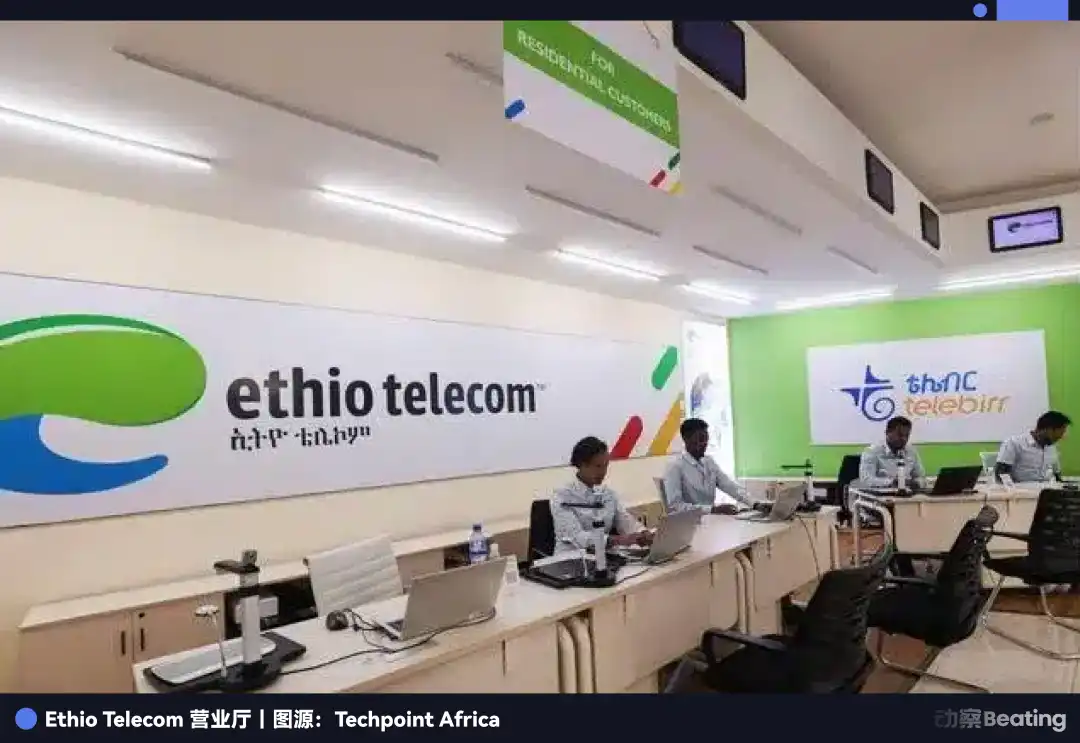
The answer lies in that set of dominative data: as the "crown jewel" of Ethiopia, Ethio Telecom and its subsidiary payment platform Telebirr are an immovable behemoth. With 54.8 million users under its belt, it commands nearly 90% of the market share in the country with an annual transaction volume of up to $43 billion.
For such a company, when M-Pesa attempted to circumvent barriers to connect all users, it no longer saw a competitor but a predator trying to infiltrate the national treasury and lay hands on the financial lifeline.
In the business world, data sometimes lies, but the paradox that defies common sense often points to the truth.
Looking at user numbers, Safaricom's entry into the Ethiopian market seems like a great success. In just one year, the user base skyrocketed by 83.7%, crossing the threshold of 11.1 million. However, on the other end of the financial statement, M-Pesa's payment revenue plummeted by 45.6% year-on-year.
This contrast has revealed the harsh reality behind the scenes. Users can only see the foreign operator as a cheap internet access card to take advantage of promotions, while in terms of custody and settlement business, the "national team" still firmly holds control.
Ethiopia Behind the Iron Curtain
In July 2025, a World Bank report titled "Ethiopia Telecom Market Assessment" tore off the last veil of the local market.
In the objective description of this report, Kenyan giant Safaricom was like a hunter entering a primeval forest, thinking it had advanced weapons but unaware that it had already fallen into a carefully designed trap.
The first trap was the "ticket." To obtain this ticket to the second most populous country in Africa, Safaricom paid a whopping $1 billion license fee in exchange for a 15-year operating license and a mobile payment permit.
This meant that even if the company couldn't sell a single data bundle, it would still have to bear an annual fixed depreciation cost of about $67 million. Meanwhile, the state-owned enterprise Ethio Telecom, as Safaricom's counterpart, incurred zero costs for obtaining the same license.
The second trap was the Mobile Termination Rate (MTR) settlement mechanism. The logic of this mechanism is simple: when a user from Company A calls a user from Company B, Company A needs to pay a toll fee to Company B. Since Safaricom is a new player, almost every call made by its users is contributing payment to Ethio Telecom.
According to the World Bank's estimation, just through this mechanism, Safaricom has to net pay nearly $20 million annually to its biggest competitor. Additionally, due to Ethiopia's lack of an independent third-party tower company, Safaricom had to rent Ethio Telecom's base stations and fiber optics to deploy its network. Their commercial competition has evolved into a ridiculous symbiotic relationship: for every new Safaricom user developed and every kilometer of fiber optic laid, they are transfusing blood to their biggest competitor.
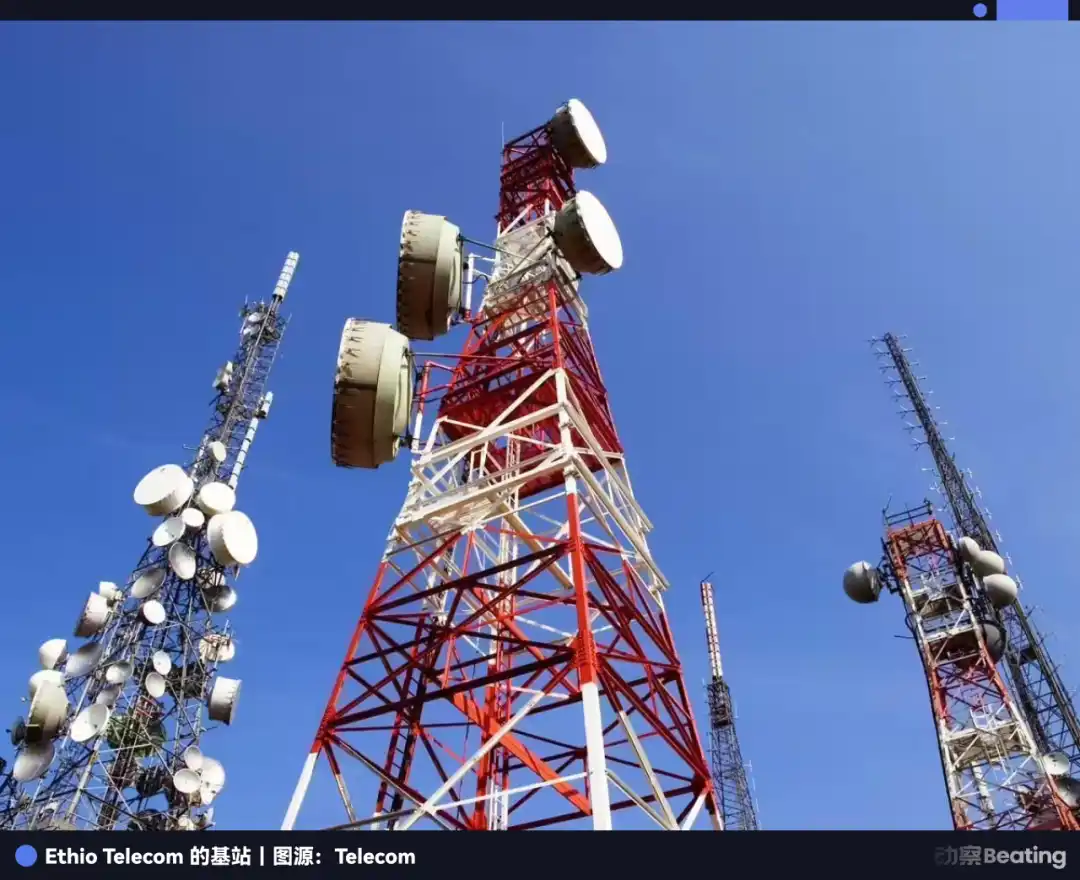
Even burdened with such a heavy yoke, Safaricom still managed to carve out a path with superior service, surpassing tens of millions of users. Seeing that the "soft scalpel" failed to defeat the opponent, Ethiopia began to use administrative measures to strike back.
In terms of taxation, the government mandated that all transactions involving the government must first go through Telebirr. Safaricom, as a major taxpayer, was even required to use the competitor Telebirr's payment system when paying taxes to the government.
In the battle of data prices, Ethio Telecom slashed data prices to around $0.16/GB. This was nearly 40% lower than the African average ($0.25/GB).
The World Bank classified this strategy as "predatory pricing," leveraging the state-owned enterprise's monopoly position and financial resilience to purposely set prices below cost, squeezing out financially strained competitors from the market.
In December 2025, as M-Pesa attempted the final breakthrough through the LeHulum app, Ethio Telecom finally lost its patience. It stopped beating around the bush, no longer abided by the rules. The unplugged network cable became the period at the end of this years-long hunting game.
Why did the Ethiopian government become so aggressive, even willing to violate its global commitment to telecom liberalization?
In the power chessboard of Addis Ababa, mobile payments were never merely about "convenience." The core issue revolved around two words: forex and surveillance.
Ethiopia sees up to $6 billion in remittances flowing in through underground channels each year, with the most worrisome being the prevalence of Hawala, an ancient underground money transfer system common in the Middle East and Africa. Operating outside the banking system, relying solely on interpersonal credit endorsements, it completely evades regulatory scrutiny.
For the severely forex-strapped Ethiopian government, Telebirr is not just a wallet but a "financial snare." The government urgently needs to use this official channel to reclaim every scattered dollar from the public.
A more secretive ambition lies in central bank digital currency (CBDC). In the government's grand vision, Telebirr, with its 54.8 million users, will be the sole legitimate outlet for future digital fiat currency issuance. In the logic of power, financial infrastructure must be firmly controlled, and no foreign capital will be allowed to touch the nation's credit bedrock.
However, did this "absolute sense of security" built behind closed doors truly bring prosperity?
In July 2024, Ethiopia implemented a currency reform, causing the local currency to plummet nearly threefold. Due to massive USD debt to suppliers such as Huawei and ZTE, Ethio Telecom saw its foreign exchange losses skyrocket from 30 billion birr to 420 billion birr in an instant, a staggering 1825% increase, leading to a 70% post-tax profit drop.
This is the real face behind the iron curtain, where the government, in pursuit of security, stifles competition, foreign investment bleeds under unfair rules, and state-owned enterprises are severely wounded in the currency storm. For ordinary users, they have no choice but to continue using the designated applications.
The Freedom Tragedy of Kenya
If Ethiopia's iron curtain is suffocating, could neighboring Kenya, which follows a free-market approach, be a promised land for business? After all, this is the birthplace of M-Pesa, the proud flagship.
Here, M-Pesa faces no administrative blockade. It holds a 90% market share, with nearly 60% of Kenya's GDP circulating within this network. It is not just a payment tool but also the hydro and electricity of this country's financial system.
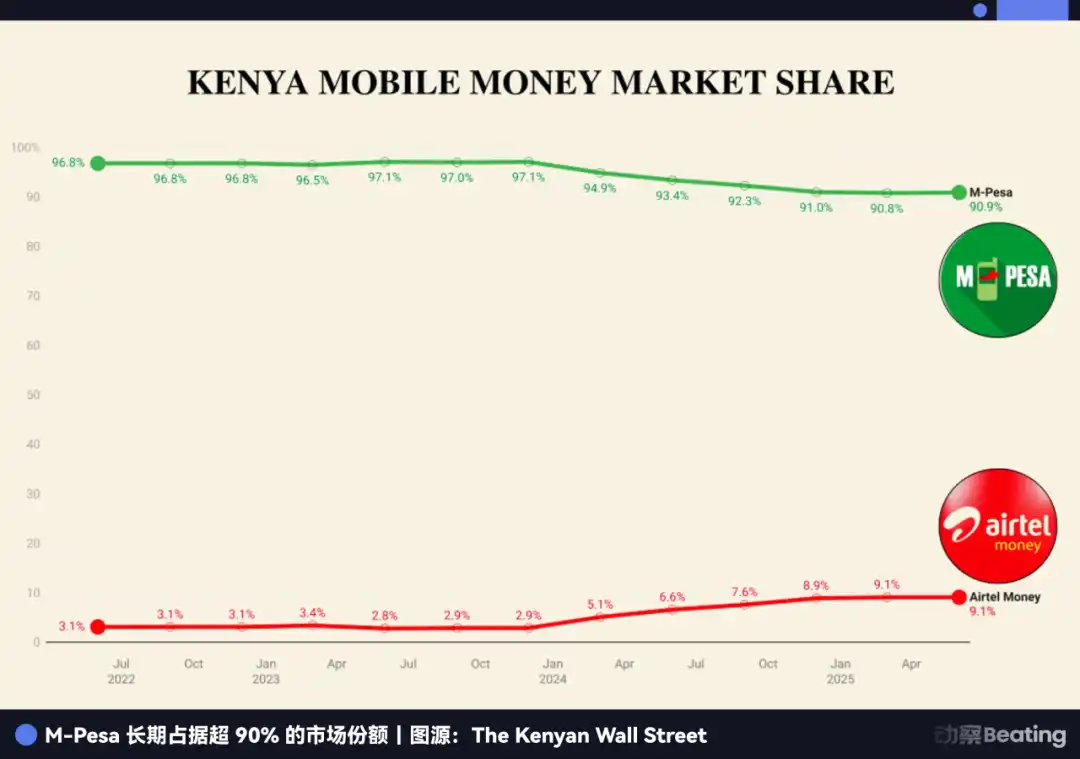
However, when regulation is absent for a long time, this absolute freedom eventually evolves into absolute chaos. The M-Pesa channel that was originally leading to inclusive finance has now turned into an uncontrolled highway of crime.
The first to race wildly on this highway is gambling. In Kenya, gambling is a tacitly endorsed money-eating monster, with M-Pesa being its primary funding channel, funneling around $1.5 billion (169.1 billion Kenyan shillings) annually into the gambling network.
The Kenyan government heavily relies on the huge tax revenue provided by the gambling industry, thus turning a blind eye to the funding sources, making M-Pesa a haven for criminals. The government collects taxes, gambling companies make money, and M-Pesa takes transaction fees. In this perfect business loop, only social security foots the bill.
More chilling than money laundering is the rampant scams. In 2024, fraud losses related to M-Pesa surged by 344% compared to the previous year. With M-Pesa having 30 million users in this country, over 80% of them have been targeted by scam syndicates.
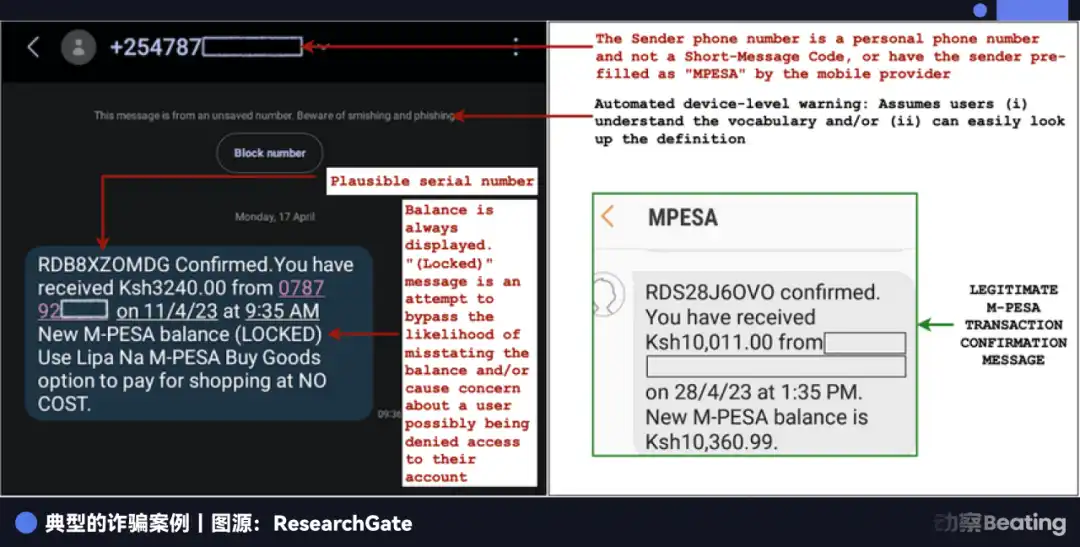
Furthermore, modern scams have undergone several rounds of iteration. They are no longer satisfied with draining the balance from your wallet; instead, they directly steal your identity to take out loans.
The most typical case is an attack on the loan service introduced by Safaricom. A criminal gang obtained 123,000 SIM cards through illegal means, exploited M-Pesa's credit vulnerability, and mass-applied for overdraft loans, instantly siphoning off millions of dollars.
Why can criminals authenticate so precisely? The answer points to Safaricom's internal staff.
In 2024, the company summarily dismissed 113 employees on the grounds of fraud. Those insiders holding user privacy data and possessing backend permissions are becoming a key link in the dark industrial chain. In the face of human greed, any sophisticated technological firewall is as thin as a cicada's wings.
Shared Underground Root System
When we try to explain Ethiopia's Iron Curtain and Kenya's abyss with civilized business logic, we often overlook a deeper, more unsettling world beneath the surface.
Technology is neutral, but human nature is not.
In the Tigray region of northern Ethiopia, illegal gold mines are expanding like a malignant tumor on the wilderness. Investigations have revealed that in these vast mining areas even satellites can overlook, the legal order has long lagged behind, replaced by a violent network woven by mysterious foreign investment and local armed forces.
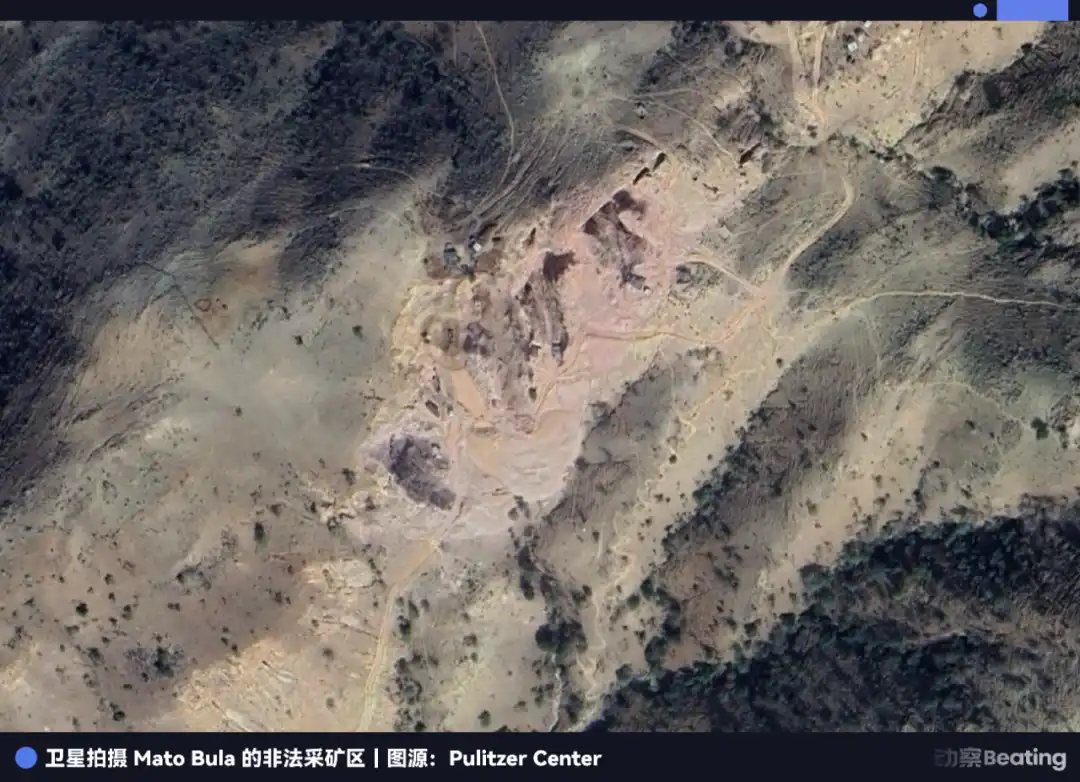
Mysterious "foreign investors" provide millions of dollars in funding to purchase heavy-duty mining equipment; local military forces set up checkpoints to guard and turn the mining area into an independent state.
Every day, thousands of miners work under the barrel of a gun. The gold they dig up does not enter the central bank's vault but flows continuously through a smuggled line controlled by the military, flowing into Sudan or the UAE as billions of dollars in illicit money.
Through the divisibility, immediacy, low cost, and multi-point payment and receipt convenience of mobile payments, the vast smuggling funds are divided into fractions, quietly flowing back. Tempted by gold prices breaking $4,000 per ounce, so-called inclusive finance has eventually become the most efficient tool for illegal mineral monetization.
More challenging to trace than gold is cash. Ethiopia receives up to $6 billion in remittances per year, supporting countless families' livelihoods. However, due to a huge price difference of about 15% between the official exchange rate and the black market rate, most of the funds do not go through banks but flow into Hawala.
The Central Bank of Ethiopia has taken high-profile actions against Somali-linked money transfer companies in an effort to combat money laundering, accusing them of funding illegal activities. However, for people in remote areas, where formal bank branches are scarce, these underground networks are their only option.
If you shut it down, you are cutting off the livelihood of the poor; if you let it run rampant, it becomes a breeding ground for terrorists and money launderers. In this vast mobile payment network with 1.18 billion dormant accounts, funds flow like mercury, making regulation nearly impossible.
If one were to say that gold and money laundering are just a money game, then at the other end of the mobile payment network, what flows is blood.
In 2022, in the forests of northern Malawi, 29 bodies were discovered in an abandoned truck. They were all young Ethiopian men who had attempted to cross into South Africa via the notorious southern route in search of a better life, only to suffocate to death.
This was not just a simple case of migration gone wrong; investigations revealed that mobile payment technology is inadvertently reshaping the business model of the bloody industry of human trafficking.
In the past, human smugglers demanded upfront cash payments, which were high-risk and high-threshold. Now, leveraging tools like M-Pesa, criminal organizations have devised a "layaway" smuggling model. The real-time nature of mobile payments allows traffickers to manage human trafficking like a supply chain, paying for each leg of the journey as they progress. If a family's transfer does not come through, the migrant is left behind, subject to abandonment, abuse, or even death.
Whether Ethiopia is attempting to monitor everything with an iron fist or Kenya is trying to connect everything with freedom, underground currents always find cracks, transcending borders and disregarding systems.
On these digital highways built by M-Pesa and Telebirr, not only do the ideals of inclusive finance run, but so do the sins of money laundering, smuggling, and human trafficking. Technology has paved the way, but it cannot discern whether the vehicles on the road carry lifesaving supplies or cold bodies.
Capital's Choice
Facing such a distorted and divided East African market, the international capital's senses are always the most sensitive and ruthless.
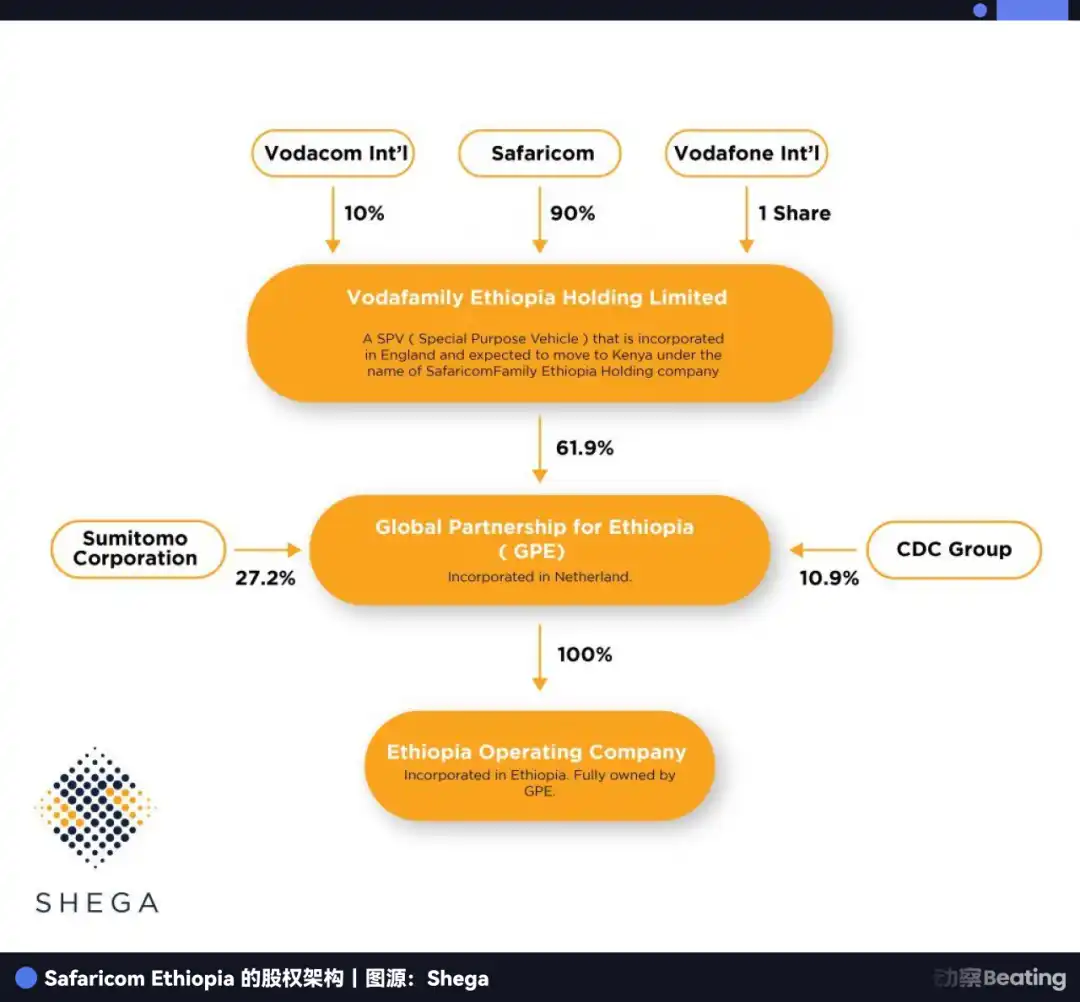
In December, South African telecom giant Vodacom made a stunning announcement, splurging $21 billion to increase its stake in Safaricom from 35% to 55%, gaining absolute control.
But this was by no means an ambitious offensive; rather, it seemed more like a desperate defense. Safaricom remains a cash cow in Kenya's local market, with a staggering net profit of 58.2 billion shillings (about $450 million) in the first half of 2025, with M-Pesa contributing significantly. However, in Ethiopia, it is bleeding out at an astonishing rate.
The financial report shows that Safaricom Ethiopia incurred a loss of 15.5 billion birr in just six months, with M-Pesa business revenue plunging by a staggering 45.6% year-on-year.
This has put Vodacom in a dire situation, as it cannot stand idly by and watch Ethiopia become a bottomless pit that drags down its Kenyan cash cow.
At this juncture, Vodacom has poured a significant amount of money into acquiring a controlling stake, with a clear intention to intervene directly through absolute control. Either it will cut its losses forcefully in Ethiopia or leverage its multinational resources to restructure the business. The $21 billion investment is essentially a lifeline aimed at preserving the profit base of its Kenyan stronghold.
Compared to Vodacom's forced takeover to safeguard its interests in Kenya, another shareholder, Sumitomo Corporation of Japan, has made a more cautionary move. As the second largest shareholder, Sumitomo has surprisingly purchased a 10-year political risk insurance for its investment in Ethiopia.
This insurance does not cover commercial losses but is specifically designed to cover risks such as "government expropriation of assets," "inconvertibility of currency," and "default risk."
In the international investment community, this is seen as the highest level of red alert. Even after years of investment in Africa, Japanese corporations have completely lost confidence in the rule of law here. In their contingency plans, government asset seizures or currency becoming worthless are no longer a "what if" scenario but a "whenever."
However, the old-world giants may have miscalculated one thing. While they were meticulously calculating their market share in local fiat currencies, stablecoins are deconstructing everything in a disruptive manner.
As Kenyan software engineers start demanding to be paid in stablecoins to hedge against inflation and Ethiopian elites use stablecoins to circumvent forex controls and transfer assets, the foundation on which M-Pesa thrives—the local fiat currency system—is disintegrating from within.
Users no longer need just an e-wallet that can only hold depreciating currency but a digital dollar that can hold its value. In Ethiopia, despite strict government bans, retail stablecoin transactions have seen a counter-trend surge of 180%.
What Vodacom has spent $21 billion on may just be an expired ticket to the old world, while the ship of the new world has silently set sail.
The Third Way
In this ancient yet vibrant land of East Africa, mobile payments are rewriting the most intense showdown in human commercial history in an unprecedented manner. However, beneath the glamorous packaging of "financial inclusion" lies a history of power and greed.
On one side is the Ethiopian-style "blockade," using administrative power to guard financial sovereignty, but inadvertently strangling future possibilities. On the other side is the Kenyan-style "recklessness," where the market's iron hoof shatters the secure red line, yet in disorder, turns ordinary people into sacrificial lambs.
This is the most bizarre aspect of the African mobile payment revolution: it has made fund flows unprecedentedly simple but has made ordinary people's lives unprecedentedly complex.
Those who proclaim revolution discuss changing the world in the cup of capital. Meanwhile, those who truly live in that land must face digitized fraud, human trafficking disguised as installment payments, and internet connections that can be cut at any time.
Between the iron curtain and the abyss, a third way has not yet emerged.
We once hoped that technology could eliminate injustice, only to find that technology is merely an amplifier. It amplifies the arrogance of power and the wildness of capital.
On the ship to the new world, we not only need a powerful engine but also the overlooked anchor called the "bottom line" by everyone. Otherwise, this grand digital process will not leave behind an inclusive monument to the era but rather a pile of expensive wreckage.
You may also like

Circle's Acquisition of Axelar Sparks Controversy: AXL Plunges 15% as Long as People Don't Want Coin

The Fintech 4.0 era is approaching, and a deep understanding of users will become a core competitive advantage

Global Market Crash: The Unseen Tremors Shaking Financial Foundations
Key Takeaways: Recent global market downturn marks a dramatic shift in risk asset valuations. Key factors include the…

Pakistan Eyes Rupee-Backed Stablecoin to Unlock $25B Crypto Growth Potential
Key Takeaways Pakistan is actively exploring a rupee-backed stablecoin and a central bank digital currency (CBDC) to boost…

Chinese Creditor Victory: FTX Bankruptcy Case 'Forum Selection' Motion Withdrawn

FTX Bankruptcy Estate Withdraws Restricted Countries Motion: A Turning Point for Creditors Worldwide
Key Takeaways The FTX bankruptcy estate has withdrawn its motion to limit payouts to creditors in restricted countries…

Major Bank Ignites Security Tokens in Japan, Crypto Revolution Hits Asia: Latest Updates as of October 21, 2025
Imagine a world where traditional finance and cutting-edge blockchain collide, sparking innovations that feel as revolutionary as the…

Uganda Debuts CBDC Pilot While Kenya Nears Crypto Regulation Approval
Imagine a continent where digital currencies aren’t just buzzwords but real tools reshaping economies— that’s the exciting shift…

Archetyp Dark Web Market Shut Down: How the Underground Ecosystem Quickly Adapts in 2025
Latest Updates on Dark Web Market Disruptions as of August 28, 2025 Imagine a shadowy online world where…
Circle's Acquisition of Axelar Sparks Controversy: AXL Plunges 15% as Long as People Don't Want Coin
The Fintech 4.0 era is approaching, and a deep understanding of users will become a core competitive advantage
Global Market Crash: The Unseen Tremors Shaking Financial Foundations
Key Takeaways: Recent global market downturn marks a dramatic shift in risk asset valuations. Key factors include the…
Pakistan Eyes Rupee-Backed Stablecoin to Unlock $25B Crypto Growth Potential
Key Takeaways Pakistan is actively exploring a rupee-backed stablecoin and a central bank digital currency (CBDC) to boost…
Chinese Creditor Victory: FTX Bankruptcy Case 'Forum Selection' Motion Withdrawn
FTX Bankruptcy Estate Withdraws Restricted Countries Motion: A Turning Point for Creditors Worldwide
Key Takeaways The FTX bankruptcy estate has withdrawn its motion to limit payouts to creditors in restricted countries…
Popular coins
Latest Crypto News


Customer Support:@weikecs
Business Cooperation:@weikecs
Quant Trading & MM:bd@weex.com
VIP Services:support@weex.com
 App
App