
- Kripto Al
- Piyasalar
- Vadeli İşlemler
- Spot
- Copy Trade
 Kazan
Kazan- Daha Fazla
Blockworks Research: As Ethereum recovers, what opportunities and challenges will Based Rollup bring?

Original author: Donovan Choy
Original translation: TechFlow

Ethereum loves Rollup. Recently, "based" Rollup has attracted much attention.
What is special about based Rollup? The core lies in its sequencer.
Traditional Layer-2 uses a centralized sequencer to process user transactions and submit them to Layer-1 for settlement, while based Rollup entrusts the sequencing task to the validators of Ethereum Layer-1. This mechanism is called "based sequencing".
This design has two major advantages: anti-censorship and enhanced interoperability.
By letting Layer-1 act as a sorter, Rollup based on Ethereum can provide the same liveness guarantees as the Ethereum mainnet while avoiding the censorship issues that may arise from a centralized sorter.
Read more: MagicBlock Open Sources a16z-supported "Short-lived Rollup" technology
Another important advantage is a significant increase in interoperability. Based on Rollup supporters (such as Justin Drake) call it " synchronous composability", that is, transactions on Ethereum can be synchronously ordered or bridged between different Layer-2.
In simple terms, smart contracts on a Rollup based on Ethereum can call other contracts on Layer-1 almost instantly within the same block, as if they were all on the same chain.
This synchronization and the idea of "money legos" is not new; it has always been an important part of Ethereum's original vision.
Read more: Rethinking Ethereum Consensus with Beam Chain
However, the current decentralized state of Rollup causes transactions between Arbitrum and Optimism to be asynchronous, which introduces uncertainty in fees. This uncertainty is further exacerbated by the fact that gas fees are calculated at different points in time, rather than uniformly calculated within the 12-second time slot of Ethereum blocks.
In addition to making Ethereum more interoperable, this mechanism also brings significant cost savings. Ahmad Mazen Bitar, technical lead at Nethermind, explained:
"Users can initiate a transaction on Layer-1, complete the operation using the deep liquidity pool of Layer-2, and then return to Layer-1. This synchronous composability makes the whole process more efficient."
Currently, the largest based Rollup is Taiko, which has seen significant growth in both its TVL and daily transaction volume this month.
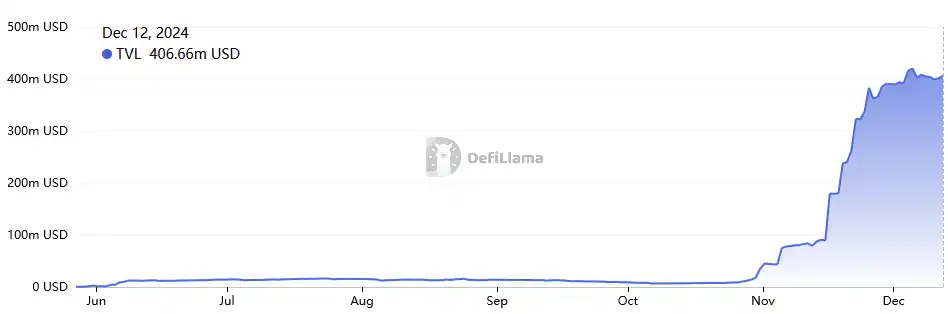
Source: DefiLlama
Other early based Rollup projects are also under development, such as Surge by the Nethermind team and UniFi by the Puffer Finance team. These projects are all based on the Taiko fork.
Nevertheless, based Rollup also faces some challenges. Since the sorting task is handed over to the Layer-1 validators, its performance is limited by the 12-second block time of Layer-1.
Therefore, the advantages of based Rollup (such as synchronous composability) may be difficult to fully realize in practice. It requires real-time zero-knowledge proofs to be completed within a 12-second time slot, otherwise composable transactions cannot be executed quickly.
To this end, Taiko introduced a variety of technologies, including zk proofs from Risc Zero and Succinct Labs, and a trusted execution environment (TEE) based on Intel SGX. This makes Taiko the first based Rollup to implement multiple proofs in a production environment without relying on a single trusted party.
"The performance of the prover is improving rapidly. We see more trusted execution environments (TEEs), more efficient and lower-cost zero-knowledge virtual machines (zkVMs), and verifiable state machines (AVSs) being introduced. We believe that the progress of zk technology is very smooth, and the goal of generating proofs within sub-time slot delays is not far away," said Brecht Devos, co-founder of Taiko, in an interview with Blockworks.
However, based Rollup also faces some challenges. For example, without a centralized sorter, an important source of revenue, MEV (maximum extractable value), may be lost. However, Devos said that this problem can be solved in some innovative ways.
In the Taiko network, "MEV can be captured by auctioning 'execution tickets' to Layer-1 block proposers," Devos explained to Blockworks.
So while Rollup based on staking gives ordering rights to Layer-1 validators by default, this is not the only solution.
Matthew Edelen, co-founder of Spire Labs, a company focused on Rollup infrastructure, shared a similar sentiment in a recent Bell Curve podcast: "Auctions are not the only way to allocate ordering rights. We can allocate 99% of ordering rights through auctions while allocating the remaining 1% to friends or independent stakers to present a better image on L2Beat."
In the long run, MEV (maximum extractable value) may not be a major problem. This view stems from a simple cost-benefit analysis: currently, most of the blockchain's revenue comes from congestion fees, which far exceeds the revenue of MEV. Moreover, as more efficient MEV solutions continue to emerge, the proportion of MEV revenue is gradually decreasing.
Therefore, for Rollup, a better revenue model is to rely on the network effect brought by synchronous composability and benefit from congestion fees rather than relying on MEV charges.
As Justin Drake said in The Rollup podcast:
“Right now, the ratio of congestion fees to contention fees is about 80:20. Of the revenue on Ethereum mainnet (Layer-1), 80% comes from congestion fees - about 3,200 ETH per day since the implementation of EIP-1559. Since the merger, MEV revenue has been about 800 ETH per day. I think this ratio will become more disparate, perhaps from 80:20 to 99:1.”
To sum up, the advantages of Based Rollup bring Ethereum’s user experience back to its original state.
Interestingly, this return is actually reminiscent of the characteristics that blockchain has had since its inception. Synchronous composability and Layer-1 transaction ordering have been core features of blockchain since the birth of the Bitcoin network.
This divergence of execution layer responsibilities is largely due to the centralized development path of Rollups in recent years (as well as the multi-chain architectures of Polkadot, Cosmos, and Avalanche). Today, Rollup-based solutions are ready to recapture this original intention.
「Original source」
Ayrıca bunları da beğenebilirsiniz

Alibaba, Latin Amerika'daki stabilcoin şirketini destekledi. Neden VelaFi?

WEEX AI Ticaret Hackathon'una Katılmak Değer Mi? $1.88M Ödül Havuzu ve Kurallar Açıklandı
$1.88M ödül havuzuna sahip bir AI ticaret yarışması — WEEX AI Ticaret Hackathon kurallarını, OpenAPI ticaretini ve yalnızca AI katılım gereksinimlerini keşfedin.

ABD Senatosu Tarım Komitesi, Kripto Piyasa Yapısının Belirlenmesi İçin 27 Ocak’ı Belirledi
Anahtar Çıkarımlar Senato Tarım Komitesi kripto piyasası yapısına yönelik yasa tasarısını 21 Ocak’ta yayımlayacak ve 27 Ocak’ta görüşme…

Tether 182 Milyon USDT’yi Dondurdu, USDT Tarafsız Bir Kripto Para mı?
Tether, Tron blockchain üzerinde 182 milyon USDT’yi dondurarak önemli bir adım attı; bu durum, stablecoin algısını köklü bir…

Anahtar Piyasa Bilgisi Tutarsızlığı 14 Ocak – Mutlaka Görün! | Alpha Erken Raporu
Bitcoin bu sabah toparlanarak 96.000 doları aştı. Ethereum da 3.300 doları geçti. Gizlilik odaklı coinler ORDI ve SATS…

Base’e Üç Yılını Harcayan Bir Geliştirici
Ana Çıkarımlar Base platformu, “Build on Base. We will support you.” vaatine rağmen, birçok geliştiriciye destek sunmuyor. Yazar…

DeepSeek Kurucusunun Büyüleyici Yolu: Huansquare Quant Fonu Başarıları
Key Takeaways DeepSeek’in kurucusu Liang Wenfeng, Huansquare Quant fonu ile 2025’te %56.55 getiri sağladı. Huansquare Quant, Çin’deki en…

ETHGas Foundation, Reputation Financialization ve Kripto Piyasalarındaki Yeni Gelişmeler
Anahtar Çıkarımlar Zama’nın $ZAMA token satışı, CoinList üzerindeki açık artırma mekanizmasıyla gerçekleştiriliyor ve tartışmalı bir yatırım olarak öne…

XMR Yüzde 50’den Fazla Artış Gösterdi: Kim Satın Alıyor?
XMR (Monero), hem yüksek gizlilik özellikleri hem de son sürat fiyat yükselişi ile kripto para gündeminin üst sırasına…

İlk Kez Üç Yılda Bir Yeni Bitcoin Core Yöneticisi Atandı
Key Takeaways: Bitcoin Core, Bitcoin ana ağı için en önemli geliştirme ve bakım ekibidir. Son üç yılda, yeni…

BitGo’nun Gelirleri ve Dijital Varlık Saklama Hizmetleri Üzerine Derinlemesine Bir Bakış
BitGo, 2025 yılında gelirini 16 milyar dolara çıkarmayı hedeflemekte ve ilk üç çeyrekte yaklaşık 10 milyar dolar gelir…
Analist: MSTR, Bitcoin Boğa Döngüsünün “Mullet”ı olarak Hareket Ediyor ve Bitcoin Baskısı Azaltıyor
Öne Çıkanlar MSTR, Bitcoin’in volatilitesini azaltarak %75’lik bir düşüş yükünü üstlendi. Michael Saylor, büyük miktarda hisse çıkararak piyasa…

Aave DeFi Kredi Piyasası Payı %50’yi Aştı, Mevcut TVL 35.833 Milyar Dolar
Önemli Noktalar Aave, DeFi kredi piyasasında %51,3’lük bir paya ulaştı ve bu oran, 2020’den beri ilk kez bir…

Binance Alpha Empire of Sight Lansmanı: Yenilikler ve Detaylar
Binance Alpha, 14 Ocak’ta saat 16:00’da Empire of Sight (Sight) jetonunu piyasaya sürecek. Airdrop etkinliğine katılım için başlangıçta…
Bugünün Trump Tarifeleri Kararı Bekleniyor, Perakende Satışlar A/A ve PPI Verileri Açıklanacak
Key Takeaways ABD Yüksek Mahkemesi’nin Trump tarifeleri davasıyla ilgili bir karar vermesi bekleniyor. Bu karar, geniş çaplı bir…

Binance Wallet ve Aster İş Birliği: Kolay, Hızlı ve İstikrarlı On-chain Sürekli Sözleşme İşlemleri
Öne Çıkanlar Binance Wallet- Aster İş Birliği: Aster, Binance Wallet’in web versiyonunda sürekli sözleşme işlemlerine olanak tanır. Kullanıcı…
Flashbot Whale “pension-usdt.eth” ETH Long Pozisyonunu Kapatıyor, 4.728M Dolar Kar Ediyor
Önemli Çıkarımlar Flashbot Whale “pension-usdt.eth”, 20.000 ETH uzun pozisyonunu kapatarak 4.728 milyon dolar kar elde etti. ASTER, Hyperliquid…

ASTER’ın Hyperliquid Platformundaki En Büyük Uzun Pozisyonu Büyük Kayıp Yaşıyor
Öne Çıkanlar ASTER’ın Hyperliquid platformunda en büyük uzun pozisyonundaki kayıplar 1.4 milyon dolara ulaştı. 0x6b4 ile başlayan whale…
Alibaba, Latin Amerika'daki stabilcoin şirketini destekledi. Neden VelaFi?
WEEX AI Ticaret Hackathon'una Katılmak Değer Mi? $1.88M Ödül Havuzu ve Kurallar Açıklandı
$1.88M ödül havuzuna sahip bir AI ticaret yarışması — WEEX AI Ticaret Hackathon kurallarını, OpenAPI ticaretini ve yalnızca AI katılım gereksinimlerini keşfedin.
ABD Senatosu Tarım Komitesi, Kripto Piyasa Yapısının Belirlenmesi İçin 27 Ocak’ı Belirledi
Anahtar Çıkarımlar Senato Tarım Komitesi kripto piyasası yapısına yönelik yasa tasarısını 21 Ocak’ta yayımlayacak ve 27 Ocak’ta görüşme…
Tether 182 Milyon USDT’yi Dondurdu, USDT Tarafsız Bir Kripto Para mı?
Tether, Tron blockchain üzerinde 182 milyon USDT’yi dondurarak önemli bir adım attı; bu durum, stablecoin algısını köklü bir…
Anahtar Piyasa Bilgisi Tutarsızlığı 14 Ocak – Mutlaka Görün! | Alpha Erken Raporu
Bitcoin bu sabah toparlanarak 96.000 doları aştı. Ethereum da 3.300 doları geçti. Gizlilik odaklı coinler ORDI ve SATS…
Base’e Üç Yılını Harcayan Bir Geliştirici
Ana Çıkarımlar Base platformu, “Build on Base. We will support you.” vaatine rağmen, birçok geliştiriciye destek sunmuyor. Yazar…


 App
App