
- Kripto Al
- Piyasalar
- Vadeli İşlemler
- Spot
- Copy Trade
 WE-Launch
History Repeating Itself: Grayscale Report Reveals New Safe Haven Logic Amid Tariff Storm

Original Article Title: Market Byte: Tariffs, Stagflation, and Bitcoin
Original Article Author: Zach Pandl
Original Article Translation: Asher, Odaily Planet Daily
Editor's Note: This article analyzes the recent impact of the United States' global tariff policy changes on the financial markets, particularly focusing on Bitcoin's unique performance during this process; discusses the long-term effects of tariffs on the economy, especially in stagflation periods and the asset allocation choices, as well as the performances of Bitcoin and gold in this environment; analyzes the current trade tensions' impact on the US dollar and potential adoption of Bitcoin, and finally provides an outlook on the economic prospects for the coming years, pointing out that scarce commodities like Bitcoin and gold may receive more attention and demand in a high inflation environment.
Since the announcement of the new global tariff policy by the United States on April 2, global asset prices have seen a significant decline, only gradually recovering until this morning's announcement of tariff suspension by Trump (excluding China). However, the initial tariff announcement nearly affected all assets, and during this time, looking at risk-adjusted benchmarks, Bitcoin's decline was relatively small. Therefore, if the Bitcoin-to-stock market return correlation is 1:1, the S&P 500's decline should have meant a 36% drop in Bitcoin price. However, in reality, Bitcoin only fell by 10%, highlighting that even during a deep market retreat, holding Bitcoin as part of a portfolio can still bring significant diversification benefits.
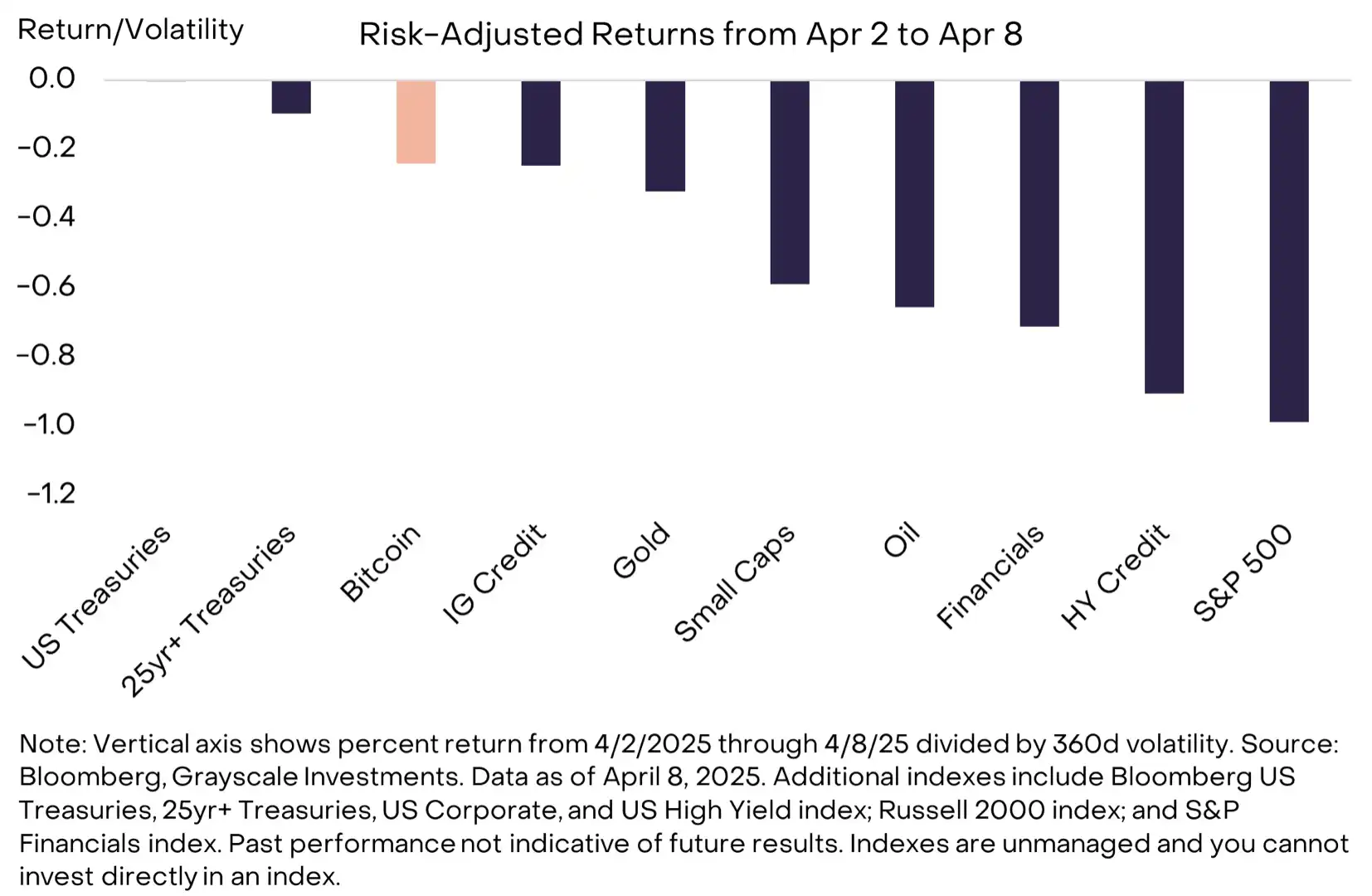
After risk adjustment, Bitcoin's price decline was relatively small
In the short term, the global market outlook may depend on the trade negotiations between the White House and other countries. While negotiations could lead to tariff reductions, setbacks in negotiations could also trigger more retaliatory actions. The actual volatility of traditional markets, both realized and implied, remains high and it is difficult to predict how trade conflicts will unfold in the coming weeks. Therefore, investors should cautiously adjust their positions in a high-risk market environment. In addition, Bitcoin's price volatility has increased much less than that of stocks, and several indicators show that speculative traders in the cryptocurrency market have relatively low positions. If macro risks ease in the next few weeks, the cryptocurrency market capitalization is expected to rebound.
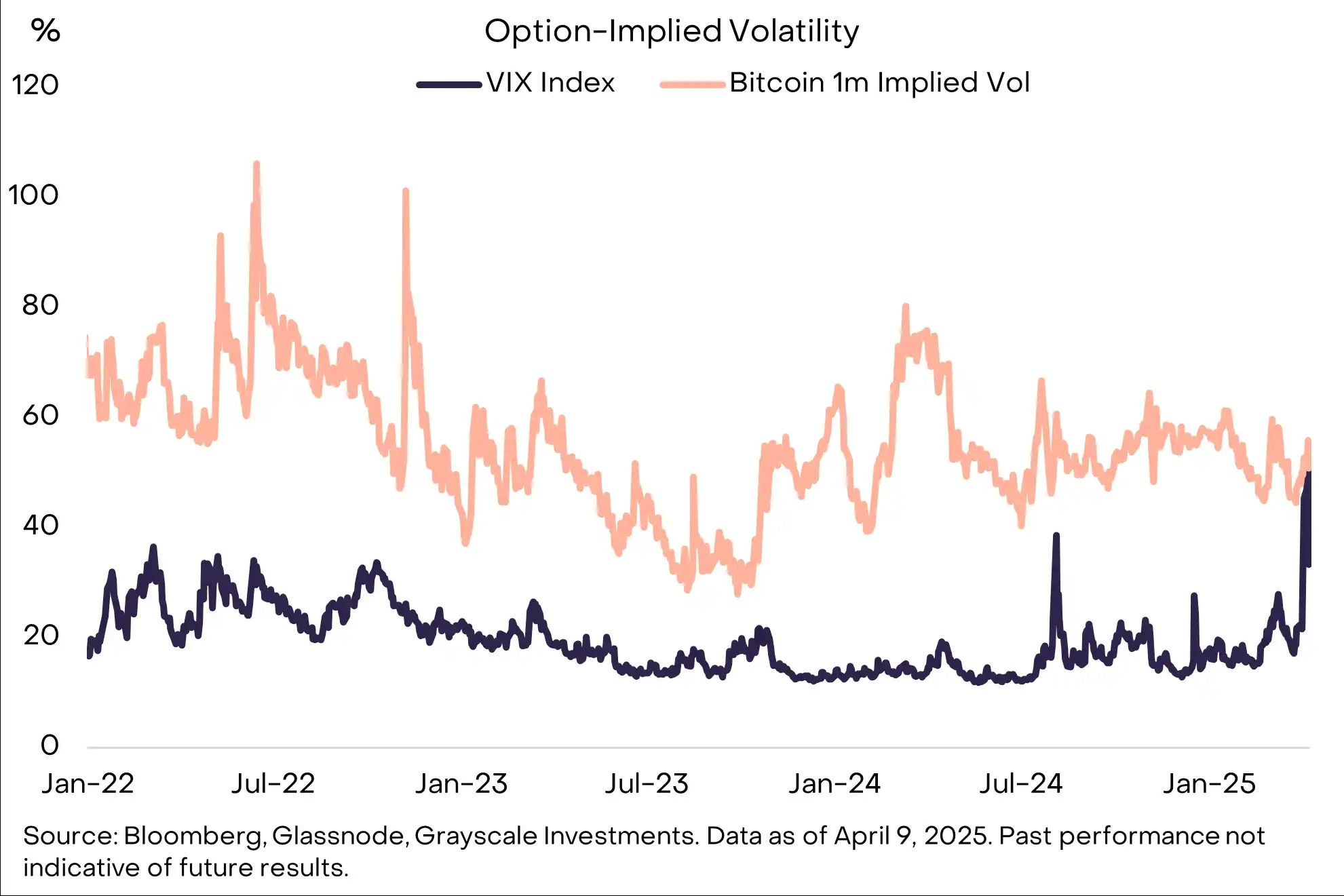
Stocks' implied volatility is close to Bitcoin's
Regarding Bitcoin, despite its price decline over the past week, from a longer-term perspective, the impact of higher tariffs on Bitcoin will depend on its effect on the economy and international capital flows. Tariffs (and changes in related non-tariff trade barriers) may lead to "stagflation" and could result in a structurally weaker dollar demand, so in this scenario, tariff increases and changes in the global trade pattern may be a positive factor for Bitcoin adoption in the medium to long term.
Asset Allocation in Stagflation
Stagflation refers to an economic state where growth is slow/sluggish while the inflation rate is high/accelerating. Tariffs increase the prices of imported goods, therefore causing inflation to rise (at least in the short term). Additionally, tariffs may slow down economic growth due to reduced real incomes for residents and adjustment costs for businesses. Over the long term, this impact may be partially offset by increased domestic manufacturing investment, and most economists expect these new tariffs to continue to drag on the economy for at least the next year.
From a historical perspective, the asset returns of the 1970s vividly demonstrated the impact of stagflation on financial markets (Bitcoin has been around for too short a time to backtest its performance). During that decade, the annualized returns of U.S. stocks and long-term bonds were both around 6%, below the average inflation rate of 7.4% at the time. In contrast, the price of gold had an annualized increase of around 30%, far surpassing the inflation rate.
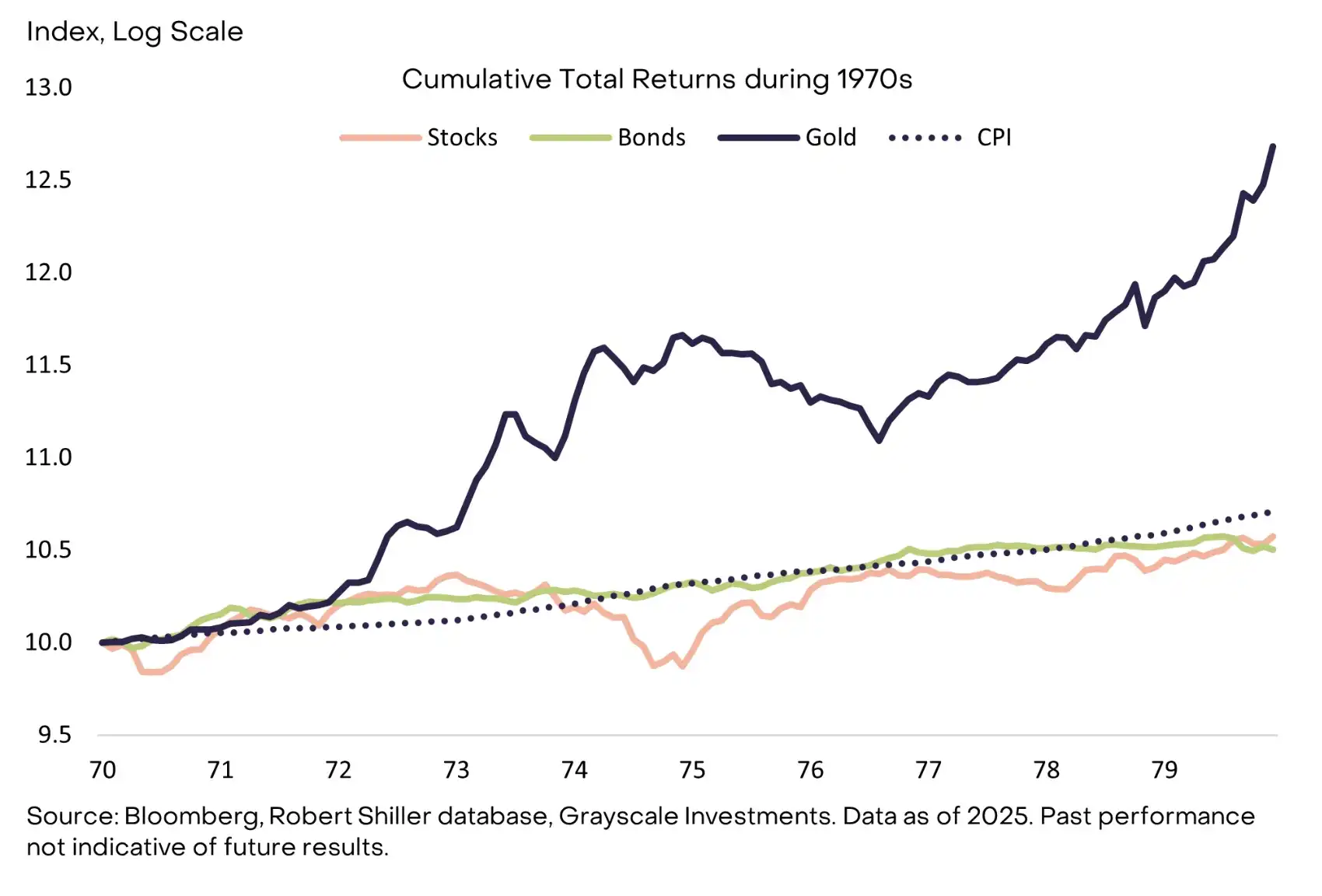
Traditional assets had negative real returns in the 1970s
Generally, extreme stagflation periods are rare, but their impact on asset returns remains largely consistent over time. The chart below shows the average annual returns of U.S. stocks, government bonds, and gold in different economic growth and inflation cycles from 1900 to 2024.
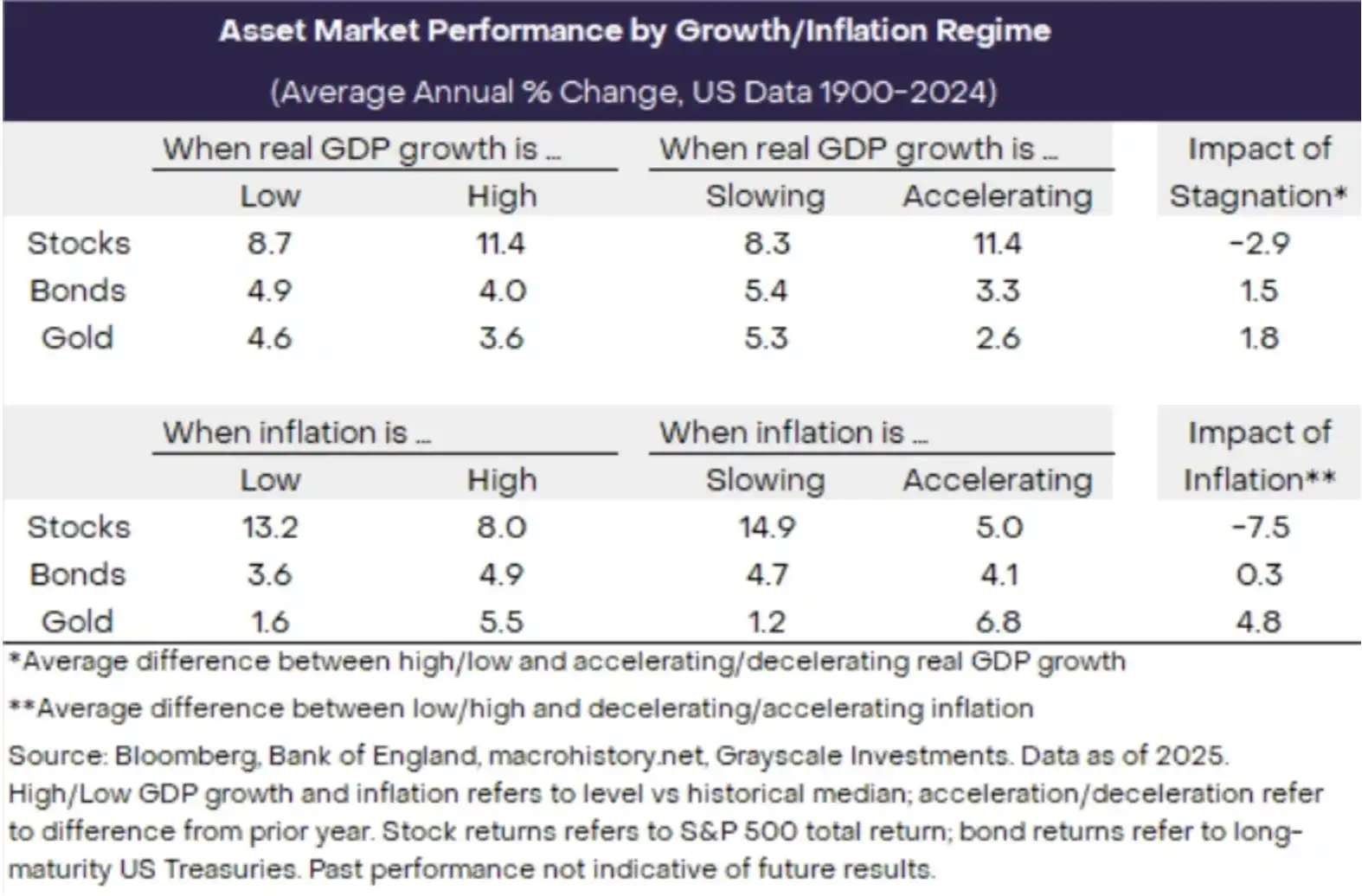
Stagflation reduces stock returns and increases gold returns
Historical data reveals three key points:
When GDP is high or accelerating and inflation is low or decelerating, stock market returns usually increase. Therefore, during stagflation, stock market returns are expected to decline, and investors may need to reduce their equity allocation;
When economic growth is sluggish and inflation is rising, gold often performs well, especially during stagflation. Gold becomes a primary hedge against inflation. This suggests that in this environment, gold is usually a more attractive investment choice;
Bond performance is closely related to inflation changes. When inflation is low, bond yields usually perform well, but when inflation rises, bond performance usually lags. Therefore, during periods of rising inflation, bond investors may face the risk of declining returns.
In summary, different assets perform differently during the economic cycle, and investors should adjust their asset allocation based on the macroeconomic environment. The stagflation period is particularly important as it often has a negative impact on stocks while gold may see growth.
Bitcoin and the US Dollar
Tariffs and trade tensions may drive the adoption of Bitcoin in the medium term, partly due to pressure on the US dollar. Specifically, if overall trade volumes with the US decline and much of the trade is dollar-denominated, the demand for the dollar in transactions will decrease. Additionally, if tariff impositions also lead to conflicts with other major countries, they may weaken the demand for the dollar as a store of value.
The share of the dollar in global foreign exchange reserves far exceeds the US's share in global economic output. There are many reasons for this, but network effects play a significant role: countries engage in trade with the US, borrow in the dollar market, and often price their exports of commodities in dollars. If trade tensions lead to a weakening of ties with the US economy/dollar-based financial markets, countries may accelerate the diversification of foreign exchange reserves.
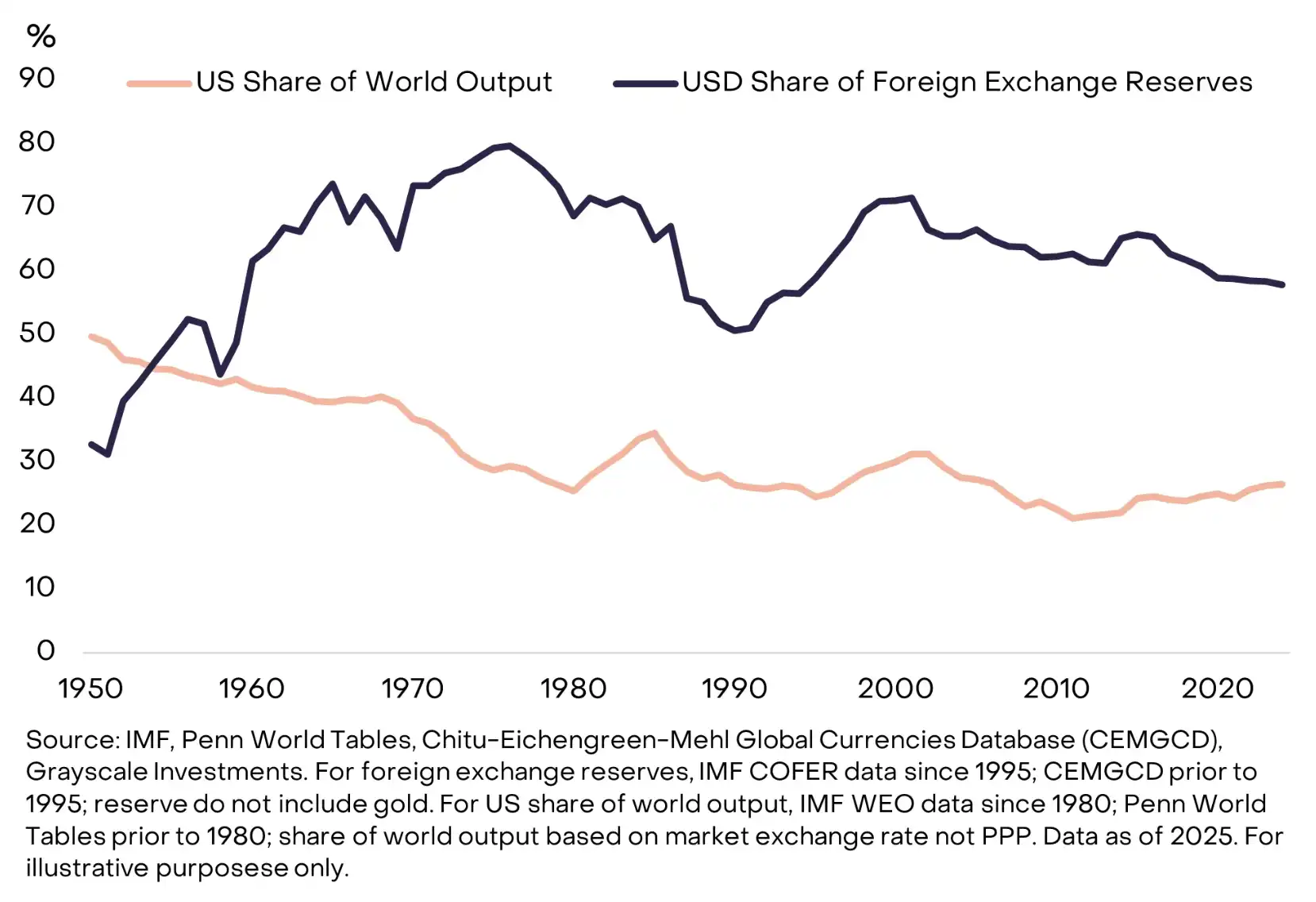
The share of the dollar in global reserves far exceeds the US's share in the global economy
Many central banks have increased their gold purchases after Russia faced Western sanctions. It is understood that besides Iran, no other country's central bank currently holds Bitcoin on its balance sheet. However, the Czech National Bank has started exploring this option, the US has also established a strategic Bitcoin reserve, and some sovereign wealth funds have publicly announced investments in Bitcoin. In our view, disruptions to the dollar-centric international trade and financial system could lead central banks to further diversify reserves, including investing in Bitcoin.
A moment in US history most similar to former President Trump's "Liberation Day" declaration may be the "Nixon Shock" on August 15, 1971. That night, President Nixon announced a comprehensive 10% tariff and ended the gold standard for the dollar—an arrangement that had supported the global trade and financial system since the end of World War II. This action triggered diplomatic activities between the US and other countries, eventually leading to the Smithsonian Agreement in December 1971, where other countries agreed to revalue their currencies against the dollar. The dollar eventually devalued by 27% between the second quarter of 1971 and the third quarter of 1978. Over the past 50 years, there have been several instances of (partially negotiated) dollar weakening following trade tensions.
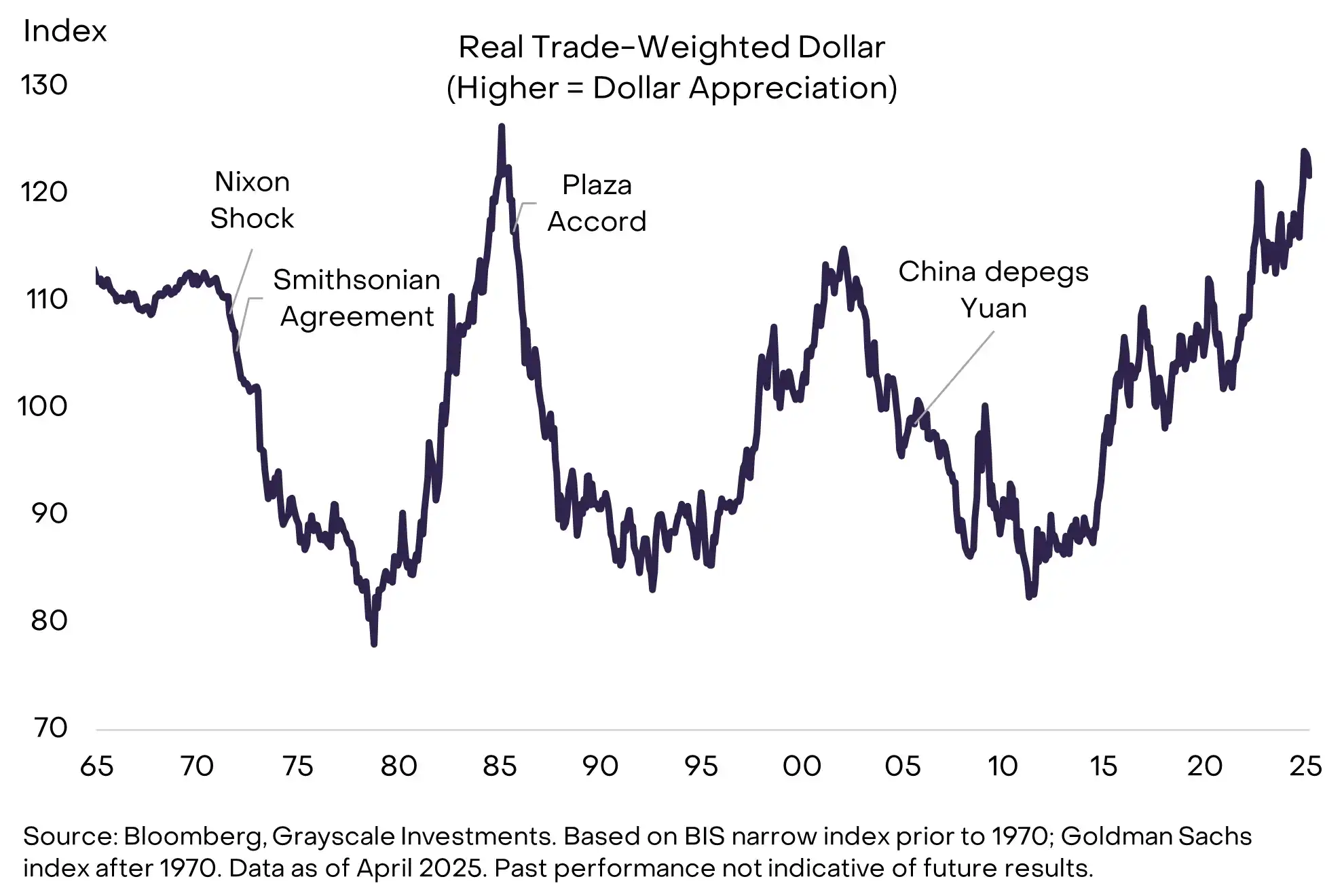
The expected recent trade tension is once again set to result in continued weakness of the U.S. dollar. According to relevant indicators, the U.S. dollar is already overvalued, the Federal Reserve has room to lower interest rates, and the White House aims to reduce the U.S. trade deficit. Although tariffs will alter effective import and export prices, dollar depreciation may gradually achieve trade flow rebalancing through market mechanisms, thereby achieving the desired effect.
Son of the Era - Bitcoin
The U.S. trade policy's shift is causing adjustments in the financial markets, which will have a short-term negative impact on the economy. However, the market conditions of the past week are unlikely to become the norm for the next four years. The Trump administration is implementing a series of policy measures that will have different impacts on GDP growth, inflation, and the trade deficit. For example, while tariffs may reduce economic growth and increase inflation (i.e., stagflation), certain types of deregulation may enhance growth and reduce inflation (i.e., reduce stagflation). The ultimate outcome will depend on the extent to which the White House pursues its policy agenda in these areas.
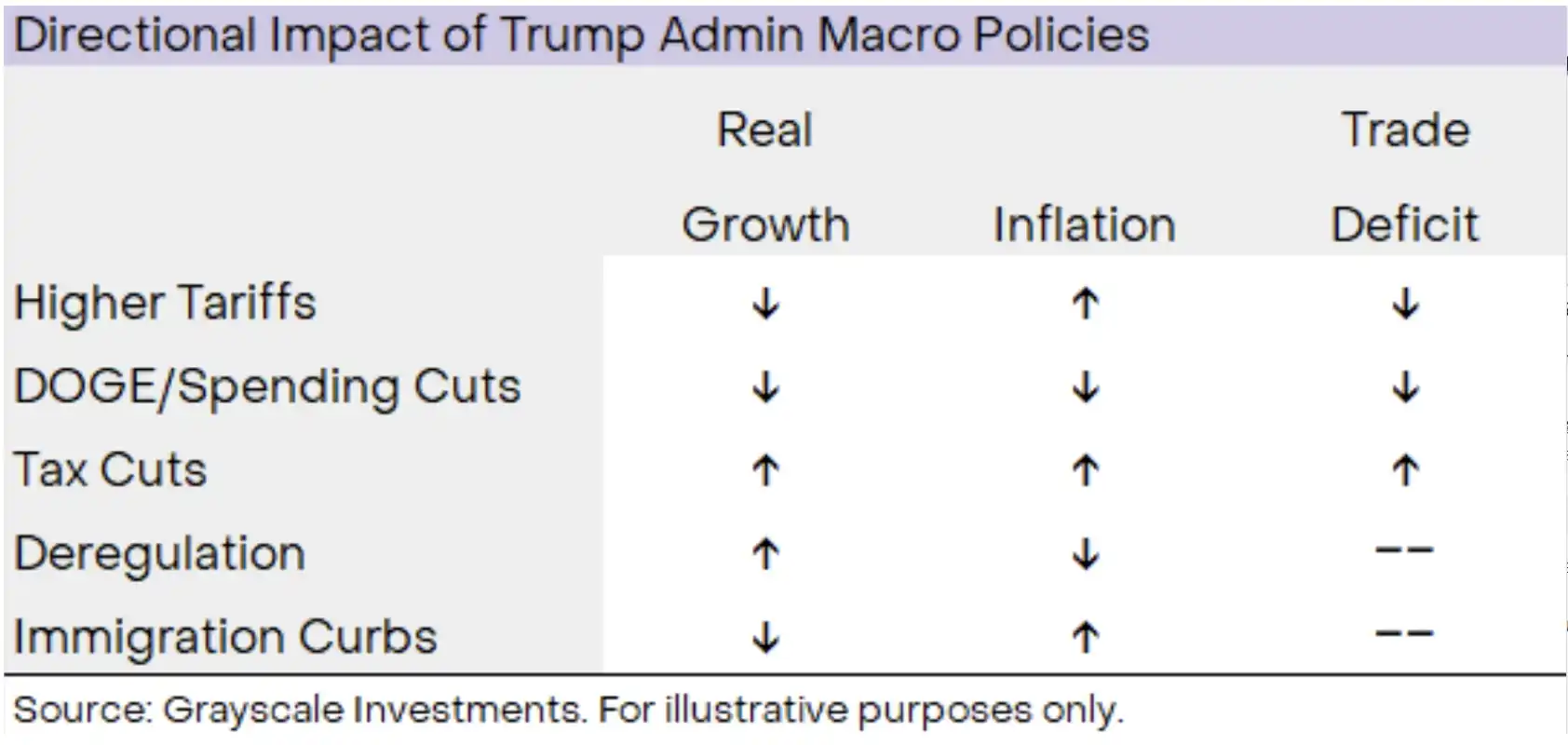
U.S. macroeconomic policies will have a series of impacts on growth and inflation
Despite uncertainties in the outlook, the best guess is that U.S. government policies will lead to sustained dollar weakness and overall above-target inflation in the next 1 to 3 years. Tariffs themselves may slow growth, but this impact may be partially offset by tax cuts, deregulation, and dollar depreciation. If the White House also actively pursues other growth-promoting policies, GDP growth may still remain relatively robust despite the initial impact of tariffs. Regardless of whether actual growth is strong, history suggests that a period of sustained inflationary pressure may be favorable for scarce commodities such as Bitcoin and gold.
Furthermore, much like gold in the 1970s, Bitcoin now has rapidly improving market structure — which is supported by U.S. government policy changes. Throughout this year, the White House has implemented a wide range of policy changes that should support investment in the digital asset industry, including dismissing a series of lawsuits, ensuring asset suitability for traditional commercial banks, and permitting regulated entities (such as custodians) to offer cryptocurrency services. This has, in turn, sparked a wave of mergers and other strategic investments. The new tariffs are a short-term negative factor for the valuation of digital assets like Bitcoin, but the Trump administration's cryptocurrency-specific policies have consistently supported the industry. Overall, the rising demand for scarce commodities assets in the macroeconomy and the improvement in the investor operating environment could be a potent combination for widespread Bitcoin adoption in the coming years.
Ayrıca bunları da beğenebilirsiniz

Trump’ın World Liberty Financial Token’ı 2025’i %40 Düştü Tamamladı
Key Takeaways: World Liberty Financial, Trump ailesinin kripto portföy projesinin, başlangıçta umut verici olan yatırımları yıl sonunda değer…

Blokzincirler Quantum Tehdidine Hazırlanırken Bitcoin Süreçlerini Tartışıyor
Anahtar teslim projeler ve test ağları yoluyla birçok blokzincir platformu, gelecekteki muhtemel quantum bilgisayar tehditlerine karşı hazırlık yapıyor.…

Eski SEC Danışmanı, RWA’ların Nasıl Uyumlu Hale Getirileceğini Açıklıyor
Key Takeaways RWA (real-world assets) tokenizasyonunda, regülasyonların önemi teknolojiye göre daha ağır basmaktadır ve uyumluluğu sağlamak için önemli…

Kraken IPO ve Kripto’nun ‘Orta Evre’ Döngüsüne Yeniden Can Vermesi
Kraken borsasının 2026 yılında planlanan halka arzı, geleneksel finans dünyasından taze sermaye akışını artırabilir. Bitcoin fiyatları bugüne kadar…
Kripto Piyasasının Düşüşü, VC Değerlemeleri ile Piyasa Değerleri Arasındaki Boşluğu Ortaya Çıkardı
Key Takeaways Birçok blockchain girişimi, önceki özel finansman turlarındaki değerlere kıyasla düşük piyasa değerleriyle işlem görüyor. Kripto piyasasındaki…

HashKey, $250M Yeni Kripto Fonunu Kurdu
HashKey, son kripto fonu olan HashKey Fintech Multi-Strategy Fund IV’in ilk kapanışında 250 milyon dolar toplamayı başardı. Fon,…

Uzatılmış kripto ETF çıkışları, kurumların disengagement’ını gösteriyor: Glassnode
Öne Çıkanlar Bitcoin ve Ether exchange-traded funds (ETF), Kasım başından bu yana sürekli çıkışlar kaydederek, kurumsal yatırımcıların kripto…

Ondo Finance’in, Tokenize Edilmiş Amerikan Hisse Senetlerini Solana’ya Getirme Planı
Önemli Çıkarımlar Ondo, 2026 başında Solana’da tokenleştirilmiş Amerikan hisse senetleri ve ETF’ler (Borsa Yatırım Fonları) sunmayı planlıyor. Tokenler,…

Filipinler, Coinbase ve Gemini’nin VASP Lisanssız Olduğu Yerde Erişimini Engelliyor
Öne Çıkanlar Filipinler’deki regülatörler kripto erişimini sıkılaştırıyor ve uluslararası borsaların yerel lisanslar almasının zorunlu olduğunu belirtiyor. İnternet servis…
Amplify ETFs Stablecoin ve Tokenization ile Ticarette Canlandı
Amplify, stablecoin ve tokenization altyapısı kuran şirketleri izleyen iki yeni borsa yatırım fonunu (ETF) başlattı. Bu fonlar, stablecoinlerden…

JPMorgan, Kripto Ticaretinde Kurumsal Müşteriler için Yenilikler Araştırıyor
JPMorgan, kurumsal müşterilerine yönelik kripto ticaret hizmetlerini değerlendiriyor. CEO Jamie Dimon’un kripto para birimlerine yönelik tavrı değişiyor. ABD’de…

Trend Research, Ethereum ile En Büyük ‘Whales’ Olma Yolunda
Key Takeaways Trend Research, 46,379 ETH daha satın alarak Ethereum varlıklarını 580,000 ETH üzerine çıkardı. Trend Research, halka…
Palmer Luckey’nin Erebor’u 4,3 Milyar Dolar Değerlemeye Ulaştı
Key Takeaways Erebor, Palmer Luckey ve Peter Thiel’in desteklediği dijital banka, 4,35 milyar dolar değerine ulaşarak kripto ve…

El Salvador’ın Bitcoin İşlemleri ve 2025’te Yaşanan Gelişmeler
Öne Çıkanlar El Salvador, 2021’de Bitcoin’i yasal para birimi olarak kabul eden ilk ülke oldu ancak uygulamalar 2025’te…

Price Predictions 12/22: SPX, DXY, BTC, ETH, BNB, XRP, SOL, DOGE, ADA, BCH
Key Takeaways Bitcoin, alongside select altcoins, is looking at a recovery phase but is also facing potential sell…

Aave kurucusu Stani Kulechov’un $10M’lik AAVE satın alımı ve yönetişimdeki tartışmalar
Önemli Çıkarımlar Aave kurucusu Stani Kulechov, $10 milyonluk AAVE token satın alımı nedeniyle topluluk tarafından eleştiriliyor. Bu satın…
Trump ailesiyle bağlantılı USD1, Binance’in gelir programını açıklamasıyla 150 milyon dolar arttı
Key Takeaways USD1 stablecoin, Binance’in getiri programının açıklanmasıyla birlikte piyasa değerine 150 milyon dolar ekledi. USD1’in piyasa değeri…
Hong Kong, Sanal Varlık Bayileri ve Saklayıcılar için Lisanslama Rejimlerini İlerletiyor
Hong Kong, sanal varlık ticareti ve saklama hizmeti veren firmalar için lisans gerekliliklerini yürürlüğe koyuyor. Stabilcoin ve tokenizasyon…
Trump’ın World Liberty Financial Token’ı 2025’i %40 Düştü Tamamladı
Key Takeaways: World Liberty Financial, Trump ailesinin kripto portföy projesinin, başlangıçta umut verici olan yatırımları yıl sonunda değer…
Blokzincirler Quantum Tehdidine Hazırlanırken Bitcoin Süreçlerini Tartışıyor
Anahtar teslim projeler ve test ağları yoluyla birçok blokzincir platformu, gelecekteki muhtemel quantum bilgisayar tehditlerine karşı hazırlık yapıyor.…
Eski SEC Danışmanı, RWA’ların Nasıl Uyumlu Hale Getirileceğini Açıklıyor
Key Takeaways RWA (real-world assets) tokenizasyonunda, regülasyonların önemi teknolojiye göre daha ağır basmaktadır ve uyumluluğu sağlamak için önemli…
Kraken IPO ve Kripto’nun ‘Orta Evre’ Döngüsüne Yeniden Can Vermesi
Kraken borsasının 2026 yılında planlanan halka arzı, geleneksel finans dünyasından taze sermaye akışını artırabilir. Bitcoin fiyatları bugüne kadar…
Kripto Piyasasının Düşüşü, VC Değerlemeleri ile Piyasa Değerleri Arasındaki Boşluğu Ortaya Çıkardı
Key Takeaways Birçok blockchain girişimi, önceki özel finansman turlarındaki değerlere kıyasla düşük piyasa değerleriyle işlem görüyor. Kripto piyasasındaki…
HashKey, $250M Yeni Kripto Fonunu Kurdu
HashKey, son kripto fonu olan HashKey Fintech Multi-Strategy Fund IV’in ilk kapanışında 250 milyon dolar toplamayı başardı. Fon,…
Popüler coinler
Güncel Kripto Haberleri


Müşteri Desteği:@weikecs
İş Birliği (İşletmeler):@weikecs
Uzman İşlemleri ve Piyasa Yapıcılar:bd@weex.com
VIP Hizmetler:support@weex.com
 App
App