
- Kripto Al
- Piyasalar
- Vadeli İşlemler
- Spot
- Copy Trade
 WE-Launch
Perhaps tariffs only scratched the surface -- what are the challenges in the Chinese market?

Original Title: When it comes to tariffs, China is a special case
Original Author: @stevesi
Original Translation: zhouzhou, BlockBeats
Editor's Note: This article discusses the significant challenges U.S. tech companies face in China. Despite the attractiveness of the Chinese market to foreign businesses, issues such as inadequate intellectual property protection, heavy government intervention, and rampant piracy make conducting business in China exceptionally difficult. Companies like Microsoft have tried various approaches but have consistently struggled to break through the complex barriers of the Chinese market. The article emphasizes that while tariffs are obvious, the true issues in China lie in soft restrictions, regulatory mazes, and cultural differences, calling for a deeper understanding and discussion of the challenges in the Chinese market.
The following is the original content (slightly reorganized for better readability):
There has been much discussion about how the United States can benefit from China's powerful manufacturing sector, with tariffs often being the focus of international trade debates. However, what is often overlooked is how difficult it is for U.S. companies to enter the Chinese market and establish a sustainable business—especially in the service and intellectual property sectors.
Tariffs are just the tip of the iceberg. Beneath the surface lies a vast and intricate network of "soft barriers," regulatory requirements, and cultural differences, making it nearly impossible for U.S. companies to enter this market in a fair and sustainable manner.
Having worked at Microsoft for 15 years and having lived and worked in China, I have personally witnessed all of this. These experiences have been more challenging and enlightening than any tariff dispute.
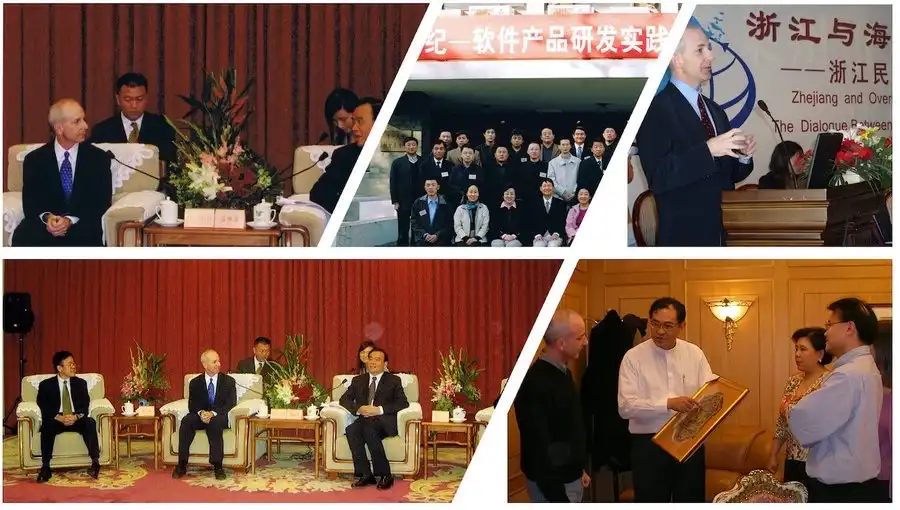
Over the years, I have participated in many events in China related to cooperation and piracy.
Microsoft's first attempt in Asia was to enter the Japanese market in the late 1980s. This was not easy. We faced some technical barriers, such as the absence of a UNICODE standard, a strong local preference for domestic products, and government policies that overtly or covertly favored Japanese companies. In many ways, this was not so different from the "Buy American" policies seen in the United States.
However, through perseverance, respect for local customs, and significant investment in product localization, we eventually succeeded. Japan's deeply rooted respect for intellectual property played a crucial role. By the mid-1990s, Microsoft Office was one of the most profitable businesses in Japan, with both corporate users and ordinary consumers loving the product, the distribution approach we tailored for the Japanese market, and the software experience we provided.
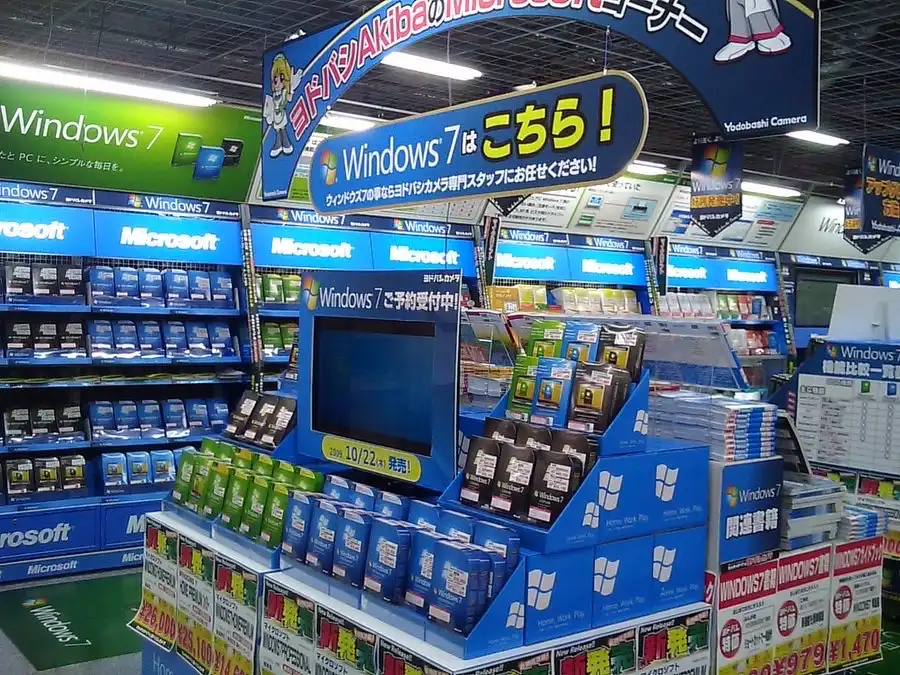
Windows 7 Released in Japan.
However, the situation in China was completely different.
From the beginning, we encountered a series of complex issues. An early version of Windows was even completely banned from sale because some of the localization work was done in Taiwan. And that was just the beginning. We responded sincerely time and time again: we established a large local development team, developed a popular Input Method Editor, built advanced research and development centers, and strictly complied with all regulations for doing business in China—even hiring locals as CCP representatives in our office.
Despite our efforts, we still hit a wall time and time again.
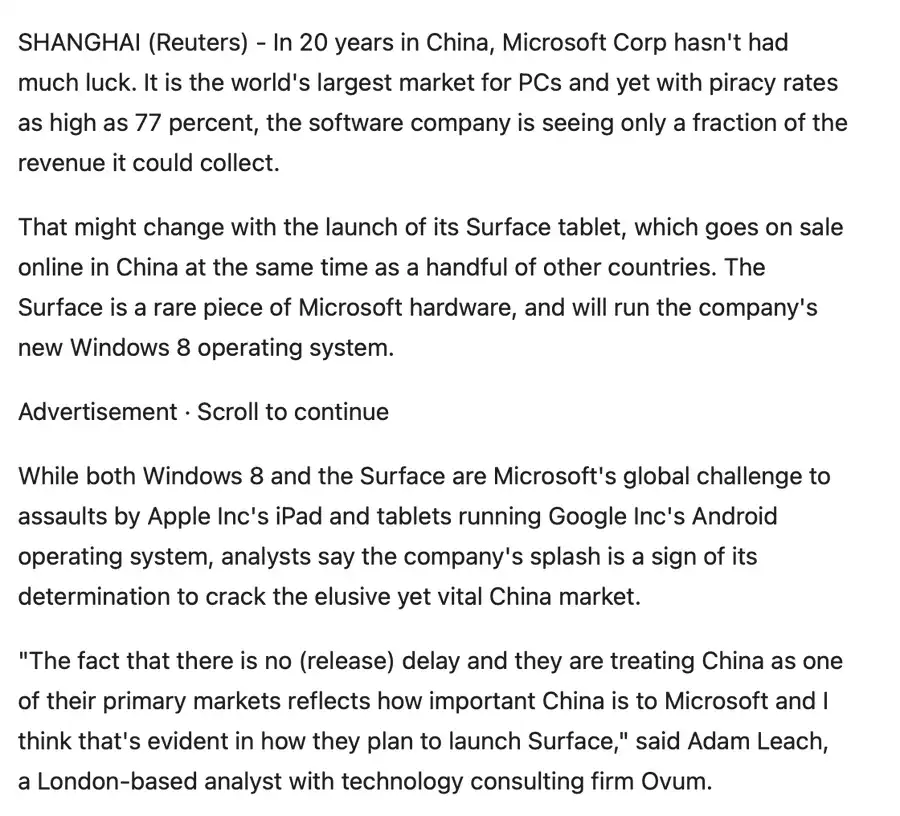
Software piracy was the most obvious and frustrating challenge. Although software piracy is a global issue, the scale in China was shocking. Around 90% of Microsoft products in China were pirated. Imagine, a country with 200 million personal computers, yet the revenue generated was similar to Italy, which has only a quarter of the number of computers and a "mere" 50% piracy rate.
In the past, we often consoled ourselves, believing that while these users were using our products for free now, they would be willing to pay for them in the future because they liked our products, and as soon as the government truly started valuing intellectual property, our revenue would increase.
Take a stroll through those bustling computer markets, and this problem would become even more apparent. There were five or more floors filled with computers—from pre-built systems to DIY kits, everything you could think of. You could choose a system, and they would assemble it for you on the spot.
After assembly, they would give you a software menu, and once you made your selection, you'd soon receive a custom-made CD containing all the software suites you wanted—Windows, Office, Photoshop—along with a serial number in a text file in the root directory, sometimes even throwing in a few pirated movies. The whole package cost only 100 RMB, roughly $12 at the time.
Time and time again, we pled with government officials in meetings. Through countless banquets and numerous toasts with baijiu, we discussed collaboration, innovation, and the value of intellectual property rights. But the response remained consistent: the government always used poverty as an excuse, claiming they couldn't afford genuine software, while they themselves drove around in black Mercedes and indulged in luxurious meals at the high-end Ferrari showroom upstairs.
Eventually, some officials began to express their attitude more openly: "We do not agree with your so-called concept of intellectual property," they told us, "we believe knowledge should be disseminated and shared."
In theory, this is a noble idea—open-source advocates also hold similar views—but in reality, it is merely a rationalization for plagiarizing and reselling our work without any compensation.
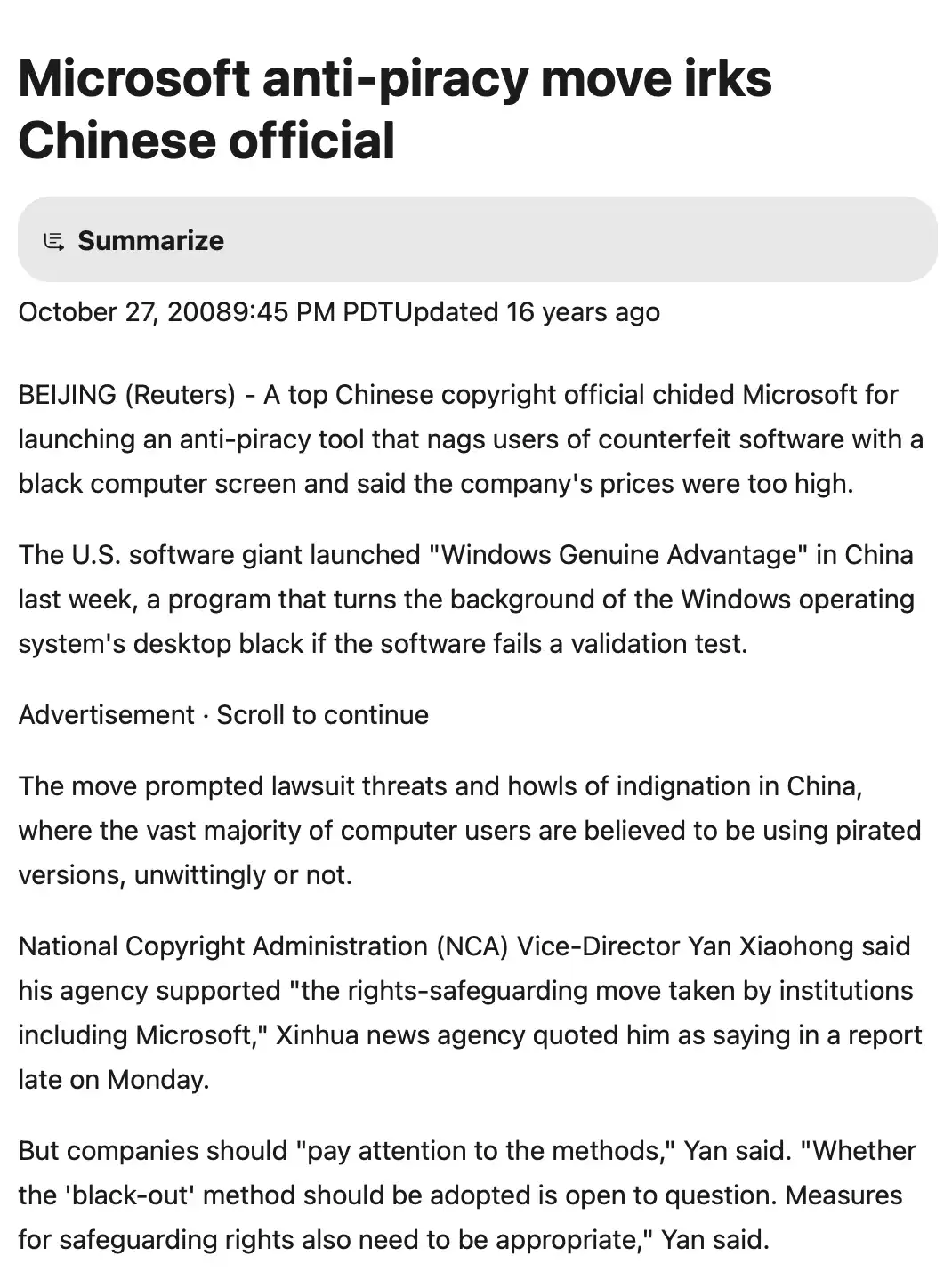
In Windows (later in Office), we gradually introduced more robust "anti-piracy" measures, but we soon found that users simply turned to using older versions of the software that were easier to crack—versions that were not only more easily pirated but also more vulnerable to hacking. We would showcase the design and related plans to the government before release, but still faced strong resistance from them. They told us that our "approach" did not meet market demand—such as a simple registration wizard program.
So you would see, on the airport flight information screens, warnings of "Windows not being registered." The cash registers at my supermarket still ran on Windows XP released a decade ago, simply because they were unwilling to pay for the newer version. PC manufacturers started shipping without pre-installed Windows, even openly claiming that they were doing so to comply with U.S. antitrust laws.
Moreover, the issue is not just limited to software. Companies in various industries in the U.S. and Europe—including pharmaceuticals, fashion, and publishing—all face similar dilemmas. I remember visiting a large pharmaceutical factory on the outskirts of Shanghai. Those in the tech industry may be more familiar with Foxconn and device manufacturers, but the pharmaceutical industry is actually larger in scale. Officials said these factories were producing for Western companies, but everyone knows that some of the products will be resold in the local market, and the enterprises that developed these products would receive no compensation.
Even consumer goods were not immune. Once, while trekking in the rain with my Microsoft China colleagues, I noticed that each of them was wearing the same North Face jacket as me. However, while my clothes remained dry, theirs were already soaked—turns out, they were wearing knockoffs manufactured in the same factory, with an identical logo, but using inferior materials.
I once firmly believed that we could find a successful path in China. I advocated for expanding local R&D, gave speeches everywhere, led teams to expand, and always held hope, believing that we could, like in Japan, eventually achieve difficult but genuine success. However, as time passed, I gradually realized: compromises have no end, and a truly sustainable long-term business model simply does not exist.
We are not alone. Google has exited China, and Meta is nearly completely blocked. Even in this era of cloud computing and subscription software, which are harder to pirate, Microsoft's revenue from China is still less than 1% of its global total revenue. Even Apple — one of the few American success stories in China — faces significant pressure from government intervention and local competition. Automakers like Ford have already retreated from the market, and BMW and Volkswagen's market share is only half of what it was a few years ago.
When it comes to fair trade, people often easily focus on tariffs. Tariffs are visible, quantifiable, and politically convenient. However, in China, tariffs are far from the biggest obstacle. The real challenges are much harder to quantify: soft restrictions, regulatory mazes, cultural differences, and the constantly evolving definitions of fairness and property rights.
Yes, every country has its form of protectionism — including the United States. The relationship between the European Union and U.S. tech companies is also fraught with friction. But over the past few decades, we have found solutions in many regions. Yet, in China, after 25 years of effort, we are still waiting for a substantial breakthrough for the tech industry to operate here.
So, when we discuss international trade, let's not just focus on tariffs. The real story — especially in China — is much more complex and much more important.
Ayrıca bunları da beğenebilirsiniz

Trump’ın World Liberty Financial Token’ı 2025’i %40 Düştü Tamamladı
Key Takeaways: World Liberty Financial, Trump ailesinin kripto portföy projesinin, başlangıçta umut verici olan yatırımları yıl sonunda değer…

Blokzincirler Quantum Tehdidine Hazırlanırken Bitcoin Süreçlerini Tartışıyor
Anahtar teslim projeler ve test ağları yoluyla birçok blokzincir platformu, gelecekteki muhtemel quantum bilgisayar tehditlerine karşı hazırlık yapıyor.…

Eski SEC Danışmanı, RWA’ların Nasıl Uyumlu Hale Getirileceğini Açıklıyor
Key Takeaways RWA (real-world assets) tokenizasyonunda, regülasyonların önemi teknolojiye göre daha ağır basmaktadır ve uyumluluğu sağlamak için önemli…

Kraken IPO ve Kripto’nun ‘Orta Evre’ Döngüsüne Yeniden Can Vermesi
Kraken borsasının 2026 yılında planlanan halka arzı, geleneksel finans dünyasından taze sermaye akışını artırabilir. Bitcoin fiyatları bugüne kadar…
Kripto Piyasasının Düşüşü, VC Değerlemeleri ile Piyasa Değerleri Arasındaki Boşluğu Ortaya Çıkardı
Key Takeaways Birçok blockchain girişimi, önceki özel finansman turlarındaki değerlere kıyasla düşük piyasa değerleriyle işlem görüyor. Kripto piyasasındaki…

HashKey, $250M Yeni Kripto Fonunu Kurdu
HashKey, son kripto fonu olan HashKey Fintech Multi-Strategy Fund IV’in ilk kapanışında 250 milyon dolar toplamayı başardı. Fon,…

Uzatılmış kripto ETF çıkışları, kurumların disengagement’ını gösteriyor: Glassnode
Öne Çıkanlar Bitcoin ve Ether exchange-traded funds (ETF), Kasım başından bu yana sürekli çıkışlar kaydederek, kurumsal yatırımcıların kripto…

Ondo Finance’in, Tokenize Edilmiş Amerikan Hisse Senetlerini Solana’ya Getirme Planı
Önemli Çıkarımlar Ondo, 2026 başında Solana’da tokenleştirilmiş Amerikan hisse senetleri ve ETF’ler (Borsa Yatırım Fonları) sunmayı planlıyor. Tokenler,…

Filipinler, Coinbase ve Gemini’nin VASP Lisanssız Olduğu Yerde Erişimini Engelliyor
Öne Çıkanlar Filipinler’deki regülatörler kripto erişimini sıkılaştırıyor ve uluslararası borsaların yerel lisanslar almasının zorunlu olduğunu belirtiyor. İnternet servis…
Amplify ETFs Stablecoin ve Tokenization ile Ticarette Canlandı
Amplify, stablecoin ve tokenization altyapısı kuran şirketleri izleyen iki yeni borsa yatırım fonunu (ETF) başlattı. Bu fonlar, stablecoinlerden…

JPMorgan, Kripto Ticaretinde Kurumsal Müşteriler için Yenilikler Araştırıyor
JPMorgan, kurumsal müşterilerine yönelik kripto ticaret hizmetlerini değerlendiriyor. CEO Jamie Dimon’un kripto para birimlerine yönelik tavrı değişiyor. ABD’de…

Trend Research, Ethereum ile En Büyük ‘Whales’ Olma Yolunda
Key Takeaways Trend Research, 46,379 ETH daha satın alarak Ethereum varlıklarını 580,000 ETH üzerine çıkardı. Trend Research, halka…
Palmer Luckey’nin Erebor’u 4,3 Milyar Dolar Değerlemeye Ulaştı
Key Takeaways Erebor, Palmer Luckey ve Peter Thiel’in desteklediği dijital banka, 4,35 milyar dolar değerine ulaşarak kripto ve…

El Salvador’ın Bitcoin İşlemleri ve 2025’te Yaşanan Gelişmeler
Öne Çıkanlar El Salvador, 2021’de Bitcoin’i yasal para birimi olarak kabul eden ilk ülke oldu ancak uygulamalar 2025’te…

Price Predictions 12/22: SPX, DXY, BTC, ETH, BNB, XRP, SOL, DOGE, ADA, BCH
Key Takeaways Bitcoin, alongside select altcoins, is looking at a recovery phase but is also facing potential sell…

Aave kurucusu Stani Kulechov’un $10M’lik AAVE satın alımı ve yönetişimdeki tartışmalar
Önemli Çıkarımlar Aave kurucusu Stani Kulechov, $10 milyonluk AAVE token satın alımı nedeniyle topluluk tarafından eleştiriliyor. Bu satın…
Trump ailesiyle bağlantılı USD1, Binance’in gelir programını açıklamasıyla 150 milyon dolar arttı
Key Takeaways USD1 stablecoin, Binance’in getiri programının açıklanmasıyla birlikte piyasa değerine 150 milyon dolar ekledi. USD1’in piyasa değeri…
Hong Kong, Sanal Varlık Bayileri ve Saklayıcılar için Lisanslama Rejimlerini İlerletiyor
Hong Kong, sanal varlık ticareti ve saklama hizmeti veren firmalar için lisans gerekliliklerini yürürlüğe koyuyor. Stabilcoin ve tokenizasyon…
Trump’ın World Liberty Financial Token’ı 2025’i %40 Düştü Tamamladı
Key Takeaways: World Liberty Financial, Trump ailesinin kripto portföy projesinin, başlangıçta umut verici olan yatırımları yıl sonunda değer…
Blokzincirler Quantum Tehdidine Hazırlanırken Bitcoin Süreçlerini Tartışıyor
Anahtar teslim projeler ve test ağları yoluyla birçok blokzincir platformu, gelecekteki muhtemel quantum bilgisayar tehditlerine karşı hazırlık yapıyor.…
Eski SEC Danışmanı, RWA’ların Nasıl Uyumlu Hale Getirileceğini Açıklıyor
Key Takeaways RWA (real-world assets) tokenizasyonunda, regülasyonların önemi teknolojiye göre daha ağır basmaktadır ve uyumluluğu sağlamak için önemli…
Kraken IPO ve Kripto’nun ‘Orta Evre’ Döngüsüne Yeniden Can Vermesi
Kraken borsasının 2026 yılında planlanan halka arzı, geleneksel finans dünyasından taze sermaye akışını artırabilir. Bitcoin fiyatları bugüne kadar…
Kripto Piyasasının Düşüşü, VC Değerlemeleri ile Piyasa Değerleri Arasındaki Boşluğu Ortaya Çıkardı
Key Takeaways Birçok blockchain girişimi, önceki özel finansman turlarındaki değerlere kıyasla düşük piyasa değerleriyle işlem görüyor. Kripto piyasasındaki…
HashKey, $250M Yeni Kripto Fonunu Kurdu
HashKey, son kripto fonu olan HashKey Fintech Multi-Strategy Fund IV’in ilk kapanışında 250 milyon dolar toplamayı başardı. Fon,…
Popüler coinler
Güncel Kripto Haberleri


Müşteri Desteği:@weikecs
İş Birliği (İşletmeler):@weikecs
Uzman İşlemleri ve Piyasa Yapıcılar:bd@weex.com
VIP Hizmetler:support@weex.com
 App
App