
- Kripto Al
- Piyasalar
- Vadeli İşlemler
- Spot
- Copy Trade
 Kazan
Kazan- Daha Fazla
Rising over 40% against the trend, how to understand the logic behind USUAL’s rise?

Original author: @hmalviya9, founder of dyorcryptoapp
Original translation: Ismay, BlockBeats
Editor's note: More and more competitors have emerged in the stablecoin track. From the beginning of December to now, from listing on Binance to the official announcement of cooperation with BlackRock, Usual has performed well in the market with its innovative economic model and high return potential. Today, USUAL broke through $1.2, setting a new record high. This article deeply analyzes the token economics, profit mechanism and potential risks of $USUAL, aiming to provide readers with a comprehensive understanding to help everyone make informed decisions in the rapidly developing crypto market. Whether considering investment or observing market trends, understanding its core mechanism is key.
The following is the original content:
$USUAL is one of the most important launches of this cycle, and the initial performance is very promising, so should you buy it or ignore it?
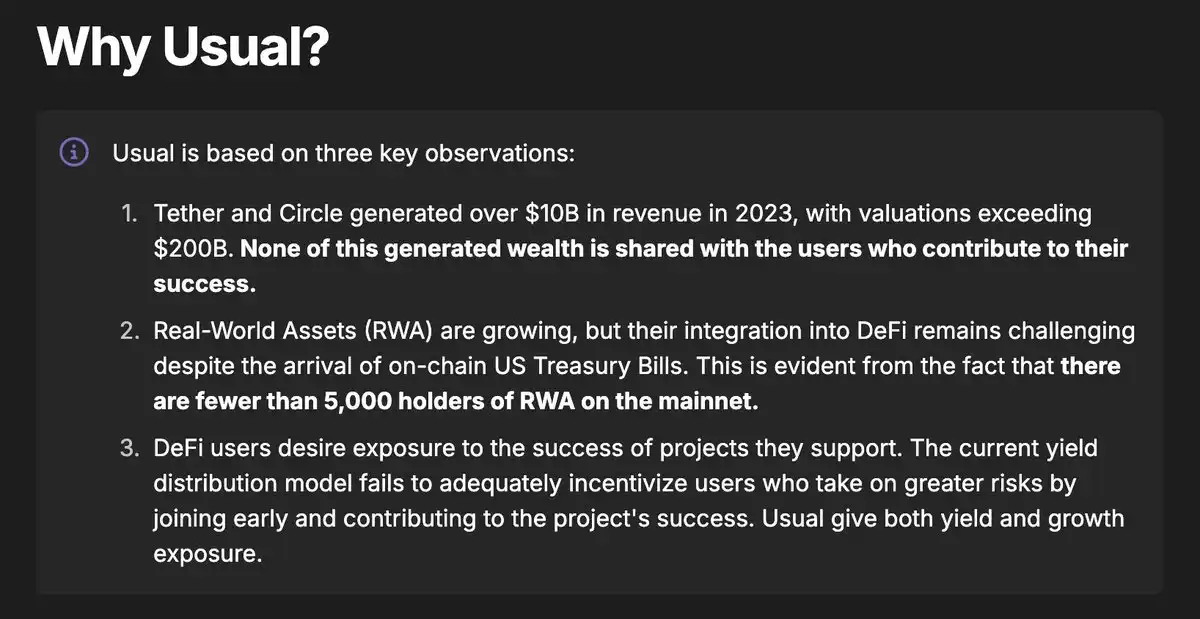
I started paying attention to USUAL a few months ago when I was researching new stablecoins. What makes USUAL unique is its clear story: Tether on chain, distributing income to token holders. Tether has made more than $7.7 billion in profits so far this year, which is almost more than BlackRock.
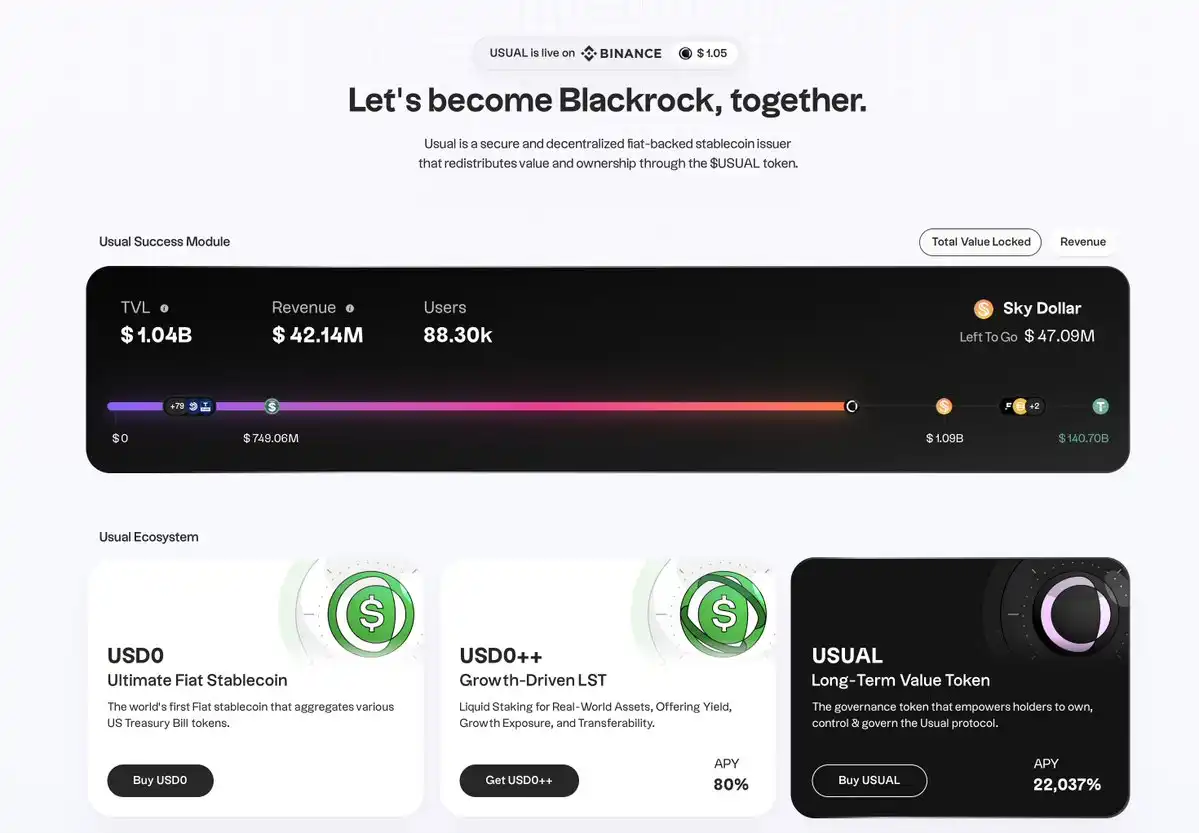
If USUAL can achieve this goal, even just 10% of it will mean $770 million in profits. And the best part is that 90% of the revenue will be distributed to token holders and stakers in the form of $USUAL.
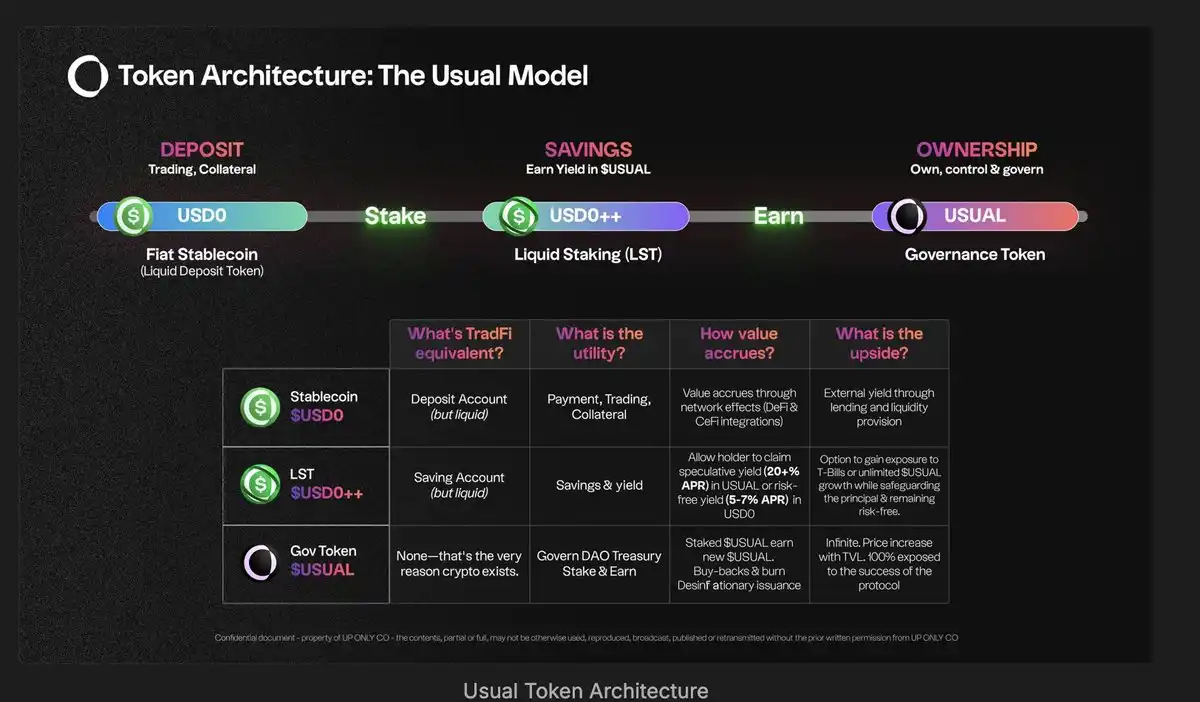
Returns are paid in $USUAL, so every time someone stakes USDO (their stablecoin), $USUAL tokens are constantly issued.
USDO is a stablecoin backed by US Treasuries that generates returns through Treasuries, and these returns are distributed in the form of $USUAL and USDO.
USUAL Money mentioned that when $USUAL's cash flow reaches a certain target, they plan to control the issuance of $USUAL and ensure that the continuous issuance rate is lower than the revenue growth rate. Initially, the issuance will be high, but over time, the issuance will gradually decrease.
USUAL offers two other tokens in addition to the governance and staking token $USUAL.
USDO++: This is the liquidity token you get after staking USDO. USDO holders need to stake USDO for 4 years to mint USDO++. USDO++ holders will receive 45% of the $USUAL issuance.
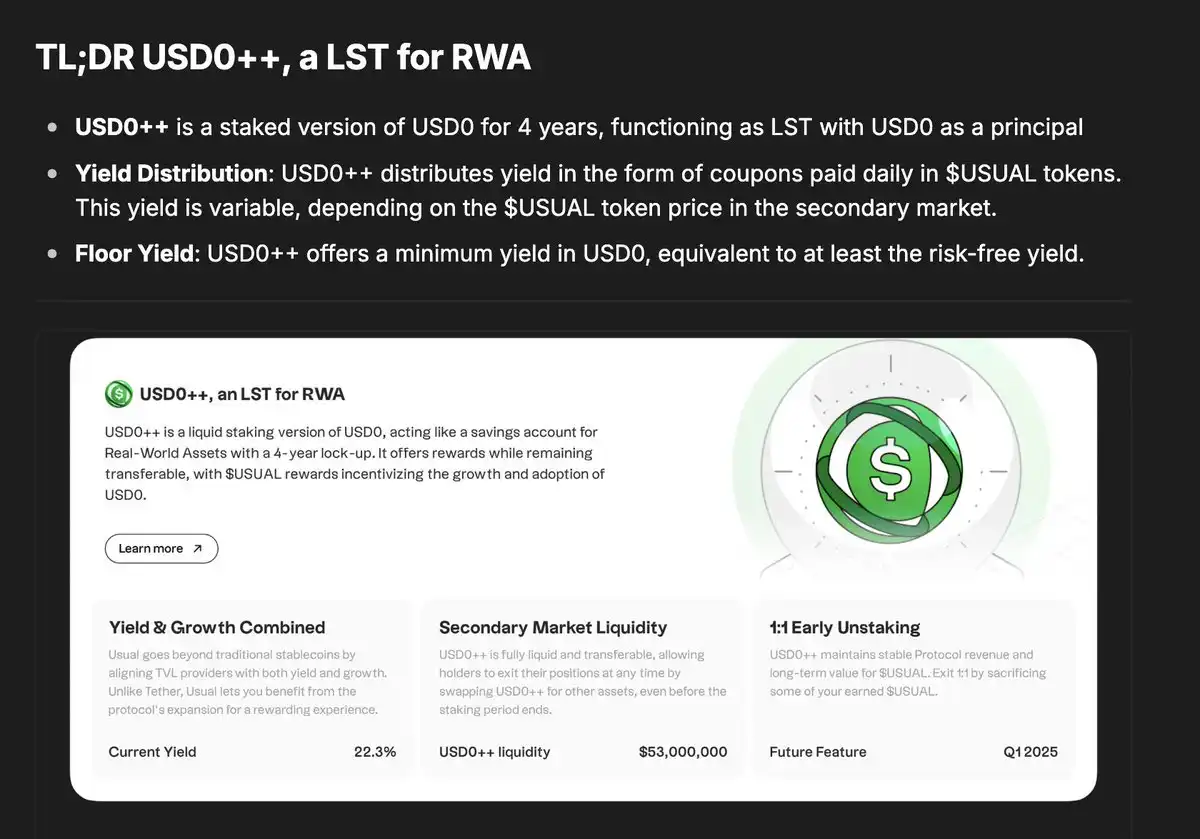
USUAL issues new $USUAL tokens whenever new USDO++ is minted. This is a core part of their flywheel mechanism. The TVL (Total Value Locked) of the protocol also tracks the value of USDO++ minted in the protocol.
The higher the TVL, the more revenue the protocol generates, which will eventually be paid to USDO++ holders in the form of $USUAL tokens.
The issuance rate of $USUAL will decrease as more users adopt it, reducing the number of tokens issued per dollar locked.
This reduction will increase the yield per token, which will naturally drive the price of $USUAL up.
The higher annualized yield (APY) on USDO++ will attract more people to stake USDO. The current APY is around 80%, so we may see TVL rise in the coming days. The current TVL is around $900 million, and 87.47% of USDO has been staked as USDO++.
USUAL also has a staking token called USUALx, which provides three forms of yield: USDO rewards from revenue, 10% of $USUAL issuance, and 50% fee share from unlocking modules.
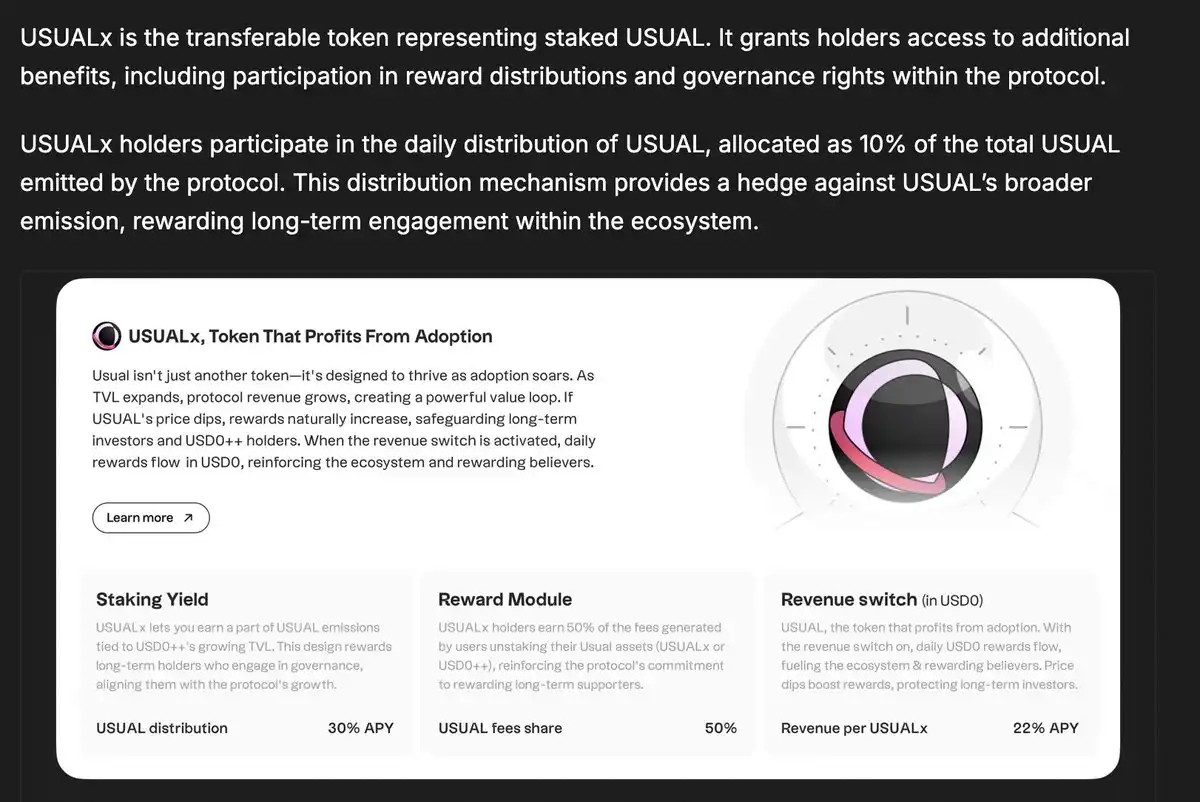
When USDO++ holders decide to unlock before expiration, the protocol will also initiate the destruction mechanism of $USUAL.
They need to destroy a portion of the $USUAL supply to unlock.
As mentioned in the USUAL Money whitepaper, we do face two serious product risks:
The market price of $USUAL (the main reward token) directly affects the benefits in the ecosystem, including rewards and liquidity incentives related to USDO++. If the price drops significantly, it may damage the competitiveness and user attractiveness of the ecosystem. Due to its inflationary nature, there is also a risk of hyperinflation.
To this end, the DAO can mitigate this risk by adjusting the minting rate to regulate the issuance, ensuring economic stability and sustainability.
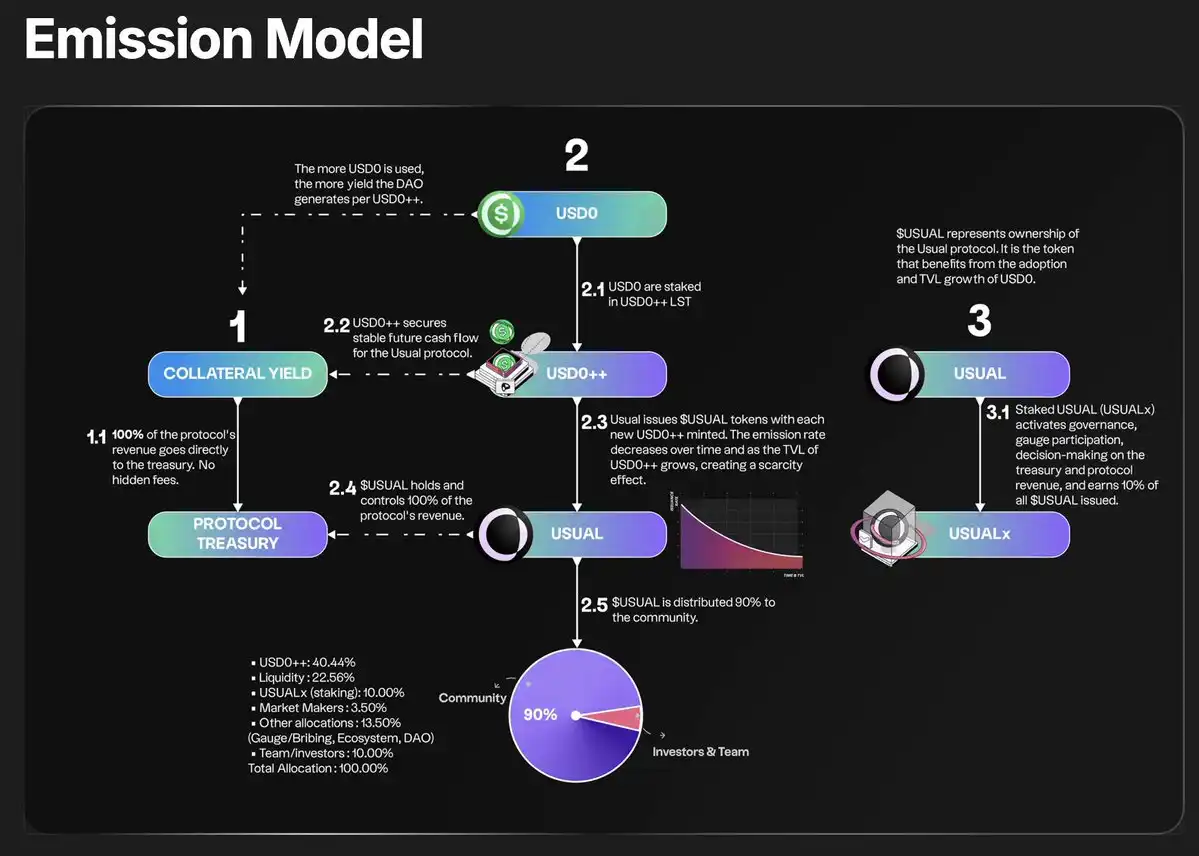
USDO++: These locked tokens lack a costless arbitrage mechanism to maintain their anchor, which can lead to price volatility. However, this risk has been minimized through strong liquidity in the secondary market, as well as liquidity provision incentives and early redemption mechanisms. In addition, the price floor redemption mechanism limits extreme volatility, ensuring stability and market efficiency.
Overall, as long as the price of $USUAL is attractive, the protocol can attract more demand for USDO and USDO++. The greater the demand for its stablecoins, the more revenue it will ultimately generate, which will be distributed to USDO++ holders, USUALx holders, and other participants.
Currently, USUALx has an annual interest rate of about 28,000%, which may attract initial demand and create early market heat.
However, in the long run, the key lies in how the USDO anchoring mechanism is stabilized and how long $USUAL can continue to attract demand.
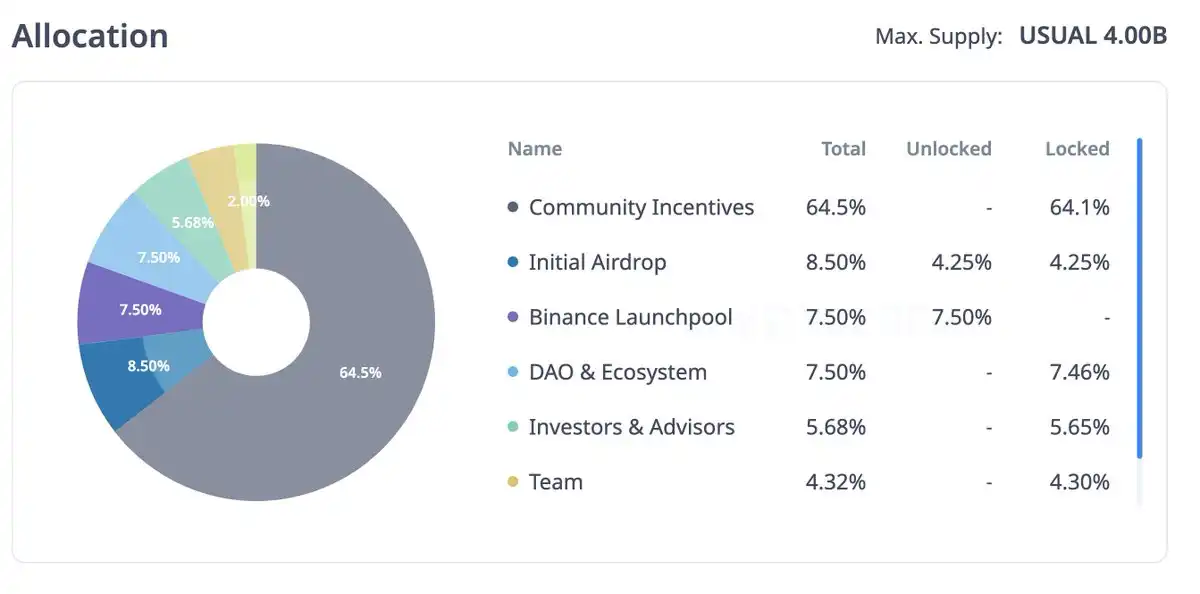
In terms of token economics: approximately 90% of the tokens are allocated to the community, of which approximately 64% are used for inflation rewards, which will adjust the issuance plan based on dynamic demand. Currently, approximately 12.4% of the tokens have entered circulation.
Ayrıca bunları da beğenebilirsiniz

Bitcoin neden 97.000 doları aştı?

2025'te Kripto Pazarını Hangi Protokoller Boşalttı?

15 Ocak'ta Ana Pazar Bilgisi Tutarsızlığı - Görülmesi Gereken Bir Durum! | Alpha Sabah Raporu

Alibaba, Latin Amerika'daki stabilcoin şirketini destekledi. Neden VelaFi?

WEEX AI Ticaret Hackathon'una Katılmak Değer Mi? $1.88M Ödül Havuzu ve Kurallar Açıklandı
$1.88M ödül havuzuna sahip bir AI ticaret yarışması — WEEX AI Ticaret Hackathon kurallarını, OpenAPI ticaretini ve yalnızca AI katılım gereksinimlerini keşfedin.

ABD Senatosu Tarım Komitesi, Kripto Piyasa Yapısının Belirlenmesi İçin 27 Ocak’ı Belirledi
Anahtar Çıkarımlar Senato Tarım Komitesi kripto piyasası yapısına yönelik yasa tasarısını 21 Ocak’ta yayımlayacak ve 27 Ocak’ta görüşme…

Tether 182 Milyon USDT’yi Dondurdu, USDT Tarafsız Bir Kripto Para mı?
Tether, Tron blockchain üzerinde 182 milyon USDT’yi dondurarak önemli bir adım attı; bu durum, stablecoin algısını köklü bir…

Anahtar Piyasa Bilgisi Tutarsızlığı 14 Ocak – Mutlaka Görün! | Alpha Erken Raporu
Bitcoin bu sabah toparlanarak 96.000 doları aştı. Ethereum da 3.300 doları geçti. Gizlilik odaklı coinler ORDI ve SATS…

Base’e Üç Yılını Harcayan Bir Geliştirici
Ana Çıkarımlar Base platformu, “Build on Base. We will support you.” vaatine rağmen, birçok geliştiriciye destek sunmuyor. Yazar…

DeepSeek Kurucusunun Büyüleyici Yolu: Huansquare Quant Fonu Başarıları
Key Takeaways DeepSeek’in kurucusu Liang Wenfeng, Huansquare Quant fonu ile 2025’te %56.55 getiri sağladı. Huansquare Quant, Çin’deki en…

ETHGas Foundation, Reputation Financialization ve Kripto Piyasalarındaki Yeni Gelişmeler
Anahtar Çıkarımlar Zama’nın $ZAMA token satışı, CoinList üzerindeki açık artırma mekanizmasıyla gerçekleştiriliyor ve tartışmalı bir yatırım olarak öne…

XMR Yüzde 50’den Fazla Artış Gösterdi: Kim Satın Alıyor?
XMR (Monero), hem yüksek gizlilik özellikleri hem de son sürat fiyat yükselişi ile kripto para gündeminin üst sırasına…

İlk Kez Üç Yılda Bir Yeni Bitcoin Core Yöneticisi Atandı
Key Takeaways: Bitcoin Core, Bitcoin ana ağı için en önemli geliştirme ve bakım ekibidir. Son üç yılda, yeni…

BitGo’nun Gelirleri ve Dijital Varlık Saklama Hizmetleri Üzerine Derinlemesine Bir Bakış
BitGo, 2025 yılında gelirini 16 milyar dolara çıkarmayı hedeflemekte ve ilk üç çeyrekte yaklaşık 10 milyar dolar gelir…
Analist: MSTR, Bitcoin Boğa Döngüsünün “Mullet”ı olarak Hareket Ediyor ve Bitcoin Baskısı Azaltıyor
Öne Çıkanlar MSTR, Bitcoin’in volatilitesini azaltarak %75’lik bir düşüş yükünü üstlendi. Michael Saylor, büyük miktarda hisse çıkararak piyasa…

Aave DeFi Kredi Piyasası Payı %50’yi Aştı, Mevcut TVL 35.833 Milyar Dolar
Önemli Noktalar Aave, DeFi kredi piyasasında %51,3’lük bir paya ulaştı ve bu oran, 2020’den beri ilk kez bir…

Binance Alpha Empire of Sight Lansmanı: Yenilikler ve Detaylar
Binance Alpha, 14 Ocak’ta saat 16:00’da Empire of Sight (Sight) jetonunu piyasaya sürecek. Airdrop etkinliğine katılım için başlangıçta…
Bugünün Trump Tarifeleri Kararı Bekleniyor, Perakende Satışlar A/A ve PPI Verileri Açıklanacak
Key Takeaways ABD Yüksek Mahkemesi’nin Trump tarifeleri davasıyla ilgili bir karar vermesi bekleniyor. Bu karar, geniş çaplı bir…
Bitcoin neden 97.000 doları aştı?
2025'te Kripto Pazarını Hangi Protokoller Boşalttı?
15 Ocak'ta Ana Pazar Bilgisi Tutarsızlığı - Görülmesi Gereken Bir Durum! | Alpha Sabah Raporu
Alibaba, Latin Amerika'daki stabilcoin şirketini destekledi. Neden VelaFi?
WEEX AI Ticaret Hackathon'una Katılmak Değer Mi? $1.88M Ödül Havuzu ve Kurallar Açıklandı
$1.88M ödül havuzuna sahip bir AI ticaret yarışması — WEEX AI Ticaret Hackathon kurallarını, OpenAPI ticaretini ve yalnızca AI katılım gereksinimlerini keşfedin.
ABD Senatosu Tarım Komitesi, Kripto Piyasa Yapısının Belirlenmesi İçin 27 Ocak’ı Belirledi
Anahtar Çıkarımlar Senato Tarım Komitesi kripto piyasası yapısına yönelik yasa tasarısını 21 Ocak’ta yayımlayacak ve 27 Ocak’ta görüşme…


 App
App