
- Kripto Al
- Piyasalar
- Vadeli İşlemler
- Spot
- Copy Trade
 WE-Launch
Trump's Tariff Policy Triggers Chain Reaction, Where Is the Bottom of the Crypto Market?

Original Title: Tariffs and Turmoil
Original Author: UkuriaOC, CryptoVizArt, Glassnode
Original Translation: Daisy, ChainCatcher
The Trump administration announced a "Liberation Day" tariff policy, causing severe turmoil in the financial markets, with major macro indices experiencing a widespread decline, and the digital asset market was not spared, facing a comprehensive sell-off.
Abstract
· The news of the U.S. imposing tariffs severely disrupted major global financial markets, with several markets experiencing one of their worst trading days since March 2020.
· Funds inflow into digital assets almost came to a standstill, leading to significant liquidity contraction and strong downward pressure.
· However, from the price movements of Bitcoin and Ethereum, as prices dipped, the scale of losses diminishing suggests that the selling pressure in the short term may be depleting.
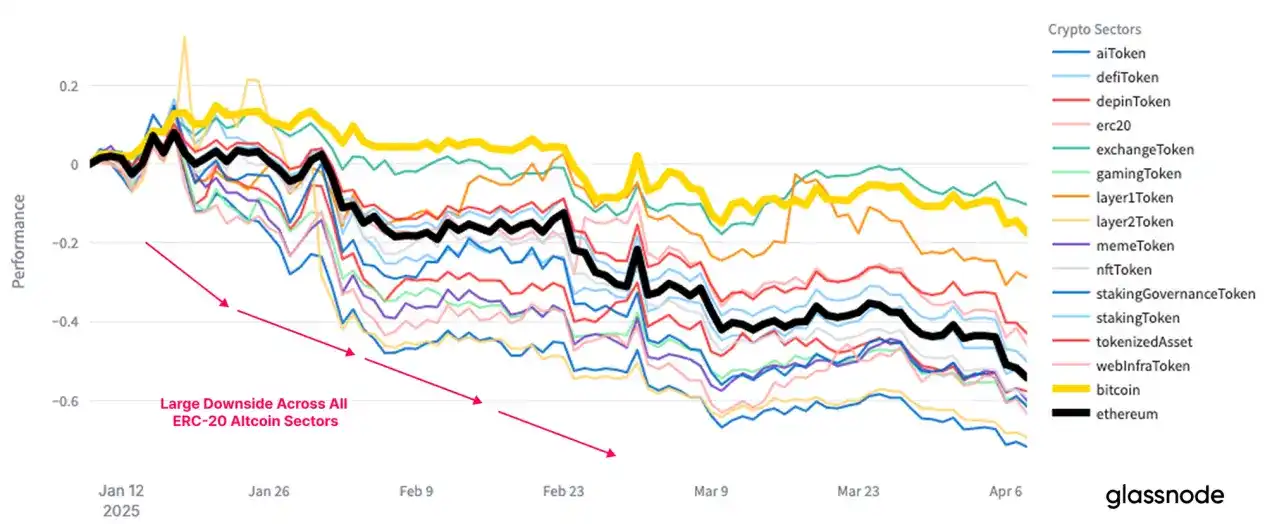
· The overall downturn in the digital asset market was widespread.
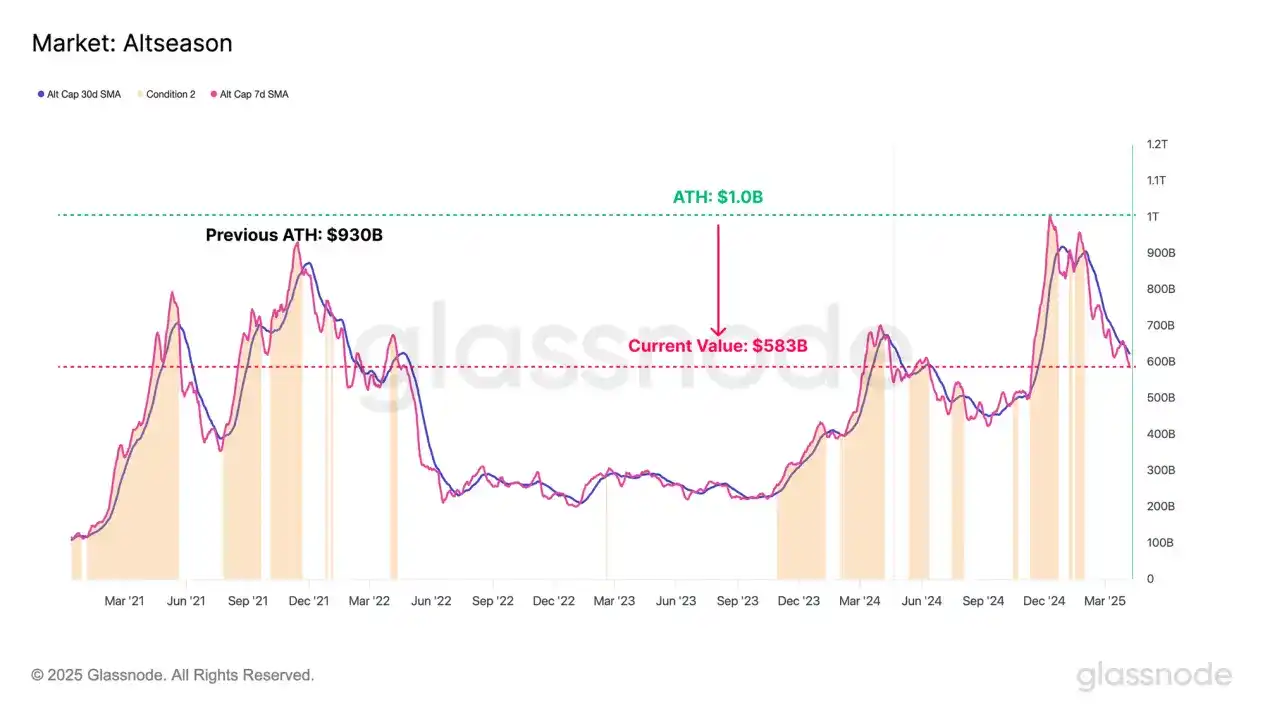
· The market capitalization of altcoins has dropped from $1 trillion in December 2024 to the current $583 billion.
· Comprehensive analysis of on-chain and technical models shows that for Bitcoin to regain its upward momentum, it must reclaim $93,000.
· The $65,000 to $71,000 range below is a key support level that bulls must defend.
Comprehensive Market Decline
The Trump administration's announcement of the "Liberation Day" tariff policy sparked intense turmoil in the financial markets, with major stock indices generally falling. The U.S. policy stance has shifted towards a weakening dollar, interest rate cuts, falling oil prices, and fiscal spending cuts. These factors combined could significantly slow down the U.S. economy and trigger a substantial liquidity contraction overall.
The uncertainty brought by tariffs has become the catalyst for a "flight to safety" in the market, triggering large-scale sell-offs, with several major financial indices recording their worst performance since March 2020.
Source: Yahoo Finance
The digital asset market was particularly sensitive to global liquidity changes and similarly did not escape this round of decline, with many crypto asset prices experiencing double-digit losses.
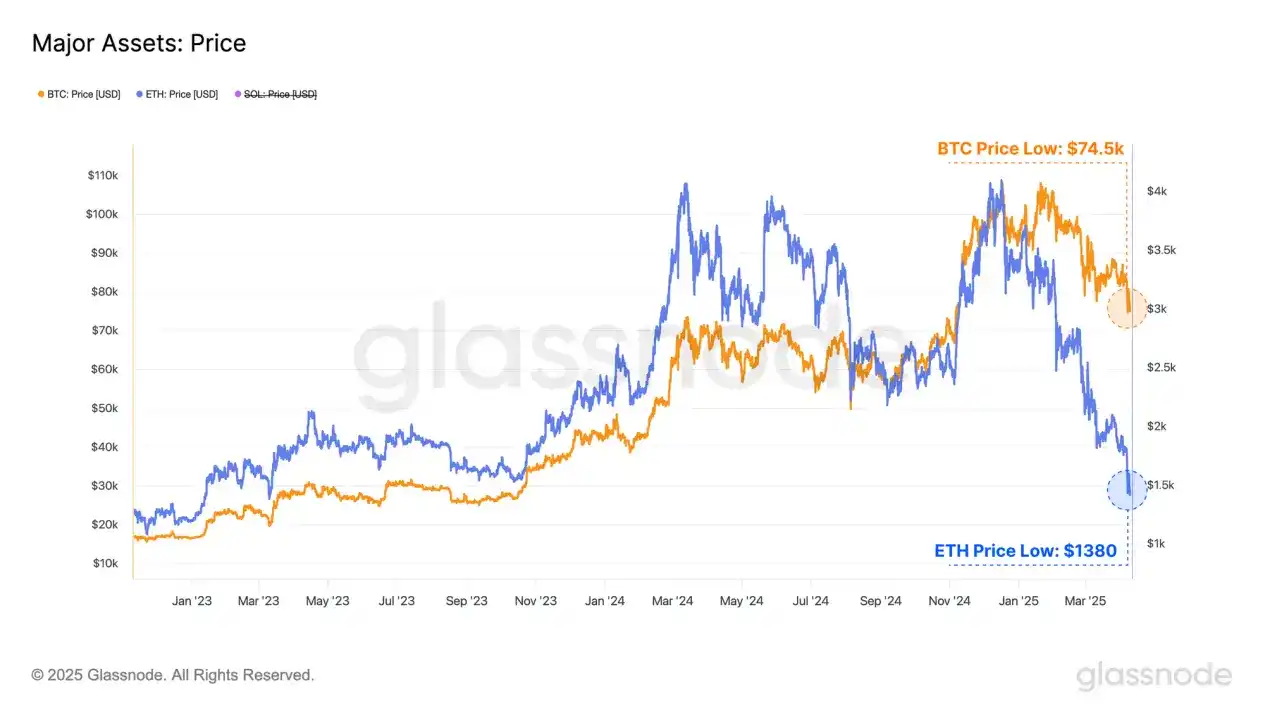
The price of Bitcoin, the leading asset, dropped from $83,500 to $74,500, causing a market value loss of around $150 billion.
Ethereum, as the second-largest cryptocurrency, experienced a more significant drop, with its price falling from $1,800 to $1,380, resulting in a market value decrease of approximately $40 billion.
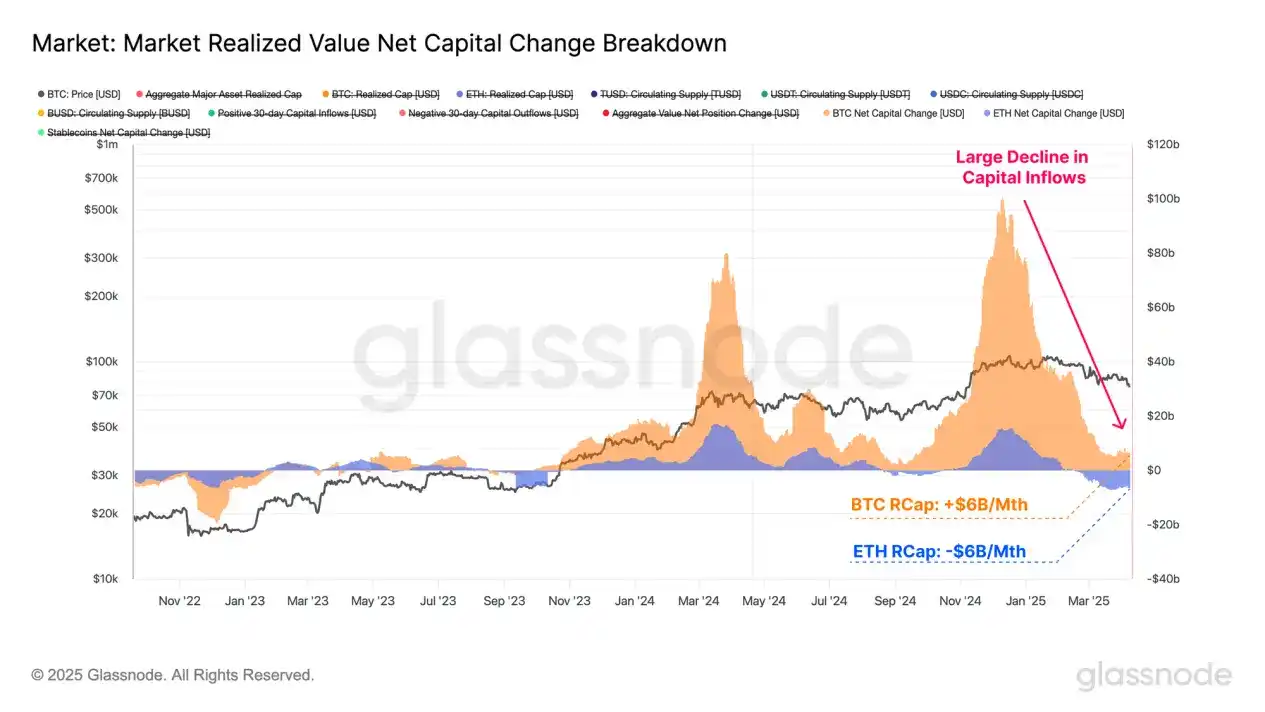
Since the beginning of the year, there has been a notable decrease in net inflows of the two major mainstream cryptocurrencies. This trend is primarily reflected in the 30-day "realized cap" change, which measures the monthly net capital flow of assets.
· Bitcoin's monthly peak inflow reached $100 billion and has now shrunk to around $60 billion;
· Ethereum's monthly peak inflow was $15.5 billion, but it has now turned into a net outflow of $6 billion.
The inflow of funds into the Bitcoin network is gradually stagnating, indicating a lack of new incremental funds in the market to support higher prices. Ethereum's outflow of funds is mainly due to ETH bought at higher levels being spent at lower levels, resulting in capital losses. This also indicates that Ethereum faces greater resistance compared to Bitcoin, with a relatively weaker market performance.
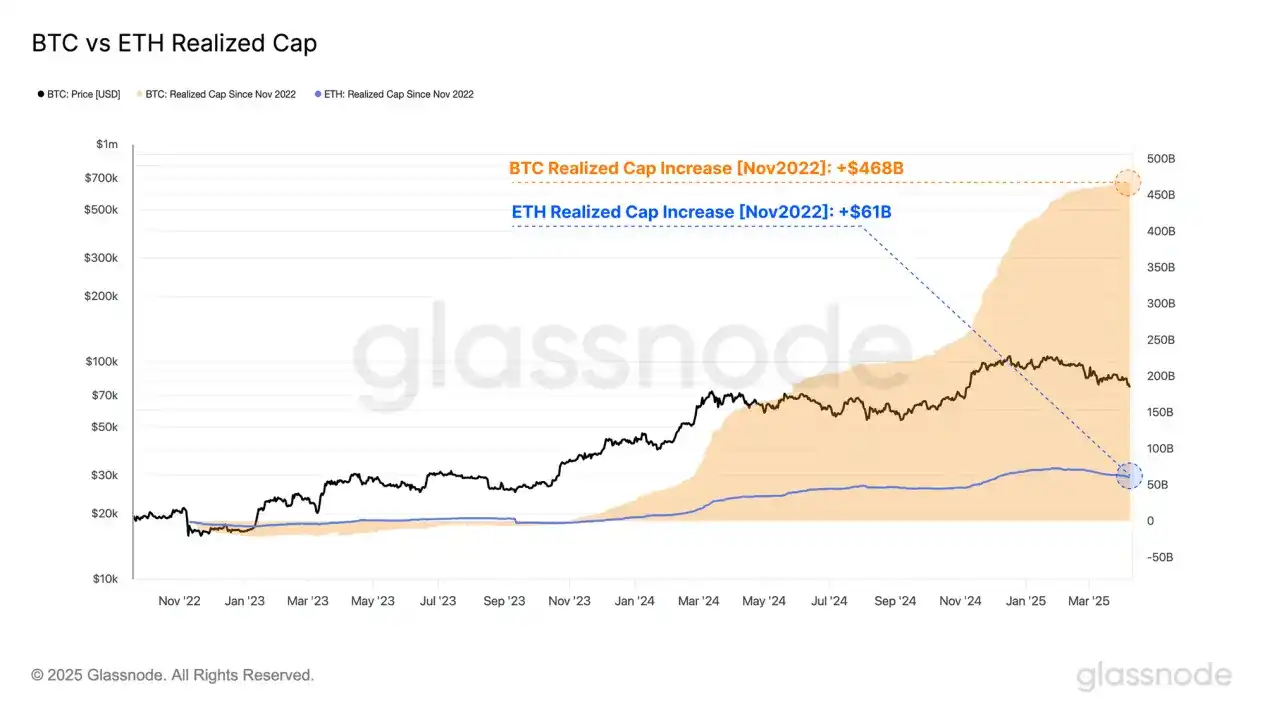
If we take the FTX collapse at the end of 2022 as a starting point and observe the overall change in Bitcoin and Ethereum's "realized cap," we can quantify the amount of capital these two assets have absorbed since the low point of this cycle.
Bitcoin's realized cap has grown from $402 billion to $870 billion, an increase of $468 billion, representing a 117% growth; Ethereum's realized cap has increased from $183 billion to $244 billion, a growth of $61 billion, a 32% increase.
The difference in fund inflows between the two partially explains the performance divergence of the two major assets since 2023. Ethereum has attracted significantly less funds and new demand in this cycle compared to Bitcoin, leading to a relatively weaker price increase and a failure to set a new high, while Bitcoin broke past the $100,000 mark in December 2024.
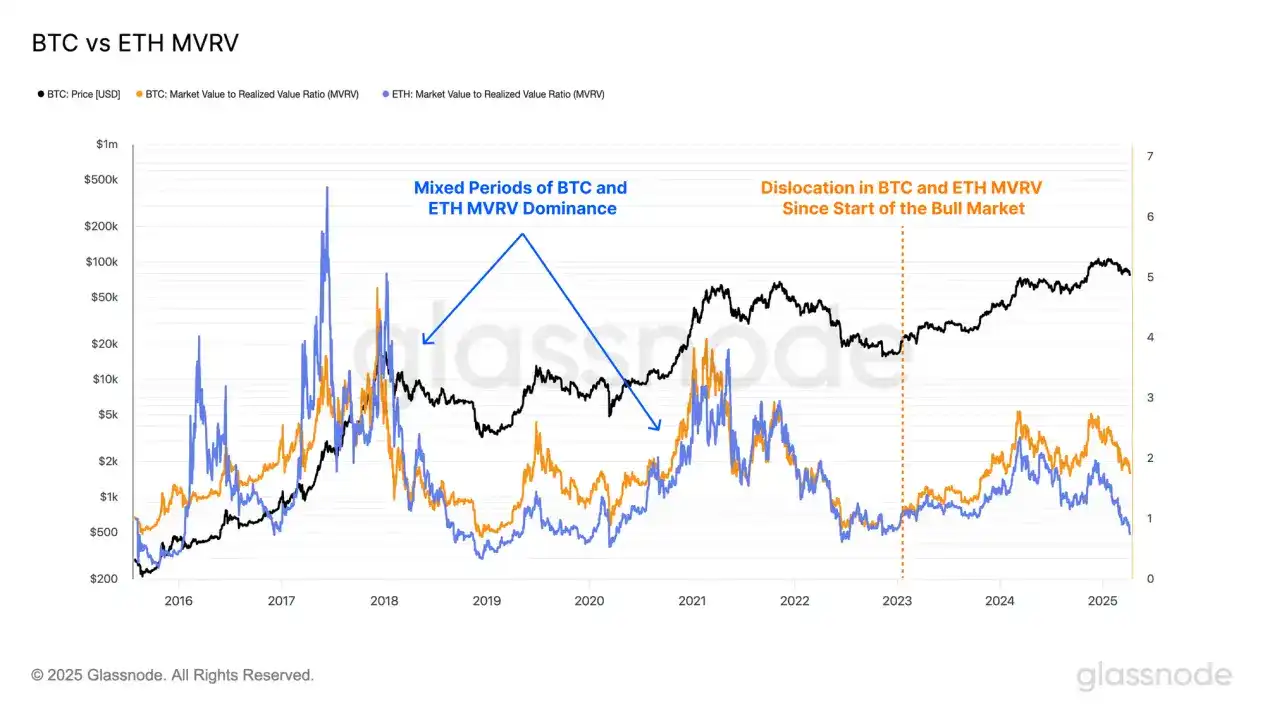
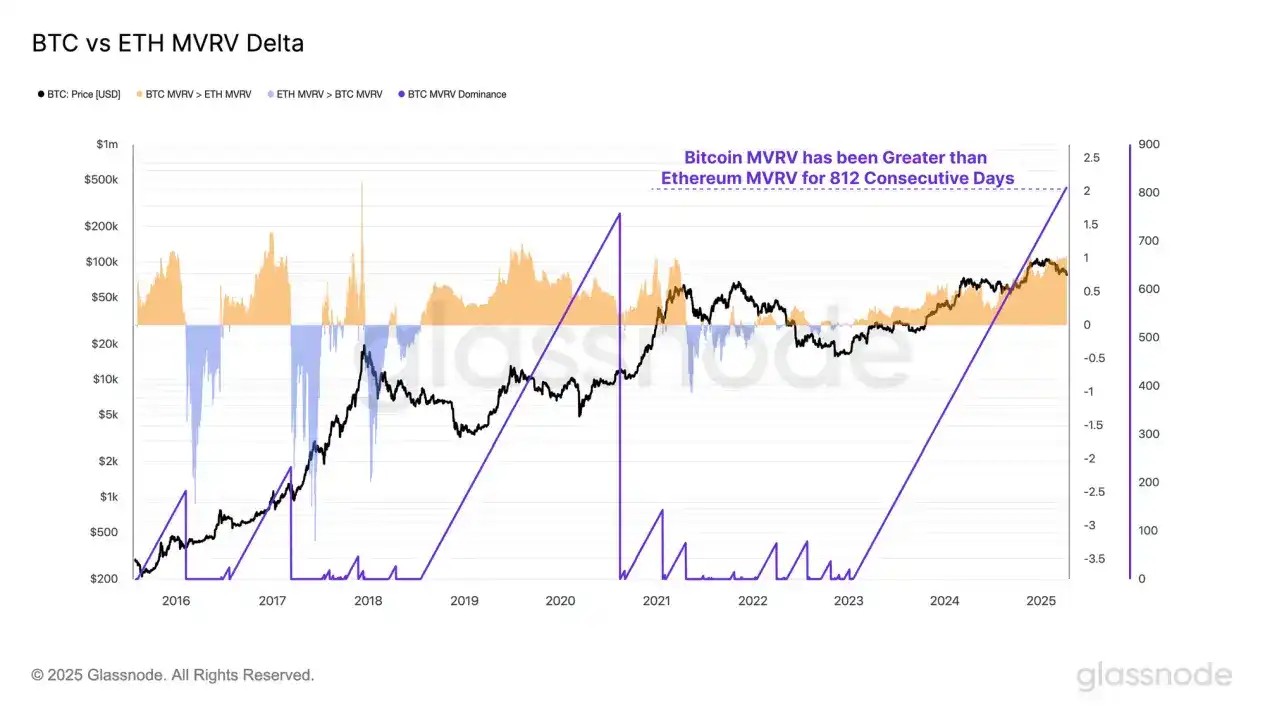
The MVRV ratio is used to measure the relationship between the spot price and the realized price, reflecting the average profit or loss level of each asset holder. When the MVRV ratio is above 1, it indicates an average profit state; below 1 indicates an average loss state.
Since the start of this bull market in January 2023, Bitcoin and Ethereum's MVRV (Market Value to Realized Value) ratio has once again shown a significant divergence. Bitcoin investors have consistently held a higher degree of unrealized gains, while Ethereum's MVRV ratio dropped below 1.0 again in March this year, indicating that the majority of holders have entered a loss-making zone.
By calculating the difference between Bitcoin's and Ethereum's MVRV ratios, we can identify whether, on average, Bitcoin holders have been better off or worse off than Ethereum holders during certain periods.
A positive difference indicates that, on average, Bitcoin investors hold higher unrealized gains than Ethereum investors, while a negative difference means that Ethereum investors have a stronger average profit-taking ability.
As mentioned earlier, since the beginning of this bull market, Bitcoin investors' average profit-taking level has consistently been higher than that of Ethereum investors.
As of now, this trend has lasted for 812 days, marking the longest duration on record.
It is evident that Ethereum has shown relatively weak performance in this cycle, mainly due to the significantly smaller scale of fund inflows and investment demand compared to Bitcoin. The divergence between the two can be further reflected in the ETH/BTC price ratio.
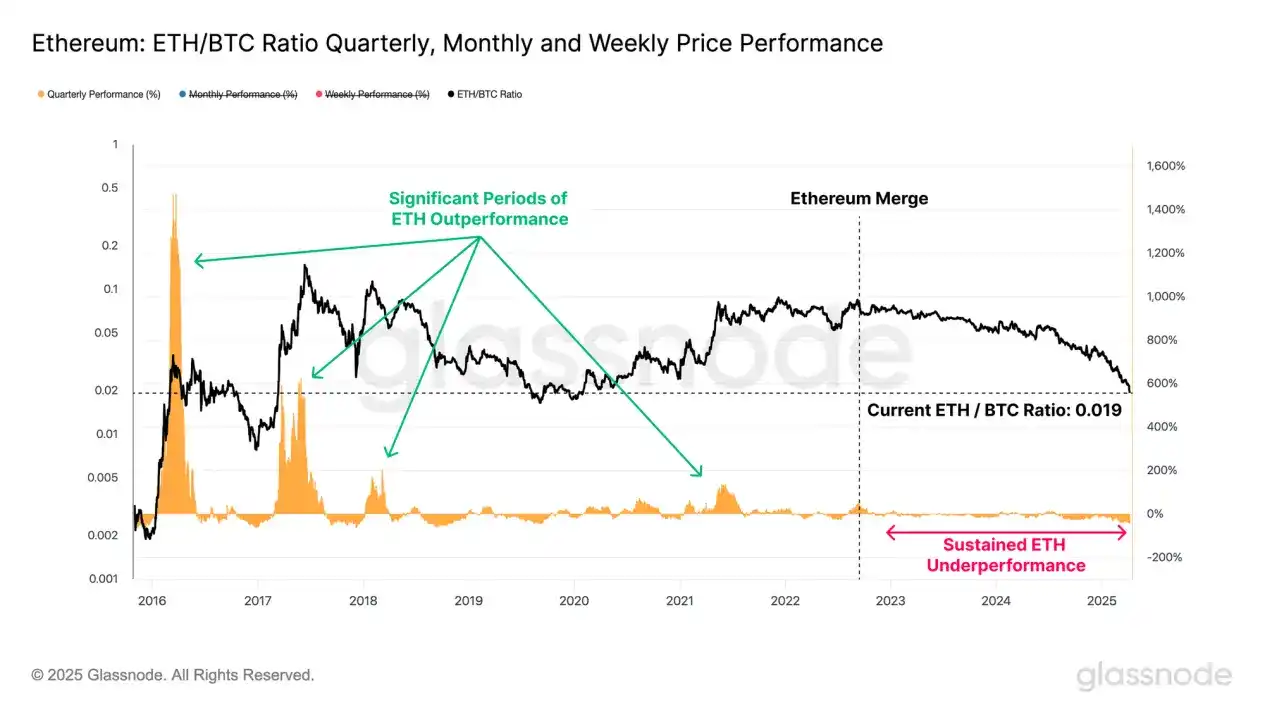
Since the September 2022 "Merge" upgrade, the ETH/BTC exchange rate has plunged from 0.080 to the current 0.0196, a steep decline of 75%. This is the lowest level for this pair since January 2020, with only 500 days out of 3531 trading days having a ratio lower than the current level.
Furthermore, there has been hardly any sustained period in this bull market where Ethereum has continuously outperformed Bitcoin, which is extremely rare in past bull markets. This further illustrates that the market structure of this cycle has significantly deviated from the familiar historical patterns and performance modes of investors.
Review of Losses
After experiencing a sharp decline like this week's, it is particularly important to examine investors' reactions, especially in a bear market often triggered by rising panic and large-scale losses.
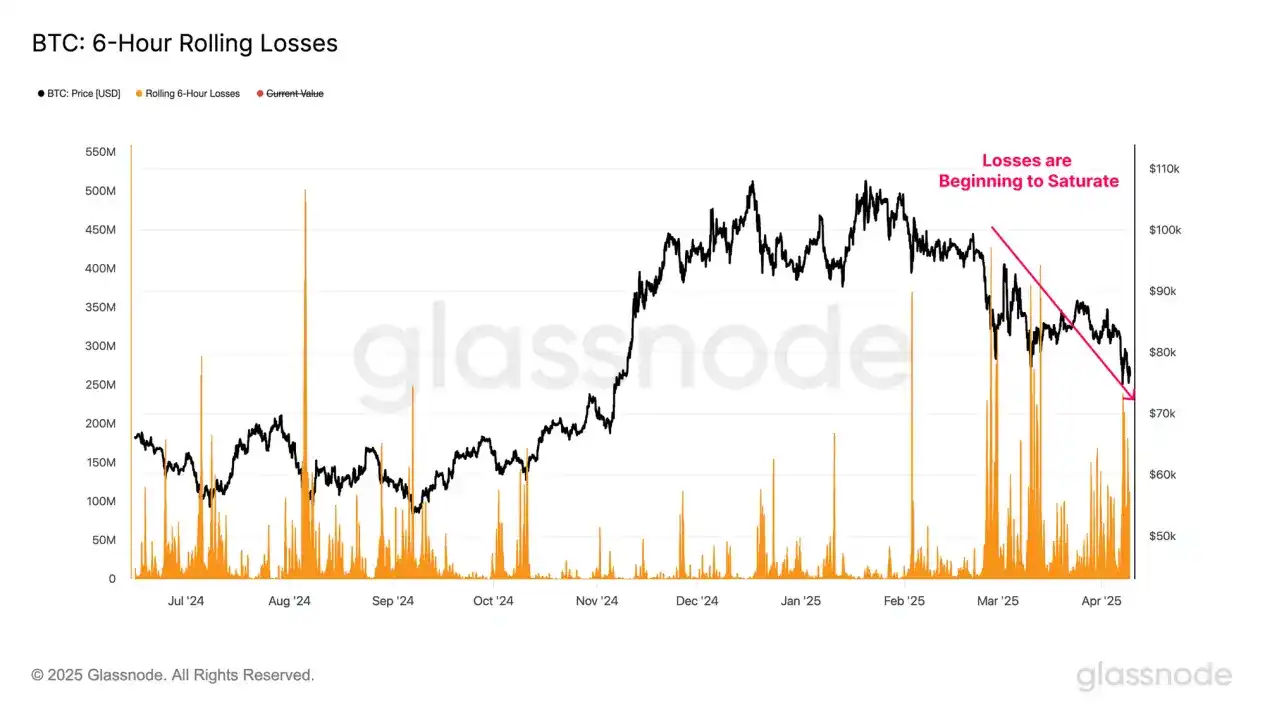
By evaluating the realized loss situation within a 6-hour rolling window, we can better understand the behavior and emotional responses of market participants in the current downtrend.
A significant "sell-off surrender" event by Bitcoin investors occurred, with the peak loss within a 6-hour window reaching up to $240 million, close to one of the largest-scale loss events of this cycle.
However, as the price continues to probe lower, the scale of realized losses is gradually shrinking, indicating that within the current price range, the market may be showing signs of short-term selling pressure exhaustion.
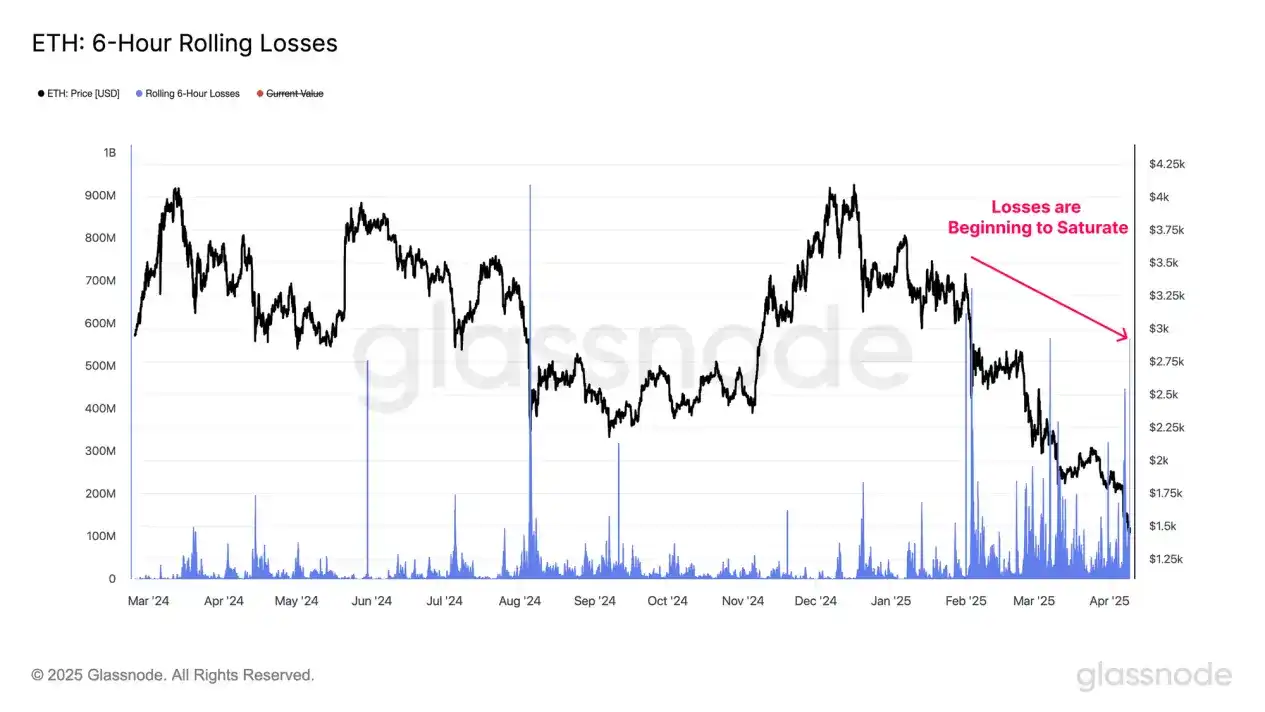
Ethereum has also exhibited a similar behavior pattern. During this round of declines, its single highest realized loss peaked at $5.64 billion, making it one of the largest sell-off events since the bull market began in January 2023.
As the price gradually probes lower, both Bitcoin's and Ethereum's realized loss amounts are diminishing, indicating that investors may be gradually adapting to the lower price range and the current volatile market environment.
Market-wide Contraction
The ongoing tightening of market liquidity has triggered a significant devaluation across the entire altcoin sector. Assets further along the risk curve are particularly sensitive to liquidity shocks, usually accompanied by more severe price pullbacks.
As of December 2024, the overall altcoin market capitalization (excluding Bitcoin, Ethereum, and stablecoins) peaked at $1 trillion during this cycle. Subsequently, the market cap saw a sharp retreat, now reduced to $583 billion, with a decline of over 40% in just a few months.
Notably, in this round of pullback, the various subsectors of altcoins did not show a clear differentiated trend. The general decline showed a broad-based nature, with all subsectors experiencing significant devaluation, and even Bitcoin recording negative returns over the past three months.
Range Assessment
Lastly, we will evaluate the market's response to key technical indicators and on-chain cost ranges, these reference tools help investors make judgments and decisions in an oscillating and uncertain market environment.
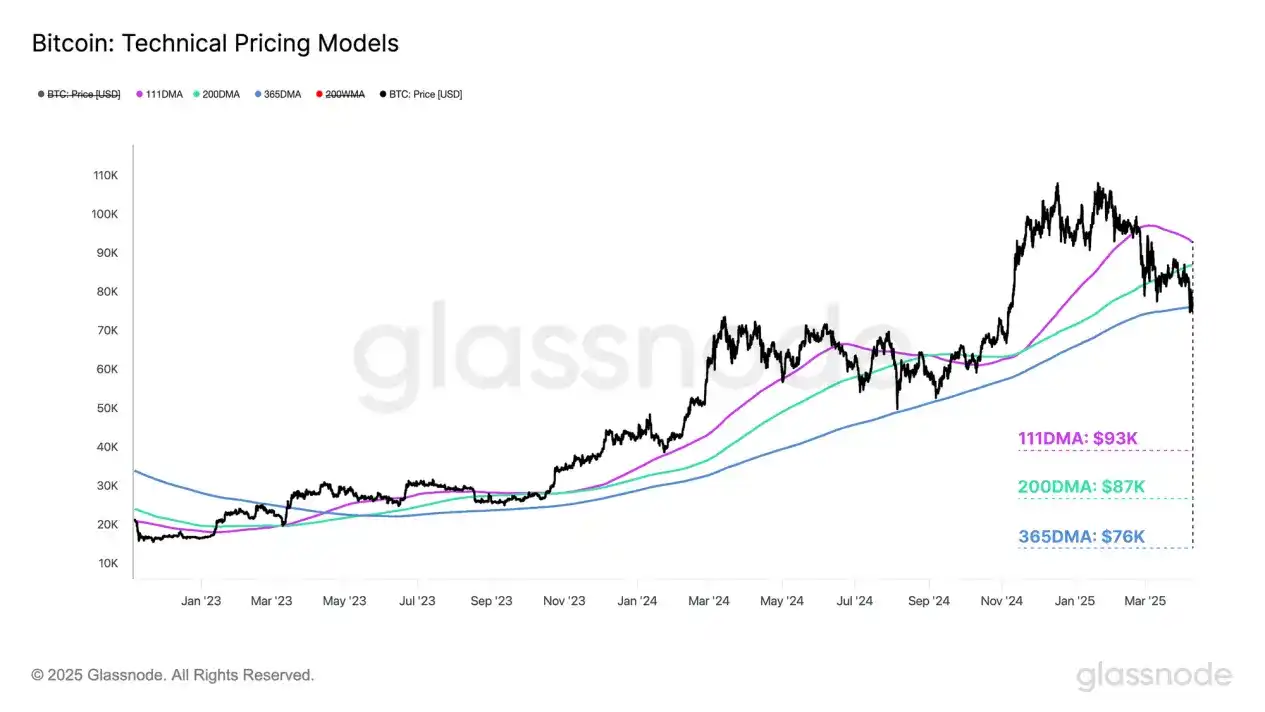
Technical analysis has long been an important tool for investors, and Bitcoin investors typically focus on a set of key moving averages. Among them, the 111-day, 200-day, and 365-day moving averages (111DMA, 200DMA, 365DMA) are commonly used indicators to measure Bitcoin market momentum.
You can refer to the following technical framework for analysis:
Bitcoin's initial break below the 111-day moving average ($93,000) signaled a significant blow to market momentum, with no subsequent effective rebound attempts.
After the initial drop, the price oscillated around the 200-day moving average ($87,000), a level considered by most technical analysts as the bull-bear line. The market showed clear signs of hesitation in this range, eventually leading to another downward movement, initiating a new round of price decline.
Recently, the price broke below the 365-day moving average ($76,000) for the first time since the 2021 cycle. This key momentum support level has not yet been completely breached. If it fails to hold steady, it may trigger further downward trend.
During the bullish phase of a market uptrend, Short-Term Holders (STH) are usually the group that bears the brunt of panic selling. Their behavior and emotional shifts can serve as important reference indicators for assessing the intensity of market pullbacks and investor response strategies.
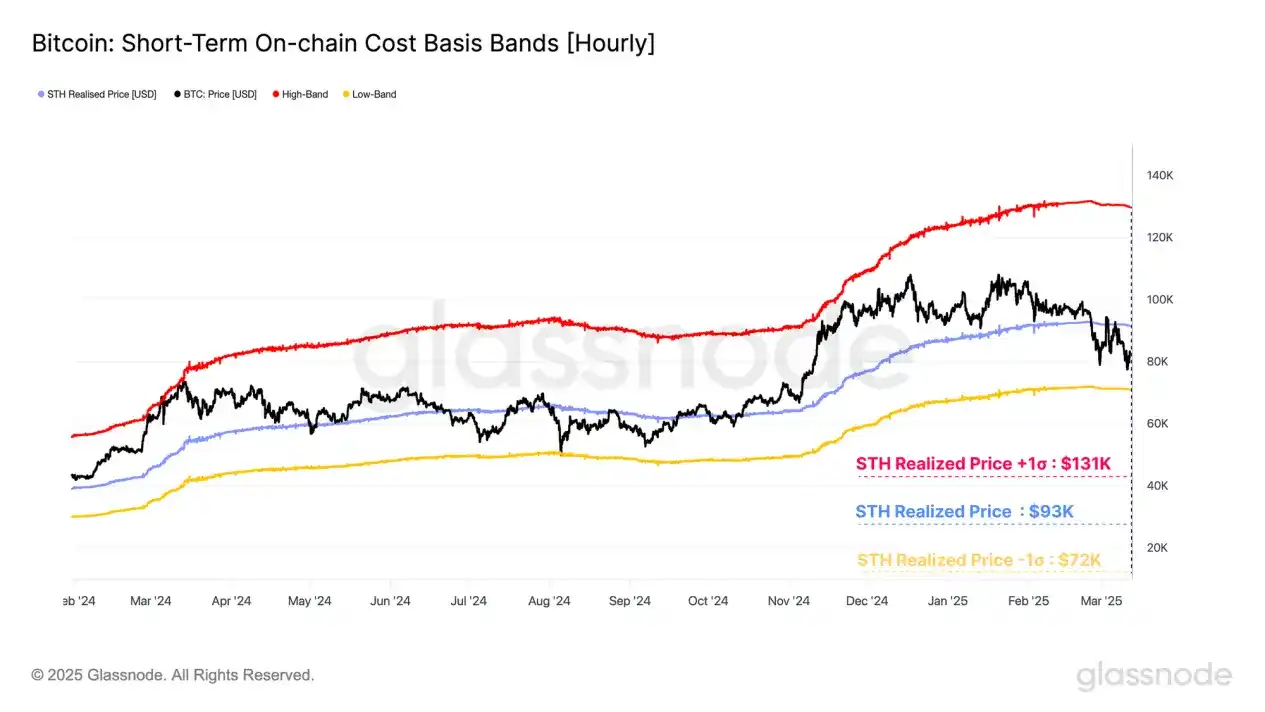
The Short-Term Holder Cost Basis has always been regarded as a key reference level for assessing market momentum during a bull market. Constructing a ±1 standard deviation range around this cost basis can typically serve as the upper and lower bounds of local price fluctuations.
· Short-Term Holder Cost Basis +1σ: $131,000
· Short-Term Holder Cost Basis: $93,000
· Short-Term Holder Cost Basis -1σ: $72,000
Bitcoin breaking below the Short-Term Holder Cost Basis (STH-CB) for the first time signals a weakening market momentum (also breaking below the 111-day moving average). The price then rebounded to below this cost basis and faced resistance, confirming a shift in investor sentiment.
Currently, the Bitcoin spot price has stabilized between the STH Cost Basis and one standard deviation below it, forming the upper and lower boundaries of the current trading range, namely $93,000 to $72,000.
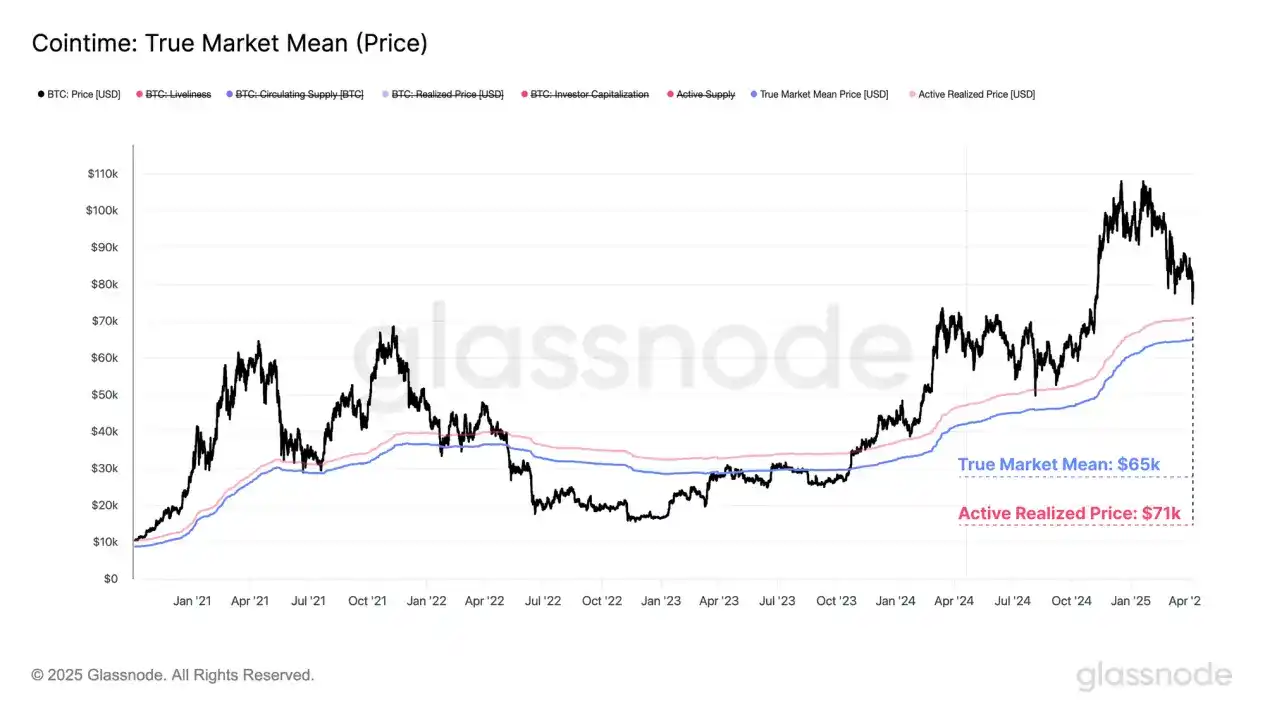
Active Realized Price and True Market Mean are another set of price models that typically reside near the midpoint of the Bitcoin cycle. These two models estimate the cost basis of active participants in the market by excluding lost or long-idle supplies.
From a statistical perspective, on approximately 50% of trading days, the spot price fluctuates above or below these two models, making them important mean reversion references and dividing markers for the market state boundaries between bull and bear markets.
· Active Realized Price: $71,000
· True Market Mean: $65,000
Consensus from multiple on-chain price models indicates that the $65,000 to $71,000 range is a key area where bulls are establishing long-term support. If the price convincingly breaks below this range, it would mean that the vast majority of active investors are underwater, potentially significantly impacting overall market sentiment.
Conclusion
Amid escalating uncertainty around U.S. trade policies, global financial markets are facing increasing pressure. This weakened trend has spread across virtually all asset classes, evident from significant pullbacks in major macro indices.
The digital asset market has not been immune, with all major subsectors experiencing a broad-based contraction. Bitcoin's price briefly dipped to $75,000, marking one of the largest pullbacks since the start of the bull market in January 2023. Ethereum saw an even more severe drop, with many altcoins now deeply entrenched in a bearish trend.
Combining various on-chain and technical price model analyses, the $65,000 to $71,000 range is seen as a key area where bulls are reconstructing long-term support. If Bitcoin's price falls below this range, market sentiment could suffer a significant blow as the vast majority of active investors would be holding positions at a loss.
Popüler coinler
Güncel Kripto Haberleri


Müşteri Desteği:@weikecs
İş Birliği (İşletmeler):@weikecs
Uzman İşlemleri ve Piyasa Yapıcılar:bd@weex.com
VIP Hizmetler:support@weex.com
 App
App