
- Buy Crypto
- Markets
- Futures
- Spot
- Copy Trade
 Earn
Earn- More
Crypto Meeting Today: How White House Decisions Influence Crypto Market

White House Crypto Meeting Today — What Actually Moved the Market
The crypto meeting today at the White House focused on stalled U.S. crypto market structure legislation, with stablecoin yield as the core fault line between banks and crypto firms. The immediate influence on the crypto market showed up as BTC weakness, tighter order books, and short-term risk-off positioning from institutions.
I’ll be blunt. Markets didn’t wait for a press release. They reacted to uncertainty. Bitcoin slipped below intraday support within hours of the meeting leaking into headlines. ETH funding cooled. Stablecoin inflows slowed across major venues. When policy lacks clarity, liquidity pulls back. I’ve seen this movie before.
At the center of the White House crypto meeting was one question: who controls yield in a dollar-denominated crypto system?
Right after the meeting broke into the news cycle, traders moved into defensive execution. That’s why platforms with deep depth and fast matching engines mattered more than narratives. This is also why I always stress execution over opinions. If you needed clean fills during the volatility window, this was not the day to trade thin books. For those needing reliable spot access during policy-driven volatility, I’ve seen traders default to venues like WEEX registration for one reason: predictable execution when headlines hit.

Who Was in the Room and Why It Matters
The White House crypto meeting brought together Coinbase, Ripple, Kraken, Tether, major U.S. banking groups, and senior White House economic advisors to negotiate unresolved issues in the CLARITY market structure bill, with stablecoin yield and custody rules as the main friction points.
Attendance matters because policy outcomes follow power dynamics. Banks showed up with balance-sheet math. Crypto firms showed up with on-chain data. Both sides walked in knowing the numbers.
On the banking side, representatives tied to the American Bankers Association and Bank Policy Institute pushed a familiar line: stablecoin yield threatens deposits. On the crypto side, issuers and exchanges pointed to capital efficiency, APY competition, and global arbitrage already happening offshore.
I’ve sat across similar tables before. When both sides bring real data, not ideology, you get slow progress. That’s exactly what happened here.
Why the White House Called This Crypto Meeting Now
The White House called the crypto meeting today to prevent the CLARITY Act from stalling completely, as internal disagreements over stablecoin yield, custody, and regulatory jurisdiction risked collapsing bipartisan support ahead of the 2026 legislative cycle.
Timing tells you intent. This wasn’t proactive. It was defensive.
By late January 2026, staffers knew the bill was drifting. Crypto firms were lobbying harder. Banks were escalating warnings about deposit flight. Meanwhile, markets were already pricing in regulatory delay.
From my perspective, this meeting wasn’t about finalizing rules. It was about stopping the bleeding. When Washington senses capital hesitation, meetings happen fast.
Latest News&Decisions From The White House Meeting

White House meeting ends with no deal as crypto industry and banks remain split over stablecoin yield rules.
——@Thedailyblock

NEW: White House crypto advisor Patrick Witt says the meeting on stablecoin rewards and yield was "constructive, fact-based, and solutions-oriented.”
——@Cointelegraph

President Trump Executive Director says todays White House meeting between the crypto and banking industries was "constructive, fact-based, and, most importantly, solutions-oriented."

The White House will host a meeting today with bankers and high-level crypto executives to discuss the crypto market structure bill. We need this Bill to stop the manipulation.
Stablecoin Yield: The Real Battlefield
Stablecoin yield became the central dispute at the White House crypto meeting because banks view yield-bearing stablecoins as a direct threat to deposits, while crypto firms see yield as essential for DeFi liquidity, market efficiency, and global competitiveness.
Yield is not a feature. It’s power.
A dollar that earns nothing inside a bank is a controlled dollar. A dollar earning 4–8% APY on-chain becomes a competitive weapon. That’s the conflict.
I watched this exact tension explode during the 2020–2021 DeFi boom. Back then, regulators ignored it. In 2026, they can’t. On-chain yield isn’t theoretical anymore. It’s measurable, scalable, and global.
That’s why the influence on the crypto market showed up immediately. Traders know that if yield gets capped, liquidity migrates. If it survives, capital floods back.
Immediate Influence on the Crypto Market After the Meeting
The influence on the crypto market after the White House crypto meeting included BTC price weakness, reduced stablecoin inflows, tighter spreads from market makers, and increased hedging activity in derivatives markets.
Within hours, BTC failed to hold key intraday levels. Not a crash. A signal.
Market makers widened spreads slightly. Funding rates normalized downward. On-chain data showed fewer fresh stablecoins entering exchanges compared to the prior week. That’s hesitation, not panic.
When policy risk rises, traders shift from directional bets to protection. Futures volume rose faster than spot volume. That’s classic.
Execution-focused traders rotated into BTC-USDT futures to manage exposure. Clean hedging matters in these windows, which is why deep order books stay relevant during regulatory news cycles.
Institutional Capital Behavior During Policy Uncertainty
Institutional traders responded to the White House crypto meeting by reducing directional exposure, increasing short-term hedges, and prioritizing regulated products with deep liquidity over DeFi yield strategies.
Institutions don’t tweet. They rebalance.
ETF flows turned mixed. Not outflows. Just caution. Large desks reduced net exposure while maintaining optionality. That tells you they expect resolution, just not immediately.
I’ve watched funds behave this way since the 2022 rate shock. They don’t fear volatility. They fear rule changes mid-trade. That’s why regulatory clarity has become a form of alpha.
On-Chain Signals That Traders Missed
On-chain data after the crypto meeting today showed slower stablecoin minting, increased exchange-to-exchange transfers, and higher utilization of centralized liquidity venues over DeFi pools.
This part matters. It’s not in headlines.
Stablecoin minting didn’t reverse. It slowed. That signals wait-and-see behavior. At the same time, exchange-to-exchange transfers rose. That’s capital positioning, not exit.
DeFi TVL stagnated briefly. Not collapsed. Traders weren’t abandoning yield. They were parking capital until rules look clearer.
Bitcoin Technical Structure Around the Meeting
Bitcoin’s technical structure during the White House crypto meeting showed rejection near short-term resistance, loss of intraday momentum, and consolidation driven by regulatory risk pricing rather than macro shocks.
BTC didn’t break because of leverage. It stalled because of doubt.
Support zones held. But upside attempts failed quickly. That’s a market waiting for permission. When policy uncertainty clears, these ranges tend to resolve fast.
I’ve seen this pattern repeat around ETF approvals, custody rulings, and tax guidance. Sideways first. Expansion later.
How Stablecoin Yield Rules Could Reshape Market Structure
If stablecoin yield remains legal under U.S. regulation, DeFi liquidity and on-chain credit markets are likely to expand; if capped or banned, yield demand will shift into derivatives, offshore venues, and structured products.
This is the fork in the road.
Yield doesn’t disappear. It relocates. Ban it domestically, and you push it offshore. Allow it with guardrails, and you keep liquidity transparent.
That’s what crypto firms argued inside the White House. And frankly, they’re right on this point. Markets route around restrictions.
Comparison: Stablecoin Yield vs Bank Savings Yield
| Feature | Stablecoin Yield | Bank Savings |
|---|---|---|
| Typical Return | 4–10% APY (variable) | 0.1–2% |
| Risk Source | Protocol, counterparty | Institutional failure |
| Liquidity Speed | Near-instant | Delayed withdrawals |
| Regulatory Status | Under debate | Established |
This table is why the meeting happened.
How Traders Positioned After the Meeting
After the White House crypto meeting, traders reduced leverage, increased short-dated hedges, rotated into high-liquidity pairs, and avoided thin altcoin order books.
This wasn’t fear. It was discipline.
Smart traders didn’t chase headlines. They managed exposure. That’s how you survive policy cycles. I learned that lesson the hard way during the 2025 custody scare.
Expert & KOL Reactions to the White House Crypto Meeting
Several industry experts and crypto thought leaders publicly weighed in on the White House crypto meeting, highlighting key implications for stablecoin regulation and market direction. Their commentary underscores the disconnect between policy intentions and market expectations.
Market policy coverage from Coindesk notes that White House discussions clearly revealed the deep stablecoin yield debate at the heart of the current regulatory impasse, with insiders acknowledging that banks and crypto firms are still “far apart” on viable frameworks — a stance that directly feeds into market uncertainty.
Analysts in broader crypto policy reporting corroborate this view, pointing out that the negotiations were centered on market structure and stablecoin deadlocks, which are likely to shape capital flows in the weeks ahead.
Why Execution Quality Mattered More Than Strategy
During policy-driven volatility, execution quality outweighed strategy as slippage, spread widening, and partial fills became the primary risks for active traders.
Bad fills kill good ideas.
This is where platforms with deep depth and predictable matching matter. When volatility spikes, shallow books punish impatience. That’s why serious traders prioritize execution infrastructure, not marketing claims.
Where WEEX Fits in This Market Environment
WEEX positioned itself as a liquidity-first trading venue during the policy-driven volatility following the White House crypto meeting, offering deep order books, low slippage, and a 1,000 BTC security shield.
I don’t talk about safety in abstractions. A 1,000 BTC shield means you’re not guessing during a flash move. It means systems stay up when volume spikes.
During the meeting window, traders needed reliability, not promises. That’s the difference between platforms built for marketing cycles and those built for stress.
What This Means for the Next 90 Days
Over the next 90 days, crypto markets will trade regulatory headlines, with stablecoin yield decisions acting as a catalyst for either liquidity expansion or derivative-driven volatility.
Expect range trading until clarity lands. Expect sudden breakouts when it does.
Policy isn’t fast. Markets are. That mismatch creates opportunity for traders who respect risk.
Final Reality Check for Traders
The crypto meeting today didn’t end uncertainty, but it confirmed that stablecoin yield and market structure rules will shape capital flows, execution strategies, and volatility patterns throughout 2026.
Here’s the real deal. Trust is the currency now. Trust in rules. Trust in execution. Trust in platforms that don’t flinch when headlines hit.
I’ve survived enough cycles to know this: when Washington talks crypto, markets listen. When rules finally land, they move fast.
Stay liquid. Stay patient. And above all, trade where the order book works for you — not against you.
You may also like
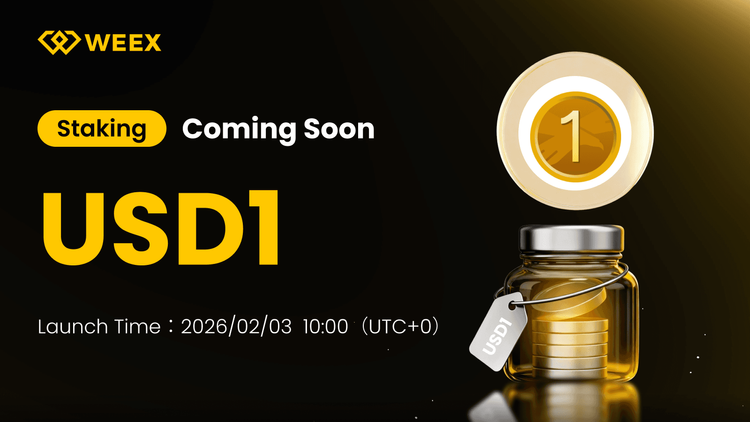
WEEX Staking USD1: Complete Guide
WEEX will officially launch USD1 Staking on 2026/02/03 10:00 UTC+0 .
Users can participate in staking directly on the WEEX platform and earn Staking rewards by holding tokens.

What is 4Ball (4BALL) Coin?
With digital currencies ever-evolving, it’s always exciting to hear about new listings in the crypto space. On February…

What is Echelon (ECHELON) Coin?
We are excited to announce that Echelon (ECHELON) is now available for trading on WEEX, with the ECHELON/USDT…

4BALL/USDT Launches on WEEX: 4Ball (4BALL) Listing
As a seasoned crypto trader with years of spotting blockchain gems on platforms like CoinMarketCap, I’m excited about…

ECHELON USDT Debuts on WEEX: Echelon (ECHELON) Spot Listing
WEEX Exchange has officially listed the ECHELON/USDT trading pair, opening up new opportunities for crypto traders to engage…

4BALL Coin Price Prediction & Forecasts for February 2026: New Listing Sparks Potential Rally After 15% Initial Surge
4BALL Coin, the innovative token behind the first Snowball mechanism on the Four.Meme platform, just went live on…

ECHELON Coin Price Prediction & Forecasts for February 2026: Could It Surge 50% Amid DeFi Lending Boom?
As a fresh entrant in the crypto space, ECHELON Coin has quickly drawn attention following its listing on…

WEEX WE-Launch: Get AXS Tokens Now – Exclusive Airdrop for First-Time Participants
WE-Launch is WEEX's innovative token launch and reward distribution platform designed to benefit the exchange's community. Unlike traditional airdrops that require complex participation, WE-Launch simplifies the process: users commit WXT tokens to share in project rewards without locking funds or navigating complicated procedures.

Introducing Zama: Complete Guide to $ZAMA and Airdrop Opportunities
Zama's fhevm is a cross-chain protocol that leverages fully homomorphic encryption (FHE) to enable confidential smart contracts on any L1/L2. Cross-chain FHE confidential smart contracts, end-to-end encryption, privacy-preserving composability on any blockchain. Learn its tokenomics, ecosystem impact, and how to claim free tokens in the WEEX $50,000 Zama airdrop before Feb.09, 2026!

Where to Buy Usor Crypto in 2026? Step-by-Step Guide for Beginners
USOR (United States Oil Reserve) is a Solana-based cryptocurrency that represents narrative-driven exposure to energy market themes. However, a crucial distinction must be understood: USOR is NOT a tokenized oil barrel and has NO official connection to U.S. government oil reserves. It's a speculative digital asset that leverages energy market narratives within the crypto space.

How to Quickly Start Futures Trading on WEEX: A Zero-Barrier Beginner's Guide
Futures trading on WEEX exchange has never been more accessible. With low minimums, intuitive design, and robust educational resources, beginners can start trading confidently in minutes—not months.

INX USDT Futures Listing: Trade Insight Protocol (INX) on WEEX
WEEX lists Insight Protocol (INX) Coin. Trade the INX USDT perpetual contract on WEEX Exchange with up to 20x leverage and deep liquidity.

WEEX Futures New Listing: XPD/USDT and XPT/USDT Perpetual Contracts
Trade Palladium (XPD) Coin and Platinum (XPT) Coin on WEEX. New XPD USDT and XPT USDT perpetual contracts now live on WEEX Exchange for professional trading.

WEEX to List ZAMA and Launch ZAMA USDT Perpetual Contract
Trade Zama (ZAMA) Coin on WEEX Exchange. ZAMA USDT Perpetual Contract is now live with up to 20x leverage. Experience secure FHE privacy trading on WEEX.

Is USOR Crypto Legit? Latest USOR News, USOR Airdrop Updates, and Scam Concerns Explained
Is USOR crypto legit or a scam? Get the latest USOR news, USOR airdrop updates, ownership insights, rug pull risks, and a realistic USOR crypto prediction—all explained clearly.

KELLYCLAUDE USDT Trading Launches on WEEX: KellyClaude (KELLYCLAUDE) Coin Listed
WEEX Exchange is excited to announce the listing of KellyClaude (KELLYCLAUDE) coin, opening up KELLYCLAUDE USDT spot trading…

What is Intel Tokenized Stock (INTCON) Coin
We are excited to announce the new listing of Intel Tokenized Stock (INTCON) on WEEX, effective February 2,…
INTCON USDT Trading Live on WEEX: Intel Tokenized Stock (Ondo) Listing
WEEX Exchange is thrilled to announce the listing of Intel Tokenized Stock (Ondo) (INTCON), bringing tokenized exposure to…
WEEX Staking USD1: Complete Guide
WEEX will officially launch USD1 Staking on 2026/02/03 10:00 UTC+0 .
Users can participate in staking directly on the WEEX platform and earn Staking rewards by holding tokens.
What is 4Ball (4BALL) Coin?
With digital currencies ever-evolving, it’s always exciting to hear about new listings in the crypto space. On February…
What is Echelon (ECHELON) Coin?
We are excited to announce that Echelon (ECHELON) is now available for trading on WEEX, with the ECHELON/USDT…
4BALL/USDT Launches on WEEX: 4Ball (4BALL) Listing
As a seasoned crypto trader with years of spotting blockchain gems on platforms like CoinMarketCap, I’m excited about…
ECHELON USDT Debuts on WEEX: Echelon (ECHELON) Spot Listing
WEEX Exchange has officially listed the ECHELON/USDT trading pair, opening up new opportunities for crypto traders to engage…
4BALL Coin Price Prediction & Forecasts for February 2026: New Listing Sparks Potential Rally After 15% Initial Surge
4BALL Coin, the innovative token behind the first Snowball mechanism on the Four.Meme platform, just went live on…


 App
App