
- Buy Crypto
- Markets
- Futures
- Spot
- Copy Trade
 WE-Launch
Short the Prediction Market

I am not a gambler, nor do I understand the thrill of staring at a candlestick chart with an accelerated heartbeat. But when CNN and CNBC each announced integrating the digital odds of prediction markets into their live newsrooms, I felt like we were being toyed with by a new kind of "truth."
The Crypto bro preaches: traditional polls will be replaced, experts are the high priests of the old age, and only odds backed by real money can reflect the wisdom of the crowd and the reality of truth. However, the trading logic nurtured by prediction markets is in line with Keynes' "beauty contest," where you no longer care about who is the most beautiful; you only care about "who others think is the most beautiful." The concept of beauty itself has been "erased," just like Duchamp's urinal in the art museum. The prediction market will continue to accelerate, derail until more and more awakened individuals start to "short" this frenzy, "short" the narrative of the prediction market itself.

Exchanges and casinos are two distinct worlds. Farmers worry about a drop in food prices, downstream food processing plants worry about price increases, so they come to the derivatives market to find those willing to take on risk. Due to different demands, trading flows.
However, in the context of the prediction market, this natural counterparty does not exist. This leads to a market where, apart from market makers, there are only smart money with insider information and destined-to-be-harvested gamblers: if a counterparty with an informational advantage is willing to trade with you at this price, then this trade is likely to be a loss for you. Once the "dumb money" is exhausted, liquidity will quickly dry up. As insider traders are allowed to exist in large numbers, a prediction market without a continuous blood supply from gamblers is an unsustainable new Ponzi scheme.
In a natural system, the value of a thermometer will not change the temperature; no matter how we bet, Halley's Comet will still return on time. But in a social system, probability itself has the power to "distort reality stance," and the observer's greed can change the observed reality.
Ethereum can ensure the "economic security" of a blockchain network through a slashing mechanism, but a prediction market cannot guarantee "social security." On the contrary, it even rewards disruption.
If a billionaire bets heavily on an extreme event, he is actually providing financial support for that outcome and using the market's probability signal to sow panic or consensus. Huge funds can form a massive potential energy, coercively entwine media coverage to affect public confidence, forcibly collapsing an uncertain outcome into what the bettors desire.
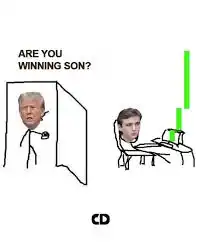
Kaito, who wanted to be a center for information distribution, eventually became a broadcasting station that only outputs noise. The prediction markets pride themselves on being a telescope to foresee the future but cannot prevent themselves from becoming billboards for creating the future.
Many people believe that with regulatory relaxation and an influx of capital, the prediction market is bound to be the next big thing. But things always tend to go too far.
People are gradually realizing that we are at the peak of a "gambling culture" cycle.
Absolute financialization will only bring emptiness. People will eventually tire of this high-frequency dopamine stimulation, returning to the experience of life. We start to turn off screens, go hiking, touch real soil, read paper books, and build deep relationships beyond the screen.

“Shorting” the prediction market is not only betting on “human subjectivity” but also on betting on “life”.
Since we can't go back to the past, perhaps the only way out is to stop wasting time on the virtual gambling table and turn around to walk into the sunlight.
You may also like

JPMorgan Explores Cryptocurrency Trading for Institutional Clients
Key Takeaways JPMorgan Chase is considering introducing cryptocurrency trading services to its institutional clientele, marking a notable shift…

Trend Research Quietly Becomes One of Ethereum’s Largest Whales with Major ETH Acquisition
Key Takeaways Trend Research has acquired 46,379 ETH, boosting their total holdings to about 580,000 ETH. The company,…

Palmer Luckey’s Erebor Reaches $4.3B Valuation as Bank Charter Progresses
Key Takeaways: Erebor, a digital bank co-founded by Palmer Luckey, has raised $350 million, bringing its valuation to…

Trump Family-Linked USD1 Stablecoin Gains $150M as Binance Unveils Yield Program
Key Takeaways The USD1 stablecoin, associated with the Trump family, increased its market capitalization by $150 million following…

Web3 and DApps in 2026: A Utility-Driven Year for Crypto
Key Takeaways The transition to utility in the crypto sector has set a new path for 2026, emphasizing…
Hong Kong Moves Forward with Licensing Regimes for Virtual Asset Dealers and Custodians
Key Takeaways Hong Kong’s FSTB and SFC are implementing new licensing requirements for virtual asset dealers and custodians…

Base's 2025 Report Card: Revenue Grows 30X, Solidifies L2 Leadership

Kalshi First Research Report: When Predicting CPI, Crowd Wisdom Beats Wall Street Analysts

Venture Capital Post-Mortem 2025: Hashrate is King, Narrative is Dead

Are Those High-Raised 2021 Projects Still Alive?

Aave Community Governance Drama Escalates, What's the Overseas Crypto Community Talking About Today?
High Fees, Can't Beat the Market Even After Paying 10x More, What Exactly Are Top Hedge Funds Selling?
Key Market Information Discrepancy on December 24th - A Must-See! | Alpha Morning Report
Polymarket Announces In-House L2, Is Polygon's Ace Up?
AI Trading Risks in Crypto Markets: Who Takes Responsibility When It Fails?
AI trading is already core market infrastructure, but regulators still treat it as a tool — responsibility always stays with the humans and platforms behind it. The biggest risk in 2025 is not rogue algorithms, but mass-adopted AI strategies that move markets in sync and blur the line between tools and unlicensed advice. The next phase of AI trading is defined by accountability and transparency, not performance — compliance is now a survival requirement, not a constraint.

Ether pumps to outsiders, dumps in-house. Can Tom Lee's team still be trusted?
The Secret Centralization Landscape of Stablecoin Payments: 85% of Transaction Volume Controlled by Top 1000 Wallets
Why Did Market Sentiment Completely Collapse in 2025? Decoding Messari's Ten-Thousand-Word Annual Report
JPMorgan Explores Cryptocurrency Trading for Institutional Clients
Key Takeaways JPMorgan Chase is considering introducing cryptocurrency trading services to its institutional clientele, marking a notable shift…
Trend Research Quietly Becomes One of Ethereum’s Largest Whales with Major ETH Acquisition
Key Takeaways Trend Research has acquired 46,379 ETH, boosting their total holdings to about 580,000 ETH. The company,…
Palmer Luckey’s Erebor Reaches $4.3B Valuation as Bank Charter Progresses
Key Takeaways: Erebor, a digital bank co-founded by Palmer Luckey, has raised $350 million, bringing its valuation to…
Trump Family-Linked USD1 Stablecoin Gains $150M as Binance Unveils Yield Program
Key Takeaways The USD1 stablecoin, associated with the Trump family, increased its market capitalization by $150 million following…
Web3 and DApps in 2026: A Utility-Driven Year for Crypto
Key Takeaways The transition to utility in the crypto sector has set a new path for 2026, emphasizing…
Hong Kong Moves Forward with Licensing Regimes for Virtual Asset Dealers and Custodians
Key Takeaways Hong Kong’s FSTB and SFC are implementing new licensing requirements for virtual asset dealers and custodians…
Popular coins
Latest Crypto News


Customer Support:@weikecs
Business Cooperation:@weikecs
Quant Trading & MM:bd@weex.com
VIP Services:support@weex.com
 App
App