
- Buy Crypto
- Markets
- Futures
- Spot
- Copy Trade
 Earn
Earn- More
How is a WeChat Account Stolen and How to Prevent It?

How Was WeChat Account Hacked? (This Article is Mainly AI-generated)
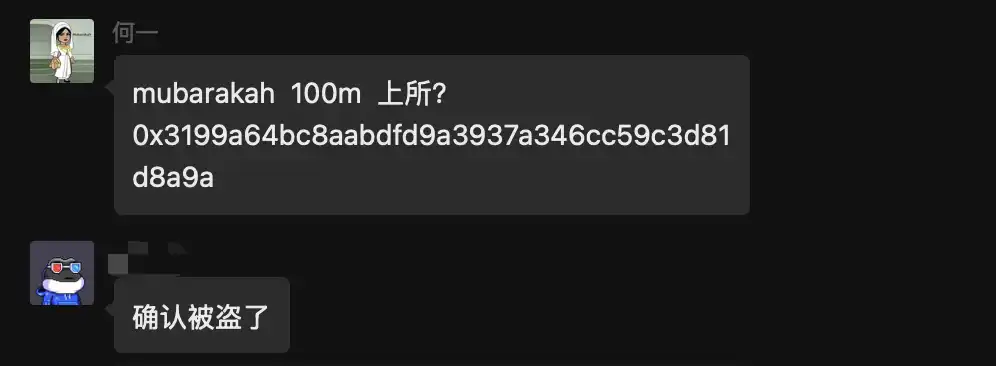
Today, Binance co-founder He Yi's WeChat account was hacked, and the hacker posted fake news in his Moments and various communities.
Many users, especially those in the cryptocurrency circle who frequently travel between China and abroad, often have the habit of changing their phone numbers. The culprit behind the recent series of hacked accounts is the overlooked practice by many users—the phone number reassignment by telecom operators.
What is "Phone Number Reassignment"?
When a user stops paying for a particular phone number or voluntarily cancels the number, the telecom operator, in order to utilize resources, will, after a "cooling-off period" (usually 3-6 months), reassign the number to the market and sell it to a new user.
How do hackers exploit this?
This creates a critical time gap and a logical loophole:
· Forgotten Bindings: Although the original owner has abandoned the phone number, they often forget to unbind the WeChat account associated with that number.
· New Owner's Privilege: After obtaining this "old number," the hacker (or the new user who unintentionally purchased the number) only needs to select "Log in via Mobile Number" or "Forgot Password" on the WeChat login page.
· SMS Verification Code Breakthrough: The WeChat system recognizes that the phone number is already registered and immediately sends a verification code. The hacker with the new SIM card enters the code and easily resets the password.
· Full Access: Once successfully logged in, the hacker gains full control of the account, including Moments, group chats, and contacts.
For cryptocurrency enthusiasts, this risk is significantly heightened due to their frequent use of backup phones, foreign SIM cards, or suspension of domestic numbers due to overseas travels.
In addition to phone number reassignment, the following two scenarios are also common causes of WeChat account hacks:
· Phishing Links and Trojans: Hackers disguise themselves as project teams or exchange customer service representatives, sending links or files (such as .exe disguised as .pdf) containing trojans. Once clicked on WeChat on a computer, the trojan immediately steals login credentials.
· Zombie Followers Cleanup Tools: Many people, in order to clean up their friends list, casually authorize insecure third-party "follower cleanup software" to scan the QR code, essentially handing over control of their account to strangers.
How to Prevent WeChat Account Hacking?
Now that you understand the principles, prevention is actually not difficult. Please immediately check your WeChat settings against the following checklist:
1. Core Rule: If you change your number, you must rebind
This is the most important point. If you no longer use your phone number (whether it is deactivated or not renewed), be sure to rebind your WeChat account before deactivating your number.
· Operation Path: WeChat > Me > Settings > Account Security > Phone Number > Change Phone Number.
· Note: It is not enough to just unbind within WeChat; you also need to check the binding status of key apps such as bank cards and trading platforms.
2. Enable "Account Protection" and "Voiceprint Lock"
Preventing login from unfamiliar devices is the second line of defense.
· Account Protection: After enabling this feature, when logging in to WeChat on an unfamiliar device, you will need to verify a verification code sent by a friend, greatly increasing the difficulty for hackers to infiltrate.
· Voiceprint Lock: Set up a Voiceprint Lock (WeChat Voiceprint), which requires you to read out a random number during login. Biometric features are difficult for hackers to replicate.
3. Set Up an "Emergency Contact"
In the extreme event of your account being compromised, an emergency contact can help you quickly appeal to recover your account, reducing the window of time for malicious activity by hackers.
· Operation Path: WeChat > Me > Settings > Account Security > Emergency Contact.
4. Isolate Sensitive Operations
· Do not directly transmit private keys or mnemonic phrases over WeChat.
· For messages such as "need help with a transfer," "lending money," or "sudden great news," even if they are from acquaintances, always perform a second confirmation via phone or video call.
You may also like

First Zero, First Revival: A Real Story from the WEEX Global AI Trading Hackathon Preliminary Round
WEEX Labs, the innovation arm of the global crypto exchange WEEX, launched the preliminary round of its flagship AI trading hackathon, AI Wars: WEEX Alpha Awakens, on January 12, 2026. Backed by world-class sponsors including AWS, the prize pool has reached $1.88 million, with a Bentley Bentayga S awaiting the champion in Dubai. Already, 788 elite teams worldwide are battling for a spot in the finals. This is more than a hackathon — it is a real-market stress test for AI trading. Registration remains open until January 18. If you want your AI to face real volatility, this is your moment.
AI Wars: WEEX Alpha Awakens – Insights, Top Strategies, and Real-Market Execution Takeaways
WEEX Labs has officially launched the preliminary round of its global AI trading hackathon, AI Wars: WEEX Alpha Awakens, bringing together hundreds of elite teams to compete in real-market conditions. With a record-breaking $1.88 million prize pool and backing from top-tier sponsors like AWS, the event has quickly become a global proving ground for AI-powered trading strategies. As competition intensifies and standout teams emerge on the leaderboard, the hackathon not only showcases cutting-edge AI execution and risk management, but also offers valuable insights and inspiration for traders looking to build or refine their own AI-driven systems.

Sentient Reveals Tokenomics, How Will the Market Price It?

AI in the Crypto Market: How Artificial Intelligence is Changing Trading Strategies
This article explores how AI contributes to these movements and share practical strategies to help you navigate an AI-powered crypto market.

Fact Check: How Much Money Did the University of Chicago Lose in its Crypto Investment?

Rumor has it that Coinbase is set to acquire Farcaster, still an Acquihire.

VanEck Q1 Market Outlook: Long-Term Bullish on Cryptocurrency, Strong Gold Demand

ThunderChain Resumes Legal Battle as Former CEO Chen Lei Accused of Embezzlement for Cryptocurrency Speculation - What Happened Back Then?

BNB Chain 2025 Year-End Review: Self-Traversal, Trade Everything

Eric Adams Denies “Rug Pull” Allegations Linked to NYC Token Despite Significant Losses
Key Takeaways: Eric Adams firmly denies allegations implying that money was moved out of the NYC Token. Market…

Animoca Brands Acquires Somo to Advance Web3 Collectibles Strategy
Key Takeaways: Animoca Brands has acquired Somo, a gaming and collectibles studio, to fortify its position in the…

Current Landscape of Cryptocurrency Exchanges in 2026
Key Takeaways The cryptocurrency exchange market is notably competitive, with each platform offering unique strengths to attract users.…

An Insight into the Dynamics of Crypto Market Trends
Key Takeaways The article provides a comprehensive look at the latest developments in the cryptocurrency market. Insight is…

Bitchat Downloads Surge in Uganda as Government Implements Internet Shutdown Before Elections
Key Takeaways: Uganda’s government enforced an internet blackout ahead of elections, pushing citizens to download Bitchat, a decentralized…
CLARITY Act Hearing Suddenly Postponed – Where Does the Disagreement Lie?

BSC’s USD1 Pool Meme Coin ‘An’ Sees Significant Surge
Key Takeaways The BSC chain’s USD1 pool meme coin ‘An’ experienced a notable market cap surge, exceeding $47.92…

Bondex (BDXN) Sees Remarkable Price Surge Amid Market Optimism
Key Takeaways Bondex (BDXN) experienced a notable price increase of 31.38% in the last 24 hours, with prices…

Is Leveraged Bitcoin DCA More Profitable than Spot?
First Zero, First Revival: A Real Story from the WEEX Global AI Trading Hackathon Preliminary Round
WEEX Labs, the innovation arm of the global crypto exchange WEEX, launched the preliminary round of its flagship AI trading hackathon, AI Wars: WEEX Alpha Awakens, on January 12, 2026. Backed by world-class sponsors including AWS, the prize pool has reached $1.88 million, with a Bentley Bentayga S awaiting the champion in Dubai. Already, 788 elite teams worldwide are battling for a spot in the finals. This is more than a hackathon — it is a real-market stress test for AI trading. Registration remains open until January 18. If you want your AI to face real volatility, this is your moment.
AI Wars: WEEX Alpha Awakens – Insights, Top Strategies, and Real-Market Execution Takeaways
WEEX Labs has officially launched the preliminary round of its global AI trading hackathon, AI Wars: WEEX Alpha Awakens, bringing together hundreds of elite teams to compete in real-market conditions. With a record-breaking $1.88 million prize pool and backing from top-tier sponsors like AWS, the event has quickly become a global proving ground for AI-powered trading strategies. As competition intensifies and standout teams emerge on the leaderboard, the hackathon not only showcases cutting-edge AI execution and risk management, but also offers valuable insights and inspiration for traders looking to build or refine their own AI-driven systems.
Sentient Reveals Tokenomics, How Will the Market Price It?
AI in the Crypto Market: How Artificial Intelligence is Changing Trading Strategies
This article explores how AI contributes to these movements and share practical strategies to help you navigate an AI-powered crypto market.


 App
App