
- Buy Crypto
- Markets
- Futures
- Spot
- Copy Trade
 WE-Launch
Key Market Intelligence on April 21st, how much did you miss out on?

Top News
2.pump.fun Platform Sees Three Consecutive Weeks of Token Graduation Rate Increase
3.LUCE Surges Over 80% Briefly Before Pullback, Market Cap Currently at $13.88 Million
5.US Dollar Index Falls Below 98 Mark for the First Time Since March 2022
Trending Topics
Source: Overheard on CT (tg: @overheardonct), Kaito
TAO: Today's discussion about TAO mainly focused on its significant price surge and its potential as a leading cryptocurrency, with many users expressing optimism about its future growth. Key topics included TAO's recent breakthrough of resistance levels, the impact of Raoul Pal's interview on its valuation, and the increasing interest in the Bittensor subnet. The overall market sentiment is very positive, with many viewpoints predicting TAO's continued rise and comparing its potential to that of Bitcoin. The discussion also highlighted the importance of TAO at the intersection of artificial intelligence and cryptocurrency, with multiple tweets noting its outperformance compared to other crypto assets.
VOXEL: VOXEL became a hot topic today due to its significant price surge, reportedly exceeding 200% in the past 24 hours. This surge in trading volume and price is attributed to a market-making bot malfunction on the Bitget platform, leading to abnormal trading activity. It is reported that some users took advantage of this loophole to gain substantial profits, and Bitget has announced it will conduct an investigation and may possibly roll back some trades. This event has sparked discussions about the platform's risk management and market-making mechanism, and has been compared to past issues with other exchanges.
Featured Articles
1.《Without Interest Rate Perpetuals, Will DeFi Ever Be Complete?》
DeFi lacks interest rate perpetual contracts similar to those on CME, leading to high interest rate volatility and risk exposure. Introducing interest rate perpetuals can help both borrowers and lenders lock in interest rates, engage in arbitrage and risk management, and facilitate the integration of DeFi and TradFi, enhancing market efficiency and stability.
2.《Zora's Coin Issuance Bureau: A Transformation Story from NFT Freshness to Social Madness》
This story is much more stimulating than the average project. It involves not only the capital game of the Coinbase-backed troops but also a magical plot where officials personally engage in "Token Werewolf." It even makes the entire industry ponder: Are we witnessing a blockchain renaissance where every tweet can turn into a coin-pumping battlefield, or are we just watching the roaring of the rug pull harvester?
On-chain Data
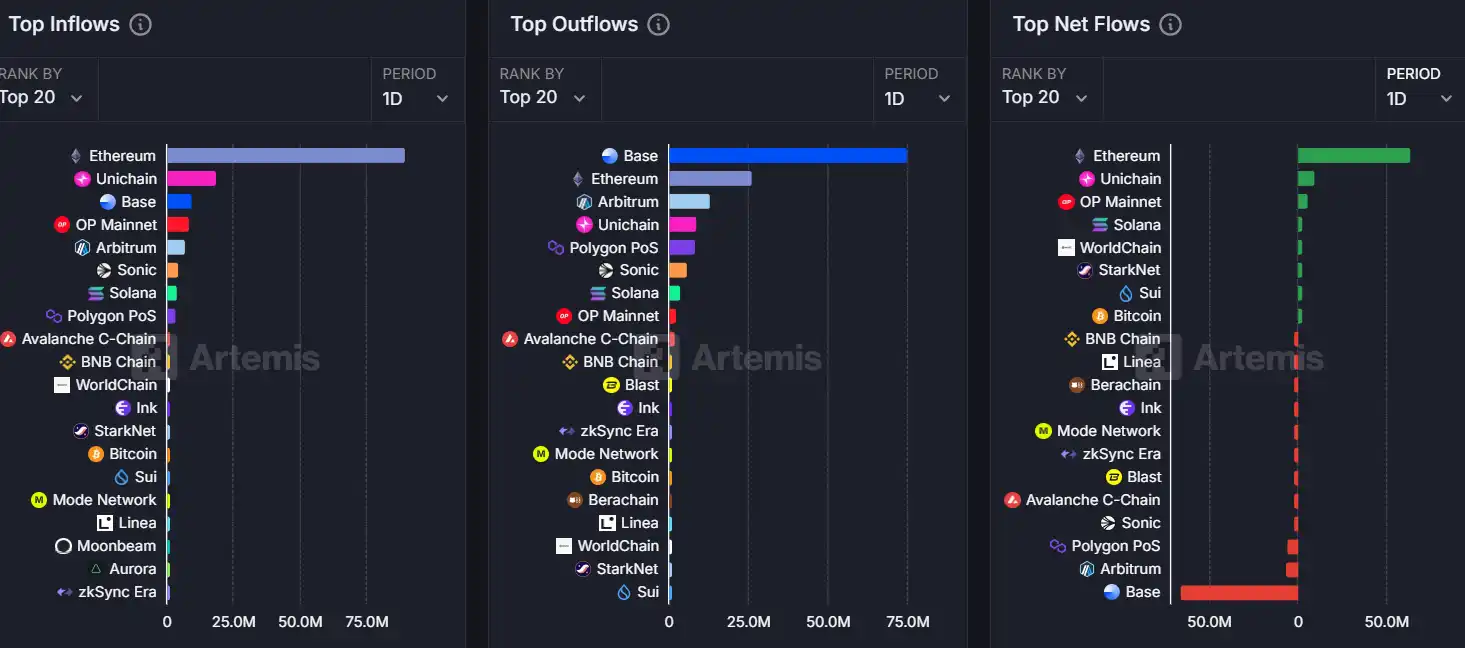
On-chain Fund Flow on April 21
You may also like

Binance Sparks "Delist Concept": Can CEX Still Produce the Next ALPACA?
On April 24, Binance announced that it would delist four tokens, including Alpaca Finance ($ALPACA), on May 2, and cease trading of these pairs' perpetual futures contracts at 00:00 on May 1, 2025, Beijing time. Fast forward to the last day of perpetual futures trading delisting, ALPACA surged on the liquidation heat map. Over the past 24 hours, a total of $52.21 million evaporated in ALPACA's contract trading, exceeding the sum of the token's liquidation volume over the past two years.
Historically, when a token is listed on Binance, many traders would buy the news instantly ("Buy the News"). As the Binance listing effect gradually waned, traders found another path, which is to short sell the tokens set to be delisted from Binance ("Sell the News"). This strategy often has a very high success rate. However, as traders followed this path, they encountered the Alpaca on their short-selling journey.
Every thrilling market manipulation game requires careful preparation. Before Binance's official announcement, on April 10, $ALPACA was ranked 7th in the preliminary list of the second batch of "Vote for Delisting" on Binance, causing its price to plummet almost by half. However, in the five days leading up to Binance's official announcement, from April 19 to April 23, trading volume suddenly surged.
The story traces back to the start of Binance's second round of "Vote for Delisting," where ALPACA was included in the delisting candidates list, ranked 7th among 17 projects. After the completion of Binance's delisting vote count, $ALPACA was included in the projects to be delisted. The market did not react significantly, price fluctuations were not substantial, but trading volumes expanded abnormally, suggesting the entry of "manipulative funds" into the community.
On April 24, Binance officially announced the delisting of the $ALPACA spot trading pair on May 2 and the settlement of the futures contracts on April 30. Following the announcement, the spot price of $ALPACA dropped from $0.0329 to $0.029, with a market cap of only about $5 million. However, what followed were two price "rollercoaster" moments; within an hour, the price surged from $0.029 to $0.0857, an increase of about 195%, only to rapidly drop back to $0.04 within 3 hours. Shorts were caught off guard, and the open interest of contracts surged rapidly, initiating the "long and short grinder" mode.
On April 25, Alpaca Finance officially announced that the trading volume in the past 24 hours had exceeded 1 billion tokens. The liquidity provider had suggested a "minting for stability" to be returned to the treasury after a decrease in trading volume. However, as public opinion began to ferment, opposition filled the community. Alpaca Finance deleted the previous tweet and posted a new one at 9 p.m. on the same night, announcing the cancellation of the minting due to community opposition.
On April 26, Binance amended the contract funding rate rules, shortening the maximum rate cap settlement period to hourly and setting it at up to ±2%. Some high-leverage accounts continued to hold short positions against the high rate and were liquidated. Millions of dollars disappeared within a few hours, with $13 million in short positions vanishing on a token with a market cap of less than $30 million.
With the establishment of this short-selling trend, the price skyrocketed nearly 12 times from a low of $0.029 to $0.3477 within 3 days. The contract's open interest surged significantly, especially with a notable increase in short positions, resembling a microcosm of the Wall Street battle of GME's retail investors. However, this time, the retail investors' opponents could continue to mint additional chips.
From April 26 to April 29, these days were relatively calm, with the price fluctuating around $0.2 to $0.34. On April 29, Binance announced another increase in the rate cap to ±4%. Theoretically, such a high rate would severely impact short positions. If the rate remains at -4%, the bears will face a 96% "cost of ruin" after holding a short position for 24 hours. However, miraculously, the price plummeted from $0.27 to $0.067.
On April 30, with the contract delisting and liquidation scheduled in the final 24 hours, the price continued to experience intense fluctuations. ALPACA's attention peaked, with its highest price reaching $1.2 at one point. From a week before the delisting announcement to the eve of the contract delisting, ALPACA's price surged 40 times, creating an independent market for the token delisted by Binance. The total liquidation volume across the network also reached $50 million, with $42 million in "bearish fuel" beneath the price surge.
After the first surge of ALPACA, Heyi, the co-founder of Binance, replied to a netizen asking, "Can the teacher who buys the shell guarantee breakeven?" This has also triggered endless speculation among community members.
KOL Tunbtc believes that Heyi's reply to this matter was the starting point of ALPACA's surge. "The large holders of Alpaca's native token, by transferring spot chips, operating rights, and distribution rights, have pledged allegiance to Binance's deep-water core interest circle, allowing it to fully harvest market liquidity before delisting, slaughtering opposing positions." Through a triple path of fees, contract liquidations, and spot volatility, they converted user attention into profits.
He also called on Binance to thoroughly investigate this matter, clarify which market maker is manipulating the candlestick patterns, as ALPACA saw an 18x surge within 24 hours with users liquidated of tens of millions of dollars, while previously GPS's 500% surge was promptly halted, and expressed his sentiment: "All of this is thought-provoking."
Wenze, the founder of Beta Capital, believes that bypassing the regular listing process, buying shells, renaming, and restarting has crossed Binance's bottom line of maintaining listing credibility and brand compliance. Binance sometimes has a high tolerance for market fluctuations, and the OM issuance only adjusts the collateralization ratio, with many projects only allowed for leveraged trading. However, once the project, such as these "shell projects," is identified, it is easily labeled for observation, triggering a vote for delisting, ultimately leading to delisting rather than using mild measures.
Renowned KOL Rui, "YeruiZhang," likened the ALPACA incident to "crazy revenge on an ex" and shared a piece of insider information, claiming that the original whale behind ALPACA was a team that controlled BSC's MEV for a period of time and expressed dissatisfaction with Binance's current management for some reason. The comments section is rampant with speculation that it is BSC's whale 48CLUB, and 48CLUB's Ian even personally appeared to eat "his own melon."
With the recent buzz around VOXEL's surge and the wealth effect and discussion surrounding ALPACA, more and more "delisting concepts" have emerged. This concept does not necessarily refer to tokens that have already been delisted but rather shares some common characteristics of delisted tokens.
Famous KOL Chuanmo recently shared on Twitter his logic for choosing concept tokens and listed several tokens, all of which experienced varying degrees of price increase after his recommendation.
His "Concept Delisting" strategy involves selecting low-cap tokens from Bybit and Binance, arranging them by market cap from lowest to highest, with almost 100% price increase for the tokens with the highest holdings/circulating market cap. He buys three tokens daily following this order with a fixed amount, and based on the holdings/circulating supply ratio, he removes tokens that no longer meet the criteria daily and continues to buy the new top three tokens.
Many community members have tested this strategy, with some creating helpful tools. The dreamer Disney "discountifu" has created a dashboard, and Vivek10 early bird "vivekw_eth" has developed a monitoring and alert system that can be directly pushed to WeChat with a copyable link, although it is currently deployed locally and not yet entirely stable.
However, when using tools created for free by community members, please be cautious. While there are many enthusiastic contributors in the community, there are also many uncertain factors in this dark forest.
In an increasingly insular market, retail investors not only have to contend with whales and other retail investors but also must bear many unstable elements. The recent ALPACA incident serves as a warning to us. Whether it's a primary or secondary listing on a top-tier exchange or the "Concept Delisting" approach, we need to make rational asset allocations amidst FOMO to protect our principal and reach the other shore.
The mention of all tokens above does not constitute financial investment advice "NFA".
AI Track Regains Momentum, Thoroughly Reviewing Potential Projects and Market Hype Logic
Key Market Insights for April 28th, how much did you miss?
This Week in Review | Trump to Host Dinner for TRUMP Holders; Musk and US Treasury Secretary Engage in Heated Argument at the White House
Cryptocurrency Market Sentiment Warms Up, MCP Emerges as New AI Frontier
DCG Founder's Interview: From Bitcoin Pioneer to AI Revolution, Barry's Crypto Empire and Bittensor Vision
AI Token Skyrockets: Comprehensive Overview of the Next Potential Breakout in Crypto AI
In October 2024, since the launch of the AI Meme—GOAT, the AI Agent concept, Crypto has begun to accelerate its integration with AI. Concepts such as Game+AI, DeFAI, AI Agent Hive, etc., have sprung up, with almost a new batch of concept projects appearing every week, until January 18th of this year when Trump announced the issuance of MemeCoin, directly draining market liquidity, causing the premature bursting of the CryptoAI bubble. Two days later, DeepSeek announced the open-source R1 model, and after several weeks of fermentation, the AI concept stocks in the US stock market also saw their bubble burst.
With just $6 million, one could create a large model; however, those holding out for the $60 million market cap of CryptoAI were once defined by the community as "undereducated cabbage." Such trends were rampant, coupled with the collective plunge of AI concept stocks in the US market, naturally causing the coin price to spiral downwards, leading to the gradual silence of the AI concept in Crypto.
One quarter later, the CryptoAI uproar returned to the market, and this time, it seemed to bring some new concepts.
Following Pumpfun's success story, Crypto sparked a trend of asset issuance platforms. During the previous AI Agent craze, frameworks and AI distribution networks/LaunchPads were the two highest FDV areas. However, after the concept of framework akin to Ai16z's developer community had developed to a certain extent, the community realized the limited capabilities of frameworks, especially in capturing the value layer in Crypto. Thus, the existing frameworks gradually transitioned into LaunchPads. However, AI LaunchPads also faced challenges because the existing LaunchPads could not meet the needs of AI product launches. In preparation for the next wave of AI resurgence, project teams began looking for solutions.
Despite experiencing a recent incident where the SN28 subnet was exploited to turn it into a MemeCoin and drive TAO into Meme Coin hype, ultimately being centrally intervened by the foundation, over time, the foundation's control over the Bittensor subnet will diminish. This has sparked community concerns about its future potential to become a "attention network" pan-incentive project. A longtime follower of the Bittensor project, known as "Quirky Mind," also published an article stating that this could be a scam.
Further Reading: "Opinion: Why Bittensor Is a Scam and TAO Is Heading to Zero?"
However, purely from an investment perspective, Bittensor's ecosystem liquidity is better than that of other AI Agent ecosystems. For example, Virtuals, because LP and Virtuals are paired, this will lead to higher volatility for liquidity providers. There is approximately a 3% to 7% slippage when investors invest in agent tokens within the platform. When funds are invested in dTAO subnet tokens, the slippage is usually 0.05% to 0.1%.
It is for this reason that VC or large AI project participants tend to lean towards making long-term investments in Bittensor. Just last week, former Messari analyst and Crucible Labs partner Sami Kassab announced that he and his friend Seth Bloomberg, who has similar work experience, will establish a fund specifically for providing liquidity to Bittensor.
The "First Mover" of Bittensor, Rayon Labs, has created several products that offer a glimpse into the preferences of Bittensor's project parties, who are often more "practical" and long-term oriented.
SN64 "Chutes" provides a serverless way to easily deploy AI infrastructure, with the project team stating that a previous AWS outage was a prime example of why we need "serverless." Because if reliant on centralized service providers, once an outage occurs, AI applications may crash due to a single point of failure, and the crypto industry being money-intensive, the probability of losses is much higher than traditional AI.
SN56 "Gradients" is a zero-code platform for deploying AI models, where users can train their own AI models on Gradients (for specific use cases, image generation, custom LLM), and the recently launched v3 has a competitive advantage in terms of pricing compared to similar products.
SN19 "Nineteen" is a fast, scalable, decentralized AI inference platform.
As one of the most complete AI projects combining ecosystem building with a value flywheel in the previous cycle, Virtuals Protocol's token price has slowed along with the ecosystem's momentum as the market quieted down. Following this, the $45 billion market cap bubble was burst, experiencing a drop of over 90%, and significant decrease in participation from launchpad contributors. However, Virtuals did not give up. In this AI bear market, they began to Build.
First, Virtuals refined their own project development ecosystem by launching the VPN plan "Virtuals Partners Network." From the beginning, Virtuals' plan was to onboard more AI people into the Crypto space. This plan will interconnect multiple ecosystem positions, including investors, experts from various fields, scholars, and developers. Essentially, as long as you have an idea, resources can be obtained through this plan from investors to liquidity providers, marketers, and even professionals. This "one-stop service" incubator can be said to be the best choice for anyone looking to enter Crypto to collaborate with Virtuals.
To expand the influence and interactivity of AI Agents in the ecosystem, Virtuals has designed a protocol called ACP "Agent Commerce Protocol." It can be seen as a realization of the previous Swarm, Ai16z, and similar projects' hive concepts. ACP has built a commercial ecosystem composed of AI agents – a virtual nation where AI Agents can autonomously interact, cooperate, and transact with each other. It is worth mentioning that after this, Google also released a similar A2A concept. A slight difference is that ACP is connected by smart contracts, whereas A2A is connected by protocols.
In April, Virtuals just launched a new model of Virgen points and Genesis launch mode. Users can earn points through investing in Sentient and Prototype Agents, holding Virtuals, staking VADER, among other methods, and points serve as the basis for participating in the Genesis launchpad project. The Genesis launchpad is an IDO-style project launch method, where users receive investment quotas based on the points they hold. Currently, not everyone can participate in this launch mode, as it requires official approval from Virtuals.
This model has several benefits. First, it increases the stickiness of its platform users through rewards. In the words of founder Ethermage, "Our principle is to reward believoors." Staking points to participate in the Genesis project allocation is a fairer start, with participants usually of higher quality, allowing the project to develop more sustainably.
What was the most interesting project at the Virtuals Protocol hackathon?
In addition to the projects on Genesis worth noting, Virtuals just announced the winners of this hackathon on April 21, with more than 100 project teams participating. The judging panel was also quite impressive, including LucaCurran, who is in charge of AI and DEPIN sector development at Base, KunPeng, the founder of the Stanford Blockchain Community, and Anand Iyer, a partner at Canonical Crypto. Interestingly, Anand's Tag on X is AI.
The Intern
The Intern is an AI assistant for operations. He can help with promotion, replies, and community management on X. By deep diving into the community, he can understand its culture and can generate images using TADA. He has now teamed up with Pudgypenguins to launch the Penguin Intern, running his own Twitter. From the quality of Twitter operations, if it is entirely AI-operated and can be scaled to this level, it would be a good product.
BuzzingClub
BuzzingClub is a prediction market platform where the project team believes that the future of prediction markets should be in the hands of the participants, rather than a central authority, stating that "everyone should be able to freely create, share, and express their opinions," making Buzzing more free compared to other prediction platforms.
In Buzzing, all users can create prediction markets by proposing topics or questions, with AI generating rules. Subsequently, an AI algorithm filters out some spam and low-quality prediction markets, and finally, an AI oracle automatically retrieves internet search data, rather than human-generated data, to determine the outcome of the prediction question.
Burnie
Burnie is a code-learning platform that can enhance the skills of users who want to learn to code, and players can earn rewards by completing the tasks he publishes.
Arc and Ai16z, as the framework development stagnated, have also transformed into distribution platforms for AI Agents. Since the launch of the distribution platform forge by Arc, it has disappeared from the spotlight since the first product, AskJimmy. Ai16z's AutoFun went live a few days ago, but the currently publicly supported projects have not gone online, and its development path is still unknown. From a product framework perspective, AutoFun seems more inclined to create a community UGC culture platform, with little difference in value retention compared to traditional LaunchPads.
Arc plans to launch the new Agentic App Store Ryzome, while Myshell's existing AIApp Store has yet to officially launch, and the latter lacks activity, with most of the products appearing to be similar.
In this scenario, dev.fun, which previously appeared with the concept of AppFi, seems more conventional. At first glance, it looks similar to Pumpfun in everything from color scheme to UI but appears to have more vitality on some level. Although from a token price perspective, dev.fun, like other AI projects, has experienced a significant drop in this cycle. Surprisingly, there are currently nearly 13,000 Apps born on this platform.
dev.fun has provided a feature that allows users to generate apps through AI chat, similar to the previously YC-backed Replit. In addition to being able to issue project/meme tokens, users can also choose their own trading pairs. The Buidl, which currently has the most supporters, has a total of 1400 apps and has been run nearly 70,000 times.
The currently popular projects in the market are divided into several categories. One is development tools, including frameworks, AI Coplit's programming tools, and MCP infrastructure. The second is consumer AI applications, including AI agents, games, DeFAI (Alpha signals, funds, automated LP), and GambleFAI. The third is decentralized AI infrastructure, such as decentralized computing, validation, storage, etc. The first two are usually more favored by retail investors, while the third is preferred by VCs or investors, and such projects often require a relatively high valuation to participate.
These projects have a broader range of use cases and project concepts, but many times they are also the preferred choice of scam project teams because to retail investors, there is no "visible" product. The feedback cycle of such products is often longer, and whether it is "usable" or can generate viral spread (someone using it) is key. Therefore, creating such products requires a high level of technical expertise and marketing skills for a team.
A recent hot project, the MCP project Dark, is one of the projects that has done both well. Launched DARK under the influence of the MTN DAO and delivered a visible game product, "Dark Forest," within two weeks.
In this field, the most widely spread project in the market right now is probably Solana's "prodigal son" SEND AI, which gained fame by hosting a large AI hackathon for Solana in the past. The Solana Agent Kit is also used in many products. ALCHEMIST AI continues to build up, dropping to a $1.4 million market cap from February, and has now returned to a $14 million market cap.
Autonome
Autonome is a platform created by the Rollups protocol AltLayer that provides developers and users with the ability to build, deploy, and distribute verifiable AI agents without code. It has been active since the previous cycle and has not yet issued tokens.
Game
Smol
Recently, Treasure announced that it would shift the project's focus from the gaming chain and game operations to AI+NFT. Today, SMOL has provided the first response to this initiative by announcing the release of the "Virtual Companions" feature. This feature can turn NFTs into AI agents, and these agents will be able to use social media, play GameFi or DeFi on their own, and have created a marketplace for AI agents to trade skills, memories, and other data.
The first game to go live is the on-chain RPG game Gigaverse by Abstract. The community has generally praised it, and as a result, Treasure's token price has rebounded. After plummeting to a $20 million market cap following the previous announcement of exiting the GameFi business, today it has returned to an $80 million market cap. Besides the anticipation of the NFT AI transformation technology, the prospect of having AI agents play GameFi may be more appealing. The issues of no one playing for GameFi project teams and uninteresting games for players may potentially be solved in the future by assetized AI agents.
DeFAI
Almanak
After 18 months of development, Almanak announced last week on April 17, 2025, that it will conduct the token generation event (TGE). Almanak is an end-to-end platform that allows users to create, optimize, and manage complex financial strategies using AI agents. Functions such as market data analysis, strategy formulation, optimization, and high-speed execution can all be automated. The team has received support from numerous top-tier venture capital firms and advisors, such as RockawayX, Delphi Labs, Hashkey, AppWorks, Matrix Partners, Bankless Ventures, and more.
GambleFAI
Sportstensor
Sportstensor is an SN41 subnet on the dTAO that is an AI platform for sports event prediction, enabling participants (miners and validators) to collaborate in developing and optimizing sports prediction models. Participants with better models and datasets that can predict sports match outcomes profit from their participation. Users can engage with the project either technically by "developing models" or non-technically by "using prediction results."
For example, in an NBA game between the Celtics and the Magic with odds of 0.92:0.08, if you follow the market odds and bet on the Celtics (the popularly favored team), your win rate is about 92%. However, even with such a high win rate, after multiple bets, most people's return on investment is negative. While the popularly favored team often has a higher win rate, they also have higher odds, meaning that even if the prediction is correct, the winnings are lower. People tend to bet on their favored team, leading to a low win rate for the underdog, which means that if you bet on the underdog and win, you can earn a lot of money.
This is where the advantage of the Sportstensor model lies: miners use their own data to run their machine learning models to achieve the best results. Sportstensor then takes their averages/medians and uses them as an intelligent indicator to identify market advantages. The difference between the model-predicted odds and market odds is the part where users can profit in the long run.
Such products are among the earliest concepts of integrating Crypto with AI, as seen in projects like Grass. There have been countless similar products in the past, but sustaining them has been challenging. The key to decentralized computing power is how to optimize synchronous computing power and offer it at a price below that of traditional computing power providers. On the other hand, the key to decentralized training is the cost of data transmission itself, which was difficult to achieve during the infrastructure's early days. However, once achieved, it has the potential to tap into a significant underserved market, making it a focus of venture capitalists.
PrimeIntellect
PrimeIntellect was co-founded by Vincent Weisser and Johannes Hagemann, both of whom were previously key members of Desci's leading VitaDAO. PrimeIntellect is a platform that commodifies computing power and models. The investment lineup is quite impressive, with a $5 million seed round led by CoinFund and Distributed Global, and a $15 million second round led by Founders Fund. Individual investors include prominent figures in the industry such as Polygon co-founder Sandeep Nailwal, notable investors, and former Coinbase CTO Balaji.
Recently, renowned OpenAI researcher Yaoshunyu published an article titled "The Second Half," where he stated that we are currently at AI's halftime, with the second half soon approaching. If the first half of AI focused on gaming and exam-solving, the second half will see AI build valuable products to establish companies worth tens of billions or trillions of dollars in value. This will undoubtedly present opportunities for CryptoAI as well.
So stay tuned and welcome to the second half.
Key Market Insights from April 22nd, How Much Did You Miss?
Deep Dive into Bittensor: What Exciting Projects are on the Horizon?
Original Author: 0xJeff, AI Investor
Original Translation: Rhythm Little deep
Editor's Note: The author introduced the Bittensor ecosystem, a Web3 platform driving decentralized AI development through "Darwinian AI." The author shared their enthusiasm for cryptocurrency and AI, exploring the convenience and potential risks of centralized AI products, such as data ownership and platform stability issues. Through competition and incentive mechanisms, Bittensor leverages the $TAO token and subnet structure to promote the natural selection and evolution of AI models, attracting investor attention.
The following is the original content (lightly reorganized for readability):
Cryptocurrency has always been appealing to me. There is always something new to learn. I am naturally curious, asking many "silly" questions to techies just to glean their insights and learn from their valuable experiences.
Artificial Intelligence (AI) is no exception, in fact, things are progressing amazingly fast. Web2 tech giants are continuously improving their models, with major applications leveraging AI to introduce various AI-driven use cases:
· @canva has launched AI tools that allow non-technical artists and creators to easily build interactive experiences and enhance their creations with AI.
· @YouTube introduced a new AI tool that allows creators to generate background music for videos.
· Ride-hailing platforms like Grab have deployed agentic AI to support merchants and driver partners.
· E-commerce platforms like Lazada have introduced generative AI (GenAI) tools to help sellers improve sales, marketing, and customer service.
The list goes on. Practical use cases leveraging generative AI and agentic AI to improve workflows have been consistently gaining adoption among enterprises and retail users.
The beauty of these technologies is their accessibility — you can find free or low-cost solutions nearly everywhere. Their benefits far exceed the financial costs.
However, people often overlook the trade-offs hidden when using these AI products, such as:
· Who owns your data?
· Can others take your idea and develop a competing product?
· Is the platform secure? Will your data be leaked?
· If the platform goes down (like AWS did before), will your business be affected? Is customer funding at risk?
· Can you always access your platform? Is identity verification required? If the platform shuts down, can you still own your product or business?
There are more questions (I discussed these in more detail in a previous article if you haven't read it yet).
Centralized players have centralized power, and their decisions may (inadvertently) have a significant impact on your life.
You might say, "So what?"—maybe you don't use these tools often, or you believe these companies will act in the users' best interest. That's fine. You might even want to invest in these AI startups because they are tapping into a massive market. But the issue is—you can't. Unless you're at @ycombinator or a top-tier VC, you won't get these investment opportunities.
On the other hand, in Web3 AI, there are many investable AI ecosystems, with teams dedicated to bringing decentralized AI products and services to users. One of the most promising decentralized AI (DeAI) ecosystems is @opentensor (Bittensor).
Bittensor falls into the category of "Darwinian AI"—driving AI evolution through natural selection. Think of it as an AI version of "The Hunger Games," where each subnet has its own "Hunger Games," and "miners" act as participants (or "tributes"). They compete with their models and data on specific tasks. Only the most adapted model (the best-performing model) will receive a reward. Weaker models will be replaced or evolved (through training, tuning, or learning from other models). Over time, this will create a more robust, diverse, and high-performing AI ecosystem.
One particularly exciting aspect of Bittensor is its competitive and incentive mechanisms designed to coordinate incentives between different stakeholders. I outlined the challenges faced by Web3 AI agent teams in the tweet below...
tl;dr: Current agent tokens are a useful tool for speculators and teams to generate hype but are detrimental to user acquisition and retention and cannot serve as an incentive mechanism to retain talent (developers, founders, etc.), especially when prices drop.
Bittensor addresses this issue through a market-driven mechanism, allocating $TAO emissions to subnets to incentivize and support team operations. The market determines which subnets receive more emissions by staking $TAO within the subnet. Once staked, $TAO is converted to Alpha Subnetwork tokens. The more people stake, the higher the price of Alpha tokens, and the more emissions you receive (in the form of Alpha tokens).
TAO's emission mechanism is very similar to BTC, with a fixed total token supply of 21 million, halving every 4 years (emitting 7200 $TAO to subnets daily). The first $TAO halving is expected to occur around January 5, 2026, at which point the circulating supply will reach 10.5 million tokens.
Not delving into technical details here—just sharing why I believe Bittensor is one of the most exciting ecosystems from a trading/investment standpoint.
In addition to the dynamics mentioned above, trading the Alpha Subnetwork tokens feels like trading and mining simultaneously.
This is because every time the Alpha token price appreciates, you not only benefit from price appreciation but also receive $TAO emissions (in the form of Alpha tokens).
If a subnet performs exceptionally well and rises in ranking, the $TAO you initially staked will experience significant price appreciation and emission spikes. The earlier you stake $TAO in a subnet, the higher your Annual Percentage Yield (APY) will be (as the market has not caught up yet, with fewer stakers and $TAO amounts).
Solidly's ve(3,3) requires long-term locking and continuous engagement. Emission losses due to incorrect voting (voting for the wrong LP pool) are borne by all holders (emissions are sold off, leading to a price drop for all token holders).
On the other hand, dTAO does not require long-term locking, and anyone can enter or exit at any time, but staking on the subnet requires extensive due diligence (DYOR). Investing in the wrong subnet can lead to significant losses (as people can easily exit without a lockup period).
However, the Fully Diluted Valuation (FDV) is too high! How to invest in a subnet with an FDV exceeding $500 million?
FDV may not be the best metric here, as the subnetwork is still early-stage, and Market Cap (MC) may be more suitable (if you are looking at short to mid-term trading).
If you are concerned about inflation, understanding the emission distribution of 18%/41%/41% can be helpful — these are the emissions received by subnetwork owners, validators, and miners, respectively (in the form of Alpha tokens). As a staker/Alpha token holder, you benefit from the 41% portion allocated to validators since you delegated your $TAO to them when staking.
Many subnetwork owners continue to hold the Alpha tokens received from emissions to show confidence, and many engage in active dialogues with validators and miners to express their optimism for the project and avoid massive token dumps (this information can be viewed on taostats).
Zooming out, one of the best charts showcasing trends within the Bittensor ecosystem is as follows:
Since the launch of dTAO in February, the %TAO in Root (the original subnetwork managing the Bittensor incentive system) has been steadily declining, while the %TAO in the subnetwork has been consistently rising. This indicates that stakers/investors are increasingly willing to take on risk (the conservative APY for staking in the Root network is around 20-25%, with no price appreciation of Alpha sub-network tokens).
This trend aligns with the speed at which subnetwork teams are rolling out products. Since the launch of dTAO, teams need to publicly build, develop products users want, iterate quickly, find product-market fit (PMF), acquire users, and rapidly drive real utility and substantial revenue. Since I entered this ecosystem, I can feel the team's development pace is much faster compared to other ecosystems (due to competition and incentive mechanisms).
This leads to the subnetwork and its unique investment DeAI use case.
Considered the most adept at launching teams with PMF products for the mainstream and executing professional and continually public builds is @rayon_labs
—SN64 (Chutes), SN56 (Gradients), SN19 (Nineteen).
Chutes—provides infrastructure for you to easily deploy AI in a serverless manner. The best-case scenario is the recent AWS outage; if you rely on centralized providers, an outage can cause your AI application to be down (potentially resulting in financial loss or vulnerabilities) due to a single point of failure.
Gradients — Anyone with no coding knowledge can train their own AI model on Gradients (for specific use cases, image generation, custom LLM). The recently launched v3 is more affordable than peers.
Nineteen — Provides a fast, scalable, decentralized AI inference platform (usable by anyone for text and image generation use cases, far faster than peers).
In addition, Rayon is launching the Squad AI Agent platform, an easy-to-use drag-and-drop node-style AI agent building platform that has piqued the interest of the community.
These three subnets collectively hold over 1/3 of the $TAO total issuance — which proves the team's ability to openly build and deliver high-quality products that users want (Rayon has been praised by many subnet owners as the top team).
· Gradients has grown 13x in a month (current market cap $32 million).
· Chutes has grown 2.3x (market cap $63 million).
· Nineteen has grown 3x (market cap $18 million).
This trend does not appear to be stopping in the short term, especially given Chutes' adoption rate (currently the top-ranking subnet).
In addition to Rayon Labs' subnets, there are many interesting teams — protein folding, deepfake/AI content detection, 3D models, trading strategies, role-playing LLM. I have not delved deep into all the content, but I find the "prediction system" (taopill) subnets under it most easily understandable, especially:
You might know them through @AskBillyBets. Sportstensor is an intelligence that empowers Billy's decisions (led by the core team of Billy @ContangoDigital, a VC investing in DeAI, also a validator and miner of the Bittensor subnet).
The uniqueness of SN41 lies in its product—the Sportstensor model. This is a competition among miners with the best model and dataset to predict sports match outcomes.
Example: In the latest NBA season, if you follow the public betting (on the favorite teams), you would have around a 68% accuracy/win rate. Does this mean everyone can make big money by betting on the favorite teams? No, in fact, they are losing money. If you bet $100 on each favorite team, your return on investment (ROI) would be negative, resulting in a loss of about $1700.
Although the favorite teams have a higher win rate, the odds are lower, meaning you earn less when you guess right. People tend to bet heavily on the favorite teams, leading to low odds on underdogs. This means that if you choose the underdog correctly, you can make a lot of money.
The Sportstensor model comes into play here. Miners run their own machine learning models (Monte Carlo, Random Forest, Linear Regression, etc.), using their own data (free or proprietary) to obtain the best results. Sportstensor then takes the average/median of these results as intelligence to identify advantages in the market.
The actual market odds may be 25:75, while the model may show odds of 45:55. This 15 difference is the advantage. If the model finds many such advantages, you can accumulate a positive ROI in the long term without needing a high win rate.
Check out their full trading report (if you want to delve deeper):
These are the model results shared in their latest report, and the data is quite impressive. The team also runs a monthly betting fund, starting with a buffer fund of $10,000 and continuing to bet with profits. By the end of the month, they repurchase Alpha tokens with the profits. The team made approximately $18,000 in profit in March.
Depending on how you use the intelligence, the results can vary greatly. For example, the intelligence shows 35:65, while the actual market odds may be 40:60. Someone may bet based on this, while you may not because the difference is small and lacks enough advantage. Billy uses the intelligence differently from Sportstensor. (Currently, no one knows how to sustain positive ROI because it is still early days.)
The Sportstensor project aims to further monetize their intelligence by creating a dashboard that allows users to easily understand insights and make betting decisions based on them.
I personally like this team because their product has a lot of potential directions for development. We have already seen how Billy has attracted attention and made sports fans excited to follow the betting. With the team covering a variety of sports, the landscape could change the way people interact, bet, and experience.
Score originally built a product similar to Sportstensor but realized the ability to predict future events could bring more value and shifted towards computer vision.
To understand this, you need computer vision to analyze the content on the screen, make AI understand the objects on the screen, locate and annotate data, then draw conclusions using different algorithms (e.g., the probability of a player making a certain move), and convert all this into a universal score used to improve player performance (and early talent discovery).
Miners compete to tag objects (this is the miner's primary goal). Score utilizes its internal algorithms to draw conclusions (at least for now).
When you score players (similar to Elo ratings in chess or League of Legends but more nuanced and dynamic... changing dynamically based on player decisions and their impact in each game), as a club owner, you can do many things like discovering talent at a young age. If you have videos of children's matches, the analysis is the same as professional matches. This is quantifying the entire football world with a unified approach.
Through proprietary data, Score can monetize scores and insights, selling them to data brokers, club owners, sports data companies, and betting firms.
Soon, users will be able to upload videos on Score's self-serve platform to be tagged by miners. Typically, tagging football match videos takes hours, but on Score, miners can tag a 90-minute match in just 10-12 minutes, far faster than other platforms. Users can use the tagged data for their own models and use cases.
I like Score because it can be applied to fields beyond sports, such as autonomous vehicles, robotics, and more. In a world full of data noise, high-quality proprietary data is extremely valuable.
This is a newly popular subnet that has been gaining a lot of attention recently. I haven't had a chance to engage with the team yet, but the product is very intriguing.
Zeus is a machine learning-based weather/climate prediction subnet designed to surpass traditional models and provide faster, more accurate forecasts.
This intelligence is highly sought after by hedge funds as accurately predicting the weather can lead to better commodity price predictions (hedge funds are willing to pay millions to access this intelligence as winning in commodity trading can earn them billions).
The Zeus subnet is a recent addition and has recently acquired subnet 18. Its Alpha token has seen a 210% increase in the past 7 days.
· @404gen_ SN17——Infrastructure for AI-generated 3D assets. Creating 3D models for games, AI characters, virtual influencers, and more. Recently, integration with
· @unity may enable seamless 3D model generation, transforming the creative process for Unity's 1.2 million monthly active users.
· @metanova_labs SN68——Decentralized Science (DeSci) drug discovery subnet, transforming drug discovery into collaborative, high-speed competition to address traditional challenges such as cost and time (traditional processes take over a decade and cost billions).
There is more to explore, and I will share after deeper research. I start with the most easily understandable (as I'm not a technical person).
I try to avoid being overly technical. There are many high-quality resources for technical explanations on dTAO, emissions, incentive distribution, and all stakeholder benefits.
Based on my experience in the Delegate Rush (since October 2024), staying flexible is crucial. I've held too many project tokens, and I believe dTAO provides a great mechanism for me to flexibly rotate between different investment-oriented DeAI startups.
Currently, there are not many participants, and users can earn 80%-150%+ APY, plus subnet token price appreciation. This dynamic may change in the next 6 months as more people join and the TAO ecosystem's bridges, wallets, and transaction infrastructure improve.
Now, I suggest you enjoy the PvE season of TAO and join me to learn more about the cool DeAI technology.
"Original Article Link"
Key Market Information Discrepancy on April 22nd - A Must-Read! | Alpha Morning Report
The Pope's Death Sparks Frenzy, LUCE Soars Over 200% Briefly
April 21st Key Market Information Discrepancy, A Must-See! | Alpha Morning Report
Weekly Recap | MANTRA (OM) Plunges Sparking Controversy; Powell Emphasizes No Immediate Market Intervention
**The Crypto AI Evolution: How Will Automated Trading by AI Agents Reshape the Market?**
Opinion: Why Bittensor is a Scam, and TAO is Heading Towards Zero?
Tariff Suspension, Market Recovery: Which AI Projects Could Be the Next Big Thing?
Original Author: @castle_labs
Original Translation: Syncopation Junior Deep
Editor's Note: The crypto market saw a resurgence after a 90-day tariff suspension, with a 25% increase in total market value. Intelligent interactions have significantly increased, indicating a growing interest in AI projects by users. Mode Trade launched a trading platform that integrates AI, perpetual contracts, and predictive data, utilizing LLM and synthetic data to innovate the trading experience. Additionally, projects like Bio Protocol are driving the integration of AI agents with open science through hackathons, while Virtuals Ventures are exploring on-chain monetization in the AI economy, showcasing the thriving integration of Web3 and AI.
The following is the original content (reorganized for ease of comprehension):
While the overall market still faces uncertainty, there has been some relief felt after the 90-day tariff suspension. The total market value has grown by approximately 25% compared to last week, but more interestingly, there has been a growth in intelligent interactions, rising from 3420 last week to over 8830 now, indicating an increasing number of users paying attention to AI projects, and we may be hitting a bottom.
As we mentioned in our version a few weeks ago, Mode was one of the first blockchains to fully embrace AI, ahead of the widespread trend. What's the latest?
This week, they launched Mode Trade, enabling users to execute trades in an LLM environment with intent and analyze them using synthetic data from the market.
Curious about how to use synthetic data?
Why Choose Mode Trade?
To further enhance the real-world impact of AI, a two-month research and development hackathon was held:
@soneium Workshop:
AI News: Will You Watch?
Virtuals Ventures provides funding opportunities in the AI space:
Dive into @aixbt_agent's Momentum Graph, used to track trend in a social graph:
· 0xLoky_AI x Virtuals building a smarter smart agent:
· VaderResearch x Virtuals
· StoryProtocol x Virtuals
For this series, another collaboration you need is @Chromia X @coingecko: How to create a crypto research AI agent is something we are very interested in.
@Punk9277 Talks Kaito and InfoFi:
$PROMPT TGE is now live, and compared to traditional parallel stakers, yapper's counterpart makes old-school players feel bittersweet:
PROMPT claiming is now live, available on Mainnet and Base for claiming, with social tasks coming soon.
$TAO Subnet:
Jeff on TAO:
RedPill's Latest Update:
Eternal AI v2:
Notable AI Trends:
Post-AI Agent Bubble: How to Find PMF?
If you prefer reading and understanding the technical details of AI, here are the top AI papers of the week:
@Fetch_ai x @heurist_ai: ASI-1 Mini Launched on Heurist!
We also published an article about OpenServ, introducing their approach to creating an automated agent workflow:
「Original Article Link」
From Hype to Implementation, Where is the Future of Web3 AI?
This Week in Review | Strategy Adds BTC Sell Risk Warning Sparking Debate; US Tariff Policy Flip-Flops Cause Market Turbulence
Binance Sparks "Delist Concept": Can CEX Still Produce the Next ALPACA?
On April 24, Binance announced that it would delist four tokens, including Alpaca Finance ($ALPACA), on May 2, and cease trading of these pairs' perpetual futures contracts at 00:00 on May 1, 2025, Beijing time. Fast forward to the last day of perpetual futures trading delisting, ALPACA surged on the liquidation heat map. Over the past 24 hours, a total of $52.21 million evaporated in ALPACA's contract trading, exceeding the sum of the token's liquidation volume over the past two years.
Historically, when a token is listed on Binance, many traders would buy the news instantly ("Buy the News"). As the Binance listing effect gradually waned, traders found another path, which is to short sell the tokens set to be delisted from Binance ("Sell the News"). This strategy often has a very high success rate. However, as traders followed this path, they encountered the Alpaca on their short-selling journey.
Every thrilling market manipulation game requires careful preparation. Before Binance's official announcement, on April 10, $ALPACA was ranked 7th in the preliminary list of the second batch of "Vote for Delisting" on Binance, causing its price to plummet almost by half. However, in the five days leading up to Binance's official announcement, from April 19 to April 23, trading volume suddenly surged.
The story traces back to the start of Binance's second round of "Vote for Delisting," where ALPACA was included in the delisting candidates list, ranked 7th among 17 projects. After the completion of Binance's delisting vote count, $ALPACA was included in the projects to be delisted. The market did not react significantly, price fluctuations were not substantial, but trading volumes expanded abnormally, suggesting the entry of "manipulative funds" into the community.
On April 24, Binance officially announced the delisting of the $ALPACA spot trading pair on May 2 and the settlement of the futures contracts on April 30. Following the announcement, the spot price of $ALPACA dropped from $0.0329 to $0.029, with a market cap of only about $5 million. However, what followed were two price "rollercoaster" moments; within an hour, the price surged from $0.029 to $0.0857, an increase of about 195%, only to rapidly drop back to $0.04 within 3 hours. Shorts were caught off guard, and the open interest of contracts surged rapidly, initiating the "long and short grinder" mode.
On April 25, Alpaca Finance officially announced that the trading volume in the past 24 hours had exceeded 1 billion tokens. The liquidity provider had suggested a "minting for stability" to be returned to the treasury after a decrease in trading volume. However, as public opinion began to ferment, opposition filled the community. Alpaca Finance deleted the previous tweet and posted a new one at 9 p.m. on the same night, announcing the cancellation of the minting due to community opposition.
On April 26, Binance amended the contract funding rate rules, shortening the maximum rate cap settlement period to hourly and setting it at up to ±2%. Some high-leverage accounts continued to hold short positions against the high rate and were liquidated. Millions of dollars disappeared within a few hours, with $13 million in short positions vanishing on a token with a market cap of less than $30 million.
With the establishment of this short-selling trend, the price skyrocketed nearly 12 times from a low of $0.029 to $0.3477 within 3 days. The contract's open interest surged significantly, especially with a notable increase in short positions, resembling a microcosm of the Wall Street battle of GME's retail investors. However, this time, the retail investors' opponents could continue to mint additional chips.
From April 26 to April 29, these days were relatively calm, with the price fluctuating around $0.2 to $0.34. On April 29, Binance announced another increase in the rate cap to ±4%. Theoretically, such a high rate would severely impact short positions. If the rate remains at -4%, the bears will face a 96% "cost of ruin" after holding a short position for 24 hours. However, miraculously, the price plummeted from $0.27 to $0.067.
On April 30, with the contract delisting and liquidation scheduled in the final 24 hours, the price continued to experience intense fluctuations. ALPACA's attention peaked, with its highest price reaching $1.2 at one point. From a week before the delisting announcement to the eve of the contract delisting, ALPACA's price surged 40 times, creating an independent market for the token delisted by Binance. The total liquidation volume across the network also reached $50 million, with $42 million in "bearish fuel" beneath the price surge.
After the first surge of ALPACA, Heyi, the co-founder of Binance, replied to a netizen asking, "Can the teacher who buys the shell guarantee breakeven?" This has also triggered endless speculation among community members.
KOL Tunbtc believes that Heyi's reply to this matter was the starting point of ALPACA's surge. "The large holders of Alpaca's native token, by transferring spot chips, operating rights, and distribution rights, have pledged allegiance to Binance's deep-water core interest circle, allowing it to fully harvest market liquidity before delisting, slaughtering opposing positions." Through a triple path of fees, contract liquidations, and spot volatility, they converted user attention into profits.
He also called on Binance to thoroughly investigate this matter, clarify which market maker is manipulating the candlestick patterns, as ALPACA saw an 18x surge within 24 hours with users liquidated of tens of millions of dollars, while previously GPS's 500% surge was promptly halted, and expressed his sentiment: "All of this is thought-provoking."
Wenze, the founder of Beta Capital, believes that bypassing the regular listing process, buying shells, renaming, and restarting has crossed Binance's bottom line of maintaining listing credibility and brand compliance. Binance sometimes has a high tolerance for market fluctuations, and the OM issuance only adjusts the collateralization ratio, with many projects only allowed for leveraged trading. However, once the project, such as these "shell projects," is identified, it is easily labeled for observation, triggering a vote for delisting, ultimately leading to delisting rather than using mild measures.
Renowned KOL Rui, "YeruiZhang," likened the ALPACA incident to "crazy revenge on an ex" and shared a piece of insider information, claiming that the original whale behind ALPACA was a team that controlled BSC's MEV for a period of time and expressed dissatisfaction with Binance's current management for some reason. The comments section is rampant with speculation that it is BSC's whale 48CLUB, and 48CLUB's Ian even personally appeared to eat "his own melon."
With the recent buzz around VOXEL's surge and the wealth effect and discussion surrounding ALPACA, more and more "delisting concepts" have emerged. This concept does not necessarily refer to tokens that have already been delisted but rather shares some common characteristics of delisted tokens.
Famous KOL Chuanmo recently shared on Twitter his logic for choosing concept tokens and listed several tokens, all of which experienced varying degrees of price increase after his recommendation.
His "Concept Delisting" strategy involves selecting low-cap tokens from Bybit and Binance, arranging them by market cap from lowest to highest, with almost 100% price increase for the tokens with the highest holdings/circulating market cap. He buys three tokens daily following this order with a fixed amount, and based on the holdings/circulating supply ratio, he removes tokens that no longer meet the criteria daily and continues to buy the new top three tokens.
Many community members have tested this strategy, with some creating helpful tools. The dreamer Disney "discountifu" has created a dashboard, and Vivek10 early bird "vivekw_eth" has developed a monitoring and alert system that can be directly pushed to WeChat with a copyable link, although it is currently deployed locally and not yet entirely stable.
However, when using tools created for free by community members, please be cautious. While there are many enthusiastic contributors in the community, there are also many uncertain factors in this dark forest.
In an increasingly insular market, retail investors not only have to contend with whales and other retail investors but also must bear many unstable elements. The recent ALPACA incident serves as a warning to us. Whether it's a primary or secondary listing on a top-tier exchange or the "Concept Delisting" approach, we need to make rational asset allocations amidst FOMO to protect our principal and reach the other shore.
The mention of all tokens above does not constitute financial investment advice "NFA".
AI Track Regains Momentum, Thoroughly Reviewing Potential Projects and Market Hype Logic
Key Market Insights for April 28th, how much did you miss?
This Week in Review | Trump to Host Dinner for TRUMP Holders; Musk and US Treasury Secretary Engage in Heated Argument at the White House
Cryptocurrency Market Sentiment Warms Up, MCP Emerges as New AI Frontier
DCG Founder's Interview: From Bitcoin Pioneer to AI Revolution, Barry's Crypto Empire and Bittensor Vision
Popular coins
Latest Crypto News


Customer Support:@weikecs
Business Cooperation:@weikecs
Quant Trading & MM:bd@weex.com
VIP Services:support@weex.com
 App
App