
- Buy Crypto
- Markets
- Futures
- Spot
- Copy Trade
 WE-Launch
Pricing Model Dissemination: Trust Chain and Real-World Asset (RWA) Attention

Original Title: "【Open Source Scythe Open Rug 25 - Dissemination Pricing Model: Chain of Suspicion and Real World Attention (RWA)】"
Original Author: Cryptovagabond, Crypto KOL
Imagine you and your comrades standing within the blast radius of a nuclear bomb. In the instant of the explosion, some are vaporized, some are blown apart, some are reduced to charred human shapes, some are severely burned, and some are left blind with skin burns.
Sound terrifying?
Now, try to replace the nuclear bomb with the launch and dissemination path of a new coin:
Some enter at presale, instantly 1000x; some 10x; some double their investment; some hodl at the peak, becoming victims in the next chapter.
How many people have you seen cursing $Libra and $TRUMP while urging Kanye to launch a coin? Why do they, knowing they might get rugged, still insist on chasing after it?
They are not stupid, nor are they simply in love with losing money. It is the law of dissemination at work. This set of rules applies not only to Crypto but also to all arbitrage games of information in the real world. Let's delve into it.
Positive Chain of Suspicion - How to Create FOMO
I'm not sure how many of my readers have an elementary school education or a Ph.D., but I'll assume everyone has read "The Three-Body Problem." In the world of "The Three-Body Problem," there is an important fundamental theorem—the Chain of Suspicion:
"I do not know if you harbor goodwill; I also do not know if you believe you harbor goodwill; nor can I assume that you believe I harbor goodwill."
In this "dark forest" scenario, civilizations cannot communicate to confirm each other's intentions, nor can they choose to remain silent and let the other side grow strong. Therefore, the only optimal solution is to strike first and destroy the other party directly.
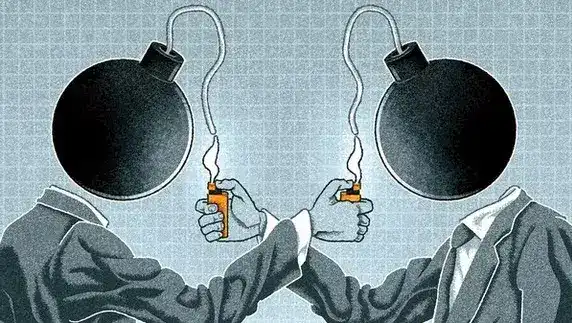
This is the ultimate PvP prisoner's dilemma, where all actions inevitably lead to an outcome of "ensuring destruction."
Liu Cixin's constructed scenario is a confrontation between cosmic civilizations, while in the Crypto trading market, we can reverse-engineer a similar "dark forest zero-sum deadlock": FOMO (Fear of Missing Out)
FOMO Trading's "Positive Chain of Suspicion"
In a market FOMO state, the market forms an inevitable buying force, and we can break down three logic chains similar to a "chain of suspicion":
1. Eliminate the Possibility of Communication
The market trend changes extremely quickly, and individuals have almost no time for sufficient communication and rational analysis before making a decision. In other words, the market does not allow for a "civilized" sit-down discussion.
2. Create a "Zero-Sum Expectation" with as Many People's Consensus as Possible
Here, the "perspective" refers to the investment logic of an event. For example, the profit of early buyers is inevitably at the expense of the opportunity cost of later buyers. All market rational participants are clear on this point. When everyone knows that "those who buy later will surely lose," the market will form a consensus that "buying first is a must."
3. Create an Unbearable Opportunity Cost
The reason why FOMO is effective is that the cost of missing out is too high. Watching others get rich quickly because of an event while hesitating to participate will lead to great psychological torment, even causing devastating mental and physical harm. Ultimately, the majority of people in the market will be forced to choose to buy in, even going all-in.
These three factors work together to form a "positive chain of suspicion" in a FOMO state. Its "positivity" lies in: it prompts market participants to take the "buy-in" action that aligns with the intended design and is inevitable.
Case Study: Market Sentiment on $TRUMP Launch Day
Taking the example of the $TRUMP token issuance day, this is how the "positive chain of suspicion" drove the market:
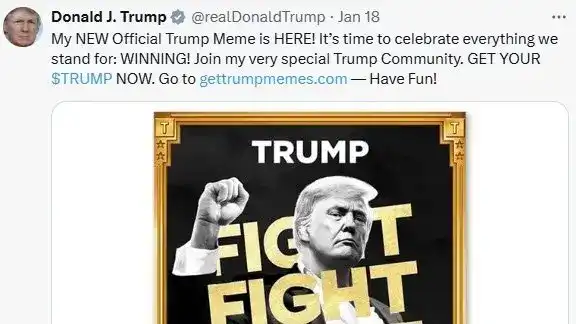
When the news of Trump's coin release came out, the market immediately surged, with the market cap skyrocketing. Although some doubted the truth of the news, the market's reaction was so fast that there was no time to verify.
After a simple verification confirmed that it was not a hacked account, the market concluded: "External funds will definitely buy," which is an irreversible transaction logic (perspective).
Having the President himself launch a coin at this level of event is extremely rare, and missing out would be a historic loss. The market consensus is: "If you miss out, not only will you lose money, but you will also be ridiculed by group members for a lifetime."
Therefore, the vast majority of people in the market have no choice but to buy in, even going all-in.

Factors Determining FOMO Trading Intensity
So, how strong is the FOMO effect of an event? It mainly depends on the following three factors:
· Speed of Trend Formation
The faster the market reacts, the less time individuals have for communication and analysis, making their trading behavior closer to instinctual responses.
· Degree of Consensus on the Logic (Angle) of FOMO Trading
Is this "angle" widely accepted by the majority of the market participants? The wider the consensus, the stronger the FOMO effect.
· Rarity and Non-replicability of the Event Itself
The more unique and irreplicable an event is, the stronger the market's perception of "missing out" will be, thus driving stronger FOMO buying behavior.
· Financial Strength of the Crowd
This is the variable that most people overlook—if the primary group spreading FOMO does not have enough funds, the price will quickly collapse.

Dissemination Pricing Model - Making FOMO Measurable
Greatness cannot be planned, but FOMO can.
In the crypto market, FOMO is a market sentiment that can be engineered, shaped, and even quantified. While "greatness" cannot be planned, the creation of FOMO can be traced.

If you want to create FOMO, among the three key elements mentioned earlier, the easiest to control is the first one (trend speed). This is because the initial pump and momentum building in the market are controllable by the project team. The second point (market consensus on the narrative angle) involves finding the market's accepted "high-price" narrative and leveraging the market's cognitive lag (i.e., information spillover leading to lower pricing).
As for the third point (event rarity and non-replicability), this is the most challenging to artificially manipulate. Anything that can be planned is fundamentally no longer scarce and is easily replicable. However, opportunities still exist in the market—if one can exploit the differences in market participants' perceptions of scarcity, they can create FOMO through a "price differential."
Case Study: The FOMO Evolution of Crypto AI Narrative (November 2024 - February 2025)
A typical example is the rapid rise and fall of the Crypto AI narrative. This cycle roughly went through the following stages:
Manufacturing information asymmetry to prevent traders from communicating: VC firms and backroom groups utilized Meme coins as a vehicle to rapidly drive up market hype, creating a liquidity squeeze that forced traders to passively follow along without enough time for rational discourse. If a form other than memecoin, such as mining rig yield farming, had been utilized, this narrative would not have been able to FOMO.
Utilizing cognitive stratification differences to establish a "zero-sum perspective" narrative targeting the audience from AI domain professionals to generalist AI-is-the-future Crypto investors, further expanding to encompass everyday traders who may not truly understand AI but recognize it as a trend.
Due to the high cognitive barrier of the AI topic outside the Crypto sphere, many in the market could only FOMO invest based on the intuition that "industry titans are pushing the AI race."
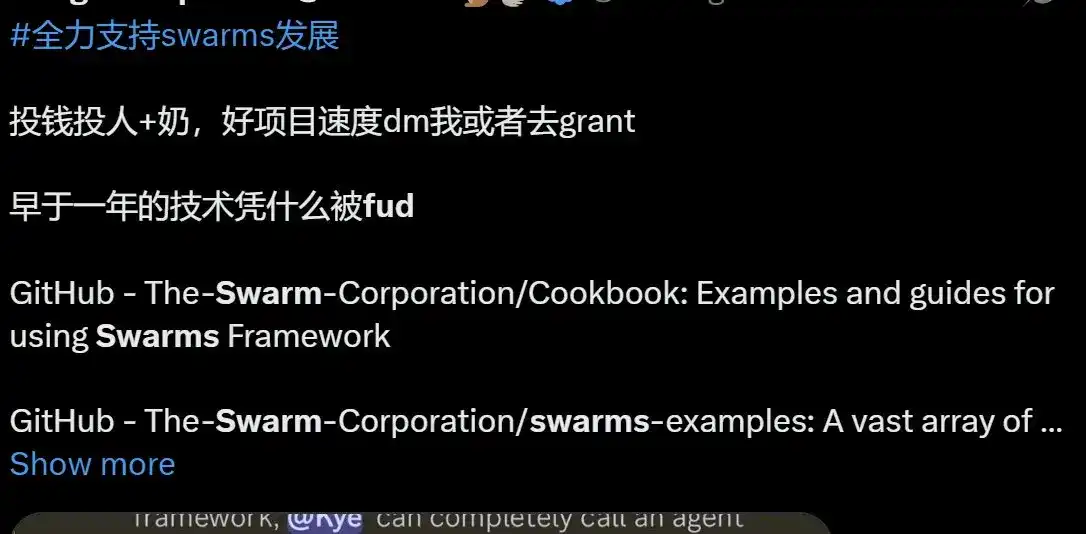
High replicability leading to narrative cooling: AI, as a technology, has extremely high replicability and lacks long-term scarcity.
This also explains why the AI narrative lasted only about 3 months and then, as traditional AI projects like Deepseek went mainstream, leveled the market's cognitive gap, with a plethora of similar AI trading agents emerging, causing the narrative FOMO to dissipate.
Propagating Pricing Mathematical Model
Based on this, we can abstract a narrative's propagating pricing mathematical model, where the core is the propagating pricing P(d) changing with the propagation distance d, to simulate how a narrative/event/project transitions from being ignored to being hyped, from being sought after to being disregarded, given that I graduated with a specialized degree, thanks to ChatGPT. If you're also illiterate like me, feel free to skip directly to the TL;DR section:

Where:
P0: Initial pricing at the event propagation origin (usually the highest)
e^(-βd): Trust decay factor, controlling FOMO intensity (rate at which market trust diminishes)
Sγ: Event scarcity (the rarer, the slower the pricing descends)
e−Rd: Replicability of the Event (the easier to replicate, the faster the price drops)
A(d): Event Attractiveness to Different Groups
V(d): Audience Value, measuring the financial strength available to different audiences in the pricing process
Core Variables Explanation
1. Trust Decay Factor e−βd
As the propagation distance d increases, the market's trust in the event decreases, and FOMO weakens
Impacted by Cognitive Cost C(d): The higher the cognitive cost, the harder the market understands the event, leading to a faster trust decay (β increases)
Low cognitive cost makes the event easier to spread, sustaining FOMO for a longer time (β decreases)
2. Scarcity Factor Sγ
The scarcer the event, the market is willing to maintain a higher price, and FOMO decreases more slowly
If the event is highly scarce (e.g., $TRUMP coin), the narrative pricing can maintain a high level for a certain period
If the event is not scarce (e.g., AI narrative), the market will quickly cool down due to increased supply
3. Replicability Factor e−Rd
If the event is easily replicable, the market's enthusiasm for it will quickly decline
Highly replicable events (e.g., AI tokens): FOMO is short-lived
Low replicability events (e.g., Musk's coin issuance): Narrative pricing decreases more slowly
4. Audience Attractiveness A(d)
Different groups have varying levels of attraction to the event, determining the spread of FOMO
Factors: Event's match with the audience (λ)
Audience's cultural background, market experience, trading habits; the higher λ, the lower the match, the poorer the attractiveness
Can be modeled using a Gaussian distribution:

If the event fails to attract a broader audience, FOMO propagation quickly ends
5. Audience Value A(d)
V(d) represents the financial strength of the audience reached at distance d in the market.
The financial strength of different audiences determines the driving force of FOMO transactions: Early entrants are usually high-capital traders (institutions, whales), with greater price influence. As it spreads to the periphery, it mainly involves retail funds, with diminishing influence.
Assuming the expression follows a Power Law Distribution:
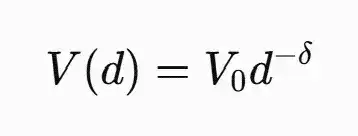
where:
V0 is the initial capital strength at the event propagation origin (e.g., VC, whale)
δ is the capital distribution decay factor, controlling the direction of market capital flow:
- Small δ (smooth capital flow): The peripheral crowd still holds relatively strong capital strength
- Large δ (rapid capital decay): The peripheral crowd consists mainly of small retail investors, and FOMO is difficult to sustain
Impact of Crowd Value:
If V(d) declines too rapidly, meaning the peripheral crowd consists of small capital holders, even if FOMO spreads, the trading impact will not be strong, leading to insufficient price support.
If V(d) declines slowly, indicating there is still strong capital support in the periphery, FOMO trading will last longer.
Summary of the Propagation Pricing Model Too Long to Read
Although this formula may not be precise, it reveals an eternal market principle:
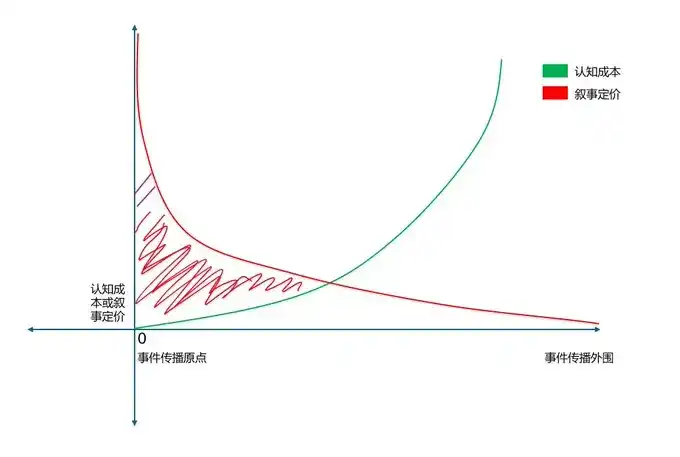
For any event, the farther the propagation distance, the higher the audience's comprehension cost; the farther the propagation distance, the lower the price the audience is willing to accept.
Events that are scarce, non-replicable, and targeted at specific audiences experience slower narrative price decline, while events that are easy to replicate and have complex information rapidly depreciate during propagation.
For a sickle, the red shaded area is the optimal "reaping zone."
The intersection of the Cognitive Cost Curve and the Narrative Price Curve signifies the death of the narrative.
Real-World Attention - Maximizing the Common Denominator of Propagation Pricing
We are constantly paying for information:
Supermarket sales, Black Friday discounts
FOMO into meme coins, real estate speculation
Political movements, even wars
Some costs are monetary, some are lives.
This is not a "Degen vs. Normie" or "Ponzi vs. Halal" issue, but rather the foundational logic of the human attention economy.

So, how can we build a high narrative-priced propagation model? What is the greatest common denominator?
This leads to the concept I have developed—Real World Attention (RWA).
RWA Definition:
The most valuable narrative is undoubtedly one that, outside of the core high-frequency users in the crypto space, can also attract attention events with the potential for "viral dissemination" that appeals to those with the global average intelligence.
It can both ensure the widest audience and cover a population with high transaction value.
If you don't believe it, you can ignore the answer and try to answer the following question
1. Why do "Presidential Coins" and "Celebrity Coins" always have a market, regardless of market conditions?
These events face a globally predictable cognitive group, and the revealed-speculation angle is unacceptable, thus forming a positive chain of suspicion.
Presidential Coin: Especially for a president of a large country, the cognitive group covered is the widest, so no matter how much it is cut, there will always be people rushing in
2. Why do many non-American artists' coin launches perform poorly?
Audience issue: The audience for North American artists is often active on crypto platforms (such as Twitter), and their information can be directly or indirectly conveyed to the crypto community; the audience value of non-American artists is lower.
The audience that comes from the origin of the spread has a high cognitive cost, so the pricing naturally tends to be lower
3. Why do event-based tokens perform better than Celebrity Coins even with the same celebrity participation? (e.g., $MAGA, $PNUT, $Jailstool, $Vine, etc.)
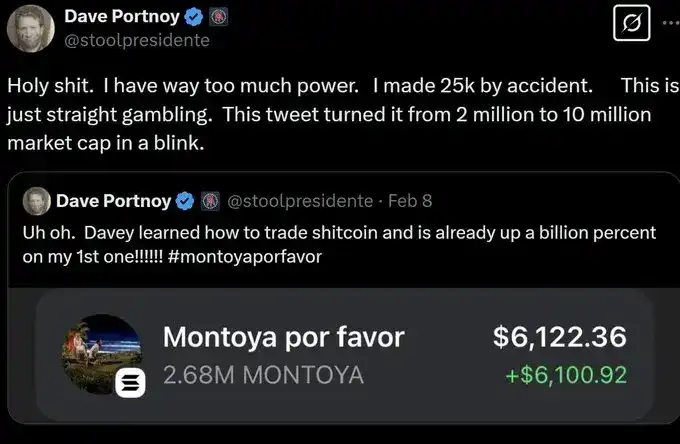
There are three reasons:
· Dramatic Tension: The event itself is more attractive, able to cross the crypto community to attract all bystanders, increasing the event's match with different audiences.
· Dissemination Audience vs. Fan Base: The dissemination audience is a dynamic process, comprising those who are activated by the event and react; whereas a celebrity's fans are a static, fixed value.
Celebrities launching coins can only activate a small portion within a fixed group, while an event can activate a more extensive group, expanding the reach of dissemination.
· Rarity: Events come with inherent scarcity. For example, although Liu Xiaoqing and Mao Amin are homogenized, Mao Amin evaded taxes, while Liu Xiaoqing found a young boyfriend when she was in her 60s—these types of events are both rare and eye-catching.
4. Why is it difficult to achieve mainstream adoption for many complex AI, DeFi narratives, and intricate Ponzi schemes?
The cognitive cost is too high (β is too large).
In the secondary market, the shared cognitive scope is too small, pricing is low, making it difficult to form a positive suspicion chain. It is even challenging to initiate effective dissemination. How could there be FOMO?
5. Why does the launch of a new coin by a large-cap Dev and the entry of a large influencer cause FOMO in meme coins?
For the audience of memecoins, this is a natural positive suspicion chain zero-sum game scenario.
If you don't get on board, you'll never get on board.
Data and monitoring tools transmit information in real time, requiring no additional cognitive cost for memecoin audiences.
The only issue is that once it spreads to the outer circle, the outer circle audience may perceive themselves on the periphery and choose not to enter.
6. Why do pure genuine and tech narrative VC coins have such a bleak secondary market?
Same as 4.
In a sense, Real World Attention (RWA) is more valuable than Real World Asset because forming consensus based on attention is much easier than forming consensus on assets.
An American may hardly recognize the asset value of a rural hut in Thailand's Sakon Nakhon province; however, if a local teenager's TikTok video becomes a meme, the American may resonate similarly.
Insights for Market and Shillers
The era of imagining that a narrative, tokenomics, or system alone can trigger a breakout is over. Projects that cannot be spread and market-priced acknowledgment can hardly expect a possibility of "going viral" or "going mainstream."
Without being able to be spread and market-priced acknowledgment, any project fundamentally cannot expect a chance to "go viral" or "go mainstream."
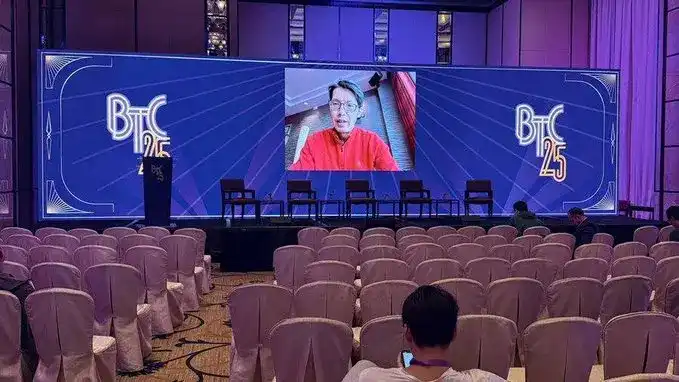
Even battle-hardened guerrilla marketing teams, if they have "no angle," will find it difficult to succeed in promotion.
Conversely, an ordinary project that can trigger real-world attention may inexplicably go viral.
When launching, this is how you need to plan the dissemination:
· Define Boundaries: If the project's core system is difficult to fit into the dissemination model, a dedicated part for dissemination needs to be carved out to ensure it does not affect the core system.
· Customization: Using assets such as memes or NFTs that can quickly rise in value and do not allow time for discussion as a vehicle; or using an incremental pricing mutual aid mechanism (such as VDS, Taishan Crowdfunding, Fomo3D).
· Choosing an Angle: Following the RWA logic, select a narrative with low information complexity that covers a broad audience.
· Creating Events: Creating events with dramatic tension as a means of dissemination, designing the onboarding process as a real-world attention event (e.g., "Eighty-Year-Old Lady Accidentally Wins Millions" or "TST dev Address Joins Pool for Collaborative Market Making, Dominating the BSC Community").
Let's take @ethsign as an example:
The narrative of EthSign itself is a type that is very difficult to promote: a B2B/B2G application:
- Token Table Token Distribution Platform
- Crypto version of Docusign
- Digital Identity
From the perspective of retail investors, especially young retail investors, the entire project is filled with one word: boring.
A clever point from @realyanxin is that, from a design perspective, a "Orange Dynasty" (sounding like a Northeastern bathhouse) targeting the C-end theme was directly carved out.
To create a positive chain of speculative spread, Sign chose to leverage an NFT airdrop and pre-airdrop events as vehicles. The airdrop also opted for an absolutely opaque mechanism that cannot be farmed, minimizing the possibility of discussion as much as possible.
Through a $16M funding announcement, Binance Labs investment, onboarding a large number of KOLs with orange glasses and adding viral elements to promote community cult activities, the entire project transmitted information to the C-end in the form of a meme, maximizing the match with the cryptocurrency community, reducing cognitive costs.
The cryptocurrency community, mainly composed of major KOLs, is a higher-than-average transaction value group.
This is already the optimal solution that a non-C-end project of this type can choose. Even with so much design effort, Sign still needs to invest a significant amount of manpower to conduct high-intensity community activities and education, artificially increase audience matching, reduce peripheral audience cognitive costs, and maximize dissemination distance. Fortunately, the Sign team has a group of event marketing talents, and in execution, they can truly capture attention.
And if you are a traditional CX project
Your event's core communicator is the Community Manager. While a typical crypto project might need an excellent agency to cover KOLs, it could be done in a two-day call,
However, a CX Community Manager, regardless of how close the relationship is, usually needs to meet in person, give a lecture, treat to a meal before starting promotion and attracting investments. Even for those with the highest level of insider recognition (high beta), the cost is significant. And when the Community Manager spreads the message to their own network, the process repeats.
In a world where young people no longer value the "inner circle" or "current state," the cost of spreading the message to the outer circle will be even higher. This means investing more in educational resources, implying that the cost of spreading the project from the beginning has increased, creating a vicious cycle of communication.
So, what you need to do is:
Reduce the complexity of the model and narrative to be explained within three sentences: What is it? How does it work? How is risk managed?
Design a zero-sum scenario that does not need explaining to create FOMO. This scenario is mainly used for communication and can be an independent complete product or part of a larger design to attract investments.
Structure the investment as a real-world attention event. For example, "An octogenarian lady is pulled into playing the game by her grandson, unexpectedly winning a jackpot of millions. The grandson is envious and takes his case to court with his grandmother." "TST dev address joins the liquidity pool to dominate the BSC community."
If you are a pure meme dev or meme infrastructure,
Here, meme refers to any low-liquidity asset type launched on-chain without permission, with chip distribution without mechanism bias, and artificial intervention in price discovery.
And Dev or infrastructure refers to the originator associated with the launch of such asset categories.
According to the communication pricing model and positive suspicion chain, only three types of resources are truly useful:
1. On-chain Liquidity Provider: Knows how to control the pace and achieve high liquidity with quick pool access.
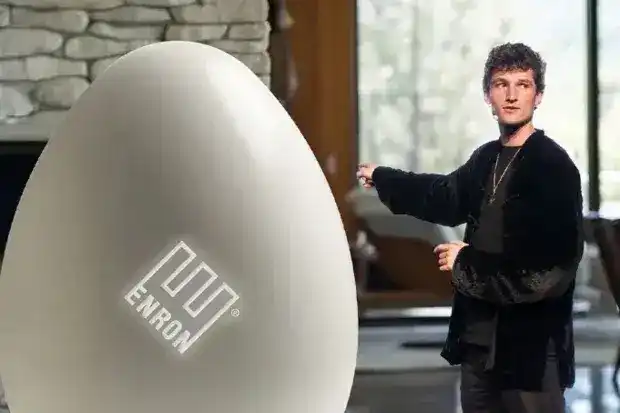
2. Network Promoter: Such as Connor Gaydos of Enron Coin, Abbey Desmond who turned Gatwick Airport into Luton Airport, or the orchestrators of China's events related to "Guo Meimei" and "Feng Jie" — these individuals can truly stir real-world attention.
3. Precision Trading KOLs and Mass Coverage Public Media/KOLs: They can activate broad market consensus.
In the cryptocurrency world, the traditional "fundamental narrative" is basically irrelevant—the propagation of the narrative is not driven by them but merely sold as a story to exchanges, market makers, and industry influencers.
Final Thoughts
I have come to realize that any model I put out there will become a doctrine, leading to an increase in the industry's barrier to entry. However, I am truly fed up with large groups coming up with a narrative out of the blue and then seeking my advice (compliments) for their projects. Another purpose of this article is to hope that project teams can thoroughly understand it before scheduling a call with me.
If you are not a project team but instead are striving to become a KOL wannabe building your personal IP, persist and continue to stir things up, attracting attention. This is actually the main point I acknowledged about @EnHeng456 and @Elizabethofyou back then: they are really good at stirring things up to attract attention. This is a very rare ability. Practice more, and you too can create your own "Enron."
Ode to those of high status, would you choose to have offspring instead!
You may also like

a16z Leads $18M Seed Round for Catena Labs, Crypto Industry Bets on Stablecoin AI Payment
Pharos, deeply integrated with AntChain, is about to launch. How can we get involved?
The End and Rebirth of NFTs: How the Meme Coin Craze Ended the PFP Era?
Key Market Intelligence on May 14th, how much did you miss out on?
1.Binance Alpha Launches HIPPO, BLUE, and Other Tokens
2.Believe Ecosystem Tokens See General Rise, LAUNCHCOIN Surges Over 250% in 24 Hours
3.Tiger Securities Introduces Cryptocurrency Deposit and Withdrawal Service, Supports Mainstream Cryptocurrencies such as BTC and ETH
4.Current Bitcoin Rally Possibly Driven by Institutions, Retail Traders Yet to Join
5.Binance Wallet's New TGE Privasea AI Participation Requires a 198 Point Threshold, with a Point Consumption of 15
Source: Overheard on CT (tg: @overheardonct), Kaito
PUMP: Today's discussions about PUMP focus on its new creator revenue-sharing model: the platform will allocate 50% of PumpSwap revenue to token creators, sparking varied reactions from users. Some criticize the move as insufficient or even misleading, while others view it as a positive step the platform is taking to reward creators. Meanwhile, PUMP faces market pressure from emerging competitors like LetsBONKfun and Raydium, which are rapidly gaining market share. Users also express concerns about PUMP's sustainability and potential regulatory risks in the U.S., with discussions extending to the platform's impact on the entire memecoin ecosystem.
COINBASE: Today, Coinbase became the first crypto company to join the S&P 500 Index, replacing Discover Financial Services, sparking widespread industry attention. The entire crypto community views this milestone as a significant development, signaling that crypto assets are further integrating into the mainstream financial system. The news has sparked lively discussions on Twitter, with many users pointing out that this may attract more institutional investors to enter the Bitcoin and other cryptocurrency markets.
XRP: XRP became the focal point of today's crypto discussion, with its significant market movements and strategic advances drawing attention. XRP has surpassed USDT to become the third-largest cryptocurrency by market capitalization, sparking market excitement and discussions about its future potential. The surge in market capitalization and price is believed to be related to increasing institutional interest, deepening strategic partnerships, and its role in the crypto ecosystem. Additionally, XRP's integration into multiple financial systems and its potential as a macro asset class are also seen as key factors driving the current market sentiment.
DYDX: Today's discussions about DYDX mainly focused on the dYdX Yapper Leaderboard launched by KaitoAI. The leaderboard aims to identify the most active community participants, with a total of $150,000 in rewards to be distributed over the first three seasons. This initiative has sparked broad community participation, with many users discussing the potential rewards and the incentive effect on the DYDX ecosystem. Meanwhile, progress on the ethDYDX to dYdX native chain migration and historical airdrop events have also been topics of discussion.
1. "What Is 'ICM'? Holding Up the $4 Billion Market Cap Solana's New Narrative"
Overnight, the hottest narrative in the crypto space has become "Internet Capital Markets," with a host of crypto projects and founders, led by the Solana ecosystem's new Launchpad platform Believe, releasing this phrase. Together with "Believe in something," it has become the new slogan heralding the onset of a bull market. What exactly is the so-called "Internet Capital Market," will it become a short-lived hype phrase like the Base ecosystem's previous Content Coin, and what related targets are available for selection?2.《LaunchCoin Surges 20x in One Day, How Did Believe Create a $200M Market Cap Shiba Inu After Going to Zero?|100x Retrospective》
LAUNCHCOIN broke through a $200 million market cap today, with the long-lost liquidity and such a high market cap "Memecoin" almost bringing half of the on-chain crypto community CT into the fray. The community is crazily discussing this token, with half of it being FOMO and the other half being FUD. This token, originally issued by Believe founder Ben Pasternak under his personal identity, transformed into a new platform token after a renaming. From once going to zero to a $200 million market cap, what happened in between?May 14 On-chain Fund Flow
Within 24 hours, GOONC's market cap soared to 70 million, could GOONC be the next billion-dollar dog on the Believe platform?
Bitcoin has broken $100,000, Ethereum has surpassed 2500, and is Solana's hot streak about to make a comeback?
The current market is in a state of macro euphoria, with GOONC riding the wave today, skyrocketing 10x in just a few hours, reaching a market cap of tens of millions of dollars, trading volume soaring past 50 million, and rumors swirling that the developer may be from OpenAI (unconfirmed but intriguing enough).
A ludicrous and absurd Solana meme that some actually buy into.
GOONC is a meme coin that has sprouted from the "gooning" subculture, offering no technological innovation or practical use, its sole function being speculation.
It takes inspiration from an NSFW term "gooning," which refers to a person being deeply immersed in certain content (you know what), eventually entering a nearly religious-like trance.
In Reddit (such as r/GOONED, r/GoonCaves) and some counterculture media outlets (such as MEL Magazine in 2020), "gooning" has gradually transitioned from an adult label to a meme-addicted, digital content and virtual self-indulgence synonym, arguably the epitome of Degen spirit.
GOONC is playing around with this concept, packaging the addictive nature, uselessness, and irony of gooning into a tradable financial product. The project team has made it clear: "We do not solve blockchain problems, we only trade absurdity." Blunt but oddly genuine.
GOONC launched on May 13, 2025, using the meme coin launch platform Believe App's LaunchCoin module on Solana. This tool is highly Degen: zero technical barriers, a few clicks to create a coin, perfect for projects like GOONC that can come up with ideas out of the blue.
The mastermind behind GOONC is also quite something and is the most talked-about, with KOL @basedalexandoor on X platform (alias "Pata van Goon") personally involved. His profile even caught the attention of Marc Andreessen, co-founder of a16z, making onlookers unable to resist speculating if GOONC has a hint of OpenAI lineage.
While this 'OpenAI Endorsement' is currently just community speculation, it is definitely a good card to play to fuel hype. Saying "we are pure speculation" on one hand, while tagging a few "AI + a16z" on the other.
GOONC took off as soon as it launched. After its launch on May 13, 2025, its market capitalization skyrocketed to $22 million within 4 hours, with a trading volume exceeding $25.6 million in 24 hours. According to platform data, the first day of trading saw an astonishing +41,100% surge, soaring from $0.0000001 to $0.02, becoming a "missed-the-boat" situation.
GOONC quickly formed an active trading community post-launch, with a lot of discussion and trading signals appearing on X platform (such as the 292x return signal provided by DeBot). Liquidity pools on exchanges like Raydium and Meteora grew rapidly, supporting high trading volumes and price increases.
The real climax occurred between May 13 and May 14, with the market cap rising to $5.5 million in the morning and directly surpassing $55 million in the afternoon. By the 14th, it briefly approached a $70 million market cap, with the trading volume soaring to $59 million. Some community members even posted screenshots claiming an increase of +85,000%, creating a new myth out of the ruins.
As of 1:30 pm on May 14, the price stabilized around $0.039, with a total market cap and FDV both around $39.6 million, and a 24-hour trading volume of $5.43 million. Active platforms include XT.COM, LBank, Meteora, and others.
Although there was a slight pullback from the peak ($0.07), the coin's popularity remains strong. For a coin that relies purely on "irony + community + X post" to thrive, this performance is already at a stellar level.
Currently, the background of the token's development team is not transparent, increasing the potential risk of a rug pull. Rugcheck.xyz warns that the creator of the GOONC contract may have permission to modify the contract (e.g., change fees or mint additional tokens), posing certain security risks.
Community members speculate that the meteoric rise of GOONC may be the "last hurrah".
How to Get Rich in Crypto Without Relying on Luck? Financial Veteran Raoul Pal's Macro Insights and Investment Path
Stablecoins Driving Global B2B Payment Innovation: How to Break Through Workflow Bottlenecks and Unlock Trillion-Dollar Market Potential?
These startups are building cutting-edge AI models without the need for a data center
Science Equity Movement: DeSci's Trillion-Dollar Knowledge Economy Reconstruction Revolution
Sentient In-Depth Research Report: Secures $85 Million in Funding to Build a Decentralized AGI New Paradigm
April 30th Market Key Intelligence, How Much Did You Miss?
Interview with Virtuals Co-Founder empty: AI Startups Don't Need a Lot of Funding, Crypto is One of the Answers
President's 'Official' Coin Issuance, Market Performance 'Desensitized'; Trump's Crypto Empire Lacks Novelty
a16z Leads $25M Investment, 0xMiden to Run a Privacy Chain on Your Phone
Sui Q1 Advanced Report: The Rise of BTCfi Infrastructure, the Boom of Lending Protocols, and the Future of Rollup-Based Scalability
Gate.io MemeBox has officially integrated with the Solana ecosystem, providing lightning-fast on-chain asset trading.
Key Market Information Discrepancy on April 30th - A Must-Read! | Alpha Morning Report
Taking Stock of the Top 10 Emerging Launchpad Platforms: Who Will Succeed in Disrupting Pump.fun?
a16z Leads $18M Seed Round for Catena Labs, Crypto Industry Bets on Stablecoin AI Payment
Pharos, deeply integrated with AntChain, is about to launch. How can we get involved?
The End and Rebirth of NFTs: How the Meme Coin Craze Ended the PFP Era?
Key Market Intelligence on May 14th, how much did you miss out on?
1.Binance Alpha Launches HIPPO, BLUE, and Other Tokens
2.Believe Ecosystem Tokens See General Rise, LAUNCHCOIN Surges Over 250% in 24 Hours
3.Tiger Securities Introduces Cryptocurrency Deposit and Withdrawal Service, Supports Mainstream Cryptocurrencies such as BTC and ETH
4.Current Bitcoin Rally Possibly Driven by Institutions, Retail Traders Yet to Join
5.Binance Wallet's New TGE Privasea AI Participation Requires a 198 Point Threshold, with a Point Consumption of 15
Source: Overheard on CT (tg: @overheardonct), Kaito
PUMP: Today's discussions about PUMP focus on its new creator revenue-sharing model: the platform will allocate 50% of PumpSwap revenue to token creators, sparking varied reactions from users. Some criticize the move as insufficient or even misleading, while others view it as a positive step the platform is taking to reward creators. Meanwhile, PUMP faces market pressure from emerging competitors like LetsBONKfun and Raydium, which are rapidly gaining market share. Users also express concerns about PUMP's sustainability and potential regulatory risks in the U.S., with discussions extending to the platform's impact on the entire memecoin ecosystem.
COINBASE: Today, Coinbase became the first crypto company to join the S&P 500 Index, replacing Discover Financial Services, sparking widespread industry attention. The entire crypto community views this milestone as a significant development, signaling that crypto assets are further integrating into the mainstream financial system. The news has sparked lively discussions on Twitter, with many users pointing out that this may attract more institutional investors to enter the Bitcoin and other cryptocurrency markets.
XRP: XRP became the focal point of today's crypto discussion, with its significant market movements and strategic advances drawing attention. XRP has surpassed USDT to become the third-largest cryptocurrency by market capitalization, sparking market excitement and discussions about its future potential. The surge in market capitalization and price is believed to be related to increasing institutional interest, deepening strategic partnerships, and its role in the crypto ecosystem. Additionally, XRP's integration into multiple financial systems and its potential as a macro asset class are also seen as key factors driving the current market sentiment.
DYDX: Today's discussions about DYDX mainly focused on the dYdX Yapper Leaderboard launched by KaitoAI. The leaderboard aims to identify the most active community participants, with a total of $150,000 in rewards to be distributed over the first three seasons. This initiative has sparked broad community participation, with many users discussing the potential rewards and the incentive effect on the DYDX ecosystem. Meanwhile, progress on the ethDYDX to dYdX native chain migration and historical airdrop events have also been topics of discussion.
1. "What Is 'ICM'? Holding Up the $4 Billion Market Cap Solana's New Narrative"
Overnight, the hottest narrative in the crypto space has become "Internet Capital Markets," with a host of crypto projects and founders, led by the Solana ecosystem's new Launchpad platform Believe, releasing this phrase. Together with "Believe in something," it has become the new slogan heralding the onset of a bull market. What exactly is the so-called "Internet Capital Market," will it become a short-lived hype phrase like the Base ecosystem's previous Content Coin, and what related targets are available for selection?2.《LaunchCoin Surges 20x in One Day, How Did Believe Create a $200M Market Cap Shiba Inu After Going to Zero?|100x Retrospective》
LAUNCHCOIN broke through a $200 million market cap today, with the long-lost liquidity and such a high market cap "Memecoin" almost bringing half of the on-chain crypto community CT into the fray. The community is crazily discussing this token, with half of it being FOMO and the other half being FUD. This token, originally issued by Believe founder Ben Pasternak under his personal identity, transformed into a new platform token after a renaming. From once going to zero to a $200 million market cap, what happened in between?May 14 On-chain Fund Flow
Within 24 hours, GOONC's market cap soared to 70 million, could GOONC be the next billion-dollar dog on the Believe platform?
Bitcoin has broken $100,000, Ethereum has surpassed 2500, and is Solana's hot streak about to make a comeback?
The current market is in a state of macro euphoria, with GOONC riding the wave today, skyrocketing 10x in just a few hours, reaching a market cap of tens of millions of dollars, trading volume soaring past 50 million, and rumors swirling that the developer may be from OpenAI (unconfirmed but intriguing enough).
A ludicrous and absurd Solana meme that some actually buy into.
GOONC is a meme coin that has sprouted from the "gooning" subculture, offering no technological innovation or practical use, its sole function being speculation.
It takes inspiration from an NSFW term "gooning," which refers to a person being deeply immersed in certain content (you know what), eventually entering a nearly religious-like trance.
In Reddit (such as r/GOONED, r/GoonCaves) and some counterculture media outlets (such as MEL Magazine in 2020), "gooning" has gradually transitioned from an adult label to a meme-addicted, digital content and virtual self-indulgence synonym, arguably the epitome of Degen spirit.
GOONC is playing around with this concept, packaging the addictive nature, uselessness, and irony of gooning into a tradable financial product. The project team has made it clear: "We do not solve blockchain problems, we only trade absurdity." Blunt but oddly genuine.
GOONC launched on May 13, 2025, using the meme coin launch platform Believe App's LaunchCoin module on Solana. This tool is highly Degen: zero technical barriers, a few clicks to create a coin, perfect for projects like GOONC that can come up with ideas out of the blue.
The mastermind behind GOONC is also quite something and is the most talked-about, with KOL @basedalexandoor on X platform (alias "Pata van Goon") personally involved. His profile even caught the attention of Marc Andreessen, co-founder of a16z, making onlookers unable to resist speculating if GOONC has a hint of OpenAI lineage.
While this 'OpenAI Endorsement' is currently just community speculation, it is definitely a good card to play to fuel hype. Saying "we are pure speculation" on one hand, while tagging a few "AI + a16z" on the other.
GOONC took off as soon as it launched. After its launch on May 13, 2025, its market capitalization skyrocketed to $22 million within 4 hours, with a trading volume exceeding $25.6 million in 24 hours. According to platform data, the first day of trading saw an astonishing +41,100% surge, soaring from $0.0000001 to $0.02, becoming a "missed-the-boat" situation.
GOONC quickly formed an active trading community post-launch, with a lot of discussion and trading signals appearing on X platform (such as the 292x return signal provided by DeBot). Liquidity pools on exchanges like Raydium and Meteora grew rapidly, supporting high trading volumes and price increases.
The real climax occurred between May 13 and May 14, with the market cap rising to $5.5 million in the morning and directly surpassing $55 million in the afternoon. By the 14th, it briefly approached a $70 million market cap, with the trading volume soaring to $59 million. Some community members even posted screenshots claiming an increase of +85,000%, creating a new myth out of the ruins.
As of 1:30 pm on May 14, the price stabilized around $0.039, with a total market cap and FDV both around $39.6 million, and a 24-hour trading volume of $5.43 million. Active platforms include XT.COM, LBank, Meteora, and others.
Although there was a slight pullback from the peak ($0.07), the coin's popularity remains strong. For a coin that relies purely on "irony + community + X post" to thrive, this performance is already at a stellar level.
Currently, the background of the token's development team is not transparent, increasing the potential risk of a rug pull. Rugcheck.xyz warns that the creator of the GOONC contract may have permission to modify the contract (e.g., change fees or mint additional tokens), posing certain security risks.
Community members speculate that the meteoric rise of GOONC may be the "last hurrah".
How to Get Rich in Crypto Without Relying on Luck? Financial Veteran Raoul Pal's Macro Insights and Investment Path
Popular coins
Latest Crypto News


Customer Support:@weikecs
Business Cooperation:@weikecs
Quant Trading & MM:bd@weex.com
VIP Services:support@weex.com
 App
App