
- Buy Crypto
- Markets
- Futures
- Spot
- Copy Trade
 WE-Launch
Revolution or Scam? An In-Depth Analysis of DeSci's Current State

Original Article Title: DeSci: A Revolution? Or Just a Dream?
Original Article Author: 100y eth, Crypto Writer
Original Article Translation: zhouzhou, BlockBeats
Editor's Note: This article explores the business model of the DeSci field and the shortcomings of the scientific research review system. The author points out that the current review process is inefficient, lacks transparency and effective incentives, affecting the impartiality of academic work. Furthermore, the prevalent "publish or perish" culture in academia makes researchers more inclined to pursue trending topics, overlooking the value of failed experiments. The rise of DeSci not only provides powerful solutions to these issues but also allows the decentralization concept to be more deeply reflected in the field of scientific research.
The following is the original content (slightly reorganized for easier reading comprehension):
The problems in academia are evident, but DeSci is not a cure-all. I recently obtained a Ph.D. in Chemical Engineering and during my studies, I published four first-author papers, including in sub-journals of "Nature" and the Journal of the American Chemical Society (JACS).
Although my academic experience is limited to the graduate level and I have not served as an independent researcher, which may result in a less comprehensive perspective, in my nearly six-year academic career, I have deeply felt many structural issues in the academic system.
In this context, DeSci (Decentralized Science) attempts to use blockchain technology to challenge the centralized structure of the scientific field, a concept that is undoubtedly fascinating. Recently, the topic of DeSci has swept through the crypto market, with many believing it can completely transform the research model in science.
I also hope to see such a transformation. However, I believe the possibility of DeSci completely overturning the traditional academic world is not high. From my perspective, the more realistic scenario is that DeSci serves as a complementary means in some aspects, alleviating specific issues in the traditional academic system.
Therefore, with the recent boom of DeSci, I would like to take this opportunity to, based on my limited academic experience, explore the structural issues in the traditional academic system, assess whether blockchain technology can truly address these issues, and analyze the impact DeSci may have on academia.
1. The Sudden Boom of DeSci
1.1 DeSci: From a Niche Concept to a Growing Movement
The longstanding structural issues in academia have long been widely discussed, for example, in articles such as VOX's "270 Scientists' View on Science's Seven Major Challenges" and "The War for the Liberation of Science." Over the years, people have been constantly trying to solve these problems, some of which will be mentioned later in this article.
As a concept, DeSci seeks to address these challenges by introducing blockchain technology into scientific research, but it did not start gaining attention until around 2020. At that time, Coinbase CEO Brian Armstrong introduced the concept of DeSci to the crypto community through ResearchHub, hoping to realign the incentive mechanism of scientific research through ResearchCoin (RSC).
However, due to the speculative nature of the crypto market, DeSci failed to attract widespread user participation, with only a small portion of the community supporting this vision for a long time—until the emergence of pump.science.
1.2 The Butterfly Effect of pump.science
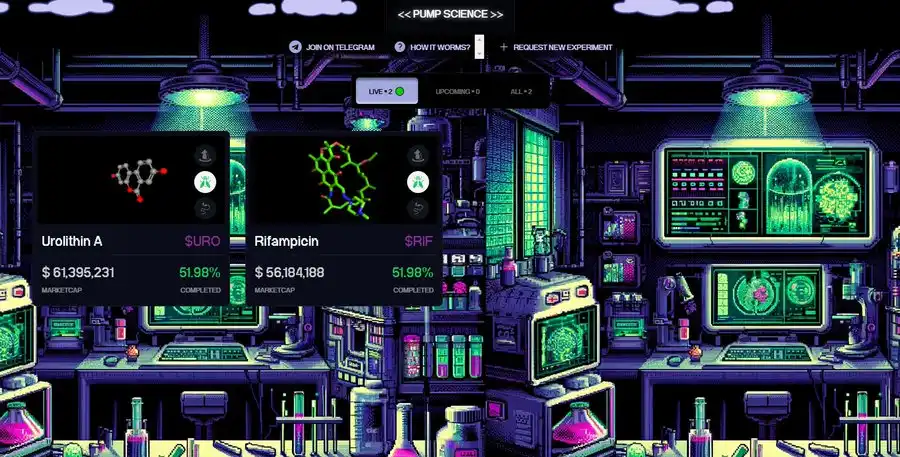
pump.science is a DeSci project in the Solana ecosystem, built by the well-known DeSci platform Molecule. It serves as both a research funding platform and utilizes Wormbot technology for real-time streaming of long-term experiments. Users can propose compounds they believe may extend lifespan or purchase tokens related to these ideas.
Once the token market cap surpasses a specific threshold, the project team uses Wormbot devices to conduct experiments to validate whether the compound can indeed extend the lifespan of the experimental subjects. If the experiment is successful, token holders receive equity in that compound.
However, some community members have criticized this model, arguing that these experiments lack sufficient scientific rigor and may not truly foster life-extending drugs. Gwart's satirical comment represents a skeptical view of DeSci, questioning the arguments put forth by its supporters.
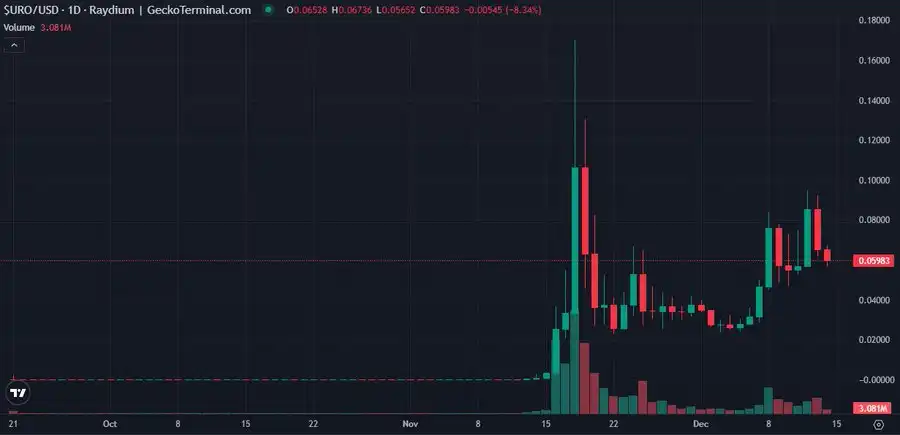
pump.science adopts a Bonding Curve mechanism similar to Molecule, where the token price rises as the number of purchasing users increases.
The launch of tokens like RIF (Representing Rifaximin) and URO (Representing Urokinase) coincided with the meme token frenzy in the crypto market, driving their prices higher. This unexpected bull run brought DeSci into the spotlight.
Ironically, what fueled the DeSci craze was not its scientific essence, but the speculative price surge of its tokens.
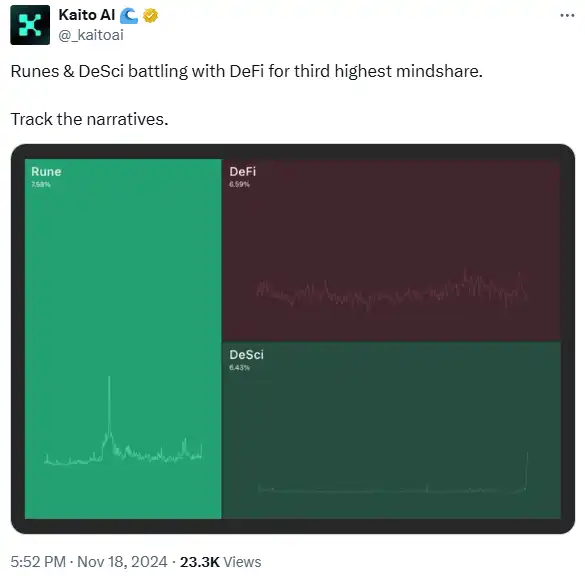
In the rapidly changing crypto market, DeSci has long been a niche area. However, in November 2024, it became one of the hottest narratives. Not only did the token issued by pump.science skyrocket, but Binance also announced an investment in DeSci's grant-funded Bio protocol. Existing DeSci tokens also saw significant price surges, marking a pivotal moment for this field.
2. Flaws in Traditional Science
It is no exaggeration to say that the academic world is facing numerous systemic and severe issues. Over the years in academia, I have often questioned: how does such a flawed system manage to sustain itself? Before delving into the potential of DeSci, let's first take a look at the shortcomings of the traditional academic system.
2.1.1 Evolution of Research Funding
Prior to the 19th century, scientists obtained research funding and made a living in a vastly different manner than today:
Sponsorship: European monarchs and nobles would sponsor researchers to enhance their own prestige and drive scientific progress. For example, Galileo received sponsorship from the Medici family, enabling him to continue developing the telescope and conducting astronomical research. Religious institutions also played a significant role in scientific development; during the Middle Ages, the church and clergy sponsored research in astronomy, mathematics, and medicine.
Self-funding: Many scientists relied on income from other professions to support their research. They may have been university professors, teachers, writers, or engineers, using these roles to financially back their research.
By the end of the 19th century and into the early 20th century, governments and corporations began establishing centralized research funding systems. During World Wars I and II, various governments set up research institutions and heavily invested in defense research to gain a competitive edge in warfare.
- In the United States, organizations such as the National Advisory Committee for Aeronautics (NACA) and the National Research Council (NRC) were established during World War I.
- In Germany, the Emergency Association of German Science (Notgemeinschaft der Deutschen Wissenschaft), founded in 1920, was the predecessor to today's German Research Foundation (DFG).
- Concurrently, corporate research institutions like Bell Labs and GE Research Lab were established, signaling the active participation of enterprises in research funding.
This government-corporate-led research funding model gradually became mainstream and continues to this day. Governments and corporations worldwide contribute substantial budgets to support global research. For instance, in just 2023, the U.S. federal government's R&D expenditure amounted to a staggering $190 billion, a 13% increase from 2022.

In the United States, the allocation process of research funding is supported by federal government funding for R&D and distributed by multiple agencies. For example:
· National Institutes of Health (NIH): the largest funder of biomedical research;
· Department of Defense (DoD): focuses on research in the defense sector;
· National Science Foundation (NSF): supports scientific and engineering research in various disciplines;
· Department of Energy (DOE): responsible for research in renewable energy and nuclear physics;
· NASA: funds space and aeronautics research.
2.1.2 Centralized Funding System Distorts Scientific Research
Today, university professors are almost unable to conduct research independently without relying on external funding. Therefore, they are forced to rely on government or corporate funding, and this centralized funding model has also brought many problems to the academic community.
First is the inefficiency of the funding acquisition process. Although the specific processes vary among countries and institutions, there is generally a widespread issue of being lengthy, opaque, and inefficient.
Research teams need to submit large numbers of application documents and reports and undergo strict reviews by the government or corporations. For renowned labs, a grant may reach several million or even tens of millions of dollars, allowing them to avoid frequent applications for a longer period. However, this is not the case for most.
For most labs, a single grant is usually only tens of thousands of dollars, meaning they need to repeatedly apply, fill out large amounts of documents, and undergo continuous reviews. Many graduate students and scholars have to spend a significant amount of time on funding applications and corporate projects rather than focusing on research.
What's worse is that many projects funded by corporations have little relevance to graduate student research topics, further highlighting the inefficiency and irrationality of this system.
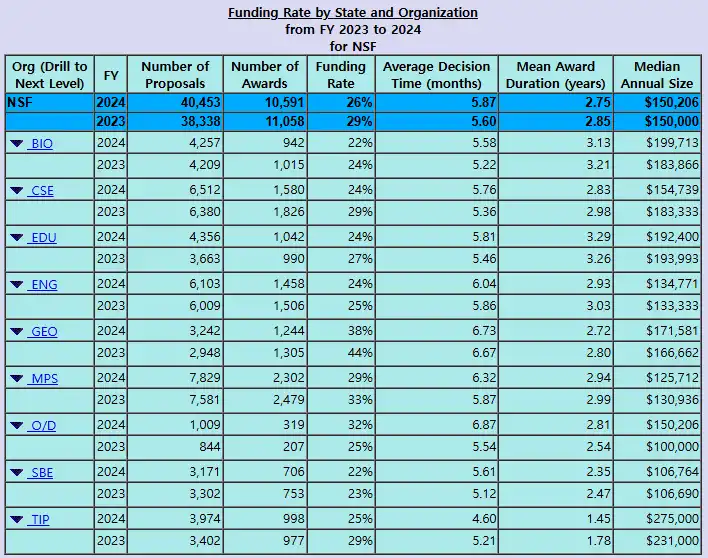
Investing a significant amount of time in funding applications may have a payoff, but obtaining funding is not easy. According to data from the National Science Foundation (NSF), the funding approval rates for 2023 and 2024 were 29% and 26%, respectively, with a median annual funding amount of only $150,000. Similarly, the success rate for funding from the National Institutes of Health (NIH) is usually between 15% and 30%.
Single-source funding often cannot meet research needs, and many scholars have to apply multiple times to sustain their research.
The challenge of funding applications lies not only in low success rates but also in the crucial role of networking. Professors often collaborate with peers in their applications rather than applying independently to increase the chances of approval. Additionally, to secure corporate funding, professors frequently engage in private lobbying efforts with the funders.
This reliance on networks, coupled with the opacity of the fund allocation process, makes it harder for early-career researchers to enter this system.
Another significant issue is the lack of incentives for long-term research. Funding exceeding 5 years is extremely rare. According to NSF data, the majority of grants have durations of 1 to 5 years, similar to the funding patterns of other government agencies. Corporate R&D project funding typically lasts only 1 to 3 years.
Political factors also profoundly influence government research funding. For example, during the Trump administration, there was a significant increase in R&D investment in the defense sector, whereas under Democratic administrations, funding tended to favor environmental research. Due to the fluctuation of government funding with policy changes, long-term research projects struggle to receive stable support.
Corporate funding faces similar challenges. In 2022, the average tenure of a CEO in the S&P 500 companies was 4.8 years, with other executives seeing similar tenure lengths. They often need to rapidly adjust their strategies based on industry and technological shifts, resulting in few long-term ongoing research projects funded by corporations.
Under the pressure of a centralized funding system, researchers are forced to select projects that can deliver visible results in a short period to ensure continued funding support. This has led to a short-term orientation in academia, with only a few institutions or teams willing to undertake research projects lasting over 5 years.
Furthermore, researchers tend to focus more on incremental improvements to increase their publication output rather than pursuing truly innovative breakthroughs.
`Scientific research can be categorized as incremental or groundbreaking, with the former being small improvements on existing work and the latter breaking entirely new ground.
`Due to the constraints of the funding model, incremental research is often easier to fund, while disruptive innovation struggles to survive.
The high degree of specialization in modern science indeed makes major breakthroughs more challenging, but the centralized funding model exacerbates this issue, further stifling the potential for disruptive innovation.
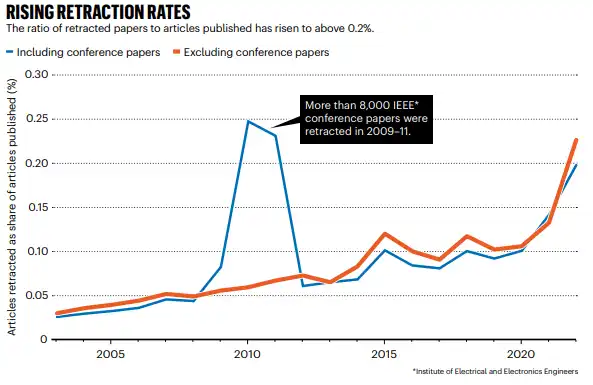
Some researchers may even manipulate data or exaggerate research findings. The current funding mechanism requires results to be produced in a limited time frame, which promotes academic misconduct. As a graduate student, I often hear about cases of data manipulation by students in other labs. Nature points out that the number of retracted papers in academic conferences and journals is sharply rising.
2.1.3 Do Not Misunderstand: Centralized Funding Is Inevitable
It needs to be clarified that centralized funding itself is not the issue. While this model has brought about many negative effects, it is still crucial to modern science. Compared to the past, today's scientific research is more complex and expensive. A graduate student's project may easily require thousands to hundreds of thousands of dollars, while research in fields such as defense, aerospace, and basic physics requires an exponential increase in resources.
Therefore, centralized funding is indispensable, but the issues within it must also be addressed.
2.2.1 Journal Industry Overview
In the crypto industry, entities such as Tether, Circle (issuer of stablecoins), Binance, and Coinbase (centralized exchanges) dominate the market. In academia, journals are the most powerful entities, including giants like Elsevier, Springer Nature, Wiley, the American Chemical Society (ACS), IEEE, and others.
· Elsevier had a revenue of $36.7 billion in 2022, with a net profit of $25.5 billion and a profit margin of nearly 70%.
· In comparison, Nvidia's profit margin in 2024 is 55%-57%.
· By the first 9 months of 2024, Springer Nature had already reached a revenue of $14.4 billion, highlighting the immense scale of the academic publishing industry.
The core profit models of academic journals include:
· Subscription Fees: Access to journal articles usually requires a subscription or a one-time fee to access specific articles.
· Article Processing Charges (APC): Authors can pay fees to make their papers open-access; otherwise, most papers are placed behind paywalls.
· Copyright and Reprint Fees: In most cases, once a paper is published, the copyright belongs to the publisher, and journals monetize through educational or commercial licensing.
2.2.2 Journals: The Epicenter of Misaligned Incentives in Academia
So, why are journals considered the "top predators" of the academic world? Isn't their business model just the same as the general publishing industry's logic? The answer is no.
Journal's business model is extremely biased towards the publisher, rather than the author or the reader.
In traditional publishing or online platforms, authors usually can share revenue with the platform, and the content can reach as wide an audience as possible. However, the core operation of academic journals is entirely in favor of the publisher's interests:
· Scholars provide research results for free, but journals profit through subscription fees, page charges, copyright transfer, etc.
· Even if authors pay a high APC, journals still control the distribution channels, influencing the reach of the paper.
· Readers (including universities, research institutions) often need to pay high subscription fees to access cutting-edge research results.
Journals play a key role in academic communication, but their profit model entirely favors the publisher, rather than the author or the academic community itself.
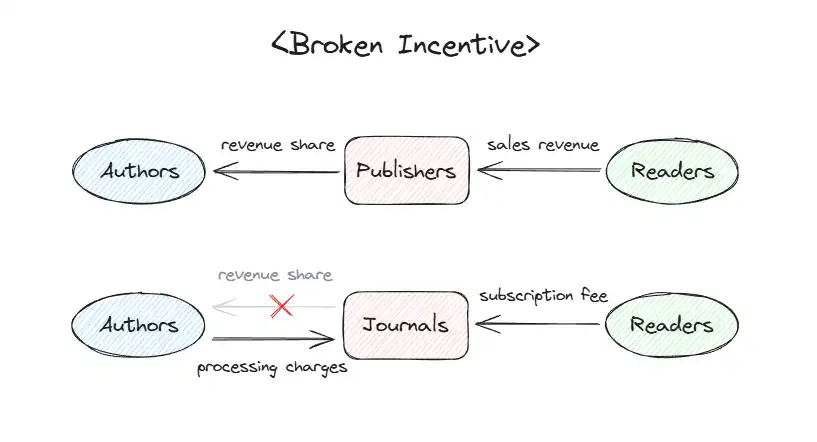
To read papers from a specific journal, readers must pay a subscription fee or purchase single articles. However, if researchers want their papers to be open access, they need to pay high processing fees to the journal and receive no profit-sharing.
It doesn't stop there—researchers not only have no right to share the revenue brought by the journal, but in most cases, the copyright of their papers is directly transferred to the journal. This means that journals can not only price freely but also repeatedly monetize this research content for business purposes.
This system is highly exploitative and entirely unfair to researchers.
In terms of the profit model, journals not only monopolize the channels for disseminating academic achievements but also squeeze researchers through high fees. The scale and depth of exploitation in their business model are astonishing.
For example, in the field of natural sciences, one of the most well-known open-access journals—Nature Communications—authors need to pay a $6,790 article processing fee (APC) for each published paper. This fee is almost a significant portion of many researchers' annual budgets, yet the journal still does not provide any share to the researchers.
The essence of academic journals has long evolved from promoting knowledge dissemination to systematic exploitation of researchers.
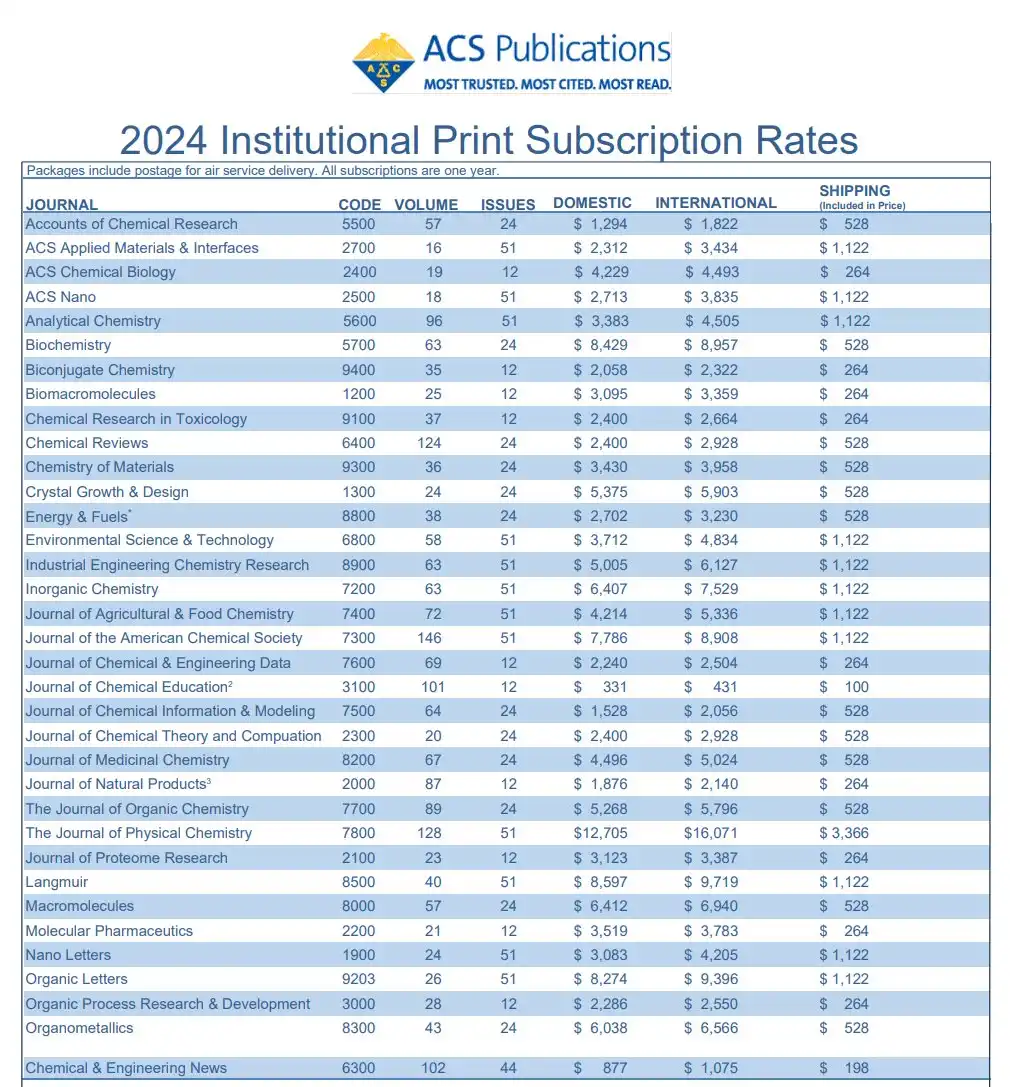
The subscription fees for academic journals are equally staggering. While subscription prices vary by journal discipline and type, the average annual institution subscription fee for journals under the American Chemical Society (ACS) can be as high as $4,908 per journal. If an institution subscribes to all ACS journals, the cost would skyrocket to $170,000.
Springer Nature's subscription fees are even higher, with an average annual fee of around $10,000 per journal, and the full journal package subscription fee reaching $630,000.
Since most research institutions subscribe to multiple journals, this means that researchers and institutions face a huge subscription expense.
A more serious issue is that researchers are almost compelled to publish papers in these journals to establish their academic credentials. The financial flow of the journal industry mainly relies on government and corporate research funding, creating a highly exploitative cycle:
· Researchers must continually publish papers to accumulate academic achievements, apply for research funding, and advance their careers.
· The funding for research mainly comes from government or corporate research grants.
· The article processing charges (APC) for publication are also paid by this funding.
· Institutions, to allow researchers to read these papers, also need to pay high subscription fees, which also come from government or corporate funding.
Since these costs are mostly borne by research funding rather than individual researchers' contributions, researchers are less sensitive to these high expenses, giving journals unlimited room to increase prices. Ultimately, academic journals have formed a distorted profit model: charging authors high publication fees, charging readers and institutions exorbitant subscription fees, and monopolizing the copyright of papers. This system not only greatly exploits researchers but also hinders the free dissemination of knowledge, turning academic research into a thoroughly commercial business.
2.2.3 Inefficiency and Lack of Transparency in the Journal Peer Review Process
The issues with journals are not only in their revenue structure but also in the inefficiency and lack of transparency in the publishing process. In my six years of academic career, having published four papers, I have encountered numerous issues, especially the inefficient submission process, lack of transparency, and a peer review system with a luck factor.
The standard peer review process for journals typically includes the following steps:
1. Researchers compile their research findings into a manuscript and submit it to the target journal.
2. The journal editor assesses whether the manuscript fits the journal's scope and basic standards. If it does, the editor will assign two to three peer reviewers to conduct a review.
3. Peer reviewers evaluate the manuscript, provide feedback, raise issues and questions, and then make one of four recommendations:
· Accept: No modifications needed, accept as is.
· Minor Revision: Accept with minor changes required.
· Major Revision: Accept but significant changes needed.
· Reject: Manuscript is not accepted.
4. The researcher revises the paper based on the review comments, and the editor makes the final decision.
While this process may seem straightforward, it is rife with inefficiencies, inconsistencies, and overreliance on subjective judgment, which can undermine the overall quality and fairness of the system.
The inefficiency of the review process is a significant issue. For example, in the natural sciences and engineering, the time required to submit a paper and go through the review process is roughly as follows:
· Time to receive editorial rejection: 1 week to 2 months.
· Time to receive peer review comments: 3 weeks to 4 months.
· Time for final decision: 3 months to 1 year.
When delays occur in the review process due to journal or reviewer circumstances, or multiple review rounds are needed, publishing a paper can take over a year. For example, in a paper I submitted, the editor sent the manuscript to three reviewers, but one did not respond, necessitating the search for another reviewer, extending the review period by four months.
Furthermore, if the paper is rejected during this lengthy period, the entire process must start again, with submission to another journal, meaning additional waiting and a doubling of time wasted. This inefficient and time-consuming publication process is highly disadvantageous for researchers, as during this time, similar research by other teams may have already been published. I have witnessed this situation many times, and novelty is a key element of a paper, delays of which can have serious consequences.
Another issue is the shortage of peer reviewers. As mentioned earlier, submitted papers are typically evaluated by two to three peer reviewers. Whether a paper is accepted often depends on the opinions of these reviewers. While reviewers are usually experts in the relevant field and consensus on the paper's quality is usually reached through them, the review results still carry an element of luck.
I have experienced an example: I once submitted a paper to a prestigious journal A, received two major comments and one minor comment, and was ultimately rejected. I then submitted the same paper to journal B, which is relatively less known, but it also rejected my paper, with one rejection and one major issue in the review comments. Interestingly, despite journal B's lower prominence, the outcome was even worse.
This highlights a key issue: the evaluation of a paper relies on a small number of experts, and the selection of reviewers is entirely determined by the journal editor. This means that whether a paper is accepted actually carries a certain element of luck. For example, if three reviewers are lenient, the paper may be accepted; but if assigned to three stricter reviewers, the paper may be rejected.
The problems in the journal peer review process are not only inefficiency and lack of transparency, but also include insufficient reviewer numbers, lack of incentivization, and the presence of bias in peer review.
Firstly, significantly increasing the number of reviewers to achieve a fairer evaluation is not practical. For journals, adding reviewers means more communication and higher inefficiency. Therefore, while increasing reviewers may help achieve a more just review, from the journal's perspective, this approach is not cost-effective.
Secondly, the lack of incentivization mechanisms in the peer review process has resulted in varying review quality. Some reviewers are able to fully grasp the content of the paper, provide insightful comments and questions. However, other reviewers do not carefully read the paper, provide information already included in the paper, or give irrelevant criticisms and comments, leading to significant revisions or straight rejections of the paper.
Let me illustrate with an example from my experience. I once submitted a paper to the renowned Journal A. Despite receiving two major comments and one minor comment, my paper was still rejected. I then submitted the same paper to Journal B, which has slightly lower prestige. However, after receiving 1 rejection and 1 major comment, it was rejected again. Interestingly, although Journal B is not as prominent as Journal A, the outcome was worse.
The third issue is the lack of incentivization measures in the peer review process, resulting in poor review quality. This varies among peer reviewers. Some reviewers have a thorough understanding of the paper and provide thoughtful comments and questions. However, others do not read the paper carefully, ask about information already included, or give irrelevant criticisms and comments, leading to major revisions or rejection. Unfortunately, this is quite common and can leave researchers feeling betrayed as if their efforts have been in vain.
The fourth issue is the lack of transparency in the peer review process. Peer review is usually conducted anonymously to ensure fairness, with journal editors responsible for selecting reviewers. However, reviewers sometimes may identify the authors of the paper under review. This can lead to biases in the review, for example, reviewers may favor papers from their friends or collaborators, or intentionally give harsh reviews to papers from competing teams. This situation is more common than we imagine and can sometimes have a significant impact on the final outcome of a paper.
2.2.6 The Illusion of Impact Factor
Lastly, I want to discuss the issue of the evaluation of citation counts and impact factors.
How do we evaluate a researcher's career and academic level? Each researcher has their own unique strengths: some excel in experimental design, some are adept at identifying research directions, and others can delve deep into overlooked details. However, qualitatively assessing each researcher's strengths is nearly impossible. Therefore, the academic community relies on quantitative metrics, namely using a single number to evaluate researchers, especially citations and the H-index.
Researchers with a high H-index and paper citation count are often considered more accomplished. The H-index is an indicator used to measure a researcher's productivity and impact. For example, an H-index of 10 means that the researcher has at least 10 papers, each of which has been cited at least 10 times. Ultimately, citation count remains the most important metric of assessment.
So, how can researchers increase their citation count? While producing high-quality papers is the fundamental solution, choosing the right research topics is equally crucial. The more popular the research field and the more researchers there are, the more likely a paper's citation count will increase.
2.2.5 Publish or Perish
Success stems from failure. Progress in any field requires failure as a stepping stone. However, in the modern scientific world, almost all papers only report successful results, while the countless failures leading to these successes are ignored and abandoned. In the fiercely competitive academic world, researchers have little incentive to report failed experiments because these failures do not benefit their careers and are often seen as a waste of time.
This also reflects the "publish or perish" phenomenon in academia. To gain academic recognition and continue funding, researchers often need to publish a large number of papers. However, successful papers tend to only present results while overlooking the failures in the research, preventing many research processes from being fully presented. As a result, the academic field exhibits low tolerance for failure, instead treating outcomes as the sole measure of a researcher's value, leading to the homogenization of academic evaluation.
This is also closely related to the relationship between impact factor and citation count. The academic world's evaluation of papers often overly relies on citation count and impact factor, overlooking the failures or challenges that may have been encountered during the research process. Yet, these undisclosed failures are actually an indispensable part of academic progress.
2.3 Systemic Challenges
In the field of computer software, open-source projects have transformed software development by publicly sharing code and encouraging global contributions, fostering collaboration among developers, thus allowing software to be improved. However, the trajectory of scientific development has moved in the opposite direction.

In the early days of science, such as the 17th century, scientists prioritized sharing knowledge, advocated for natural philosophy, and displayed an open and collaborative attitude, distancing themselves from rigid authority. For example, despite their competitive relationship, Isaac Newton and Robert Hooke still shared and critiqued each other's work through letters, collectively advancing knowledge.
In contrast, modern science has become more closed off. Researchers, driven by competition to secure funding and publish in high-impact journals, often keep unpublished research confidential and strongly discourage external sharing. As a result, research labs within the same field naturally see each other as competitors, with limited avenues to learn about each other's work.
Since much research builds incrementally on previously published work, competing labs are likely to be working on similar research topics. Without sharing the research process, multiple labs end up conducting parallel studies on the same subject. This creates a high-stakes, low-efficiency environment where the lab that publishes results first reaps all the credit. Researchers often find that as they near completion, similar research has already been published, rendering much of their efforts futile.
In the worst cases, even within the same lab, students may withhold experimental materials or research findings from each other, fostering internal competition rather than collaboration. As open-source culture has become foundational in computer science, the modern scientific community must embrace a more open and collaborative culture to benefit a broader audience.
3. How to Fix Traditional Science?
Researchers are acutely aware of these issues in the scientific community. While they recognize these problems, these challenges are deeply rooted in structural issues that individuals find hard to address. However, over the years, there have been many attempts to tackle these issues.
3.1.1 Fixing Centralized Funding
Fast Grants: During the COVID-19 pandemic, Stripe's CEO, Patrick Collison, identified inefficiencies in traditional grant processes and launched the Fast Grants initiative, raising $50 million to support hundreds of projects. Funding decisions are made within 14 days, with grant amounts ranging from $10,000 to $500,000, a significant sum for researchers.
Renaissance Philanthropy: Founded by Tom Kalil, a former technology policy advisor to Presidents Clinton and Obama. This nonprofit consultancy organization connects donors with high-impact scientific and technological projects and, with the support of Eric and Wendy Schmidt, operates similarly to the patronage system that once thrived among European scientists.
hhmi: The Howard Hughes Medical Institute employs a unique funding model that supports individual researchers rather than specific projects. By providing long-term funding, it alleviates the pressure for short-term results, allowing researchers to focus on sustained research work.
experiment.com: This is an online crowdfunding platform that allows researchers to introduce their work to the public and raise the necessary funds from individual donors.
3.1.2 Fixing Academic Journals
PLOS ONE: PLOS ONE is an open-access scientific journal that anyone can freely read, download, and share articles from. It evaluates papers based on scientific validity rather than impact and is known for publishing negative, inconclusive, or invalid results. Its streamlined publishing process helps researchers quickly disseminate research findings. However, PLOS ONE charges researchers article processing fees ranging from $1000 to $5000.
arXiv, bioRxiv, medRxiv, PsyArXiv, SocArXiv: These are preprint servers that allow researchers to share their paper drafts before formal publication. They enable the rapid dissemination of research findings, claim precedence on specific topics, provide community feedback and collaboration opportunities, and offer readers free access to papers.
Sci-hub: Founded by Kazakhstani programmer Alexandra Elbakyan, Sci-hub provides free access to paywalled papers. Despite being illegal in most jurisdictions and facing lawsuits from publishers like Elsevier, it has been praised for advancing free access to academic content while also criticized for legal violations.
3.1.3 Fixing Collaboration
ResearchGate: This is a professional social platform where researchers can share papers, ask and answer questions, and find collaborators.
CERN: CERN is a non-profit organization involved in particle physics research, conducting large-scale experiments that are challenging for individual labs to undertake. It brings together researchers from multiple countries, funded based on each participating country's GDP contribution.
3.2 DeSci, the New Wave
While the above efforts have made some progress in addressing the challenges modern science faces, they have not created enough impact to fundamentally transform the field. In recent years, with the rise of blockchain technology, a concept called Decentralized Science (DeSci) has garnered attention as a potential solution to these structural issues. So, what exactly is DeSci? Can it truly revolutionize the modern scientific ecosystem?
4. Enter DeSci
4.1 DeSci Overview
DeSci, short for Decentralized Science, refers to making scientific knowledge a public good by improving funding, research, peer review, and research output sharing. It aims to create a more efficient, fair, transparent, and inclusive system. Blockchain technology plays a central role in achieving these goals through the following features:
Transparency: Except for privacy networks, blockchain networks are inherently transparent, allowing anyone to view transactions. This feature enhances the transparency of project funding and peer review processes.
Ownership: Blockchain assets are protected by private keys, making ownership claims easy. This feature enables researchers to monetize their data or assert intellectual property (IP) rights to leverage funded research outcomes.
Incentive Mechanism: The incentive mechanism is core to blockchain networks. To encourage collaboration and active participation, token incentives can be used to reward individuals participating in various research processes.
Smart Contracts: Smart contracts deployed on a neutral network execute operations based on their code definitions. They can be used to establish and automate interaction logic among participants, with transparency.
4.2 Potential Applications of DeSci
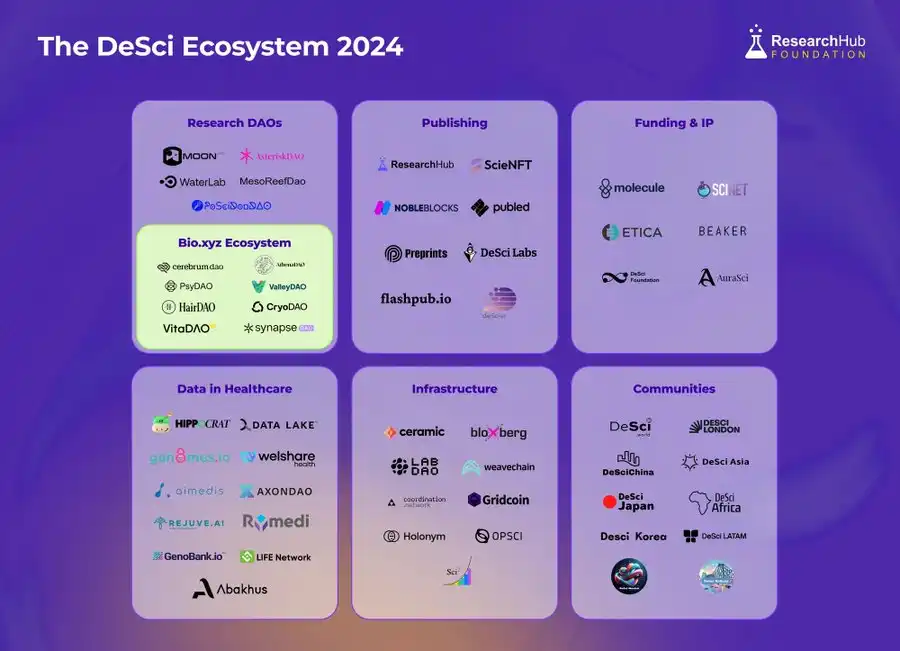
As the name suggests, DeSci can be applied to various aspects of scientific research. ResearchHub categorizes the potential applications of DeSci into the following five areas:
Research DAOs: These are decentralized autonomous organizations focusing on specific research topics. Through blockchain technology, they can transparently manage research planning, funding, governance voting, and project management.
Publication: Blockchain can decentralize and transform the publication process entirely. Research papers, data, and code can be permanently recorded on the blockchain, ensuring their credibility, providing free access, and improving processes such as peer review through token incentives.
Funding and Intellectual Property: Researchers can easily obtain global audience funding support through blockchain networks. Additionally, by tokenizing research projects, token holders can participate in project direction decisions or share future intellectual property income.
Data: Blockchain can achieve secure, transparent storage, management, and sharing of research data.
Infrastructure: This includes governance tools, storage solutions, community platforms, and identity systems that can be seamlessly integrated into DeSci projects.
The best way to understand DeSci is to explore projects within its ecosystem and see how they address structural issues in modern science. Next, let's take a closer look at some prominent projects in the DeSci ecosystem.
5. DeSci Ecosystem
5.1 Why the Ethereum Ecosystem is the Ideal Choice for DeSci
Unlike DeFi, gaming, or AI applications, DeSci projects primarily focus on the Ethereum ecosystem. This trend can be attributed to the following reasons:
· Trustworthy Neutrality: Ethereum is the most neutral network among smart contract platforms. Given the nature of DeSci, which involves significant fund flows (e.g., research funding), values such as decentralization, fairness, censorship resistance, and trust are crucial. This makes Ethereum the optimal network for building DeSci projects.
· Network Effects: Ethereum boasts the largest user base and liquidity in the smart contract network. Compared to other applications, DeSci, as a relatively niche field, may face fragmentation risks if projects are spread across multiple networks. This fragmentation could hinder project management due to liquidity and ecosystem-related challenges. Therefore, most DeSci projects are built on the Ethereum network to leverage Ethereum's strong network effects.
· DeSci Infrastructure: Few DeSci projects are built from scratch. Instead, many projects leverage existing frameworks (such as Molecule) to accelerate development. Since most DeSci infrastructure tools are based on Ethereum, the majority of projects in this field also operate on Ethereum.
Based on these reasons, the DeSci projects discussed in this article mostly belong to the Ethereum ecosystem. Next, we will explore some representative projects in each area of DeSci.
5.2.1 Molecule
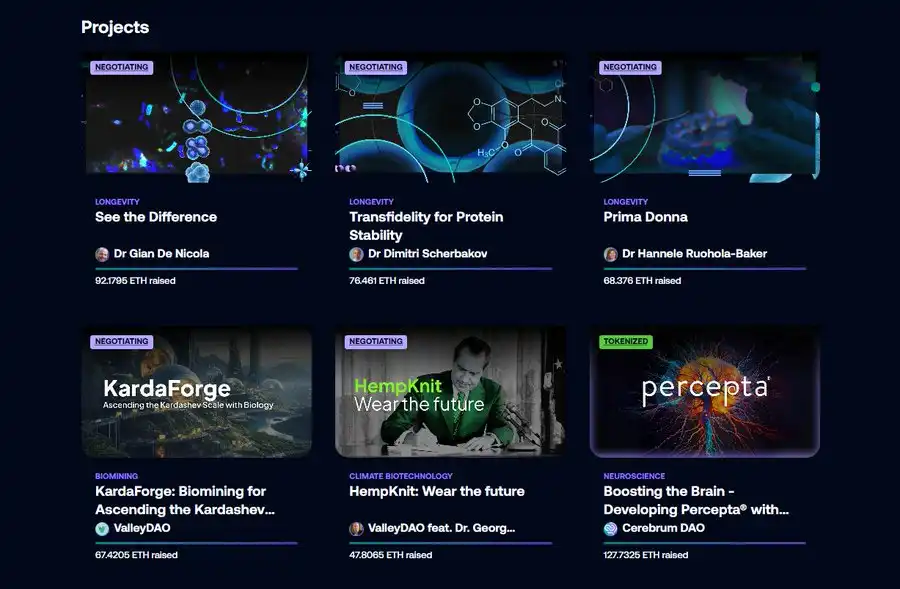
Molecule is a fundraising and tokenization platform for biopharma intellectual property. Researchers can raise funds from multiple individuals via blockchain, tokenize project IP, and funders can receive IP Tokens proportionate to their contributions.
Molecule's decentralized fundraising platform, Catalyst, connects researchers and funders. Researchers prepare the necessary documentation and project plans, submit projects on the platform, and funders support these proposals with ETH funding. Once the fundraising is complete, IP-NFTs and IP Tokens are issued, and funders can claim these tokens based on their contributions.
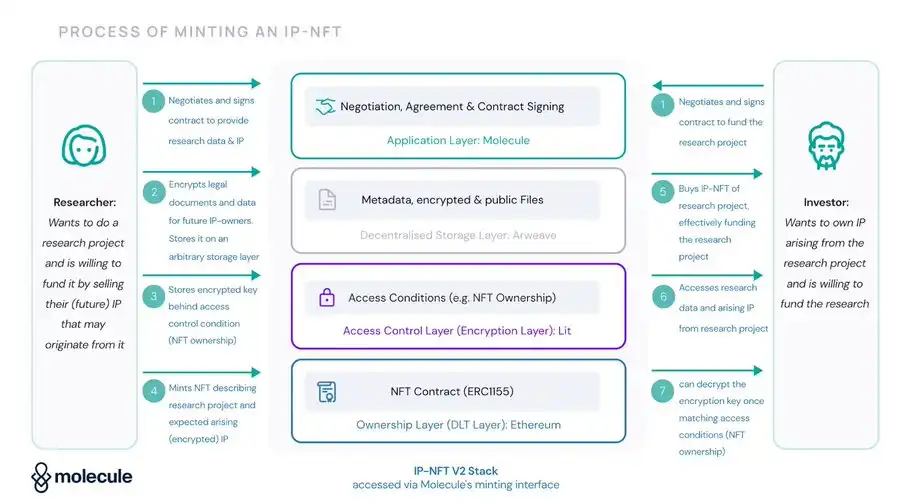
An IP NFT represents a tokenized version of project intellectual property on the blockchain, combining two legal agreements into one smart contract. The first legal agreement is the research agreement signed between researchers and funders. This agreement includes terms such as research scope, deliverables, timeline, budget, confidentiality, intellectual property and data ownership, publication, results disclosure, licensing, and patent conditions. The second legal agreement is the assignment agreement, transferring the research agreement to the IP NFT holder, ensuring that the rights of the current IP NFT holder can be transferred to a new holder.
IP Tokens represent partial governance rights over intellectual property. Token holders can participate in key research decisions and access exclusive information. While IP Tokens do not guarantee revenue sharing from the research, depending on the intellectual property holder, future commercialization profits may be distributed to IP Token holders.
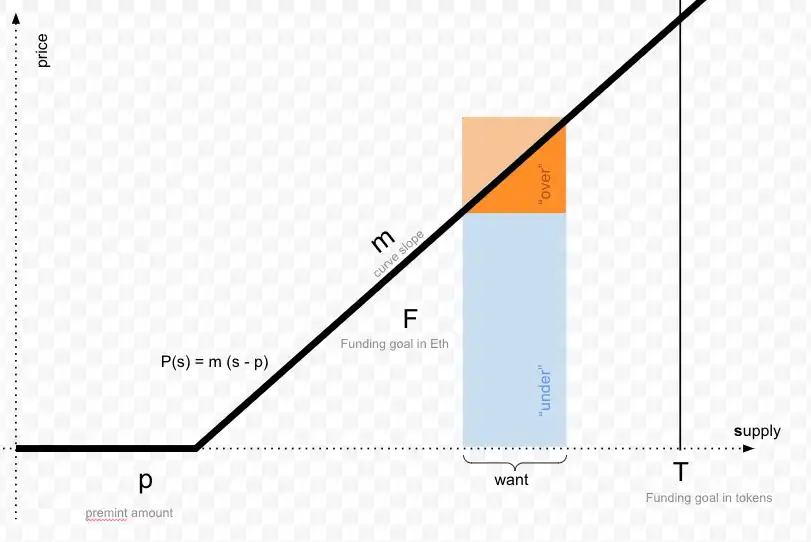
The price of IP Tokens is determined by the Catalyst Bonding Curve, reflecting the relationship between token supply and price. As more tokens are issued, their price increases. This mechanism incentivizes early contributors by allowing them to acquire tokens at a lower cost.
Here are some cases of successful fundraising through Molecule:
Oslo University's Square Lab: The Square Lab researches aging and Alzheimer's disease. The lab received support from VitaDAO through Molecule's IP-NFT framework to identify and characterize new drug candidates for activating mitochondrial autophagy, which has a positive impact on Alzheimer's research.
Artan Bio: Artan Bio focuses on tRNA-related research. Through Molecule's IP-NFT framework, it received $91,300 in funding from the VitaDAO community.
5.2.2 Bio.xyz
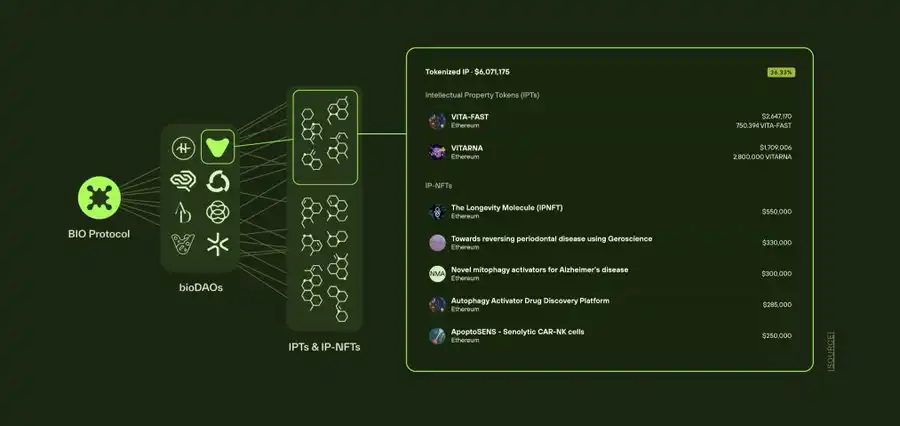
Bio.xyz is a curation and liquidity protocol for decentralized science (DeSci), similar to an incubator supporting BioDAO. Bio.xyz's goals include:
·Plan, create, and accelerate new BioDAO-funded scientific projects on-chain.
·Provide ongoing funding and liquidity for BioDAO and on-chain biotech assets.
·Standardize BioDAO frameworks, tokenomics, and data/product suites.
·Generation and commercialization of scientific intellectual property (IP) and data.
BIO token holders can vote to decide which new BioDAOs join the ecosystem. Once a BioDAO is approved to join the BIO ecosystem, voting-supported token holders can participate in the initial private token sale. This process is similar to an approved seed round.
The governance token of the approved BioDAO is paired with the BIO token and added to a liquidity pool, addressing BioDAO's concerns regarding governance token liquidity (e.g., VITA/BIO). Additionally, Bio.xyz also operates a bio/acc rewards program providing BIO token rewards to BioDAOs to help them achieve key milestones.
Furthermore, the BIO token serves as a meta-governance token among multiple BioDAOs, enabling BIO holders to participate in the governance of various BioDAOs. Moreover, the BIO network provides $100,000 in funding for incubated BioDAOs, acquiring 6.9% of the BioDAO's token supply for the liquidity pool. This increases the protocol's assets under management (AUM), thereby enhancing the value of the BIO token.
Bio.xyz leverages Molecule's IP NFT and IP Tokens framework to manage and own IP. For example, VitaDAO successfully issued IP Tokens such as VitaRNA and VITA-FAST within the Bio ecosystem. Below is a list of research DAOs currently incubated through Bio.xyz, which will be discussed in detail:
·Cerebrum DAO: Focused on preventing neurodegenerative diseases.
·PsyDAO: Dedicated to advancing consciousness evolution through safe, accessible psychedelic experiences.
·cryoDAO: Contributing to cryopreservation research projects.
·AthenaDAO: Committed to driving women's health research.
·ValleyDAO: Supporting synthetic biology research.
·HairDAO: Collaborating with others to develop new methods for treating hair loss.
·VitaDAO: Focused on research related to human lifespan.
In summary, Bio.xyz is planning BioDAO and providing a token framework, liquidity services, funding, and incubation support. As the IP of BioDAO in the ecosystem is successfully commercialized, the value of Bio.xyz's funding pool will increase, creating a virtuous cycle.
5.3.1 VitaDAO
When mentioning the most well-known research DAO, VitaDAO is often the first to come to people's minds. Its reputation stems from being an early DeSci project and receiving lead investment from Pfizer Ventures in 2023. VitaDAO funds projects dedicated to longevity and aging research, having supported over 24 projects with funding exceeding $4.2 million. In return, VitaDAO receives IP NFTs or company equity and operates IP NFTs using the Molecule.xyz framework.
VitaDAO provides transparency through blockchain, making its funding pool publicly visible. The pool's value is approximately $44 million, including around $2.3 million in equity and $29 million in tokenized IP assets. VITA token holders decide the direction of the DAO through governance votes and can access various health services.
Noteworthy projects supported by VitaDAO include VitaRNA and VITA-FAST. The IP of both projects has been tokenized and is actively traded, with VitaRNA having a market value of around $13 million and VITA-FAST's market value at $24 million. Both projects hold regular meetings with VitaDAO to update on their progress.
VitaRNA: VitaRNA is an IP Token project led by the biotech company Artan Bio. The project received funding in June 2023 and released an IP NFT in January 2024, breaking it down into IP Tokens. The project's innovative research focuses on inhibiting arginine nonsense mutations, particularly the CGA codon, which is vital in proteins associated with DNA damage, neurodegenerative diseases, and tumor suppression.
VITA-FAST: VITA-FAST is an IP Token project from Viktor Korolchuk's lab at Newcastle University. The project focuses on discovering new autophagy inducers. Autophagy is a cellular process, the decline of which is a factor in biological aging. Therefore, the project explores anti-aging and related disease treatment by stimulating autophagy, ultimately aiming to enhance human healthspan.
5.3.2 HairDAO
HairDAO is an open-source research network where patients and researchers collaborate to develop methods for treating hair loss. According to data from the Scandinavian Biotech Lab, hair loss affects 85% of men and 50% of women in their lifetime. However, currently available treatments in the market include methods such as Minoxidil, Finasteride, and Dutasteride. Notably, Minoxidil was FDA approved in 1988, while Finasteride received approval in 1997.
Despite the approval of these treatment methods, their effects are limited, often only able to slow down or temporarily stop hair loss rather than cure it. The development of hair loss treatments has been slow due to:
· Complex Causes: Hair loss is influenced by various factors, including genetics, hormonal changes, and immune reactions, making the development of effective targeted therapies challenging.
· High Development Costs: Drug development requires significant time and investment, but since hair loss is not life-threatening, research funding priorities for it are usually lower.
HairDAO incentivizes patients to share their treatment experiences and data in the application, rewarding them with HAIR governance tokens. HAIR token holders can participate in DAO governance votes, enjoy discounts on HairDAO hair care products, and stake tokens for faster access to confidential research data.
5.3.3 Others
CryoDAO: CryoDAO focuses on cryopreservation research, with a funding pool exceeding $7 million and having funded five projects. CRYO token holders can participate in governance voting and have the opportunity for early or exclusive access to funded research breakthroughs and data.
ValleyDAO: ValleyDAO aims to address climate challenges through funding synthetic biology research. Synthetic biology, which uses organisms to sustainably synthesize nutrients, fuels, and drugs, is a key technology for combating climate change. ValleyDAO has funded multiple projects, including research by Professor Rodrigo Ledesma-Amaro at Imperial College London.
CerebrumDAO: CerebrumDAO focuses on brain health research, particularly Alzheimer's disease prevention. Its Snapshot page showcases proposals from various projects seeking funding. Decisions are made through decentralized voting by DAO members.
5.4.1 ResearchHub
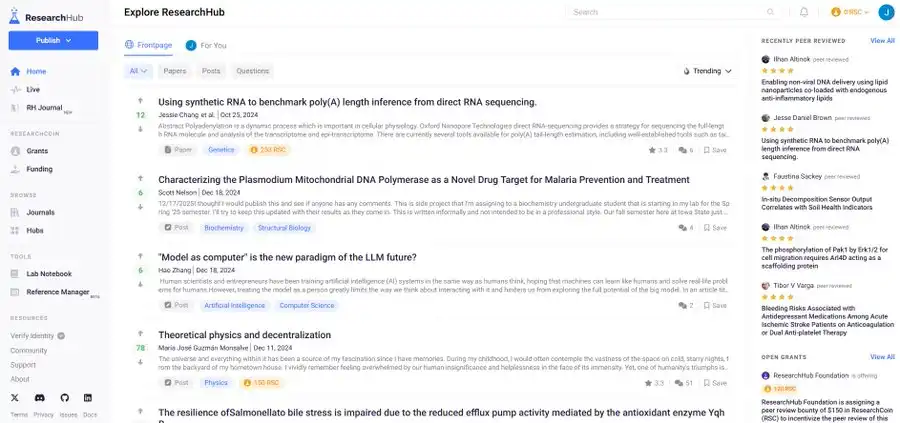
ResearchHub is a leading DeSci publishing platform aimed to be the "GitHub for Science." Founded by Coinbase CEO Brian Armstrong and Patrick Joyce, ResearchHub successfully raised a $5 million Series A funding in June 2023, led by Open Source Software Capital.
ResearchHub is a tool for open publication and discussion of scientific research, incentivizing researchers through its native RSC token for publishing, peer review, and curation. Its key features include:
Funding
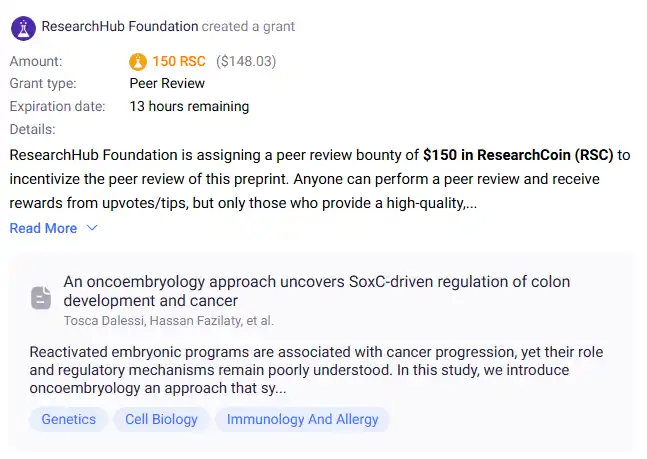
Users can create funding requests for specific tasks from other ResearchHub users using the RSC token. Funding types include:
· Peer Review: Request for peer review of a manuscript.
· Answer Questions: Request for answering specific questions.
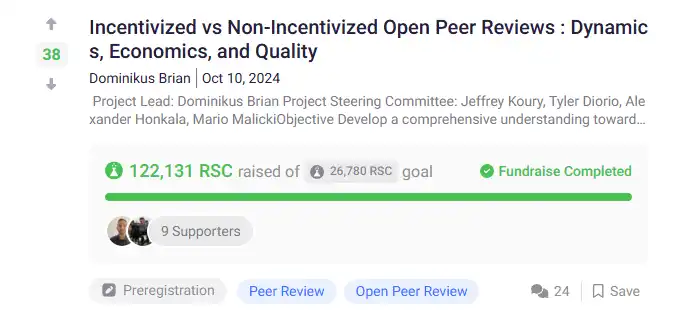
Under the "Funds" tab, researchers can upload research proposals and receive RSC token funding from users.
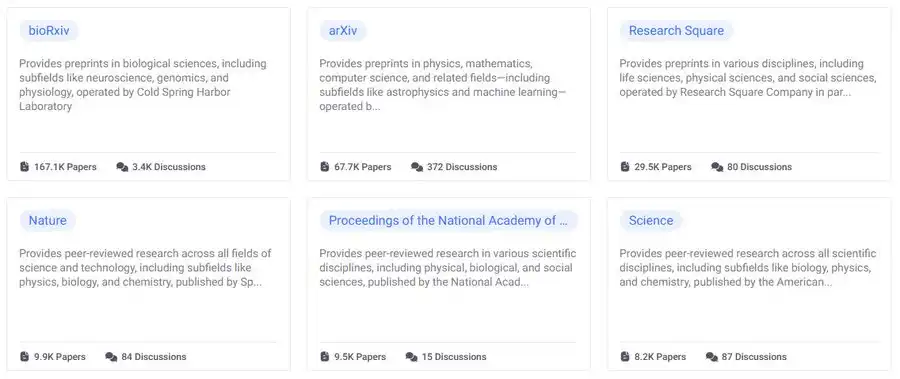
The Journal section archives papers from peer-reviewed journals and preprint servers. Users can browse literature and engage in discussions. However, many peer-reviewed papers are behind paywalls, allowing access only to abstracts written by others.
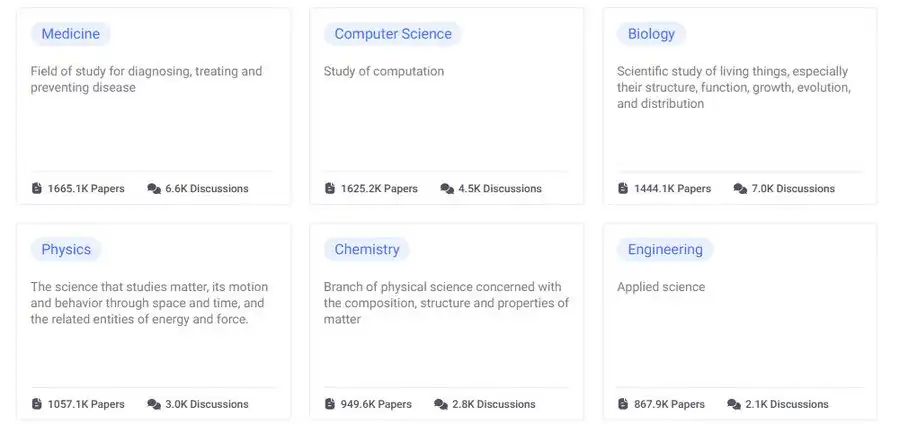
The Hub section is where users can create and join research groups to facilitate discussions on specific research topics.
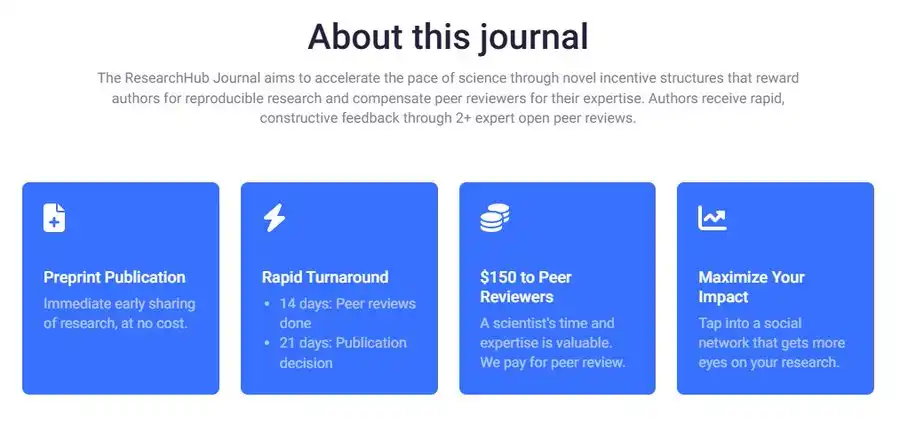
RH Journal is ResearchHub's in-house journal with an efficient peer review process completed in 14 days and decisions made within 21 days. Additionally, it provides incentive mechanisms for peer reviewers, addressing the common incentive misalignment issues in traditional peer review systems.
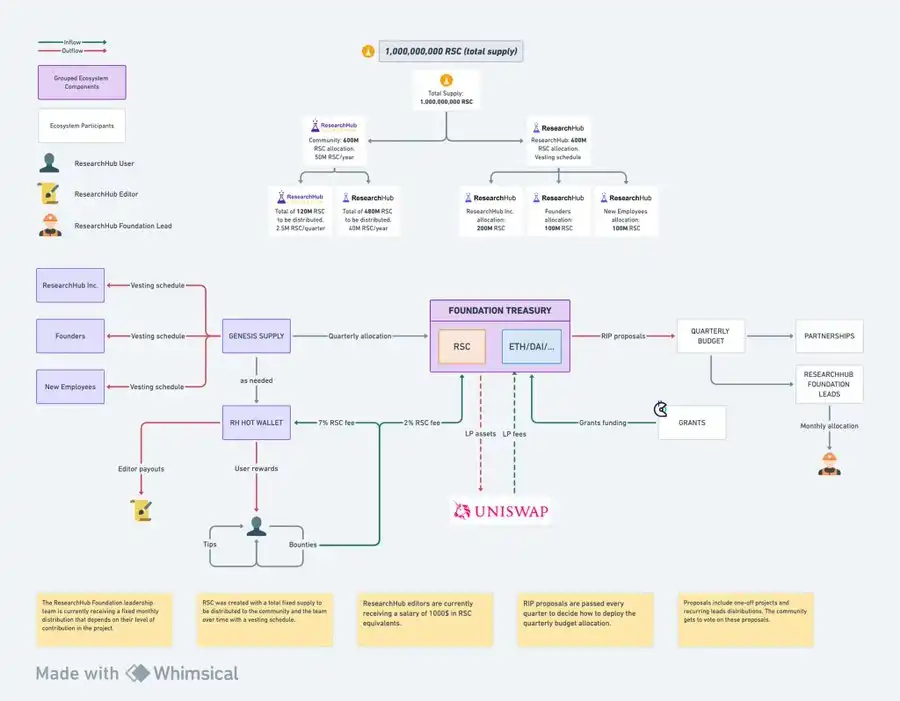
The RSC token is an ERC-20 token designed for the ResearchHub ecosystem, with a total supply of 1 billion tokens. RSC tokens drive user engagement and support ResearchHub in becoming a fully decentralized open platform. Their uses include:
· Governance voting
· Tipping other users
· Bounty programs
· Incentives for peer reviewers
· Rewards for orchestrating research papers
5.4.2 ScieNFT
ScieNFT is a decentralized preprint server where researchers can mint their work as NFTs. The published formats can range from simple charts and ideas to datasets, artworks, methods, and even negative results. Preprint data is stored using decentralized storage solutions like IPFS and Filecoin, while the NFTs are uploaded to the Avalanche C-Chain.
While using NFTs to identify and track ownership of work is an advantage, a notable drawback is the lack of clear benefits of owning these NFTs. Additionally, the market lacks effective curation.
5.4.3 deScier

deScier is a decentralized scientific journal platform. Unlike publishers like Elsevier or Springer Nature managing multiple journals, deScier hosts various journals. All papers retain 100% of the researchers' copyright, and peer review is part of the process. However, as described below, a significant limitation is the lower number of papers published in the journals and slower upload speeds.
5.5.1 Data Lake
Data Lake software enables researchers to integrate various user recruitment channels, track their effectiveness, manage consent forms, and conduct prescreening surveys while giving users control over their data. Researchers can share and manage patient data consent easily between third parties. The Data Lake Chain, based on Arbitrum Orbit's L3 network, is used to manage patient consent.
5.5.2 Welshare Health
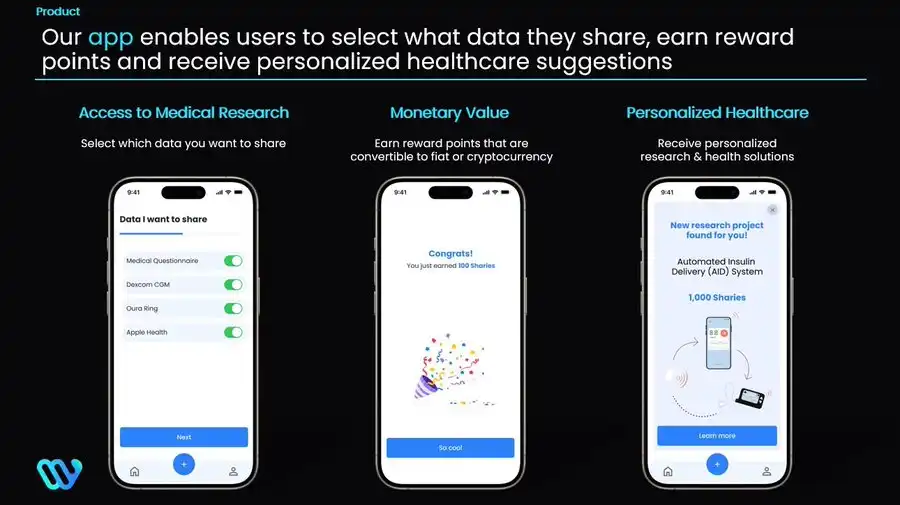
In traditional medical research, the most significant bottleneck is the delay in recruiting clinical trial participants and a lack of patient participation. Additionally, while patients' medical data is highly valuable, there is also a risk of misuse. Welshare aims to address these challenges through Web3 technology.
Patients can securely manage their data, monetize it to earn income, and receive personalized medical services. Conversely, medical researchers can more easily access diverse datasets, facilitating their research.
Through an application built on the Base Network, users can selectively provide data to earn in-app reward points, which can later be converted into cryptocurrency or fiat currency.
5.5.3 Hippocrat
Hippocrat is a decentralized healthcare data protocol that allows individuals to securely manage their health data using blockchain and Zero Knowledge Proof (ZKP) technology. Its first product, HippoDoc, is a telemedicine application that provides medical consultations, combining medical databases, AI technology, and assistance from healthcare professionals. During this process, patient data is securely stored on the blockchain.
5.6.1 Ceramic
Ceramic is a decentralized event streaming protocol that enables developers to create decentralized databases, distributed computation pipelines, authenticated data streams, and more. These features make it ideal for DeSci projects, helping them leverage Ceramic as a decentralized database:
· Data on the Ceramic network is permissionless, allowing researchers to share and collaborate on data.
· Actions on the Ceramic network such as research papers, citations, and reviews are represented as "Ceramic streams." Each stream can only be modified by the original author's account, ensuring intellectual property traceability.
· Ceramic also provides infrastructure for verifiable claims, enabling DeSci projects to adopt its reputation infrastructure.
5.6.2 bloXberg
bloXberg is a blockchain infrastructure established under the leadership of the Max Planck Digital Library in Germany, with participants including ETH Zurich, Ludwig Maximilian University of Munich, and IT University of Copenhagen, among other renowned research institutions.
bloXberg aims to advance scientific progress through various processes in innovative scientific research, such as research data management, peer review, and intellectual property protection. By leveraging blockchain to decentralize these processes, it enhances the transparency and efficiency of research. Researchers can securely share and collaborate on research data using blockchain.
Is DeSci Really a Panacea?
We have explored the structural issues in modern science and how DeSci addresses these problems. But hold on a moment. Can DeSci truly transform the scientific landscape and play a central role as the crypto community claims? I don't think so. However, I do believe that DeSci has the potential to play a supportive role in certain areas.
6.1 What Blockchain Can and Cannot Solve
Blockchain is not magic; it cannot solve all problems. We must clearly delineate what blockchain can and cannot solve.
6.1.1 Funding
DeSci is poised to excel in funding under the following conditions:
Small-scale funding
Research with commercial potential
The funding scale in the scientific community varies greatly, ranging from tens of thousands to millions or even billions of dollars. For large projects requiring substantial funding, centralized funding from governments or corporations is inevitable. However, small-scale projects can obtain funding through the DeSci platform.
For researchers conducting small-scale projects, cumbersome paperwork and lengthy funding review processes can be overwhelming. In such cases, the DeSci funding platform provides rapid and efficient funding support, making it highly attractive.
However, to increase the likelihood of a research project receiving funding through the DeSci platform, it must have a reasonable commercialization outlook, such as through patents or technology transfer. This provides a motive for public investment in the project. However, most modern scientific research is not focused on commercialization but rather aims to enhance a nation's or corporation's technological competitiveness.
In conclusion, fields suitable for funding on the DeSci platform include biotechnology, healthcare, and pharmaceuticals. Successful research in these areas has high commercial potential. Furthermore, while ultimate commercialization requires substantial funding, the initial stages of research typically require less funding than other fields, making the DeSci platform a favorable option for capital raising.
I doubt whether DeSci can support long-term research. Although a few researchers may receive support from altruistic and voluntary funders to pursue long-term research, this culture is unlikely to be widely disseminated in the scientific community. Even if the DeSci platform utilizes blockchain, there is no inherent causation suggesting they can sustain long-term funding. If attempting to forcibly link blockchain with long-term research, a possible consideration could be milestone-based funding through smart contracts.
6.1.2 Journal
Ideally, the area where DeSci is most likely to bring innovation is academic journals. Through smart contracts and token incentives, DeSci has the potential to restructure the journal-driven profit model into a researcher-centric model. However, in reality, this will be a challenge.
For researchers, a key factor in their career is publishing papers. In academia, researchers' capabilities are primarily judged by the journals they publish in, citation counts, and h-index. Human nature instinctively relies on authority, a fact that has remained unchanged from prehistoric times to today. For example, an unknown researcher can become a star overnight by publishing an article in top journals such as Nature, Science, or Cell.
Although ideally researchers' capability assessment should focus on qualitative aspects, this evaluation heavily relies on peer recommendations, thus almost unavoidably depends on quantitative assessment. It is precisely because of this that journals hold enormous power. Despite monopolizing the profit model, researchers still have to comply. To give DeSci journals more influence, they must establish authority, but achieving the reputation accumulated over a century by traditional journals through token incentives alone is extremely challenging.
While DeSci may not be able to completely change the journal landscape, it can undoubtedly make contributions in certain areas, such as peer review and negative results.
As mentioned earlier, peer reviewers currently have little incentive, which reduces the quality and efficiency of reviews. Providing token incentives to reviewers can improve review quality and raise journal standards.
Furthermore, token incentives can drive the development of a network of journals specialized in publishing negative results. Since reputation has less impact on journals specialized in negative results, the combination of token rewards will motivate researchers to publish their findings in such journals.
6.1.3 Collaboration
In my view, blockchain is unlikely to significantly address the intense competition in modern science. Unlike in the past, the number of researchers today far exceeds that of the past, where every achievement directly impacts career progress, making competition inevitable. Expecting blockchain to solve the overall collaboration issue in the scientific community is unrealistic.
On the other hand, in small-scale research DAOs, blockchain can effectively promote collaboration. Researchers in DAOs share a common vision through token-aligned incentives and record achievements on the blockchain through timestamps to gain recognition. I hope to see not only the number and activities of research DAOs grow in the biotechnology field but also expand into other disciplines.
7. Final Thoughts: DeSci Needs a Bitcoin Moment
Modern science faces many structural challenges, and DeSci provides a compelling narrative to address these issues. While DeSci may not be able to completely transform the entire scientific ecosystem, it can gradually expand through those who find value in it, including researchers and users.
Ultimately, we may see a balance between TradSci and DeSci. Just as Bitcoin was once considered a toy for computer geeks but now has major traditional financial institutions entering the market, I hope DeSci will also receive long-term recognition like Bitcoin and experience its own "Bitcoin moment."
Original Article Link: Link to Original Article
You may also like

a16z Leads $18M Seed Round for Catena Labs, Crypto Industry Bets on Stablecoin AI Payment
Pharos, deeply integrated with AntChain, is about to launch. How can we get involved?
$COIN Joins S&P 500, but Coinbase Isn't Celebrating
On May 13, S&P Dow Jones Indices announced that Coinbase would officially replace Discover Financial Services in the S&P 500 on May 19. While other companies like Block and MicroStrategy, closely tied to Bitcoin, were already part of the S&P 500, Coinbase became the first cryptocurrency exchange whose primary business is in the index. This also signifies that cryptocurrency is gradually moving from the fringes to the mainstream in the U.S.
On the day of the announcement, Coinbase's stock price surged by 23%, surpassing the $250 mark. However, just 3 days later, Coinbase was hit by two consecutive events: a hack where employees were bribed to steal customer data and a demand for a $20 million ransom, and an investigation by the U.S. Securities and Exchange Commission (SEC) into the authenticity of its claim of having over 100 million "verified users" in its securities filings and marketing materials. These two events acted as mini-bombs, and at the time of writing, Coinbase's stock had already dropped by over 7.3%.
Coincidentally, Discover Financial Services, being replaced by Coinbase, can also be considered the "Coinbase" of the previous payment era. Discover is a U.S.-based digital banking and payment services company headquartered in Illinois, founded in 1960. Its payment network, Discover Network, is the fourth largest payment network apart from Visa, Mastercard, and American Express.
In April, after the approval of the acquisition of Discover by the sixth-largest U.S. bank, Capital One, this well-established digital banking company of over 60 years smoothly handed over its S&P 500 "seat" to this emerging cryptocurrency "bank." This unexpected coincidence also portrayed the handover between the new and old eras in Coinbase's entry into the S&P 500, resembling a relay race scene. However, this relay baton also brought Coinbase's accumulated "external troubles and internal strife" to a tipping point.
Over the past decade, cryptocurrency exchanges have been the most stable "profit machines." They play a role in providing liquidity to the entire industry and rely on trading fees to sustain their operations. However, with the comprehensive rollout of ETF products in the U.S. market, this profit model is facing unprecedented challenges. As the leader in the "American stack," with over 80% of its business coming from the U.S., Coinbase is most affected by this.
Starting from the approval of Bitcoin and Ethereum spot ETFs, traditional financial capital has significantly onboarded users and funds that originally belonged to exchanges in a more cost-effective, compliant, and transparent manner. The transaction fee revenue of cryptocurrency exchanges has started to decline, and this trend may further intensify in the coming months.
According to Coinbase's 2024 Q4 financial report, the platform's total trading revenue was $417 million, a 45% year-on-year decrease. The contribution of BTC and ETH's trading revenue dropped from 65% in the same period last year to less than 50%.
This decline is not a result of a decrease in market enthusiasm. In fact, since the approval of the Bitcoin ETF in January 2024, the inflow of BTC into the U.S. market has continued to reach new highs, with asset management giants like BlackRock and Fidelity rapidly expanding their management scale. Data shows that BlackRock's iShares Bitcoin ETF (IBIT) alone has surpassed $17 billion in assets under management. As of mid-May 2025, the cumulative net inflow of 11 major institutional Bitcoin spot ETFs on the market has exceeded $41.5 billion, with a total net asset value of $1214.69 billion, accounting for approximately 5.91% of the total Bitcoin market capitalization.
Institutional investors and some retail investors are shifting towards ETF products, partly due to compliance and tax considerations. On one hand, ETFs have much lower trading costs compared to cryptocurrency exchanges. While Coinbase's spot trading fee rate varies annually in a tiered manner but averages around 1.49%, for example, the management fee for IBIT ETF is only 0.25%, and the majority of ETF institution fees fluctuate around 0.15% to 0.25%.
In other words, the more rational users are, the more likely they are to move from exchanges to ETF products, especially for investors aiming for long-term holdings.
According to multiple sources, several institutions, including VanEck and Grayscale, have submitted applications to the SEC for a Solana (SOL) ETF, with some institutions also planning to submit an XRP ETF proposal. Once approved, this may trigger a new round of fund migration. According to a report submitted by Coinbase to the SEC, as of April, the platform's trading revenue from XRP and Solana accounted for 18% and 10%, nearly one-third of the platform's fee revenue.
However, the Bitcoin and Ethereum ETFs passed in 2024 also reduced the fees for these two tokens on Coinbase from 30% and 15% to 26% and 10%, respectively. If the SOL and XRP ETFs are approved, it will further undermine the core fee revenue of exchanges like Coinbase.
The expansion of ETF products is gradually weakening the financial intermediary status of cryptocurrency exchanges. From their original roles as matchmakers and clearers to now gradually becoming mere "on-ramps and off-ramps" for funds, exchanges are seeing their marginal value squeezed by ETFs.
On May 12, 2025, SEC Chairman Paul S. Atkins gave a keynote speech at the Tokenization and Cryptocurrency Working Group roundtable. The theme of his speech revolved around "It is a new day at the SEC," where he indicated that the SEC would not approach enforcement and regulation the same way as before but would instead pave the way for cryptocurrency assets in the U.S. market.
With signs of cryptocurrency compliance such as the SEC's "NEW DAY" declaration, an increasing number of traditional brokerages are attempting to enter the cryptocurrency industry. One of the most representative cases is the well-known U.S. brokerage Robinhood, which began expanding its crypto business in 2018. By the time of its IPO in 2021, Robinhood's crypto business revenue accounted for over 50% of the company, with a significant boost from the Dogecoin "moonshot" promoted by Musk.
In Q1 2025 earnings report, Robinhood showcased strong growth, especially in revenue from cryptocurrency and options trading. Fueled by Trump's Memecoin, cryptocurrency-related revenue reached $250 million, nearly doubling year-over-year. Consequently, Robinhood Gold subscription users reached 3.5 million, a 90% increase from the previous year, with the rapid growth of Robinhood Gold providing the company with a stable source of income.
Meanwhile, RobinHood is actively pursuing acquisitions in the cryptocurrency space. In 2024, it announced a $2 billion acquisition of the long-standing European cryptocurrency exchange Bitstamp. Additionally, Canada's largest cryptocurrency CEX, WonderFi, which recently went public on the Toronto Stock Exchange, also announced its integration with RobinHood Crypto. After obtaining virtual asset licenses in the UK, Canada, Singapore, and other markets, RobinHood has taken a proactive approach in the compliant cryptocurrency trading market.
Furthermore, an increasing number of brokerage firms are exploring the same path. Futu Securities, Tiger Brokers, and others are also dipping their toes into cryptocurrency trading, with some having applied for or obtained the VA license from the Hong Kong SFC. Although their user bases are currently small, traditional brokerages have a natural advantage in user trust, regulatory licenses, and low fee structures. This could pose a threat to native cryptocurrency platforms in the future.
In April 2025, security researchers discovered that some Coinbase user data was leaked on the dark web. While the platform initially responded by attributing it to a "technical misinformation," it still raised concerns among users regarding its security and privacy protection. Just two days before Dow Jones Indexes announced Coinbase's addition to the S&P 500 Index, on May 11, 2025, Coinbase received an email from an unknown threat actor claiming to have obtained customer account information and internal documents, demanding a $20 million ransom to keep the data private. Subsequent investigations confirmed the data breach.
Cybercriminals obtained the data by bribing overseas customer service agents and support staff, mainly in "non-U.S. regions such as India." These agents abused their access to Coinbase's internal customer support system and stole customer data. As early as February this year, blockchain detective ZachXBT revealed on X platform that between December 2024 and January 2025, Coinbase users lost over $65 million to social engineering scams, with the actual amount potentially higher.
Among the victims was a well-known figure, 67-year-old Ed Suman, an established artist in the art world for nearly two decades, having been involved in the creation of artworks such as Jeff Koons' "Balloon Dog" sculpture. Earlier this year, he fell victim to an impersonation scam involving fake Coinbase customer support, resulting in a loss of over $2 million in cryptocurrency. ZachXBT critiqued Coinbase for its inadequate handling of such scams, noting that other major exchanges have not faced similar issues and recommending Coinbase to enhance its security measures.
Amidst a series of ongoing social engineering incidents, although there has not been any impact on user assets at the technical level so far, it has raised concerns among many retail and institutional investors. Especially institutions holding massive assets on Coinbase. Just considering the U.S. BTC ETF institutions, as of mid-May 2025, they collectively hold nearly 840,000 BTC, and 75% of these are custodied by Coinbase. If we price BTC at $100,000, this amount reaches a staggering $63 billion, which is equivalent to the nominal GDP of two Iceland in the year 2024.
In addition, Coinbase Custody also serves over 300 institutional clients, including hedge funds, family offices, pension funds, and endowments. As of the Q1 2025 financial report, Coinbase's total assets under management (including institutional and retail clients) reached $404 billion. The specific amount of institutional custodied assets was not explicitly disclosed in the latest report, but it should still be over 50% based on the Q4 2024 report.
Once this security barrier is breached, not only could the rate of user attrition far exceed expectations, but more importantly, institutional trust in it would undermine the foundation of its business. Therefore, after a hacking event, Coinbase's stock price plummeted significantly.
Facing a decline in spot trading fee revenue, Coinbase is also accelerating its transformation, attempting to find growth opportunities in derivatives and emerging assets. Coinbase acquired a stake in the options platform Deribit at the end of 2024 and announced the official launch of perpetual contract products in 2025. This acquisition fills in Coinbase's gap in options trading and its relatively small global market share.
Deribit has a strong presence in non-U.S. markets, especially in Asia and Europe. The acquisition has enabled Coinbase to gain a dominant position in bitcoin and ethereum options trading on Deribit, accounting for approximately 80% of the global options trading volume, with daily trading volume remaining above $2 billion.
Meanwhile, 80-90% of Deribit's customer base consists of institutional investors, with their professionalism and liquidity in the Bitcoin and Ethereum options market highly favored by institutions. Coinbase's compliance advantage, coupled with its already robust institutional ecosystem, makes it even more suitable. By using institutions as an entry point, it can face the squeeze from giants like Binance and OKX in the derivatives market.
Facing a similar dilemma is Kraken, which is attempting to replicate Binance Futures' model in non-U.S. markets. Since the derivatives market relies more on professional users, fee rates are relatively higher and stickiness is stronger, making it a significant source of revenue for exchanges. In the first half of 2025, Kraken completed the acquisition of TradeStation Crypto and a futures exchange, aiming to build a complete derivatives trading ecosystem to hedge the risk of declining spot transaction fee income.
With the surge of Memecoin in 2024, Binance, OKX, and various CEX platforms began massively listing small-market-cap, highly volatile tokens to activate active trading users. Due to the wealth effect and trading activity of Memecoins, Coinbase was also forced to join the battle, successively listing popular tokens from the Solana ecosystem such as BOOK OF MEME and Dogwifhat. Although these coins are controversial, they are frequently traded, with fee rates several times higher than mainstream coins, serving as a "blood-boosting" method for spot trading.
However, due to its status as a publicly traded company, this practice is a riskier endeavor for Coinbase. Even in the current crypto-friendly environment, the SEC is still investigating whether tokens like SOL, ADA, and SAND constitute securities.
In addition to the forced transformation strategies carried out by the aforementioned CEXs, they are also starting to lay out RWAs and the most talked-about stablecoin payment fields, such as the PYUSD launched through a collaboration between Coinbase and Paypal, Coinbase's support for the Euro stablecoin EURC by Circle that complies with EU MiCA regulatory requirements, or the USD1 launched through a collaboration between Binance and WIFL. In the increasingly crowded trading field, many CEXs have shifted their focus from just the trading market to the application field.
The golden age of transaction fees has quietly ended, and the second half of the crypto exchange platform game has silently begun.
Arthur Hayes: Why I'm Betting on ETH While the Market Is Obsessed with SOL
CryptoPunks Changes Hands Twice, Did the Originator of NFTs Finally Find Its "Forever Home" This Time?
The End and Rebirth of NFTs: How the Meme Coin Craze Ended the PFP Era?
Key Market Intelligence on May 14th, how much did you miss out on?
1.Binance Alpha Launches HIPPO, BLUE, and Other Tokens
2.Believe Ecosystem Tokens See General Rise, LAUNCHCOIN Surges Over 250% in 24 Hours
3.Tiger Securities Introduces Cryptocurrency Deposit and Withdrawal Service, Supports Mainstream Cryptocurrencies such as BTC and ETH
4.Current Bitcoin Rally Possibly Driven by Institutions, Retail Traders Yet to Join
5.Binance Wallet's New TGE Privasea AI Participation Requires a 198 Point Threshold, with a Point Consumption of 15
Source: Overheard on CT (tg: @overheardonct), Kaito
PUMP: Today's discussions about PUMP focus on its new creator revenue-sharing model: the platform will allocate 50% of PumpSwap revenue to token creators, sparking varied reactions from users. Some criticize the move as insufficient or even misleading, while others view it as a positive step the platform is taking to reward creators. Meanwhile, PUMP faces market pressure from emerging competitors like LetsBONKfun and Raydium, which are rapidly gaining market share. Users also express concerns about PUMP's sustainability and potential regulatory risks in the U.S., with discussions extending to the platform's impact on the entire memecoin ecosystem.
COINBASE: Today, Coinbase became the first crypto company to join the S&P 500 Index, replacing Discover Financial Services, sparking widespread industry attention. The entire crypto community views this milestone as a significant development, signaling that crypto assets are further integrating into the mainstream financial system. The news has sparked lively discussions on Twitter, with many users pointing out that this may attract more institutional investors to enter the Bitcoin and other cryptocurrency markets.
XRP: XRP became the focal point of today's crypto discussion, with its significant market movements and strategic advances drawing attention. XRP has surpassed USDT to become the third-largest cryptocurrency by market capitalization, sparking market excitement and discussions about its future potential. The surge in market capitalization and price is believed to be related to increasing institutional interest, deepening strategic partnerships, and its role in the crypto ecosystem. Additionally, XRP's integration into multiple financial systems and its potential as a macro asset class are also seen as key factors driving the current market sentiment.
DYDX: Today's discussions about DYDX mainly focused on the dYdX Yapper Leaderboard launched by KaitoAI. The leaderboard aims to identify the most active community participants, with a total of $150,000 in rewards to be distributed over the first three seasons. This initiative has sparked broad community participation, with many users discussing the potential rewards and the incentive effect on the DYDX ecosystem. Meanwhile, progress on the ethDYDX to dYdX native chain migration and historical airdrop events have also been topics of discussion.
1. "What Is 'ICM'? Holding Up the $4 Billion Market Cap Solana's New Narrative"
Overnight, the hottest narrative in the crypto space has become "Internet Capital Markets," with a host of crypto projects and founders, led by the Solana ecosystem's new Launchpad platform Believe, releasing this phrase. Together with "Believe in something," it has become the new slogan heralding the onset of a bull market. What exactly is the so-called "Internet Capital Market," will it become a short-lived hype phrase like the Base ecosystem's previous Content Coin, and what related targets are available for selection?2.《LaunchCoin Surges 20x in One Day, How Did Believe Create a $200M Market Cap Shiba Inu After Going to Zero?|100x Retrospective》
LAUNCHCOIN broke through a $200 million market cap today, with the long-lost liquidity and such a high market cap "Memecoin" almost bringing half of the on-chain crypto community CT into the fray. The community is crazily discussing this token, with half of it being FOMO and the other half being FUD. This token, originally issued by Believe founder Ben Pasternak under his personal identity, transformed into a new platform token after a renaming. From once going to zero to a $200 million market cap, what happened in between?May 14 On-chain Fund Flow
Within 24 hours, GOONC's market cap soared to 70 million, could GOONC be the next billion-dollar dog on the Believe platform?
Bitcoin has broken $100,000, Ethereum has surpassed 2500, and is Solana's hot streak about to make a comeback?
The current market is in a state of macro euphoria, with GOONC riding the wave today, skyrocketing 10x in just a few hours, reaching a market cap of tens of millions of dollars, trading volume soaring past 50 million, and rumors swirling that the developer may be from OpenAI (unconfirmed but intriguing enough).
A ludicrous and absurd Solana meme that some actually buy into.
GOONC is a meme coin that has sprouted from the "gooning" subculture, offering no technological innovation or practical use, its sole function being speculation.
It takes inspiration from an NSFW term "gooning," which refers to a person being deeply immersed in certain content (you know what), eventually entering a nearly religious-like trance.
In Reddit (such as r/GOONED, r/GoonCaves) and some counterculture media outlets (such as MEL Magazine in 2020), "gooning" has gradually transitioned from an adult label to a meme-addicted, digital content and virtual self-indulgence synonym, arguably the epitome of Degen spirit.
GOONC is playing around with this concept, packaging the addictive nature, uselessness, and irony of gooning into a tradable financial product. The project team has made it clear: "We do not solve blockchain problems, we only trade absurdity." Blunt but oddly genuine.
GOONC launched on May 13, 2025, using the meme coin launch platform Believe App's LaunchCoin module on Solana. This tool is highly Degen: zero technical barriers, a few clicks to create a coin, perfect for projects like GOONC that can come up with ideas out of the blue.
The mastermind behind GOONC is also quite something and is the most talked-about, with KOL @basedalexandoor on X platform (alias "Pata van Goon") personally involved. His profile even caught the attention of Marc Andreessen, co-founder of a16z, making onlookers unable to resist speculating if GOONC has a hint of OpenAI lineage.
While this 'OpenAI Endorsement' is currently just community speculation, it is definitely a good card to play to fuel hype. Saying "we are pure speculation" on one hand, while tagging a few "AI + a16z" on the other.
GOONC took off as soon as it launched. After its launch on May 13, 2025, its market capitalization skyrocketed to $22 million within 4 hours, with a trading volume exceeding $25.6 million in 24 hours. According to platform data, the first day of trading saw an astonishing +41,100% surge, soaring from $0.0000001 to $0.02, becoming a "missed-the-boat" situation.
GOONC quickly formed an active trading community post-launch, with a lot of discussion and trading signals appearing on X platform (such as the 292x return signal provided by DeBot). Liquidity pools on exchanges like Raydium and Meteora grew rapidly, supporting high trading volumes and price increases.
The real climax occurred between May 13 and May 14, with the market cap rising to $5.5 million in the morning and directly surpassing $55 million in the afternoon. By the 14th, it briefly approached a $70 million market cap, with the trading volume soaring to $59 million. Some community members even posted screenshots claiming an increase of +85,000%, creating a new myth out of the ruins.
As of 1:30 pm on May 14, the price stabilized around $0.039, with a total market cap and FDV both around $39.6 million, and a 24-hour trading volume of $5.43 million. Active platforms include XT.COM, LBank, Meteora, and others.
Although there was a slight pullback from the peak ($0.07), the coin's popularity remains strong. For a coin that relies purely on "irony + community + X post" to thrive, this performance is already at a stellar level.
Currently, the background of the token's development team is not transparent, increasing the potential risk of a rug pull. Rugcheck.xyz warns that the creator of the GOONC contract may have permission to modify the contract (e.g., change fees or mint additional tokens), posing certain security risks.
Community members speculate that the meteoric rise of GOONC may be the "last hurrah".
After Surging 40%, Has Ethereum Price Peaked Upon Exiting the Craze?
Whether you are an insider or an outsider, these days you must be familiar with the news about Ethereum. The reason is simple, causing Ethereum enthusiasts to sigh with emotion and almost throwing off-guard those who defend Ethereum, Ethereum, with a "3-day surge of 40%," climbed to the top of the Douyin Hot List.
As we all know, Ethereum launched the Pectra upgrade on May 7th. This most significant network upgrade since early 2024 integrates the Prague execution layer hard fork and the Electra consensus layer upgrade, significantly improving Ethereum's performance through 11 improvement proposals. The account abstraction feature (EIP-7702) allows users to flexibly manage wallets through social media accounts or multi-signature schemes, reducing the user threshold, attracting more users and developers. The staking mechanism optimization increases the validator ETH cap from 32ETH to 2048ETH and introduces a flexible withdrawal method, making it easier for institutions and individuals to participate in network security, enhancing the market's confidence in Ethereum's long-term value.
At the same time, Pectra optimized the interaction efficiency of Layer 2 networks such as Arbitrum and Optimism, making transactions faster and cheaper, leading to a surge in on-chain activity. As a crucial step for Ethereum's transition from "2G" to "5G," the Pectra upgrade not only enhances network vitality but also "recharges confidence" in the market, directly driving the price increase.
Related Reading: "Ethereum Skyrockets 22% in One Day, E Enthusiasts Rejoice"
It's not just Ethereum itself, as Wall Street also brought important bullish news.
The world's largest asset management company, BlackRock, proposed to the SEC allowing Ethereum ETFs for staking. This proposal is expected to elevate Ethereum ETFs from a mere investment tool to a bond-like "interest-bearing asset," bringing investors both capital appreciation and passive income, igniting market optimism about Ethereum's future potential.
Specifically, BlackRock has proposed to amend its S-1 filing to allow investors to create and redeem ETF shares directly with Ethereum instead of the U.S. dollar (i.e., in-kind redemption). This move, combined with its $2.9 billion BUIDL Fund launched in March 2024, aims to deepen the integration of traditional finance with blockchain. The BUIDL Fund is a tokenized fund operating on the Ethereum network, investing in traditional assets such as U.S. Treasury bonds. This setup is highly attractive to institutional investors, as they can not only benefit from Ethereum's price appreciation but also earn stable cash flow through staking.
Robert Mitchnick, BlackRock's Head of Digital Assets, stated in a CNBC interview in March 2025 that the addition of staking functionality will significantly enhance the appeal of the Ethereum ETF. He admitted that when the Ethereum spot ETF was launched in July 2024 without staking functionality, the market demand was lackluster, and staking could be the key to reversing this trend.
Meanwhile, the SEC's shifting stance on cryptocurrency regulation has also fueled this upward trend. During the tenure of the previous SEC chairman, the regulatory approach was tough, and staking was strictly viewed through the Howey test as a potential unregistered security. Therefore, when approving the Ethereum spot ETF in May 2024, staking functionality was explicitly prohibited.
However, with Trump back in the White House and Paul Atkins taking over the SEC, there has been a noticeable relaxation in crypto regulation. Apart from BlackRock, ETF issuers such as Invesco Galaxy, VanEck, WisdomTree, and 21Shares have also submitted applications for similar staking and in-kind redemption.
Related reading: "New Chairman Takes Office, SEC Transforms into 'Crypto Daddy' Within 48 Hours"
If staking ETFs are approved, the benefits are likely to go beyond price appreciation. The introduction of staking functionality could redefine the role of crypto assets, making them more similar to traditional financial products that provide returns and value appreciation, thereby driving Ethereum closer to mainstream finance.
Currently, the SEC still needs to address several decisions related to crypto ETFs, including whether to approve ETFs for Solana, XRP, Litecoin, and even Dogecoin. With the calls for an "altcoin season" growing louder, Ethereum's strong performance may just be the beginning of a larger crypto market frenzy.
In addition, the Trump family-related DeFi project WLFI is also bullish on this wave of rise, with frequent on-chain activities. According to on-chain data analyst @ai_9684xtpa's monitoring, a WLFI-related address is currently borrowing coins to go long on ETH, borrowing 4 million U from Aave to buy 1590 ETH at an average price of $2515 per ETH.
For this epic surge of Ethereum after half a year of silence, the community has indeed gained more confidence and hope, which has also led to a revival of the entire altcoin market. However, amidst the joy, there are also voices of pessimism. Below is a summary conducted by BlockBeats based on community discussions.
The optimists point out that the current market structure is similar to the eve of the bull markets in 2016 and 2020, predicting a life-changing surge in the next 3-6 months, where some altcoins may even achieve astonishing single-day gains of up to 40%.
@liuwei16602825 stated that this surge signifies the return of the bull market as a sure thing. There is no need to worry about a pullback. The driving force behind the surge uses a high-cost isolated operation, fearing a drop more than any retail investor and will definitely do everything to support the price.
Related Reading: "Ethereum Leads the Surge Triggering the 'Altcoin Season' Speculation, How Do Traders View the Future Market?"
The bears mainly believe that this surge is different from the bull market of 2021, as the current market lacks the confidence of large-scale retail investors entering and holding positions for the long term, with funds rotating too quickly.
@market_beggar observed that a Bitfinex E/B whale has started to close positions and believes that if this whale maintains its high-speed position-closing operation for the next few days, it can be inferred that the whale no longer sees the upside potential of ETH, preparing to take profits and exit. The closing time will be a key focus going forward.
@FLS_OTC stated that there are still many uncertainties at the macro level, and the liquidity cannot support a major bull market. At this stage, it is a "last hurrah," not a complete reversal, and will continue to remain in a short position.
@off_thetarget believes that after ETH transitioned from POW to POS, it lost the "gold standard" of mining machine power cost support. The staking economic model led to a breakdown in value anchoring. Additionally, the L2 ecosystem (such as Starknet, zkSync, etc.) suffered from liquidity fragmentation, failing to establish an effective capital inflow mechanism, causing the collapse of the split disc pattern. Furthermore, the ETH community's excessive pursuit of technical narratives divorced from real-world needs resulted in a weak ecosystem growth. Therefore, he believes that ETH's intrinsic value system has crumbled, and the price is bound to plummet to the 800-1200 range, with a decisive short position at 1800.
@Airdrop_Guard, based on the core logic of the "High Probability Trading Strategy," where three sets of underlying logic different trading systems (such as volume depletion, price supply-demand, long/short position funding rate, etc.) simultaneously issue a short signal at the same point (2580), creating a high-probability trading opportunity. He emphasizes that these systems must be based on different algorithms and logics (rather than mere technical indicator overlays). The current ETH trend aligns with the short conditions in multiple independent dimensions of his trading system, hence the decision to short.
Overall, Bitcoin still maintains over 54% market dominance, and institutional funds' continued preference for it may limit the altcoin's upward potential. The market's future direction will depend on multiple factors, such as Bitcoin's price trend, global macroeconomic conditions, and whether funds can effectively rotate from Bitcoin to the altcoin sector.
Although Ethereum's recent leadership in the market has brought about optimistic sentiment, investors still need to remain rational as different sectors of altcoins are likely to show divergence in trends. Whether this round of Ethereum's rise will usher in a true altcoin frenzy may require more time and conducive conditions.
How to Get Rich in Crypto Without Relying on Luck? Financial Veteran Raoul Pal's Macro Insights and Investment Path
Stablecoins Driving Global B2B Payment Innovation: How to Break Through Workflow Bottlenecks and Unlock Trillion-Dollar Market Potential?
These startups are building cutting-edge AI models without the need for a data center
After CEX and Wallet, OKX enters the payment game
Science Equity Movement: DeSci's Trillion-Dollar Knowledge Economy Reconstruction Revolution
Sentient In-Depth Research Report: Secures $85 Million in Funding to Build a Decentralized AGI New Paradigm
April 30th Market Key Intelligence, How Much Did You Miss?
Interview with Virtuals Co-Founder empty: AI Startups Don't Need a Lot of Funding, Crypto is One of the Answers
Week 16 On-Chain Data: Intensifying Structural Supply-Demand Imbalance, Data Reveals Solid Blueprint for Next Bull Run?
a16z Leads $18M Seed Round for Catena Labs, Crypto Industry Bets on Stablecoin AI Payment
Pharos, deeply integrated with AntChain, is about to launch. How can we get involved?
$COIN Joins S&P 500, but Coinbase Isn't Celebrating
On May 13, S&P Dow Jones Indices announced that Coinbase would officially replace Discover Financial Services in the S&P 500 on May 19. While other companies like Block and MicroStrategy, closely tied to Bitcoin, were already part of the S&P 500, Coinbase became the first cryptocurrency exchange whose primary business is in the index. This also signifies that cryptocurrency is gradually moving from the fringes to the mainstream in the U.S.
On the day of the announcement, Coinbase's stock price surged by 23%, surpassing the $250 mark. However, just 3 days later, Coinbase was hit by two consecutive events: a hack where employees were bribed to steal customer data and a demand for a $20 million ransom, and an investigation by the U.S. Securities and Exchange Commission (SEC) into the authenticity of its claim of having over 100 million "verified users" in its securities filings and marketing materials. These two events acted as mini-bombs, and at the time of writing, Coinbase's stock had already dropped by over 7.3%.
Coincidentally, Discover Financial Services, being replaced by Coinbase, can also be considered the "Coinbase" of the previous payment era. Discover is a U.S.-based digital banking and payment services company headquartered in Illinois, founded in 1960. Its payment network, Discover Network, is the fourth largest payment network apart from Visa, Mastercard, and American Express.
In April, after the approval of the acquisition of Discover by the sixth-largest U.S. bank, Capital One, this well-established digital banking company of over 60 years smoothly handed over its S&P 500 "seat" to this emerging cryptocurrency "bank." This unexpected coincidence also portrayed the handover between the new and old eras in Coinbase's entry into the S&P 500, resembling a relay race scene. However, this relay baton also brought Coinbase's accumulated "external troubles and internal strife" to a tipping point.
Over the past decade, cryptocurrency exchanges have been the most stable "profit machines." They play a role in providing liquidity to the entire industry and rely on trading fees to sustain their operations. However, with the comprehensive rollout of ETF products in the U.S. market, this profit model is facing unprecedented challenges. As the leader in the "American stack," with over 80% of its business coming from the U.S., Coinbase is most affected by this.
Starting from the approval of Bitcoin and Ethereum spot ETFs, traditional financial capital has significantly onboarded users and funds that originally belonged to exchanges in a more cost-effective, compliant, and transparent manner. The transaction fee revenue of cryptocurrency exchanges has started to decline, and this trend may further intensify in the coming months.
According to Coinbase's 2024 Q4 financial report, the platform's total trading revenue was $417 million, a 45% year-on-year decrease. The contribution of BTC and ETH's trading revenue dropped from 65% in the same period last year to less than 50%.
This decline is not a result of a decrease in market enthusiasm. In fact, since the approval of the Bitcoin ETF in January 2024, the inflow of BTC into the U.S. market has continued to reach new highs, with asset management giants like BlackRock and Fidelity rapidly expanding their management scale. Data shows that BlackRock's iShares Bitcoin ETF (IBIT) alone has surpassed $17 billion in assets under management. As of mid-May 2025, the cumulative net inflow of 11 major institutional Bitcoin spot ETFs on the market has exceeded $41.5 billion, with a total net asset value of $1214.69 billion, accounting for approximately 5.91% of the total Bitcoin market capitalization.
Institutional investors and some retail investors are shifting towards ETF products, partly due to compliance and tax considerations. On one hand, ETFs have much lower trading costs compared to cryptocurrency exchanges. While Coinbase's spot trading fee rate varies annually in a tiered manner but averages around 1.49%, for example, the management fee for IBIT ETF is only 0.25%, and the majority of ETF institution fees fluctuate around 0.15% to 0.25%.
In other words, the more rational users are, the more likely they are to move from exchanges to ETF products, especially for investors aiming for long-term holdings.
According to multiple sources, several institutions, including VanEck and Grayscale, have submitted applications to the SEC for a Solana (SOL) ETF, with some institutions also planning to submit an XRP ETF proposal. Once approved, this may trigger a new round of fund migration. According to a report submitted by Coinbase to the SEC, as of April, the platform's trading revenue from XRP and Solana accounted for 18% and 10%, nearly one-third of the platform's fee revenue.
However, the Bitcoin and Ethereum ETFs passed in 2024 also reduced the fees for these two tokens on Coinbase from 30% and 15% to 26% and 10%, respectively. If the SOL and XRP ETFs are approved, it will further undermine the core fee revenue of exchanges like Coinbase.
The expansion of ETF products is gradually weakening the financial intermediary status of cryptocurrency exchanges. From their original roles as matchmakers and clearers to now gradually becoming mere "on-ramps and off-ramps" for funds, exchanges are seeing their marginal value squeezed by ETFs.
On May 12, 2025, SEC Chairman Paul S. Atkins gave a keynote speech at the Tokenization and Cryptocurrency Working Group roundtable. The theme of his speech revolved around "It is a new day at the SEC," where he indicated that the SEC would not approach enforcement and regulation the same way as before but would instead pave the way for cryptocurrency assets in the U.S. market.
With signs of cryptocurrency compliance such as the SEC's "NEW DAY" declaration, an increasing number of traditional brokerages are attempting to enter the cryptocurrency industry. One of the most representative cases is the well-known U.S. brokerage Robinhood, which began expanding its crypto business in 2018. By the time of its IPO in 2021, Robinhood's crypto business revenue accounted for over 50% of the company, with a significant boost from the Dogecoin "moonshot" promoted by Musk.
In Q1 2025 earnings report, Robinhood showcased strong growth, especially in revenue from cryptocurrency and options trading. Fueled by Trump's Memecoin, cryptocurrency-related revenue reached $250 million, nearly doubling year-over-year. Consequently, Robinhood Gold subscription users reached 3.5 million, a 90% increase from the previous year, with the rapid growth of Robinhood Gold providing the company with a stable source of income.
Meanwhile, RobinHood is actively pursuing acquisitions in the cryptocurrency space. In 2024, it announced a $2 billion acquisition of the long-standing European cryptocurrency exchange Bitstamp. Additionally, Canada's largest cryptocurrency CEX, WonderFi, which recently went public on the Toronto Stock Exchange, also announced its integration with RobinHood Crypto. After obtaining virtual asset licenses in the UK, Canada, Singapore, and other markets, RobinHood has taken a proactive approach in the compliant cryptocurrency trading market.
Furthermore, an increasing number of brokerage firms are exploring the same path. Futu Securities, Tiger Brokers, and others are also dipping their toes into cryptocurrency trading, with some having applied for or obtained the VA license from the Hong Kong SFC. Although their user bases are currently small, traditional brokerages have a natural advantage in user trust, regulatory licenses, and low fee structures. This could pose a threat to native cryptocurrency platforms in the future.
In April 2025, security researchers discovered that some Coinbase user data was leaked on the dark web. While the platform initially responded by attributing it to a "technical misinformation," it still raised concerns among users regarding its security and privacy protection. Just two days before Dow Jones Indexes announced Coinbase's addition to the S&P 500 Index, on May 11, 2025, Coinbase received an email from an unknown threat actor claiming to have obtained customer account information and internal documents, demanding a $20 million ransom to keep the data private. Subsequent investigations confirmed the data breach.
Cybercriminals obtained the data by bribing overseas customer service agents and support staff, mainly in "non-U.S. regions such as India." These agents abused their access to Coinbase's internal customer support system and stole customer data. As early as February this year, blockchain detective ZachXBT revealed on X platform that between December 2024 and January 2025, Coinbase users lost over $65 million to social engineering scams, with the actual amount potentially higher.
Among the victims was a well-known figure, 67-year-old Ed Suman, an established artist in the art world for nearly two decades, having been involved in the creation of artworks such as Jeff Koons' "Balloon Dog" sculpture. Earlier this year, he fell victim to an impersonation scam involving fake Coinbase customer support, resulting in a loss of over $2 million in cryptocurrency. ZachXBT critiqued Coinbase for its inadequate handling of such scams, noting that other major exchanges have not faced similar issues and recommending Coinbase to enhance its security measures.
Amidst a series of ongoing social engineering incidents, although there has not been any impact on user assets at the technical level so far, it has raised concerns among many retail and institutional investors. Especially institutions holding massive assets on Coinbase. Just considering the U.S. BTC ETF institutions, as of mid-May 2025, they collectively hold nearly 840,000 BTC, and 75% of these are custodied by Coinbase. If we price BTC at $100,000, this amount reaches a staggering $63 billion, which is equivalent to the nominal GDP of two Iceland in the year 2024.
In addition, Coinbase Custody also serves over 300 institutional clients, including hedge funds, family offices, pension funds, and endowments. As of the Q1 2025 financial report, Coinbase's total assets under management (including institutional and retail clients) reached $404 billion. The specific amount of institutional custodied assets was not explicitly disclosed in the latest report, but it should still be over 50% based on the Q4 2024 report.
Once this security barrier is breached, not only could the rate of user attrition far exceed expectations, but more importantly, institutional trust in it would undermine the foundation of its business. Therefore, after a hacking event, Coinbase's stock price plummeted significantly.
Facing a decline in spot trading fee revenue, Coinbase is also accelerating its transformation, attempting to find growth opportunities in derivatives and emerging assets. Coinbase acquired a stake in the options platform Deribit at the end of 2024 and announced the official launch of perpetual contract products in 2025. This acquisition fills in Coinbase's gap in options trading and its relatively small global market share.
Deribit has a strong presence in non-U.S. markets, especially in Asia and Europe. The acquisition has enabled Coinbase to gain a dominant position in bitcoin and ethereum options trading on Deribit, accounting for approximately 80% of the global options trading volume, with daily trading volume remaining above $2 billion.
Meanwhile, 80-90% of Deribit's customer base consists of institutional investors, with their professionalism and liquidity in the Bitcoin and Ethereum options market highly favored by institutions. Coinbase's compliance advantage, coupled with its already robust institutional ecosystem, makes it even more suitable. By using institutions as an entry point, it can face the squeeze from giants like Binance and OKX in the derivatives market.
Facing a similar dilemma is Kraken, which is attempting to replicate Binance Futures' model in non-U.S. markets. Since the derivatives market relies more on professional users, fee rates are relatively higher and stickiness is stronger, making it a significant source of revenue for exchanges. In the first half of 2025, Kraken completed the acquisition of TradeStation Crypto and a futures exchange, aiming to build a complete derivatives trading ecosystem to hedge the risk of declining spot transaction fee income.
With the surge of Memecoin in 2024, Binance, OKX, and various CEX platforms began massively listing small-market-cap, highly volatile tokens to activate active trading users. Due to the wealth effect and trading activity of Memecoins, Coinbase was also forced to join the battle, successively listing popular tokens from the Solana ecosystem such as BOOK OF MEME and Dogwifhat. Although these coins are controversial, they are frequently traded, with fee rates several times higher than mainstream coins, serving as a "blood-boosting" method for spot trading.
However, due to its status as a publicly traded company, this practice is a riskier endeavor for Coinbase. Even in the current crypto-friendly environment, the SEC is still investigating whether tokens like SOL, ADA, and SAND constitute securities.
In addition to the forced transformation strategies carried out by the aforementioned CEXs, they are also starting to lay out RWAs and the most talked-about stablecoin payment fields, such as the PYUSD launched through a collaboration between Coinbase and Paypal, Coinbase's support for the Euro stablecoin EURC by Circle that complies with EU MiCA regulatory requirements, or the USD1 launched through a collaboration between Binance and WIFL. In the increasingly crowded trading field, many CEXs have shifted their focus from just the trading market to the application field.
The golden age of transaction fees has quietly ended, and the second half of the crypto exchange platform game has silently begun.
Arthur Hayes: Why I'm Betting on ETH While the Market Is Obsessed with SOL
CryptoPunks Changes Hands Twice, Did the Originator of NFTs Finally Find Its "Forever Home" This Time?
The End and Rebirth of NFTs: How the Meme Coin Craze Ended the PFP Era?
Popular coins
Latest Crypto News


Customer Support:@weikecs
Business Cooperation:@weikecs
Quant Trading & MM:bd@weex.com
VIP Services:support@weex.com
 App
App