
- Buy Crypto
- Markets
- Futures
- Spot
- Copy Trade
 WE-Launch
Which City Will Be the Crypto Capital? A Look at the 2025 Crypto-Friendly City Index

Original Title: Crypto Friendly Cities Index 2025
Original Author: Multipolitan
Original Translation: Felix, PANews
We are currently witnessing the reshaping of global financial and technological centers. Wealth, talent, and innovation are actively moving from jurisdictions hostile to cryptocurrency towards cities that openly embrace blockchain and digital assets. Identifying the most crypto-friendly cities is not only crucial but also requires insight. The future of financial, innovation, and talent flow is being rewritten — understanding this shift is essential for anyone looking to stay ahead in a rapidly evolving environment.
The Next Global Financial Center Will Be Dominated by Cryptocurrency
The next global financial center will not only embrace cryptocurrency but will also thrive on cryptocurrency. Here are the reasons why the most successful cities of the future are heavily betting on blockchain and digital assets:
1. Regulatory Arbitrage: The New Financial Power Play
Businesses, investors, and crypto pioneers are flocking to jurisdictions that offer a clear, consistent, and crypto-friendly regulatory environment. For example, Binance is strategically moving its operations, while Coinbase is considering pulling out of the United States due to regulatory friction. Regulatory clarity is not only beneficial but crucial.
2. Following Money and Talent
Crypto-friendly cities like Dubai, Singapore, and Zug (Switzerland) are rapidly becoming "magnets" attracting wealth, innovation, and talent. Cities with hostile regulations may lose their competitive edge, leading to a brain drain.
3. Cryptocurrency: A Parallel Financial Revolution
Governments that actively adopt cryptocurrency can gain new investments, tax revenue, and economic growth. Those that resist or over-regulate face not only the risk of capital flight but also the severe consequences of talent drain. Cryptocurrency is not just an asset but also an economic catalyst.
4. Digital Nomads and a Diversified Future
Cryptocurrency wealth knows no borders, and its holders are increasingly embracing a "decentralized lifestyle" — strategically diversifying their residence and assets across jurisdictions that support cryptocurrency. Stability, low taxes, and innovative policies are no longer just attractive conditions but prerequisites for cities shaping the future economy by attracting sovereign individuals.
5. First Mover Advantage: Cryptocurrency Winner Takes All
Cities that have embraced cryptocurrency early are gaining significant economic advantages. El Salvador has rapidly transformed from obscurity to a global Bitcoin hub, while Dubai's fintech-friendly policies have positioned it as a global financial powerhouse. In the crypto space, pioneers not only hold a leading position but also dominate. The global financial landscape is undergoing a transformation. Cities that swiftly embrace cryptocurrency are not only seeking to enhance their own influence but also to solidify their position as future financial hubs.
Where Is Cryptocurrency Wealth Flowing?
· Cryptocurrency-Friendly Centers: Dubai, Singapore, Zug (Switzerland), Lisbon, Miami, Puerto Rico, Hong Kong (recently shifting back to crypto-friendly).
· Jurisdictions Losing Crypto Talent: Some areas in the United States (regulatory hostility), China (talent outflow due to bans), some regions in the European Union (unclear regulatory paths in some countries).
How to Determine a Cryptocurrency-Friendly City?
Most cryptocurrency-friendly indices focus solely on tax incentives, but the actual situation is much more complex. While tax policies are important, regulation, legal clarity, and practical adoption are equally crucial in determining a city's cryptocurrency-friendliness.
The "2025 Cryptocurrency City Index" goes beyond surface-level metrics. Its methodology includes a multi-indicator analysis to provide a comprehensive view. It first pre-selected 27 cities based on 5 national-level criteria to ensure alignment with a thriving crypto ecosystem. Key focuses include:
· Clear Cryptocurrency Legal Status: Stable and predictable regulatory frameworks.
· Strong Economic Growth: Cities that provide robust macroeconomic conditions for business development. High-growth cities offer better business opportunities, investor confidence, and a solid financial infrastructure to support crypto businesses.
· High Wealth Class – A wealth center that drives cryptocurrency adoption through retail and institutional participants.
· Quality of Life – Cities that rank high in national and city-level happiness indexes ensure sustainable long-term cryptocurrency adoption. A city needs to be not just business-friendly but also livable. Factors such as healthcare, safety, and cost of living influence the choices of crypto entrepreneurs, digital nomads, and investors.
More than just a regulatory haven: The best cryptocurrency cities should not only be regulatory safe havens but also be places where talent wants to settle and thrive. By combining these factors, the first Cryptocurrency City Index has been created to provide a snapshot for the true flourishing of digital finance and the genuine integration of cryptocurrencies.
After identifying 27 cities, the "Cryptocurrency Adoption" of these cities was evaluated based on five indicators:
· Regulatory Environment: National regulations were assessed by analyzing local tax policies, licensing frameworks, and incentive schemes, using a three-point scoring system based on a comparative analysis.
· Tax System: Considering different legislative conditions, the highest potential capital gains tax rate was used to evaluate the tax impact. Scores ranged from 1 to 3 based on the comparison of each jurisdiction to the sample average.
· Wealth and Lifestyle: The city's economic health was measured using GDP per capita and house prices, representing investment potential and quality of life, respectively. Scores were derived by comparing the data to the averages using a weighted average method, with a higher weight given to city-level house price data.
· Digital Infrastructure: Connectivity and technological readiness were measured through indicators such as internet speed and smart city rankings. This score reflects the level of support each city's infrastructure provides for cryptocurrency activities, categorizing cities into high, medium, and low tiers.
· Crypto Infrastructure: The presence of cryptocurrency ATMs and retail adoption rates were analyzed to reflect the extent of cryptocurrency culture penetration in each city. Cities with high concentration of these assets scored the highest, showcasing their leading position in cryptocurrency integration.
Each indicator contributed to the total score, with the Cryptocurrency Culture weight doubled to highlight its importance. The final score was adjusted on a 180-point scale to determine the rankings, focusing on cities that combine legal, economic, and infrastructural advantages to attract cryptocurrency enthusiasts and investors.
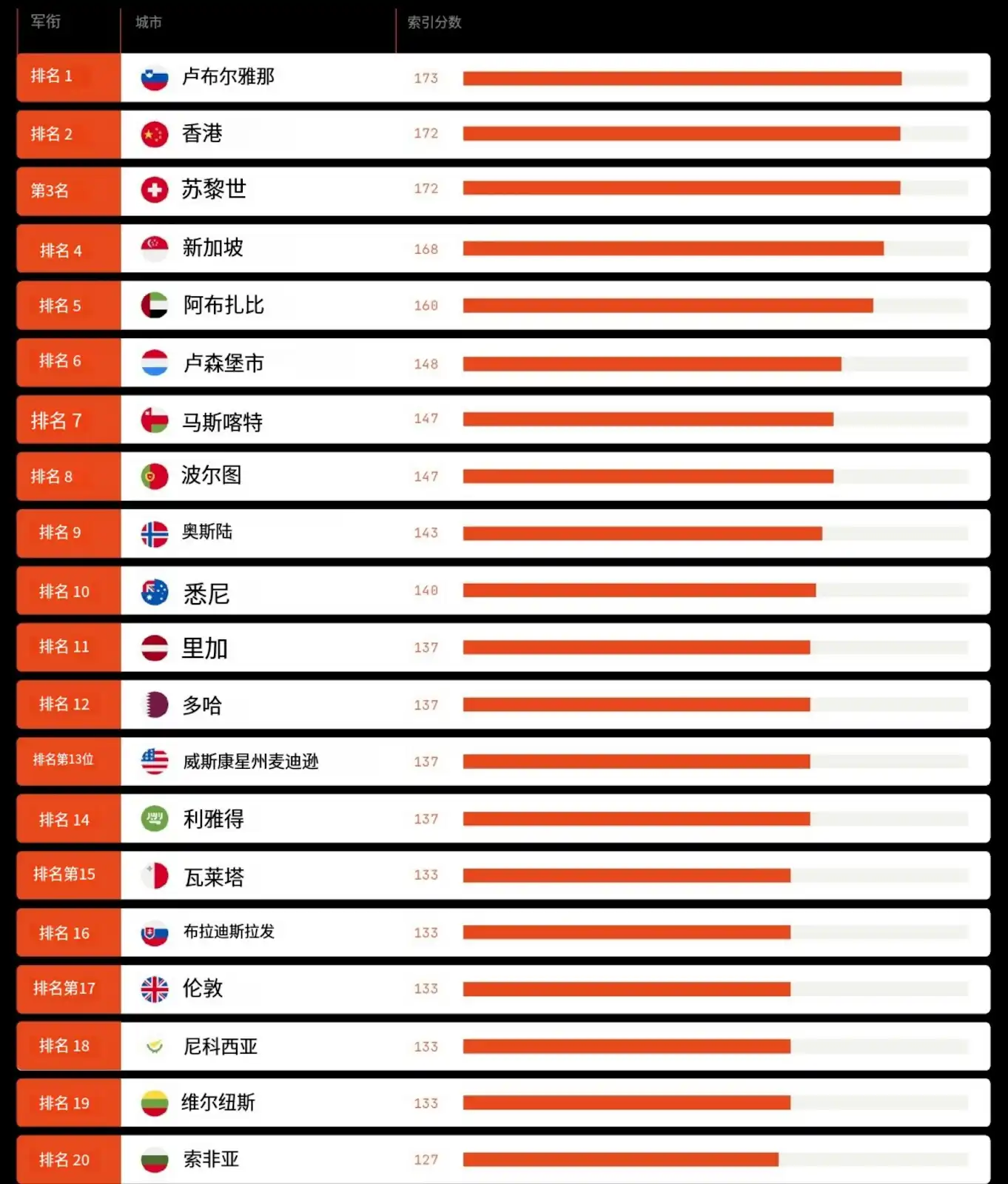
Multipolitan 2025 Cryptocurrency-Friendly City Index
The Future Financial Hubs
The global financial landscape is no longer dominated solely by traditional financial centers like New York or London. The rise of crypto-friendly cities is transforming this landscape.
· Crypto-Friendly Cities: Abu Dhabi, Ljubljana, Luxembourg City, Muscat, Nicosia, Lisbon, Riga, Singapore, Zurich—each city offers a clear legal framework and attractive tax system.
· Top Smart Cities: Zurich, Oslo, Singapore, London, Abu Dhabi—ranking high in the IMD 2024 Smart City Index, proving that crypto-friendly cities are also at the forefront in terms of technology and infrastructure.
· Cryptocurrency ATM and Merchant Leader: Sydney leads with 330 cryptocurrency ATMs and retail locations, followed by Hong Kong (201 ATMs) and Ljubljana (155 ATMs), where these cities have integrated real-world cryptocurrency.
Furthermore, speed and connectivity are the foundations of the digital economy, with connectivity driving cryptocurrency adoption. Abu Dhabi, Doha, and Oslo lead in internet speeds, reaching 398 Mbps, 265 Mbps, and 205 Mbps respectively, enabling high-frequency trading, digital finance, and seamless blockchain transactions. Mapping the most crypto-friendly cities aligns perfectly with the industry's borderless ethos. As people and capital seek favorable jurisdictions, the demand for advisory services to assist high-net-worth individuals in migration, business establishment, and asset management will continue to grow.
How Is Cryptocurrency Wealth Centralized?
Mere tracking of how many people own cryptocurrency is no longer sufficient. Equally important is understanding who holds significant cryptocurrency wealth. The landscape is vastly different between millions holding small amounts of cryptocurrency versus countries dominated by a few crypto whales. Multipolitan's Cryptocurrency Wealth Concentration Index combines cryptocurrency ownership rates and transaction volume (adjusted for inequality using the Gini coefficient) to provide insightful analysis.
Cryptocurrency has evolved from a speculative novelty to a global financial phenomenon. As digital assets gain mainstream acceptance, a key question remains: where is cryptocurrency wealth truly concentrated? To grasp the emerging financial landscape, Multipolitan has developed the "2025 Cryptocurrency Wealth Concentration Index," which not only reveals cryptocurrency adoption but also showcases the actual concentration of cryptocurrency wealth globally.
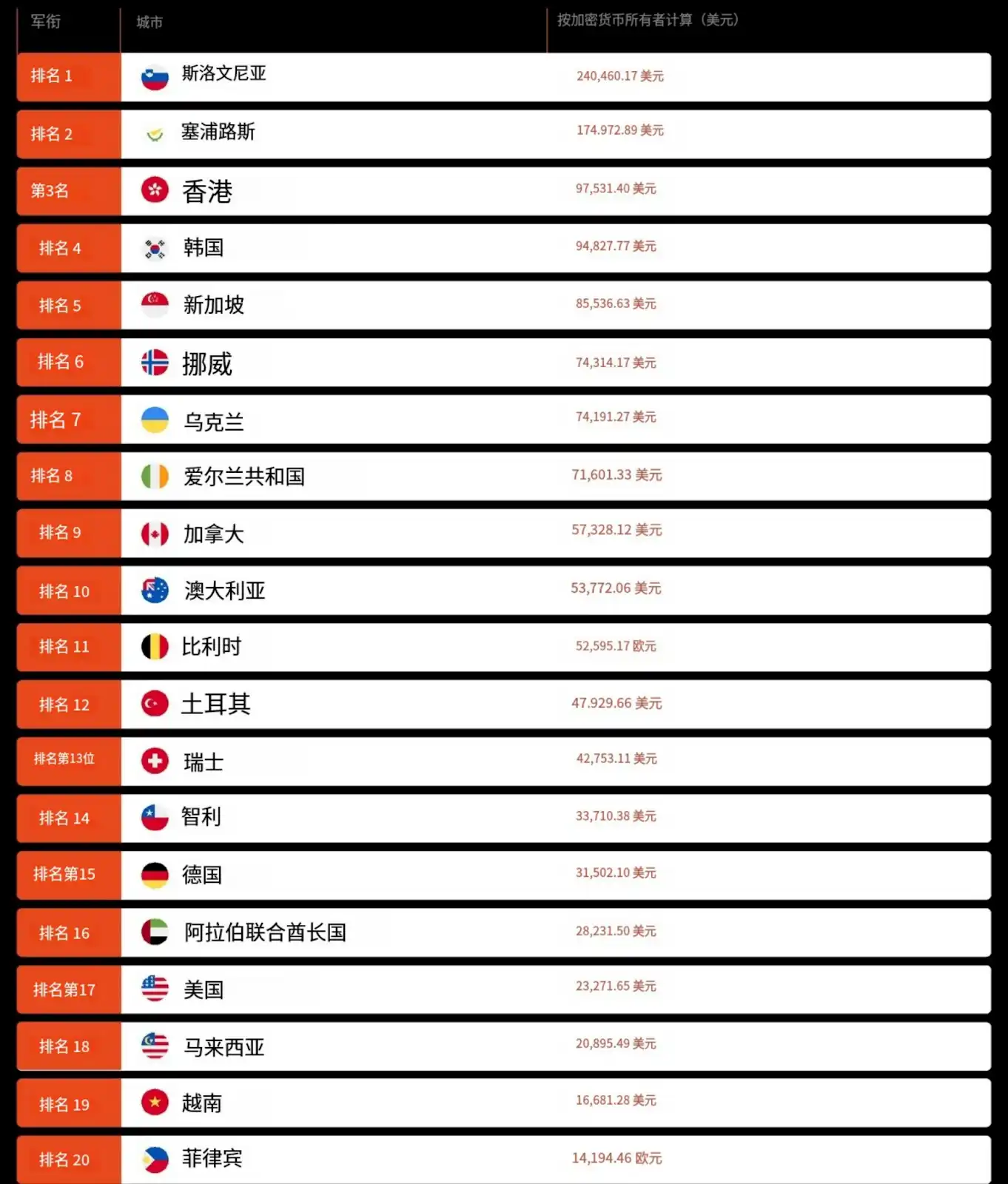
Multipolitan 2025 Cryptocurrency Wealth Concentration Index
Global Leaders in Cryptocurrency
· UAE - Global Adoption Leader. The UAE has 25.3% of its population holding cryptocurrency, leading in adoption rates, thanks to proactive government policies and clear regulations, making cities like Dubai thriving cryptocurrency hubs.
· India - Digital Giant. India has 118.9 million cryptocurrency holders, making it the world's largest cryptocurrency community. Despite facing regulatory hurdles, its retail investors continue to drive mass market participation, highlighting India's growing influence.
· United States—Still the Leader in Capital Flow. The United States remains a dominant force in capital flow. With some of the world's largest exchanges and institutional investors, the U.S. leads in trading volume, reaching $2.07 trillion. Such significant trading activity has positioned the U.S. as a key node in the global cryptocurrency financial landscape.
Slovenia, Cyprus, and Hong Kong SAR, China—Small Countries, Big Impact. Slovenia leads in per capita cryptocurrency transaction volume, with an average of $240,000 per person, indicating high user trading activity and wealth concentration. Cyprus averages $174,000 per person, and Hong Kong SAR, China averages $77,000 per person, making these regions hubs of cryptocurrency wealth concentration.
The Future is Borderless and Ever-Changing
Cryptocurrency wealth is no longer confined to traditional financial centers like New York, London, or Singapore. It is borderless, ever-changing, and finding new homes at the intersection of innovation and clarity. Cities and countries embracing these dynamics will lay the groundwork for the next financial era. The future financial capitals are believed to be in the cryptocurrency age.
This index is not just data; it is a strategic tool that can guide decisions on migration, business growth, and asset management. Understanding the concentration of today's cryptocurrency wealth will shape the future global financial landscape. The question now is not who is adopting cryptocurrency but who will control the immense wealth of cryptocurrency in the future. The competition to become the ultimate Cryptopolis is heating up.
You may also like
Deep Dive into Dubai's Crypto Dream: Illusion, Capital, and Decentralized Empire
Four.meme: How to Turn the BSC Chain into a DeFi Meme Wonderland Using AI Concept
Each to Their Own, Every Public Blockchain Has Its Purpose
If MicroStrategy were forced to sell BTC, how much selling pressure would it bring to the market?
In the midst of the RWA Craze, will Cryptocurrency Rise as the New Financial System or Fall as a Traditional Satellite?
Interview with Cat CEO: I'm in Japan, Selling My House for Cryptocurrency
Dissecting Saylor's Bitcoin Financial Magic: Stock Price Triples Since Last October
Michael J. Saylor's Strategic Bet: Bitcoin's Premium Issuance and Capital Control
Here we go! These OKX products will help you easily navigate through choppy markets
This Week in Review | Binance Initiates Listing and Delisting Voting; Identity of '50x Leverage' Whale Revealed
Strategy Reset: Is the "Buy Buy Buy" Mode Back On? A Comprehensive Analysis of the New Financing Plan
Redot Pay has completed a $40 million Series A round. Will Lightspeed Venture Partners and Sequoia Capital create a payment giant in the crypto world?
Doesn't cryptocurrency payment always feel a bit precarious? The wallet operations are cumbersome, the asset volatility is intimidating, and with the fog of regulation, the average person trying to buy a cup of coffee with cryptocurrency feels like they are embarking on an adventure. Ever since the $40 billion evaporation due to the UST collapse in 2022, "stablecoin" briefly became synonymous with risk, and the market's confidence in stablecoins has been fluctuating.
But change is underway. On March 13, 2025, the U.S. Senate Banking Committee passed the Stablecoin Regulation Act by 18 to 6, providing greater clarity on the compliance path for mainstream stablecoins like USDT and USDC. With the market's confidence restored, the cornerstone of trust in cryptocurrency payments is being solidified. Riding this wave of enthusiasm, the cryptocurrency payment platform Redot Pay announced on March 14 that it had completed a $40 million Series A funding round. The round was led by Lightspeed with participation from A-list institutions such as Sequoia China. The company's goal is to make cryptocurrency payments as easy as swiping a bank card, requiring no technical knowledge so that even those without a bank account can easily participate.
CEO Michael Gao stated, "What we are doing is solving real-world problems—making transparency and inclusivity our driving force."
Founded in April 2023 and headquartered in Hong Kong, Redot Pay has emerged as a rising star in the cryptocurrency payment field. In less than two years, it has attracted over 3 million users. Redot Pay's mission is to enable global users, especially those without bank accounts, to easily access financial services. In other words, it is not just a transaction tool but also the entryway for many into the global financial system.
This round of funding will help Redot Pay accelerate the expansion of its global payment network, transforming cryptocurrency payments from being lofty to being more integrated into daily life. In the future, whether you are ordering a latte in a Hong Kong cafe, purchasing handicrafts in the Southeast Asian market, or sending cross-border remittances to family, Redot Pay may become your payment method.
Specific public information about the founder and core team of Redot Pay is relatively limited, and the core team maintains a low profile. CEO Michael Gao is a graduate of Nanyang Technological University in Singapore. Before founding Redot Pay, he served as the CEO of ChainUp Technology in Hong Kong and was responsible for global sales, showcasing strong business acumen and market insight.
Another co-founder, Jonathan Chan, is also a veteran in the industry. Teaming up with Gao, the two hope to make cryptocurrency payments no longer a game for geeks and speculators but a simple daily operation like swiping a bank card.
Fundraising is not just about "getting money to do things" but more like finding a group of "angel investors" to endorse you, help smoothen your path, and fill in the gaps. This time, Redot Pay has received support from a wave of top-tier investment institutions.
The lead investor for this round of funding is Lightspeed. This venture capital giant established in 2000 has a keen investment eye, having nurtured star companies like Snapchat and Affirm. This means that Redot Pay has not only received $40 million but also gained a "life mentor," bringing strategic guidance and global network resources, especially in consumer technology and financial technology.
Looking at the participating lineup, Sequoia Capital China has deep roots in the Asian market and is considered the "West Point Military Academy of the Entrepreneurial Circle." Galaxy Ventures is a veteran player in the crypto field, while DST Global Partners, Accel, and Vertex Ventures are no pushovers. When these big players make a move, it's basically a bet that Redot Pay will become the next giant in the cryptocurrency payment sector.
With this background, Redot Pay may have deeper cooperation with giants like Visa and StriatX in the future. The speed of entering new markets may be faster than taking a high-speed rail. With the endorsement of top institutions to stabilize its footing and avoid pitfalls, this round of funding not only added $40 million to Redot Pay's account but also came with a VIP pass.
Market demand has never been so strong. The enthusiasm for cryptocurrency payments is rapidly rising, shifting from a previous "future vision" to an "immediate opportunity." Currently, there are still 1.3 billion people worldwide without bank accounts, unable to easily access financial services. They have smartphones, they have networks, the only thing missing is a simple, efficient payment method.
Inflationary pressures, exchange rate fluctuations, and outdated financial infrastructure make people more eager than ever for decentralized payment methods. Of course, Redot Pay is not the only player on this track. Competitors like Triple-A are also entering the cryptocurrency payment space. To stand out, Redot Pay needs to excel in user experience and ecosystem integration. Is the payment process smooth enough? Is fiat currency exchange low-cost? Are there enough partner merchants? These are key factors determining success. Users won't pay the price for complex technology. Only if it's truly simple and user-friendly can it become the "Alipay" of the cryptocurrency payment era.
The core goal of Redot Pay is to completely change the stereotype of cryptocurrency payments being "complex, high-threshold, and inconvenient." In November 2023, Redot Pay launched the Visa physical card, supporting global ATM withdrawals, allowing users to directly cash out their cryptocurrency assets.
Simultaneously, a virtual card was also introduced, compatible with ApplePay and GooglePay, enabling users to spend cryptocurrency directly at offline stores or e-commerce platforms just like using a traditional bank card. In December 2024, the platform integrated with the Solana network, followed by joining the Arbitrum ecosystem in February 2025. By leveraging the advantages of these high-performance blockchains, transaction costs are reduced, and payment speed is increased.
Compared to payment platforms that still rely on a single chain, Redot Pay's multi-chain integration strategy is undoubtedly more forward-thinking, providing users with a smoother payment experience. In terms of ecosystem partnerships, Redot Pay is also accelerating the implementation of applications, with collaborations with StraitX and Visa, enabling it to take the lead in the retail payment market in Singapore.
In less than two years, Redot Pay's user base has exceeded 3 million, a growth rate that clearly demonstrates its high market fit. Redot Pay is using technological innovation and practical application to prove that it is not just a "concept hype" shell company but a true dark horse aiming to make cryptocurrency payments mainstream. The current market situation provides a window of opportunity for its expansion, but amidst the industry's rapid development, changes in regulatory policies must not be ignored. Balancing compliance and innovation to stay ahead will be the key challenge for Redot Pay moving forward.
Market Maker Operations Behind the Scenes: The Full Operation Chain of a Coin Circle "Harvester"
IOSG Founder: From Hong Kong to Denver, Ethereum Is Entering a "Dunkirk Moment"
Strategic Reserve and Power Play: The Crypto Order of the Trump Era
External Innovation vs. Internal Dilemma: Crypto Sailing Through the Fog
TrumpCoin Enriches Chinese, Sparks Division in US Crypto Community
Why Did I Choose to Stake my Shiba Inu on Worldchain?
Deep Dive into Dubai's Crypto Dream: Illusion, Capital, and Decentralized Empire
Four.meme: How to Turn the BSC Chain into a DeFi Meme Wonderland Using AI Concept
Each to Their Own, Every Public Blockchain Has Its Purpose
If MicroStrategy were forced to sell BTC, how much selling pressure would it bring to the market?
In the midst of the RWA Craze, will Cryptocurrency Rise as the New Financial System or Fall as a Traditional Satellite?
Interview with Cat CEO: I'm in Japan, Selling My House for Cryptocurrency
Popular coins
Latest Crypto News


Customer Support:@weikecs
Business Cooperation:@weikecs
Quant Trading & MM:bd@weex.com
VIP Services:support@weex.com
 App
App