
- Buy Crypto
- Markets
- Futures
- Spot
- Copy Trade
 Earn
Earn- More
From Law Enforcement to Regulatory Pawn, Unveiling the Insider Story of Binance Executive's Arrest

Original Title: The Untold Story of a Crypto Crimefighters Descent Into Nigerian Prison
Original Author: Andy Greenberg, Wired
Original Translation: Tracy, Alvin, BitpushNews
As a U.S. federal agent, Tigran Gambaryan pioneered modern cryptocurrency investigations. Later, at Binance, he found himself caught between the world's largest cryptocurrency exchange and a government determined to hold it to account.
On the morning of March 23, 2024, at 8 a.m., Tigran Gambaryan woke up on a couch in Abuja, Nigeria, starting his day with pre-dawn prayers as he had been dozing off there since dawn. The house around him, often filled with the hum of a nearby generator, was unusually quiet. In that silence, the harsh reality of Gambaryan's situation had been flooding his mind every morning for nearly a month: he and his cryptocurrency company Binance colleague, Nadeem Anjarwalla, were being held hostage, unable to access their passports. Under the watch of military guards, they were detained in a compound surrounded by barbed wire owned by the Nigerian government.
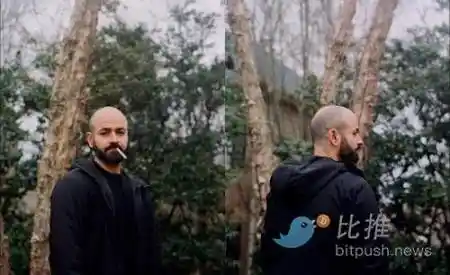
Gambaryan rose from the couch. The 39-year-old Armenian-American was wearing a white t-shirt, built like a fighter with a muscular physique, his right arm covered in Eastern Orthodox tattoos. Normally bald-shaven, his neatly trimmed black beard had grown short and wild from a month without a shave. Gambaryan found the house's cook and asked her to buy him some cigarettes. Then, he paced anxiously in the interior courtyard of the house, making calls to his lawyer and other Binance contacts, resuming his daily effort to, in his words, "damn well solve this."
Just the day before, these two Binance employees and their cryptocurrency mogul employer were informed that they were about to be charged with tax evasion. These two individuals appeared to be caught in the midst of bureaucratic infighting, a conflict between an irresponsible foreign government and one of the most controversial players in the cryptocurrency economy. Now, not only were they forcibly detained with no end in sight, but they were also being labeled as criminals.
After over two hours on the phone, as the courtyard started to bake under the rising sun, Gambaryan finally hung up and returned inside, still without any sign of Anjarwalla. That pre-dawn morning, Anjarwalla had gone to a local mosque to pray, accompanied by his guards who kept a close eye on him. Upon his return to the house, he informed Gambaryan that he was going upstairs to sleep.
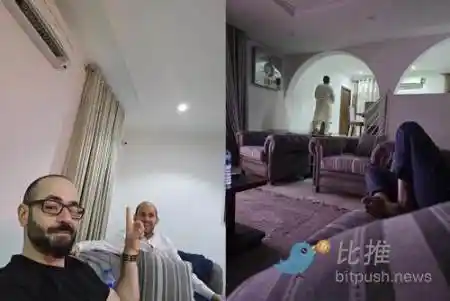
Several hours had passed since then, so Gambaryan went up to the second-floor bedroom to check on his colleague. He pushed the door open to find Anjarwalla seemingly asleep, his feet sticking out from under the sheets. Gambaryan called out to him from the doorway, but there was no response. For a moment, he was worried that Anjarwalla might be on the verge of another panic attack—this young Kenyan-British Binance executive had been sleeping in Gambaryan's bed for several days, too anxious to spend the night alone.
Gambaryan crossed the dark room—he had heard that the house's caretaker was behind on the electricity bill, the generator was out of diesel, so daytime power outages were common—he placed his hand on the blanket. Strangely, the blanket seemed to sink down as if there was no actual body underneath.
Gambaryan pulled back the covers. He found a t-shirt underneath with a pillow stuffed inside. Bending down to look at the foot protruding from the blanket, he now realized it was actually a sock with a water bottle inside.
Without calling out to Anjarwalla again or searching the house, Gambaryan knew that his Binance colleague and cellmate had escaped. He also immediately realized that his own situation was about to get worse. Little did he know then how much worse it would get—he would be thrown into a Nigerian prison, charged with money laundering, facing a potential 20-year sentence, denied medical care even as his health deteriorated to the brink of death, all while being used as a pawn in a multi-billion-dollar cryptocurrency extortion scheme.
At that moment, he simply sat silently on the bed, in the darkness 6,000 miles away from home, contemplating the stark reality of being completely alone now.
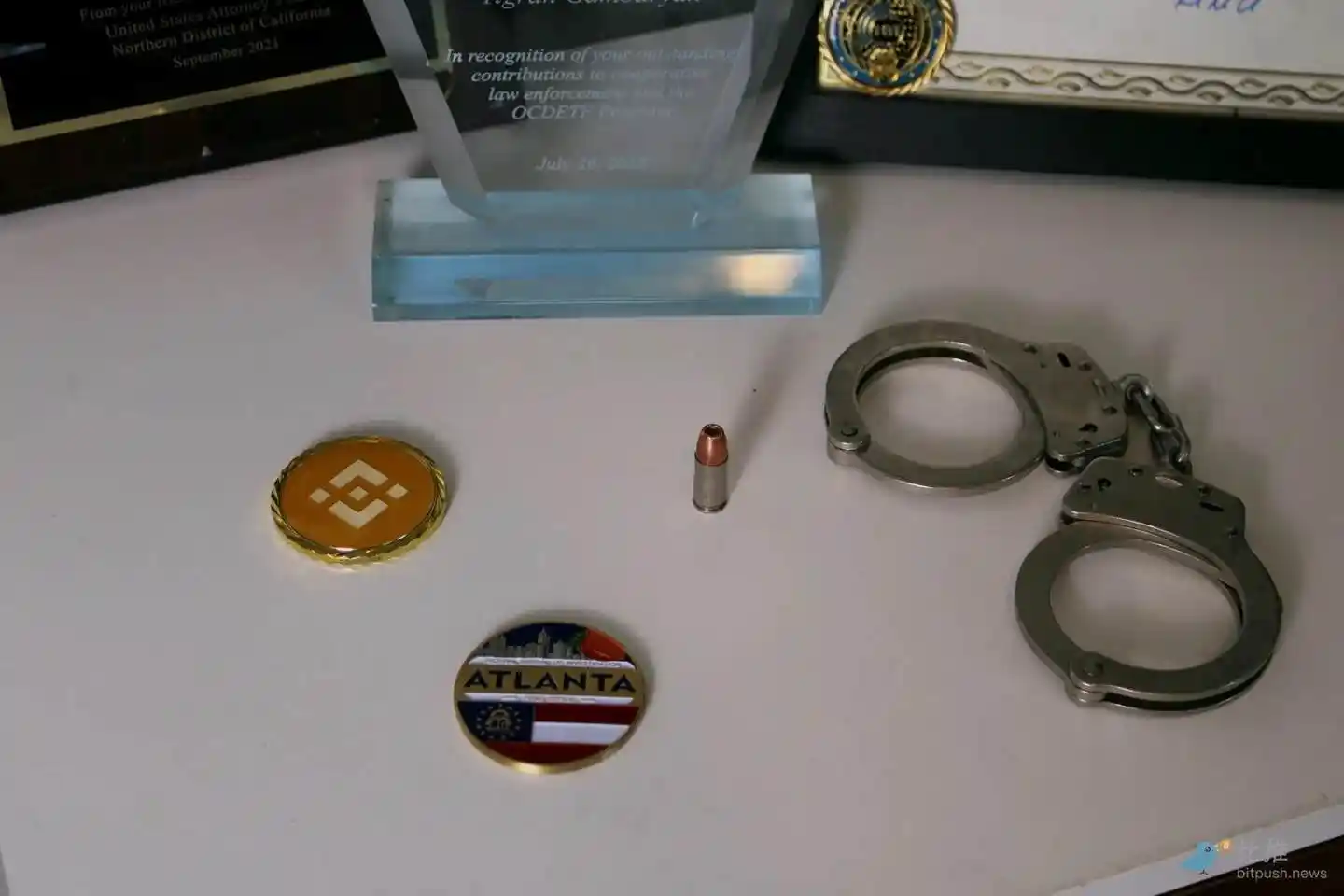
TIGRAN GAMBARYAN's intensifying Nigerian nightmare was at least partially rooted in a conflict that had been brewing for fifteen years. Since the mysterious Satoshi Nakamoto unveiled Bitcoin to the world in 2009, cryptocurrency has promised a libertarian Holy Grail: a digital currency free from government control, immune to inflation, able to transcend borders with impunity, as if it existed in an entirely different dimension. However, the reality today is that cryptocurrency has evolved into a multi-trillion-dollar industry largely operated by companies with lavish offices and well-paid executives—entities that can be pressured by the laws and enforcement agencies of nations, much like any other industry in the real world.
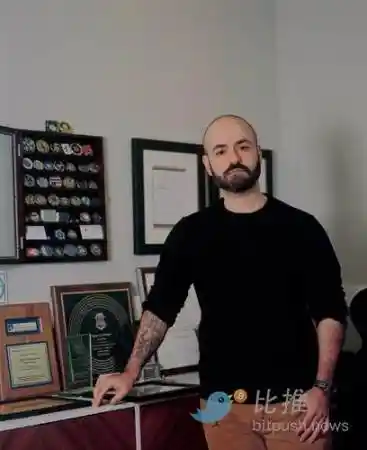
Prior to becoming one of the most globally recognized victims, a sacrifice in the chaotic intersection of fintech lawlessness and global law enforcement, Gambaryan had embodied this conflict in another way: as one of the world's most effective and innovative cryptocurrency dedicated law enforcement officers. Before joining Binance in 2021, Gambaryan spent a decade as a Special Agent in the IRS Criminal Investigation (IRS-CI), enforcing tax authority law. During his tenure at IRS-CI, Gambaryan pioneered a technology to track cryptocurrency and identify suspects by analyzing the Bitcoin blockchain. Through this "follow-the-money" tactic, he dismantled one network crime conspiracy after another, shattering the myth of Bitcoin's anonymity.
Starting in 2014, it was Gambaryan who traced Bitcoin following the FBI's seizure of the Silk Road dark web drug market, uncovering two corrupt federal agents who, during the investigation of the market, embezzled over $1 million—marking the first time blockchain evidence was included in a criminal complaint. Over the next few years, Gambaryan helped trace the theft of $500 million worth of Bitcoin from the first cryptocurrency exchange, Mt. Gox, ultimately identifying a group of Russian hackers as the masterminds behind the heist.
In 2017, Gambaryan partnered with blockchain analytics startup Chainalysis to create a clandestine Bitcoin tracking method that successfully identified and aided the FBI in seizing the servers hosting AlphaBay. AlphaBay was a dark web criminal marketplace estimated to be ten times the size of Silk Road. Shortly after, Gambaryan played a crucial role in dismantling the "Welcome to Video" encrypted child exploitation video network, the largest operation of its kind to date. This action led to the arrest of 337 users worldwide and the rescue of 23 children.
Finally, in 2020, Gambaryan and another IRS-CI agent traced and seized nearly 70,000 bitcoins stolen years earlier by a hacker from the Silk Road. At today's prices, these bitcoins are valued at $7 billion, making it the largest-ever confiscation of any currency type related to crime, flowing into the U.S. Treasury Department.
"He [Gambaryan] was involved in almost all of the major cryptocurrency cases at the time," former U.S. prosecutor Will Frentzen said, who worked closely with Gambaryan and prosecuted the crimes he exposed. "He was very innovative in the investigation, using many approaches that people had not thought of, and very generous in giving credit." In the fight against cryptocurrency crime, Frentzen stated, “I don't think anyone has had a bigger impact on this field than him."
After experiencing that legendary career, Gambaryan turned to the private sector, making a decision that shocked many government colleagues who had worked with him. He became the head of Binance's investigation team. Binance is a massive cryptocurrency exchange processing billions of dollars in daily transactions and known for its indifference to whether users are breaking the law.
When Gambaryan joined Binance in the fall of 2021, the company was already under investigation by the U.S. Department of Justice. Ultimately, the investigation revealed that Binance handled tens of billions of dollars in transactions that violated anti-money laundering laws and circumvented international sanctions against Iran, Cuba, Syria, and the Russian-occupied region of Ukraine. The Justice Department also pointed out that the company directly processed over $100 million in cryptocurrency transactions from the Russian dark web crime market Hydra, with some funds originating from the sale of child exploitation material and funding identified terrorist organizations.
Some of Gambaryan's former colleagues privately expressed their dissatisfaction with his career switch, even going as far as to believe he was "selling out." However, Gambaryan firmly believes that he is actually taking on the most critical role in his career. As part of Binance's effort to clean up its corporate image after years of rapid expansion, Gambaryan formed a new investigative team within the company, recruiting top agents from the IRS-CI and other law enforcement agencies around the world, and helping Binance engage in unprecedented cooperation with law enforcement.
Gambaryan stated that by analyzing data representing trading volumes exceeding the sum of the New York Stock Exchange, London Stock Exchange, and Tokyo Stock Exchange, his team successfully assisted in uncovering global cases such as child exploitation, terrorism, and organized crime. "We have assisted in thousands of cases globally. My influence at Binance may be even greater than when I was in law enforcement," Gambaryan once told me. "I am very proud of the work we have done, and I am ready to defend my decision to join Binance if anyone questions it."
Although Gambaryan has helped Binance create a more compliant image, this transformation does not erase the company's history as a rogue exchange, nor does it shield it from the consequences of past wrongdoing. In November 2023, U.S. Attorney General Merrick Garland announced during a press conference that Binance had agreed to pay a $43 billion fine and forfeiture, one of the largest corporate penalties in U.S. criminal justice history. The company's founder and CEO, Changpeng Zhao, was personally fined $150 million and sentenced to four months in prison.
The United States is not the only country dissatisfied with Binance. By early 2024, Nigeria began to criticize the company, not only for its compliance violations acknowledged in the U.S. plea agreement but also for exacerbating the devaluation of the Nigerian Naira. From late 2023 to early 2024, the Naira devalued by nearly 70%, prompting Nigerians to exchange their local currency for cryptocurrency, especially stablecoins pegged to the U.S. dollar.
Amaka Anku, the Africa Director at Eurasia Group, stated that the true cause of the Naira's devaluation was the relaxation of exchange rate restrictions between the Naira and the U.S. dollar by the new Nigerian president Bola Tinubu's administration, coupled with unexpectedly low foreign exchange reserves at the Central Bank of Nigeria. However, when the Naira began to devalue, cryptocurrency served as an unregulated means to sell off the Naira, further exacerbating the devaluation pressure. "You can't directly blame Binance or any cryptocurrency exchange for this devaluation," Anku said, "but they certainly contributed to the process."
For years, cryptocurrency supporters have envisioned Satoshi's invention as a safe haven for citizens facing an inflation crisis. That moment has finally arrived, and the government of Nigeria, the largest economy in Africa, is furious about it. In December 2023, a committee of the Nigerian National Assembly summoned senior Binance executives to a hearing in the capital city of Abuja to explain how they would rectify the alleged wrongdoings. To address this situation, Binance assembled a Nigerian delegation as a symbol of the company's commitment to cooperation with global law enforcement and governments, with Tigran Gambaryan, a former federal agent and star investigator, naturally becoming a member of the delegation.
However, before resorting to extreme measures such as coercion and kidnapping hostages, the criminals first made a demand for a bribe.
In January 2023, Gambaryan had just arrived in Abuja for a few days, and his trip was going smoothly. To show goodwill, he met with investigators from the Economic and Financial Crimes Commission (EFCC) of Nigeria. The EFCC is essentially the counterpart of Gambaryan's former agency, the US Internal Revenue Service, responsible for combating fraud, investigating government corruption, and discussed the possibility of providing cryptocurrency investigation training to the agency's staff. He then participated in a roundtable meeting with Binance executives and members of the Nigerian House of Representatives, where everyone pledged in a friendly atmosphere to resolve their differences together.
When Gambaryan arrived in Nigeria, he was received at the airport by EFCC detective Olalekan Ogunjobi. Ogunjobi had read Gambaryan's professional background and expressed great admiration for his legendary achievements as a federal agent. Throughout the trip, Ogunjobi almost dined with Gambaryan every night at the hotel—the Transcorp Hilton Abuja. Gambaryan shared his experience of cryptocurrency crime investigation with Ogunjobi, how to handle cases, how to set up task forces, etc. They exchanged a lot of investigation experiences. When Gambaryan presented Ogunjobi with his book "Tracers in the Dark" and signed it, Ogunjobi requested him to sign the book.
One night, while Gambaryan, Ogunjobi, and a group of Binance colleagues were dining at the table, a Binance employee received a call from the company's lawyer. After the pleasantries, the lawyer told Gambaryan that the actual meeting with Nigerian officials was not as friendly as it seemed. The officials now demanded a payment of $150 million to resolve Binance's issues in Nigeria—and requested payment in cryptocurrency, to be transferred directly to the officials' crypto wallets. What was even more shocking was that the officials implied that the Binance team could not leave Nigeria until this amount was paid.
Gambaryan was very shocked and didn't even have time to explain to Ogunjobi or say goodbye. He quickly gathered Binance's staff, hastily left the restaurant, and returned to the meeting room at the Transcorp Hilton hotel to discuss the next steps in response. Paying this blatantly obvious bribe would violate the U.S. Foreign Corrupt Practices Act. If they refused, they might be detained indefinitely. In the end, the team decided to take the third option: leave Nigeria immediately. They spent the whole night in the meeting room urgently planning how to get all Binance employees on a plane as soon as possible, change flights, and reschedule the departure for the early morning of the next day.
The next morning, the Binance team gathered on the second floor of the hotel with their luggage already packed. They tried to avoid passing through the lobby in case Nigerian officials were waiting there to stop them from leaving. Everyone took taxis to the airport, nervously passed through security, boarded the plane back home, and encountered no issues throughout the process. They all felt like they had narrowly escaped a disaster.
Shortly after returning to the suburbs of Atlanta, Gambaryan received a phone call from Ogunjobi. Gambaryan mentioned that Ogunjobi was very disappointed about the bribery request the Binance team faced and was shocked by the behavior of their Nigerian compatriots. Ogunjobi suggested to Gambaryan that he should report this bribery incident to the Nigerian authorities and request an anti-corruption investigation.
Finally, Ogunjobi arranged for Gambaryan to have a call with EFCC official Ahmad Sa'ad Abubakar. Abubakar was introduced as a trusted aide to Nigeria's National Security Adviser, Nuhu Ribadu. Ogunjobi informed Gambaryan that Ribadu was an anti-corruption crusader who had even given a TEDx talk. Now, Ribadu invited Gambaryan to meet with him in person to resolve Binance's issues in Nigeria and to uncover the truth behind the bribery incident.
Gambaryan shared the phone call situation with his Binance colleagues, and it sounded like an opportunity to resolve the company's dilemma in Nigeria. So, Binance's executives and Gambaryan began to consider that perhaps he could use this invitation to return to Nigeria, unraveling the increasingly complicated relationship between the company and the Nigerian government. Although this idea sounded very risky—after all, they had hastily fled the country just a few weeks ago—Gambaryan believed he received a friendly invitation from a powerful official and also had the personal assurance of his friend Ogunjobi. Binance's local staff also informed Gambaryan that, upon verification, they believed this solution was reliable.
Gambaryan shared the bribery incident and the invitation to Nigeria with his wife, Yuki. For her, this proposal was clearly very dangerous. She repeatedly asked Gambaryan not to go.
Now Gambaryan admits that perhaps he still retained the mindset of a former Federal agent—an identity imbued with a sense of duty and security. "I think that was a part of me that remained from before: when duty calls, you go," he said. "I was asked to go."
So, in what he now considers one of the most unwise decisions of his life, Gambaryan packed his bags, kissed Yuki and their two children goodbye, and set off early on the morning of February 25th, boarding a flight to Abuja.
The second leg of the journey began with a pick-up from Ogunjobi at the airport, where Ogunjobi once again reassured him on the drive to the Transcorp Hilton Hotel and during dinner. This time, the only one accompanying Gambaryan was Binance's East Africa Manager, Nadeem Anjarwalla, a recent graduate and British-Kenyan with a baby back home in Nairobi.
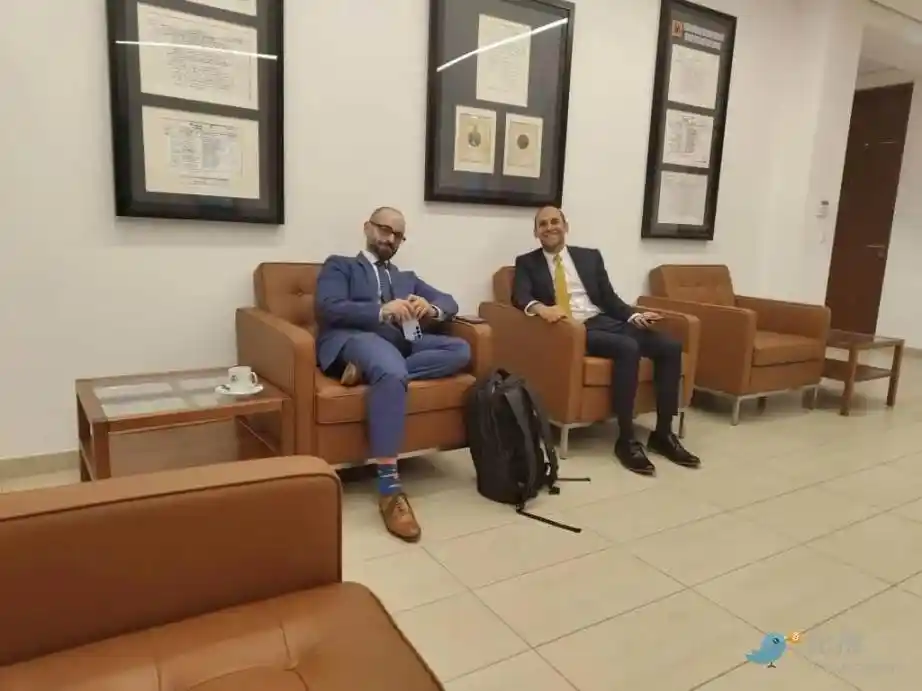
However, when Gambaryan and Anjarwalla walked into the meeting with Nigerian officials the next day, they were surprised to find that Abubakar was joined by staff from the EFCC and the Central Bank of Nigeria. Soon, the focus of the meeting became clear: this meeting was not about Nigeria's corruption issues. At the start of the meeting, Abubakar inquired about Binance's cooperation with Nigerian law enforcement, then swiftly shifted the discussion to the EFCC's request for Binance Nigeria user transaction data. Abubakar stated that Binance had only provided data for the past year, not all the data he had requested. Feeling blindsided, Gambaryan explained this was due to a last-minute request oversight and promised to promptly provide all the necessary data. Despite Abubakar's apparent displeasure, the meeting proceeded, and everyone eventually exchanged business cards amicably.
Gambaryan and Anjarwalla were left in the hallway, awaiting the next appointment. After some time, Anjarwalla went to the restroom. When he returned, he mentioned he overheard some of the officials they had just met with sounding angry from a nearby conference room, as Gambaryan recalls him saying.
After nearly two hours of waiting, Ogunjobi returned and ushered them into another meeting room. Gambaryan remembers that the officials in this room had solemn expressions, an unusually serious atmosphere, with everyone silently sitting, seemingly waiting for someone’s arrival—Gambaryan didn't know who that person was. He noticed a look of shock on Ogunjobi's face and dared not make eye contact with him. "What on earth is happening?" he thought.
At that moment, a middle-aged man named Hamma Adama Bello entered the room. He was an official of the EFCC, dressed in a gray suit, with a scruffy beard, looking to be in his forties. He did not greet them or ask any questions; instead, he placed a folder on the table and immediately began reprimanding them. Gambaryan remembered him saying, "Binance is 'crippling our economy' and providing funding for terrorism."
He then proceeded to tell Gambaryan and Anjarwalla what would happen: they would be taken back to the hotel to pack their belongings and then moved to another location. There, more EFCC officials and some central bank personnel would be present until Binance handed over all transaction data involving every Nigerian who had ever used the platform.
Gambaryan felt his heart race, and he quickly explained that he did not have the authority nor the capability to provide such a large amount of data—his actual purpose for this trip was to report the bribery situation to Bello's agency.
Upon hearing about the bribery, Bello seemed somewhat surprised, as if he were hearing about this for the first time, but he quickly dismissed it. The meeting ended. Gambaryan hurriedly sent a text message to Binance's Chief Compliance Officer, Noah Perlman, informing him that they might be detained. Then, the officials confiscated their phones.
The two were taken to a black Land Cruiser parked outside, with tinted windows. The SUV brought them back to the Transcorp Hilton hotel and escorted them to their respective rooms—Anjarwalla followed Bello and another officer, while Gambaryan was accompanied by Ogunjobi. They were instructed to pack their belongings. Gambaryan remembered saying to Ogunjobi, "You know how bad this is, right?"
Ogunjobi could hardly look him in the eye and replied, "I know, I know."
Subsequently, the Land Cruiser took them to a large two-story house situated within a walled compound, with marble floors inside, providing enough bedrooms for two Binance staff members, several EFCC officials, and a private chef. Gambaryan later learned that this house was the government-designated residence of the National Security Adviser, Ribadu, who chose to stay in his personal home, making this place available for official use—serving as a temporary holding location for them in this event.
That evening, Bello did not make any further demands. After Gambaryan and Anjarwalla had eaten Nigerian stew prepared by the house chef, they were informed they could rest. Gambaryan lay on the bed, feeling anxious and almost on the verge of panic as he did not have his phone to contact the outside world or even inform his family of his whereabouts.
It wasn't until 2 a.m. that he finally fell asleep, only to wake up a few hours later to the early morning call to prayer. Too anxious to stay in bed, he walked out to the house's courtyard, smoked a cigarette, and pondered his current predicament: he had become a hostage, embroiled in the very financial crime he had spent his life fighting against.
But beyond this sense of irony, what overwhelmed him even more was the complete sense of the unknown. "What will happen to me? What will Yuki go through?" he thought of his wife, filled with anxiety. "How long will we be here?"
Gambaryan stood in the courtyard, smoking, until the sun came up.
Next came the interrogation.
Breakfast was prepared by the chef, but Gambaryan was too stressed to eat. Bello sat down to talk with them, informing them that for their release, Binance must hand over all data regarding Nigerian users and prohibit Nigerian users from engaging in peer-to-peer trading. Peer-to-peer trading is a feature on the Binance platform that allows traders to post cryptocurrency sale ads at rates they partially control, which Nigerian officials believe has exacerbated the devaluation of the Naira.
In addition to these demands, there was an undisclosed request in the meeting room: Binance needed to make a substantial payment. While Gambaryan and Anjarwalla were being held, the Nigerian side communicated with Binance executives through a clandestine channel, informing the company that they were being asked to pay billions of dollars. According to sources familiar with the negotiations, government officials even openly told the BBC that this fine would amount to at least $10 billion, more than double the highest settlement Binance has paid to the U.S. (Several insiders have revealed that Binance did propose a "deposit" scheme based on the company's estimated tax liability in Nigeria, but these proposals were never accepted. Meanwhile, on the second day of Gambaryan and Anjarwalla's detention, the U.S. embassy received a strange letter from the EFCC stating that Gambaryan was being detained "solely for constructive dialogue" and was "voluntarily engaging in these strategic talks.").
Gambaryan repeatedly explained to Bello that he had no real power in Binance's business decisions and could not meet his demands. Despite hearing this, Bello did not change his tone and continued to accuse Binance of harming Nigeria, claiming that Nigeria should be compensated. Gambaryan recalled that Bello sometimes boasted about carrying a firearm and showed photos of himself training with the FBI at Quantico in Virginia, seemingly to show his authority and his connections to the United States.
Ogunjobi also participated in the interrogation. Gambaryan said that he was quieter and more respectful than Bello, but he was no longer the respectful student he used to be. When Gambaryan mentioned that he had provided a lot of assistance to the Nigerian law enforcement, Ogunjobi responded by saying that he saw comments on LinkedIn saying that Binance had hired him just to create a facade of legitimacy, a statement that shocked Gambaryan, especially after their previous long conversations.
Gambaryan, furious and unable to meet the demands of the Nigerian side, requested to see a lawyer, contact the US Embassy, and return his phone. However, all requests were denied, although he was allowed to call his wife in the presence of a guard.
Stuck in a deadlock with EFCC officials, Gambaryan told them that he would not eat unless allowed to see a lawyer and contact the embassy. He began a hunger strike, trapped in this house, guarded by government officials and security guards, spending his days sitting on the couch watching Nigerian TV. After five days of a hunger strike, the officials finally relented.
He and Anjarwalla had their phones returned but were told not to contact the media, and their passports were confiscated. They were then allowed to meet with a local lawyer hired by Binance. After a week of detention, Gambaryan was taken to a Nigerian government building to meet with local diplomats. The diplomats said they would follow up on Gambaryan's situation, but for now, they couldn't set him free.
They then began to live a Groundhog Day-like daily life, as Gambaryan later told his wife, going around in circles. The house was spacious and clean but dilapidated, with a leaking roof and many days without electricity. Gambaryan became friends with the cook and some caretakers, watching pirated episodes of "Avatar: The Last Airbender" with them. Anjarwalla, on the other hand, started doing yoga every day and drinking smoothies made by the cook.
Anjarwalla seems to be more struggling with the anxiety of their imprisonment than Gambaryan, feeling disheartened for missing his son's first birthday. The Nigerian authorities confiscated his British passport, unaware that Anjarwalla also holds his Kenyan passport. He joked with Gambaryan about escaping, but Gambaryan expressed that he never seriously considered it. He reminded himself that Yuki had warned him not to do anything foolish, and he had no intention of taking any risks.
One day, while lying on the couch, Anjarwalla told Gambaryan that he felt unwell and was shivering with cold. Gambaryan covered him with many blankets, but he was still trembling. Eventually, the Nigerian authorities took Anjarwalla and Gambaryan to the hospital in another black Land Cruiser and conducted a malaria test on Anjarwalla. The test came back negative, and the doctor informed Anjarwalla that he had actually experienced a panic attack. Since then, Gambaryan said, every night Anjarwalla would sleep beside him as he was too afraid to sleep alone.
During the second week of Gambaryan and Anjarwalla's detention, Binance agreed to a request to disable its peer-to-peer trading in Nigeria and halted all naira transactions. EFCC officials informed Gambaryan and Anjarwalla to pack their bags in preparation for their release. Both took this news seriously, with Gambaryan even filming a video of the house on his phone as a memento of this bizarre chapter in their lives.
However, just as they were about to be released, government minders took them to the EFCC office. The agency's chairperson requested confirmation that Binance had handed over all data related to Nigerian users. Upon learning that Binance had not complied, he immediately rescinded the release order and sent the duo back to the guesthouse.
At this point, the cryptocurrency website DLNews was the first to report that two Binance executives were detained in Nigeria, though no names were disclosed. A few days later, both The Wall Street Journal and Wired confirmed that the detained individuals were Anjarwalla and Gambaryan.
Bello was furious about the news leak, with Gambaryan recalling that Bello blamed him and Anjarwalla. Bello told them that if they handed over the requested data, they would gain their freedom. Gambaryan lost his patience and retorted to Bello, "Are you asking me to take it out of my right pocket, or my left pocket?" He recalled standing up, comically pulling something out of one pocket and then the other. "I simply cannot provide this data."
Several weeks had passed, and the negotiations were still at a standstill. As Ramadan began, Gambaryan would join Anjarwalla every morning to pray and fast together during the day as a sign of friendly solidarity.
However, after nearly a month of hardship, things took a sudden turn. One morning, Gambaryan woke up to find that Anjarwalla had already returned from the mosque. As he went to look for his companion, all he found in the bed were a shirt stuffed into the pillowcase and a water bottle inside a sock—Anjarwalla had escaped.
Later, Gambaryan learned that Anjarwalla had managed to board a flight to flee Nigeria. He speculated that Anjarwalla might have found a way to bypass the yard's fence, successfully evading the guards—who were often asleep in the morning—then paid for a taxi to the airport and ultimately boarded the plane using his second passport.
Gambaryan realized that his own situation in Nigeria was about to take a dramatic turn. He walked to the yard, recorded a selfie video, intending to send it to his wife Yuki and Binance colleagues, speaking to the camera as he walked.
“I have been detained by the Nigerian government for a month now, and I do not know what will happen after today,” he said calmly and composedly. “I have done nothing wrong. I have been a policeman all my life. I just ask the Nigerian government to let me go and request assistance from the U.S. government. I need your help, everyone. I do not know if I can make it out without your help. Please help me.”
Upon learning of Anjarwalla's escape, the Nigerian authorities confiscated Gambaryan's phone, and the guards and wardens began a frantic search of the house. Soon, they disappeared, replaced by new faces.
Sensing the more severe events that might follow, Gambaryan managed to persuade a Nigerian to lend him a phone discreetly, then went to the bathroom to call his wife, reaching Yuki late at night. Gambaryan said that it was the first time in their 17-year relationship that he had told her he was scared. Yuki cried, she went into the closet to talk to him, avoiding waking the children. Then, Gambaryan suddenly hung up—the arrival of someone was imminent.
A military officer instructed Gambaryan to pack his bags, telling him he was being released. Although he knew this couldn't be true, he still packed his things, walked out to the waiting car, and saw Ogunjobi sitting inside. When Gambaryan asked Ogunjobi where they were going, Ogunjobi vaguely replied that maybe they were going home, but not today—then silently looked at his phone.
The car finally pulled into the EFCC compound, not stopping near the headquarters but heading straight to the detention facility. Gambaryan angrily cursed the guards, no longer caring if he offended them.
As he was led into the EFCC detention building, he saw a group of people who had once guarded him in the safe house, now also locked up in cells, under investigation for possibly allowing Anjarwalla to escape or even suspected of colluding with him. Subsequently, Gambaryan was placed alone in his own cell.
As Gambaryan described, the cell was like a windowless "box" with only a timed cold-water shower and an untimely Posturepedic mattress. The room was crawling with as many as half a dozen cockroaches of various sizes. Despite the sweltering heat of Abuja, the cell had neither air conditioning nor ventilation, only the "loudest fan in the world" that Gambaryan remembered running day and night. "I can still hear that damn fan," he said.
Locked alone in that cell, Gambaryan said he began to feel disconnected from his body, the environment, and this hellish situation. On the first night, he didn't even think about his family, his mind blank, not even noticing the cockroaches in the room.
By the morning of the second day, Gambaryan had gone over 24 hours without food. Another detainee gave him some cookies. He quickly realized that his survival depended on Ogunjobi, who would come every few days to bring him food, sometimes even allowing him to use a phone during his brief release from solitary confinement. Soon, Gambaryan's former guards also began to share meals sent by family members with him, while Ogunjobi's visits became less frequent, sometimes even refusing to let him use the phone. He had met his once-admiring young man who picked him up at the airport, seeming to have completely changed. "It's almost like he enjoyed having control over me," Gambaryan said.
Just days ago his Nigerian guard, now became Gambaryan's only friend. He taught a young EFCC staff member to play chess, and they would play together during their brief leisure time before being locked back in their cells.
After being locked up for a few days, Gambaryan's lawyer came to see him and informed him that in addition to the original tax evasion charge, he was now also being accused of money laundering. These new charges meant he could face up to 20 years in prison.
In the second week at the detention center, Gambaryan's son turned 5. On his son's birthday, Gambaryan was allowed to use the EFCC's phone to call his family, and he even smoked a few cigarettes, which was usually not permitted. He spoke with his wife for 20 minutes—he said his wife was "falling apart" due to anxiety, and then talked to the children. His son still did not understand why he was not at home. Yuki told Gambaryan that their son had started crying for him at random times and would often sit in his chair in their home office. Gambaryan explained to his daughter that he was still resolving legal issues with the Nigerian government. Later, he found out that his daughter had searched his name, read the news, and knew more than she let on after two weeks of his detention.
In addition to occasional visits with fellow inmates, Gambaryan had two books to pass the time—a Dan Brown novel given to him by an EFCC staff member and a "Percy Jackson" young adult novel brought by his lawyer. He had almost nothing else to keep himself occupied. His thoughts cycled between angry curses, self-blame, and a sense of emptiness.
"It's torture, plain and simple," Gambaryan said. "I know if I stayed there much longer, I would definitely lose it."

Despite feeling extremely lonely, Gambaryan was not forgotten. While in the EFCC's custody, a loose group of friends and supporters had already begun responding to his distress calls in videos. However, he quickly realized that to achieve freedom, genuine help would not come from the Biden administration.
Internally at Binance, Gambaryan's first text about his detention immediately triggered endless crisis meetings, the hiring of lawyers and consultants, and reaching out to any government officials in Nigeria who might have influence. Former U.S. prosecutor from the Bay Area Will Frentzen, who had handled many of Gambaryan's big cases, took over Gambaryan's case upon moving to the private firm Morrison Foerster, becoming his personal defense attorney. Gambaryan's former colleague Patrick Hillman, who had worked with former Florida Congressman Connie Mack on crisis response, understood Mack's experience in handling hostage situations. Mack agreed to lobby for Gambaryan using his contacts in the legislature. Gambaryan's former FBI colleagues also immediately began to exert pressure, urging the FBI to push for Gambaryan's release.
However, at the highest levels of the U.S. government, some who supported Gambaryan said their entreaties were met with cautious responses. "From the first day of Gambaryan's detention, State Department staff have been working tirelessly to ensure his safety, health, and legal assistance, and to push for his release following his criminal prosecution," a senior State Department official told WIRED in an interview on condition of anonymity as per department policy. However, according to several individuals involved in the matter, the Biden administration initially seemed to take a somewhat ambivalent stance toward Gambaryan. After all, Binance had just agreed to pay a massive fine to the Justice Department, the government's attitude toward the entire cryptocurrency industry was unfriendly, and Binance's reputation was poor, "toxic"—as described by one of Gambaryan's supporters.
“They thought maybe there was indeed a case on the Nigerian side,” Frentzen said. “They weren't sure what Tigran had done there. So they both chose to step back.”
Gambaryan found himself in a precarious situation in Nigeria at an extremely dangerous geopolitical moment. The U.S. Ambassador to Nigeria was set to retire in 2023, and the new ambassador would not officially take office until May 2024. Meanwhile, Niger and Chad had requested the U.S. to withdraw its troops from their countries as they were strengthening their ties with Russia, while Nigeria remained a key U.S. military ally in the region. This made the negotiations for Gambaryan's rescue more complicated than dealing with other countries that had wrongfully detained U.S. citizens, such as Russia or Iran. “Nigeria was the only option left, and they knew that,” Frentzen said. “So, the timing was really bad. Tigran was truly one of the unluckiest people in the world.”
While Gambaryan was held captive in a safe house, it might have been clearer on the diplomatic front that he was a hostage, as former Congressman Mack, who had lobbied for Gambaryan's release, noted. However, the criminal charges brought against him complicated the situation. “The U.S. government went along with this narrative,” Mack said, “they wanted to let the legal process play out.”
Frentzen and his senior colleague at Morrison Foerster, former General Counsel of the National Security Agency Robert Litt, stated that they began reaching out to the White House to explain how weak Gambaryan's criminal case was. In the over 300-page “evidence” submitted by the Nigerian prosecutors, only two pages mentioned Gambaryan himself: one showing his work emails at Binance, and another showing a scan of his business card.
Nevertheless, over the next few months, the U.S. government still did not intervene in Gambaryan's criminal prosecution. For Frentzen, it was a shocking situation: a former IRS special agent who had worked in the federal government for many years, handling numerous significant cryptocurrency criminal cases and asset forfeiture cases in history, now received government support that was merely silence in what seemed to be a cryptocurrency extortion incident.
“This person helped the U.S. recover billions of dollars,” Frentzen recalled, “and yet we couldn't get him out of his predicament in Nigeria?”
In early April, Gambaryan was brought to court for an arraignment. He was dressed in a black T-shirt and dark green pants, publicly displayed as a symbol of the evil forces destroying the Nigerian economy. As he sat on a red sofa chair listening to the charges, local and international media swarmed in, with cameras sometimes just a few feet from his face, making it nearly impossible for him to hide his anger and humiliation. “I feel like a circus animal,” he said.
In this court hearing, the upcoming one, and in subsequent court filings, the prosecutor argued that if Gambaryan were to be released on bail, he would likely abscond, citing Anjarwalla's escape as an example. Strangely, they emphasized that Gambaryan was born in Armenia, even though he left the country with his family at the age of 9. More absurdly, they claimed that Gambaryan and the other inmates at the EFCC detention center had conspired to plot an escape using a stand-in, with Gambaryan dismissing this as a complete and utter fabrication.
At one point, the prosecutor explicitly stated that detaining Gambaryan was crucial for the Nigerian government as it was their leverage against Binance. "The first defendant, Binance, operates virtually," the prosecutor told the judge, "the only one we can get our hands on is this defendant."
The judge denied Gambaryan's bail application, deciding to continue his detention. After two weeks in solitary confinement, he was transferred to a proper prison—the Kuje Prison.
The guards—including the ever-present Ogunjobi—escorted Gambaryan into a van. Ogunjobi returned his cigarettes to him, and he smoked almost continuously during the hour-long journey from downtown Abuja, passing through what appeared to be a peri-urban slum area. During this journey, Gambaryan was allowed to make calls to Yuki and some Binance executives, some of whom had not heard from him in weeks.
This journey to the Kuje Prison, passing through a prison notorious for its abysmal conditions and having housed Boko Haram suspects, left Gambaryan feeling numb, "cut off from the outside world," and completely resigned to his fate. "I'm just living by the hour, by the minute," he said.
As they arrived and passed through the prison gates, Gambaryan saw for the first time the low-rise buildings of the prison, their walls painted in a light yellow hue, many structures still bearing scars from ISIS attacks, with an assault two years prior having seen over 800 inmates escape. The EFCC guard ushered Gambaryan into the prison and to the office of the prison warden. It later emerged that the warden was under strict instructions from the national security advisor Ribadu to keep a close eye on him.
Subsequently, Gambaryan was taken to the "segregation unit," a section set aside for high-risk inmates and VIP prisoners willing to pay extra for special treatment. This 6×10-foot room contained a toilet, a metal bed frame with a "simple blanket" as a mattress, and a window with metal bars. Compared to the EFCC dungeon, this room was considered an "upgrade": he had sunlight and fresh air—though tainted by a landfill burning several hundred meters away—could see trees, which at night would be swarmed by bats.
On Gambaryan's first night in prison, it started to rain, and a cool breeze blew in through the window. "Although the environment was very poor," Gambaryan said, "I felt like I was in heaven."
Shortly after, Gambaryan met his neighbors. One of them was the deputy vice president of Nigeria's cousin, another was a suspect in a fraud case awaiting extradition to the United States, with the amount involved reaching up to $1 billion; the third was former Nigerian Deputy Police Commissioner Abba Kyari, who was indicted in the United States on bribery charges, despite Nigeria rejecting the extradition request from the U.S. Gambaryan believed that Kyari's case was more about him crossing some corrupt Nigerian officials.
Gambaryan stated that Kyari wielded significant influence in prison, with other inmates essentially working for him. Kyari's wife would bring home-cooked meals for everyone, including the guards. Gambaryan particularly enjoyed a type of dumpling made by Kyari's wife from northern Nigeria, and she would make extra for him. In return, he would share takeout brought by a lawyer from the Kilimanjaro fast food restaurant with Kyari, who especially liked their Scottish eggs.
Gambaryan's neighbors taught him the unwritten rules of prison life: how to acquire a cellphone, how to avoid conflicts with prison staff, and how to steer clear of violence from other inmates. Gambaryan insisted that he never bribed the guards—although they sometimes demanded exorbitant amounts of money—but due to his close relationship with Kyari, he still received protection. "He's like my Red," Gambaryan said, likening Kyari to the character played by Morgan Freeman in "The Shawshank Redemption". "He's the key to my survival."
Over the next few weeks, Gambaryan's case continued, and he was regularly taken back to Abuja for hearings, where each time the judge seemed to favor the prosecutor. On May 17—his 40th birthday—he attended another hearing, and his bail request was ultimately denied. That evening, lawyers brought a large cake paid for by Binance, delivered to Kuje Prison, which he shared with his neighbors and the guards.
Every evening, Gambaryan would be locked in his cell early, usually starting from 7 p.m., several hours before the other inmates, and he was constantly watched by a guard who recorded his every move in a notebook, all under the orders of the National Security Adviser. He found he could do pull-ups on the windowsill at the entrance to the isolation unit's courtyard to exercise. Despite the large cockroaches, geckos, and even scorpions in his cell—he learned to shake out the tiny brown scorpions before putting on his shoes each time—he gradually adapted to prison life.
Sometimes, he would wake up from a dream, dreaming that he was still outside, only to suddenly realize that he was in this small, dirty cell, and then he would get up from bed, anxiously pacing in the cramped space until around 6 a.m. when the guards would let him out. However, Gambaryan ultimately said that his dreams also became filled with prison imagery.
One afternoon in May, Gambaryan started feeling unwell during a meeting with his lawyer. He returned to his cell, lay down, and for the rest of the evening, he was vomiting. He thought he might have food poisoning, but the guards conducted a blood test, which revealed he had malaria. The guards demanded cash from him, used that money to buy intravenous fluid, hung it on a nail on the cell wall, and gave him an anti-malaria injection.
The next morning, Gambaryan had a court hearing. He told the guards he was too weak to even walk, but they still removed the IV drip and forcibly put him in a vehicle, citing it as an official order. Upon reaching the courthouse, he struggled to climb the long steps, but as soon as he entered the courtroom, his vision began to blur, and the room started spinning. He then collapsed to the ground. The guards helped him up, and he sat slumped in a chair as his lawyers requested the court to order his transfer to a hospital.
The judge issued a hospitalization order, but Gambaryan was not taken directly to a medical facility; instead, he was returned to Kudja Prison. Discussions took place among the court, his lawyers, the prison, the National Security Adviser's office, and the U.S. State Department on whether to temporarily release him, as they were concerned he might pose a flight risk. For the next 10 days, Gambaryan lay in his cell, unable to eat or stand up. Eventually, he was taken to the Nizamiye Hospital in Abuja, where he underwent a chest X-ray, received a brief examination, was prescribed antibiotics by the doctor who said he was fine, and then inexplicably sent back to Kudja Prison.
In reality, Gambaryan's condition had worsened. His friend, Chagri Poyraz, a Turkish-Canadian, had to fly to Ankara to inquire with the Turkish government about Gambaryan's hospital records, only to discover that his X-ray revealed he was suffering from several severe bacterial lung infections. Months later, the judge in the case also summoned the medical director of Kudja Prison, Abraham Ehizojie, to testify as to why the hospitalization order was not followed. The prosecutor presented Gambaryan's medical records, claiming he had refused treatment and requested to be sent back to prison, which Gambaryan vehemently denied.
Upon his return to the cell in Kudja Prison, Gambaryan ran a high fever for several days, reaching a temperature of 104 degrees Fahrenheit. During a brief hospitalization, the guards searched his cell and found a hidden phone, leading to his complete isolation, cut off from contacting the outside world until a neighbor helped him obtain a new phone. His body grew weaker, breathing became difficult, and his temperature remained high. Gambaryan began to feel like he might not survive. At one point, he called Will Frentzen and told him he might be in critical condition. However, prison officials in Kudja still refused to have him taken back to the hospital.
Nevertheless, Gambaryan did not die. But he lay in bed for nearly a month until he could finally stand up and eat again. He had lost nearly 30 pounds of weight compared to when he entered prison.
One day, as he was recovering in his cell, a guard told him he had visitors. Despite still feeling weak, he slowly made his way to the office in front of the prison. Upon entering, he saw two U.S. congressmen—French Hill and Chrissy Houlahan, representing different parties. Gambaryan could hardly believe they were real—it had been months since he had seen any Americans, apart from occasional visits from low-level State Department officials.
Over the next 25 minutes, they listened to Gambaryan describe the harsh conditions of the prison and his near-death experiences between malaria and later pneumonia. Hill recalled that Gambaryan spoke in a very low voice, to the point where the two congressmen had to lean in to hear him clearly, especially amidst the noise of the fan.
At times, Gambaryan's eyes would fill with tears as the loneliness, suffering, and fear of death finally overwhelmed him. "He looked like a sick, weak, emotionally shattered person, really in need of a hug," Hill said. Both congressmen gave him a hug and assured him that they would work towards his release.
Then, he was taken back to his cell.
The next day, on June 20, Hill and Houlahan recorded a video on the tarmac of the Abuja airport. "We have requested our embassy to push for Tigran's humanitarian release, given the harsh conditions of the prison, his innocence, and his health condition," Hill said to the camera. "We hope he can go home, and let the rest be handled by Binance and the Nigerian people."
Connie Mack's conversation with his old friends had an effect: during a subcommittee hearing on Americans detained by foreign governments, Gambaryan's Georgia congressman, Rich McCormick, suggested that Gambaryan's case should be treated as a hostage situation by a foreign government. He referenced the Levinson Act, which requires the U.S. government to assist citizens wrongfully detained. "Is U.S. diplomatic intervention necessary to ensure the release of those detained? Absolutely, absolutely," McCormick said at the hearing. "This individual should be treated better."
Meanwhile, 16 Republican congressmen signed a letter urging the White House to treat Gambaryan's case as a hostage situation. Weeks later, McCormick introduced this request as a congressional resolution. Over a hundred former federal agents and prosecutors also signed another letter urging the State Department to intensify efforts to help resolve the issue.
According to multiple sources, FBI Director Christopher Wray mentioned Gambaryan's case during a meeting with President Tinubu when he visited Nigeria in June. Subsequently, the Nigerian tax authority FIRS dropped the tax evasion charges against Gambaryan. However, more serious money laundering charges brought by the EFCC still stand, continuing to threaten him with decades of imprisonment.
For months, Gambaryan's supporters have been hoping that Nigeria would finally reach an agreement with Binance to drop the prosecution against him. However, a representative of Binance stated that by that time, they seemed unable to propose conditions that would interest the Nigerian side, with Nigeria no longer even hinting at accepting any payments. Every time they felt close to reaching an agreement, the demands would change, officials would disappear, and the deal would fall through. "It was like Lucy and the football," said Deborah Curtis, a lawyer at Arnold & Porter and former Deputy General Counsel at the CIA, who was providing legal assistance to Binance at the time.
As the summer passed, Gambaryan's supporters began to believe that the negotiations between Nigeria and Binance had reached an impasse, with the criminal case progressing far enough that Binance alone could not secure Gambaryan's freedom. "It became clear that this could only be resolved through the U.S. government—otherwise, there is no hope," said Frentzen.
Meanwhile, Gambaryan's health deteriorated once again. Lying on a metal bed frame for extended periods exacerbated an old back injury he sustained over a decade ago during IRS-CI training, later diagnosed as a herniated disc—a rupture in the outer tissue of the spine, causing the inner cushion to protrude, compress nerves, and trigger intense, persistent pain.
By August, Gambaryan texted me that he was "almost paralyzed." He had not been out of bed for weeks, and due to lack of movement, he was also taking blood thinners to prevent leg clots. He described how every night the pain was so severe he could not sleep, often dozing off only around five or six in the morning, unable even to read. Occasionally, he would call his family, chat with his daughter, and listen to her play a Japanese role-playing game called "Omori" on the computer he had set up for her until she fell asleep in Atlanta. Then, a few hours later, he would drift off.
Despite visits from members of Congress and increasing calls for his release, Gambaryan seemed to be almost in despair, at the lowest point of his prison ordeal.
「I try to appear strong in front of Yuki and the kids, but the situation is really bad,」 he wrote to me. 「I am truly in a dark place right now.」
A few days later, a video appeared on the X platform showing Gambaryan limping into the courtroom with a cane, dragging one foot. In the video, he sought help from a guard in the hallway, but the guard even refused his request. Gambaryan later told me that court staff had received instructions not to provide any assistance, nor allow him to use a wheelchair, for fear of arousing public sympathy.
「This is fucking terrible! Why can't I use a wheelchair?」 Gambaryan angrily shouted in the video. 「I am an innocent man!」
「I'm fucking human!」 Gambaryan continued, his voice almost choking up. He took a few difficult steps with the cane, shook his head in disbelief, and then leaned against the wall to rest. 「I just can't do this.」
If the instructions at the time were to prevent Gambaryan from eliciting sympathy when entering the courtroom, then this approach backfired completely. The video quickly went viral online and was watched millions of times.
By the fall of 2024, the U.S. government finally seemed to have reached a consensus that it was time to bring Gambaryan home. In September, the House Foreign Affairs Committee passed a bipartisan resolution approving McCormick's proposed bill, calling for expedited handling of Gambaryan's case. 「I urge the State Department, I urge President Biden: to put greater pressure on the Nigerian government,」 Congressman Hill said in a hearing. 「We must recognize that an American citizen has been kidnapped and detained by a friendly country, completely unrelated to him.」
Some of Gambaryan's supporters revealed that they had heard the new U.S. Ambassador to Nigeria had also begun to frequently mention Gambaryan's situation to Nigerian officials, including President Tinubu, with at least one minister blocking the ambassador on WhatsApp.
During the United Nations General Assembly in late September, the U.S. Ambassador to the UN raised Gambaryan's case with the Nigerian Foreign Minister and stressed the need for his immediate release, as noted in the meeting records. Meanwhile, Binance hired a truck with a digital billboard displaying Gambaryan's face to drive around the UN and Midtown Manhattan, calling for Nigeria to stop his illegal detention.
Simultaneously, White House National Security Advisor Jake Sullivan spoke with Nigerian National Security Advisor Nuhu Ribadu on the phone, essentially demanding Gambaryan's release, according to multiple individuals involved in pushing for Gambaryan's release. One of the most influential messages was that several supporters indicated U.S. officials made it clear that Gambaryan's case would be a sticking point in discussions between President Biden and Nigerian President Tinubu at the UN General Assembly or other forums, which deeply unsettled the Nigerian side.
Despite all the pressure being exerted, whether to release Gambaryan still remains in the hands of the Nigerian government. "For a while, the Nigerian side realized that this was a very bad decision," a Gambaryan supporter who wished to remain anonymous said, requesting anonymity due to the sensitivity of the negotiations. "After that, the issue became whether they were giving in, or because of pride, or because they had gone too far to turn back."
On a day in October, during the long drive from Kuje to the Abuja court—by then, Gambaryan had lost count of how many court hearings he had been through—the driver received a phone call. After a brief conversation, he turned the car around and took Gambaryan back to the prison. Upon arrival at the prison, he was taken to the front desk and informed that due to his ill health, he could not go to court. It was a statement, not a question.
Back in his cell, Gambaryan called Will Frentzen, who told him that this might finally mean they were ready to send him home. After months of shattered hopes over the past eight months, Gambaryan did not easily believe this news.
A few days later, a court hearing was held, but Gambaryan did not attend. The prosecution told the judge that they had decided to drop all charges against Gambaryan due to his health condition. Officials at Kuje Prison spent a whole day processing paperwork, then took him out of his cell, brought him his suitcase he had brought when he went to Abuja, and escorted him to the Abuja Continental Hotel. Binance had booked a room for him, arranged for private security guards, and brought in a doctor to check his health to ensure he was fit enough to fly. For Gambaryan, all of this came too suddenly, after so many months of hopeless waiting, it was almost hard to believe.
The next day, on the runway at Abuja Airport, Nigerian officials returned his passport to him—though not before a dispute over a $2000 fine for his expired visa. U.S. State Department staff helped him stand up from the wheelchair and board the private plane equipped with medical facilities. Gambaryan had no idea that Binance staff had been preparing for this flight for weeks—the Nigerian officials had told them Gambaryan would be released, only to change their minds—they had even arranged a flight path over Niger, and officials from Niger signed the agreement less than an hour before takeoff.

On the plane, Gambaryan ate a few bites of salad, lay down on the couch, and fell asleep, waking up in Rome.
Binance arranged for a driver and private security to meet him at the Italian airport and take him to an airport hotel overnight before flying back to Atlanta the next day. At the hotel, he called Yuki and then called Ogunjobi — his former friend in Nigeria who had urged him to return to Abuja several months ago.
Gambaryan said he wanted to hear Ogunjobi's explanation. When he called, Ogunjobi started crying on the phone, apologizing repeatedly, thanking God that Gambaryan was finally released.
All of this was too much for Gambaryan to handle. He listened quietly but did not accept the apologies. While Ogunjobi poured his heart out, he noticed an American friend calling, a former Secret Service agent he had worked with before. Little did Gambaryan know at the time, this agent happened to be in Rome attending a conference along with his former boss — Jarod Koopman, head of the IRS-CI Cyber Crimes Unit, and they planned to bring him beer and pizza.
Gambaryan told Ogunjobi he had to hang up and then ended the call.
On a cold and windy day in December, former federal agents, prosecutors, State Department officials, and congressional aides gathered in a luxurious room in the Rayburn House Office Building to talk. One by one, members of Congress walked in, shaking hands with Tigran Gambaryan, dressed in a dark blue suit and tie, neatly trimmed beard, and shaved head. Despite limping slightly from an emergency spinal surgery he underwent in Georgia a month earlier, his stride was still firm.
Gambaryan posed for photos with each legislator, aide, State Department official, and engaged in conversations, thanking them for their efforts in bringing him home. When French parliamentarian Hill expressed delight in seeing him again, Gambaryan jokingly remarked that he hoped this time his scent was better than when he was in Kutaisi.
This reception was just one of several VIP welcomes Gambaryan received upon returning home. At the airport in Georgia, Congressman McCormick welcomed him and presented him with a U.S. flag that had flown over the Capitol building the day before. The White House also issued a statement, indicating that President Biden had called the Nigerian President to thank President Tinubu for facilitating Gambaryan's release on humanitarian grounds.
Later, I learned that this thank-you note was part of an agreement between the U.S. government and Nigeria, which also included assisting Nigeria in the investigation of Binance—a investigation that is still ongoing to this day. Nigeria continues to refrain from prosecuting Binance and Anjarwalla. A spokesperson for Binance stated in the note that the company was "relieved and grateful," Gambaryan had safely returned home, and thanked everyone who had worked to secure his release. "We urgently hope to put this episode behind us and continue to work towards a better future for Nigeria and the global blockchain industry," the note read. "We will continue to defend ourselves against unfounded accusations." Nigerian government officials did not respond to WIRED's multiple interview requests regarding the Gambaryan case.
After the reception ended, Gambaryan and I left in a taxi, and I asked him what he planned to do next. He said that if the new government was willing to welcome him back, he might return to government work—of course, depending on whether Yuki was willing to endure life in Washington again. Last month, cryptocurrency news site Coindesk reported that he had been recommended by some cryptocurrency industry figures with ties to former President Trump to serve as the SEC's cryptocurrency czar or in a senior role within the FBI's cyber division. Considering these opportunities, he vaguely said, "I may need some time to gather my thoughts."

I asked him how his experience in Nigeria had changed him. He responded in a strangely lighthearted tone, "I guess it did make me angrier, didn't it?" He seemed to be pondering this question for the first time. "It made me want to retaliate against those who did this to me."
For Gambaryan, revenge may not just be a fantasy. He is filing a human rights lawsuit against the Nigerian government, a case that originated from his detention, as he hopes to investigate the Nigerian officials whom he believes held him hostage for over half a year. He said that sometimes he even messages those officials whom he holds responsible for the incident, telling them, "You will see me again." He said their actions "have shamed the badge," and while he can forgive them for what they did to him, he cannot forgive what they did to his family.

"Was I foolish to do this? Perhaps," he told me in the taxi. "At the time, I was in intense back pain, lying on the floor, it was just too boring."
As we got out of the car and arrived at his hotel in Arlington, Gambaryan lit a cigarette. I told him that despite his own assertion of being angrier than before he was imprisoned, in my view, he seemed calmer and happier than he had been in the past few years—I remember reporting on him relentlessly taking down corrupt federal agents, cryptocurrency money launderers, and child abusers, and he always gave me an impression of anger, determination, and relentless pursuit of investigative targets.
Gambaryan responded by saying that if he now appears more relaxed, it's only because he's finally back home—he's grateful to see his family and friends, to be able to walk again, to be free from the conflicts between powers larger than life that had nothing to do with him. To be alive and out of prison, not dead in there.
As for the past kind of angry drive, Gambaryan disagrees.
「I'm not sure that was anger.」 he said. 「That was justice. What I wanted was justice, and I still do.」
You may also like
$COIN Joins S&P 500, but Coinbase Isn't Celebrating
On May 13, S&P Dow Jones Indices announced that Coinbase would officially replace Discover Financial Services in the S&P 500 on May 19. While other companies like Block and MicroStrategy, closely tied to Bitcoin, were already part of the S&P 500, Coinbase became the first cryptocurrency exchange whose primary business is in the index. This also signifies that cryptocurrency is gradually moving from the fringes to the mainstream in the U.S.
On the day of the announcement, Coinbase's stock price surged by 23%, surpassing the $250 mark. However, just 3 days later, Coinbase was hit by two consecutive events: a hack where employees were bribed to steal customer data and a demand for a $20 million ransom, and an investigation by the U.S. Securities and Exchange Commission (SEC) into the authenticity of its claim of having over 100 million "verified users" in its securities filings and marketing materials. These two events acted as mini-bombs, and at the time of writing, Coinbase's stock had already dropped by over 7.3%.
Coincidentally, Discover Financial Services, being replaced by Coinbase, can also be considered the "Coinbase" of the previous payment era. Discover is a U.S.-based digital banking and payment services company headquartered in Illinois, founded in 1960. Its payment network, Discover Network, is the fourth largest payment network apart from Visa, Mastercard, and American Express.
In April, after the approval of the acquisition of Discover by the sixth-largest U.S. bank, Capital One, this well-established digital banking company of over 60 years smoothly handed over its S&P 500 "seat" to this emerging cryptocurrency "bank." This unexpected coincidence also portrayed the handover between the new and old eras in Coinbase's entry into the S&P 500, resembling a relay race scene. However, this relay baton also brought Coinbase's accumulated "external troubles and internal strife" to a tipping point.
Over the past decade, cryptocurrency exchanges have been the most stable "profit machines." They play a role in providing liquidity to the entire industry and rely on trading fees to sustain their operations. However, with the comprehensive rollout of ETF products in the U.S. market, this profit model is facing unprecedented challenges. As the leader in the "American stack," with over 80% of its business coming from the U.S., Coinbase is most affected by this.
Starting from the approval of Bitcoin and Ethereum spot ETFs, traditional financial capital has significantly onboarded users and funds that originally belonged to exchanges in a more cost-effective, compliant, and transparent manner. The transaction fee revenue of cryptocurrency exchanges has started to decline, and this trend may further intensify in the coming months.
According to Coinbase's 2024 Q4 financial report, the platform's total trading revenue was $417 million, a 45% year-on-year decrease. The contribution of BTC and ETH's trading revenue dropped from 65% in the same period last year to less than 50%.
This decline is not a result of a decrease in market enthusiasm. In fact, since the approval of the Bitcoin ETF in January 2024, the inflow of BTC into the U.S. market has continued to reach new highs, with asset management giants like BlackRock and Fidelity rapidly expanding their management scale. Data shows that BlackRock's iShares Bitcoin ETF (IBIT) alone has surpassed $17 billion in assets under management. As of mid-May 2025, the cumulative net inflow of 11 major institutional Bitcoin spot ETFs on the market has exceeded $41.5 billion, with a total net asset value of $1214.69 billion, accounting for approximately 5.91% of the total Bitcoin market capitalization.
Institutional investors and some retail investors are shifting towards ETF products, partly due to compliance and tax considerations. On one hand, ETFs have much lower trading costs compared to cryptocurrency exchanges. While Coinbase's spot trading fee rate varies annually in a tiered manner but averages around 1.49%, for example, the management fee for IBIT ETF is only 0.25%, and the majority of ETF institution fees fluctuate around 0.15% to 0.25%.
In other words, the more rational users are, the more likely they are to move from exchanges to ETF products, especially for investors aiming for long-term holdings.
According to multiple sources, several institutions, including VanEck and Grayscale, have submitted applications to the SEC for a Solana (SOL) ETF, with some institutions also planning to submit an XRP ETF proposal. Once approved, this may trigger a new round of fund migration. According to a report submitted by Coinbase to the SEC, as of April, the platform's trading revenue from XRP and Solana accounted for 18% and 10%, nearly one-third of the platform's fee revenue.
However, the Bitcoin and Ethereum ETFs passed in 2024 also reduced the fees for these two tokens on Coinbase from 30% and 15% to 26% and 10%, respectively. If the SOL and XRP ETFs are approved, it will further undermine the core fee revenue of exchanges like Coinbase.
The expansion of ETF products is gradually weakening the financial intermediary status of cryptocurrency exchanges. From their original roles as matchmakers and clearers to now gradually becoming mere "on-ramps and off-ramps" for funds, exchanges are seeing their marginal value squeezed by ETFs.
On May 12, 2025, SEC Chairman Paul S. Atkins gave a keynote speech at the Tokenization and Cryptocurrency Working Group roundtable. The theme of his speech revolved around "It is a new day at the SEC," where he indicated that the SEC would not approach enforcement and regulation the same way as before but would instead pave the way for cryptocurrency assets in the U.S. market.
With signs of cryptocurrency compliance such as the SEC's "NEW DAY" declaration, an increasing number of traditional brokerages are attempting to enter the cryptocurrency industry. One of the most representative cases is the well-known U.S. brokerage Robinhood, which began expanding its crypto business in 2018. By the time of its IPO in 2021, Robinhood's crypto business revenue accounted for over 50% of the company, with a significant boost from the Dogecoin "moonshot" promoted by Musk.
In Q1 2025 earnings report, Robinhood showcased strong growth, especially in revenue from cryptocurrency and options trading. Fueled by Trump's Memecoin, cryptocurrency-related revenue reached $250 million, nearly doubling year-over-year. Consequently, Robinhood Gold subscription users reached 3.5 million, a 90% increase from the previous year, with the rapid growth of Robinhood Gold providing the company with a stable source of income.
Meanwhile, RobinHood is actively pursuing acquisitions in the cryptocurrency space. In 2024, it announced a $2 billion acquisition of the long-standing European cryptocurrency exchange Bitstamp. Additionally, Canada's largest cryptocurrency CEX, WonderFi, which recently went public on the Toronto Stock Exchange, also announced its integration with RobinHood Crypto. After obtaining virtual asset licenses in the UK, Canada, Singapore, and other markets, RobinHood has taken a proactive approach in the compliant cryptocurrency trading market.
Furthermore, an increasing number of brokerage firms are exploring the same path. Futu Securities, Tiger Brokers, and others are also dipping their toes into cryptocurrency trading, with some having applied for or obtained the VA license from the Hong Kong SFC. Although their user bases are currently small, traditional brokerages have a natural advantage in user trust, regulatory licenses, and low fee structures. This could pose a threat to native cryptocurrency platforms in the future.
In April 2025, security researchers discovered that some Coinbase user data was leaked on the dark web. While the platform initially responded by attributing it to a "technical misinformation," it still raised concerns among users regarding its security and privacy protection. Just two days before Dow Jones Indexes announced Coinbase's addition to the S&P 500 Index, on May 11, 2025, Coinbase received an email from an unknown threat actor claiming to have obtained customer account information and internal documents, demanding a $20 million ransom to keep the data private. Subsequent investigations confirmed the data breach.
Cybercriminals obtained the data by bribing overseas customer service agents and support staff, mainly in "non-U.S. regions such as India." These agents abused their access to Coinbase's internal customer support system and stole customer data. As early as February this year, blockchain detective ZachXBT revealed on X platform that between December 2024 and January 2025, Coinbase users lost over $65 million to social engineering scams, with the actual amount potentially higher.
Among the victims was a well-known figure, 67-year-old Ed Suman, an established artist in the art world for nearly two decades, having been involved in the creation of artworks such as Jeff Koons' "Balloon Dog" sculpture. Earlier this year, he fell victim to an impersonation scam involving fake Coinbase customer support, resulting in a loss of over $2 million in cryptocurrency. ZachXBT critiqued Coinbase for its inadequate handling of such scams, noting that other major exchanges have not faced similar issues and recommending Coinbase to enhance its security measures.
Amidst a series of ongoing social engineering incidents, although there has not been any impact on user assets at the technical level so far, it has raised concerns among many retail and institutional investors. Especially institutions holding massive assets on Coinbase. Just considering the U.S. BTC ETF institutions, as of mid-May 2025, they collectively hold nearly 840,000 BTC, and 75% of these are custodied by Coinbase. If we price BTC at $100,000, this amount reaches a staggering $63 billion, which is equivalent to the nominal GDP of two Iceland in the year 2024.
In addition, Coinbase Custody also serves over 300 institutional clients, including hedge funds, family offices, pension funds, and endowments. As of the Q1 2025 financial report, Coinbase's total assets under management (including institutional and retail clients) reached $404 billion. The specific amount of institutional custodied assets was not explicitly disclosed in the latest report, but it should still be over 50% based on the Q4 2024 report.
Once this security barrier is breached, not only could the rate of user attrition far exceed expectations, but more importantly, institutional trust in it would undermine the foundation of its business. Therefore, after a hacking event, Coinbase's stock price plummeted significantly.
Facing a decline in spot trading fee revenue, Coinbase is also accelerating its transformation, attempting to find growth opportunities in derivatives and emerging assets. Coinbase acquired a stake in the options platform Deribit at the end of 2024 and announced the official launch of perpetual contract products in 2025. This acquisition fills in Coinbase's gap in options trading and its relatively small global market share.
Deribit has a strong presence in non-U.S. markets, especially in Asia and Europe. The acquisition has enabled Coinbase to gain a dominant position in bitcoin and ethereum options trading on Deribit, accounting for approximately 80% of the global options trading volume, with daily trading volume remaining above $2 billion.
Meanwhile, 80-90% of Deribit's customer base consists of institutional investors, with their professionalism and liquidity in the Bitcoin and Ethereum options market highly favored by institutions. Coinbase's compliance advantage, coupled with its already robust institutional ecosystem, makes it even more suitable. By using institutions as an entry point, it can face the squeeze from giants like Binance and OKX in the derivatives market.
Facing a similar dilemma is Kraken, which is attempting to replicate Binance Futures' model in non-U.S. markets. Since the derivatives market relies more on professional users, fee rates are relatively higher and stickiness is stronger, making it a significant source of revenue for exchanges. In the first half of 2025, Kraken completed the acquisition of TradeStation Crypto and a futures exchange, aiming to build a complete derivatives trading ecosystem to hedge the risk of declining spot transaction fee income.
With the surge of Memecoin in 2024, Binance, OKX, and various CEX platforms began massively listing small-market-cap, highly volatile tokens to activate active trading users. Due to the wealth effect and trading activity of Memecoins, Coinbase was also forced to join the battle, successively listing popular tokens from the Solana ecosystem such as BOOK OF MEME and Dogwifhat. Although these coins are controversial, they are frequently traded, with fee rates several times higher than mainstream coins, serving as a "blood-boosting" method for spot trading.
However, due to its status as a publicly traded company, this practice is a riskier endeavor for Coinbase. Even in the current crypto-friendly environment, the SEC is still investigating whether tokens like SOL, ADA, and SAND constitute securities.
In addition to the forced transformation strategies carried out by the aforementioned CEXs, they are also starting to lay out RWAs and the most talked-about stablecoin payment fields, such as the PYUSD launched through a collaboration between Coinbase and Paypal, Coinbase's support for the Euro stablecoin EURC by Circle that complies with EU MiCA regulatory requirements, or the USD1 launched through a collaboration between Binance and WIFL. In the increasingly crowded trading field, many CEXs have shifted their focus from just the trading market to the application field.
The golden age of transaction fees has quietly ended, and the second half of the crypto exchange platform game has silently begun.
Arthur Hayes: Why I'm Betting on ETH While the Market Is Obsessed with SOL
Key Market Insights for May 16th, how much did you miss out on?
CryptoPunks Changes Hands Twice, Did the Originator of NFTs Finally Find Its "Forever Home" This Time?
May 16 Key Market Information Gap, A Must-Read! | Alpha Morning Report
MOG Coin Skyrockets as Elon Musk and Garry Tan Embrace "mog/acc" Identity
STARTUP's Price Surges 40x in 30 Minutes: How did he become the Emotion King of Believe?
Key Market Intelligence on May 14th, how much did you miss out on?
1.Binance Alpha Launches HIPPO, BLUE, and Other Tokens
2.Believe Ecosystem Tokens See General Rise, LAUNCHCOIN Surges Over 250% in 24 Hours
3.Tiger Securities Introduces Cryptocurrency Deposit and Withdrawal Service, Supports Mainstream Cryptocurrencies such as BTC and ETH
4.Current Bitcoin Rally Possibly Driven by Institutions, Retail Traders Yet to Join
5.Binance Wallet's New TGE Privasea AI Participation Requires a 198 Point Threshold, with a Point Consumption of 15
Source: Overheard on CT (tg: @overheardonct), Kaito
PUMP: Today's discussions about PUMP focus on its new creator revenue-sharing model: the platform will allocate 50% of PumpSwap revenue to token creators, sparking varied reactions from users. Some criticize the move as insufficient or even misleading, while others view it as a positive step the platform is taking to reward creators. Meanwhile, PUMP faces market pressure from emerging competitors like LetsBONKfun and Raydium, which are rapidly gaining market share. Users also express concerns about PUMP's sustainability and potential regulatory risks in the U.S., with discussions extending to the platform's impact on the entire memecoin ecosystem.
COINBASE: Today, Coinbase became the first crypto company to join the S&P 500 Index, replacing Discover Financial Services, sparking widespread industry attention. The entire crypto community views this milestone as a significant development, signaling that crypto assets are further integrating into the mainstream financial system. The news has sparked lively discussions on Twitter, with many users pointing out that this may attract more institutional investors to enter the Bitcoin and other cryptocurrency markets.
XRP: XRP became the focal point of today's crypto discussion, with its significant market movements and strategic advances drawing attention. XRP has surpassed USDT to become the third-largest cryptocurrency by market capitalization, sparking market excitement and discussions about its future potential. The surge in market capitalization and price is believed to be related to increasing institutional interest, deepening strategic partnerships, and its role in the crypto ecosystem. Additionally, XRP's integration into multiple financial systems and its potential as a macro asset class are also seen as key factors driving the current market sentiment.
DYDX: Today's discussions about DYDX mainly focused on the dYdX Yapper Leaderboard launched by KaitoAI. The leaderboard aims to identify the most active community participants, with a total of $150,000 in rewards to be distributed over the first three seasons. This initiative has sparked broad community participation, with many users discussing the potential rewards and the incentive effect on the DYDX ecosystem. Meanwhile, progress on the ethDYDX to dYdX native chain migration and historical airdrop events have also been topics of discussion.
1. "What Is 'ICM'? Holding Up the $4 Billion Market Cap Solana's New Narrative"
Overnight, the hottest narrative in the crypto space has become "Internet Capital Markets," with a host of crypto projects and founders, led by the Solana ecosystem's new Launchpad platform Believe, releasing this phrase. Together with "Believe in something," it has become the new slogan heralding the onset of a bull market. What exactly is the so-called "Internet Capital Market," will it become a short-lived hype phrase like the Base ecosystem's previous Content Coin, and what related targets are available for selection?2.《LaunchCoin Surges 20x in One Day, How Did Believe Create a $200M Market Cap Shiba Inu After Going to Zero?|100x Retrospective》
LAUNCHCOIN broke through a $200 million market cap today, with the long-lost liquidity and such a high market cap "Memecoin" almost bringing half of the on-chain crypto community CT into the fray. The community is crazily discussing this token, with half of it being FOMO and the other half being FUD. This token, originally issued by Believe founder Ben Pasternak under his personal identity, transformed into a new platform token after a renaming. From once going to zero to a $200 million market cap, what happened in between?May 14 On-chain Fund Flow
Within 24 hours, GOONC's market cap soared to 70 million, could GOONC be the next billion-dollar dog on the Believe platform?
Bitcoin has broken $100,000, Ethereum has surpassed 2500, and is Solana's hot streak about to make a comeback?
The current market is in a state of macro euphoria, with GOONC riding the wave today, skyrocketing 10x in just a few hours, reaching a market cap of tens of millions of dollars, trading volume soaring past 50 million, and rumors swirling that the developer may be from OpenAI (unconfirmed but intriguing enough).
A ludicrous and absurd Solana meme that some actually buy into.
GOONC is a meme coin that has sprouted from the "gooning" subculture, offering no technological innovation or practical use, its sole function being speculation.
It takes inspiration from an NSFW term "gooning," which refers to a person being deeply immersed in certain content (you know what), eventually entering a nearly religious-like trance.
In Reddit (such as r/GOONED, r/GoonCaves) and some counterculture media outlets (such as MEL Magazine in 2020), "gooning" has gradually transitioned from an adult label to a meme-addicted, digital content and virtual self-indulgence synonym, arguably the epitome of Degen spirit.
GOONC is playing around with this concept, packaging the addictive nature, uselessness, and irony of gooning into a tradable financial product. The project team has made it clear: "We do not solve blockchain problems, we only trade absurdity." Blunt but oddly genuine.
GOONC launched on May 13, 2025, using the meme coin launch platform Believe App's LaunchCoin module on Solana. This tool is highly Degen: zero technical barriers, a few clicks to create a coin, perfect for projects like GOONC that can come up with ideas out of the blue.
The mastermind behind GOONC is also quite something and is the most talked-about, with KOL @basedalexandoor on X platform (alias "Pata van Goon") personally involved. His profile even caught the attention of Marc Andreessen, co-founder of a16z, making onlookers unable to resist speculating if GOONC has a hint of OpenAI lineage.
While this 'OpenAI Endorsement' is currently just community speculation, it is definitely a good card to play to fuel hype. Saying "we are pure speculation" on one hand, while tagging a few "AI + a16z" on the other.
GOONC took off as soon as it launched. After its launch on May 13, 2025, its market capitalization skyrocketed to $22 million within 4 hours, with a trading volume exceeding $25.6 million in 24 hours. According to platform data, the first day of trading saw an astonishing +41,100% surge, soaring from $0.0000001 to $0.02, becoming a "missed-the-boat" situation.
GOONC quickly formed an active trading community post-launch, with a lot of discussion and trading signals appearing on X platform (such as the 292x return signal provided by DeBot). Liquidity pools on exchanges like Raydium and Meteora grew rapidly, supporting high trading volumes and price increases.
The real climax occurred between May 13 and May 14, with the market cap rising to $5.5 million in the morning and directly surpassing $55 million in the afternoon. By the 14th, it briefly approached a $70 million market cap, with the trading volume soaring to $59 million. Some community members even posted screenshots claiming an increase of +85,000%, creating a new myth out of the ruins.
As of 1:30 pm on May 14, the price stabilized around $0.039, with a total market cap and FDV both around $39.6 million, and a 24-hour trading volume of $5.43 million. Active platforms include XT.COM, LBank, Meteora, and others.
Although there was a slight pullback from the peak ($0.07), the coin's popularity remains strong. For a coin that relies purely on "irony + community + X post" to thrive, this performance is already at a stellar level.
Currently, the background of the token's development team is not transparent, increasing the potential risk of a rug pull. Rugcheck.xyz warns that the creator of the GOONC contract may have permission to modify the contract (e.g., change fees or mint additional tokens), posing certain security risks.
Community members speculate that the meteoric rise of GOONC may be the "last hurrah".
After Surging 40%, Has Ethereum Price Peaked Upon Exiting the Craze?
Whether you are an insider or an outsider, these days you must be familiar with the news about Ethereum. The reason is simple, causing Ethereum enthusiasts to sigh with emotion and almost throwing off-guard those who defend Ethereum, Ethereum, with a "3-day surge of 40%," climbed to the top of the Douyin Hot List.
As we all know, Ethereum launched the Pectra upgrade on May 7th. This most significant network upgrade since early 2024 integrates the Prague execution layer hard fork and the Electra consensus layer upgrade, significantly improving Ethereum's performance through 11 improvement proposals. The account abstraction feature (EIP-7702) allows users to flexibly manage wallets through social media accounts or multi-signature schemes, reducing the user threshold, attracting more users and developers. The staking mechanism optimization increases the validator ETH cap from 32ETH to 2048ETH and introduces a flexible withdrawal method, making it easier for institutions and individuals to participate in network security, enhancing the market's confidence in Ethereum's long-term value.
At the same time, Pectra optimized the interaction efficiency of Layer 2 networks such as Arbitrum and Optimism, making transactions faster and cheaper, leading to a surge in on-chain activity. As a crucial step for Ethereum's transition from "2G" to "5G," the Pectra upgrade not only enhances network vitality but also "recharges confidence" in the market, directly driving the price increase.
Related Reading: "Ethereum Skyrockets 22% in One Day, E Enthusiasts Rejoice"
It's not just Ethereum itself, as Wall Street also brought important bullish news.
The world's largest asset management company, BlackRock, proposed to the SEC allowing Ethereum ETFs for staking. This proposal is expected to elevate Ethereum ETFs from a mere investment tool to a bond-like "interest-bearing asset," bringing investors both capital appreciation and passive income, igniting market optimism about Ethereum's future potential.
Specifically, BlackRock has proposed to amend its S-1 filing to allow investors to create and redeem ETF shares directly with Ethereum instead of the U.S. dollar (i.e., in-kind redemption). This move, combined with its $2.9 billion BUIDL Fund launched in March 2024, aims to deepen the integration of traditional finance with blockchain. The BUIDL Fund is a tokenized fund operating on the Ethereum network, investing in traditional assets such as U.S. Treasury bonds. This setup is highly attractive to institutional investors, as they can not only benefit from Ethereum's price appreciation but also earn stable cash flow through staking.
Robert Mitchnick, BlackRock's Head of Digital Assets, stated in a CNBC interview in March 2025 that the addition of staking functionality will significantly enhance the appeal of the Ethereum ETF. He admitted that when the Ethereum spot ETF was launched in July 2024 without staking functionality, the market demand was lackluster, and staking could be the key to reversing this trend.
Meanwhile, the SEC's shifting stance on cryptocurrency regulation has also fueled this upward trend. During the tenure of the previous SEC chairman, the regulatory approach was tough, and staking was strictly viewed through the Howey test as a potential unregistered security. Therefore, when approving the Ethereum spot ETF in May 2024, staking functionality was explicitly prohibited.
However, with Trump back in the White House and Paul Atkins taking over the SEC, there has been a noticeable relaxation in crypto regulation. Apart from BlackRock, ETF issuers such as Invesco Galaxy, VanEck, WisdomTree, and 21Shares have also submitted applications for similar staking and in-kind redemption.
Related reading: "New Chairman Takes Office, SEC Transforms into 'Crypto Daddy' Within 48 Hours"
If staking ETFs are approved, the benefits are likely to go beyond price appreciation. The introduction of staking functionality could redefine the role of crypto assets, making them more similar to traditional financial products that provide returns and value appreciation, thereby driving Ethereum closer to mainstream finance.
Currently, the SEC still needs to address several decisions related to crypto ETFs, including whether to approve ETFs for Solana, XRP, Litecoin, and even Dogecoin. With the calls for an "altcoin season" growing louder, Ethereum's strong performance may just be the beginning of a larger crypto market frenzy.
In addition, the Trump family-related DeFi project WLFI is also bullish on this wave of rise, with frequent on-chain activities. According to on-chain data analyst @ai_9684xtpa's monitoring, a WLFI-related address is currently borrowing coins to go long on ETH, borrowing 4 million U from Aave to buy 1590 ETH at an average price of $2515 per ETH.
For this epic surge of Ethereum after half a year of silence, the community has indeed gained more confidence and hope, which has also led to a revival of the entire altcoin market. However, amidst the joy, there are also voices of pessimism. Below is a summary conducted by BlockBeats based on community discussions.
The optimists point out that the current market structure is similar to the eve of the bull markets in 2016 and 2020, predicting a life-changing surge in the next 3-6 months, where some altcoins may even achieve astonishing single-day gains of up to 40%.
@liuwei16602825 stated that this surge signifies the return of the bull market as a sure thing. There is no need to worry about a pullback. The driving force behind the surge uses a high-cost isolated operation, fearing a drop more than any retail investor and will definitely do everything to support the price.
Related Reading: "Ethereum Leads the Surge Triggering the 'Altcoin Season' Speculation, How Do Traders View the Future Market?"
The bears mainly believe that this surge is different from the bull market of 2021, as the current market lacks the confidence of large-scale retail investors entering and holding positions for the long term, with funds rotating too quickly.
@market_beggar observed that a Bitfinex E/B whale has started to close positions and believes that if this whale maintains its high-speed position-closing operation for the next few days, it can be inferred that the whale no longer sees the upside potential of ETH, preparing to take profits and exit. The closing time will be a key focus going forward.
@FLS_OTC stated that there are still many uncertainties at the macro level, and the liquidity cannot support a major bull market. At this stage, it is a "last hurrah," not a complete reversal, and will continue to remain in a short position.
@off_thetarget believes that after ETH transitioned from POW to POS, it lost the "gold standard" of mining machine power cost support. The staking economic model led to a breakdown in value anchoring. Additionally, the L2 ecosystem (such as Starknet, zkSync, etc.) suffered from liquidity fragmentation, failing to establish an effective capital inflow mechanism, causing the collapse of the split disc pattern. Furthermore, the ETH community's excessive pursuit of technical narratives divorced from real-world needs resulted in a weak ecosystem growth. Therefore, he believes that ETH's intrinsic value system has crumbled, and the price is bound to plummet to the 800-1200 range, with a decisive short position at 1800.
@Airdrop_Guard, based on the core logic of the "High Probability Trading Strategy," where three sets of underlying logic different trading systems (such as volume depletion, price supply-demand, long/short position funding rate, etc.) simultaneously issue a short signal at the same point (2580), creating a high-probability trading opportunity. He emphasizes that these systems must be based on different algorithms and logics (rather than mere technical indicator overlays). The current ETH trend aligns with the short conditions in multiple independent dimensions of his trading system, hence the decision to short.
Overall, Bitcoin still maintains over 54% market dominance, and institutional funds' continued preference for it may limit the altcoin's upward potential. The market's future direction will depend on multiple factors, such as Bitcoin's price trend, global macroeconomic conditions, and whether funds can effectively rotate from Bitcoin to the altcoin sector.
Although Ethereum's recent leadership in the market has brought about optimistic sentiment, investors still need to remain rational as different sectors of altcoins are likely to show divergence in trends. Whether this round of Ethereum's rise will usher in a true altcoin frenzy may require more time and conducive conditions.
How to Get Rich in Crypto Without Relying on Luck? Financial Veteran Raoul Pal's Macro Insights and Investment Path
Which City Will Be the Crypto Capital? A Look at the 2025 Crypto-Friendly City Index
These startups are building cutting-edge AI models without the need for a data center
After CEX and Wallet, OKX enters the payment game
Binance Sparks "Delist Concept": Can CEX Still Produce the Next ALPACA?
On April 24, Binance announced that it would delist four tokens, including Alpaca Finance ($ALPACA), on May 2, and cease trading of these pairs' perpetual futures contracts at 00:00 on May 1, 2025, Beijing time. Fast forward to the last day of perpetual futures trading delisting, ALPACA surged on the liquidation heat map. Over the past 24 hours, a total of $52.21 million evaporated in ALPACA's contract trading, exceeding the sum of the token's liquidation volume over the past two years.
Historically, when a token is listed on Binance, many traders would buy the news instantly ("Buy the News"). As the Binance listing effect gradually waned, traders found another path, which is to short sell the tokens set to be delisted from Binance ("Sell the News"). This strategy often has a very high success rate. However, as traders followed this path, they encountered the Alpaca on their short-selling journey.
Every thrilling market manipulation game requires careful preparation. Before Binance's official announcement, on April 10, $ALPACA was ranked 7th in the preliminary list of the second batch of "Vote for Delisting" on Binance, causing its price to plummet almost by half. However, in the five days leading up to Binance's official announcement, from April 19 to April 23, trading volume suddenly surged.
The story traces back to the start of Binance's second round of "Vote for Delisting," where ALPACA was included in the delisting candidates list, ranked 7th among 17 projects. After the completion of Binance's delisting vote count, $ALPACA was included in the projects to be delisted. The market did not react significantly, price fluctuations were not substantial, but trading volumes expanded abnormally, suggesting the entry of "manipulative funds" into the community.
On April 24, Binance officially announced the delisting of the $ALPACA spot trading pair on May 2 and the settlement of the futures contracts on April 30. Following the announcement, the spot price of $ALPACA dropped from $0.0329 to $0.029, with a market cap of only about $5 million. However, what followed were two price "rollercoaster" moments; within an hour, the price surged from $0.029 to $0.0857, an increase of about 195%, only to rapidly drop back to $0.04 within 3 hours. Shorts were caught off guard, and the open interest of contracts surged rapidly, initiating the "long and short grinder" mode.
On April 25, Alpaca Finance officially announced that the trading volume in the past 24 hours had exceeded 1 billion tokens. The liquidity provider had suggested a "minting for stability" to be returned to the treasury after a decrease in trading volume. However, as public opinion began to ferment, opposition filled the community. Alpaca Finance deleted the previous tweet and posted a new one at 9 p.m. on the same night, announcing the cancellation of the minting due to community opposition.
On April 26, Binance amended the contract funding rate rules, shortening the maximum rate cap settlement period to hourly and setting it at up to ±2%. Some high-leverage accounts continued to hold short positions against the high rate and were liquidated. Millions of dollars disappeared within a few hours, with $13 million in short positions vanishing on a token with a market cap of less than $30 million.
With the establishment of this short-selling trend, the price skyrocketed nearly 12 times from a low of $0.029 to $0.3477 within 3 days. The contract's open interest surged significantly, especially with a notable increase in short positions, resembling a microcosm of the Wall Street battle of GME's retail investors. However, this time, the retail investors' opponents could continue to mint additional chips.
From April 26 to April 29, these days were relatively calm, with the price fluctuating around $0.2 to $0.34. On April 29, Binance announced another increase in the rate cap to ±4%. Theoretically, such a high rate would severely impact short positions. If the rate remains at -4%, the bears will face a 96% "cost of ruin" after holding a short position for 24 hours. However, miraculously, the price plummeted from $0.27 to $0.067.
On April 30, with the contract delisting and liquidation scheduled in the final 24 hours, the price continued to experience intense fluctuations. ALPACA's attention peaked, with its highest price reaching $1.2 at one point. From a week before the delisting announcement to the eve of the contract delisting, ALPACA's price surged 40 times, creating an independent market for the token delisted by Binance. The total liquidation volume across the network also reached $50 million, with $42 million in "bearish fuel" beneath the price surge.
After the first surge of ALPACA, Heyi, the co-founder of Binance, replied to a netizen asking, "Can the teacher who buys the shell guarantee breakeven?" This has also triggered endless speculation among community members.
KOL Tunbtc believes that Heyi's reply to this matter was the starting point of ALPACA's surge. "The large holders of Alpaca's native token, by transferring spot chips, operating rights, and distribution rights, have pledged allegiance to Binance's deep-water core interest circle, allowing it to fully harvest market liquidity before delisting, slaughtering opposing positions." Through a triple path of fees, contract liquidations, and spot volatility, they converted user attention into profits.
He also called on Binance to thoroughly investigate this matter, clarify which market maker is manipulating the candlestick patterns, as ALPACA saw an 18x surge within 24 hours with users liquidated of tens of millions of dollars, while previously GPS's 500% surge was promptly halted, and expressed his sentiment: "All of this is thought-provoking."
Wenze, the founder of Beta Capital, believes that bypassing the regular listing process, buying shells, renaming, and restarting has crossed Binance's bottom line of maintaining listing credibility and brand compliance. Binance sometimes has a high tolerance for market fluctuations, and the OM issuance only adjusts the collateralization ratio, with many projects only allowed for leveraged trading. However, once the project, such as these "shell projects," is identified, it is easily labeled for observation, triggering a vote for delisting, ultimately leading to delisting rather than using mild measures.
Renowned KOL Rui, "YeruiZhang," likened the ALPACA incident to "crazy revenge on an ex" and shared a piece of insider information, claiming that the original whale behind ALPACA was a team that controlled BSC's MEV for a period of time and expressed dissatisfaction with Binance's current management for some reason. The comments section is rampant with speculation that it is BSC's whale 48CLUB, and 48CLUB's Ian even personally appeared to eat "his own melon."
With the recent buzz around VOXEL's surge and the wealth effect and discussion surrounding ALPACA, more and more "delisting concepts" have emerged. This concept does not necessarily refer to tokens that have already been delisted but rather shares some common characteristics of delisted tokens.
Famous KOL Chuanmo recently shared on Twitter his logic for choosing concept tokens and listed several tokens, all of which experienced varying degrees of price increase after his recommendation.
His "Concept Delisting" strategy involves selecting low-cap tokens from Bybit and Binance, arranging them by market cap from lowest to highest, with almost 100% price increase for the tokens with the highest holdings/circulating market cap. He buys three tokens daily following this order with a fixed amount, and based on the holdings/circulating supply ratio, he removes tokens that no longer meet the criteria daily and continues to buy the new top three tokens.
Many community members have tested this strategy, with some creating helpful tools. The dreamer Disney "discountifu" has created a dashboard, and Vivek10 early bird "vivekw_eth" has developed a monitoring and alert system that can be directly pushed to WeChat with a copyable link, although it is currently deployed locally and not yet entirely stable.
However, when using tools created for free by community members, please be cautious. While there are many enthusiastic contributors in the community, there are also many uncertain factors in this dark forest.
In an increasingly insular market, retail investors not only have to contend with whales and other retail investors but also must bear many unstable elements. The recent ALPACA incident serves as a warning to us. Whether it's a primary or secondary listing on a top-tier exchange or the "Concept Delisting" approach, we need to make rational asset allocations amidst FOMO to protect our principal and reach the other shore.
The mention of all tokens above does not constitute financial investment advice "NFA".
RWA Evergreen Product Crisis: Why is the GLP Model Doomed to Collapse Under RWA Evergreen?
Sentient In-Depth Research Report: Secures $85 Million in Funding to Build a Decentralized AGI New Paradigm
Interview with Virtuals Co-Founder empty: AI Startups Don't Need a Lot of Funding, Crypto is One of the Answers
$COIN Joins S&P 500, but Coinbase Isn't Celebrating
On May 13, S&P Dow Jones Indices announced that Coinbase would officially replace Discover Financial Services in the S&P 500 on May 19. While other companies like Block and MicroStrategy, closely tied to Bitcoin, were already part of the S&P 500, Coinbase became the first cryptocurrency exchange whose primary business is in the index. This also signifies that cryptocurrency is gradually moving from the fringes to the mainstream in the U.S.
On the day of the announcement, Coinbase's stock price surged by 23%, surpassing the $250 mark. However, just 3 days later, Coinbase was hit by two consecutive events: a hack where employees were bribed to steal customer data and a demand for a $20 million ransom, and an investigation by the U.S. Securities and Exchange Commission (SEC) into the authenticity of its claim of having over 100 million "verified users" in its securities filings and marketing materials. These two events acted as mini-bombs, and at the time of writing, Coinbase's stock had already dropped by over 7.3%.
Coincidentally, Discover Financial Services, being replaced by Coinbase, can also be considered the "Coinbase" of the previous payment era. Discover is a U.S.-based digital banking and payment services company headquartered in Illinois, founded in 1960. Its payment network, Discover Network, is the fourth largest payment network apart from Visa, Mastercard, and American Express.
In April, after the approval of the acquisition of Discover by the sixth-largest U.S. bank, Capital One, this well-established digital banking company of over 60 years smoothly handed over its S&P 500 "seat" to this emerging cryptocurrency "bank." This unexpected coincidence also portrayed the handover between the new and old eras in Coinbase's entry into the S&P 500, resembling a relay race scene. However, this relay baton also brought Coinbase's accumulated "external troubles and internal strife" to a tipping point.
Over the past decade, cryptocurrency exchanges have been the most stable "profit machines." They play a role in providing liquidity to the entire industry and rely on trading fees to sustain their operations. However, with the comprehensive rollout of ETF products in the U.S. market, this profit model is facing unprecedented challenges. As the leader in the "American stack," with over 80% of its business coming from the U.S., Coinbase is most affected by this.
Starting from the approval of Bitcoin and Ethereum spot ETFs, traditional financial capital has significantly onboarded users and funds that originally belonged to exchanges in a more cost-effective, compliant, and transparent manner. The transaction fee revenue of cryptocurrency exchanges has started to decline, and this trend may further intensify in the coming months.
According to Coinbase's 2024 Q4 financial report, the platform's total trading revenue was $417 million, a 45% year-on-year decrease. The contribution of BTC and ETH's trading revenue dropped from 65% in the same period last year to less than 50%.
This decline is not a result of a decrease in market enthusiasm. In fact, since the approval of the Bitcoin ETF in January 2024, the inflow of BTC into the U.S. market has continued to reach new highs, with asset management giants like BlackRock and Fidelity rapidly expanding their management scale. Data shows that BlackRock's iShares Bitcoin ETF (IBIT) alone has surpassed $17 billion in assets under management. As of mid-May 2025, the cumulative net inflow of 11 major institutional Bitcoin spot ETFs on the market has exceeded $41.5 billion, with a total net asset value of $1214.69 billion, accounting for approximately 5.91% of the total Bitcoin market capitalization.
Institutional investors and some retail investors are shifting towards ETF products, partly due to compliance and tax considerations. On one hand, ETFs have much lower trading costs compared to cryptocurrency exchanges. While Coinbase's spot trading fee rate varies annually in a tiered manner but averages around 1.49%, for example, the management fee for IBIT ETF is only 0.25%, and the majority of ETF institution fees fluctuate around 0.15% to 0.25%.
In other words, the more rational users are, the more likely they are to move from exchanges to ETF products, especially for investors aiming for long-term holdings.
According to multiple sources, several institutions, including VanEck and Grayscale, have submitted applications to the SEC for a Solana (SOL) ETF, with some institutions also planning to submit an XRP ETF proposal. Once approved, this may trigger a new round of fund migration. According to a report submitted by Coinbase to the SEC, as of April, the platform's trading revenue from XRP and Solana accounted for 18% and 10%, nearly one-third of the platform's fee revenue.
However, the Bitcoin and Ethereum ETFs passed in 2024 also reduced the fees for these two tokens on Coinbase from 30% and 15% to 26% and 10%, respectively. If the SOL and XRP ETFs are approved, it will further undermine the core fee revenue of exchanges like Coinbase.
The expansion of ETF products is gradually weakening the financial intermediary status of cryptocurrency exchanges. From their original roles as matchmakers and clearers to now gradually becoming mere "on-ramps and off-ramps" for funds, exchanges are seeing their marginal value squeezed by ETFs.
On May 12, 2025, SEC Chairman Paul S. Atkins gave a keynote speech at the Tokenization and Cryptocurrency Working Group roundtable. The theme of his speech revolved around "It is a new day at the SEC," where he indicated that the SEC would not approach enforcement and regulation the same way as before but would instead pave the way for cryptocurrency assets in the U.S. market.
With signs of cryptocurrency compliance such as the SEC's "NEW DAY" declaration, an increasing number of traditional brokerages are attempting to enter the cryptocurrency industry. One of the most representative cases is the well-known U.S. brokerage Robinhood, which began expanding its crypto business in 2018. By the time of its IPO in 2021, Robinhood's crypto business revenue accounted for over 50% of the company, with a significant boost from the Dogecoin "moonshot" promoted by Musk.
In Q1 2025 earnings report, Robinhood showcased strong growth, especially in revenue from cryptocurrency and options trading. Fueled by Trump's Memecoin, cryptocurrency-related revenue reached $250 million, nearly doubling year-over-year. Consequently, Robinhood Gold subscription users reached 3.5 million, a 90% increase from the previous year, with the rapid growth of Robinhood Gold providing the company with a stable source of income.
Meanwhile, RobinHood is actively pursuing acquisitions in the cryptocurrency space. In 2024, it announced a $2 billion acquisition of the long-standing European cryptocurrency exchange Bitstamp. Additionally, Canada's largest cryptocurrency CEX, WonderFi, which recently went public on the Toronto Stock Exchange, also announced its integration with RobinHood Crypto. After obtaining virtual asset licenses in the UK, Canada, Singapore, and other markets, RobinHood has taken a proactive approach in the compliant cryptocurrency trading market.
Furthermore, an increasing number of brokerage firms are exploring the same path. Futu Securities, Tiger Brokers, and others are also dipping their toes into cryptocurrency trading, with some having applied for or obtained the VA license from the Hong Kong SFC. Although their user bases are currently small, traditional brokerages have a natural advantage in user trust, regulatory licenses, and low fee structures. This could pose a threat to native cryptocurrency platforms in the future.
In April 2025, security researchers discovered that some Coinbase user data was leaked on the dark web. While the platform initially responded by attributing it to a "technical misinformation," it still raised concerns among users regarding its security and privacy protection. Just two days before Dow Jones Indexes announced Coinbase's addition to the S&P 500 Index, on May 11, 2025, Coinbase received an email from an unknown threat actor claiming to have obtained customer account information and internal documents, demanding a $20 million ransom to keep the data private. Subsequent investigations confirmed the data breach.
Cybercriminals obtained the data by bribing overseas customer service agents and support staff, mainly in "non-U.S. regions such as India." These agents abused their access to Coinbase's internal customer support system and stole customer data. As early as February this year, blockchain detective ZachXBT revealed on X platform that between December 2024 and January 2025, Coinbase users lost over $65 million to social engineering scams, with the actual amount potentially higher.
Among the victims was a well-known figure, 67-year-old Ed Suman, an established artist in the art world for nearly two decades, having been involved in the creation of artworks such as Jeff Koons' "Balloon Dog" sculpture. Earlier this year, he fell victim to an impersonation scam involving fake Coinbase customer support, resulting in a loss of over $2 million in cryptocurrency. ZachXBT critiqued Coinbase for its inadequate handling of such scams, noting that other major exchanges have not faced similar issues and recommending Coinbase to enhance its security measures.
Amidst a series of ongoing social engineering incidents, although there has not been any impact on user assets at the technical level so far, it has raised concerns among many retail and institutional investors. Especially institutions holding massive assets on Coinbase. Just considering the U.S. BTC ETF institutions, as of mid-May 2025, they collectively hold nearly 840,000 BTC, and 75% of these are custodied by Coinbase. If we price BTC at $100,000, this amount reaches a staggering $63 billion, which is equivalent to the nominal GDP of two Iceland in the year 2024.
In addition, Coinbase Custody also serves over 300 institutional clients, including hedge funds, family offices, pension funds, and endowments. As of the Q1 2025 financial report, Coinbase's total assets under management (including institutional and retail clients) reached $404 billion. The specific amount of institutional custodied assets was not explicitly disclosed in the latest report, but it should still be over 50% based on the Q4 2024 report.
Once this security barrier is breached, not only could the rate of user attrition far exceed expectations, but more importantly, institutional trust in it would undermine the foundation of its business. Therefore, after a hacking event, Coinbase's stock price plummeted significantly.
Facing a decline in spot trading fee revenue, Coinbase is also accelerating its transformation, attempting to find growth opportunities in derivatives and emerging assets. Coinbase acquired a stake in the options platform Deribit at the end of 2024 and announced the official launch of perpetual contract products in 2025. This acquisition fills in Coinbase's gap in options trading and its relatively small global market share.
Deribit has a strong presence in non-U.S. markets, especially in Asia and Europe. The acquisition has enabled Coinbase to gain a dominant position in bitcoin and ethereum options trading on Deribit, accounting for approximately 80% of the global options trading volume, with daily trading volume remaining above $2 billion.
Meanwhile, 80-90% of Deribit's customer base consists of institutional investors, with their professionalism and liquidity in the Bitcoin and Ethereum options market highly favored by institutions. Coinbase's compliance advantage, coupled with its already robust institutional ecosystem, makes it even more suitable. By using institutions as an entry point, it can face the squeeze from giants like Binance and OKX in the derivatives market.
Facing a similar dilemma is Kraken, which is attempting to replicate Binance Futures' model in non-U.S. markets. Since the derivatives market relies more on professional users, fee rates are relatively higher and stickiness is stronger, making it a significant source of revenue for exchanges. In the first half of 2025, Kraken completed the acquisition of TradeStation Crypto and a futures exchange, aiming to build a complete derivatives trading ecosystem to hedge the risk of declining spot transaction fee income.
With the surge of Memecoin in 2024, Binance, OKX, and various CEX platforms began massively listing small-market-cap, highly volatile tokens to activate active trading users. Due to the wealth effect and trading activity of Memecoins, Coinbase was also forced to join the battle, successively listing popular tokens from the Solana ecosystem such as BOOK OF MEME and Dogwifhat. Although these coins are controversial, they are frequently traded, with fee rates several times higher than mainstream coins, serving as a "blood-boosting" method for spot trading.
However, due to its status as a publicly traded company, this practice is a riskier endeavor for Coinbase. Even in the current crypto-friendly environment, the SEC is still investigating whether tokens like SOL, ADA, and SAND constitute securities.
In addition to the forced transformation strategies carried out by the aforementioned CEXs, they are also starting to lay out RWAs and the most talked-about stablecoin payment fields, such as the PYUSD launched through a collaboration between Coinbase and Paypal, Coinbase's support for the Euro stablecoin EURC by Circle that complies with EU MiCA regulatory requirements, or the USD1 launched through a collaboration between Binance and WIFL. In the increasingly crowded trading field, many CEXs have shifted their focus from just the trading market to the application field.
The golden age of transaction fees has quietly ended, and the second half of the crypto exchange platform game has silently begun.


 App
App