
- Buy Crypto
- Markets
- Futures
- Spot
- Copy Trade
 WE-Launch
Key Market Information Discrepancy on April 17th - A Must-See! | Alpha Morning Report

Featured News
1.US SEC to Hold Third Cryptocurrency Policy Roundtable on April 25, Focusing on Crypto Custody Issues
4.Former SEC Chair: Bitcoin May Endure for a Long Time
5.Raydium Launches Token Issuance Platform LaunchLab
Articles & Threads
1.《ZKsync Loses $5 Million in Token Theft, Former L2 Star Now in a Mess》
On April 15, the on-chain ZK token price of ZKsync, one of the "Ethereum's four major layer 2 solutions," suddenly plummeted. As of the time of writing, the ZK token price is temporarily at $0.0444, with a drop of over 14% in 24 hours, quickly drawing community attention. Due to the incident, some CEXs have suspended ZKSync deposits and withdrawals.
2.《Mantra Co-Founder Reveals: $5 Billion OM Token Collapse, Truly "Luna 2.0"?》
The podcast discussed Mantra's co-founder JP Mullin's explanation of the OM token's collapse. He expressed a sense of responsibility for the losses incurred by investors and the community, despite no malicious intent. JP pledged to provide full transparency and introduced a buyback and burn plan to support investors. He emphasized the importance of transparency and ongoing communication, stating his commitment to fully rectify the current situation and restore the project's health. He thanked supporters and promised to enhance future community engagement and commitment to ensure better development and responsiveness to investors' needs.
Market Data
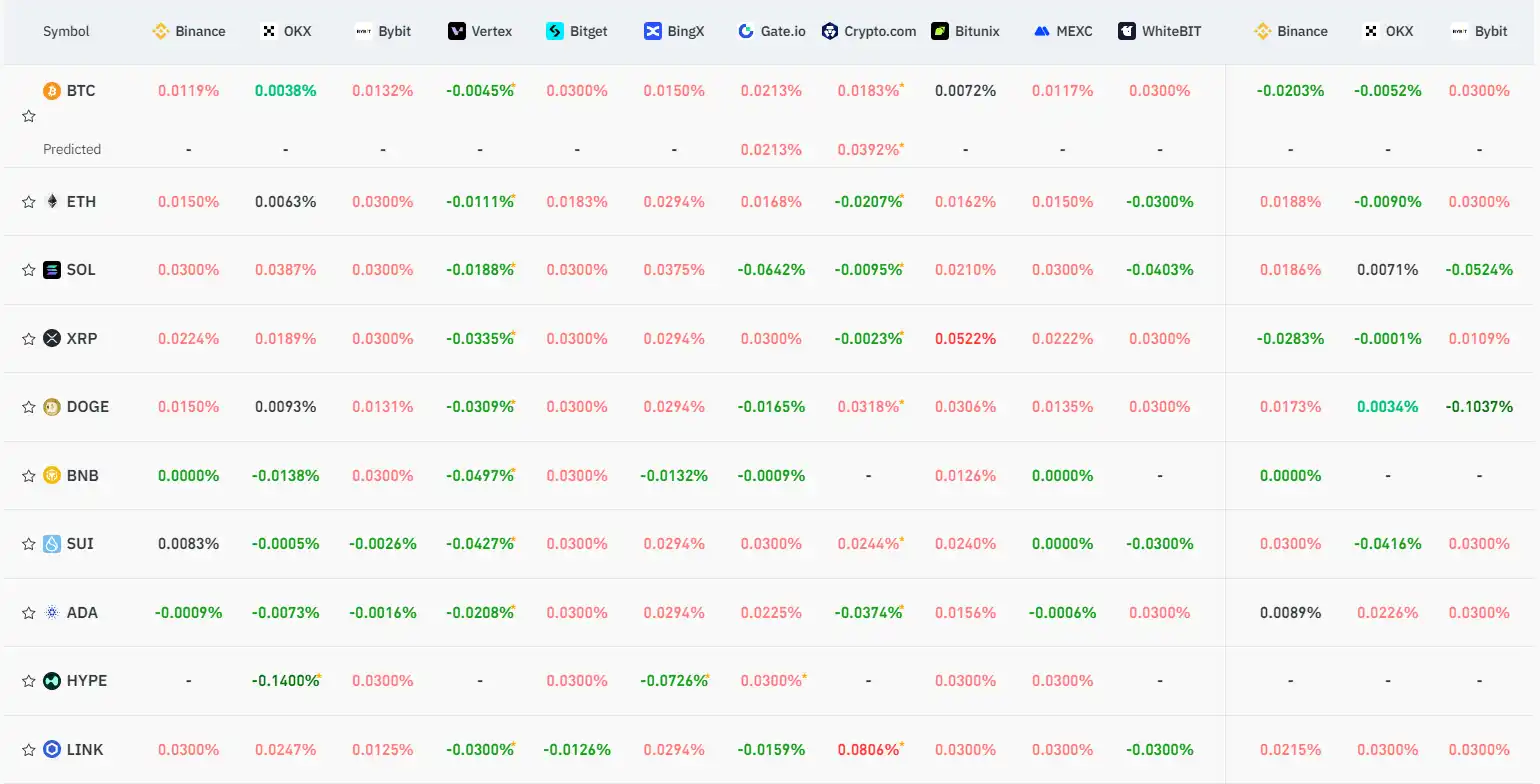
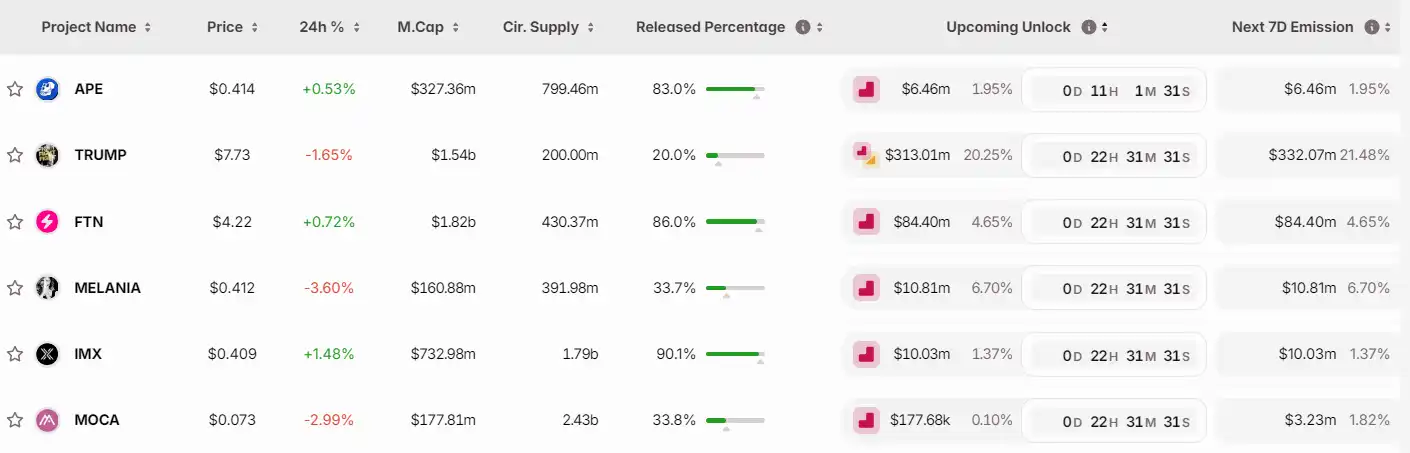
Daily Market Overall Funding Heatmap (Reflecting Funding Rate) and Token Unlocks
Data Source: Coinglass, TokenUnlocks
Funding Rate
Token Unlocks
You may also like

Deconstructing Binance Alpha2.0's New "Asia-Led Liquidity Mining" Model
After CEX and Wallet, OKX enters the payment game
Binance Sparks "Delist Concept": Can CEX Still Produce the Next ALPACA?
On April 24, Binance announced that it would delist four tokens, including Alpaca Finance ($ALPACA), on May 2, and cease trading of these pairs' perpetual futures contracts at 00:00 on May 1, 2025, Beijing time. Fast forward to the last day of perpetual futures trading delisting, ALPACA surged on the liquidation heat map. Over the past 24 hours, a total of $52.21 million evaporated in ALPACA's contract trading, exceeding the sum of the token's liquidation volume over the past two years.
Historically, when a token is listed on Binance, many traders would buy the news instantly ("Buy the News"). As the Binance listing effect gradually waned, traders found another path, which is to short sell the tokens set to be delisted from Binance ("Sell the News"). This strategy often has a very high success rate. However, as traders followed this path, they encountered the Alpaca on their short-selling journey.
Every thrilling market manipulation game requires careful preparation. Before Binance's official announcement, on April 10, $ALPACA was ranked 7th in the preliminary list of the second batch of "Vote for Delisting" on Binance, causing its price to plummet almost by half. However, in the five days leading up to Binance's official announcement, from April 19 to April 23, trading volume suddenly surged.
The story traces back to the start of Binance's second round of "Vote for Delisting," where ALPACA was included in the delisting candidates list, ranked 7th among 17 projects. After the completion of Binance's delisting vote count, $ALPACA was included in the projects to be delisted. The market did not react significantly, price fluctuations were not substantial, but trading volumes expanded abnormally, suggesting the entry of "manipulative funds" into the community.
On April 24, Binance officially announced the delisting of the $ALPACA spot trading pair on May 2 and the settlement of the futures contracts on April 30. Following the announcement, the spot price of $ALPACA dropped from $0.0329 to $0.029, with a market cap of only about $5 million. However, what followed were two price "rollercoaster" moments; within an hour, the price surged from $0.029 to $0.0857, an increase of about 195%, only to rapidly drop back to $0.04 within 3 hours. Shorts were caught off guard, and the open interest of contracts surged rapidly, initiating the "long and short grinder" mode.
On April 25, Alpaca Finance officially announced that the trading volume in the past 24 hours had exceeded 1 billion tokens. The liquidity provider had suggested a "minting for stability" to be returned to the treasury after a decrease in trading volume. However, as public opinion began to ferment, opposition filled the community. Alpaca Finance deleted the previous tweet and posted a new one at 9 p.m. on the same night, announcing the cancellation of the minting due to community opposition.
On April 26, Binance amended the contract funding rate rules, shortening the maximum rate cap settlement period to hourly and setting it at up to ±2%. Some high-leverage accounts continued to hold short positions against the high rate and were liquidated. Millions of dollars disappeared within a few hours, with $13 million in short positions vanishing on a token with a market cap of less than $30 million.
With the establishment of this short-selling trend, the price skyrocketed nearly 12 times from a low of $0.029 to $0.3477 within 3 days. The contract's open interest surged significantly, especially with a notable increase in short positions, resembling a microcosm of the Wall Street battle of GME's retail investors. However, this time, the retail investors' opponents could continue to mint additional chips.
From April 26 to April 29, these days were relatively calm, with the price fluctuating around $0.2 to $0.34. On April 29, Binance announced another increase in the rate cap to ±4%. Theoretically, such a high rate would severely impact short positions. If the rate remains at -4%, the bears will face a 96% "cost of ruin" after holding a short position for 24 hours. However, miraculously, the price plummeted from $0.27 to $0.067.
On April 30, with the contract delisting and liquidation scheduled in the final 24 hours, the price continued to experience intense fluctuations. ALPACA's attention peaked, with its highest price reaching $1.2 at one point. From a week before the delisting announcement to the eve of the contract delisting, ALPACA's price surged 40 times, creating an independent market for the token delisted by Binance. The total liquidation volume across the network also reached $50 million, with $42 million in "bearish fuel" beneath the price surge.
After the first surge of ALPACA, Heyi, the co-founder of Binance, replied to a netizen asking, "Can the teacher who buys the shell guarantee breakeven?" This has also triggered endless speculation among community members.
KOL Tunbtc believes that Heyi's reply to this matter was the starting point of ALPACA's surge. "The large holders of Alpaca's native token, by transferring spot chips, operating rights, and distribution rights, have pledged allegiance to Binance's deep-water core interest circle, allowing it to fully harvest market liquidity before delisting, slaughtering opposing positions." Through a triple path of fees, contract liquidations, and spot volatility, they converted user attention into profits.
He also called on Binance to thoroughly investigate this matter, clarify which market maker is manipulating the candlestick patterns, as ALPACA saw an 18x surge within 24 hours with users liquidated of tens of millions of dollars, while previously GPS's 500% surge was promptly halted, and expressed his sentiment: "All of this is thought-provoking."
Wenze, the founder of Beta Capital, believes that bypassing the regular listing process, buying shells, renaming, and restarting has crossed Binance's bottom line of maintaining listing credibility and brand compliance. Binance sometimes has a high tolerance for market fluctuations, and the OM issuance only adjusts the collateralization ratio, with many projects only allowed for leveraged trading. However, once the project, such as these "shell projects," is identified, it is easily labeled for observation, triggering a vote for delisting, ultimately leading to delisting rather than using mild measures.
Renowned KOL Rui, "YeruiZhang," likened the ALPACA incident to "crazy revenge on an ex" and shared a piece of insider information, claiming that the original whale behind ALPACA was a team that controlled BSC's MEV for a period of time and expressed dissatisfaction with Binance's current management for some reason. The comments section is rampant with speculation that it is BSC's whale 48CLUB, and 48CLUB's Ian even personally appeared to eat "his own melon."
With the recent buzz around VOXEL's surge and the wealth effect and discussion surrounding ALPACA, more and more "delisting concepts" have emerged. This concept does not necessarily refer to tokens that have already been delisted but rather shares some common characteristics of delisted tokens.
Famous KOL Chuanmo recently shared on Twitter his logic for choosing concept tokens and listed several tokens, all of which experienced varying degrees of price increase after his recommendation.
His "Concept Delisting" strategy involves selecting low-cap tokens from Bybit and Binance, arranging them by market cap from lowest to highest, with almost 100% price increase for the tokens with the highest holdings/circulating market cap. He buys three tokens daily following this order with a fixed amount, and based on the holdings/circulating supply ratio, he removes tokens that no longer meet the criteria daily and continues to buy the new top three tokens.
Many community members have tested this strategy, with some creating helpful tools. The dreamer Disney "discountifu" has created a dashboard, and Vivek10 early bird "vivekw_eth" has developed a monitoring and alert system that can be directly pushed to WeChat with a copyable link, although it is currently deployed locally and not yet entirely stable.
However, when using tools created for free by community members, please be cautious. While there are many enthusiastic contributors in the community, there are also many uncertain factors in this dark forest.
In an increasingly insular market, retail investors not only have to contend with whales and other retail investors but also must bear many unstable elements. The recent ALPACA incident serves as a warning to us. Whether it's a primary or secondary listing on a top-tier exchange or the "Concept Delisting" approach, we need to make rational asset allocations amidst FOMO to protect our principal and reach the other shore.
The mention of all tokens above does not constitute financial investment advice "NFA".
Science Equity Movement: DeSci's Trillion-Dollar Knowledge Economy Reconstruction Revolution
Sentient In-Depth Research Report: Secures $85 Million in Funding to Build a Decentralized AGI New Paradigm
a16z Leads $25M Investment, 0xMiden to Run a Privacy Chain on Your Phone
Gate.io MemeBox has officially integrated with the Solana ecosystem, providing lightning-fast on-chain asset trading.
Ethereum Foundation's "Three Pillars" Manifesto: From Core Vision to Decentralization Reform, Vitalik Reaffirms Mission
This is the Winter of VC, yet the Spring of KOL Agency.
Vitalik's Talk: Exploring the Ethereum 2025 Vision, Fusion Innovation of POS, L2, Cryptography, and AI
This Week in Review | Trump to Host Dinner for TRUMP Holders; Musk and US Treasury Secretary Engage in Heated Argument at the White House
Cryptocurrency Market Sentiment Warms Up, MCP Emerges as New AI Frontier
MCP In-Depth Research Report: Protocol New Infrastructure in the AI+Crypto Mega Trend
Bull Market Returns, Can Ethereum's Pectra Upgrade Turn the Tide?
Vitalik's Long-Term L1 Execution Layer Proposal Full Text: Replacing EVM with RISC-V
Weekly Recap | MANTRA (OM) Plunges Sparking Controversy; Powell Emphasizes No Immediate Market Intervention
Bitcoin Eco Goes 10x Again, What Is the New Asset Protocol Alkanes?
「Methane」 is the most popular term in the recent Bitcoin ecosystem, serving as the first fairly minted token of the new Alkanes protocol in the Bitcoin ecosystem. 「Methane」
The market value of METHANE has exceeded 6 million USD, which means each METHANE is worth over 60 USD. The author inquired with some Bitcoin ecosystem players who participated in the minting process, and there is a significant difference in minting costs. If we take 5 USD per token as the minting cost benchmark, then the profit from minting METHANE has already exceeded 10 times.
In the long stagnant situation of the Bitcoin ecosystem, how did this new asset protocol Alkanes emerge?
The predecessor of the Alkanes protocol was called Protorunes, which means 「programmable runes,」 and it has the same founder. This thing also briefly caught the attention of the Bitcoin ecosystem last year, and runes were quite popular at that time.
The protocol's founder @judoflexchop is the Chief Technology Officer of the Bitcoin wallet Oyl Wallet. Although the number of users of this wallet in the Bitcoin ecosystem may not be very high, it is still well-known. Just look at its funding situation to understand why:
On March 8, 2024, the Bitcoin infrastructure company Oyl completed a 3 million USD Pre-Seed round of financing, led by Arca, with participation from Foresight Ventures, Arthur Hayes's family office Maelstrom, Domo, UTXO Management, Taproot Wizards CEO Udi Werthheimer, Kanosei, and FlamingoDAO, among others.
With Arthur Hayes's involvement, this wallet quickly gained prominence in the Bitcoin ecosystem. In the middle of last year, Oyl launched a Bitcoin NFT project called 「Airheads,」 which sparked controversy due to the relatively high minting price. In terms of the NFT's price performance, it was considered a 「failure」 project, but recently it has surged nearly three times in value due to the popularity of the Alkanes protocol.
Although they are all wallets, in the Bitcoin ecosystem, most major wallets are not just wallets. For example, OKX, UniSat, Magic Eden, and the main character of this article, Oyl, have various other Bitcoin ecosystem businesses outside of their wallets, with only Xverse having a more "focused" business scope. Returning to Oyl, in addition to the wallet, they have also developed a Bitcoin RPC called "Sandshrew" and the Alkanes protocol.
Currently, Oyl is fully focused on promoting this protocol, and the official promotion has also adopted the name Alkanes:
Alkanes is a new Bitcoin asset protocol. Overall, it draws on the "Runestone" structure of the Rune protocol, but with greater scalability and support for smart contracts. As mentioned earlier, the predecessor of this protocol was Protorunes. At first glance, Protorunes may seem like a "customized version of Rune," but it is not. In simple terms, the Rune protocol and the "Runestone" structure are like a closed iOS system, while Protorunes and Alkanes are like open-source Android.
Protorunes corresponds to the "Runestone" of the Rune protocol. Here, "Runestone" is not the highly valuable early NFT of the Rune system but rather a "transaction data encapsulation," in short, a piece of information embedded in a Bitcoin transaction that serves as an index to determine if there is any Rune operation in the transaction.
If the indexer discovers the "RUNES" identifier while scanning the OP_RETURN of each transaction, it interprets the data following the identifier, such as etching, minting, transferring, and so on. The "Runestone" acts as an operational guide, and the indexer derives indexing results based on this guide.
The "Runestone" is exclusively for the Rune protocol's operational guide, directly corresponding to the Rune protocol, unlike Protorunes. Simply put, we cannot instruct the indexer of the Rune protocol to perform such actions directly, saying, "I am a sub-asset protocol based on Runestone; please index me together." However, Protorunes can. Everyone can customize their new asset protocol based on the Protorunes data format, and these protocols will be assigned a "Protocol ID." The indexer will read the "Protocol ID" to determine which protocol's specifications to parse.
There are some modular blockchain launch frameworks like Ethereum's, which make things simpler. For developers, they can just use the tools provided by Oyl instead of having to build their own indexer.
On the smart contract implementation front, before OP_CAT's revival, it was basically limited to storing contract data in transactions and executing off-chain indexes, not deviating too much from that approach.
On a technical level, apart from technology, there are two main reasons why this protocol could gain momentum. Firstly, it has received strong support from the Chinese inscription player community. Undoubtedly, the most financially capable group in the Bitcoin ecosystem currently is the Chinese inscription player community. This group is quite unique, as the PvP aspect of Solana meme coins is redundant in the Bitcoin ecosystem, but gaining approval from the Chinese inscription player community is also quite challenging. Once the inscription gains momentum, the spread speed within WeChat groups will be rapid and influential.
Searching for the keyword "Alkanes" on Twitter, one will find that most of the content comes from Chinese users, and the protocol's founder has also posted Chinese tweets thanking the Chinese community for their support. The early Bitcoin ecosystem minting tool, iDclub, created a transaction market for the Alkanes protocol, also coming from Chinese hands.
The second reason is that the project team behind this protocol has a background, and according to their disclosed plans, they don't just intend to launch an asset protocol to "funnel" into their own wallet. They also plan to develop AMM, BTC staking, stablecoins, MEV tools, and a trustless ZK bridge, essentially creating a BTCFi ecosystem around this protocol.
The entire narrative logic is coherent—a smart contract-supported asset protocol used to build applications around it. Without the backing of the project team to explain this narrative, it's hard to convince people. After all, in the Bitcoin ecosystem, players still feel some pain from Atomicals' decline, and there is too much uncertainty when big things are not done by a mature team.
- METHANE, the first fairly minted token of the Alkanes protocol, currently with a market cap of about $6 million. The Chinese meaning of Alkanes is "alkanes," while the Chinese meaning of METHANE is indeed "methane," so players also mention BUTANE "butane" and HEXANE "hexane," but these two tokens currently have market capitalizations of only around $250,000 each.
- DIESEL, from the official team and also the first token deployed by the Alkanes protocol, currently valued at around $12.6 million. This coin has a unique mechanism, with a total supply of only 1,562,500 tokens, 28% reserved for the team, and 72% being produced block by block along with each Bitcoin block, with production halving following Bitcoin's halving schedule. In each block, the miner who submits the highest fee for a DIESEL minting transaction will ultimately receive the block's DIESEL output. In summary, a DIESEL is minted per block, and only one person (the miner whose fee for the minting transaction was the highest) can mine DIESEL in each block. Ordinary players can hardly mint anymore, and scientists will automatically monitor and increase the miner fee continuously.
Since METHANE is fairly launched, the holder base/chip distribution is definitely healthier compared to DIESEL, and it is fully circulating. Therefore, currently on social media platforms, the volume of METHANE is much higher than that of DIESEL. Purely based on volume rather than market value, it would feel like METHANE is leading the pack. There is no information available from the official sources about DIESEL's future empowerment. Thus, in terms of community engagement, METHANE is far superior, while DIESEL excels in official background and potential future empowerment expectations.
This protocol is still in its very early stages. Various wallets have not caught up with support for assets of this protocol yet, so it is best to use Oyl Wallet for interacting with assets of this protocol to ensure asset security.
Essentially, the success of this protocol has ticked off all the key success factors of a new asset protocol in the Bitcoin ecosystem — "Mainnet Asset," "Fair Launch," and "Community Support." Additionally, it has "Smart Contracts" and a narrative on the ecosystem layer. In the long-standing quietness of the Bitcoin ecosystem, it has still managed to stand out. Hopefully, the ecosystem can be further developed and progress even further in the future.
Opinion: Why Bittensor is a Scam, and TAO is Heading Towards Zero?
Deconstructing Binance Alpha2.0's New "Asia-Led Liquidity Mining" Model
After CEX and Wallet, OKX enters the payment game
Binance Sparks "Delist Concept": Can CEX Still Produce the Next ALPACA?
On April 24, Binance announced that it would delist four tokens, including Alpaca Finance ($ALPACA), on May 2, and cease trading of these pairs' perpetual futures contracts at 00:00 on May 1, 2025, Beijing time. Fast forward to the last day of perpetual futures trading delisting, ALPACA surged on the liquidation heat map. Over the past 24 hours, a total of $52.21 million evaporated in ALPACA's contract trading, exceeding the sum of the token's liquidation volume over the past two years.
Historically, when a token is listed on Binance, many traders would buy the news instantly ("Buy the News"). As the Binance listing effect gradually waned, traders found another path, which is to short sell the tokens set to be delisted from Binance ("Sell the News"). This strategy often has a very high success rate. However, as traders followed this path, they encountered the Alpaca on their short-selling journey.
Every thrilling market manipulation game requires careful preparation. Before Binance's official announcement, on April 10, $ALPACA was ranked 7th in the preliminary list of the second batch of "Vote for Delisting" on Binance, causing its price to plummet almost by half. However, in the five days leading up to Binance's official announcement, from April 19 to April 23, trading volume suddenly surged.
The story traces back to the start of Binance's second round of "Vote for Delisting," where ALPACA was included in the delisting candidates list, ranked 7th among 17 projects. After the completion of Binance's delisting vote count, $ALPACA was included in the projects to be delisted. The market did not react significantly, price fluctuations were not substantial, but trading volumes expanded abnormally, suggesting the entry of "manipulative funds" into the community.
On April 24, Binance officially announced the delisting of the $ALPACA spot trading pair on May 2 and the settlement of the futures contracts on April 30. Following the announcement, the spot price of $ALPACA dropped from $0.0329 to $0.029, with a market cap of only about $5 million. However, what followed were two price "rollercoaster" moments; within an hour, the price surged from $0.029 to $0.0857, an increase of about 195%, only to rapidly drop back to $0.04 within 3 hours. Shorts were caught off guard, and the open interest of contracts surged rapidly, initiating the "long and short grinder" mode.
On April 25, Alpaca Finance officially announced that the trading volume in the past 24 hours had exceeded 1 billion tokens. The liquidity provider had suggested a "minting for stability" to be returned to the treasury after a decrease in trading volume. However, as public opinion began to ferment, opposition filled the community. Alpaca Finance deleted the previous tweet and posted a new one at 9 p.m. on the same night, announcing the cancellation of the minting due to community opposition.
On April 26, Binance amended the contract funding rate rules, shortening the maximum rate cap settlement period to hourly and setting it at up to ±2%. Some high-leverage accounts continued to hold short positions against the high rate and were liquidated. Millions of dollars disappeared within a few hours, with $13 million in short positions vanishing on a token with a market cap of less than $30 million.
With the establishment of this short-selling trend, the price skyrocketed nearly 12 times from a low of $0.029 to $0.3477 within 3 days. The contract's open interest surged significantly, especially with a notable increase in short positions, resembling a microcosm of the Wall Street battle of GME's retail investors. However, this time, the retail investors' opponents could continue to mint additional chips.
From April 26 to April 29, these days were relatively calm, with the price fluctuating around $0.2 to $0.34. On April 29, Binance announced another increase in the rate cap to ±4%. Theoretically, such a high rate would severely impact short positions. If the rate remains at -4%, the bears will face a 96% "cost of ruin" after holding a short position for 24 hours. However, miraculously, the price plummeted from $0.27 to $0.067.
On April 30, with the contract delisting and liquidation scheduled in the final 24 hours, the price continued to experience intense fluctuations. ALPACA's attention peaked, with its highest price reaching $1.2 at one point. From a week before the delisting announcement to the eve of the contract delisting, ALPACA's price surged 40 times, creating an independent market for the token delisted by Binance. The total liquidation volume across the network also reached $50 million, with $42 million in "bearish fuel" beneath the price surge.
After the first surge of ALPACA, Heyi, the co-founder of Binance, replied to a netizen asking, "Can the teacher who buys the shell guarantee breakeven?" This has also triggered endless speculation among community members.
KOL Tunbtc believes that Heyi's reply to this matter was the starting point of ALPACA's surge. "The large holders of Alpaca's native token, by transferring spot chips, operating rights, and distribution rights, have pledged allegiance to Binance's deep-water core interest circle, allowing it to fully harvest market liquidity before delisting, slaughtering opposing positions." Through a triple path of fees, contract liquidations, and spot volatility, they converted user attention into profits.
He also called on Binance to thoroughly investigate this matter, clarify which market maker is manipulating the candlestick patterns, as ALPACA saw an 18x surge within 24 hours with users liquidated of tens of millions of dollars, while previously GPS's 500% surge was promptly halted, and expressed his sentiment: "All of this is thought-provoking."
Wenze, the founder of Beta Capital, believes that bypassing the regular listing process, buying shells, renaming, and restarting has crossed Binance's bottom line of maintaining listing credibility and brand compliance. Binance sometimes has a high tolerance for market fluctuations, and the OM issuance only adjusts the collateralization ratio, with many projects only allowed for leveraged trading. However, once the project, such as these "shell projects," is identified, it is easily labeled for observation, triggering a vote for delisting, ultimately leading to delisting rather than using mild measures.
Renowned KOL Rui, "YeruiZhang," likened the ALPACA incident to "crazy revenge on an ex" and shared a piece of insider information, claiming that the original whale behind ALPACA was a team that controlled BSC's MEV for a period of time and expressed dissatisfaction with Binance's current management for some reason. The comments section is rampant with speculation that it is BSC's whale 48CLUB, and 48CLUB's Ian even personally appeared to eat "his own melon."
With the recent buzz around VOXEL's surge and the wealth effect and discussion surrounding ALPACA, more and more "delisting concepts" have emerged. This concept does not necessarily refer to tokens that have already been delisted but rather shares some common characteristics of delisted tokens.
Famous KOL Chuanmo recently shared on Twitter his logic for choosing concept tokens and listed several tokens, all of which experienced varying degrees of price increase after his recommendation.
His "Concept Delisting" strategy involves selecting low-cap tokens from Bybit and Binance, arranging them by market cap from lowest to highest, with almost 100% price increase for the tokens with the highest holdings/circulating market cap. He buys three tokens daily following this order with a fixed amount, and based on the holdings/circulating supply ratio, he removes tokens that no longer meet the criteria daily and continues to buy the new top three tokens.
Many community members have tested this strategy, with some creating helpful tools. The dreamer Disney "discountifu" has created a dashboard, and Vivek10 early bird "vivekw_eth" has developed a monitoring and alert system that can be directly pushed to WeChat with a copyable link, although it is currently deployed locally and not yet entirely stable.
However, when using tools created for free by community members, please be cautious. While there are many enthusiastic contributors in the community, there are also many uncertain factors in this dark forest.
In an increasingly insular market, retail investors not only have to contend with whales and other retail investors but also must bear many unstable elements. The recent ALPACA incident serves as a warning to us. Whether it's a primary or secondary listing on a top-tier exchange or the "Concept Delisting" approach, we need to make rational asset allocations amidst FOMO to protect our principal and reach the other shore.
The mention of all tokens above does not constitute financial investment advice "NFA".
Science Equity Movement: DeSci's Trillion-Dollar Knowledge Economy Reconstruction Revolution
Sentient In-Depth Research Report: Secures $85 Million in Funding to Build a Decentralized AGI New Paradigm
a16z Leads $25M Investment, 0xMiden to Run a Privacy Chain on Your Phone
Popular coins
Latest Crypto News


Customer Support:@weikecs
Business Cooperation:@weikecs
Quant Trading & MM:bd@weex.com
VIP Services:support@weex.com
 App
App