
- Buy Crypto
- Markets
- Futures
- Spot
- Copy Trade
 WE-Launch
Solana Ad Fiasco: Should Public Blockchains Take Sides Politically?

On one side, watching a big sister join various crypto pump groups and dance in the BNB Chain ecosystem group, while on the other side, Solana and Base are at it again. Both chains, seen by the community as to some extent "American chains," have completely fallen out on the issue of ideology.
"American Chain" Adopts a Clear Political Stance, Community Mocks, Base Strikes Back
The catalyst this time was a now-deleted promotional video by Solana, featuring a dialogue between a consultant (symbolizing certain ideological trends in modern society) and a man named "American" (representing traditional American values, innovative spirit, and rational thinking).

American expressed interest in technological innovation, space exploration, nuclear energy, cryptocurrency, and artificial intelligence, among other areas, but the consultant kept steering him towards identity politics, gender identity, and social constructivism, rather than practical action and progress.
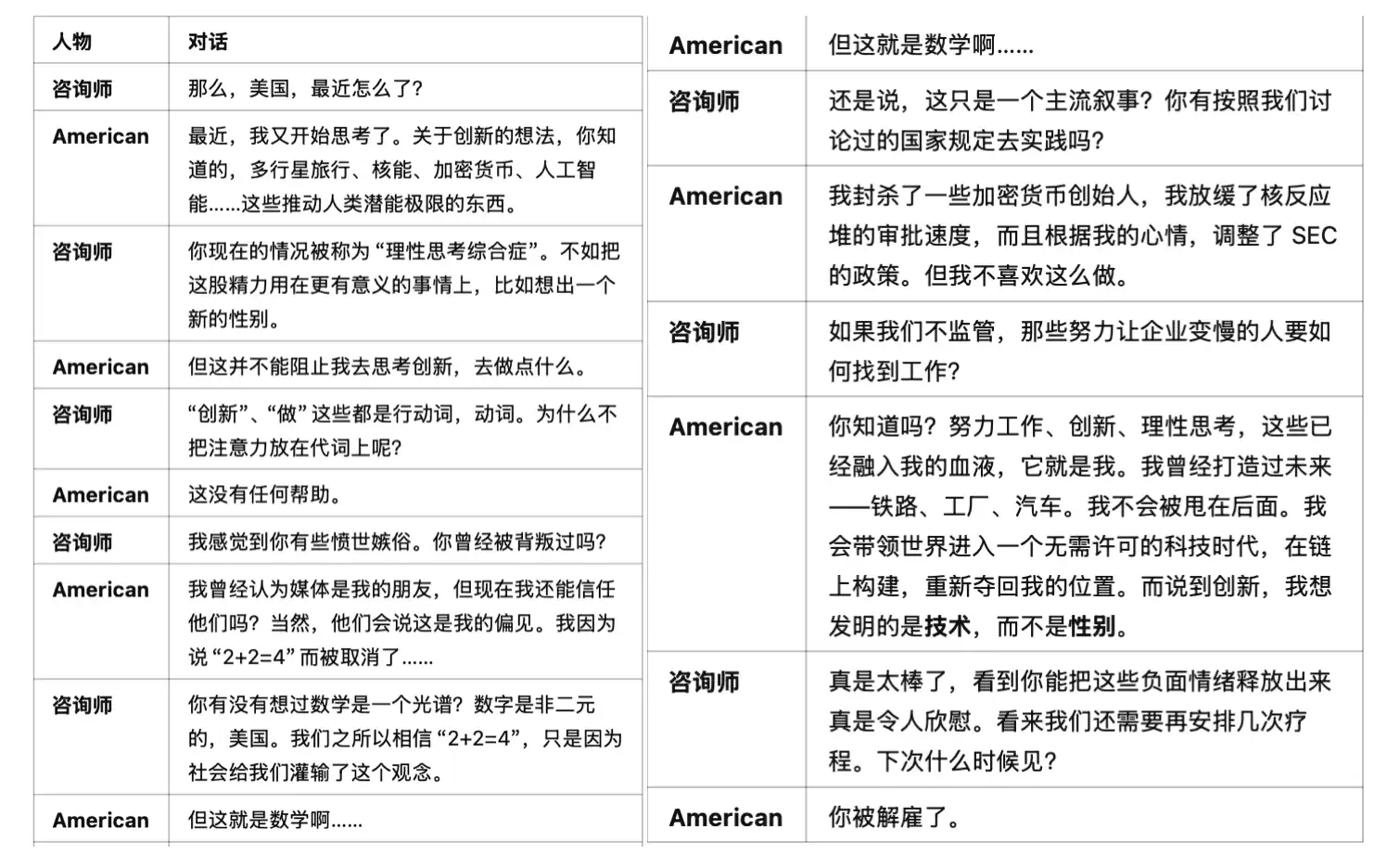
Ad Copy List; Illustration: BlockBeats
American expressed confusion and dissatisfaction to the consultant, as he found his rational thinking and innovative spirit to be problematic. He was even canceled for insisting on the objectivity of math ("2+2=4"). After being forced to comply with regulatory policies, such as cracking down on cryptocurrency and slowing down nuclear energy approvals, American finally realized he could not accept this reality, decided to embrace innovation and action again, and at the end of the conversation, "fired" the consultant, symbolizing resistance to certain modern ideological trends.
At the end of the video, American bursts out the door, with "American is Back" written on the screen, followed by promotional information for Solana's May conference and the emblematic logo symbolizing accelerationism.
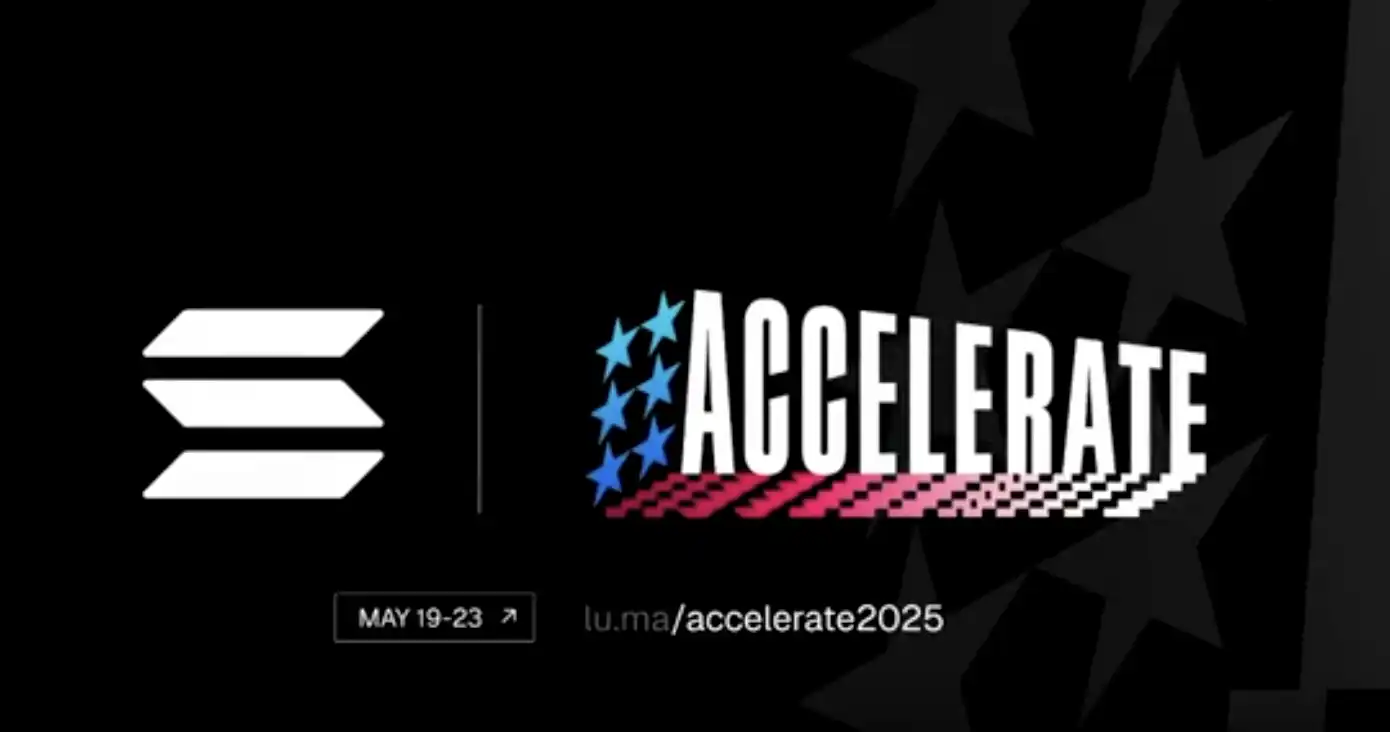
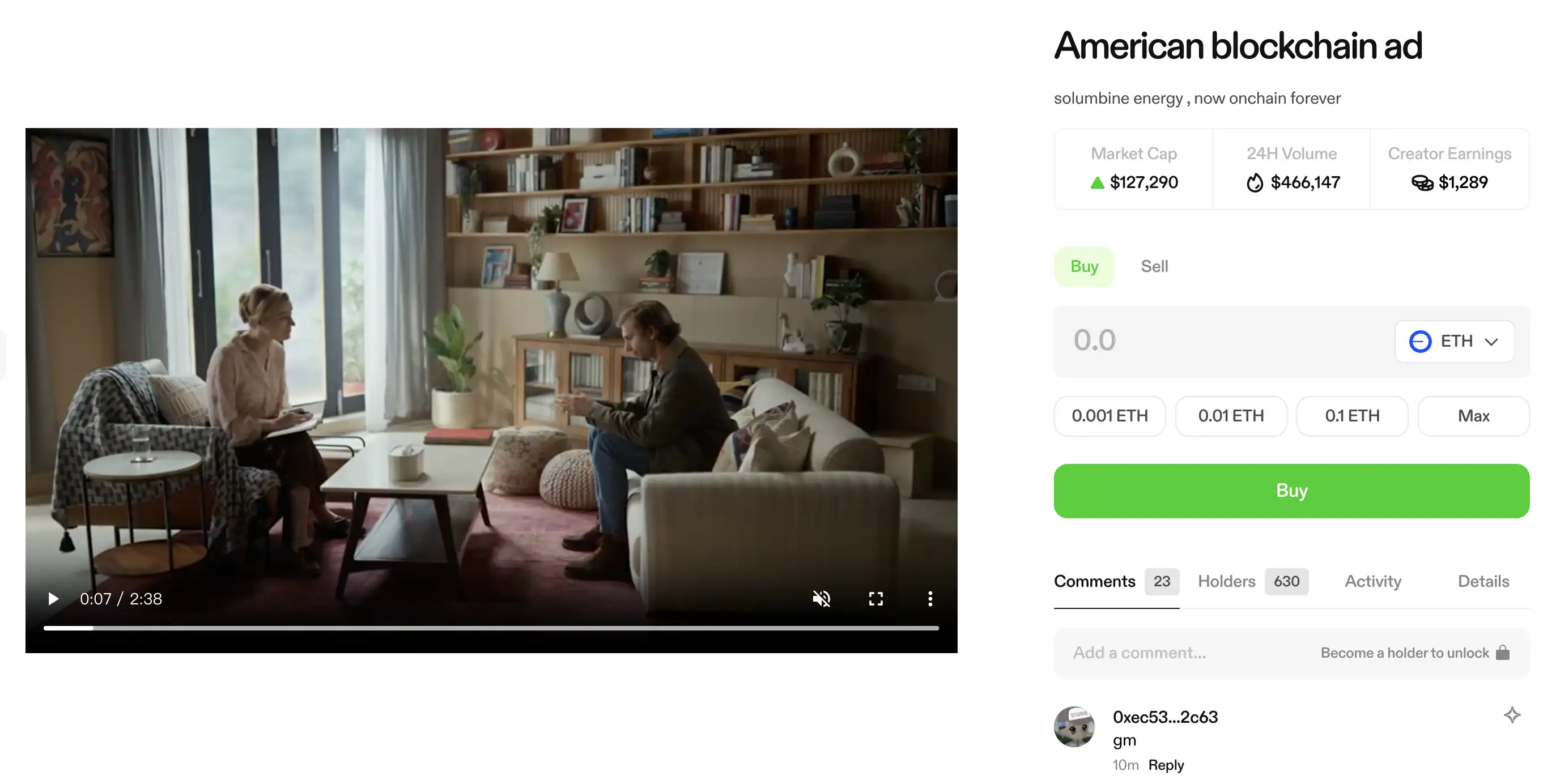
The community had mixed reactions to this ad. Solana chose to delete the video a few hours after its release, but someone uploaded it to Zora for the community to mint, and it is currently valued at $120,000.
On the other hand, Base also "stirred things up" by releasing a video, with the theme of a transformation story of an old car dealer. Initially immersed in traditional car trading and having no interest in cryptocurrency, he began contemplating new solutions when faced with real-world issues such as slow bank transfers, limited business hours, and inconvenient cash transactions. Eventually, upon a recommendation from a repeat customer, he embraced cryptocurrency.
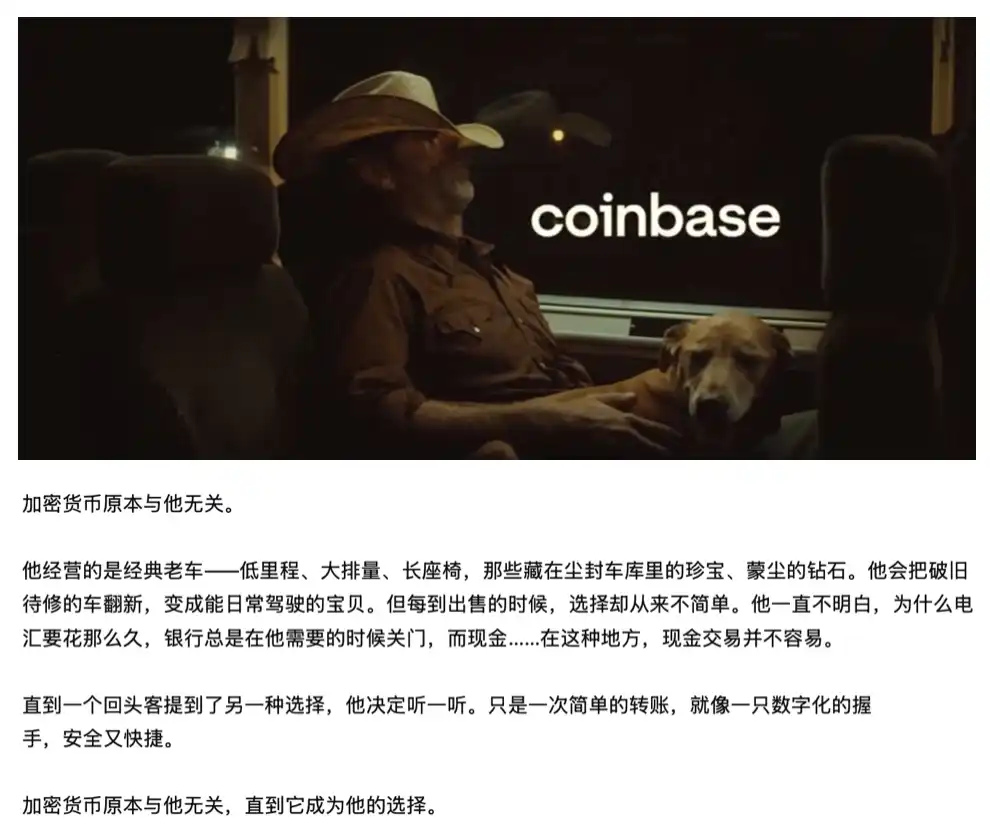
Illustration: BlockBeats
Two Paths for Public Blockchains: Mosque or Chameleon?
While Solana was mocked by the community for this advertisement, some also recalled its 2020 political donation campaign during the "Black Lives Matter" movement, where Solana stated, "Regardless of race or gender, everyone is equal, fair and just." Now, with the release of an advertisement accusing transgenderism of hindering innovation, people in the community have criticized Solana as a political chameleon.
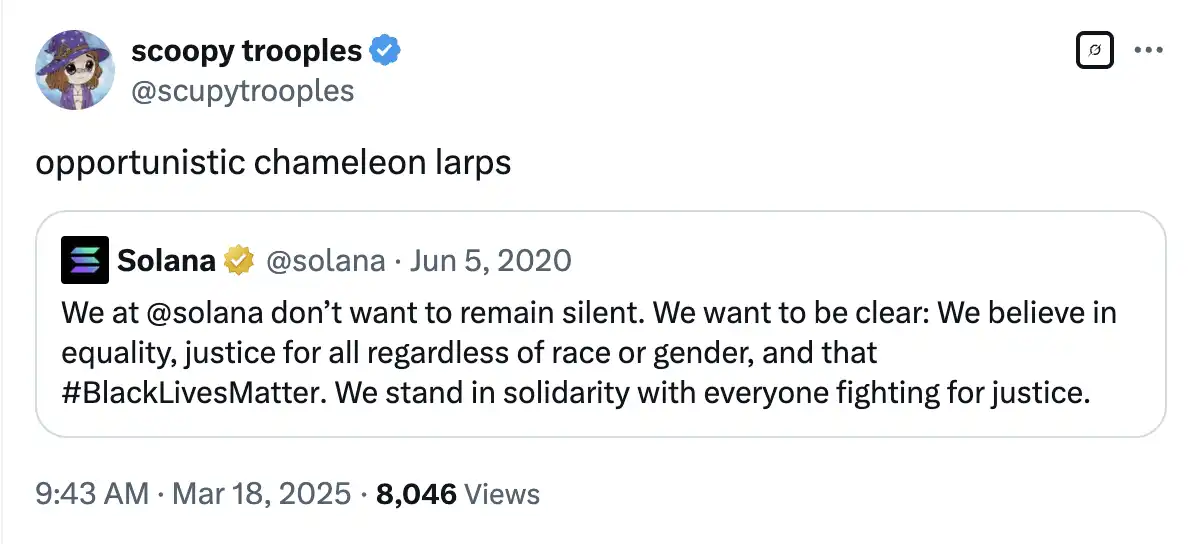
Solana has not been immune to controversies within the blockchain ecosystem, such as with Ethereum and Base. However, since the inauguration of Trump, the blockchain ecosystems centered in the U.S., led by Solana and Base, have shown completely different political stances and ideological choices compared to Ethereum.
Ethereum's founder, Vitalik, has consistently maintained his political stance, advocating for decentralization, rejecting political intervention, avoiding speculation, and driving technological and ecological innovation. He hopes that Ethereum can uphold its initial values and attract more users through practical applications, rather than seeking short-term gains by catering to politics or vested interest groups.
On social media, he plainly stated that the Ethereum Foundation will avoid affiliating with any political figures, emphasizing that those who attempt to ride on the popularity of politicians are misguided, and Ethereum needs a more distinct and clear positioning.
In contrast, Solana, Base, Cardano, Ripple, and other crypto projects have become guests of Trump.
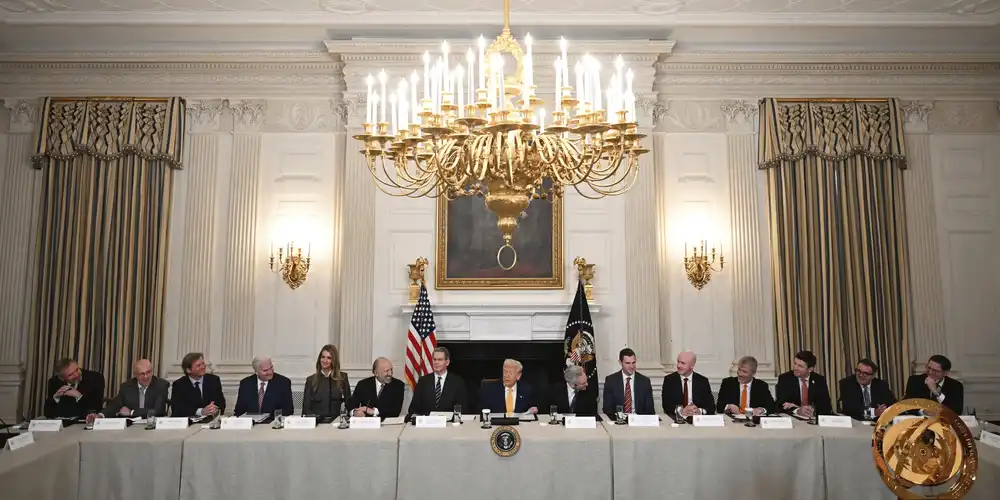
First Cryptocurrency White House Summit
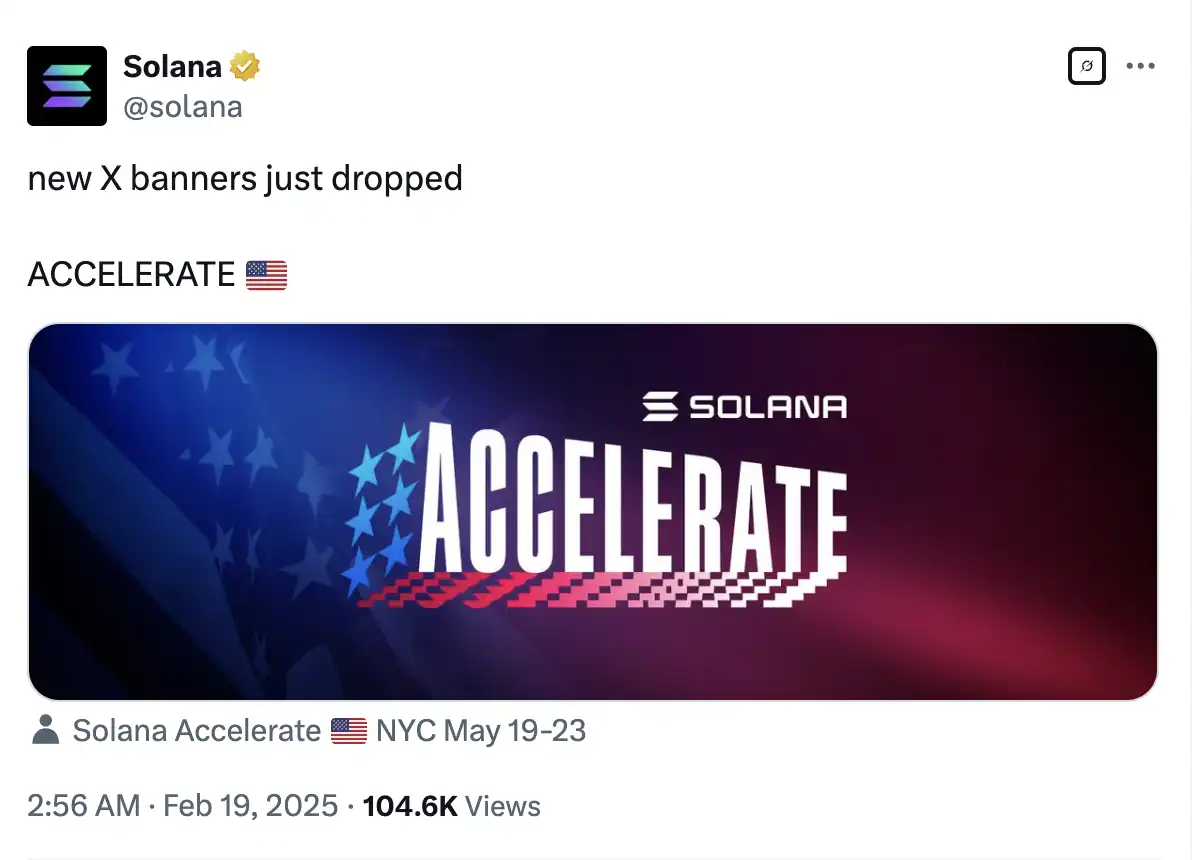
In February of this year, Solana updated its brand image with a banner promoting the word "ACCELERATE," with the background displaying the American flag.
The English-speaking community is currently in a heated debate over Solana's short film, with some expressing confusion as to why such an open-source project (especially one built on cryptography) like Solana would take such a strange stance, leaving many puzzled.
「Have you not realized that there is a disproportionately large number of transgender developers contributing to open source, cryptography, security, and intelligence software? Almost everyone who has grown up in the cypherpunk culture knows at least one transgender super developer or hacker, who is truly a legendary figure. What makes these communities so admirable is that they always adhere to this belief: we don't care who you are, we only care about what you have done.」
Some also argue in support of Solana, believing that since they have political resources, they should use them reasonably to maximize the ecosystem's development benefits.
Others think that this advertisement is a very clever marketing strategy, 「Those who cry out 'cryptocurrency should be decentralized, politically neutral' completely missed the point, this ad is designed to make people feel awkward and stir up anger, and you all fell for it — which in turn has made its spread even wider.」 Indeed, this is the case, as everyone is now sharing this ad clip.
Meanwhile, the community's complaints about Ethereum have not stopped, 「Say what you will about Solana's embarrassing marketing, but at least they are not afraid to try various things, no matter how foolish they may seem. Ethereum, on the other hand, is busy maintaining its 'trusted neutrality' and releasing a lot of clichés.」
As Solana anchors its brand image to the American flag and Base uses a commercial narrative to satirize the traditional financial system, the crypto space has irreversibly stepped into the ideological battleground. This "American Chain" values war has not only revealed the ambition of the public chain ecosystem to compete for political discourse power but also reflected the deep contradiction between decentralization beliefs and the pragmatism of survival.
Just as Bitcoin once tried to dissolve sovereign will with an algorithm, today's Layer1 networks are actively weaving political narratives — this may herald the script for the 2.0 of the crypto revolution: technical protocols are starting to learn to manipulate ideological tools, and the original doctrine of 'trusted neutrality' is being redefined by a more complex reality game. When the code cannot prove its position, perhaps the future of the crypto world will no longer be adjudicated solely by hash rate.
You may also like
Key Market Insights for May 16th, how much did you miss out on?
Deconstructing Binance Alpha2.0's New "Asia-Led Liquidity Mining" Model
Binance Alpha Points Gameplay Overtakes on the Inside Track, Sweeping 90% of the Web3 Wallet Market
Gate.io MemeBox has officially integrated with the Solana ecosystem, providing lightning-fast on-chain asset trading.
Taking Stock of the Top 10 Emerging Launchpad Platforms: Who Will Succeed in Disrupting Pump.fun?
Stablecoin Showdown: Six Rising Stars Enter the Fray, Will the Market Structure Shift?
This Week in Review | Trump to Host Dinner for TRUMP Holders; Musk and US Treasury Secretary Engage in Heated Argument at the White House
Cryptocurrency Market Sentiment Warms Up, MCP Emerges as New AI Frontier
How did Gate.io manage to break through besides Binance and OKX?
BYDFi has officially launched the on-chain trading tool MoonX, ushering in the era of CEX+DEX dual-engine.
Binance Wallet IDO Survival Report: 10 Projects' Real Data Proves Narrative is More Important Than Traffic?
Crypto Market Update: Potential Trend Reversal Ahead, Capitalizing on Short-Term Funding for Investment Opportunities
Four.meme: How to Turn the BSC Chain into a DeFi Meme Wonderland Using AI Concept
Weekly Recap | MANTRA (OM) Plunges Sparking Controversy; Powell Emphasizes No Immediate Market Intervention
Key Market Intelligence on April 18th, how much did you miss out on?
On-chain Liquidity Migration: A Rollercoaster Ride of 15 Months, Who Will Stand Tall Post-Hype?
Federal Reserve Chair Powell recently commented on cryptocurrency, what bullish signals did he give to the industry?
During the liquidity crisis of Q1 25YO, where did on-chain transaction volume flow to?
Original Article Author: @stacy_muur, CuratedCrypt0 Member
Original Article Translation: Motion小Deep
Editor's Note: From January 2024 to March 2025, DeFi on-chain transaction volume experienced a surge and downturn. DEX trading volume reached a peak of $380 billion in January 2025, followed by a 35% decline. Solana's native DEX emerged, holding 5 out of the top 10 seats, with Hyperliquid occupying over 60% of the perpetual contract market share. Leading DEXs such as Uniswap and PancakeSwap dominated around 40% of the trading volume. Chain-level market share saw fluctuations, with Solana, Ethereum, and Base showing varying degrees of persistence, while CEX still accounted for nearly 80% of spot trading. The future of DeFi depends on the chain that can solidify user habits, rather than mere speculation.
The following is the original content (restructured for easier reading comprehension):
Over the past 15 months, the DeFi liquidity landscape has been redrawn among different chains, moving away from hype-driven outliers and quietly concentrating on fundamentals rather than noise.
· DEX trading volume hit a historic high of $380 billion in January 2025, followed by a 35% drop in the next two months, signaling a possible short-term top.
· The top 10 DEXs now account for nearly 80% of the activity volume; Uniswap and PancakeSwap alone represent around 40%.
· Solana's native DEX quietly took the top spot, with 5 out of the top 10, and its share expanded due to meme-driven trading volume growth.
· Hyperliquid disrupted the perpetual contract landscape, rising from a newcomer to dominating over 60% of the market share by March 2025.
All insights are based on public data. Special thanks to DefiLlama for consistently providing high-quality statistical data.
In early 2024, DEX trading volume showed strength in March and May, followed by a slowdown in the middle of the year.
The situation took a sharp turn in the fourth quarter, with transaction volumes surging in November and December, continuing into January 2025 to reach an explosive peak of $380 billion.
However, this wave of growth was short-lived. By February, the transaction volume had dropped to $245 billion, a steep 35% decrease, bringing an end to the three-month vertical climb. This decline set the tone for a more cautious second quarter.
The DEX landscape remains highly concentrated. The top 10 protocols now account for 79.5% of daily trading volume, with just the top 5 controlling 59.1%.
Uniswap and PancakeSwap represent around 40% of all DEX trading volume, being the only two protocols with total trading volume exceeding a trillion dollars. Their dominance is built on first-mover advantage, cross-chain coverage, and deep liquidity.
Uniswap Labs has also launched Unichain, a dedicated Ethereum L2 based on the Optimism Superchain, aiming to provide fast, low-cost transactions with native cross-chain interoperability.
Solana's rise has been noteworthy. Five out of the top 10 DEXs are Solana-native: @orca_so, @MeteoraAG, @RaydiumProtocol, @Lifinity_IO, @pumpdotfun.
Orca (8.02%) and Meteora (6.70%) alone contribute about 15% of global DEX activity.
This rise is driven by low fees, fast block times, and the sticky flow of Solana's meme coin culture. Pump.fun entering the top 10 clearly reflects this energy.
@0xfluid (7.09%) is the most capital-efficient DEX in the top 5. Active on Ethereum, with monthly trading volumes surpassing $100 billion. Its launch on Arbitrum saw volumes grow from $426 million in February to $1.6 billion in March, demonstrating rapid adoption.
@AerodromeFi, based on Base, reflects the growth of liquidity on the Base L2.
While Hyperliquid doesn't rank high in spot trading, it dominates the perpetual contract market with over 60% market share.
The past 15 months have shown that while most chains can attract attention, few can retain users. From January 2024 to March 2025, chain-level DEX market share has shifted rapidly, with only a few maintaining significant traction.
Solana has seen the most prominent performance. It steadily climbed in 2024, reaching a peak of 45.8% in January 2025 during the $TRUMP and $MELANIA meme coin craze. By March, its share halved to 21.5%. Nonetheless, its average share of 25.1% remains the highest across all chains.
Ethereum, on the other hand, exhibited the opposite trend. Starting at about 32% share in 2024, it dropped to 15.3% in January 2025 but rebounded to 26.4% by March, demonstrating its resilience even after losing momentum.
Base has been the most stable climber. Rising from 3% in March 2024 to 12.4% in December and remaining steady at 7.4% in March 2025, averaging 6.6% during this period. No hype, just gradual, sticky growth.
The BNB chain maintained an average share of 14.7%, remaining stable throughout, without any sudden spikes or crashes, sustained only by retail traffic, lacking any breakthrough moments.
Arbitrum started strong at 16% but failed to take off. By January 2025, it slipped to 4.8%, surpassed by Base and Solana.
Blast peaked at 42.3% in June 2024, only to vanish the following month—a typical case of incentive-driven transaction volume with no retention.
Conclusion: Chain-level DEX dominance is highly volatile. Solana surged, Ethereum recovered, Base slowly gained ground, and hype cycles quickly burned out. The enduring chains are not the loudest but the most utilized.
Despite the DEX explosion at the beginning of 2025, centralized exchanges (CEX) continue to dominate the spot market. Even at the peak of DEX in January, CEX still held nearly 80% of the total trading volume.
While the CEX dominance dropped from 90% at the beginning of 2024 to a low of 79%, the overall pattern is clear: DEX is growing, but CEX remains the default venue for most traders.
In 2024, the on-chain perpetual contract landscape saw a reversal.
After dYdX's two-plus-year reign at the top, Hyperliquid rose to redefine the dominant position. It first took the lead in February, briefly lost to @SynFuturesDefi mid-year, regained the top spot in August, and has held it since. By March 2025, Hyperliquid held nearly 59% of the perpetual contract trading volume, establishing itself as the preferred venue for professional traders.
This rise to prominence was fueled by a product offering close to a CEX experience, gaining attention. In contrast, dYdX quickly declined. Its market share dropped from 13.2% at the beginning of 2024 to 2.7% in March 2025 as users gravitated towards faster, sleeker, and more modern alternatives.
@JupiterExchange took a different path in perpetual contracts, climbing to second place with an 8.8% share by leveraging Solana-native liquidity and a spot DEX funnel. It expanded rapidly but stabilized behind Hyperliquid. Others such as SynFutures, @Vertex_Protocol, and @ParadexApp briefly showed traction.
The most significant shift in perpetual contract infrastructure over the past year has not been in user preferences for a particular protocol but in their trust in which chain executes transactions.
In January 2024, Ethereum and Arbitrum controlled over 65% of the perpetual contract trading volume. However, by March 2025, this had plummeted to just 11.8%, overtaken by updated, faster execution layers.
Leading this transition is Hyperliquid's custom chain, which saw its share increase from 13.6% to 58.9% during the same period. In less than a year, it has become the default perpetual contract execution environment, supplanting the L1 and L2 layers that once defined the category. Not only is it faster, but it also provides the high reliability and low latency that professional traders require.
Solana also showed strength, rising to nearly 16% by the end of 2024 with Jupiter and Phoenix, but eventually stabilizing at 10-11%, failing to sustain its breakout momentum. Base and ZKsync showed vitality, peaking at around 6-7%, but have not yet reached the top tier.
Meanwhile, Blast became a cautionary tale: achieving a 18.8% single-month miracle in June 2024, only to quickly vanish. In the realm driven by product quality and user retention, hype failed to endure. The new execution stack is clear—performance-first chains have reset the standard, and traditional infrastructure is no longer the default choice.
The future of DeFi lies not in the number of chains, but in solidifying the narrative into user habits.
「Original Article Link」
Key Market Insights for May 16th, how much did you miss out on?
Deconstructing Binance Alpha2.0's New "Asia-Led Liquidity Mining" Model
Binance Alpha Points Gameplay Overtakes on the Inside Track, Sweeping 90% of the Web3 Wallet Market
Gate.io MemeBox has officially integrated with the Solana ecosystem, providing lightning-fast on-chain asset trading.
Taking Stock of the Top 10 Emerging Launchpad Platforms: Who Will Succeed in Disrupting Pump.fun?
Stablecoin Showdown: Six Rising Stars Enter the Fray, Will the Market Structure Shift?
Popular coins
Latest Crypto News


Customer Support:@weikecs
Business Cooperation:@weikecs
Quant Trading & MM:bd@weex.com
VIP Services:support@weex.com
 App
App