
- Buy Crypto
- Markets
- Futures
- Spot
- Copy Trade
 WE-Launch
Underground Argentina: Jewish Moneylender, Chinese Supermarket, Slacker Youth, and Middle Class Relapsing into Poverty

Original Article Title: "Underground Argentina: Jewish Moneylenders, Chinese Supermarkets, Slacking Youth, and Reimpoverished Middle Class"
Original Article Author: Sleepy.txt, Dynamic Observation Beating
In Argentina, even the US dollar has malfunctioned.
Pablo has a somewhat unique identity. Ten years ago, he was an expatriate employee of Huawei in Argentina, living in this South American country for two years; ten years later, he returned to the place as a Web3 developer to attend the Devconnect conference.
This perspective spanning a decade made him a witness to a cruel economic experiment.
When he left back then, 1 US dollar could only be exchanged for a dozen or so pesos; now, Argentina's black market exchange rate has surged to 1:1400. According to the simplest business logic, this means that if you have US dollars in your pocket, you should have royal purchasing power in this country.
However, this "dollar superiority complex" only lasted until the first lunch.
"I deliberately returned to the ordinary neighborhood where I used to live, found a small restaurant I used to frequent," Pablo recalled, "and ordered a bowl of noodles, which surprisingly cost 100 RMB when converted."
It was not a wealthy area with many tourists but a "fly-infested restaurant" full of life. Having a meal here ten years ago cost around 50 RMB per person; and now, in this place defined by the global media as a "failed state," prices have directly matched those in Shanghai's CBD or Paris in Western Europe.
This is a typical case of "stagflation." Although the peso has devalued by more than 100 times, prices of goods priced in US dollars have actually risen by more than 50%.
When a country's credit completely collapses, inflation spreads like an indiscriminate flood, even if you are sitting on the seemingly sturdy ship of the US dollar, the water level will still rise above your ankles. In a magical way, this country has transmitted the cost of currency collapse to everyone, including those holding hard currency.
Many people thought that in such intense turmoil, people would panic-hoard US dollars, or embrace cryptocurrency as predicted by tech enthusiasts. But we were all wrong.
Here, young people neither save money nor buy houses because the moment the salary is received, its value begins to evaporate; here, the true controllers of the financial lifeline are not the central bank but a shadow financial network woven by Jewish moneylenders from the Once district and over 10,000 Chinese supermarkets across Argentina.
Welcome to the Underground Argentina.
The Youth Dare Not Have a Future
To understand Argentina's informal economy, one must first grasp the survival logic of a particular group: those pleasure-seeking young people.
If you walk the streets of Buenos Aires at night, you would experience a severe cognitive dissonance. The bars are lively, the tango halls play music throughout the night, and the young people in restaurants still generously tip 10%. This doesn't look like a country undergoing a "shock therapy" crisis; it looks more like a golden age.
However, this is not a symbol of prosperity but rather a form of almost desperate "doomsday revelry." In the first half of 2024, the country's poverty rate soared to 52.9%; even after Milae vigorously pushed through reforms, in the first quarter of 2025, 31.6% of people remained struggling below the poverty line.
In the grand narrative of the Web3 community, Argentina is often described as a "crypto utopia." The outside world imagines that in this currency-failing nation, young people would immediately buy USDT or Bitcoin as a hedge upon receiving their salaries.
However, during Pablo's on-the-ground visits, he bluntly burst the bubble of this elite perspective.
"This is actually a misconception," Pablo pointed out coldly. "Most young people are typical 'living paycheck to paycheck,' with little left after paying rent, utilities, and daily expenses, with no savings to exchange for dollars or stablecoins."
It's not that they don't want to hedge; it's that they are not in a position to hedge.
What hinders savings is not just poverty but also the "devaluation of labor."
From 2017 to 2023, Argentines' real wages decreased by 37%. Even with nominal wage increases under Milae's leadership, the purchasing power of private sector wages still declined by 14.7% in the past year.
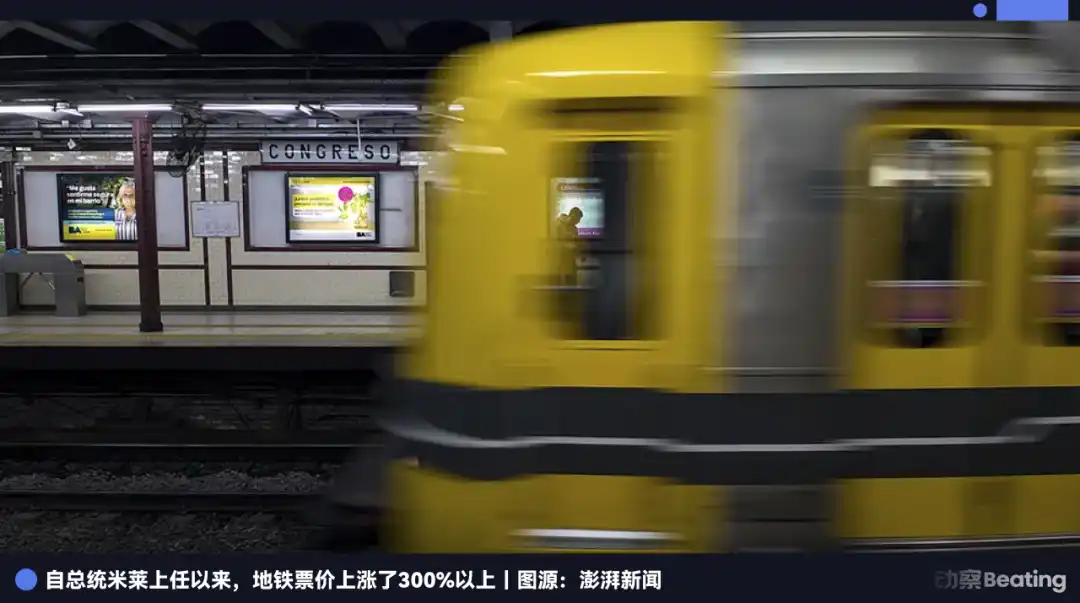
What does this mean? It means that for a young Argentine this year compared to last year, even with more hard work, they receive less bread and milk in return. In this environment, "saving" becomes a ridiculous joke. Thus, a near-rational "inflation immunity" spreads among this generation.
Since no matter how hard they work, they can't save enough for a down payment on a house, since the speed of saving can never catch up with the speed of currency evaporation, converting the peso in their hands, which could turn into worthless paper at any moment, into immediate joy, becomes the only economically rational choice.
A survey has shown that 42% of Argentinians constantly feel anxious, and 40% feel deeply exhausted. However, at the same time, as many as 88% of people admit to resorting to "emotional spending" to combat this anxiety.
This contradiction in collective psychology is precisely a microcosm of the century-long ebbs and flows of this country. They use the dance steps of tango to confront the uncertainty of the future, and numb the sense of helplessness deep within with barbecue and beer.
But this is only the surface of underground Argentina. Where did the billions of pesos spent recklessly by young people ultimately flow to?
They did not disappear. Under the cover of night in Buenos Aires, this cash, like underground rivers, eventually converges into the hands of two very special groups.
They, one being the largest "cash vacuum cleaner" in all of Argentina, and the other controlling the lifeline of the exchange rate, are the most unique.
Chinese Supermarkets and Jewish Moneylenders
If the Central Bank of Argentina were to suddenly announce closure tomorrow, the country's financial system might experience a brief period of chaos; but if those 13,000 Chinese supermarkets were to close simultaneously, Argentinean society could immediately come to a standstill.
In Buenos Aires, the true financial heart does not beat within the grandiose bank buildings, but rather is hidden within the cash registers on the streets and the mansions of the Once district.
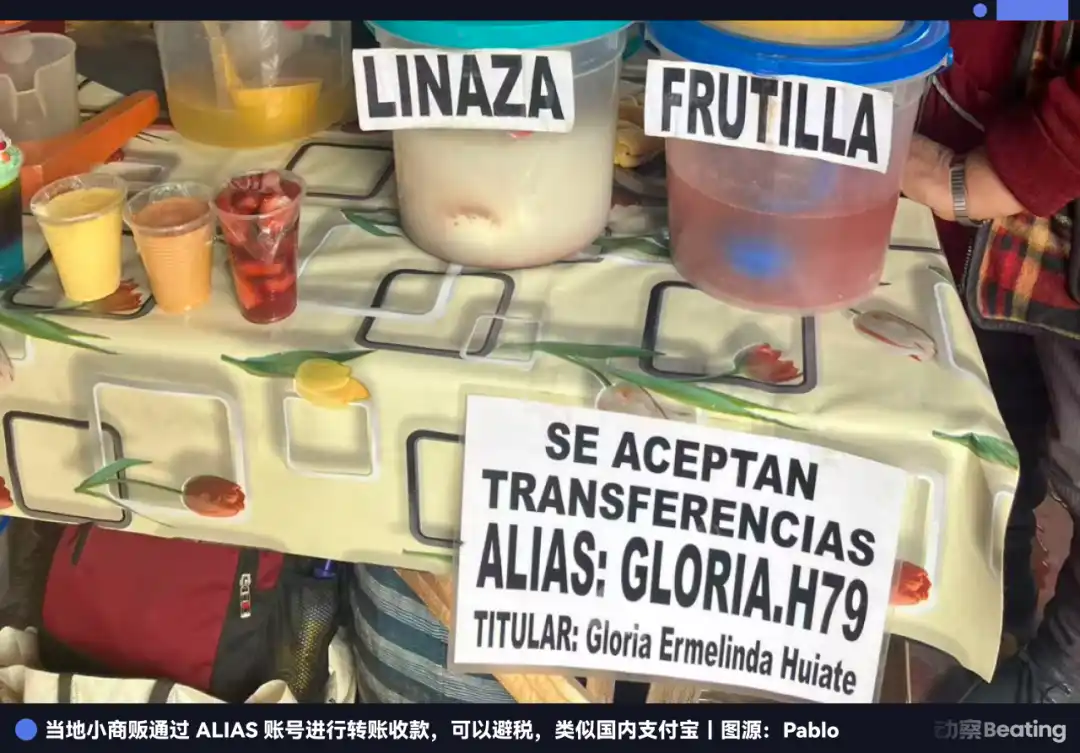
This is a clandestine alliance forged by two groups of outsiders: one being the supermarket owners from China, and the other being the Jewish financiers who have been deeply rooted for a century.
In Argentina, nothing penetrates the city's fabric like "Supermercados Chinos (Chinese supermarkets)." As of 2021, the number of Chinese supermarkets in Argentina has exceeded 13,000, accounting for over 40% of the total number of supermarkets nationwide. They may not be as large as Carrefour, but they are omnipresent.
For Argentina's underground economy, these supermarkets are not just a place to sell milk and bread; fundamentally, they are round-the-clock operating "cash absorption points."
Most Chinese supermarkets try to have customers pay with cash, some restaurants remind you to pay with cash at checkout to receive a discount, and some even directly post notices: "Cash Payment Discount 10%-15%."
This is actually to avoid taxation. Argentina's sales tax is as high as 21%, and to prevent the government from taking a piece of the pie, businesses are willing to give discounts to consumers just to keep a massive amount of turnover outside the official financial system.
"The tax authorities definitely know, but they haven't been cracking down hard," Pablo said in the interview.
A 2011 report showed that the annual sales of thousands of Chinese supermarkets at that time had already reached $5.98 billion. Today, more than a decade later, this number will only be larger. However, there is a fatal problem here: the peso is "hot." In an environment of triple-digit inflation, every moment is devaluing.
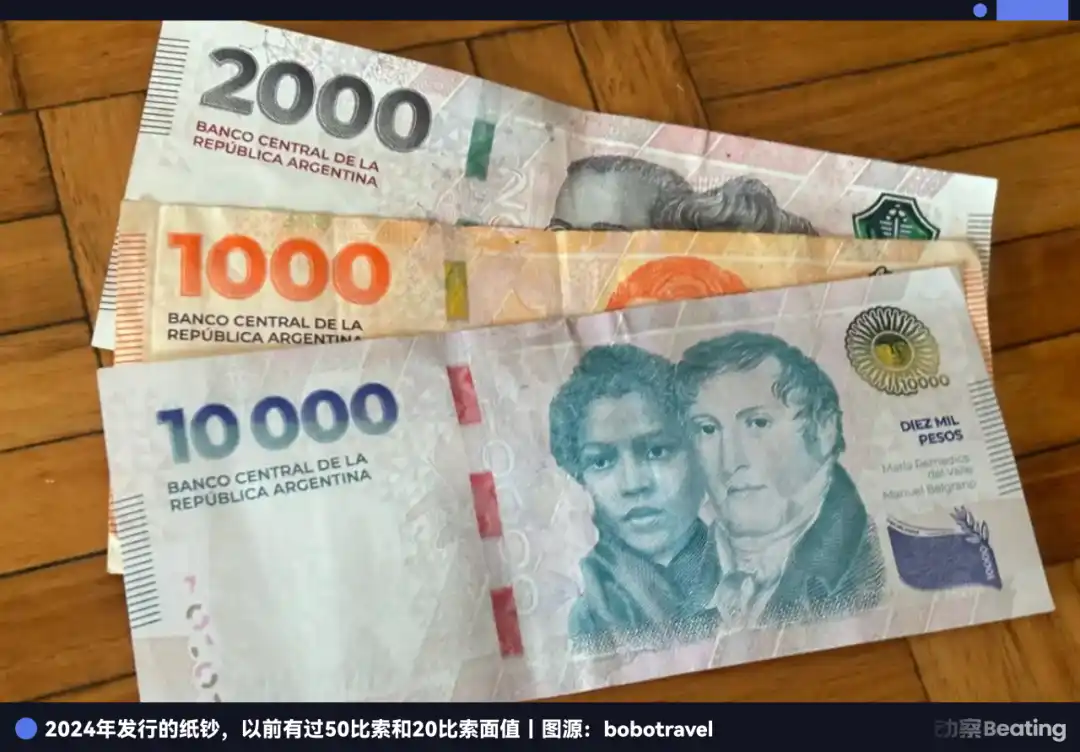
"Chinese merchants earn a large amount of peso cash and need to exchange it for yuan to take back to China, so they will find various ways to exchange money," Pablo said. "So, for Chinese tourists, the most convenient and best exchange channel is Chinese supermarkets or Chinese restaurants because they urgently need yuan to hedge the pesos they hold."
However, sporadic tourists cannot spend such a huge amount of cash. Chinese supermarkets need another outlet, and in Buenos Aires, only underground banks represented by Jewish people from the Once area have the capacity to handle this scale of cash.
"Historically, Jewish people gathered in a wholesale area called Once. If you have seen movies about Argentine Jews, some scenes are based in Once," Pablo explained. "There they have their own synagogue, and it is also the only place in Argentina where a terrorist attack has occurred."
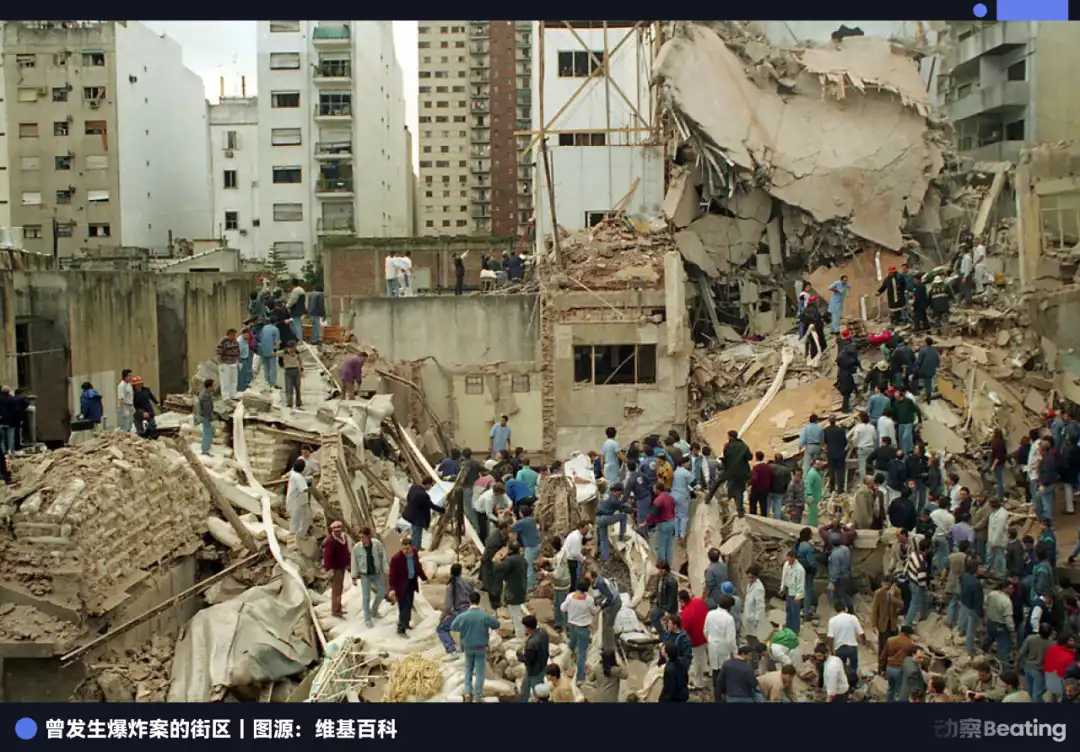
He is referring to the AMIA bombing on July 18, 1994.
That day, a car loaded with explosives rammed into the AMIA Jewish Community Center, causing an explosion that killed 85 people and injured more than 300, marking one of the darkest chapters in Argentine history. After that event, a huge wall was erected outside the synagogue, covered with the word "peace" in various languages.
This disaster completely changed the survival philosophy of the Jewish community. Since then, the entire community has become extremely closed-off and vigilant. These walls not only deflect bombs but also have formed an extremely insular and highly cohesive circle.
As the times have changed, Jewish merchants have gradually exited the physical wholesale business and turned to their area of expertise—finance.
They operate underground banks known as "Cuevas" and, leveraging deep connections in the political and economic spheres, have built a parallel financial network independent of the official system. Today, some of them have moved out of the Once area, and more diverse ethnic groups, including Chinese people, have also entered the underground banking business.
Under Argentina's long-standing foreign exchange control, there was once a huge price difference of over 100% between the official exchange rate and the black market exchange rate. This meant that anyone who honestly exchanged currency through official channels would see half of their asset value evaporate instantly. This forced both businesses and individuals to rely on an underground financial network built by the Jewish community.
Chinese supermarkets generated a massive amount of peso cash every day, in urgent need of being exchanged for hard currency; Jewish money exchanges had US dollar reserves and global fund transfer channels, but required a large amount of peso cash to maintain their daily high-interest loan turnover and exchange operations. The precise matching of the two parties' needs created a perfect commercial loop.
Therefore, in Argentina, dedicated cash trucks (or a few inconspicuous private vehicles) would shuttle between Chinese supermarkets and the Once district every night. The cash flow from the Chinese community provided a continuous blood supply to the Jewish financial network, while the Jewish community's US dollar reserves provided the only escape route for the Chinese community's wealth.
Without the need for cumbersome compliance checks or waiting in line at the bank, relying on this cross-community tacit understanding and trust, this system has operated efficiently for decades.
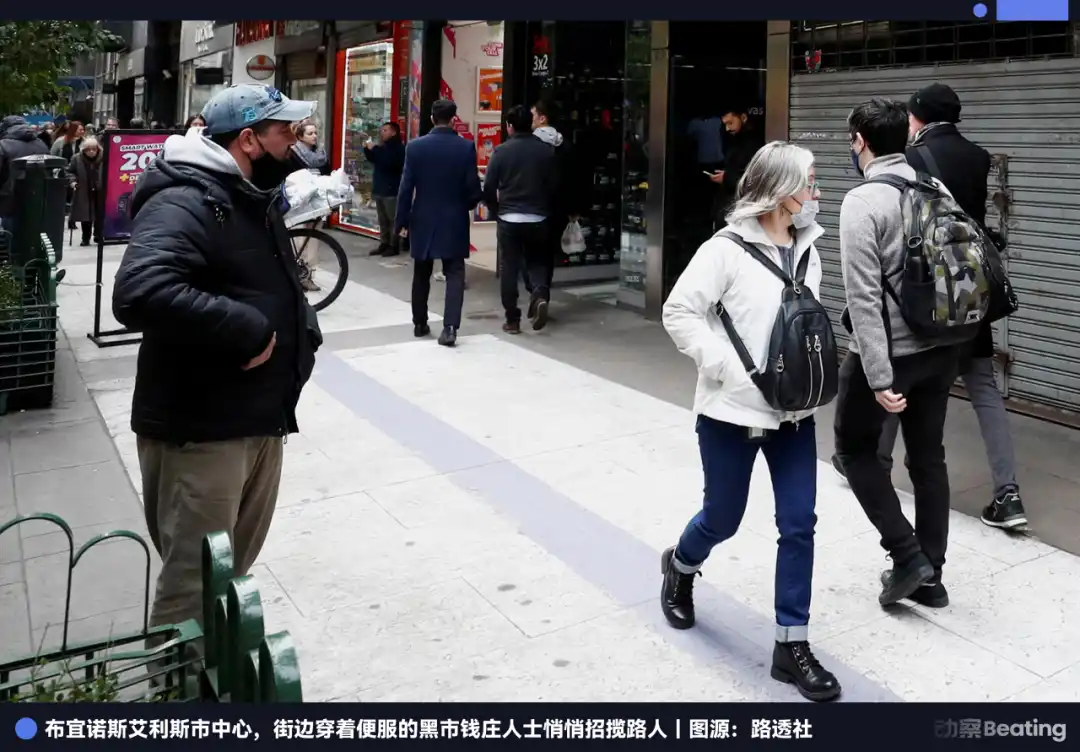
In an era when the country's machinery malfunctioned, it was this non-compliant underground system that supported the most basic survival needs of countless ordinary families and merchants. Compared to the crumbling official peso, Chinese supermarkets and Jewish money exchanges were evidently more trustworthy.
P2P Tax Evasion
If Chinese supermarkets and Jewish money exchanges were the main arteries of Argentina's underground economy, then cryptocurrency is the more secretive veins.
Over the past few years, the global Web3 community has been extolling a myth: Argentina is the holy land of cryptocurrency. The data seems to support this—cryptocurrency ownership in this country with a population of 46 million reaches 19.8%, ranking first in Latin America.
However, when you delve into this land like Pablo, you will find that the truth behind the myth is not that glamorous. Not many people here are talking about the ideals of decentralization, nor do many care about blockchain's technological innovation.
All the enthusiasm ultimately points to a blunt verb: escape.
"Outside the crypto sphere, the average Argentine's knowledge of crypto is not high," Pablo said. For most Argentine cryptocurrency users, this is not a revolution for financial freedom, but merely a self-defense battle for asset preservation. They do not care about what Web3 is; they only care about one thing: can USDT prevent the money in my hands from depreciating.
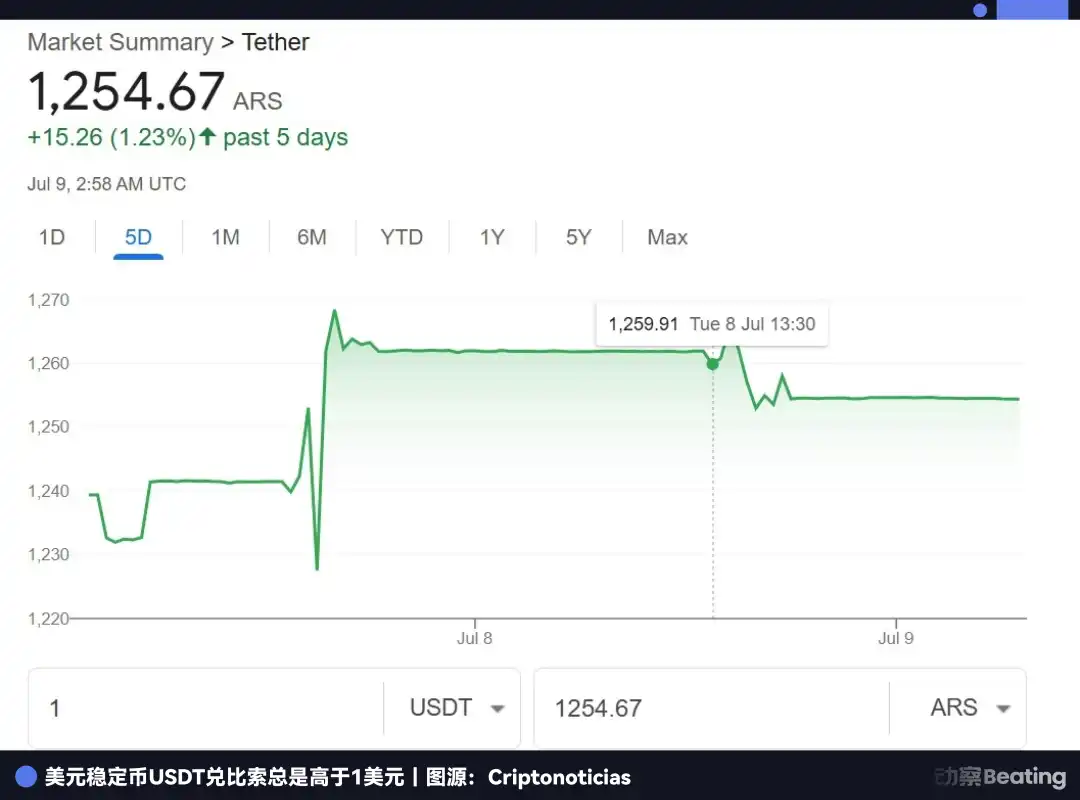
This explains why stablecoins account for 61.8% of Argentina's cryptocurrency trading volume. For freelancers, digital nomads, and the wealthy who have business abroad, USDT is their digital dollar.
Compared to hiding dollars under the mattress or risking exchanging money on the black market, clicking a mouse to convert pesos to USDT seems more elegant and secure.
However, security is not the only consideration; a deeper motivation lies in privacy.
For the common folk, their "cryptocurrency" is cash.
Why do Chinese supermarkets prefer cash payments? Because cash transactions can avoid issuing an invoice, saving 21% in taxes directly. For the working class earning only a few hundred dollars a month, that crumpled peso bill is their "tax haven." They don't need to understand blockchain; they just need to know that paying with cash can save them 15%.
For the middle class, freelancers, and digital nomads, stablecoins like USDT play the same role. Argentina's tax authority cannot trace on-chain transfers. A local Web3 practitioner described cryptocurrency as a "digital Swiss bank." A local programmer working on overseas projects, if receiving payments through a bank, not only has to exchange at the official rate but also pay high personal income tax. However, if they receive payment in USDT, that money becomes completely invisible.
This "peer-to-peer tax evasion" logic runs through every level of Argentine society. Whether it's cash transactions by street vendors or USDT transfers by the elite, fundamentally, it reflects a lack of trust in the country's credit and a desire to protect private property. In a high-tax, low-welfare, and continuously devaluing currency country, every "gray transaction" is a resistance against institutional plunder.
Pablo recommended a web app called Peanut, which can be used without downloading, offers rates close to the black market, and even supports Chinese identity verification. This app is rapidly growing locally in Argentina, proving the market's desire for an "escape hatch."
Although the tools have become more accessible, this Noah's Ark still only carries two types of people: those who are fully underground (the poor using cash and the rich using crypto) and those digital nomads with foreign income.
While the poor use cash to evade taxes and the rich use crypto to transfer assets, who has become the sole loser in this crisis?
The Heartbreaking Answer: It's those law-abiding "honest folks".
Compliance-Strangled Honest Folks
We usually think that having a tax-paying, compliant respectable job is the ticket to the middle class. But in a country with a dual-currency system and runaway inflation, this "compliance ticket" has turned into a heavy shackle.
Their dilemma arises from an unsolvable math problem: income anchored to the official exchange rate, expenses anchored to the black market exchange rate.
Let's say you're a high-ranking executive at a multinational corporation, earning a monthly salary of 1 million pesos. In official reports, calculated at the 1:1000 official exchange rate, your monthly salary is equivalent to $1000. But in real life, when you go to the supermarket to buy milk, go to the gas station to fill up, all prices are pegged to the black market exchange rate (1:1400 or even higher).
With this in-and-out, your actual purchasing power is halved the moment your salary hits your account.
What's worse, you don't have the privilege of being "invisible." You can't offer cash discounts like the Chinese supermarket owner to evade taxes, nor can you receive payments in USDT like digital nomads to hide assets. Every cent of your income is within the reach of the tax authority (AFIP), completely transparent, with no escape.
Thus, a cruel sociological phenomenon emerges. From 2017 to 2023, Argentina has seen a wave of "New Poor."
They were originally respectable middle-class individuals, well-educated, living in decent neighborhoods. But caught between rising living costs and continuously devaluing income, they helplessly watched themselves slide toward the poverty line.
This is a "reverse selection" society. Those who are adept in the underground economy—Chinese supermarket owners, Jewish moneylenders, freelancers accepting USDT—they hold the keys to survival in the wreckage. And those who try to "work honestly" within the official system end up footing the bill for the system's costs.
Even the smartest individuals in this group, all their efforts amount to nothing more than a "defensive" struggle.
Pablo mentioned the financial wisdom of the Argentine middle class in the interview. For example, using platforms like Mercado Pago to achieve annualized returns as high as 30% to 50% to preserve value.
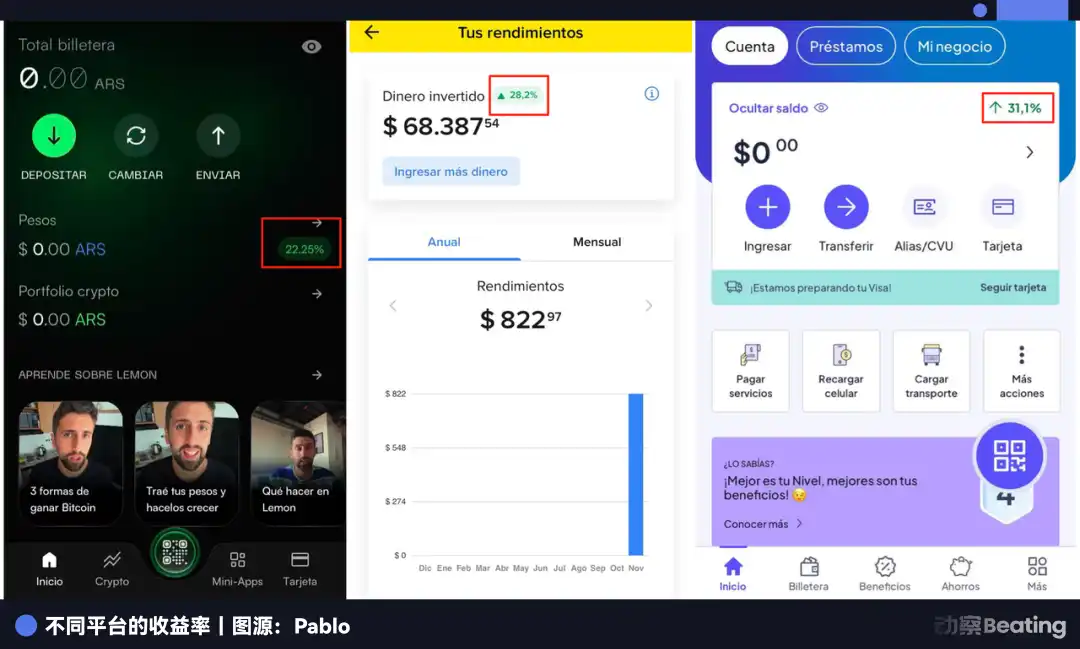
Sound high? But Pablo did the math: "Taking into account inflation's exchange rate erosion, such an APY can only keep their pesos at the same USD value in case of stable rates, but rates are often unstable, overall, such a yield cannot keep up with the peso's depreciation speed."
In addition, many savvy Argentinians will, before sensing a drastic devaluation of the peso, unwaveringly cash out through credit cards, then exchange to USD, leveraging the inflation time difference for arbitrage.
However, all of these are merely "defensive" measures, not "offensive." In a country facing a currency and credit collapse, all financial planning and arbitrage, fundamentally, are attempts to "not lose" or "lose less," rather than actual wealth growth.
The collapse of the middle class is often silent.
They will not protest on the streets burning tires like the lower class, nor will they emigrate directly like the wealthy. They simply quietly cancel weekend gatherings, change their children's private schools, and then anxiously calculate next month's bills every late night.
They are the most obedient taxpayers in the country, and also the most thoroughly harvested group.
The Gamble of a Nation's Fate
On this return to Argentina, Pablo saw a microcosm of the country's shift on an outlet in the corner.
Once, Argentina practiced an almost ludicrous trade protectionism, where all appliances had to meet the "Argentinian standard," forcibly removing the top end of universal triangular plugs, otherwise sales were prohibited. This was not just a plug issue; it was a symbol of mercantilist barriers, using executive orders to force the nation to foot the bill for subpar and overpriced domestic industry.
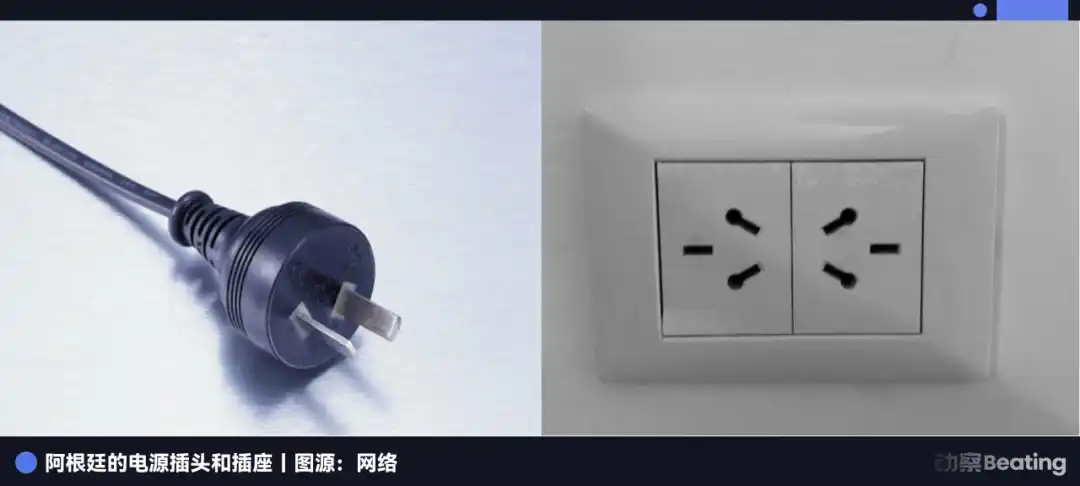
Today, Milei is dismantling this wall. The "madman" president, a follower of the Austrian School, carried out a world-watching social experiment: cutting 30% of government spending, lifting years-long exchange controls.
With this single stroke, the effect was immediate. The treasury saw a surplus unseen in years, the inflation rate dropped from a frenzied 200% to the 30% range, and the once 100% official-black market exchange rate spread was compressed to around 10%.
However, the price of reform was severe.
When subsidies were cut, the exchange rate was set free, the new poor and hand-to-mouthers mentioned earlier bore the brunt of the first shock. Yet, what surprised Pablo was that, despite the hardships, most of the people he interacted with still supported Milei.
Argentina's history is a cyclical tale of collapse and rebuilding. From 1860 to 1930, it was one of the richest countries in the world; but then it fell into long-term decline, swinging back and forth between economic growth and crises.
In 2015, Macri came to power and lifted exchange controls, attempting liberalizing reforms that ultimately failed, leading to a reinstatement of controls in 2019. Will Milei's reform be the turning point to break this cycle? Or will it be, after a brief glimmer of hope, met with deeper despair once again?
No one knows the answer. But what can be certain is that the underground world, constructed by Jewish money changers, Chinese supermarkets, and countless individuals with "inflation immunity," possesses powerful inertia and vitality. It provides shelter when the official order collapses and chooses to lay low and adapt when the official order is rebuilt.
At the end of the article, let's return to Pablo's lunch.
"At first, I thought with prices so high, the waiter must be earning a lot, so I only left a 5% tip. Later, I was educated by a friend and realized I should give a 10% tip." Pablo recalled.
In a country of soaring prices and currency collapse, people still maintain the habit of tipping, still spin in tango ballrooms, still chat and laugh in cafes. This barbaric vitality is the true essence of this country.
For a hundred years, the Rose Palace in Buenos Aires has seen one owner after another, and the peso has seen one devaluation after another. But relying on underground transactions and gray wisdom, the common people have managed to find a way out of the impasse.
As long as this country's thirst for "stability" remains less than its yearning for "freedom"; as long as the people's trust in the government remains lower than their trust in the Chinese store on the corner, then the underground Argentina will exist forever.
Welcome to Underground Argentina.
You may also like

Kalshi First Research Report: When Predicting CPI, Crowd Wisdom Beats Wall Street Analysts

Venture Capital Post-Mortem 2025: Hashrate is King, Narrative is Dead

Are Those High-Raised 2021 Projects Still Alive?

Aave Community Governance Drama Escalates, What's the Overseas Crypto Community Talking About Today?
High Fees, Can't Beat the Market Even After Paying 10x More, What Exactly Are Top Hedge Funds Selling?
Key Market Information Discrepancy on December 24th - A Must-See! | Alpha Morning Report

2025 Whale Saga: Mansion Kidnapping, Supply Chain Poisoning, and Billions Liquidated

Believing in the Capital Market - The Essence and Core Value of Cryptocurrency

Absorb Polymarket Old Guard, Coinbase Plunges Into Prediction Market Abyss

AI Trading Risks in Crypto Markets: Who Takes Responsibility When It Fails?
AI trading is already core market infrastructure, but regulators still treat it as a tool — responsibility always stays with the humans and platforms behind it. The biggest risk in 2025 is not rogue algorithms, but mass-adopted AI strategies that move markets in sync and blur the line between tools and unlicensed advice. The next phase of AI trading is defined by accountability and transparency, not performance — compliance is now a survival requirement, not a constraint.

Ether pumps to outsiders, dumps in-house. Can Tom Lee's team still be trusted?

2025 Asset Review: Why Did Bitcoin Significantly Underperform Gold and US Stocks?

Why Did Market Sentiment Completely Collapse in 2025? Decoding Messari's Ten-Thousand-Word Annual Report
Twitter 上的「虚假流量」是指通过操纵关注者数量、喜欢和转发等指标来人为增加一条推文的影响力和可信度。下面是一些常见的制造虚假流量的方法: 1. <b>购买关注者:</b> 一些用户会通过购买关注者来迅速增加他们的关注者数量,从而让他们的账号看起来更受欢迎。 2. <b>使用机器人账号:</b> 制造虚假流量的另一种常见方法是使用机器人账号自动执行喜欢、转发和评论等互动操作,从而提高一条推文的互动量。 3. <b>推文交换:</b> 一些用户之间会进行推文交换,即互相喜欢、转发对方的推文...

Audiera Sees Massive Price Surge – Key Cryptocurrency Updates
Key Takeaways Audiera (BEAT) has witnessed significant growth, experiencing a 70.10% increase in the past week. Despite the…

In Vietnam, USDT’s Use and the Reality of Web3 Adoption
Key Takeaways Vietnam has emerged as a leading nation in the adoption of cryptocurrencies, despite cultural and regulatory…

Facing Losses: A Trader’s Journey to Redemption
Key Takeaways Emotional reactions to trading losses, such as increasing risks or exiting the market entirely, often reflect…

Market Outlook: The Future of Cryptocurrency by 2026
Key Takeaways The report focuses on the impact of critical factors like Bitcoin, Ethereum, and Solana, alongside regulatory…
Kalshi First Research Report: When Predicting CPI, Crowd Wisdom Beats Wall Street Analysts
Venture Capital Post-Mortem 2025: Hashrate is King, Narrative is Dead
Are Those High-Raised 2021 Projects Still Alive?
Aave Community Governance Drama Escalates, What's the Overseas Crypto Community Talking About Today?
High Fees, Can't Beat the Market Even After Paying 10x More, What Exactly Are Top Hedge Funds Selling?
Key Market Information Discrepancy on December 24th - A Must-See! | Alpha Morning Report
Popular coins
Latest Crypto News


Customer Support:@weikecs
Business Cooperation:@weikecs
Quant Trading & MM:bd@weex.com
VIP Services:support@weex.com
 App
App