
- Buy Crypto
- Markets
- Futures
- Spot
- Copy Trade
 WE-Launch
Berachain DeFi Lead's Latest Interview: How to Earn Super High Yields through POL?

Original Article Title: Berachain Ecosystem Insights: POL and Yield Opportunities
Original Article Author: Castle Labs, Web3 Ecosystem Partner
Original Article Translation: ChatGPT
Editor's Note: The author conducted an interview with the Berachain DeFi lead and summarized it into an article, exploring how to participate and earn generous returns on Berachain. The article focuses on explaining Berachain's innovative DeFi mechanisms, Boyco cross-chain deployment, and how to earn rewards through liquidity bidding and token staking. It will also delve into the interaction of three tokens and the POL mechanism, demonstrating how it brings new earning opportunities to users.
The following is the original content (slightly reorganized for better readability):
Twitter is a gold mine of information, as long as you know where to look.
Today, we will delve into the interview between @phtevenstrong and @capnjackbearow (Berachain DeFi lead), focusing on how to participate in Berachain and take advantage of some surprising earning opportunities.
The Role of DeFi in Berachain
Many have misunderstood the launch of Berachain and what users can do on the network. Since its launch, the lack of POL has indeed dampened the enthusiasm of many, but the Berachain ecosystem has introduced several innovative protocols and primitives that users can already start taking advantage of.
Here are some insights about Jack's role:
· Building a narrative in DeFi
· Focusing on Boyco
· Identifying asset focuses (e.g., Boyco chose Bitcoin LSTs early on)
The mechanisms developed internally in Berachain reflect a larger trend of the changing roles in DeFi: DeFi is not just about gaining APY through asset lending as we previously envisioned. With the industry's maturation, DeFi is poised to underpin all financial applications.
The Significance of BOYCO
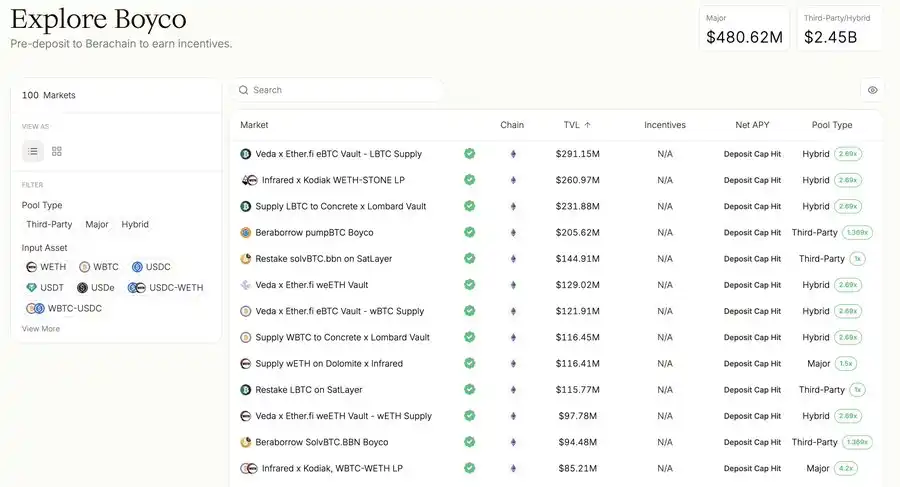
The deployment of Boyco is a crucial decision for a new system, where users can ensure over $30 billion in liquidity is bootstrapped for Berachain through liquidity bidding prior to launch.
The inspiration for Boyco comes from the Agglayer (Jack previously worked on development tools at Polygon) bridging and calling feature, which allows users to cross-chain transfer funds from A to B and call smart contracts on chain B.
Therefore, Boyco can be seen as a cross-chain deposit module with a bridging-calling execution model, depositing funds into Berachain, thus significantly improving the depositor's user experience.
Experiences Learned from Boyco
· Some assets had a late listing time (e.g., Ethena)
· No expectations for a third-party escrow deposit vault
· TVL growth was too fast, prompting changes in some outcomes and KPIs (e.g., how to get liquidity for key assets, how to ensure asset ratio balance, and how to ensure fund yield)
· Next time, perhaps more focus can be placed on the selection of asset pairs
How to Translate into a Yield Benchmark?
Using the Pendle market performance on Bera as an example, the Boyco experiment seems to be highly successful in providing the offered APY yield benchmark.
The stablecoin APY ranges from 8% to 10%, and the Bitcoin APY (SolvBTC) exceeds 12%.
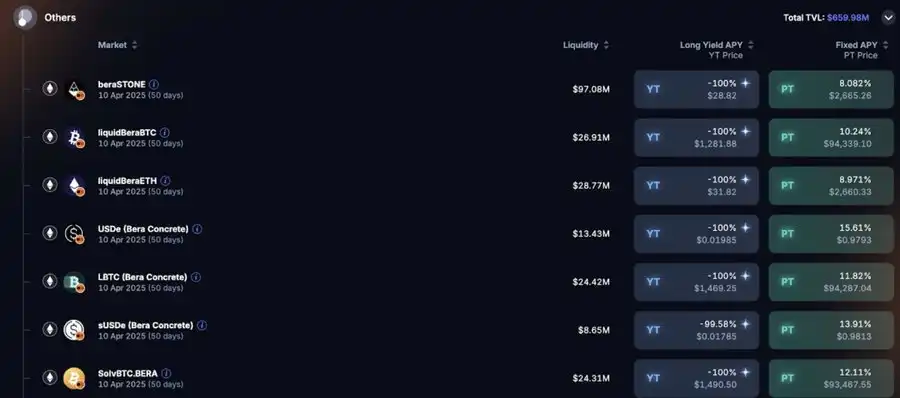
However, Jack emphasizes that these forecasts do not take into account the interest of native apps, which will stack on top of these yields.
How do users interact with the ecosystem and the three tokens of Bera? What are their functionalities, and how do they interact with each other?
$Honey: The native ecosystem stablecoin with minimal correlation to POL. Honey is minted by depositing collateral from a whitelist into the vault. Initially, Honey was an algorithmic seigniorage stablecoin (inspired by Frax) but eventually transitioned into a fully collateralized stablecoin backed by a basket of different stablecoins. This was done to minimize risks for Honey by avoiding the addition of any risky assets to the basket.
$BERA: The gas token of Berachain, which must be staked by participants to become validators. BERA is transferable and can be obtained by burning BGT tokens.
$BGT (Bera Governance Token): BGT is the core of POL, Berachain's fee-generating component that grants rights to POL rewards. It is a non-transferable token that only validators can earn through block rewards. Users can acquire BGT by performing certain actions in authorized dApps (such as adding liquidity to a pool or borrowing assets). Once obtained, BGT can be burned to receive BERA or delegated to validators.
This token model enables Berachain to identify and differentiate between various use cases and utilize different tokens to handle POL specialization.
How Does POL Work?
“We borrowed the design of a POS network and redirected the block rewards elsewhere.”
Instead of placing incentive assets in the protocol token (critical for protocol functionality), Berachain uses BGT as the fee allocation and governance token. Block rewards are distributed to more ecosystem participants, who can bid for these rewards (e.g., they can utilize these rewards to scale more frequently).
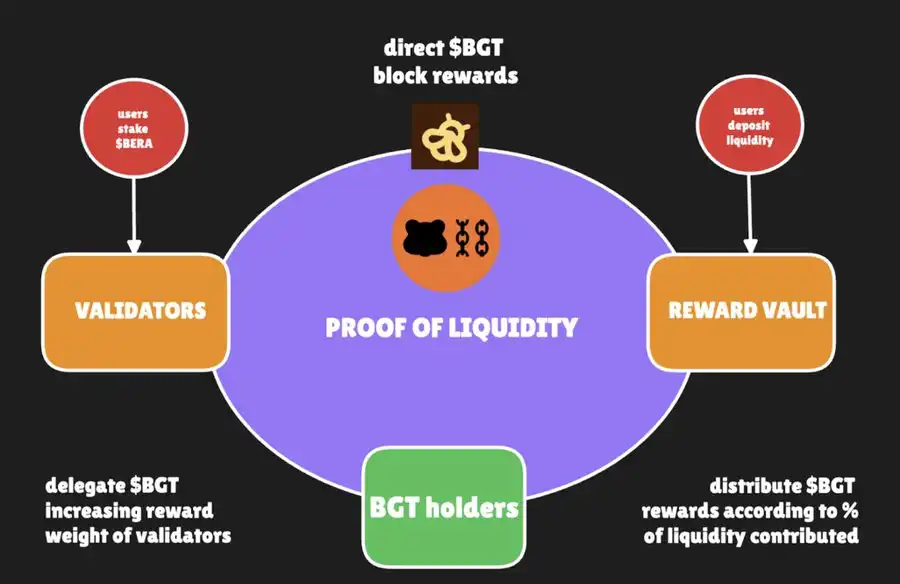
Explaining POL to a five-year-old could be likened to multiple food courts scattered throughout a city:
· Berachain is the city itself, with multiple food courts.
· Validators are the owners or managers of each food court, ensuring smooth operations and customer attraction.
· Apps are the stalls within each food court, providing customers with specific dishes (services).
· Users are the customers at these stalls—they purchase food (transactors, performing transactions) or hang around the stalls, eating and drinking (liquidity providers, staking assets or providing liquidity for others to transact).
How the dynamics work:
· The food court owners (validators) aim to attract more customers to their court rather than others. Customers bring footfall, vitality, and ultimately profit to the court, but more importantly, if they are satisfied, they will stay longer, providing stability to the court.
· The stall owner (application) wants to secure the best location in the food court to attract these customers. Competition between stalls is fierce, so stall owners negotiate with the square owner to secure a prime spot or privileges that will attract customers.
The POL Mechanism is like a new form of bargaining chip:
· To obtain a better location or lower rent (i.e., better incentives or validator support), stall owners offer a portion of their revenue (protocol fees) or some products (tokens) to the food court owner.
· The food court owner is incentivized to accept these proposals as it ties their success closely to the stall's success. By supporting profitable stalls, both parties benefit. In return, the stall receives the best location, attracting more customers (users and liquidity).
· This dynamic creates a self-reinforcing cycle through the POL Mechanism: Validators align with well-performing applications, and applications are incentivized to continue growing, thus keeping the square and entire city (network) bustling. Everyone benefits, from users to applications to validators.
Berachain's Rewards
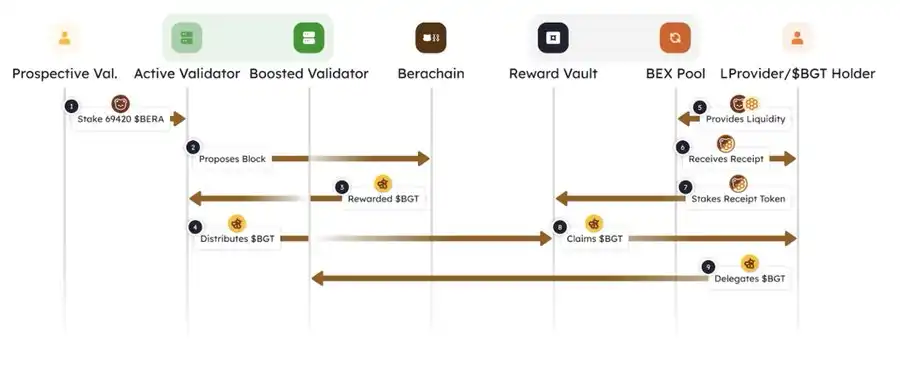
POL introduces an additional layer of rewards to the ecosystem:
For example, users on @Dolomite_io who stake assets not only earn yields on those assets but also receive additional rewards through POL.
Initially, these rewards are expected to be quite generous.
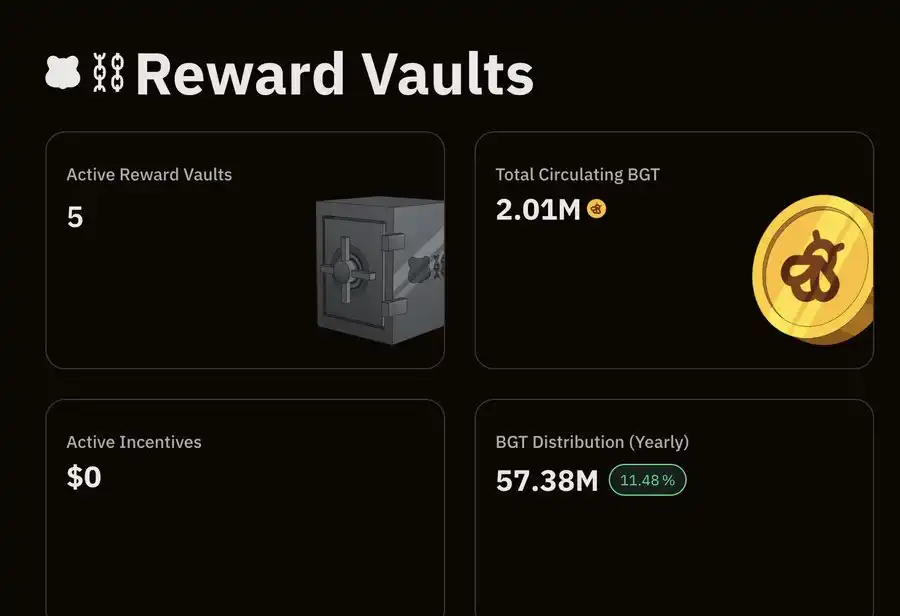
Comparing it to ve tokens (e.g., Curve or the original Solidly fork), the yield provided per BGT will be much higher than the yearly-distributed yield.
Currently, the trading price for BGT is expected to be 1.3 to 1.5 times that of Bera, primarily due to the anticipated incentive value.
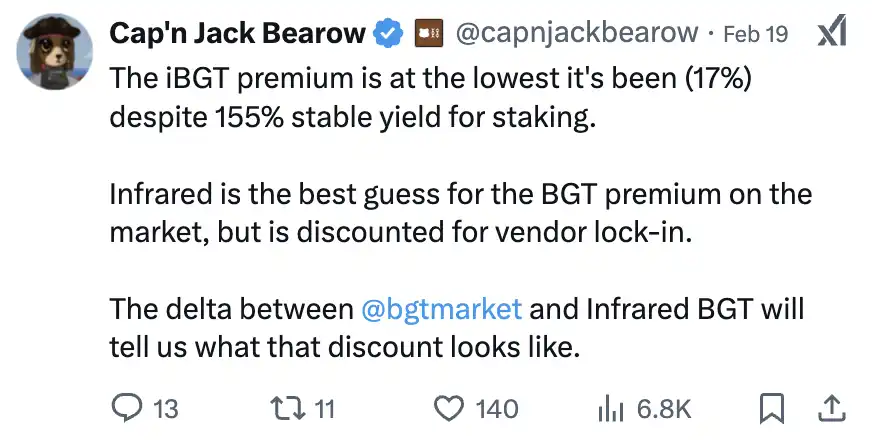
The only way to receive these rewards is by holding BGT, which can be acquired in two ways:
· Providing liquidity to POL
· Using liquidity-wrapped tokens such as iBGT (although, in case of increased demand, the premium may rise)
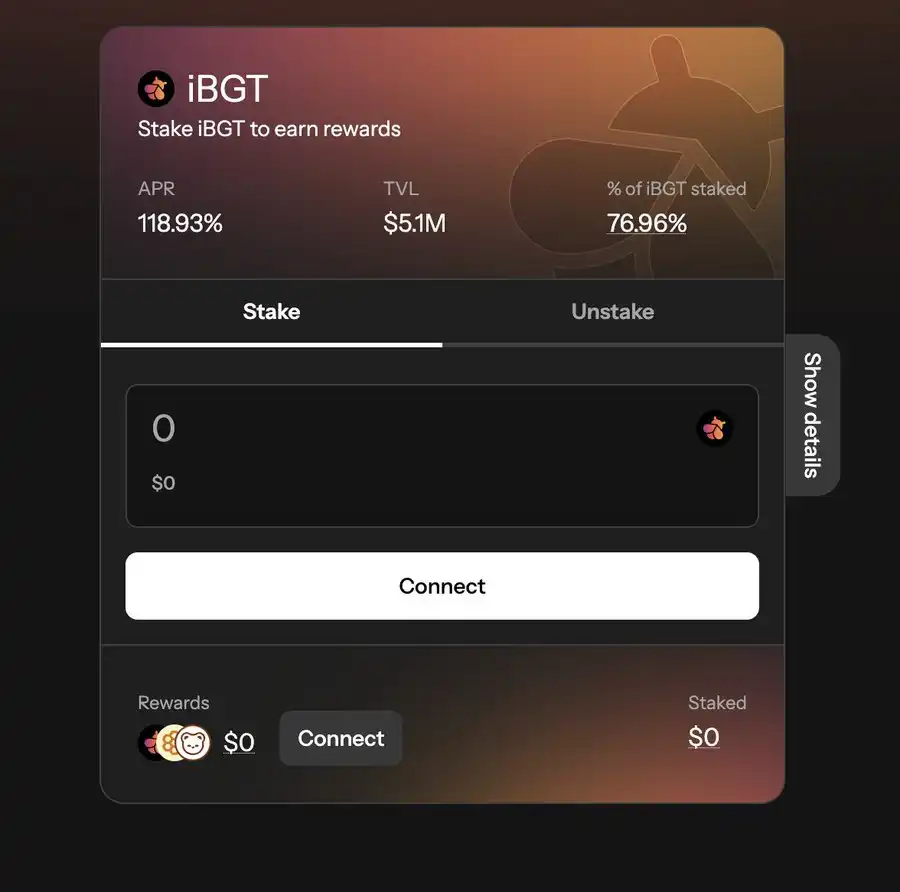
It is expected that as the staking token ratio increases, and more BGT circulates compared to incentives, the premium will gradually decrease.
· Bull Market Scenario: Incentives flowing to BGT will increase at a higher rate than the issuance speed of BGT, thereby increasing returns, further increasing the demand for BGT > more liquidity flows into the chain for yield farming.
· Bear Market Scenario: Incentives decrease, BGT issuance will increase, but at a fixed rate, thereby reducing returns and BGT demand > users will start burning BGT to BERA, reducing their yield claim, as the amount of yield claimed decreases, the rewards increase relative to BGT issuance, restarting the flywheel.
As a holder of iBGT (the transferable version of BGT), you can now stake iBGT and receive over a 100% Annual Percentage Rate (APR). This is currently not possible on $Bera, although $Bera still allows users to access some of the validator rewards.
· Real-World Example: An application incentivizes with $1 worth of BGT.
Validators take a 10% commission, which can be shared with Bera stakers. The remaining 90% of the $1 flows to BGT stakers delegated to that validator.
Two Ways to Stake to Validators
· Staking via Bera
· Delegating via BGT
Breakdown of LP Fees, using @Kodiakfi as an example
Currently, these are the only liquidity pools that have received governance approval, for BGT to set the validator issuance rate. This is crucial to ensure the initial BGT distribution before POL launch, to mitigate governance attacks.
When looking at the Kodiak pool, BEX is used on the backend.
Furthermore, the pool's APR does not take into account the premium on iBGT. If users wish to take advantage of this, make sure to deposit your LP tokens from BEX to @Infraredfinance through the "Vault" section.
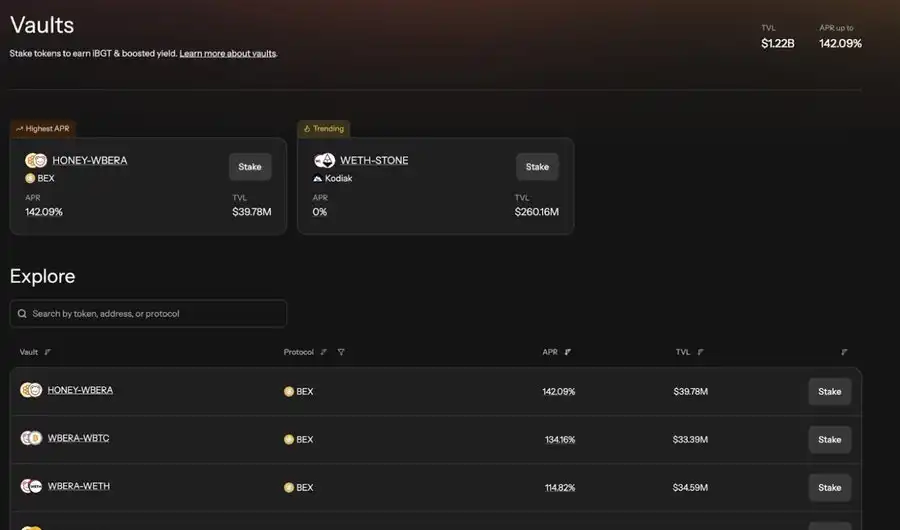
Another example, @Dolomite_io allows users to deposit their LP tokens and choose which POL-eligible assets they want to expose.
· Deposit collateral > Choose iBGT as issuance > Stake to earn additional rewards
This is similar to Convex: deposit LP tokens and receive a liquid-wrapped token with additional functionality, with the main difference being that users cannot redeem CVX like the underlying asset of veCVX (except through OTC trading).
If iBGT's trading price falls below BGT, a burn mechanism will be activated to ensure less volatility.
How does the system scale as more pools are added? How can users participate in this process?
Through proposals, the growth of pools will start slowly (adding about 5-10 initially in the first few weeks) and increase over time to allow governance to determine liquidity and flow.
Participants and validators are incentivized to whitelist as many honest pools (non-rug) as possible. In each block, validators will decide which pool's liquidity issuance to allocate to. With a deeper order book, validators can access higher ROI for their block rewards. Validators are incentivized to allow as much throughput as possible to receive rewards.
Therefore, any legitimate reward pool proposal should expect to be approved.
What is Boyco's mode of participation?
In the future, we can expect products related to Boyco to receive BGT instead of BEX pools.
For example, multiple treasury vaults on Infrared, including Kodiak and Dolomite, will receive BGT rewards once they are whitelisted.
To foster the game theory of POL, Jack shared some plans to address the negotiation around reward distribution between validators and applications through an effective ZK OTC framework.
Additionally, there are plans to reduce the current 10% inflation rate to a smaller and stable figure.
POL can also help address the value demand on L2: Since Berachain is EVM compatible, L2 chains like Arbitrum and other Orbit chains can seamlessly connect to Berachain and benefit from these yields, introducing these mechanisms into the protocol architecture (from the 56-minute timestamp: we recommend listening to understand this exciting overview of how it works).
Berachain's main focus will continue to be on DeFi and consumer applications.
Given these developments, we hope this overview will give you a clearer understanding, enabling you to better grasp Berachain's current game theory and incentive mechanisms for users.
In particular, we haven't seen such a high APY in a long time.
Many have been scarred by the 2021 era of liquidity provision—will Berachain bring back the glory of returns?
Some resources to explore Berachain's returns
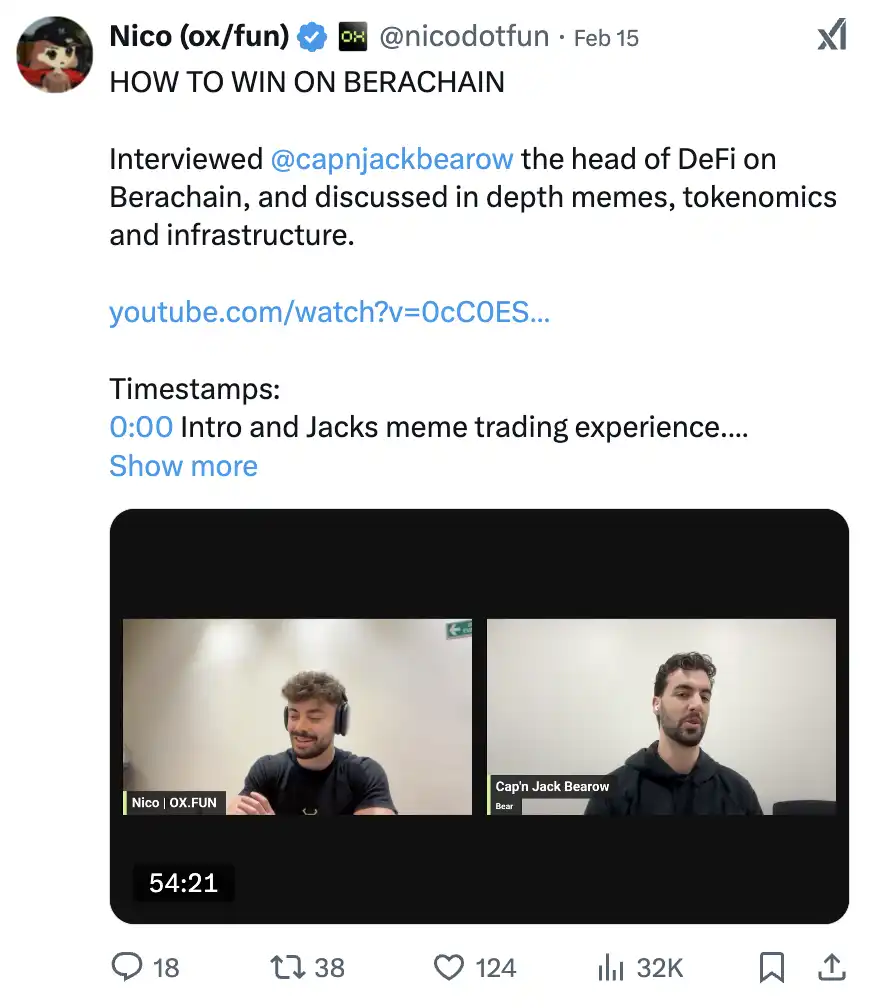
Another fascinating interview by @nicodotfun and @capnjackbearow
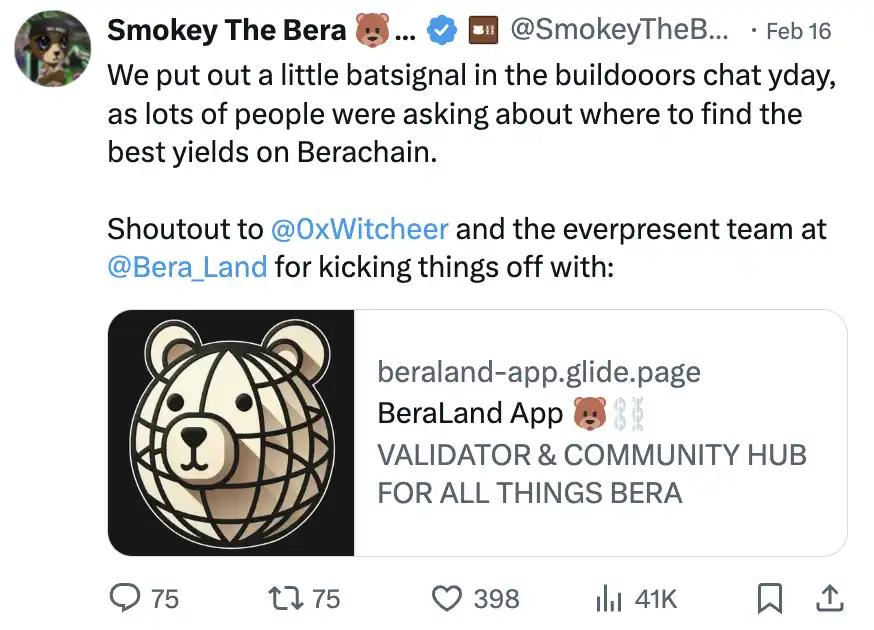
Beraland Community Hub
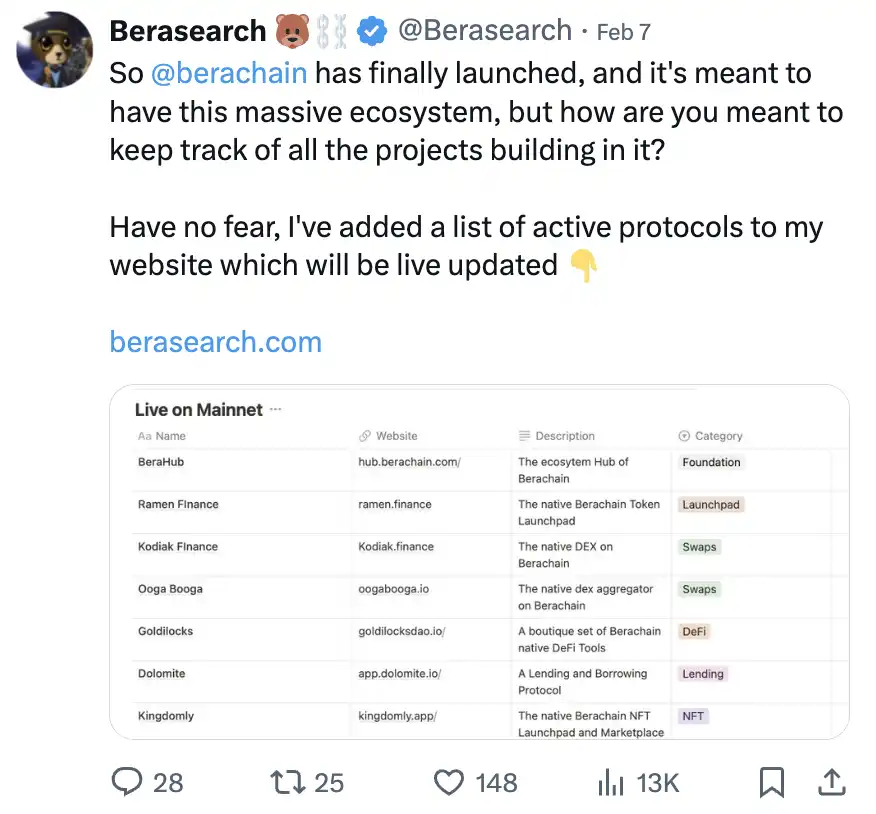
Real-time protocol list on Berasearch
You may also like

Deconstructing Binance Alpha2.0's New "Asia-Led Liquidity Mining" Model
After CEX and Wallet, OKX enters the payment game
Science Equity Movement: DeSci's Trillion-Dollar Knowledge Economy Reconstruction Revolution
Sentient In-Depth Research Report: Secures $85 Million in Funding to Build a Decentralized AGI New Paradigm
April 30th Market Key Intelligence, How Much Did You Miss?
a16z Leads $25M Investment, 0xMiden to Run a Privacy Chain on Your Phone
Ethereum Foundation's "Three Pillars" Manifesto: From Core Vision to Decentralization Reform, Vitalik Reaffirms Mission
This is the Winter of VC, yet the Spring of KOL Agency.
Vitalik's Talk: Exploring the Ethereum 2025 Vision, Fusion Innovation of POS, L2, Cryptography, and AI
This Week in Review | Trump to Host Dinner for TRUMP Holders; Musk and US Treasury Secretary Engage in Heated Argument at the White House
MCP In-Depth Research Report: Protocol New Infrastructure in the AI+Crypto Mega Trend
Bull Market Returns, Can Ethereum's Pectra Upgrade Turn the Tide?
Vitalik's Long-Term L1 Execution Layer Proposal Full Text: Replacing EVM with RISC-V
Weekly Recap | MANTRA (OM) Plunges Sparking Controversy; Powell Emphasizes No Immediate Market Intervention
Bitcoin Eco Goes 10x Again, What Is the New Asset Protocol Alkanes?
「Methane」 is the most popular term in the recent Bitcoin ecosystem, serving as the first fairly minted token of the new Alkanes protocol in the Bitcoin ecosystem. 「Methane」
The market value of METHANE has exceeded 6 million USD, which means each METHANE is worth over 60 USD. The author inquired with some Bitcoin ecosystem players who participated in the minting process, and there is a significant difference in minting costs. If we take 5 USD per token as the minting cost benchmark, then the profit from minting METHANE has already exceeded 10 times.
In the long stagnant situation of the Bitcoin ecosystem, how did this new asset protocol Alkanes emerge?
The predecessor of the Alkanes protocol was called Protorunes, which means 「programmable runes,」 and it has the same founder. This thing also briefly caught the attention of the Bitcoin ecosystem last year, and runes were quite popular at that time.
The protocol's founder @judoflexchop is the Chief Technology Officer of the Bitcoin wallet Oyl Wallet. Although the number of users of this wallet in the Bitcoin ecosystem may not be very high, it is still well-known. Just look at its funding situation to understand why:
On March 8, 2024, the Bitcoin infrastructure company Oyl completed a 3 million USD Pre-Seed round of financing, led by Arca, with participation from Foresight Ventures, Arthur Hayes's family office Maelstrom, Domo, UTXO Management, Taproot Wizards CEO Udi Werthheimer, Kanosei, and FlamingoDAO, among others.
With Arthur Hayes's involvement, this wallet quickly gained prominence in the Bitcoin ecosystem. In the middle of last year, Oyl launched a Bitcoin NFT project called 「Airheads,」 which sparked controversy due to the relatively high minting price. In terms of the NFT's price performance, it was considered a 「failure」 project, but recently it has surged nearly three times in value due to the popularity of the Alkanes protocol.
Although they are all wallets, in the Bitcoin ecosystem, most major wallets are not just wallets. For example, OKX, UniSat, Magic Eden, and the main character of this article, Oyl, have various other Bitcoin ecosystem businesses outside of their wallets, with only Xverse having a more "focused" business scope. Returning to Oyl, in addition to the wallet, they have also developed a Bitcoin RPC called "Sandshrew" and the Alkanes protocol.
Currently, Oyl is fully focused on promoting this protocol, and the official promotion has also adopted the name Alkanes:
Alkanes is a new Bitcoin asset protocol. Overall, it draws on the "Runestone" structure of the Rune protocol, but with greater scalability and support for smart contracts. As mentioned earlier, the predecessor of this protocol was Protorunes. At first glance, Protorunes may seem like a "customized version of Rune," but it is not. In simple terms, the Rune protocol and the "Runestone" structure are like a closed iOS system, while Protorunes and Alkanes are like open-source Android.
Protorunes corresponds to the "Runestone" of the Rune protocol. Here, "Runestone" is not the highly valuable early NFT of the Rune system but rather a "transaction data encapsulation," in short, a piece of information embedded in a Bitcoin transaction that serves as an index to determine if there is any Rune operation in the transaction.
If the indexer discovers the "RUNES" identifier while scanning the OP_RETURN of each transaction, it interprets the data following the identifier, such as etching, minting, transferring, and so on. The "Runestone" acts as an operational guide, and the indexer derives indexing results based on this guide.
The "Runestone" is exclusively for the Rune protocol's operational guide, directly corresponding to the Rune protocol, unlike Protorunes. Simply put, we cannot instruct the indexer of the Rune protocol to perform such actions directly, saying, "I am a sub-asset protocol based on Runestone; please index me together." However, Protorunes can. Everyone can customize their new asset protocol based on the Protorunes data format, and these protocols will be assigned a "Protocol ID." The indexer will read the "Protocol ID" to determine which protocol's specifications to parse.
There are some modular blockchain launch frameworks like Ethereum's, which make things simpler. For developers, they can just use the tools provided by Oyl instead of having to build their own indexer.
On the smart contract implementation front, before OP_CAT's revival, it was basically limited to storing contract data in transactions and executing off-chain indexes, not deviating too much from that approach.
On a technical level, apart from technology, there are two main reasons why this protocol could gain momentum. Firstly, it has received strong support from the Chinese inscription player community. Undoubtedly, the most financially capable group in the Bitcoin ecosystem currently is the Chinese inscription player community. This group is quite unique, as the PvP aspect of Solana meme coins is redundant in the Bitcoin ecosystem, but gaining approval from the Chinese inscription player community is also quite challenging. Once the inscription gains momentum, the spread speed within WeChat groups will be rapid and influential.
Searching for the keyword "Alkanes" on Twitter, one will find that most of the content comes from Chinese users, and the protocol's founder has also posted Chinese tweets thanking the Chinese community for their support. The early Bitcoin ecosystem minting tool, iDclub, created a transaction market for the Alkanes protocol, also coming from Chinese hands.
The second reason is that the project team behind this protocol has a background, and according to their disclosed plans, they don't just intend to launch an asset protocol to "funnel" into their own wallet. They also plan to develop AMM, BTC staking, stablecoins, MEV tools, and a trustless ZK bridge, essentially creating a BTCFi ecosystem around this protocol.
The entire narrative logic is coherent—a smart contract-supported asset protocol used to build applications around it. Without the backing of the project team to explain this narrative, it's hard to convince people. After all, in the Bitcoin ecosystem, players still feel some pain from Atomicals' decline, and there is too much uncertainty when big things are not done by a mature team.
- METHANE, the first fairly minted token of the Alkanes protocol, currently with a market cap of about $6 million. The Chinese meaning of Alkanes is "alkanes," while the Chinese meaning of METHANE is indeed "methane," so players also mention BUTANE "butane" and HEXANE "hexane," but these two tokens currently have market capitalizations of only around $250,000 each.
- DIESEL, from the official team and also the first token deployed by the Alkanes protocol, currently valued at around $12.6 million. This coin has a unique mechanism, with a total supply of only 1,562,500 tokens, 28% reserved for the team, and 72% being produced block by block along with each Bitcoin block, with production halving following Bitcoin's halving schedule. In each block, the miner who submits the highest fee for a DIESEL minting transaction will ultimately receive the block's DIESEL output. In summary, a DIESEL is minted per block, and only one person (the miner whose fee for the minting transaction was the highest) can mine DIESEL in each block. Ordinary players can hardly mint anymore, and scientists will automatically monitor and increase the miner fee continuously.
Since METHANE is fairly launched, the holder base/chip distribution is definitely healthier compared to DIESEL, and it is fully circulating. Therefore, currently on social media platforms, the volume of METHANE is much higher than that of DIESEL. Purely based on volume rather than market value, it would feel like METHANE is leading the pack. There is no information available from the official sources about DIESEL's future empowerment. Thus, in terms of community engagement, METHANE is far superior, while DIESEL excels in official background and potential future empowerment expectations.
This protocol is still in its very early stages. Various wallets have not caught up with support for assets of this protocol yet, so it is best to use Oyl Wallet for interacting with assets of this protocol to ensure asset security.
Essentially, the success of this protocol has ticked off all the key success factors of a new asset protocol in the Bitcoin ecosystem — "Mainnet Asset," "Fair Launch," and "Community Support." Additionally, it has "Smart Contracts" and a narrative on the ecosystem layer. In the long-standing quietness of the Bitcoin ecosystem, it has still managed to stand out. Hopefully, the ecosystem can be further developed and progress even further in the future.
Key Market Information Discrepancy on April 17th - A Must-See! | Alpha Morning Report
April 16th Market Key Insights, How Much Did You Miss?
IOSG In-Depth Report: Unveiling the Harsh Reality of Web3 Consumer App Survival Rate at Only 7%
Deconstructing Binance Alpha2.0's New "Asia-Led Liquidity Mining" Model
After CEX and Wallet, OKX enters the payment game
Science Equity Movement: DeSci's Trillion-Dollar Knowledge Economy Reconstruction Revolution
Sentient In-Depth Research Report: Secures $85 Million in Funding to Build a Decentralized AGI New Paradigm
April 30th Market Key Intelligence, How Much Did You Miss?
a16z Leads $25M Investment, 0xMiden to Run a Privacy Chain on Your Phone
Popular coins
Latest Crypto News


Customer Support:@weikecs
Business Cooperation:@weikecs
Quant Trading & MM:bd@weex.com
VIP Services:support@weex.com
 App
App