
- Buy Crypto
- Markets
- Futures
- Spot
- Copy Trade
 WE-Launch
Cryptocurrency, the Unraveling of Cyber Religion in Progress?

At the end of last year, during a dinner with a friend I met on a trip, I was asked, "What interesting things are still happening in the crypto world?"
I mentioned the trend of Bitcoin epitaphs in 2023, the approval of a Bitcoin spot ETF in the U.S., the meme coin speculation frenzy on Solana, Bitcoin hitting a new all-time high, and so on.
After listening, my friend just smiled and shook her head, saying, "It's all meaningless."
This friend of mine, who bought various concept assets during the time when celebrities were rushing to buy or even issue NFTs, Facebook rebranded to Meta embracing the metaverse, various DAO organizations were popular in trying to buy the U.S. Constitution, an NBA team, or an island to build a utopia, has not sold any of them to this day.
These narratives have become stale in the eyes of the crypto world, even considered a "scam." So, for someone who just had a taste of the crypto world, an "outsider" to the crypto definition like her, I was curious to know how she viewed such opinions and whether she thought these investments were failures.
Her response was:
Of course not. Before buying, I had no knowledge or interest in the crypto world, but NFTs, the metaverse, DAOs were the trends at that time. I felt that if I didn't participate, I would be left behind. I know my NFT has since dropped significantly, but I have hardly paid attention since then, and I do not consider it a failed investment. It's like the Pentium computer my family bought me in my childhood; who would say that buying a computer back then was a failed action just because the Pentium processor became outdated over time?
I said that this example was not quite right because buying a computer is consumption, whereas buying NFTs, metaverse land is an investment. She smiled and said that at least for her, NFTs and metaverse land are not investments but consumption. Because investments are rational and are not driven by novelty and trendy emotional factors, and investments cannot bring about a sense of novelty and trendiness.
Blockchain belongs to young people, Web3 belongs to young people. We can use it to change the world or create a world of our own. But now, the crypto world is rapidly losing this kind of appeal.
Belief cannot make money, so all that's left is the belief in making money
The current crypto world is struggling in the myth of "out of ideas" and disillusionment, and is sinking.
What can blockchain technology really do? In the years of the cryptocurrency industry's development history, endless new narratives have provided a constant source of energy for industry development, allowing the cryptocurrency's "dream market" pace to be maintained. From the legendary story of buying 2 pizzas with 10,000 Bitcoins, which spontaneously established the value of a new generation of currency, to the Ethereum ICO frenzy that transformed blockchain into a new, decentralized asset issuance and financing platform, and then to DeFi (Decentralized Finance) elevating blockchain to a bank that can perform a series of financial operations such as lending and leverage, and to the emergence of "consumer-grade applications" such as NFTs, the metaverse, games, and more.
Blockchain has the power to change the world, and cryptocurrency has the power to change the world. As long as one holds such a belief, stays in this community with a curiosity for all new technological innovations, one will eventually find their opportunity and reap their rewards. Once, many young people were attracted by the vitality of cryptocurrency, immersing themselves in the crypto wave as brave trendsetters of their time, transforming their lives in the marvelous cryptocurrency journey.
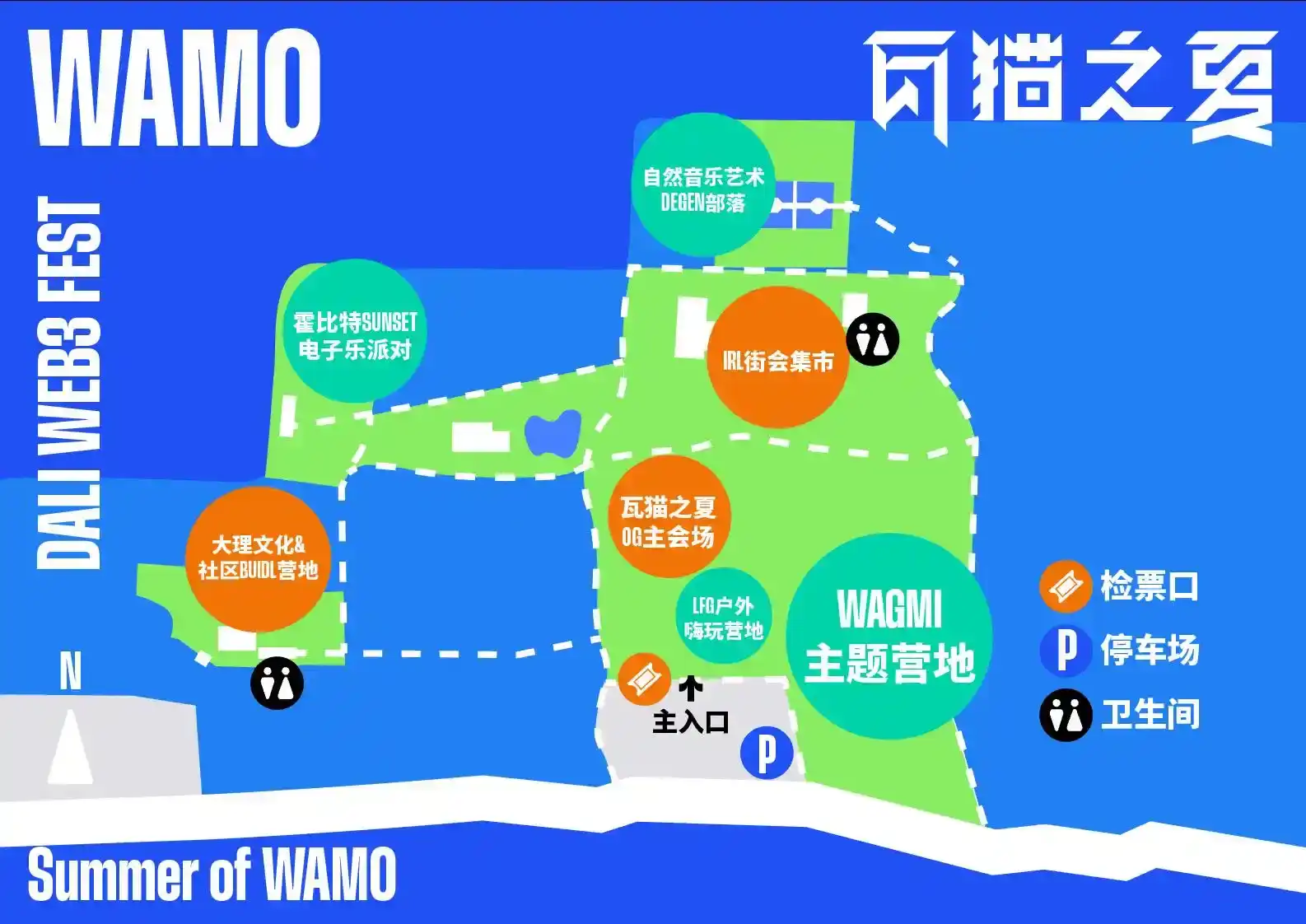
From the end of 2021 to 2022, stars from around the world rushed to buy or even personally issue NFTs, Facebook rebranded to Meta diving into the metaverse, aiming to buy a copy of the U.S. Constitution, purchase an NBA team, acquire an island to build a utopia, and various DAOs (Decentralized Autonomous Organizations) sprouted up like mushrooms after the rain. In my mind, this is the "Golden Age" of blockchain, or rather Web3. In 2022, in Dali, there was a very lively and "artistic" Web3 street party organized by a small group, gradually expanding from two or three members of the local youth community to around thirty to nearly one hundred people, completing it in a very decentralized manner powered by passion.
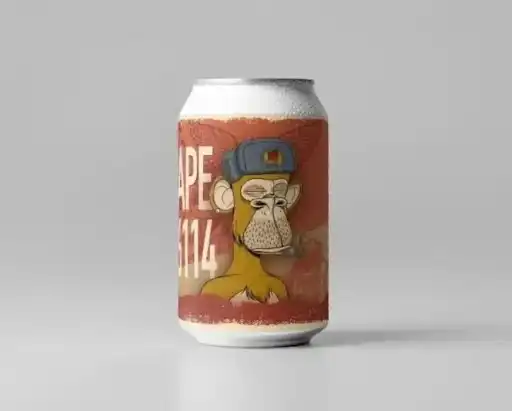
Also in 2022, the "Leap Sea" Tavern, which later received tens of millions of yuan in angel investment, gained more attention due to its unique "Web3" features. Liang You, the owner of this tavern, said in an interview at the time that he was not an insider of the Web3 circle, but the organizational structure of the "Leap Sea" Tavern adopted the DAO model from Web3 and even released the first domestic collaborative beer with the Bored Ape Yacht Club.
Twitter is the most active social media platform in the crypto community. In the past, you could see various cryptocurrency industry analyses and insights into the industry's development directions or debates. Nowadays, such content has lost its appeal and has become scarce. In its place are posts about what Binance founder CZ's dog is named, success tips from various "crypto gods," and discussions about "college girls" and "business K."
This change reflects the direct result of the crypto community falling into the misconception of "value innovation" and having their "dao hearts shattered." As the U.S. government becomes increasingly crypto-friendly, the community naturally rejoices but also feels anxious about "this being the last bull market." Initially, when NFTs, "digital luxury goods," or metaverse land, "digital real estate dreams," experienced a downturn, the community blamed the project teams for not doing well enough. Gradually, they stopped complaining and became indifferent, sneering at various narratives.
In this disillusionment, exchanges, market makers, and KOLs have become the most dominant forces in the crypto world. If a coin can be listed on an exchange, it means there can be enough users, not transacting on the blockchain, participating. If a coin has a market maker behind it, it means there is funding to "set up the game," artificially creating price trends to liven up the "game." In the crypto world, these "game setups" are often referred to as "conspiracy groups." If a coin has KOL participation, it means that KOL must also cheer for their holdings, with the most influential KOLs being called the "front row," even if they do not directly promote on Twitter, some will track their on-chain behavior to buy in.
Recently, at the Consensus 2025 conference just concluded in Hong Kong, many crypto people self-mockingly noted that although the conference was named "Consensus Conference," it seems that those seeking consensus did not find it. During the conference, project teams were still able to spare no expense, renting various high-end venues to hold exquisite events, even spending HKD 600,000 in one night on drinks.
However, the revelry does not eliminate the confusion and anxiety in the crypto world about "where are we heading." In the crypto world, without the fairy tale that belief can bring profits, only the belief in making money remains.
The "Nasdaq"-ization of the Crypto World, the Original Sin of the "Second Crypto Religion"
As the crypto world began subconsciously analogizing itself to the decentralized "Nasdaq," the schism of cryptocurrency, the world's largest "cyber religion," had already begun to show.
The value of cryptocurrency can be interpreted in different ways by different people, with the most common perspective possibly starting from finance. But in my view, the value of cryptocurrency has always been the value of belief, the value of the "cyber religion."
From buying 2 pizzas with 10,000 Bitcoins, to becoming "dark web currency," to becoming the legal tender of El Salvador, and further to the U.S. establishing a Bitcoin strategic reserve. One great achievement after another cannot be planned, nor can it be predicted. It is the belief of people around the world in Bitcoin that has allowed this "cyber religion" to undergo a magnificent 16 years. If no one truly believed from the bottom of their hearts that Bitcoin would become the world's currency in the future, if no one believed that Satoshi Nakamoto would never touch the roughly 1 million Bitcoins they owned, Bitcoin would never have steadily developed to where it is today.
The "Nasdaq"-ization of the crypto world began with the birth of Ethereum. This was actually the first split of the "cyber religion," the formal formation of the "Second Crypto Religion." Bitcoin purists adhere to the "currency" positioning and do not want the Bitcoin blockchain to pursue more capabilities at the expense of even a little security, stability, or decentralization. Bitcoin believers believe in the intrinsic value of Bitcoin itself, while Ethereum believers believe they can and should create more value.
“Bitcoin is gold, Ethereum is silver.” Through new blockchain technologies such as ICOs, DeFi, NFTs, the Metaverse, blockchain games, and more, Ethereum has steadily climbed to its peak, ultimately winning such a position in the hearts of the crypto community. Ethereum's founder, Vitalik Buterin, also soared to fame at that time, becoming the second “god” in the crypto world after Satoshi Nakamoto.
However, in reality, the “Second Crypto Religion” was never quite stable from the beginning. Because whether gold or silver, the world does not need these two precious metals to present their “what can they do” answer sheet to prove their value. From this perspective, Bitcoin can fully rival gold, but Ethereum cannot be compared to silver. Since Ethereum's inception, Ethereum has been on a path that constantly requires validation of its value, much like our helpless lives, always needing to present an answer sheet.
Rather than calling Vitalik Buterin a “god,” it is more accurate to say he is the Steve Jobs of the crypto world. Now, his situation seems to be echoing the early days of Steve Jobs. In 1985, Apple faced declining performance due to competition from IBM. Steve Jobs was ousted from the Apple board of directors due to disagreements with most of the management. Nearly 20 years later, Ethereum faced declining performance due to competition from Solana. When Vitalik Buterin expressed that he would not proactively engage with governments for “surrender” as a positive move, he transitioned from being the “V God” to the “V Dog.”
On the crowdfunding platform Kickstarter, many games have gone through a long period from fundraising to final development and delivery. “Star Citizen” has been in the alpha testing phase for over 12 years. However, in the highly speculative cryptocurrency market, Vitalik Buterin cannot receive such enduring patience from the market.
However, whether the various new blockchain technology explorations that have taken place on Ethereum can truly “take off” and be useful depends on a combination of timing, opportunity, and people. Taking NFTs as an example, from the birth of CryptoPunks to the explosion of NFTs took about four years. If NFTs have enabled blockchain technology to find a new application direction in “new art medium,” computer-generated art through the computer vision (art) algorithm has its origins in the 1950s. It took about 70 years before blockchain technology endowed this art category with uniqueness and traceability, finding the perfect form of presentation. After all, if the images generated by computer algorithms are simply printed out using a printer, their charm would undoubtedly be greatly diminished.
Why Did the Cryptocurrency Community Lose Patience This Time?
A Real Bull Market or a Fake One?
Because Bitcoin hit a new all-time high last year.
In the cryptocurrency community, the term "familiarity bias" is used to specifically refer to referencing past bullish experiences to capture the next major upward trend. One of the iron laws of "familiarity bias" is that each Bitcoin halving, which occurs every 4 years, will kick off a major bull run. Bitcoin is expected to rise and hit a new all-time high, then consolidate at a high level, while Ethereum-led "altcoins" will take center stage in the bull market's "second half," and various new blockchain technology narratives will bring forth one after another wealth myth of tens to hundreds of times returns.
When Bitcoin hit a new all-time high again last year, the cryptocurrency community still believed in this iron law. What sets this round apart from previous bull markets is that this time, the community is more anxious. This anxiety still stems from a loss of faith—the U.S. government even stepped in to "buy the dip," and moving forward, the opportunities left for retail investors will become fewer and fewer.
For most people in the cryptocurrency community, Bitcoin's new all-time high does not directly translate into profits because Bitcoin's market cap is too large, making it difficult to achieve financial freedom through Bitcoin investments quickly. What people are hoping for is the frenzy of "altcoins" after Bitcoin's new all-time high.
Interestingly, there are actually no objective conditions this time around to replicate the frenzy of "altcoins." First, the funds buying Bitcoin spot ETFs are actually active in the traditional financial markets and do not directly enter the on-chain activities, such as DeFi, NFTs, metaverse, as was the case in the past. Second, there hasn't been a new, refreshing, unified native crypto narrative within the community, let alone one that can attract attention and participation from outside the community.
However, after waiting patiently for 3 years, is this the result everyone was expecting? The cryptocurrency community is unwilling to accept this outcome. This "unwillingness" has formed a false bull market, and insiders refer to this market situation as "PvP"—in the previous bull market, everyone spread the new narrative with a shared passion and vision, and the Web3 concept even spread to some non-blockchain industries. This time, there is no consensus on the new narrative; everyone just wants to be a "smart person" and achieve victory by profiting from others' losses.
This situation closely resembles the ending of "Alice, the Last Time of Her Empire"—a series of tough survival games created by those on the brink of death from a natural disaster of asteroid impact, all coming together to create a hallucination.
For the "cyber religion," this is a very bad situation that reveals a very dangerous sign—the cryptocurrency community, in confusion and loss, in the anxiety of making money, has willingly stripped away the idealism and sacredness of the cryptocurrency community.
Pessimistic Honesty is Actually Helplessness Self-Abasement
The crypto community has started calling cryptocurrency a "casino."
Last year, I met up with a friend I had known for a while offline, who specializes in trading meme coins. Meme coins were his entry point into the cryptocurrency market, and it was almost the only track he was interested in within the cryptocurrency market.
"I just find this thing fun, something our generation plays with. Meme coins, or even if you take out the word 'coin,' this kind of thing is whimsical, not well understood in reality but in the cryptocurrency market, everyone recognizes this thing, this culture. When I discovered that I could make money based on my sense of these contents or aesthetic, I thought meme coins were really cool and fun."
After he finished speaking, we both took a big gulp of our drinks. As alcohol spread through my body, memories of those meme coins that had once excited me quickly flashed through my mind, such as $DOGE derived from that globally renowned Shiba Inu meme, repeatedly mentioned by Musk, $PEOPLE, which had a huge pump to fund the purchase of a copy of the U.S. Constitution...
But now, even the "fun" that was once the key to meme coins has almost malfunctioned. Setting everything aside, closing my eyes, only one word remains:
"Gamble"
Solana, the most vibrant "crypto casino" of this fake bull market, has seen over 640,000 meme coins appear since April 1st last year, and this data was only up to early July last year. In other words, in a span of three months, over 7,000 new meme coins were appearing on Solana on average every day.
The disappearance of "cyber religious believers" corresponds to the emergence of "crypto gamblers." These "crypto gamblers" post a series of English and number-laden "addresses" on various chat apps every day, which is referred to as "CA," meaning the token's contract address. With this address, they can precisely locate the token they need to trade.
"Smart money" and "dev" are the key success factors that "crypto gamblers" care most about. "Smart money" is equivalent to the "crypto gambling god." These addresses on the blockchain are sought after in daily transactions due to their high win rates, and their trading actions attract many "crypto gamblers" to follow suit with buy-ins. "Dev" is the abbreviation for "developer," referring to the creators of the tokens. "Crypto gamblers" need a relatively reliable "game initiator" to participate and try to avoid participating in games initiated by token creators with a history of massive sell-offs right after the start.
Objectively speaking, the most prominent narrative of wealth creation during this fake bull run has been the "Crypto Casino" narrative. However, what was originally meant to be a helpless, honest reflection of the current state of affairs has ultimately turned into a numb and self-righteous stance.
This is the most severe challenge that the "cyber-religion" of cryptocurrency has faced to date—a time when the industry's idealism and sanctity have been fractured. No one knows when or how this fracture will be healed.
Can this fracture even be healed?
The consensus of cryptocurrency is not unbreakable; it needs to continue to evolve
The most significant value created by the coin circle's "New Narrative," born out of blockchain technological innovation attempts, lies in presenting the "cyber-religion" in a more diverse light to the world, allowing more individuals to become interested in and gain a deeper understanding of cryptocurrency through different perspectives. Previously, this was in a positive feedback loop with cryptocurrency price growth, but now, it has become detached.
The rise in cryptocurrency prices serves more to reinforce the beliefs of existing "disciples." The astounding wealth narratives created by cryptocurrency do not directly aid in the "preaching" of cryptocurrency.
Does the coin circle need a new narrative? Yes. Is there a rush? Not really. The world is constantly evolving, and technological advancements will bring forth a continuous stream of new demands. It is highly likely that tomorrow or even later today, the answer to "What else can blockchain do" will naturally emerge. Even if not, has the original narrative been good enough? No, it can still be improved upon, and there is still a need for further exploration.
If cryptocurrency is merely a "casino," just a speculator's paradise, then its doomsday clock has already started ticking. How the coin circle views this industry will determine how it presents itself to the world.
Perhaps the current generation of young people still finds cryptocurrency cool, but what about the next generation, and the one after that? How will they perceive cryptocurrency?
I do not know, my friend, the answer is blowing in the wind.
You may also like
Science Equity Movement: DeSci's Trillion-Dollar Knowledge Economy Reconstruction Revolution
Sentient In-Depth Research Report: Secures $85 Million in Funding to Build a Decentralized AGI New Paradigm
Taking Stock of the Top 10 Emerging Launchpad Platforms: Who Will Succeed in Disrupting Pump.fun?
Ika Receives Strategic Investment from Sui Foundation, Total Funding Exceeds $21 Million
Switzerland Zug, April 28, 2025, Chainwire
The world's fastest parallel MPC network, Ika, is set to launch on the Sui blockchain, announces a strategic investment from the Sui Foundation. Previously, Ika successfully completed a record-breaking 1.4 million SUI NFT art event on Sui. Ika is the world's first sub-second MPC network, capable of achieving zero-trust interoperability among hundreds of signing nodes, unprecedented in scale and rock-solid security.
Ika's core values of performance, speed, and high decentralization align perfectly with Sui. With its upcoming launch on the Sui blockchain, Ika will bring its unparalleled MPC technology into the Sui ecosystem, providing Sui Move smart contract developers with secure cross-Web3 interoperability. This further solidifies Sui's position as the preferred solution in cross-chain DeFi, decentralized custody, chain abstraction, AI-agent defense, native Bitcoin programmability, leveraging the first truly scalable and secure MPC signature scheme.
Ika addresses key bottlenecks of existing MPC networks and delivers unparalleled performance through innovative 2PC-MPC encryption scheme and Sui's Mysticeti consensus protocol:
1. Record Throughput: Ika's transaction processing capability is up to 10,000 times higher than current MPC networks, supporting unprecedented transaction volumes.
2. Ultra-Low Latency: While traditional network signatures may experience delays of 30 seconds or more, Ika can generate signatures in sub-seconds, supporting cross-chain real-time applications.
3. Tremendous Scalability: Ika breaks the conventional limit of 4-8 nodes, and the 2PC-MPC can scale to hundreds or even thousands of signers, enhancing decentralization without sacrificing performance.
4. Zero-Trust Security: Ika's architecture ensures that even in the most extreme scenarios, user assets remain secure, setting a new standard for decentralized security.
Ika's ultra-fast MPC network supports various applications on the Sui blockchain, and several Sui developers have utilized Ika to build tech, including:
· DeFi Interoperability: Ika's sub-second speed and scalability enable instant secure operations within the Web3 ecosystem, bringing liquidity from chains like Bitcoin and Ethereum into Sui. Sui developers Full Sail and Rhei have announced upcoming tech launches based on Ika.
· Decentralized Custody: Ika provides a secure, decentralized custody solution for digital assets on Sui, delivering unparalleled security for both institutional and individual users. Sui developers Aeon and Human Tech have announced the integration of Ika into their technology.
· Chain Abstraction: Ika helps Sui developers abstract away multi-chain complexity for users, combining with Sui's zkLogin feature to deliver a seamless user experience. Sui developers Covault and Lucky Kat have announced the integration of Ika into their technology.
· Programmable Bitcoin: Ika unlocks new possibilities for native BTC on Sui, enabling programmable and secure DeFi and custody. Sui developers Native and Nativerse have announced the upcoming launch of Ika-based technology.
· AI Agent Protection: Ika enhances AI applications on Sui by providing secure MPC protection, ensuring AI agents do not possess unrestricted power and safeguarding user asset security. Sui developers Atoma and Ekko have announced the upcoming launch of Ika-based technology.
The strategic investment in Ika by the Sui Foundation underscores Sui's commitment to driving cutting-edge technology for high performance and decentralization. This amplifies the technical synergy within the Sui ecosystem, propelling Sui and Ika to the forefront of the Web3 revolution, jointly advancing the future of secure, scalable, decentralized infrastructure.
Ika has raised over $21 million in funding, with a peak private valuation of $6 billion FDV, backed by support from Sui Foundation, DCG, Big Brain Holdings, Blockchange, Node Capital, Amplify Partners, Liquid2 Ventures, FalconX, Tykhe Block Ventures, Lightshift, Token Bay Capital, Collider, Zero Knowledge Ventures, NoLimit Holdings, Rubik Ventures, Dispersion Capital, Insignius Capital, Impatient Ventures, Cerulean Ventures, Earl Grey Capital, HDI Ventures, Flowdesk, TPC Ventures, Purechain Capital, Solr DAO, Heroic Ventures, Naval Ravikant, NotVCs, G-20 Group, Artifact Capital, DSRV, Encapsulate, and many other key players in the Web3 space.
Ika also demonstrated the strong support of Sui users by launching the "MF Squid Market" NFT art event, which became the largest and most successful NFT event in Sui's history, raising over 1.4 million SUI and establishing an active grassroots community.
The IKA token is set to native launch on the Sui blockchain, unlocking new decentralized security features and utilities. As the native token of the Ika MPC Network, IKA will play a key role in its ultra-fast, scalable infrastructure, used for paying MPC signature services, enabling seamless transactions within the Web3 ecosystem. Leveraging Sui's unparalleled speed and performance, Ika enhances the security and scalability of the entire ecosystem, introducing the most promising MPC technology in blockchain to the fastest-growing L1 of Web3.
Ika is the world's fastest parallel MPC network, offering sub-second latency, unprecedented scale and decentralization, and zero-trust security. As the preferred choice for interoperability, decentralized custody, and chain abstraction, Ika will fundamentally transform digital asset security and multi-chain DeFi.
Sui is the first Layer 1 blockchain and smart contract platform designed from the ground up to provide fast, private, secure, and inclusive digital assets. Built on the Move programming language, its object-centric model supports parallel execution, sub-second finality, and rich on-chain assets. Through horizontally scalable processing and storage capacity, Sui supports widespread applications at low cost with unparalleled speed. Sui represents a significant advancement in blockchain technology, offering creators and developers a platform to build exceptional user experiences.
Contact:
Ika PR
pr@ika.xyz (mailto:pr@ika.xyz)
AI Track Regains Momentum, Thoroughly Reviewing Potential Projects and Market Hype Logic
Bitcoin is Just the Beginning: Trillion-Dollar Asset Manager Hamilton Lane Dives into How Tokenization is Disrupting Traditional Finance
This is the Winter of VC, yet the Spring of KOL Agency.
After the RTFKT "Image Missing" Incident, Nike Faces $5 Million Class Action Lawsuit, Where Does the Future of NFTs Stand?
This Week in Review | Trump to Host Dinner for TRUMP Holders; Musk and US Treasury Secretary Engage in Heated Argument at the White House
Privacy Dark Horse Inco Raises $5 Million in Funding, a16z CSX Leads Investment Igniting FHE Craze
One Month Left in Office, Has Trump and Musk's Political Alliance Broken Down?
Recently, a high-profile dispute at the White House once again brought the U.S. government into the spotlight. The head of the Department of Government Efficiency, Musk, and the U.S. Treasury Secretary Bennett engaged in a heated argument due to ideological differences, almost escalating into a physical confrontation. In the end, Trump accepted Bennett's appointment proposal, raising concerns about cracks in the relationship between Trump and Musk. Behind this conflict is not only a power clash between Silicon Valley and Washington but also a revealing of the complex game from "close allies" to "power balancing" between Trump and Musk.
Looking back to the beginning of the year, Trump's most significant political reform involving Musk was the establishment of the "Department of Government Efficiency" (DOGE) to promote radical reform under the guise of "streamlining the government." Its core objectives include reducing government spending, digitizing the bureaucratic system, and replacing human decision-making with algorithms. The core team consists of 6 technical elites aged 19-25. Since Trump took office on January 20th, DOGE has swiftly carried out its restructuring, from shutting down the U.S. International Development Agency to significantly reducing the number of federal government employees, and even obtaining taxpayer privacy information to enhance fiscal efficiency. Under Trump's direction and support, Musk has bravely faced the challenges and spearheaded a radical reform storm in the United States.
Related Reading: "Terminating hundreds of contracts in 18 days, Musk and six post-00s revolutionize the United States" "Cutting billions of dollars in contracts again, what peculiar government departments has Musk's D.O.G.E identified?"
According to DOGE's official website data, as of April 20, 2025, DOGE has saved approximately $160 billion in total, averaging about $993.79 saved per taxpayer, with savings in various areas:
Contract Terminations: 8,454 contracts terminated, saving about $30 billion. For example, terminating the Risk Management Agency's lease in Topeka, Kansas, with an annual rent of $121,800, is expected to save approximately $964,000 over multiple years.
Grant Cancellations: 9,699 grants terminated, saving about $33 billion. For example, terminating grants from the U.S. International Development Agency to the Global Vaccine and Immunization Alliance Foundation, saving a total of $1.75 billion.
Lease Terminations: 643 leases terminated, saving about $3 billion.
However, an NPR analysis points out that some contract terminations did not result in actual savings. For example, 794 contract cancellations were expected to bring no savings as the funds were already fully committed. Additionally, the DOGE calculated savings using the potential highest value of the contract rather than actual expenditures, leading to controversy.
As early as the 2024 U.S. presidential election, Musk began frequent interactions with Trump. At that time, Musk contributed $259 million, mobilized all Silicon Valley resources, and with his personal influence endorsement, became a key supporter for Trump's return to the White House. After Trump took office, as his "angel investor," Musk naturally gained unprecedented political status and power.
On February 7, Musk publicly expressed his support for Trump on social media. He said his love for Trump was "the maximum love that a straight man can give to another man."
On March 4, while attending Trump's State of the Union address, Musk was wearing a tie borrowed from Trump.
As Musk massively laid off federal employees from government agencies, a wave of vandalism against Tesla cars, intimidation of owners, and protests at dealership stores erupted nationwide. Tesla factories faced peaceful demonstrations and acts of destruction, including charging station fires. Vandalism of Cybertrucks surged across the U.S., with some owners even graffitiing their own Tesla vehicles to protest against Musk.
Reports of Tesla car and dealership vandalism as well as protest activities suggest that opposition to Musk has reached a boiling point. Bell Analyst Ben Carlo stated on CNBC, "When people's cars are at risk of being scratched or burned, even those who support Musk or are indifferent to Musk may have second thoughts about whether to buy a Tesla."
Musk has also stated multiple times that running his own businesses is "very challenging." Tesla's stock price has experienced its most severe drop in five years, and his social media company X has also suffered multiple outages.
However, such swift reforms are bound to harm the interests of a considerable portion of people. From the day Musk entered politics, opposition voices have been constant. Tesla's stock has plummeted since Musk took office, nearly halving its market value, marking the most severe decline in five years. This has led to Musk's personal assets evaporating by approximately $121 billion since the beginning of the year.
As Musk's biggest political backer and ally, Trump inevitably had to stand up for him when Musk came under attack.
On the afternoon of March 11th, local time in the U.S., Trump held a 30-minute press conference on the White House driveway. The press conference looked more like a large-scale Tesla car show—accompanied by Musk, Trump answered questions about the U.S. stock market, Canadian tariffs, and the Russia-Ukraine conflict while test-driving five different types and colors of Tesla cars.
"The one I like is that one," Trump pointed to a bright red Model S priced at about $80,000, saying. In the end, Trump chose the Model S and said he would write an $80,000 check to buy the car in full.
Trump also criticized those who were boycotting Tesla, believing that they were harming a great American company. He claimed that if the boycotters continued to treat Tesla this way, he would root out these people and "curse" them to "hell." White House spokesperson Harrison Fields also stated: "The despicable acts of violence being continuously carried out by radical left-wing activists against Tesla are no different from domestic terrorism."
Under Trump's "endorsement," Tesla's stock price rebounded during trading on Tuesday, rising 3.79% at the close.
To show loyalty, on March 24th, at Trump's third cabinet meeting, Musk wore a red hat with the words "Trump is always right."
During this period, the two were still intimate comrades-in-arms dedicated to advancing reform. Trump needed a "sharp tool" to expand his territory, while Musk needed a platform to realize his political ambitions. Both were highly aligned in their goals and interests.
Since Trump announced his high tariffs policy, a conflict arose between Trump's political goals and Musk's personal interests, leading to a crack in their relationship. The high tariffs caused a sharp drop in the U.S. stock market in a short period, and Musk's assets have shrunk by over $100 billion since the beginning of the year. Musk, as an entrepreneur, views issues from an economic rather than political perspective, supporting barrier reduction and free trade. He has also repeatedly expressed his opposition to the tariff policy.
On April 5, during the Italian Alliance Assembly held in Florence, Musk, in a video call interview with Italian Deputy Prime Minister Matteo Salvini, expressed, "Ultimately, I hope that Europe and the United States can reach an agreement. In my view, ideally, we should move towards zero tariffs, effectively establishing a free trade area between Europe and North America." On April 7, Musk shared a video on Twitter featuring the late free-market economist Milton Friedman discussing the benefits of free trade. Musk did not add any text, but this move was widely interpreted as a criticism of Trump's tariff policies.
Musk's brother, Kimbal Musk, also criticized Trump's tariff policy on Twitter, pointing out that "Taxing consumption means less consumption, which also means fewer job opportunities, leading to even less consumption and fewer job opportunities." He believes that taxation is a "structural, permanent tax on American consumers."
Particularly targeted at trade advisor Peter Navarro, Musk has also made many criticisms and sarcastic comments. On April 8, he replied to a post quoting Navarro's interview where Navarro referred to Tesla more as an "assembler" than a "manufacturer," criticizing its components coming from China, Japan, and Taiwan. Musk directly responded in a heated manner, stating, "Navarro is a complete idiot, what he said here is obviously false," followed by a community note proving the Tesla Model Y is the "most American-made car." One retort apparently wasn't enough, as Musk further referred to Navarro as "dumber than a sack of bricks" in another post.
Their contradictory stances on the tariff issue gradually fermented in the intricate power struggle.
On April 23, local time, it was reported by insiders that on April 17, Musk and Treasury Secretary Bezos had a heated clash during a meeting in the West Wing of the White House. Bezos lost control of his emotions and erupted with profanity, to which Musk provocatively responded with a "raise your voice." The confrontation even escalated to personal attacks, with Bezos angrily accusing Musk of exaggerating the DOGE budget cut issue, leading to no progress. Musk, in turn, directly retorted that Bezos was a "Soros puppet" and mocked him for his previous hedge fund debacle. The argument alarmed Trump and visiting Italian Prime Minister Meloni, and it took assistant intervention to separate the two.
The direct cause of this conflict was the controversy over the appointment of the IRS Commissioner. As Elon Musk, serving as the head of the U.S. Department of Efficiency, proposed the appointment of Gary Sharply as the Acting Commissioner of the IRS without the approval of Treasury Secretary Bennett, Bennett viewed this as a violation of his authority. He lobbied President Trump to revoke the appointment and instead support his own deputy, Deputy Treasury Secretary Michael Falkend, for the position of IRS Commissioner.
The outcome of this power struggle seemed to favor Bennett as President Trump eventually supported Bennett's proposal, revoked Musk's nomination of Sharply, and appointed Falkend as the Acting Commissioner of the IRS.
The fact that two top U.S. officials could be so enraged as to publicly curse each other at the White House gates despite their public image was due to their long-standing animosity. Back when Trump first took office, Musk had strongly advocated for nominating Howard Lutnick as Treasury Secretary, but Trump ultimately chose Bennett and appointed Lutnick to lead the Department of Commerce. Perhaps from the beginning, Trump had strategically set up a situation where his subordinates would check each other, siding with whoever aligned more with his own ideas. This set the stage for future conflicts.
The conflict between the two was fundamentally a power struggle and game of influence between two factions within the Trump administration. The reformist faction represented by Musk sought to reshape the landscape through new policies, while the traditional faction represented by Bennett resisted actions that harmed their own interests. Trump's handling of this event was seen as a sign of Musk's diminished influence within the government.
It is worth noting that, regarding tariff policies, Bennett, unlike Musk's clear opposition, had publicly supported tariff policies, believing that implementing new tariffs in the U.S. was necessary. He also refuted the idea that new tariffs would cause an economic downturn. Perhaps the consistency in policy preferences was also a reason why Trump gradually leaned towards Bennett and distanced himself from Musk. After all, to Trump, a businessman by background, permanent interests matter more than permanent friends.
Musk's role was constrained by the 130-day term limit for special government employees, which began counting from Trump's inauguration on January 20, 2025, and is expected to expire at the end of May. Anonymous sources within the White House hinted at the end of February that Musk "will stay," but on March 31, Trump himself openly acknowledged Musk's prioritization of his commercial duties and showed no signs of insisting on retention. Perhaps as the mission of DOGE is accomplished, Musk's 130-day government employee term enters its final phase, and Trump will gradually sideline Musk from the power center, shifting to new allies who align more with his current interests. In retrospect, it's a poignant reminder of how fleeting alliances can be.
The world's richest person, Musk, experienced the thrill of a "Tech Disruption Workplace" at the center of American politics. He ignited a fire for Trump's "New Sheriff in Town," touching the interests of countless people. He reformed the behemoth of the American government at an incredible speed, leaving behind not only a controversial outline of "Algorithmic Governance" but also exposing the deep-seated contradictions between capital and power in American politics. This radical experiment of "Tech Transforming Politics" seems to be nearing its conclusion. When Musk truly departs, that red hat proclaiming "Trump Is Always Right" may perhaps become the most dramatic footnote to this brief "political marriage."
RaveDAO at Terra Solis by Tomorrowland: A Female-Led Techno Night Where Web3 Culture Converges
MCP In-Depth Research Report: Protocol New Infrastructure in the AI+Crypto Mega Trend
12-Hour Market Cap Surpasses $25 Million, Is $JOS Legit or Another "Rug Pull"?
Web3 PvZ: Transforming GameFi with "Plants vs. Zombies" Gameplay, AI-Driven Wealth Metamorphosis Cryptocurrency
April 23 Market Key Intelligence, How Much Did You Miss?
Arthur Hayes New Article: Bitcoin to Return to “Gold Tier” Safe Haven, Altseason to Potentially Follow
AI Token Skyrockets: Comprehensive Overview of the Next Potential Breakout in Crypto AI
In October 2024, since the launch of the AI Meme—GOAT, the AI Agent concept, Crypto has begun to accelerate its integration with AI. Concepts such as Game+AI, DeFAI, AI Agent Hive, etc., have sprung up, with almost a new batch of concept projects appearing every week, until January 18th of this year when Trump announced the issuance of MemeCoin, directly draining market liquidity, causing the premature bursting of the CryptoAI bubble. Two days later, DeepSeek announced the open-source R1 model, and after several weeks of fermentation, the AI concept stocks in the US stock market also saw their bubble burst.
With just $6 million, one could create a large model; however, those holding out for the $60 million market cap of CryptoAI were once defined by the community as "undereducated cabbage." Such trends were rampant, coupled with the collective plunge of AI concept stocks in the US market, naturally causing the coin price to spiral downwards, leading to the gradual silence of the AI concept in Crypto.
One quarter later, the CryptoAI uproar returned to the market, and this time, it seemed to bring some new concepts.
Following Pumpfun's success story, Crypto sparked a trend of asset issuance platforms. During the previous AI Agent craze, frameworks and AI distribution networks/LaunchPads were the two highest FDV areas. However, after the concept of framework akin to Ai16z's developer community had developed to a certain extent, the community realized the limited capabilities of frameworks, especially in capturing the value layer in Crypto. Thus, the existing frameworks gradually transitioned into LaunchPads. However, AI LaunchPads also faced challenges because the existing LaunchPads could not meet the needs of AI product launches. In preparation for the next wave of AI resurgence, project teams began looking for solutions.
Despite experiencing a recent incident where the SN28 subnet was exploited to turn it into a MemeCoin and drive TAO into Meme Coin hype, ultimately being centrally intervened by the foundation, over time, the foundation's control over the Bittensor subnet will diminish. This has sparked community concerns about its future potential to become a "attention network" pan-incentive project. A longtime follower of the Bittensor project, known as "Quirky Mind," also published an article stating that this could be a scam.
Further Reading: "Opinion: Why Bittensor Is a Scam and TAO Is Heading to Zero?"
However, purely from an investment perspective, Bittensor's ecosystem liquidity is better than that of other AI Agent ecosystems. For example, Virtuals, because LP and Virtuals are paired, this will lead to higher volatility for liquidity providers. There is approximately a 3% to 7% slippage when investors invest in agent tokens within the platform. When funds are invested in dTAO subnet tokens, the slippage is usually 0.05% to 0.1%.
It is for this reason that VC or large AI project participants tend to lean towards making long-term investments in Bittensor. Just last week, former Messari analyst and Crucible Labs partner Sami Kassab announced that he and his friend Seth Bloomberg, who has similar work experience, will establish a fund specifically for providing liquidity to Bittensor.
The "First Mover" of Bittensor, Rayon Labs, has created several products that offer a glimpse into the preferences of Bittensor's project parties, who are often more "practical" and long-term oriented.
SN64 "Chutes" provides a serverless way to easily deploy AI infrastructure, with the project team stating that a previous AWS outage was a prime example of why we need "serverless." Because if reliant on centralized service providers, once an outage occurs, AI applications may crash due to a single point of failure, and the crypto industry being money-intensive, the probability of losses is much higher than traditional AI.
SN56 "Gradients" is a zero-code platform for deploying AI models, where users can train their own AI models on Gradients (for specific use cases, image generation, custom LLM), and the recently launched v3 has a competitive advantage in terms of pricing compared to similar products.
SN19 "Nineteen" is a fast, scalable, decentralized AI inference platform.
As one of the most complete AI projects combining ecosystem building with a value flywheel in the previous cycle, Virtuals Protocol's token price has slowed along with the ecosystem's momentum as the market quieted down. Following this, the $45 billion market cap bubble was burst, experiencing a drop of over 90%, and significant decrease in participation from launchpad contributors. However, Virtuals did not give up. In this AI bear market, they began to Build.
First, Virtuals refined their own project development ecosystem by launching the VPN plan "Virtuals Partners Network." From the beginning, Virtuals' plan was to onboard more AI people into the Crypto space. This plan will interconnect multiple ecosystem positions, including investors, experts from various fields, scholars, and developers. Essentially, as long as you have an idea, resources can be obtained through this plan from investors to liquidity providers, marketers, and even professionals. This "one-stop service" incubator can be said to be the best choice for anyone looking to enter Crypto to collaborate with Virtuals.
To expand the influence and interactivity of AI Agents in the ecosystem, Virtuals has designed a protocol called ACP "Agent Commerce Protocol." It can be seen as a realization of the previous Swarm, Ai16z, and similar projects' hive concepts. ACP has built a commercial ecosystem composed of AI agents – a virtual nation where AI Agents can autonomously interact, cooperate, and transact with each other. It is worth mentioning that after this, Google also released a similar A2A concept. A slight difference is that ACP is connected by smart contracts, whereas A2A is connected by protocols.
In April, Virtuals just launched a new model of Virgen points and Genesis launch mode. Users can earn points through investing in Sentient and Prototype Agents, holding Virtuals, staking VADER, among other methods, and points serve as the basis for participating in the Genesis launchpad project. The Genesis launchpad is an IDO-style project launch method, where users receive investment quotas based on the points they hold. Currently, not everyone can participate in this launch mode, as it requires official approval from Virtuals.
This model has several benefits. First, it increases the stickiness of its platform users through rewards. In the words of founder Ethermage, "Our principle is to reward believoors." Staking points to participate in the Genesis project allocation is a fairer start, with participants usually of higher quality, allowing the project to develop more sustainably.
What was the most interesting project at the Virtuals Protocol hackathon?
In addition to the projects on Genesis worth noting, Virtuals just announced the winners of this hackathon on April 21, with more than 100 project teams participating. The judging panel was also quite impressive, including LucaCurran, who is in charge of AI and DEPIN sector development at Base, KunPeng, the founder of the Stanford Blockchain Community, and Anand Iyer, a partner at Canonical Crypto. Interestingly, Anand's Tag on X is AI.
The Intern
The Intern is an AI assistant for operations. He can help with promotion, replies, and community management on X. By deep diving into the community, he can understand its culture and can generate images using TADA. He has now teamed up with Pudgypenguins to launch the Penguin Intern, running his own Twitter. From the quality of Twitter operations, if it is entirely AI-operated and can be scaled to this level, it would be a good product.
BuzzingClub
BuzzingClub is a prediction market platform where the project team believes that the future of prediction markets should be in the hands of the participants, rather than a central authority, stating that "everyone should be able to freely create, share, and express their opinions," making Buzzing more free compared to other prediction platforms.
In Buzzing, all users can create prediction markets by proposing topics or questions, with AI generating rules. Subsequently, an AI algorithm filters out some spam and low-quality prediction markets, and finally, an AI oracle automatically retrieves internet search data, rather than human-generated data, to determine the outcome of the prediction question.
Burnie
Burnie is a code-learning platform that can enhance the skills of users who want to learn to code, and players can earn rewards by completing the tasks he publishes.
Arc and Ai16z, as the framework development stagnated, have also transformed into distribution platforms for AI Agents. Since the launch of the distribution platform forge by Arc, it has disappeared from the spotlight since the first product, AskJimmy. Ai16z's AutoFun went live a few days ago, but the currently publicly supported projects have not gone online, and its development path is still unknown. From a product framework perspective, AutoFun seems more inclined to create a community UGC culture platform, with little difference in value retention compared to traditional LaunchPads.
Arc plans to launch the new Agentic App Store Ryzome, while Myshell's existing AIApp Store has yet to officially launch, and the latter lacks activity, with most of the products appearing to be similar.
In this scenario, dev.fun, which previously appeared with the concept of AppFi, seems more conventional. At first glance, it looks similar to Pumpfun in everything from color scheme to UI but appears to have more vitality on some level. Although from a token price perspective, dev.fun, like other AI projects, has experienced a significant drop in this cycle. Surprisingly, there are currently nearly 13,000 Apps born on this platform.
dev.fun has provided a feature that allows users to generate apps through AI chat, similar to the previously YC-backed Replit. In addition to being able to issue project/meme tokens, users can also choose their own trading pairs. The Buidl, which currently has the most supporters, has a total of 1400 apps and has been run nearly 70,000 times.
The currently popular projects in the market are divided into several categories. One is development tools, including frameworks, AI Coplit's programming tools, and MCP infrastructure. The second is consumer AI applications, including AI agents, games, DeFAI (Alpha signals, funds, automated LP), and GambleFAI. The third is decentralized AI infrastructure, such as decentralized computing, validation, storage, etc. The first two are usually more favored by retail investors, while the third is preferred by VCs or investors, and such projects often require a relatively high valuation to participate.
These projects have a broader range of use cases and project concepts, but many times they are also the preferred choice of scam project teams because to retail investors, there is no "visible" product. The feedback cycle of such products is often longer, and whether it is "usable" or can generate viral spread (someone using it) is key. Therefore, creating such products requires a high level of technical expertise and marketing skills for a team.
A recent hot project, the MCP project Dark, is one of the projects that has done both well. Launched DARK under the influence of the MTN DAO and delivered a visible game product, "Dark Forest," within two weeks.
In this field, the most widely spread project in the market right now is probably Solana's "prodigal son" SEND AI, which gained fame by hosting a large AI hackathon for Solana in the past. The Solana Agent Kit is also used in many products. ALCHEMIST AI continues to build up, dropping to a $1.4 million market cap from February, and has now returned to a $14 million market cap.
Autonome
Autonome is a platform created by the Rollups protocol AltLayer that provides developers and users with the ability to build, deploy, and distribute verifiable AI agents without code. It has been active since the previous cycle and has not yet issued tokens.
Game
Smol
Recently, Treasure announced that it would shift the project's focus from the gaming chain and game operations to AI+NFT. Today, SMOL has provided the first response to this initiative by announcing the release of the "Virtual Companions" feature. This feature can turn NFTs into AI agents, and these agents will be able to use social media, play GameFi or DeFi on their own, and have created a marketplace for AI agents to trade skills, memories, and other data.
The first game to go live is the on-chain RPG game Gigaverse by Abstract. The community has generally praised it, and as a result, Treasure's token price has rebounded. After plummeting to a $20 million market cap following the previous announcement of exiting the GameFi business, today it has returned to an $80 million market cap. Besides the anticipation of the NFT AI transformation technology, the prospect of having AI agents play GameFi may be more appealing. The issues of no one playing for GameFi project teams and uninteresting games for players may potentially be solved in the future by assetized AI agents.
DeFAI
Almanak
After 18 months of development, Almanak announced last week on April 17, 2025, that it will conduct the token generation event (TGE). Almanak is an end-to-end platform that allows users to create, optimize, and manage complex financial strategies using AI agents. Functions such as market data analysis, strategy formulation, optimization, and high-speed execution can all be automated. The team has received support from numerous top-tier venture capital firms and advisors, such as RockawayX, Delphi Labs, Hashkey, AppWorks, Matrix Partners, Bankless Ventures, and more.
GambleFAI
Sportstensor
Sportstensor is an SN41 subnet on the dTAO that is an AI platform for sports event prediction, enabling participants (miners and validators) to collaborate in developing and optimizing sports prediction models. Participants with better models and datasets that can predict sports match outcomes profit from their participation. Users can engage with the project either technically by "developing models" or non-technically by "using prediction results."
For example, in an NBA game between the Celtics and the Magic with odds of 0.92:0.08, if you follow the market odds and bet on the Celtics (the popularly favored team), your win rate is about 92%. However, even with such a high win rate, after multiple bets, most people's return on investment is negative. While the popularly favored team often has a higher win rate, they also have higher odds, meaning that even if the prediction is correct, the winnings are lower. People tend to bet on their favored team, leading to a low win rate for the underdog, which means that if you bet on the underdog and win, you can earn a lot of money.
This is where the advantage of the Sportstensor model lies: miners use their own data to run their machine learning models to achieve the best results. Sportstensor then takes their averages/medians and uses them as an intelligent indicator to identify market advantages. The difference between the model-predicted odds and market odds is the part where users can profit in the long run.
Such products are among the earliest concepts of integrating Crypto with AI, as seen in projects like Grass. There have been countless similar products in the past, but sustaining them has been challenging. The key to decentralized computing power is how to optimize synchronous computing power and offer it at a price below that of traditional computing power providers. On the other hand, the key to decentralized training is the cost of data transmission itself, which was difficult to achieve during the infrastructure's early days. However, once achieved, it has the potential to tap into a significant underserved market, making it a focus of venture capitalists.
PrimeIntellect
PrimeIntellect was co-founded by Vincent Weisser and Johannes Hagemann, both of whom were previously key members of Desci's leading VitaDAO. PrimeIntellect is a platform that commodifies computing power and models. The investment lineup is quite impressive, with a $5 million seed round led by CoinFund and Distributed Global, and a $15 million second round led by Founders Fund. Individual investors include prominent figures in the industry such as Polygon co-founder Sandeep Nailwal, notable investors, and former Coinbase CTO Balaji.
Recently, renowned OpenAI researcher Yaoshunyu published an article titled "The Second Half," where he stated that we are currently at AI's halftime, with the second half soon approaching. If the first half of AI focused on gaming and exam-solving, the second half will see AI build valuable products to establish companies worth tens of billions or trillions of dollars in value. This will undoubtedly present opportunities for CryptoAI as well.
So stay tuned and welcome to the second half.
Science Equity Movement: DeSci's Trillion-Dollar Knowledge Economy Reconstruction Revolution
Sentient In-Depth Research Report: Secures $85 Million in Funding to Build a Decentralized AGI New Paradigm
Taking Stock of the Top 10 Emerging Launchpad Platforms: Who Will Succeed in Disrupting Pump.fun?
Ika Receives Strategic Investment from Sui Foundation, Total Funding Exceeds $21 Million
Switzerland Zug, April 28, 2025, Chainwire
The world's fastest parallel MPC network, Ika, is set to launch on the Sui blockchain, announces a strategic investment from the Sui Foundation. Previously, Ika successfully completed a record-breaking 1.4 million SUI NFT art event on Sui. Ika is the world's first sub-second MPC network, capable of achieving zero-trust interoperability among hundreds of signing nodes, unprecedented in scale and rock-solid security.
Ika's core values of performance, speed, and high decentralization align perfectly with Sui. With its upcoming launch on the Sui blockchain, Ika will bring its unparalleled MPC technology into the Sui ecosystem, providing Sui Move smart contract developers with secure cross-Web3 interoperability. This further solidifies Sui's position as the preferred solution in cross-chain DeFi, decentralized custody, chain abstraction, AI-agent defense, native Bitcoin programmability, leveraging the first truly scalable and secure MPC signature scheme.
Ika addresses key bottlenecks of existing MPC networks and delivers unparalleled performance through innovative 2PC-MPC encryption scheme and Sui's Mysticeti consensus protocol:
1. Record Throughput: Ika's transaction processing capability is up to 10,000 times higher than current MPC networks, supporting unprecedented transaction volumes.
2. Ultra-Low Latency: While traditional network signatures may experience delays of 30 seconds or more, Ika can generate signatures in sub-seconds, supporting cross-chain real-time applications.
3. Tremendous Scalability: Ika breaks the conventional limit of 4-8 nodes, and the 2PC-MPC can scale to hundreds or even thousands of signers, enhancing decentralization without sacrificing performance.
4. Zero-Trust Security: Ika's architecture ensures that even in the most extreme scenarios, user assets remain secure, setting a new standard for decentralized security.
Ika's ultra-fast MPC network supports various applications on the Sui blockchain, and several Sui developers have utilized Ika to build tech, including:
· DeFi Interoperability: Ika's sub-second speed and scalability enable instant secure operations within the Web3 ecosystem, bringing liquidity from chains like Bitcoin and Ethereum into Sui. Sui developers Full Sail and Rhei have announced upcoming tech launches based on Ika.
· Decentralized Custody: Ika provides a secure, decentralized custody solution for digital assets on Sui, delivering unparalleled security for both institutional and individual users. Sui developers Aeon and Human Tech have announced the integration of Ika into their technology.
· Chain Abstraction: Ika helps Sui developers abstract away multi-chain complexity for users, combining with Sui's zkLogin feature to deliver a seamless user experience. Sui developers Covault and Lucky Kat have announced the integration of Ika into their technology.
· Programmable Bitcoin: Ika unlocks new possibilities for native BTC on Sui, enabling programmable and secure DeFi and custody. Sui developers Native and Nativerse have announced the upcoming launch of Ika-based technology.
· AI Agent Protection: Ika enhances AI applications on Sui by providing secure MPC protection, ensuring AI agents do not possess unrestricted power and safeguarding user asset security. Sui developers Atoma and Ekko have announced the upcoming launch of Ika-based technology.
The strategic investment in Ika by the Sui Foundation underscores Sui's commitment to driving cutting-edge technology for high performance and decentralization. This amplifies the technical synergy within the Sui ecosystem, propelling Sui and Ika to the forefront of the Web3 revolution, jointly advancing the future of secure, scalable, decentralized infrastructure.
Ika has raised over $21 million in funding, with a peak private valuation of $6 billion FDV, backed by support from Sui Foundation, DCG, Big Brain Holdings, Blockchange, Node Capital, Amplify Partners, Liquid2 Ventures, FalconX, Tykhe Block Ventures, Lightshift, Token Bay Capital, Collider, Zero Knowledge Ventures, NoLimit Holdings, Rubik Ventures, Dispersion Capital, Insignius Capital, Impatient Ventures, Cerulean Ventures, Earl Grey Capital, HDI Ventures, Flowdesk, TPC Ventures, Purechain Capital, Solr DAO, Heroic Ventures, Naval Ravikant, NotVCs, G-20 Group, Artifact Capital, DSRV, Encapsulate, and many other key players in the Web3 space.
Ika also demonstrated the strong support of Sui users by launching the "MF Squid Market" NFT art event, which became the largest and most successful NFT event in Sui's history, raising over 1.4 million SUI and establishing an active grassroots community.
The IKA token is set to native launch on the Sui blockchain, unlocking new decentralized security features and utilities. As the native token of the Ika MPC Network, IKA will play a key role in its ultra-fast, scalable infrastructure, used for paying MPC signature services, enabling seamless transactions within the Web3 ecosystem. Leveraging Sui's unparalleled speed and performance, Ika enhances the security and scalability of the entire ecosystem, introducing the most promising MPC technology in blockchain to the fastest-growing L1 of Web3.
Ika is the world's fastest parallel MPC network, offering sub-second latency, unprecedented scale and decentralization, and zero-trust security. As the preferred choice for interoperability, decentralized custody, and chain abstraction, Ika will fundamentally transform digital asset security and multi-chain DeFi.
Sui is the first Layer 1 blockchain and smart contract platform designed from the ground up to provide fast, private, secure, and inclusive digital assets. Built on the Move programming language, its object-centric model supports parallel execution, sub-second finality, and rich on-chain assets. Through horizontally scalable processing and storage capacity, Sui supports widespread applications at low cost with unparalleled speed. Sui represents a significant advancement in blockchain technology, offering creators and developers a platform to build exceptional user experiences.
Contact:
Ika PR
pr@ika.xyz (mailto:pr@ika.xyz)
AI Track Regains Momentum, Thoroughly Reviewing Potential Projects and Market Hype Logic
Bitcoin is Just the Beginning: Trillion-Dollar Asset Manager Hamilton Lane Dives into How Tokenization is Disrupting Traditional Finance
Popular coins
Latest Crypto News


Customer Support:@weikecs
Business Cooperation:@weikecs
Quant Trading & MM:bd@weex.com
VIP Services:support@weex.com
 App
App