
- Buy Crypto
- Markets
- Futures
- Spot
- Copy Trade
 WE-Launch
DeFi Market Breathes a Sigh of Relief: Trump Administration Kicks Off Regulatory Loosening

Original Article Title: How Big Is Trump's IRS Rule Reversal Crypto Win?
Original Article Author: Token Dispatch, Prathik Desai
Original Article Translation: Block Unicorn
U.S. President Donald Trump signed a resolution last Thursday overturning the Internal Revenue Service's (IRS) controversial decentralized finance (DeFi) broker reporting rule, marking his first crypto victory. This also became the first crypto-related bill ever signed by a U.S. president. After years of regulatory uncertainty, the crypto industry finally has concrete evidence that Washington is listening.
The resolution passed with impressive bipartisan support, with the Senate voting 70-28 and the House voting 292-132, indicating that crypto may finally be transcending political divides.
This reversal is not just about undoing a problematic tax rule; it could be a precursor to determining how the decentralized finance ecosystem evolves in the world's largest economy.
In this article, we will take you through the origins of the DeFi broker rule, the significance of its repeal, and most importantly, how it will set the stage for a new crypto regulatory approach under the Trump 2.0 administration.
Biden's Parting "Gift"
On December 27, 2024, the Biden administration finalized a controversial IRS rule in the last few weeks, requiring "DeFi brokers" to collect and report user transaction information — this was the final strike against crypto innovation before the government transition.
The rule expanded the definition of "broker" from the 2021 Infrastructure Bill to include DeFi platforms, requiring them to issue 1099 forms to users and report transaction details to the IRS, with the rule originally set to take effect on January 1, 2027.
This sent shockwaves through the industry, prompting a backlash.
Why? Seven words: Technically impossible to comply with, a triggering factor.
The Biden administration specifically targeted "front-end service providers." Think of MetaMask or Uniswap interfaces, used by millions to swap tokens — these intuitive interfaces enable ordinary users to access decentralized protocols.
According to this rule, these front-end entities need to collect name, address, phone number, and transaction details — information that they cannot access in a truly decentralized ecosystem.
When faced with criticism of this contradiction, the tax authority responded with a perfunctory statement:
“Individuals with technical expertise engaging in financial services-related trades or businesses must adhere to the same rules as other financial services business operators.”
This exposes a profound misunderstanding of how decentralized systems operate. Industry leaders have described this as an “irreconcilable contradiction” — demanding that entities collect information they cannot even access.
This means platforms either have to redesign protocols to collect information that goes against user privacy and the core principles of decentralization, or completely exit the U.S. market.
The Biden Treasury Department’s last-minute extension of the rule to DeFi was seen as an unauthorized executive overreach.
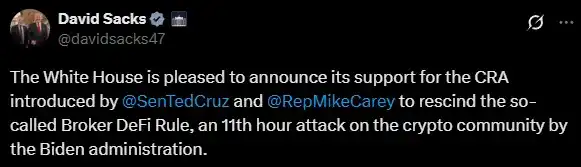
Former AI and Crypto Czar under Trump, David Sacks, bluntly referred to it as a “midnight regulation,” stating that it “will smother American innovation, raise privacy concerns, and impose unprecedented compliance burdens on American DeFi companies.”
Turning Point
The significance of repealing this rule goes far beyond minor tweaks to tax policy.
Under the Congressional Review Act that Congress used to repeal the rule, the IRS cannot issue a “substantially similar” rule without new congressional authorization. This not only halted the rule but created breathing room for developers and entrepreneurs who can now proceed with more certainty.
The resolution’s passage signifies that the crypto industry has finally achieved a long-sought goal: significant political capital in Washington.
Want more good news? This may just be the beginning. Treasury Secretary Scott Bessent stated at a recent White House summit on digital assets plans to “revoke and amend” related crypto tax rules.
Bipartisan and Industry Support
A key feature of this reversal is its bipartisan nature.
When Republicans and dozens of Democrats joined forces to overturn the rule of a Democratic administration, it revealed a shift in the political relevance of cryptocurrency and the notion that financial technology innovation deserves room to grow.
This marks a significant shift from the era of the Securities and Exchange Commission (SEC) under Gary Gensler's leadership, during which the Democratic Party leadership largely supported aggressive enforcement actions against crypto companies.
Even Senate Minority Leader Chuck Schumer broke ranks with the party leadership to support this measure, a political calculation that fully illustrates the increasing importance of cryptocurrency in elections.
Industry groups that were once hard to get recognition for have now become influential voices.
The Blockchain Association and DeFi Education Fund led proactive lobbying efforts, successfully reversing the Democratic Party's voting situation, ultimately garnering a majority of votes to overturn the veto. Their success demonstrates that cryptocurrency advocacy has rapidly matured, with their outreach to key legislators being very mature, focusing on specific policy issues rather than generic blockchain education.
When the Biden administration rolled out the rule, the Blockchain Association pledged to take "aggressive action." They did indeed deliver on that promise.
Now, four months after filing the lawsuit, the association is celebrating the repeal of the rule that threatened to end the US crypto industry.
Importantly, despite some influential Democrats opposing it, arguing that the resolution could lead to tax evasion, this victory has still been achieved.
Massachusetts Democratic Congressman Richard Neal had warned that this move could lead to the government losing $40 billion in tax revenue. This revenue estimate could be from unreported capital gains, and as crypto advocates push for further regulatory easing, this will remain a point of contention.
Global Positioning
The signing of this resolution has significantly altered the United States' position in the global competition for crypto dominance.
The contrast is stark. Just a few months ago, due to regulatory uncertainty, crypto companies were abandoning the US market.
Coinbase had prepared contingency plans to move overseas. Now, the Trump 2.0 government positioning the US as the "Crypto Capital of the World" campaign promise seems to be coming into effect.
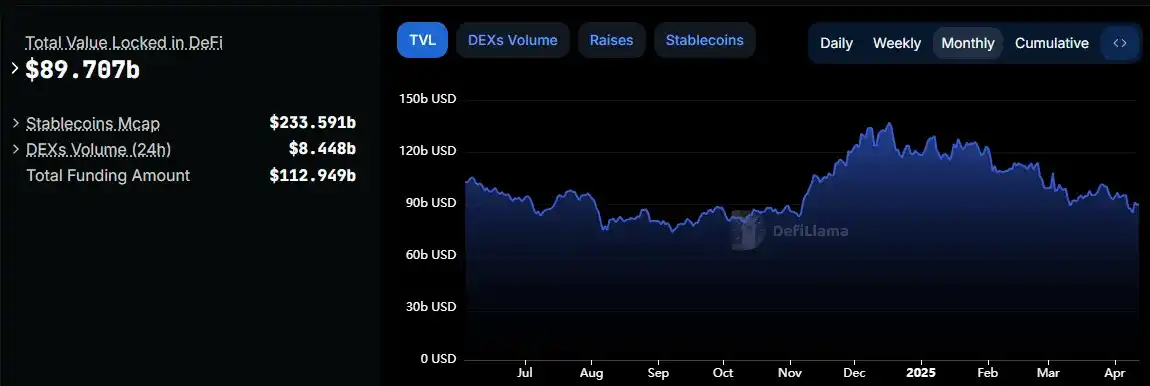
With the surge in global investment in DeFi—approximately $900 billion currently locked in protocols according to DeFiLlama—countries that create a friendly regulatory environment will reap significant economic benefits: high-skill job opportunities, legitimate tax revenue from operations, and technological leadership.
This resolution also sent a strong signal to regions and countries like Hong Kong, the UAE, and Japan positioning themselves as crypto-friendly alternatives.
For global crypto entrepreneurs and investors, Thursday's signing delivered a clear message: the U.S. is open for business.
The Middle Way
The resolution sparked a legitimate debate about the balance between innovation and tax compliance.
Critics, such as Texas Democratic Congressman Lloyd Doggett, argue that repealing the rule would create exploitable loopholes for wealthy investors.
This concern is not entirely unfounded.
The decentralized nature of DeFi protocols means that transactions occur without the record-keeping of traditional intermediaries. While the blockchain itself is transparent, associating wallet addresses with taxpayers is still challenging. Without some form of reporting mechanism, tax compliance heavily relies on voluntary disclosure.
Some policy experts have proposed a compromise – creating optional compliance frameworks that require certain disclosures in exchange for regulatory clarity. This "safe harbor" approach would allow DeFi protocols to operate legally while gradually introducing appropriate safeguards.
Our Take
Trump's signing of this resolution represents a breakthrough in addressing the core contradiction of crypto regulation, a contradiction that has plagued the industry from day one: the collision of an industrial-age regulatory framework with a digital-native financial system.
This victory demonstrates that Washington has finally recognized that forcing decentralized systems to fit within a centralized regulatory framework is a non-starter. Innovation needs appropriate guardrails, not retrofitted roadblocks.
This moment unveils a deeper layer of the U.S. regulatory philosophy. For decades, U.S. financial regulation has followed a pattern: innovation occurs, issues arise, regulation responds. The DeFi broker-dealer rules attempted pre-emptive regulation before fully understanding the natural evolution of the technology. Its failure shows that the U.S. is reverting to its traditional strength – allowing innovation to flourish while addressing specific issues as they arise.
Celebration should be tempered with pragmatism. The crypto industry faces a critical test of its credibility. Having now gained some regulatory breathing room, it must deliver real-world benefits beyond trader profits. Can DeFi significantly improve financial access? Will it lower transaction costs for everyday users? Can it create more efficient markets benefiting a broader economy?
The bipartisan nature of this victory is both an opportunity and a warning. While crypto has transcended partisan divides today, its support still hinges on demonstrating real-world utility. If the industry cannot move beyond speculation to solve actual problems, today's allies could become tomorrow's critics.
For global competitors who thought the U.S. had abandoned its leadership in digital asset innovation, this reversal is a wake-up call. The U.S. possesses unparalleled capital markets, technical talent, and regulatory flexibility—when these factors align, they create a powerful competitive advantage.
The road ahead remains challenging. The SEC's oversight of tokens, the CFTC's jurisdiction over derivatives, banks' concerns over stablecoins—these issues remain unresolved. However, this decision indicates that, in cases where broad ideological arguments often fall short, focused advocacy on specific technical issues can succeed with careful organization.
The window of innovation is now open. The industry must now collaborate with regulatory bodies to establish a framework that both protects consumers and drives genuine innovation. Thursday's signing indicates that both parties may be finally ready for such conversations.
You may also like
a16z Leads $18M Seed Round for Catena Labs, Crypto Industry Bets on Stablecoin AI Payment
Pharos, deeply integrated with AntChain, is about to launch. How can we get involved?
The End and Rebirth of NFTs: How the Meme Coin Craze Ended the PFP Era?
Key Market Intelligence on May 14th, how much did you miss out on?
1.Binance Alpha Launches HIPPO, BLUE, and Other Tokens
2.Believe Ecosystem Tokens See General Rise, LAUNCHCOIN Surges Over 250% in 24 Hours
3.Tiger Securities Introduces Cryptocurrency Deposit and Withdrawal Service, Supports Mainstream Cryptocurrencies such as BTC and ETH
4.Current Bitcoin Rally Possibly Driven by Institutions, Retail Traders Yet to Join
5.Binance Wallet's New TGE Privasea AI Participation Requires a 198 Point Threshold, with a Point Consumption of 15
Source: Overheard on CT (tg: @overheardonct), Kaito
PUMP: Today's discussions about PUMP focus on its new creator revenue-sharing model: the platform will allocate 50% of PumpSwap revenue to token creators, sparking varied reactions from users. Some criticize the move as insufficient or even misleading, while others view it as a positive step the platform is taking to reward creators. Meanwhile, PUMP faces market pressure from emerging competitors like LetsBONKfun and Raydium, which are rapidly gaining market share. Users also express concerns about PUMP's sustainability and potential regulatory risks in the U.S., with discussions extending to the platform's impact on the entire memecoin ecosystem.
COINBASE: Today, Coinbase became the first crypto company to join the S&P 500 Index, replacing Discover Financial Services, sparking widespread industry attention. The entire crypto community views this milestone as a significant development, signaling that crypto assets are further integrating into the mainstream financial system. The news has sparked lively discussions on Twitter, with many users pointing out that this may attract more institutional investors to enter the Bitcoin and other cryptocurrency markets.
XRP: XRP became the focal point of today's crypto discussion, with its significant market movements and strategic advances drawing attention. XRP has surpassed USDT to become the third-largest cryptocurrency by market capitalization, sparking market excitement and discussions about its future potential. The surge in market capitalization and price is believed to be related to increasing institutional interest, deepening strategic partnerships, and its role in the crypto ecosystem. Additionally, XRP's integration into multiple financial systems and its potential as a macro asset class are also seen as key factors driving the current market sentiment.
DYDX: Today's discussions about DYDX mainly focused on the dYdX Yapper Leaderboard launched by KaitoAI. The leaderboard aims to identify the most active community participants, with a total of $150,000 in rewards to be distributed over the first three seasons. This initiative has sparked broad community participation, with many users discussing the potential rewards and the incentive effect on the DYDX ecosystem. Meanwhile, progress on the ethDYDX to dYdX native chain migration and historical airdrop events have also been topics of discussion.
1. "What Is 'ICM'? Holding Up the $4 Billion Market Cap Solana's New Narrative"
Overnight, the hottest narrative in the crypto space has become "Internet Capital Markets," with a host of crypto projects and founders, led by the Solana ecosystem's new Launchpad platform Believe, releasing this phrase. Together with "Believe in something," it has become the new slogan heralding the onset of a bull market. What exactly is the so-called "Internet Capital Market," will it become a short-lived hype phrase like the Base ecosystem's previous Content Coin, and what related targets are available for selection?2.《LaunchCoin Surges 20x in One Day, How Did Believe Create a $200M Market Cap Shiba Inu After Going to Zero?|100x Retrospective》
LAUNCHCOIN broke through a $200 million market cap today, with the long-lost liquidity and such a high market cap "Memecoin" almost bringing half of the on-chain crypto community CT into the fray. The community is crazily discussing this token, with half of it being FOMO and the other half being FUD. This token, originally issued by Believe founder Ben Pasternak under his personal identity, transformed into a new platform token after a renaming. From once going to zero to a $200 million market cap, what happened in between?May 14 On-chain Fund Flow
Within 24 hours, GOONC's market cap soared to 70 million, could GOONC be the next billion-dollar dog on the Believe platform?
Bitcoin has broken $100,000, Ethereum has surpassed 2500, and is Solana's hot streak about to make a comeback?
The current market is in a state of macro euphoria, with GOONC riding the wave today, skyrocketing 10x in just a few hours, reaching a market cap of tens of millions of dollars, trading volume soaring past 50 million, and rumors swirling that the developer may be from OpenAI (unconfirmed but intriguing enough).
A ludicrous and absurd Solana meme that some actually buy into.
GOONC is a meme coin that has sprouted from the "gooning" subculture, offering no technological innovation or practical use, its sole function being speculation.
It takes inspiration from an NSFW term "gooning," which refers to a person being deeply immersed in certain content (you know what), eventually entering a nearly religious-like trance.
In Reddit (such as r/GOONED, r/GoonCaves) and some counterculture media outlets (such as MEL Magazine in 2020), "gooning" has gradually transitioned from an adult label to a meme-addicted, digital content and virtual self-indulgence synonym, arguably the epitome of Degen spirit.
GOONC is playing around with this concept, packaging the addictive nature, uselessness, and irony of gooning into a tradable financial product. The project team has made it clear: "We do not solve blockchain problems, we only trade absurdity." Blunt but oddly genuine.
GOONC launched on May 13, 2025, using the meme coin launch platform Believe App's LaunchCoin module on Solana. This tool is highly Degen: zero technical barriers, a few clicks to create a coin, perfect for projects like GOONC that can come up with ideas out of the blue.
The mastermind behind GOONC is also quite something and is the most talked-about, with KOL @basedalexandoor on X platform (alias "Pata van Goon") personally involved. His profile even caught the attention of Marc Andreessen, co-founder of a16z, making onlookers unable to resist speculating if GOONC has a hint of OpenAI lineage.
While this 'OpenAI Endorsement' is currently just community speculation, it is definitely a good card to play to fuel hype. Saying "we are pure speculation" on one hand, while tagging a few "AI + a16z" on the other.
GOONC took off as soon as it launched. After its launch on May 13, 2025, its market capitalization skyrocketed to $22 million within 4 hours, with a trading volume exceeding $25.6 million in 24 hours. According to platform data, the first day of trading saw an astonishing +41,100% surge, soaring from $0.0000001 to $0.02, becoming a "missed-the-boat" situation.
GOONC quickly formed an active trading community post-launch, with a lot of discussion and trading signals appearing on X platform (such as the 292x return signal provided by DeBot). Liquidity pools on exchanges like Raydium and Meteora grew rapidly, supporting high trading volumes and price increases.
The real climax occurred between May 13 and May 14, with the market cap rising to $5.5 million in the morning and directly surpassing $55 million in the afternoon. By the 14th, it briefly approached a $70 million market cap, with the trading volume soaring to $59 million. Some community members even posted screenshots claiming an increase of +85,000%, creating a new myth out of the ruins.
As of 1:30 pm on May 14, the price stabilized around $0.039, with a total market cap and FDV both around $39.6 million, and a 24-hour trading volume of $5.43 million. Active platforms include XT.COM, LBank, Meteora, and others.
Although there was a slight pullback from the peak ($0.07), the coin's popularity remains strong. For a coin that relies purely on "irony + community + X post" to thrive, this performance is already at a stellar level.
Currently, the background of the token's development team is not transparent, increasing the potential risk of a rug pull. Rugcheck.xyz warns that the creator of the GOONC contract may have permission to modify the contract (e.g., change fees or mint additional tokens), posing certain security risks.
Community members speculate that the meteoric rise of GOONC may be the "last hurrah".
How to Get Rich in Crypto Without Relying on Luck? Financial Veteran Raoul Pal's Macro Insights and Investment Path
Stablecoins Driving Global B2B Payment Innovation: How to Break Through Workflow Bottlenecks and Unlock Trillion-Dollar Market Potential?
These startups are building cutting-edge AI models without the need for a data center
Science Equity Movement: DeSci's Trillion-Dollar Knowledge Economy Reconstruction Revolution
Sentient In-Depth Research Report: Secures $85 Million in Funding to Build a Decentralized AGI New Paradigm
April 30th Market Key Intelligence, How Much Did You Miss?
Interview with Virtuals Co-Founder empty: AI Startups Don't Need a Lot of Funding, Crypto is One of the Answers
a16z Leads $25M Investment, 0xMiden to Run a Privacy Chain on Your Phone
Sui Q1 Advanced Report: The Rise of BTCfi Infrastructure, the Boom of Lending Protocols, and the Future of Rollup-Based Scalability
Gate.io MemeBox has officially integrated with the Solana ecosystem, providing lightning-fast on-chain asset trading.
Key Market Information Discrepancy on April 30th - A Must-Read! | Alpha Morning Report
Taking Stock of the Top 10 Emerging Launchpad Platforms: Who Will Succeed in Disrupting Pump.fun?
April 29th Market Key Insights, How Much Did You Miss?
a16z Leads $18M Seed Round for Catena Labs, Crypto Industry Bets on Stablecoin AI Payment
Pharos, deeply integrated with AntChain, is about to launch. How can we get involved?
The End and Rebirth of NFTs: How the Meme Coin Craze Ended the PFP Era?
Key Market Intelligence on May 14th, how much did you miss out on?
1.Binance Alpha Launches HIPPO, BLUE, and Other Tokens
2.Believe Ecosystem Tokens See General Rise, LAUNCHCOIN Surges Over 250% in 24 Hours
3.Tiger Securities Introduces Cryptocurrency Deposit and Withdrawal Service, Supports Mainstream Cryptocurrencies such as BTC and ETH
4.Current Bitcoin Rally Possibly Driven by Institutions, Retail Traders Yet to Join
5.Binance Wallet's New TGE Privasea AI Participation Requires a 198 Point Threshold, with a Point Consumption of 15
Source: Overheard on CT (tg: @overheardonct), Kaito
PUMP: Today's discussions about PUMP focus on its new creator revenue-sharing model: the platform will allocate 50% of PumpSwap revenue to token creators, sparking varied reactions from users. Some criticize the move as insufficient or even misleading, while others view it as a positive step the platform is taking to reward creators. Meanwhile, PUMP faces market pressure from emerging competitors like LetsBONKfun and Raydium, which are rapidly gaining market share. Users also express concerns about PUMP's sustainability and potential regulatory risks in the U.S., with discussions extending to the platform's impact on the entire memecoin ecosystem.
COINBASE: Today, Coinbase became the first crypto company to join the S&P 500 Index, replacing Discover Financial Services, sparking widespread industry attention. The entire crypto community views this milestone as a significant development, signaling that crypto assets are further integrating into the mainstream financial system. The news has sparked lively discussions on Twitter, with many users pointing out that this may attract more institutional investors to enter the Bitcoin and other cryptocurrency markets.
XRP: XRP became the focal point of today's crypto discussion, with its significant market movements and strategic advances drawing attention. XRP has surpassed USDT to become the third-largest cryptocurrency by market capitalization, sparking market excitement and discussions about its future potential. The surge in market capitalization and price is believed to be related to increasing institutional interest, deepening strategic partnerships, and its role in the crypto ecosystem. Additionally, XRP's integration into multiple financial systems and its potential as a macro asset class are also seen as key factors driving the current market sentiment.
DYDX: Today's discussions about DYDX mainly focused on the dYdX Yapper Leaderboard launched by KaitoAI. The leaderboard aims to identify the most active community participants, with a total of $150,000 in rewards to be distributed over the first three seasons. This initiative has sparked broad community participation, with many users discussing the potential rewards and the incentive effect on the DYDX ecosystem. Meanwhile, progress on the ethDYDX to dYdX native chain migration and historical airdrop events have also been topics of discussion.
1. "What Is 'ICM'? Holding Up the $4 Billion Market Cap Solana's New Narrative"
Overnight, the hottest narrative in the crypto space has become "Internet Capital Markets," with a host of crypto projects and founders, led by the Solana ecosystem's new Launchpad platform Believe, releasing this phrase. Together with "Believe in something," it has become the new slogan heralding the onset of a bull market. What exactly is the so-called "Internet Capital Market," will it become a short-lived hype phrase like the Base ecosystem's previous Content Coin, and what related targets are available for selection?2.《LaunchCoin Surges 20x in One Day, How Did Believe Create a $200M Market Cap Shiba Inu After Going to Zero?|100x Retrospective》
LAUNCHCOIN broke through a $200 million market cap today, with the long-lost liquidity and such a high market cap "Memecoin" almost bringing half of the on-chain crypto community CT into the fray. The community is crazily discussing this token, with half of it being FOMO and the other half being FUD. This token, originally issued by Believe founder Ben Pasternak under his personal identity, transformed into a new platform token after a renaming. From once going to zero to a $200 million market cap, what happened in between?May 14 On-chain Fund Flow
Within 24 hours, GOONC's market cap soared to 70 million, could GOONC be the next billion-dollar dog on the Believe platform?
Bitcoin has broken $100,000, Ethereum has surpassed 2500, and is Solana's hot streak about to make a comeback?
The current market is in a state of macro euphoria, with GOONC riding the wave today, skyrocketing 10x in just a few hours, reaching a market cap of tens of millions of dollars, trading volume soaring past 50 million, and rumors swirling that the developer may be from OpenAI (unconfirmed but intriguing enough).
A ludicrous and absurd Solana meme that some actually buy into.
GOONC is a meme coin that has sprouted from the "gooning" subculture, offering no technological innovation or practical use, its sole function being speculation.
It takes inspiration from an NSFW term "gooning," which refers to a person being deeply immersed in certain content (you know what), eventually entering a nearly religious-like trance.
In Reddit (such as r/GOONED, r/GoonCaves) and some counterculture media outlets (such as MEL Magazine in 2020), "gooning" has gradually transitioned from an adult label to a meme-addicted, digital content and virtual self-indulgence synonym, arguably the epitome of Degen spirit.
GOONC is playing around with this concept, packaging the addictive nature, uselessness, and irony of gooning into a tradable financial product. The project team has made it clear: "We do not solve blockchain problems, we only trade absurdity." Blunt but oddly genuine.
GOONC launched on May 13, 2025, using the meme coin launch platform Believe App's LaunchCoin module on Solana. This tool is highly Degen: zero technical barriers, a few clicks to create a coin, perfect for projects like GOONC that can come up with ideas out of the blue.
The mastermind behind GOONC is also quite something and is the most talked-about, with KOL @basedalexandoor on X platform (alias "Pata van Goon") personally involved. His profile even caught the attention of Marc Andreessen, co-founder of a16z, making onlookers unable to resist speculating if GOONC has a hint of OpenAI lineage.
While this 'OpenAI Endorsement' is currently just community speculation, it is definitely a good card to play to fuel hype. Saying "we are pure speculation" on one hand, while tagging a few "AI + a16z" on the other.
GOONC took off as soon as it launched. After its launch on May 13, 2025, its market capitalization skyrocketed to $22 million within 4 hours, with a trading volume exceeding $25.6 million in 24 hours. According to platform data, the first day of trading saw an astonishing +41,100% surge, soaring from $0.0000001 to $0.02, becoming a "missed-the-boat" situation.
GOONC quickly formed an active trading community post-launch, with a lot of discussion and trading signals appearing on X platform (such as the 292x return signal provided by DeBot). Liquidity pools on exchanges like Raydium and Meteora grew rapidly, supporting high trading volumes and price increases.
The real climax occurred between May 13 and May 14, with the market cap rising to $5.5 million in the morning and directly surpassing $55 million in the afternoon. By the 14th, it briefly approached a $70 million market cap, with the trading volume soaring to $59 million. Some community members even posted screenshots claiming an increase of +85,000%, creating a new myth out of the ruins.
As of 1:30 pm on May 14, the price stabilized around $0.039, with a total market cap and FDV both around $39.6 million, and a 24-hour trading volume of $5.43 million. Active platforms include XT.COM, LBank, Meteora, and others.
Although there was a slight pullback from the peak ($0.07), the coin's popularity remains strong. For a coin that relies purely on "irony + community + X post" to thrive, this performance is already at a stellar level.
Currently, the background of the token's development team is not transparent, increasing the potential risk of a rug pull. Rugcheck.xyz warns that the creator of the GOONC contract may have permission to modify the contract (e.g., change fees or mint additional tokens), posing certain security risks.
Community members speculate that the meteoric rise of GOONC may be the "last hurrah".
How to Get Rich in Crypto Without Relying on Luck? Financial Veteran Raoul Pal's Macro Insights and Investment Path
Popular coins
Latest Crypto News


Customer Support:@weikecs
Business Cooperation:@weikecs
Quant Trading & MM:bd@weex.com
VIP Services:support@weex.com
 App
App