
- Buy Crypto
- Markets
- Futures
- Spot
- Copy Trade
 WE-Launch
Interview with the Managing Director of CCCC and the Head of Greater China at Bybit: How Crypto Content Creator Campus is Reshaping the Crypto Creator Ecosystem

In the ongoing journey of the crypto industry towards mass adoption, 'content' has become a key gateway connecting users to the world. Especially with the proliferation of AI tools and the evolution of platform mechanisms, the creator community is expanding at an unprecedented pace, but the crypto content ecosystem is still far from mature.
In such a dynamic yet noisy era, the Crypto Content Creator Campus (referred to as CCCC), supported by Bybit, has emerged. It is not only an educational initiative aimed at creators but also a systematic response to industry content quality, creation mechanisms, and long-term value.
CCCC will launch its first Asia-Pacific Content Creator Conference in Bali from April 10 to 13, 2025. Set against a lush tropical backdrop, this event will bring together 150 talented creators to participate in a two-day immersive program, including keynote speeches, expert roundtables, a content creator competition, and celebrity forums. Participants will delve into discussions on creator growth, user engagement, monetization strategies, and the development trends in Web3 content.
In this exclusive interview, BlockBeats spoke with CCCC's Managing Director, Phoebe Peng, and Bybit's Greater China Regional Head, Martin, discussing the background of the CCCC Bali event, key challenges in the content creation ecosystem, and the role of trading platforms in the new content era. The conversation covers observations on creation trends, thoughts on platform responsibilities, and proposes a specific path for crypto content to shift from 'fast food' to 'nutritious' content. CCCC is an experiment and a paradigm shift in the making.
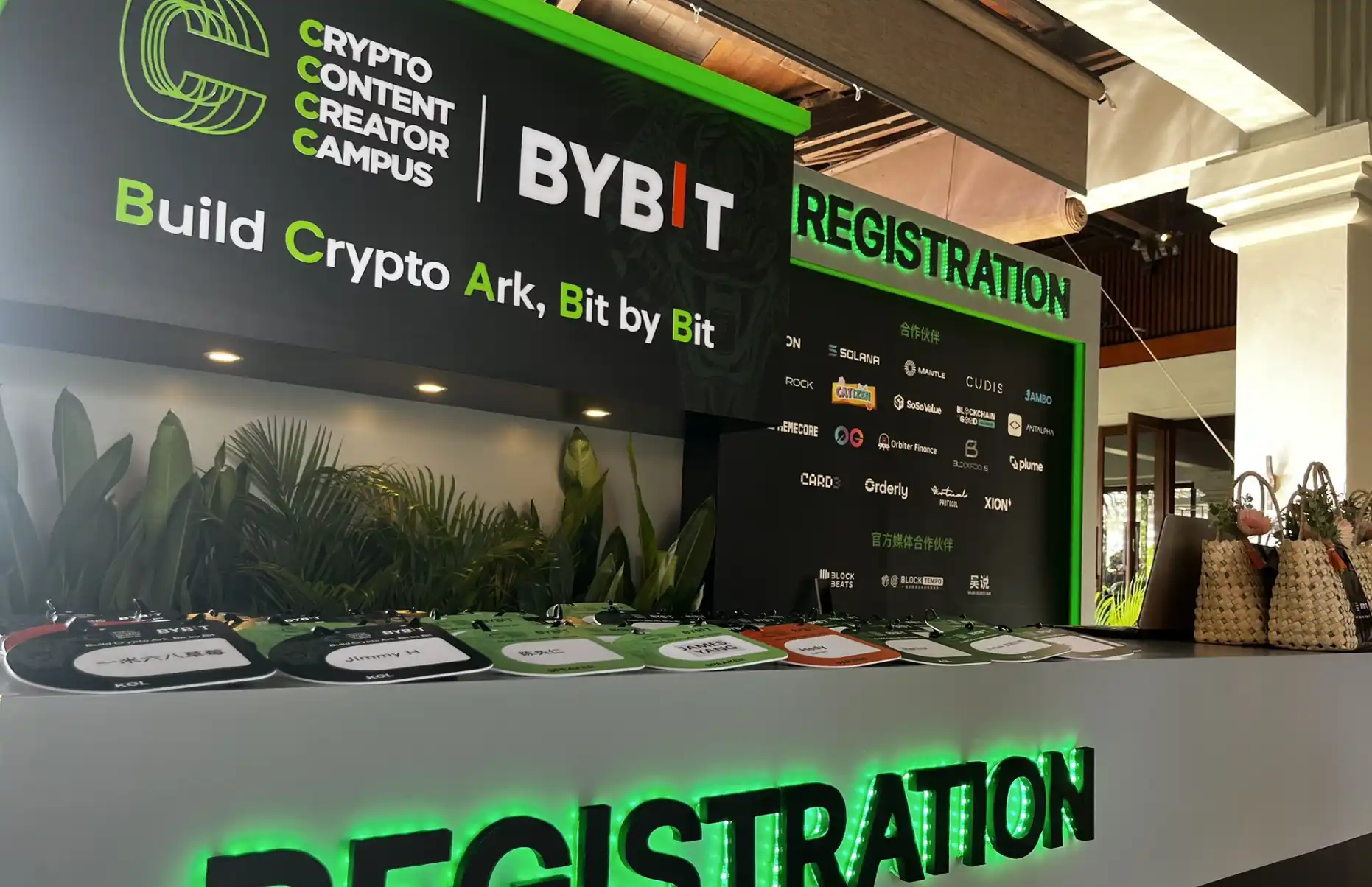
Below is the full interview:
BlockBeats: Please give a brief self-introduction.
Martin: Hello, everyone. I'm Martin, mainly responsible for Bybit's Greater China and Malaysia business. I have been with Bybit for almost six years, accompanying the founder and the team since the early stages of the startup until today.
Phoebe: I'm Phoebe. I entered the crypto industry at the end of 2021 and am currently leading the advancement of CCCC (Campus Crypto Creator Camp). In November 2024, we organized the first CCCC conference in Dubai. I was responsible for overseeing the conference design from scratch, signing keynote speakers, and inviting sponsorships.
BlockBeats: Before we delve into today's topic, let's talk about the Bybit hack incident. As one of the most serious security incidents in the cryptocurrency industry in recent years, this attack undoubtedly posed a challenge to user trust and brand image. However, Bybit's swift response also earned industry recognition. As the Head of Greater China, how do you view the impact of this incident on brand trust and user relationships?
Martin: This incident was indeed a significant challenge for us, as seen by many media outlets using headlines like "largest amount stolen in human history". The impact was substantial. However, I want to emphasize that it also showcased our responsiveness and strengths as a leading trading platform.
Following the event, we promptly pledged to safeguard all users' withdrawals, enhanced trust through a 1:1 reserve fund mechanism, and maintained full transparency throughout. Our CEO continued to voice updates on Twitter, with many users getting real-time updates primarily through his tweets rather than internal notifications. This approach further instilled trust and recognition in us as a platform worthy of trust.
Subsequently, in March, our funds shifted from net outflows to net inflows, and trading volumes gradually recovered. Currently, we are approaching the industry's second position in both futures and spot trading. It is evident that as panic subsided, users chose us.
Moreover, this incident became a significant showcase of our technological prowess and risk management capabilities. Post-incident, we held numerous AMAs, Twitter Spaces, and media interviews across various global markets in multiple languages, actively engaging with users worldwide, providing real-time updates on our response progress and data. Through this mechanism, we not only retained existing users but also attracted security-conscious new users. Particularly in the Chinese-speaking community, we received much positive feedback, with several key opinion leaders (KOLs) voluntarily voicing support, igniting a new wave of growth. I believe this adaptability and user trust are our true competitive advantages in the Web3 industry.
Gathering in Bali, Focusing on Crypto Content Creation
BlockBeats: Returning to our topic, can you introduce Crypto Content Creator Campus (CCCC) to everyone? What is its core objective?
Phoebe: Before discussing what CCCC is, I'd like to address why Bybit launched such a project and why I decided to join, even actively driving its implementation. Behind this, there's a broader context—we've entered the "creator age" in both the cryptocurrency and traditional industries.
Especially in 2023, the explosion of various AI tools has completely changed the threshold for creation. From ChatGPT to the popularization of image, music, and video generation tools, more and more people can easily become creators. At the same time, the mechanisms of platforms like YouTube, Bilibili, TikTok, Xiaohongshu, etc., are continuously evolving towards the "individual as a brand" direction, greatly promoting the rise of individual creation.
In this trend, the Crypto industry has naturally seen the emergence of a large number of outstanding content creators. However, we have also seen a clear problem: the creative ecosystem of this industry is still far from mature, and the supporting systems are relatively weak. Whether it's content quality, visual style, tool support, or a systematic path for skill enhancement, everything is still not well developed.
In comparison, the creation system of Web2 is already very mature, forming a complete chain from content style, production process to talent development. In this regard, Web3 is still in its early stages, and the growth of content creators relies more on exploration, lacking platform-led guidance and long-term support.
Therefore, the emergence of CCCC can be said to be inevitable. Even if it were not initiated by Bybit, I believe there would definitely be other organizations willing to take responsibility for the industry to build similar organizations or platforms to provide systematic support for creators in the crypto field.
CCCC stands for Crypto Content Creator Campus, and as the name implies, its core is "education." Currently, our educational content mainly includes two directions:
First, by organizing offline conferences to provide creators with high-density learning and networking opportunities. For example, in November 2023, we held a global creators' conference in Dubai, inviting senior executives from major internet platforms and well-known content creators from Web2 and Web3. Through several days of workshops and sharing sessions, we helped participants understand core skills such as platform algorithms, content planning, and brand building.
Second, is the "KOL Incubation Academy" that we launched at the end of last year. This is a longer-term growth-oriented plan for creators looking to deepen their content careers. We invited outstanding teachers from the community to serve as mentors (also known as KOL Coaches), conducted open applications, engaged in two-way selection with students, and provided content guidance, strategy support, and brand assistance, forming a sustainable learning community.
Through these two paths, we hope that on the one hand, content creators can quickly establish awareness of the industry, and on the other hand, they can continuously receive experiences and resources from the community, avoiding the misconception of falling into the trap of "creating content just for the sake of traffic", such as over-reliance on extreme content like adult content, gambling, drugs, etc., to attract attention.
CCCC is a platform established for the long-term development of the industry. Its goal is not short-term traffic, but to build an ecosystem that is deep, systematic, and allows truly excellent creators to be seen.
BlockBeats: What were Bybit's expectations and core ideas for this event?
Martin: The original intention of hosting this event was to encourage more KOLs to participate in content creation, learn together, and jointly build this industry.
However, after the hack incident, some things changed. We are very grateful to those KOLs and community partners who spoke out for us in a timely manner. They not only provided support in public opinion, but many project teams also actively assisted us in recovering funds, tracking the hacker, and providing substantial help.
Therefore, this event later also incorporated a theme of "gratitude" to express our thanks to the teams, KOLs, and project teams who lent a helping hand at a critical moment.
At the same time, we also hope that through this event, we can further promote communication among content creators, focusing on how to improve content quality rather than disseminating invalid or low-quality information. We hope that this will be a positive organization and cooperation platform where all participants can grow together.
Phoebe: This event in Bali has a special background. It is exclusively sponsored by Bybit, and compared to last year's industry conference in Dubai, this event is more focused on Bybit itself.
Last year in Dubai, our conference was industry-wide, with Bybit being just one of many sponsors. We also invited several exchanges such as OKEx, Gate.io, and Bitget as important partners, with OKEx and Aptos even co-naming with us. Overall, it was a more neutral, open event that truly served the industry.
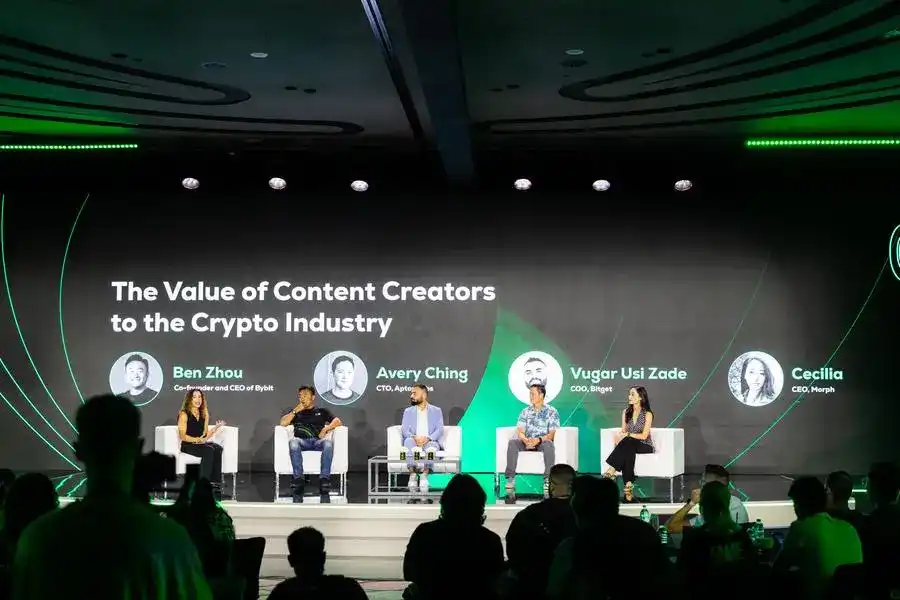
However, this year, although we will also organize an industry-wide conference in Lisbon, the event in Bali is fully led by Bybit. Therefore, in the planning process, we will pay more attention to Bybit's perspective and demands, and this is also the first time CCCC and Bybit are presented externally in a co-branded form.
So, what are Bybit's core demands? I think there are two points:
Firstly, this is Bybit's first major empowerment event aimed at the Chinese-language creator community. In the past, Bybit did not specifically hold similar content education projects for the Chinese community. This time, through CCCC, we hope to bring some truly valuable knowledge and support to the Chinese KOLs (content creators) who have been with Bybit for a long time.
Secondly, this is a "Gratitude and Giving Back" event. Bybit's development cannot be separated from these early content creators who have been with us every step of the way. From the early days of the platform to today, they have consistently contributed content and delivered value. Bybit's CEO, Ben, has always emphasized that he will not forget those who were the earliest supporters of Bybit. So, this event is not just a simple conference; rather, it aims to help these creators go further through education and long-term capacity building.
Therefore, CCCC Bali has a special meaning to me. It is completely different from last year's industry conference in Dubai. This is my first time interacting with the Chinese-language KOL community, and the first time organizing an event by invitation only. I hope to bring something truly valuable to Chinese creators, hoping that after participating, they can make transformations and breakthroughs in their actual creative work.
This is also why we have set up the "Graphic, Video, Music" three major tracks. Many creators are already proficient in a certain field, such as being skilled at Twitter graphics, but we hope they can explore other types of creative approaches to expand their boundaries. So, we have invited music moguls like Hanjin and Gao Kaiwei, who have already achieved "breaking the circle," to share their creative methods and inspire attendees with real-life examples.
Aside from the creative inspiration, what I am looking forward to the most is their upgrade at the "tools" level. For example, the teachers in the music track will introduce some tools suitable for beginners, especially how AI tools can help them reduce costs and increase efficiency. Teacher Hanjin himself is one of the earliest adopters of NFT and AI tools in the music industry, and he is personally involved in planning the content of this competition. Through sharing these experiences, I hope that people who are only good at text or graphic creation will have the ability to move towards more diverse forms such as video or music.
How to Create Content and Build a Brand?
BlockBeats: As the person in charge of CCCC, how do you view the overall ecosystem of crypto content creation? What are the pain points and opportunities?
Phoebe: In fact, I have just mentioned some aspects of the current state of the crypto content creation ecosystem. We can see that more and more people are entering the crypto industry, and correspondingly, the number of crypto content creators is also growing. At the same time, crypto projects themselves rely heavily on marketing, and content is precisely one of the most important channels of dissemination. So, overall, this ecosystem is expanding continuously, and creative activities are becoming more active.
However, behind this "prosperity," we also see significant issues. Firstly, there is content overload. Although information is being generated rapidly, and hot topics emerge frequently, most content leans towards being quick and superficial, focused on hype and breaking news, lacking critical thinking and constructive elements, and notably, lacking systematization. This has led to a paradox: as content multiplies, the cognitive gap widens. Especially for new users, much of the content lacks direction, appearing lively but making it difficult to truly understand the crypto world, causing them to feel restless and not knowing where to start.
The second challenge lies in the disconnect between content quality and incentive mechanisms. We can see that some content producers truly adhere to long-termism and serious creation, but they often do not have the advantage of traffic, nor can they necessarily receive reasonable rewards. Instead, it is the content that caters to hot topics and chases after traffic that is more likely to attract attention. This phenomenon not only exists in the crypto industry but is a problem throughout the entire content ecosystem. However, for creators, this misalignment of incentives can greatly undermine their enthusiasm.
The third challenge lies in language differences. We can clearly feel that there is a gap between the English-speaking and Chinese-speaking regions in terms of content quality, expression, and production finesse. Even though we have gathered 150 top Chinese-speaking KOLs this time, when I compare their social media content with that of top overseas creators, the gap is still evident, especially in terms of systematicity and depth of content.
Behind this actually reveals a larger issue, the imbalance of language resources. High-quality content still predominantly exists in the English-speaking context, while Chinese and other smaller language content is relatively scarce. This makes it difficult for many local users to access information, and also affects the popularization and deepening of the crypto ecosystem.
In response to these challenges, I hope that CCCC can gradually advance targeted solutions. For example, promoting critical, constructive, and long-term-oriented content creation; exploring a more equitable and reasonable incentive mechanism model to truly allow high-quality creators to receive the rewards they deserve; on the language dimension, no longer limiting to English, but encouraging the growth of localized content. Last year, when we were incubating projects, we began to explore a multilingual layout, collaborating with top creators from different language regions, allowing them to output high-quality content in their respective cultural contexts.
If Web3 wants to achieve true mass adoption, it should not only serve a small group of highly educated, English-proficient users but should promote language localization and structural optimization of content. Only in this way can the crypto content ecosystem possibly mature and truly serve a broader audience.
BlockBeats: What qualities or abilities does CCCC value most when choosing incubation coaches?
Phoebe: When we choose a coach, we highly value whether they possess altruism. Because our CCCC is a nonprofit organization, the teachers on the platform volunteer to teach without charging student fees, and we do not pay them. Therefore, teachers willing to join must genuinely do so out of love and a sense of responsibility for the industry, willing to dedicate their time, energy, and knowledge to help others. This long-termism and public awareness are our primary criteria.
Secondly, the Coach must demonstrate professionalism and constructiveness in their field. If they are involved in video content creation, we will closely evaluate their YouTube presence, including content depth, delivery style, audience feedback, etc., to ensure they can provide valuable knowledge input.
Lastly, we hope the Coach is willing to collaborate with us in content creation. We will clearly categorize the courses, define the teaching direction and target audience, and assist them in selecting suitable tools and methods. Therefore, individuals willing to cooperate in content system development and collectively enhance course quality will be our priority choice.
BlockBeats: In your opinion, what role should a trading platform brand play in the Web3 content ecosystem? Should it be a platform, advocate, or deeply engaged participant?
Martin: Currently, we have built our own live streaming system within the platform. When users engage in our AMAs or Twitter Spaces, they can directly watch the video on Twitter. If I remember correctly, we may be the only project that synchronously provides video live streaming in Twitter Spaces, as other platforms' live streams are mainly limited to their own in-app experiences.
I believe this is a highlight of our platform in terms of user experience. Moving forward, in addition to continuing to focus on Twitter and Telegram, we are also advancing the development of our proprietary content platform, such as our blog and community space, similar to other projects' content hubs or forums.
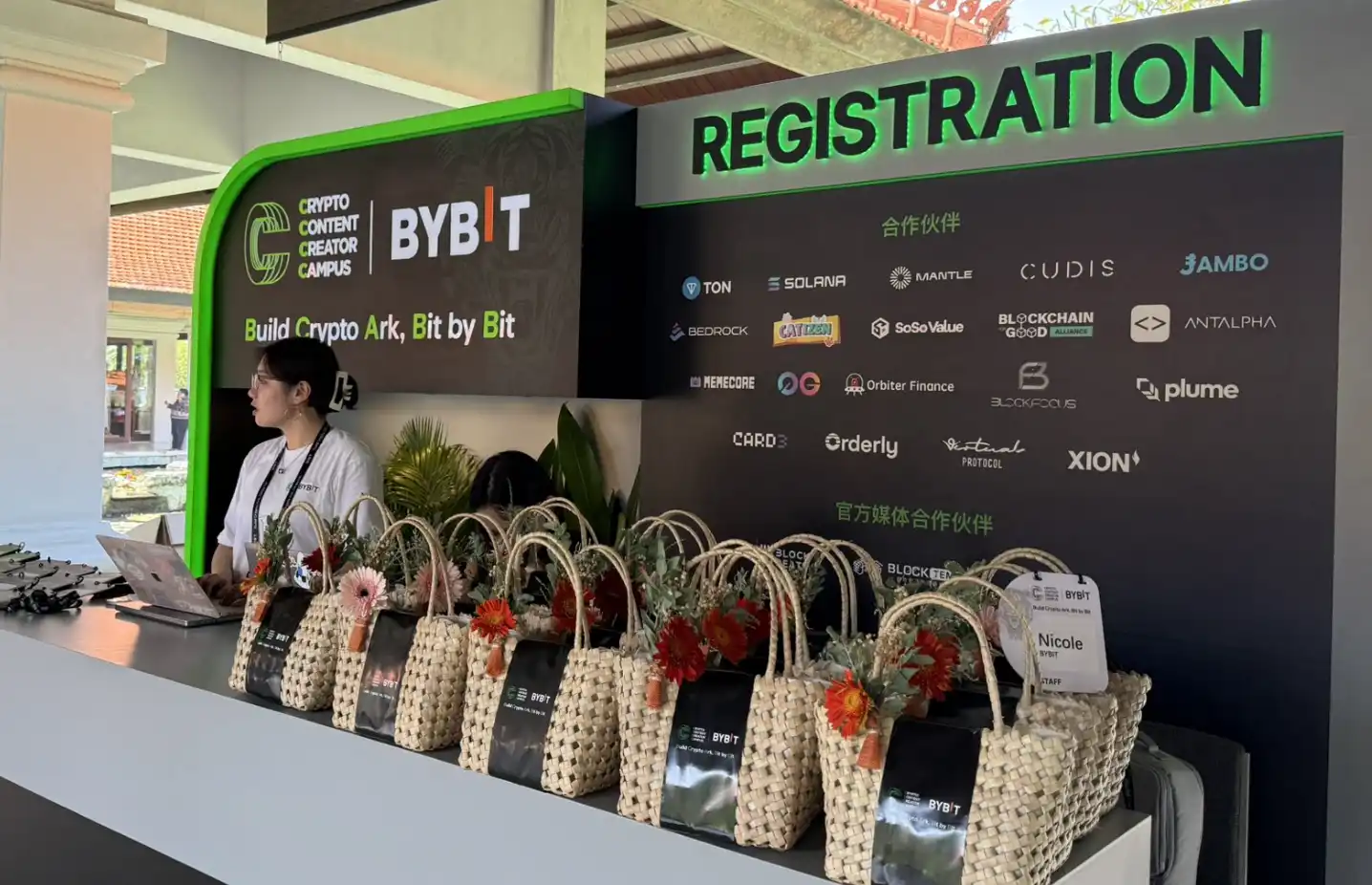
We aim to attract more high-quality content creators through these platforms, encouraging them to engage in long-term creation within our ecosystem. Simultaneously, we will provide more exposure and promotion to outstanding content, helping creators expand their influence, ensuring good content is seen by more users and retained.
How Can Cryptocurrency Content Creators Monetize Their Content?
BlockBeats: In the current market environment, creators generally face issues such as traffic anxiety and limited monetization models. How will CCCC jointly build a sustainable content business ecosystem?
Phoebe: Towards the end of last year when discussing thematic directions, we initiated preliminary thoughts around "How can content creators monetize." We outlined several typical paths. While the specific areas where CCCC will focus its efforts are still under discussion, these ideas provide a reference framework.
From an individual perspective, the most basic monetization method is to leverage the platform's advertising mechanism, such as YouTube, to earn advertising revenue through content traffic. This falls under the monetization path of brand-type creators.
In the Web3 field, monetization methods are more diverse. Creators can earn rewards by accepting project commissions to publish content, or they can join professional media platforms as contributors to receive stable compensation. In addition, some influential creators may be invited to serve as project advisors or mentors, or even organize a KOL network to integrate content resources and engage in higher-level commercial operations.
As influence further expands and with active community support, communities may spontaneously develop various "native gameplay" activities. For example, creating content assets through issuing memes, NFT emojis, and other forms, which may become new monetization channels. These monetization methods are more characteristic of Web3, emphasizing community co-creation and decentralized value extension.
Moving to a higher stage involves transitioning from a creator to an entrepreneur or product lead. Whether launching physical products or creating digital products or services, these are mature paths to transform influence into business value.
These are our current phased thoughts on "how content can be monetized". This year, we will further delve into this topic in Lisbon and attempt to build a system to support content creators' monetization. It is currently in the exploration phase, and specific execution plans have not yet been implemented.
BlockBeats: What advice do you have for young creators and independent KOLs who want to enter the encrypted content creation field? What future resource support can CCCC and Bybit provide?
Phoebe: I think the most important point is that you must truly love content creation itself. If I could give you one piece of advice, I would say: make sure you genuinely enjoy creating and identify with the values of the crypto industry. Only then can you persist even without traffic, proactively learn, continuously improve, and find your own way of expression.
If you love creating, enjoy the process of refining content, then you will naturally seek out more tools, participate in CCCC conferences, meet other creators, expand your horizons continuously, and eventually grow into a content producer who can bring long-term value to the industry.
The crypto industry experiences bull and bear cycles. In a bull market, both project teams and content creators are likely to quickly monetize and receive positive feedback; however, in a bear market, these rewards may become scarce. It is for this reason that we hope creators act out of love, rather than being driven by short-term incentives.
Whether you are a newcomer who has just entered the industry or an established influencer, it is worth reminding yourself at all times: why did you choose to create content in the first place, and what do you hope to leave behind for this industry.
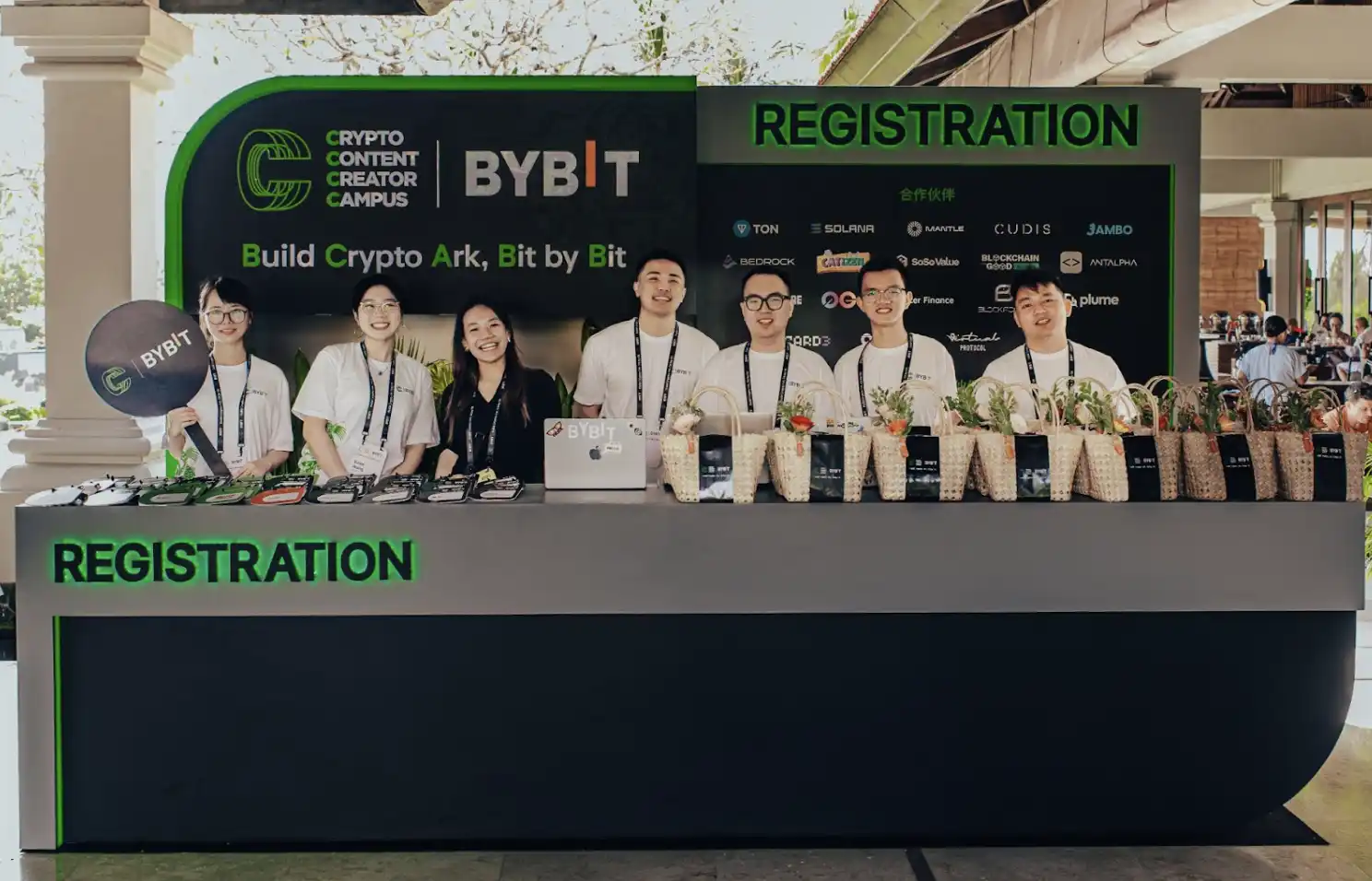
Martin: In addition to the content interaction platform, we also plan to launch a feature similar to a "Square" for friendly businesses, accompanied by the release of bounty tasks. After creators publish relevant content, they will not only receive basic rewards, but we will also launch a points mall in the future where users can exchange points for different benefits. Currently, this part is still in the design phase.
We not only encourage content creation but also hope to help more people enter the industry in a better way through this method. You just mentioned that you hope to earn additional income through content creation, but the path to enter this industry is much more than just this one.
For example, if you are interested in community management, you can join our official ambassador program to accompany users in the community and provide support. We also have various roles suitable for people with different skill backgrounds to participate. The key is to enter the industry first to have the opportunity to find a position that suits you.
Everyone sees different opportunities, and the path that suits others may not necessarily suit you. The most important thing is to get involved first, understand how this industry operates, find your own pace and direction, and naturally discover a monetization method that suits you, expanding your sources of income.
You may also like

a16z Leads $18M Seed Round for Catena Labs, Crypto Industry Bets on Stablecoin AI Payment
Pharos, deeply integrated with AntChain, is about to launch. How can we get involved?
The End and Rebirth of NFTs: How the Meme Coin Craze Ended the PFP Era?
Key Market Intelligence on May 14th, how much did you miss out on?
1.Binance Alpha Launches HIPPO, BLUE, and Other Tokens
2.Believe Ecosystem Tokens See General Rise, LAUNCHCOIN Surges Over 250% in 24 Hours
3.Tiger Securities Introduces Cryptocurrency Deposit and Withdrawal Service, Supports Mainstream Cryptocurrencies such as BTC and ETH
4.Current Bitcoin Rally Possibly Driven by Institutions, Retail Traders Yet to Join
5.Binance Wallet's New TGE Privasea AI Participation Requires a 198 Point Threshold, with a Point Consumption of 15
Source: Overheard on CT (tg: @overheardonct), Kaito
PUMP: Today's discussions about PUMP focus on its new creator revenue-sharing model: the platform will allocate 50% of PumpSwap revenue to token creators, sparking varied reactions from users. Some criticize the move as insufficient or even misleading, while others view it as a positive step the platform is taking to reward creators. Meanwhile, PUMP faces market pressure from emerging competitors like LetsBONKfun and Raydium, which are rapidly gaining market share. Users also express concerns about PUMP's sustainability and potential regulatory risks in the U.S., with discussions extending to the platform's impact on the entire memecoin ecosystem.
COINBASE: Today, Coinbase became the first crypto company to join the S&P 500 Index, replacing Discover Financial Services, sparking widespread industry attention. The entire crypto community views this milestone as a significant development, signaling that crypto assets are further integrating into the mainstream financial system. The news has sparked lively discussions on Twitter, with many users pointing out that this may attract more institutional investors to enter the Bitcoin and other cryptocurrency markets.
XRP: XRP became the focal point of today's crypto discussion, with its significant market movements and strategic advances drawing attention. XRP has surpassed USDT to become the third-largest cryptocurrency by market capitalization, sparking market excitement and discussions about its future potential. The surge in market capitalization and price is believed to be related to increasing institutional interest, deepening strategic partnerships, and its role in the crypto ecosystem. Additionally, XRP's integration into multiple financial systems and its potential as a macro asset class are also seen as key factors driving the current market sentiment.
DYDX: Today's discussions about DYDX mainly focused on the dYdX Yapper Leaderboard launched by KaitoAI. The leaderboard aims to identify the most active community participants, with a total of $150,000 in rewards to be distributed over the first three seasons. This initiative has sparked broad community participation, with many users discussing the potential rewards and the incentive effect on the DYDX ecosystem. Meanwhile, progress on the ethDYDX to dYdX native chain migration and historical airdrop events have also been topics of discussion.
1. "What Is 'ICM'? Holding Up the $4 Billion Market Cap Solana's New Narrative"
Overnight, the hottest narrative in the crypto space has become "Internet Capital Markets," with a host of crypto projects and founders, led by the Solana ecosystem's new Launchpad platform Believe, releasing this phrase. Together with "Believe in something," it has become the new slogan heralding the onset of a bull market. What exactly is the so-called "Internet Capital Market," will it become a short-lived hype phrase like the Base ecosystem's previous Content Coin, and what related targets are available for selection?2.《LaunchCoin Surges 20x in One Day, How Did Believe Create a $200M Market Cap Shiba Inu After Going to Zero?|100x Retrospective》
LAUNCHCOIN broke through a $200 million market cap today, with the long-lost liquidity and such a high market cap "Memecoin" almost bringing half of the on-chain crypto community CT into the fray. The community is crazily discussing this token, with half of it being FOMO and the other half being FUD. This token, originally issued by Believe founder Ben Pasternak under his personal identity, transformed into a new platform token after a renaming. From once going to zero to a $200 million market cap, what happened in between?May 14 On-chain Fund Flow
Within 24 hours, GOONC's market cap soared to 70 million, could GOONC be the next billion-dollar dog on the Believe platform?
Bitcoin has broken $100,000, Ethereum has surpassed 2500, and is Solana's hot streak about to make a comeback?
The current market is in a state of macro euphoria, with GOONC riding the wave today, skyrocketing 10x in just a few hours, reaching a market cap of tens of millions of dollars, trading volume soaring past 50 million, and rumors swirling that the developer may be from OpenAI (unconfirmed but intriguing enough).
A ludicrous and absurd Solana meme that some actually buy into.
GOONC is a meme coin that has sprouted from the "gooning" subculture, offering no technological innovation or practical use, its sole function being speculation.
It takes inspiration from an NSFW term "gooning," which refers to a person being deeply immersed in certain content (you know what), eventually entering a nearly religious-like trance.
In Reddit (such as r/GOONED, r/GoonCaves) and some counterculture media outlets (such as MEL Magazine in 2020), "gooning" has gradually transitioned from an adult label to a meme-addicted, digital content and virtual self-indulgence synonym, arguably the epitome of Degen spirit.
GOONC is playing around with this concept, packaging the addictive nature, uselessness, and irony of gooning into a tradable financial product. The project team has made it clear: "We do not solve blockchain problems, we only trade absurdity." Blunt but oddly genuine.
GOONC launched on May 13, 2025, using the meme coin launch platform Believe App's LaunchCoin module on Solana. This tool is highly Degen: zero technical barriers, a few clicks to create a coin, perfect for projects like GOONC that can come up with ideas out of the blue.
The mastermind behind GOONC is also quite something and is the most talked-about, with KOL @basedalexandoor on X platform (alias "Pata van Goon") personally involved. His profile even caught the attention of Marc Andreessen, co-founder of a16z, making onlookers unable to resist speculating if GOONC has a hint of OpenAI lineage.
While this 'OpenAI Endorsement' is currently just community speculation, it is definitely a good card to play to fuel hype. Saying "we are pure speculation" on one hand, while tagging a few "AI + a16z" on the other.
GOONC took off as soon as it launched. After its launch on May 13, 2025, its market capitalization skyrocketed to $22 million within 4 hours, with a trading volume exceeding $25.6 million in 24 hours. According to platform data, the first day of trading saw an astonishing +41,100% surge, soaring from $0.0000001 to $0.02, becoming a "missed-the-boat" situation.
GOONC quickly formed an active trading community post-launch, with a lot of discussion and trading signals appearing on X platform (such as the 292x return signal provided by DeBot). Liquidity pools on exchanges like Raydium and Meteora grew rapidly, supporting high trading volumes and price increases.
The real climax occurred between May 13 and May 14, with the market cap rising to $5.5 million in the morning and directly surpassing $55 million in the afternoon. By the 14th, it briefly approached a $70 million market cap, with the trading volume soaring to $59 million. Some community members even posted screenshots claiming an increase of +85,000%, creating a new myth out of the ruins.
As of 1:30 pm on May 14, the price stabilized around $0.039, with a total market cap and FDV both around $39.6 million, and a 24-hour trading volume of $5.43 million. Active platforms include XT.COM, LBank, Meteora, and others.
Although there was a slight pullback from the peak ($0.07), the coin's popularity remains strong. For a coin that relies purely on "irony + community + X post" to thrive, this performance is already at a stellar level.
Currently, the background of the token's development team is not transparent, increasing the potential risk of a rug pull. Rugcheck.xyz warns that the creator of the GOONC contract may have permission to modify the contract (e.g., change fees or mint additional tokens), posing certain security risks.
Community members speculate that the meteoric rise of GOONC may be the "last hurrah".
How to Get Rich in Crypto Without Relying on Luck? Financial Veteran Raoul Pal's Macro Insights and Investment Path
Stablecoins Driving Global B2B Payment Innovation: How to Break Through Workflow Bottlenecks and Unlock Trillion-Dollar Market Potential?
These startups are building cutting-edge AI models without the need for a data center
Science Equity Movement: DeSci's Trillion-Dollar Knowledge Economy Reconstruction Revolution
Sentient In-Depth Research Report: Secures $85 Million in Funding to Build a Decentralized AGI New Paradigm
April 30th Market Key Intelligence, How Much Did You Miss?
Interview with Virtuals Co-Founder empty: AI Startups Don't Need a Lot of Funding, Crypto is One of the Answers
a16z Leads $25M Investment, 0xMiden to Run a Privacy Chain on Your Phone
Sui Q1 Advanced Report: The Rise of BTCfi Infrastructure, the Boom of Lending Protocols, and the Future of Rollup-Based Scalability
Gate.io MemeBox has officially integrated with the Solana ecosystem, providing lightning-fast on-chain asset trading.
Key Market Information Discrepancy on April 30th - A Must-Read! | Alpha Morning Report
Taking Stock of the Top 10 Emerging Launchpad Platforms: Who Will Succeed in Disrupting Pump.fun?
April 29th Market Key Insights, How Much Did You Miss?
a16z Leads $18M Seed Round for Catena Labs, Crypto Industry Bets on Stablecoin AI Payment
Pharos, deeply integrated with AntChain, is about to launch. How can we get involved?
The End and Rebirth of NFTs: How the Meme Coin Craze Ended the PFP Era?
Key Market Intelligence on May 14th, how much did you miss out on?
1.Binance Alpha Launches HIPPO, BLUE, and Other Tokens
2.Believe Ecosystem Tokens See General Rise, LAUNCHCOIN Surges Over 250% in 24 Hours
3.Tiger Securities Introduces Cryptocurrency Deposit and Withdrawal Service, Supports Mainstream Cryptocurrencies such as BTC and ETH
4.Current Bitcoin Rally Possibly Driven by Institutions, Retail Traders Yet to Join
5.Binance Wallet's New TGE Privasea AI Participation Requires a 198 Point Threshold, with a Point Consumption of 15
Source: Overheard on CT (tg: @overheardonct), Kaito
PUMP: Today's discussions about PUMP focus on its new creator revenue-sharing model: the platform will allocate 50% of PumpSwap revenue to token creators, sparking varied reactions from users. Some criticize the move as insufficient or even misleading, while others view it as a positive step the platform is taking to reward creators. Meanwhile, PUMP faces market pressure from emerging competitors like LetsBONKfun and Raydium, which are rapidly gaining market share. Users also express concerns about PUMP's sustainability and potential regulatory risks in the U.S., with discussions extending to the platform's impact on the entire memecoin ecosystem.
COINBASE: Today, Coinbase became the first crypto company to join the S&P 500 Index, replacing Discover Financial Services, sparking widespread industry attention. The entire crypto community views this milestone as a significant development, signaling that crypto assets are further integrating into the mainstream financial system. The news has sparked lively discussions on Twitter, with many users pointing out that this may attract more institutional investors to enter the Bitcoin and other cryptocurrency markets.
XRP: XRP became the focal point of today's crypto discussion, with its significant market movements and strategic advances drawing attention. XRP has surpassed USDT to become the third-largest cryptocurrency by market capitalization, sparking market excitement and discussions about its future potential. The surge in market capitalization and price is believed to be related to increasing institutional interest, deepening strategic partnerships, and its role in the crypto ecosystem. Additionally, XRP's integration into multiple financial systems and its potential as a macro asset class are also seen as key factors driving the current market sentiment.
DYDX: Today's discussions about DYDX mainly focused on the dYdX Yapper Leaderboard launched by KaitoAI. The leaderboard aims to identify the most active community participants, with a total of $150,000 in rewards to be distributed over the first three seasons. This initiative has sparked broad community participation, with many users discussing the potential rewards and the incentive effect on the DYDX ecosystem. Meanwhile, progress on the ethDYDX to dYdX native chain migration and historical airdrop events have also been topics of discussion.
1. "What Is 'ICM'? Holding Up the $4 Billion Market Cap Solana's New Narrative"
Overnight, the hottest narrative in the crypto space has become "Internet Capital Markets," with a host of crypto projects and founders, led by the Solana ecosystem's new Launchpad platform Believe, releasing this phrase. Together with "Believe in something," it has become the new slogan heralding the onset of a bull market. What exactly is the so-called "Internet Capital Market," will it become a short-lived hype phrase like the Base ecosystem's previous Content Coin, and what related targets are available for selection?2.《LaunchCoin Surges 20x in One Day, How Did Believe Create a $200M Market Cap Shiba Inu After Going to Zero?|100x Retrospective》
LAUNCHCOIN broke through a $200 million market cap today, with the long-lost liquidity and such a high market cap "Memecoin" almost bringing half of the on-chain crypto community CT into the fray. The community is crazily discussing this token, with half of it being FOMO and the other half being FUD. This token, originally issued by Believe founder Ben Pasternak under his personal identity, transformed into a new platform token after a renaming. From once going to zero to a $200 million market cap, what happened in between?May 14 On-chain Fund Flow
Within 24 hours, GOONC's market cap soared to 70 million, could GOONC be the next billion-dollar dog on the Believe platform?
Bitcoin has broken $100,000, Ethereum has surpassed 2500, and is Solana's hot streak about to make a comeback?
The current market is in a state of macro euphoria, with GOONC riding the wave today, skyrocketing 10x in just a few hours, reaching a market cap of tens of millions of dollars, trading volume soaring past 50 million, and rumors swirling that the developer may be from OpenAI (unconfirmed but intriguing enough).
A ludicrous and absurd Solana meme that some actually buy into.
GOONC is a meme coin that has sprouted from the "gooning" subculture, offering no technological innovation or practical use, its sole function being speculation.
It takes inspiration from an NSFW term "gooning," which refers to a person being deeply immersed in certain content (you know what), eventually entering a nearly religious-like trance.
In Reddit (such as r/GOONED, r/GoonCaves) and some counterculture media outlets (such as MEL Magazine in 2020), "gooning" has gradually transitioned from an adult label to a meme-addicted, digital content and virtual self-indulgence synonym, arguably the epitome of Degen spirit.
GOONC is playing around with this concept, packaging the addictive nature, uselessness, and irony of gooning into a tradable financial product. The project team has made it clear: "We do not solve blockchain problems, we only trade absurdity." Blunt but oddly genuine.
GOONC launched on May 13, 2025, using the meme coin launch platform Believe App's LaunchCoin module on Solana. This tool is highly Degen: zero technical barriers, a few clicks to create a coin, perfect for projects like GOONC that can come up with ideas out of the blue.
The mastermind behind GOONC is also quite something and is the most talked-about, with KOL @basedalexandoor on X platform (alias "Pata van Goon") personally involved. His profile even caught the attention of Marc Andreessen, co-founder of a16z, making onlookers unable to resist speculating if GOONC has a hint of OpenAI lineage.
While this 'OpenAI Endorsement' is currently just community speculation, it is definitely a good card to play to fuel hype. Saying "we are pure speculation" on one hand, while tagging a few "AI + a16z" on the other.
GOONC took off as soon as it launched. After its launch on May 13, 2025, its market capitalization skyrocketed to $22 million within 4 hours, with a trading volume exceeding $25.6 million in 24 hours. According to platform data, the first day of trading saw an astonishing +41,100% surge, soaring from $0.0000001 to $0.02, becoming a "missed-the-boat" situation.
GOONC quickly formed an active trading community post-launch, with a lot of discussion and trading signals appearing on X platform (such as the 292x return signal provided by DeBot). Liquidity pools on exchanges like Raydium and Meteora grew rapidly, supporting high trading volumes and price increases.
The real climax occurred between May 13 and May 14, with the market cap rising to $5.5 million in the morning and directly surpassing $55 million in the afternoon. By the 14th, it briefly approached a $70 million market cap, with the trading volume soaring to $59 million. Some community members even posted screenshots claiming an increase of +85,000%, creating a new myth out of the ruins.
As of 1:30 pm on May 14, the price stabilized around $0.039, with a total market cap and FDV both around $39.6 million, and a 24-hour trading volume of $5.43 million. Active platforms include XT.COM, LBank, Meteora, and others.
Although there was a slight pullback from the peak ($0.07), the coin's popularity remains strong. For a coin that relies purely on "irony + community + X post" to thrive, this performance is already at a stellar level.
Currently, the background of the token's development team is not transparent, increasing the potential risk of a rug pull. Rugcheck.xyz warns that the creator of the GOONC contract may have permission to modify the contract (e.g., change fees or mint additional tokens), posing certain security risks.
Community members speculate that the meteoric rise of GOONC may be the "last hurrah".
How to Get Rich in Crypto Without Relying on Luck? Financial Veteran Raoul Pal's Macro Insights and Investment Path
Popular coins
Latest Crypto News


Customer Support:@weikecs
Business Cooperation:@weikecs
Quant Trading & MM:bd@weex.com
VIP Services:support@weex.com
 App
App