
- Buy Crypto
- Markets
- Futures
- Spot
- Copy Trade
 Earn
Earn- More
What is the Impact of Virtual Large Buybacks?

This morning, Virtuals announced that it will use the 12,990,427.85 $VIRTUAL accumulated from transaction revenue through post-bonding to conduct a buyback and burn of ecosystem-related proxy tokens based on Time Weighted Average Price (TWAP) over the next 30 days. The top-ranking tokens for buyback include GAME, CANVO, AIXBT, among others, all of which have seen over a 20% price surge.

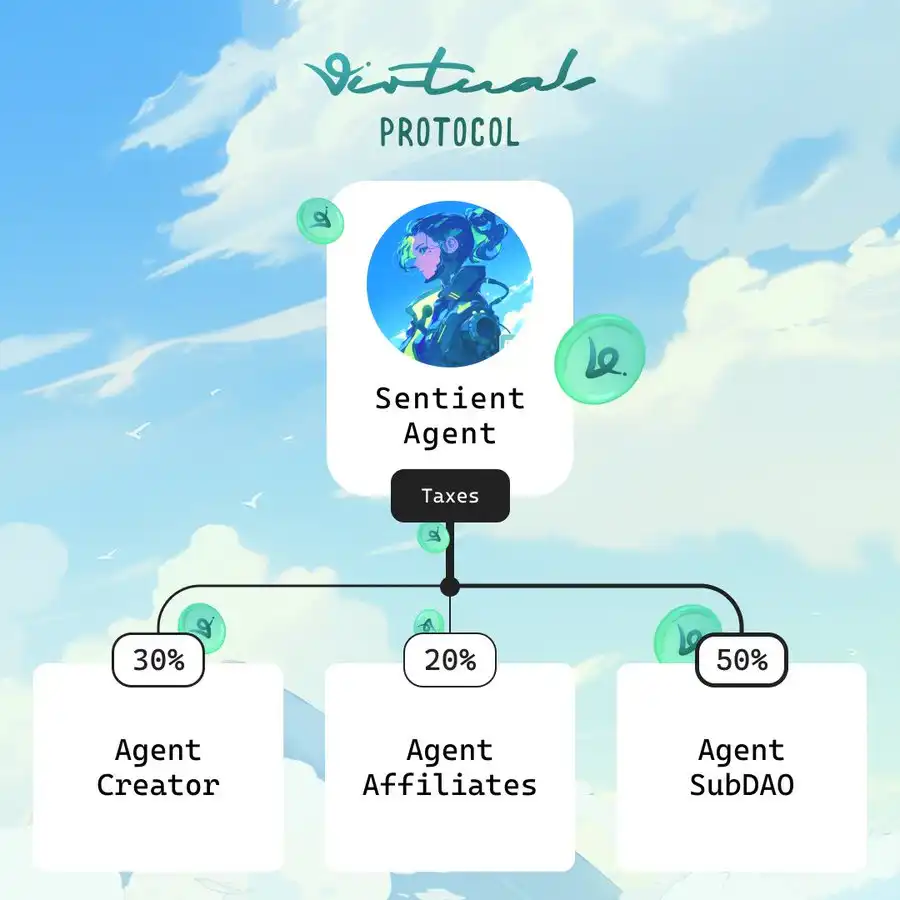
Simultaneously, Virtuals updated its Value Accumulation Mechanism, with key changes including:
Post-Bonding Tax Distribution: 30% allocated to Agent Creators, 20% allocated to Agent Affiliates, and 50% allocated to Agent subDAO as a reserve fund for future governance decisions;
Creator Reward Distribution: Rewards will be directly sent to the wallet of the proxy deployer.
Agent Affiliates Mechanism: Involves revenue sharing with various trading platforms or interfaces (such as Telegram Bot) within the Virtuals ecosystem. Upon becoming an Agent Affiliate, the platform will receive 20% of the post-bonding tax revenue generated from facilitated trades to incentivize its community and future project planning.
Reason for Upgrade and Impact
Each Virtual token creates a liquidity pool with $VIRTUAL as the paired asset (e.g., AIXBT/VIRTUAL), allowing the platform to accumulate a significant amount of $VIRTUAL as revenue from transaction fees.
However, this revenue cannot be directly liquidated, as doing so may trigger market panic and harm the ecosystem. A decline in the price of $VIRTUAL would also affect the proxy tokens pegged to it. Additionally, mishandling these funds may leave the platform with a substantial tax burden on this unusable revenue.
Therefore, the platform has chosen to utilize this revenue by conducting a buyback and burning of ecosystem tokens.
Beneficiary Token Categories
1. Tokens with Transaction Fee-to-Market Value Ratio:
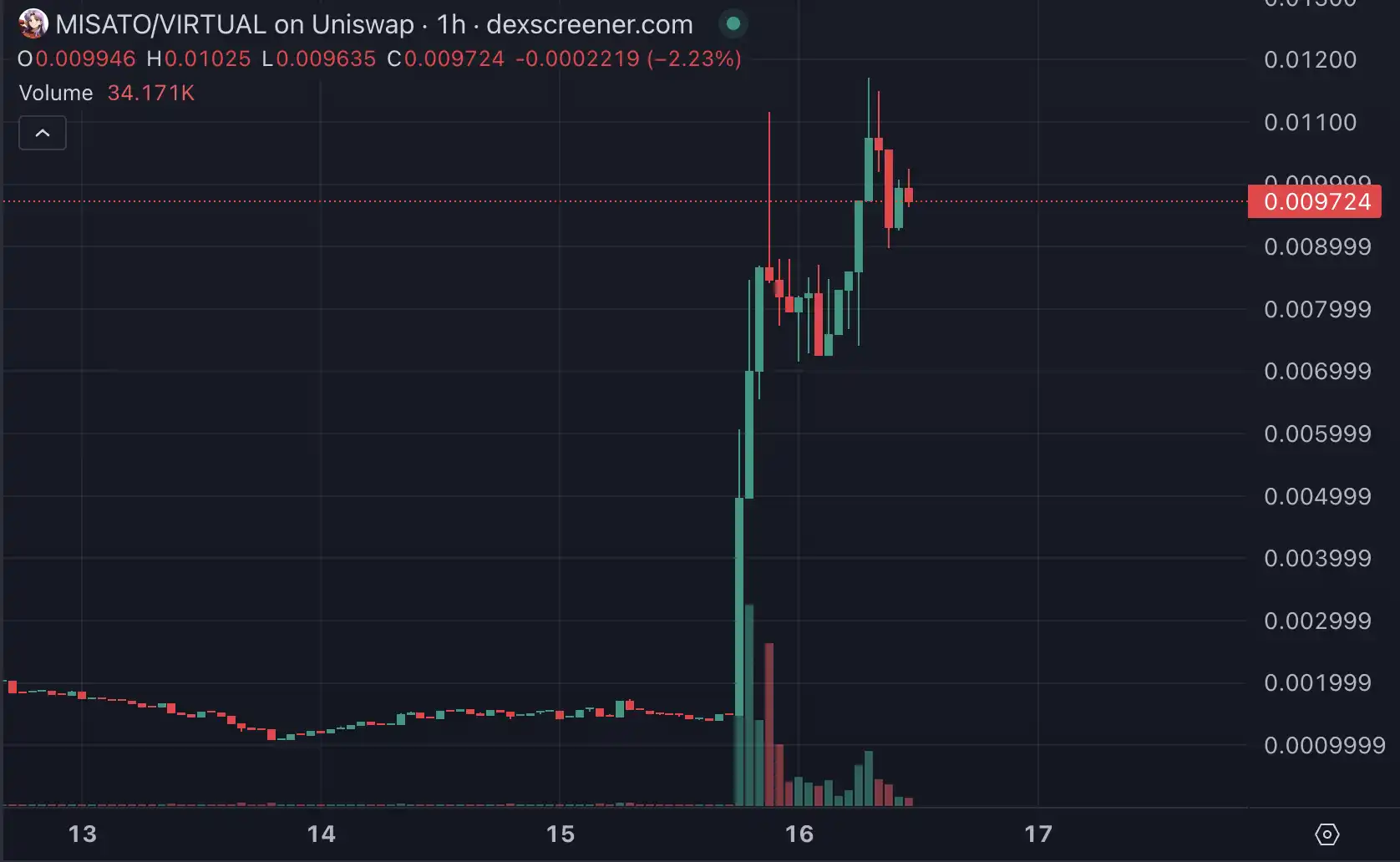
The buyback amount depends on the cumulative amount of transaction fees, so tokens with a large overall trading volume but relatively low market cap will receive a greater proportionate incentive,
such as tokens like MISATO, which saw a significant increase in price due to the buyback announcement.
2. Most Liquidity in Non-VIRTUAL Pairing Pools Tokens
The valuation unit of these tokens (VIRTUAL) is less affected by selling pressure but still benefits from the buyback incentive. For example, $AIXBT actually received around $2.5 million in incentives, but since its primary liquidity is in other pools, it is less affected by VIRTUAL selling pressure.
Affected Groups
1. $VIRTUAL Holders
The significant $48 million selling amount has a notable impact. Previously, the price of $VIRTUAL benefited from the continuous accumulation of fees (equivalent to $48 million in value lock-up).
However, now these fees will be converted to cBTC, starting to exert selling pressure on the market. The positive feedback loop that drove $VIRTUAL's price up has now reversed into a negative loop.
2. Tokens with Only VIRTUAL Pairing Pools or Low Trading Volume
These tokens receive smaller incentives but have to withstand the price pressure from $VIRTUAL selling. The impact is particularly severe on newly issued tokens as they have accumulated less fee income.
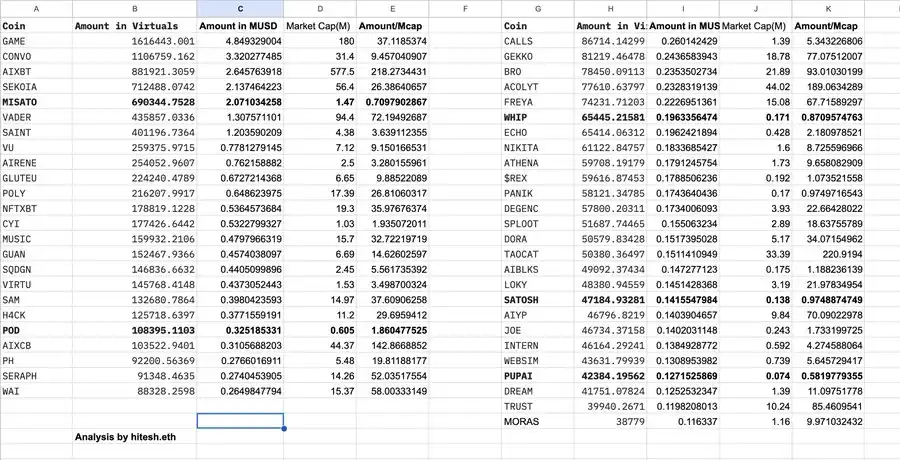
On-chain analyst hitesh.eth analyzed the top 50 tokens based on 30-day Time-Weighted Average Price (TWAP) buyback and burn distribution and found that the buyback pressure on some tokens exceeds their current market value.
How Does the Community View This Buyback?
It can be said that this upgrade has brought stronger value support to the Virtuals ecosystem, but the community has expressed concerns about the updated buyback and distribution model. Some believe that Virtuals chose to sell $VIRTUAL instead of directly burning these tokens. "This approach goes against the best interests of holders and the team, as the team actively created $48 million in selling pressure. For the ecosystem, some of the incentives flowed to agent tokens with liquidity primarily located outside, causing capital outflows from the ecosystem."
The crypto KOL Liam stated that while converting fees to cBTC is the right direction for Virtuals, the platform should significantly reduce the fees to avoid excessive extraction from the ecosystem. Additionally, fee distribution should be standardized based on the token's listing time to put new and old tokens on a level playing field.
However, the view that "buybacks will create significant selling pressure" has been questioned as being inaccurate. This is because these Agent tokens are paired with $VIRTUAL, and buying Agent tokens with $VIRTUAL does not involve selling any $VIRTUAL; it simply adds $VIRTUAL to the liquidity pool. If the liquidity pool is priced in WETH, then $VIRTUAL would first be exchanged for WETH, but that is not the case here.
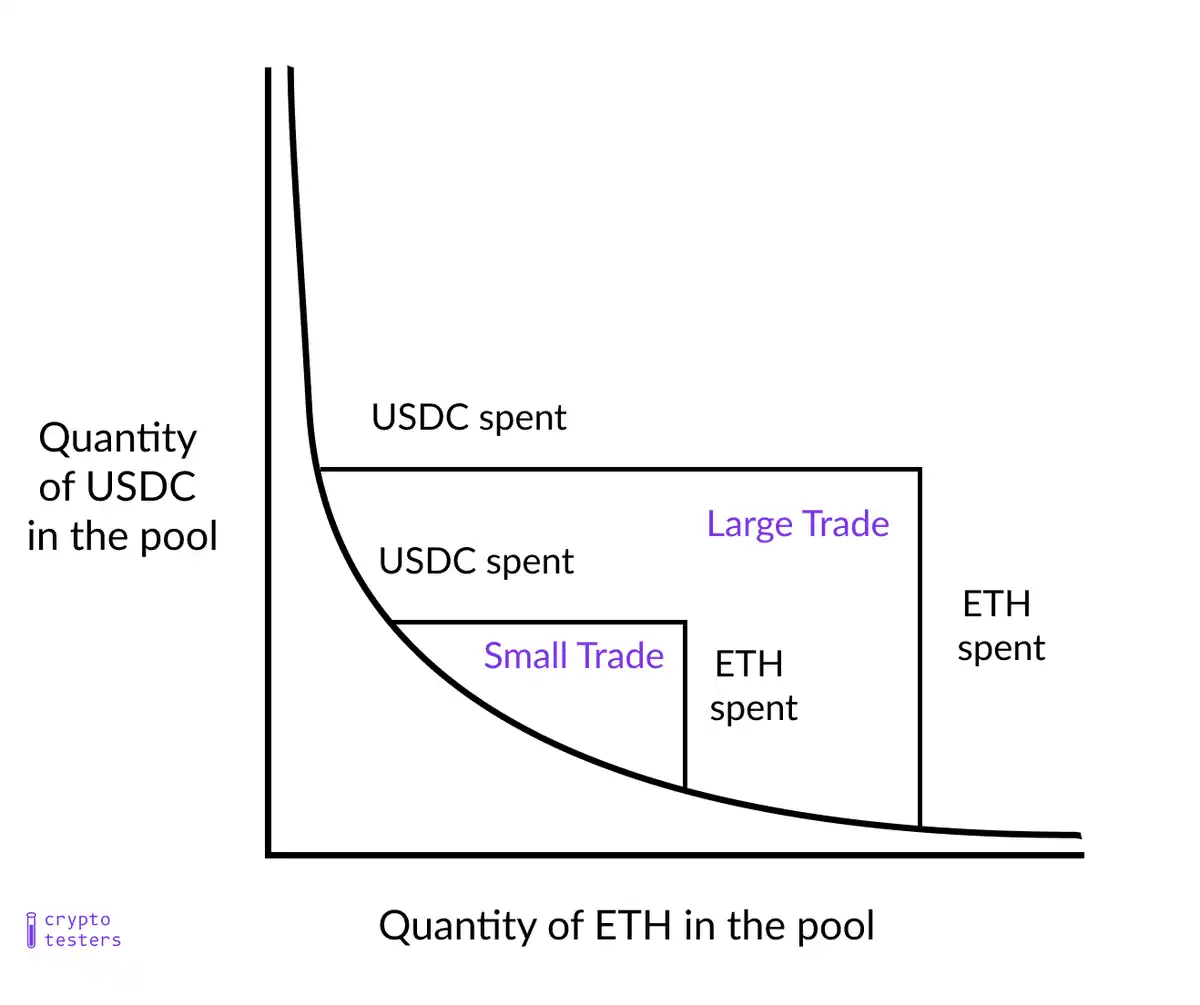
Nevertheless, this will indeed create indirect selling pressure. As the quantity of $VIRTUAL in the liquidity pool increases, the token's value will rise, potentially prompting holders to sell more $VIRTUAL. However, due to the nature of the liquidity pool and price impact, and the fact that the liquidity of many of these tokens is already very low, they cannot directly sell off all the tokens.
Leftcurve DAO member mcSleuth believes that this announcement will not generate direct selling pressure, and the indirect selling pressure is almost negligible, especially considering that the market cap of $VIRTUAL is 36 billion USD and liquidity is very high.
You may also like
Science Equity Movement: DeSci's Trillion-Dollar Knowledge Economy Reconstruction Revolution
Sentient In-Depth Research Report: Secures $85 Million in Funding to Build a Decentralized AGI New Paradigm
Interview with Virtuals Co-Founder empty: AI Startups Don't Need a Lot of Funding, Crypto is One of the Answers
Taking Stock of the Top 10 Emerging Launchpad Platforms: Who Will Succeed in Disrupting Pump.fun?
「New With Old」: How to Refactor AI Agent Minting Logic for Genesis Launch using a Point System?
Ika Receives Strategic Investment from Sui Foundation, Total Funding Exceeds $21 Million
Switzerland Zug, April 28, 2025, Chainwire
The world's fastest parallel MPC network, Ika, is set to launch on the Sui blockchain, announces a strategic investment from the Sui Foundation. Previously, Ika successfully completed a record-breaking 1.4 million SUI NFT art event on Sui. Ika is the world's first sub-second MPC network, capable of achieving zero-trust interoperability among hundreds of signing nodes, unprecedented in scale and rock-solid security.
Ika's core values of performance, speed, and high decentralization align perfectly with Sui. With its upcoming launch on the Sui blockchain, Ika will bring its unparalleled MPC technology into the Sui ecosystem, providing Sui Move smart contract developers with secure cross-Web3 interoperability. This further solidifies Sui's position as the preferred solution in cross-chain DeFi, decentralized custody, chain abstraction, AI-agent defense, native Bitcoin programmability, leveraging the first truly scalable and secure MPC signature scheme.
Ika addresses key bottlenecks of existing MPC networks and delivers unparalleled performance through innovative 2PC-MPC encryption scheme and Sui's Mysticeti consensus protocol:
1. Record Throughput: Ika's transaction processing capability is up to 10,000 times higher than current MPC networks, supporting unprecedented transaction volumes.
2. Ultra-Low Latency: While traditional network signatures may experience delays of 30 seconds or more, Ika can generate signatures in sub-seconds, supporting cross-chain real-time applications.
3. Tremendous Scalability: Ika breaks the conventional limit of 4-8 nodes, and the 2PC-MPC can scale to hundreds or even thousands of signers, enhancing decentralization without sacrificing performance.
4. Zero-Trust Security: Ika's architecture ensures that even in the most extreme scenarios, user assets remain secure, setting a new standard for decentralized security.
Ika's ultra-fast MPC network supports various applications on the Sui blockchain, and several Sui developers have utilized Ika to build tech, including:
· DeFi Interoperability: Ika's sub-second speed and scalability enable instant secure operations within the Web3 ecosystem, bringing liquidity from chains like Bitcoin and Ethereum into Sui. Sui developers Full Sail and Rhei have announced upcoming tech launches based on Ika.
· Decentralized Custody: Ika provides a secure, decentralized custody solution for digital assets on Sui, delivering unparalleled security for both institutional and individual users. Sui developers Aeon and Human Tech have announced the integration of Ika into their technology.
· Chain Abstraction: Ika helps Sui developers abstract away multi-chain complexity for users, combining with Sui's zkLogin feature to deliver a seamless user experience. Sui developers Covault and Lucky Kat have announced the integration of Ika into their technology.
· Programmable Bitcoin: Ika unlocks new possibilities for native BTC on Sui, enabling programmable and secure DeFi and custody. Sui developers Native and Nativerse have announced the upcoming launch of Ika-based technology.
· AI Agent Protection: Ika enhances AI applications on Sui by providing secure MPC protection, ensuring AI agents do not possess unrestricted power and safeguarding user asset security. Sui developers Atoma and Ekko have announced the upcoming launch of Ika-based technology.
The strategic investment in Ika by the Sui Foundation underscores Sui's commitment to driving cutting-edge technology for high performance and decentralization. This amplifies the technical synergy within the Sui ecosystem, propelling Sui and Ika to the forefront of the Web3 revolution, jointly advancing the future of secure, scalable, decentralized infrastructure.
Ika has raised over $21 million in funding, with a peak private valuation of $6 billion FDV, backed by support from Sui Foundation, DCG, Big Brain Holdings, Blockchange, Node Capital, Amplify Partners, Liquid2 Ventures, FalconX, Tykhe Block Ventures, Lightshift, Token Bay Capital, Collider, Zero Knowledge Ventures, NoLimit Holdings, Rubik Ventures, Dispersion Capital, Insignius Capital, Impatient Ventures, Cerulean Ventures, Earl Grey Capital, HDI Ventures, Flowdesk, TPC Ventures, Purechain Capital, Solr DAO, Heroic Ventures, Naval Ravikant, NotVCs, G-20 Group, Artifact Capital, DSRV, Encapsulate, and many other key players in the Web3 space.
Ika also demonstrated the strong support of Sui users by launching the "MF Squid Market" NFT art event, which became the largest and most successful NFT event in Sui's history, raising over 1.4 million SUI and establishing an active grassroots community.
The IKA token is set to native launch on the Sui blockchain, unlocking new decentralized security features and utilities. As the native token of the Ika MPC Network, IKA will play a key role in its ultra-fast, scalable infrastructure, used for paying MPC signature services, enabling seamless transactions within the Web3 ecosystem. Leveraging Sui's unparalleled speed and performance, Ika enhances the security and scalability of the entire ecosystem, introducing the most promising MPC technology in blockchain to the fastest-growing L1 of Web3.
Ika is the world's fastest parallel MPC network, offering sub-second latency, unprecedented scale and decentralization, and zero-trust security. As the preferred choice for interoperability, decentralized custody, and chain abstraction, Ika will fundamentally transform digital asset security and multi-chain DeFi.
Sui is the first Layer 1 blockchain and smart contract platform designed from the ground up to provide fast, private, secure, and inclusive digital assets. Built on the Move programming language, its object-centric model supports parallel execution, sub-second finality, and rich on-chain assets. Through horizontally scalable processing and storage capacity, Sui supports widespread applications at low cost with unparalleled speed. Sui represents a significant advancement in blockchain technology, offering creators and developers a platform to build exceptional user experiences.
Contact:
Ika PR
pr@ika.xyz (mailto:pr@ika.xyz)
AI Track Regains Momentum, Thoroughly Reviewing Potential Projects and Market Hype Logic
Key Market Information Discrepancy on April 21st - A Must-Read! | Alpha Morning Report
Bitcoin is Just the Beginning: Trillion-Dollar Asset Manager Hamilton Lane Dives into How Tokenization is Disrupting Traditional Finance
This is the Winter of VC, yet the Spring of KOL Agency.
After the RTFKT "Image Missing" Incident, Nike Faces $5 Million Class Action Lawsuit, Where Does the Future of NFTs Stand?
Privacy Dark Horse Inco Raises $5 Million in Funding, a16z CSX Leads Investment Igniting FHE Craze
Bitcoin Surges Back to $90,000: Which Altcoins Are Worth Watching?
RaveDAO at Terra Solis by Tomorrowland: A Female-Led Techno Night Where Web3 Culture Converges
MCP In-Depth Research Report: Protocol New Infrastructure in the AI+Crypto Mega Trend
12-Hour Market Cap Surpasses $25 Million, Is $JOS Legit or Another "Rug Pull"?
Web3 PvZ: Transforming GameFi with "Plants vs. Zombies" Gameplay, AI-Driven Wealth Metamorphosis Cryptocurrency
Bull Comeback Speedrun? The Next Investment Opportunity for Crypto AI
Science Equity Movement: DeSci's Trillion-Dollar Knowledge Economy Reconstruction Revolution
Sentient In-Depth Research Report: Secures $85 Million in Funding to Build a Decentralized AGI New Paradigm
Interview with Virtuals Co-Founder empty: AI Startups Don't Need a Lot of Funding, Crypto is One of the Answers
Taking Stock of the Top 10 Emerging Launchpad Platforms: Who Will Succeed in Disrupting Pump.fun?
「New With Old」: How to Refactor AI Agent Minting Logic for Genesis Launch using a Point System?
Ika Receives Strategic Investment from Sui Foundation, Total Funding Exceeds $21 Million
Switzerland Zug, April 28, 2025, Chainwire
The world's fastest parallel MPC network, Ika, is set to launch on the Sui blockchain, announces a strategic investment from the Sui Foundation. Previously, Ika successfully completed a record-breaking 1.4 million SUI NFT art event on Sui. Ika is the world's first sub-second MPC network, capable of achieving zero-trust interoperability among hundreds of signing nodes, unprecedented in scale and rock-solid security.
Ika's core values of performance, speed, and high decentralization align perfectly with Sui. With its upcoming launch on the Sui blockchain, Ika will bring its unparalleled MPC technology into the Sui ecosystem, providing Sui Move smart contract developers with secure cross-Web3 interoperability. This further solidifies Sui's position as the preferred solution in cross-chain DeFi, decentralized custody, chain abstraction, AI-agent defense, native Bitcoin programmability, leveraging the first truly scalable and secure MPC signature scheme.
Ika addresses key bottlenecks of existing MPC networks and delivers unparalleled performance through innovative 2PC-MPC encryption scheme and Sui's Mysticeti consensus protocol:
1. Record Throughput: Ika's transaction processing capability is up to 10,000 times higher than current MPC networks, supporting unprecedented transaction volumes.
2. Ultra-Low Latency: While traditional network signatures may experience delays of 30 seconds or more, Ika can generate signatures in sub-seconds, supporting cross-chain real-time applications.
3. Tremendous Scalability: Ika breaks the conventional limit of 4-8 nodes, and the 2PC-MPC can scale to hundreds or even thousands of signers, enhancing decentralization without sacrificing performance.
4. Zero-Trust Security: Ika's architecture ensures that even in the most extreme scenarios, user assets remain secure, setting a new standard for decentralized security.
Ika's ultra-fast MPC network supports various applications on the Sui blockchain, and several Sui developers have utilized Ika to build tech, including:
· DeFi Interoperability: Ika's sub-second speed and scalability enable instant secure operations within the Web3 ecosystem, bringing liquidity from chains like Bitcoin and Ethereum into Sui. Sui developers Full Sail and Rhei have announced upcoming tech launches based on Ika.
· Decentralized Custody: Ika provides a secure, decentralized custody solution for digital assets on Sui, delivering unparalleled security for both institutional and individual users. Sui developers Aeon and Human Tech have announced the integration of Ika into their technology.
· Chain Abstraction: Ika helps Sui developers abstract away multi-chain complexity for users, combining with Sui's zkLogin feature to deliver a seamless user experience. Sui developers Covault and Lucky Kat have announced the integration of Ika into their technology.
· Programmable Bitcoin: Ika unlocks new possibilities for native BTC on Sui, enabling programmable and secure DeFi and custody. Sui developers Native and Nativerse have announced the upcoming launch of Ika-based technology.
· AI Agent Protection: Ika enhances AI applications on Sui by providing secure MPC protection, ensuring AI agents do not possess unrestricted power and safeguarding user asset security. Sui developers Atoma and Ekko have announced the upcoming launch of Ika-based technology.
The strategic investment in Ika by the Sui Foundation underscores Sui's commitment to driving cutting-edge technology for high performance and decentralization. This amplifies the technical synergy within the Sui ecosystem, propelling Sui and Ika to the forefront of the Web3 revolution, jointly advancing the future of secure, scalable, decentralized infrastructure.
Ika has raised over $21 million in funding, with a peak private valuation of $6 billion FDV, backed by support from Sui Foundation, DCG, Big Brain Holdings, Blockchange, Node Capital, Amplify Partners, Liquid2 Ventures, FalconX, Tykhe Block Ventures, Lightshift, Token Bay Capital, Collider, Zero Knowledge Ventures, NoLimit Holdings, Rubik Ventures, Dispersion Capital, Insignius Capital, Impatient Ventures, Cerulean Ventures, Earl Grey Capital, HDI Ventures, Flowdesk, TPC Ventures, Purechain Capital, Solr DAO, Heroic Ventures, Naval Ravikant, NotVCs, G-20 Group, Artifact Capital, DSRV, Encapsulate, and many other key players in the Web3 space.
Ika also demonstrated the strong support of Sui users by launching the "MF Squid Market" NFT art event, which became the largest and most successful NFT event in Sui's history, raising over 1.4 million SUI and establishing an active grassroots community.
The IKA token is set to native launch on the Sui blockchain, unlocking new decentralized security features and utilities. As the native token of the Ika MPC Network, IKA will play a key role in its ultra-fast, scalable infrastructure, used for paying MPC signature services, enabling seamless transactions within the Web3 ecosystem. Leveraging Sui's unparalleled speed and performance, Ika enhances the security and scalability of the entire ecosystem, introducing the most promising MPC technology in blockchain to the fastest-growing L1 of Web3.
Ika is the world's fastest parallel MPC network, offering sub-second latency, unprecedented scale and decentralization, and zero-trust security. As the preferred choice for interoperability, decentralized custody, and chain abstraction, Ika will fundamentally transform digital asset security and multi-chain DeFi.
Sui is the first Layer 1 blockchain and smart contract platform designed from the ground up to provide fast, private, secure, and inclusive digital assets. Built on the Move programming language, its object-centric model supports parallel execution, sub-second finality, and rich on-chain assets. Through horizontally scalable processing and storage capacity, Sui supports widespread applications at low cost with unparalleled speed. Sui represents a significant advancement in blockchain technology, offering creators and developers a platform to build exceptional user experiences.
Contact:
Ika PR
pr@ika.xyz (mailto:pr@ika.xyz)


 App
App