
- Buy Crypto
- Markets
- Futures
- Spot
- Copy Trade
 WE-Launch
Why Did the Crypto Market Lose $900 Billion While Stablecoin Market Cap Hit an All-Time High?

Since Trump took office, the total market value of cryptocurrency has evaporated by nearly $900 billion, but the total market value of stablecoins has increased by 1.03% in the past week, surpassing $227 billion to hit a historical high. The community can't help but wonder what factors are driving the market value of stablecoins to rise against the trend?
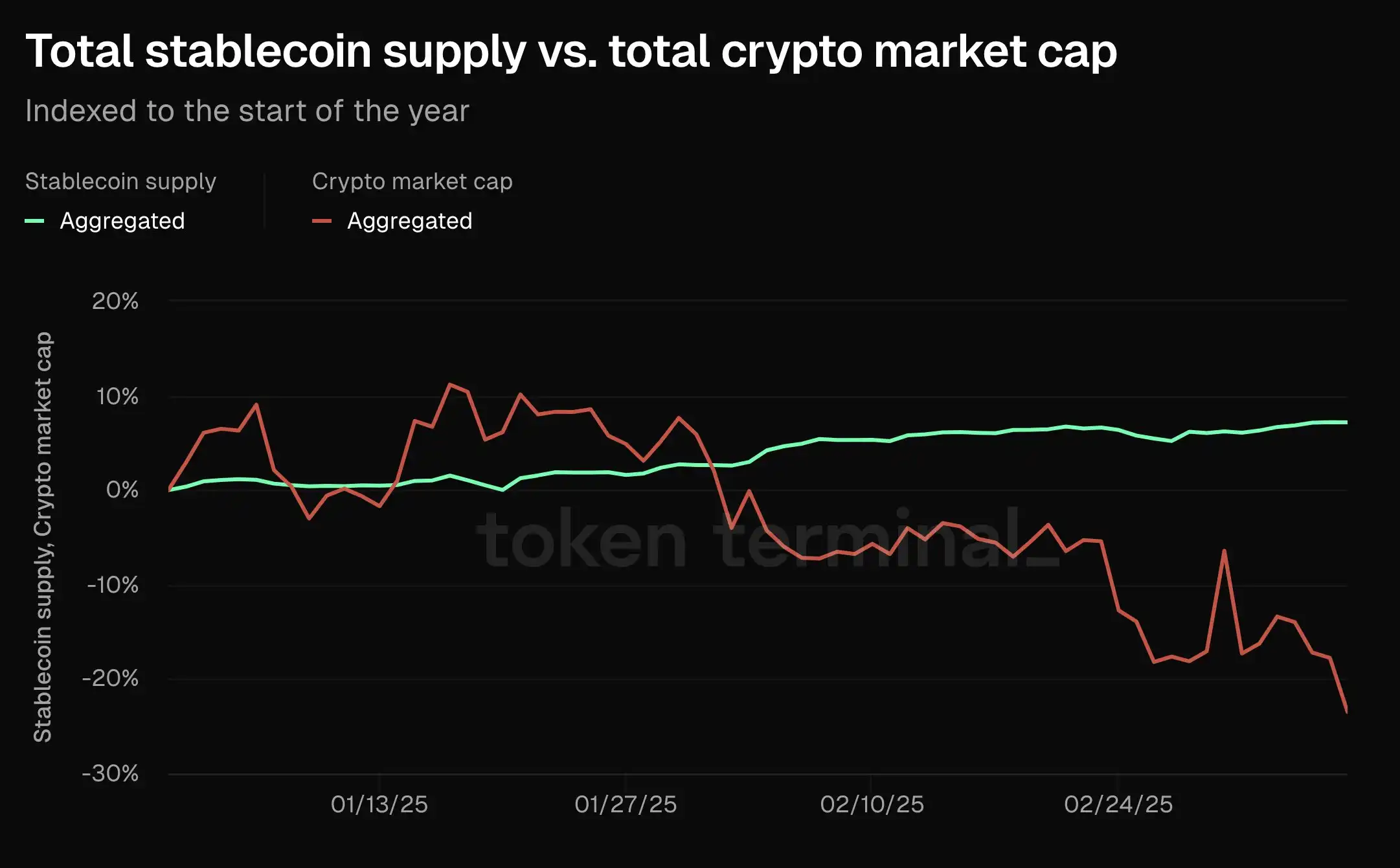
As the market value of stablecoins hits a historical high, Frax Finance co-founder Sam tweeted that a bear market is a bull market for stablecoins. He said, "Another way to describe a price drop is a rise in the value of the U.S. dollar. In these environments, on-chain dollar issuers will receive the most benefits, especially as favorable regulation is imminent."
Recently, CryptoQuant CEO Ki Young Ju also wrote an analysis stating that the capital flow cycle of past altcoin seasons is outdated. "The rotation of crypto assets dominated by Bitcoin has essentially ended under the drive of regulation and institutional adoption. New capital will flow through stablecoins or widely adopted altcoins — a scenario completely different from traditional altcoin seasons."
Against the backdrop of cryptocurrency assets and U.S. stocks trending downward and under pressure, stablecoins rising against the trend to consolidate the dominance of the U.S. dollar may have become the biggest winner in the recent market turmoil.
Regulatory Easing
On February 27, U.S. crypto-friendly Senator Cynthia Lummis stated at the first hearing of the Senate Banking Subcommittee on Digital Assets that "we are about to develop a bipartisan legislative framework for stablecoins and market structure."
At a White House inaugural crypto summit last Friday with little news coverage, Trump expressed his hope to receive a stablecoin legislative bill before the August congressional recess to advance federal government regulatory reform of cryptocurrency and reiterated his wish for the dollar to "remain dominant in the long run."
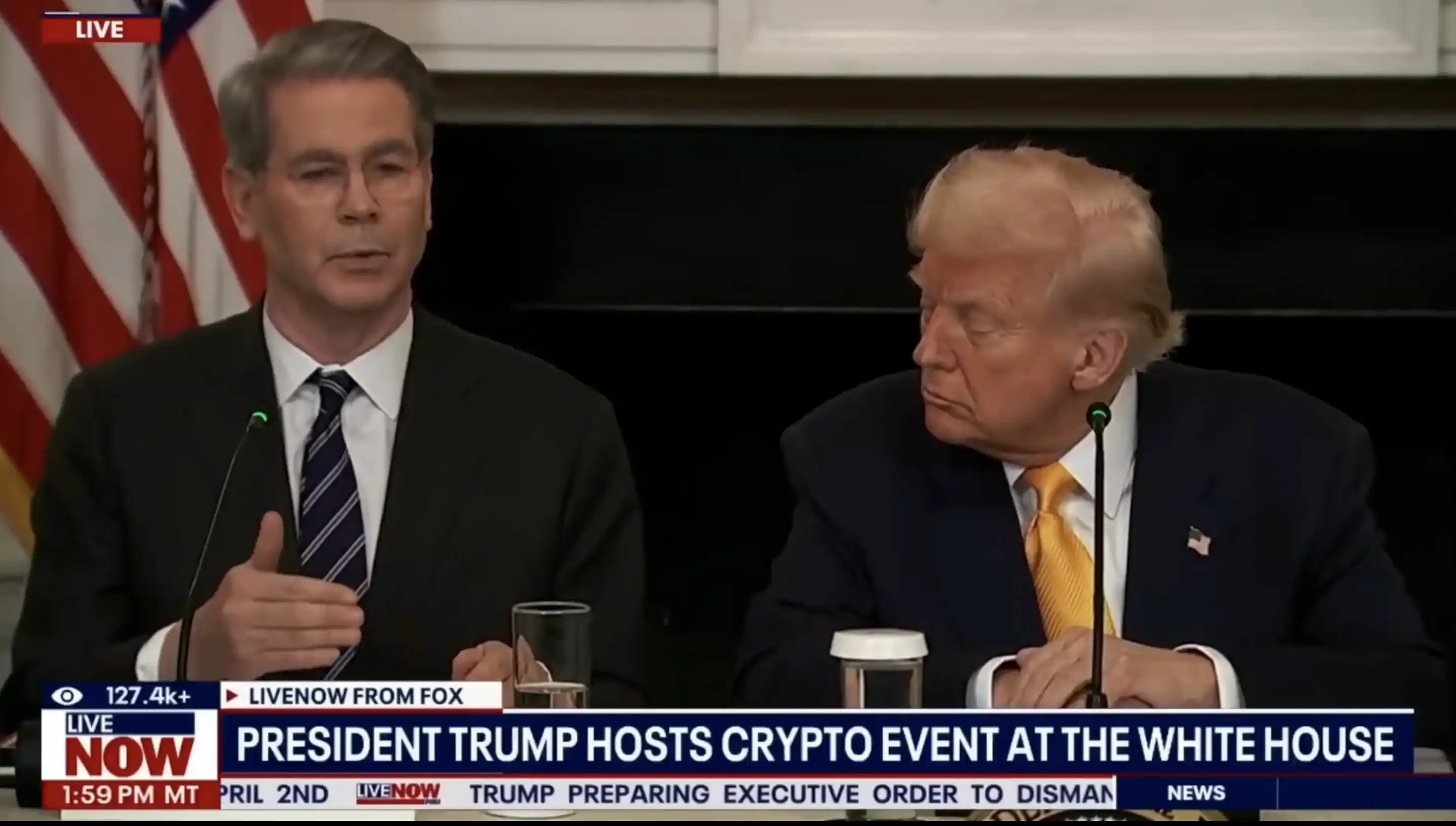
U.S. Treasury Secretary Scott Bessent pledged to strengthen the global reserve currency status of the dollar using digital assets, stating, "We will deeply consider the stablecoin system. As President Trump has directed, we will maintain the U.S. as the world's leading reserve currency and will use stablecoins to achieve that."
This statement highlights the U.S. government's concerns about macroeconomic and geopolitical uncertainties, which may lead to decreased demand from foreign investors for U.S. bonds, thereby pushing up bond yields. In the past year, the top two holders of U.S. debt, Japan and China, have continued to reduce their holdings. To maintain the global reserve currency status of the dollar, it is necessary to ensure a sustained demand for U.S. bonds in the international market.
By holding US Treasury bonds as reserve assets, stablecoins can help lower bond yields and simultaneously expand the global circulation of the US dollar. Stablecoins need to hold sufficient reserves in US dollars to meet investor redemption demands, with Tether currently being one of the largest holders of three-month US Treasury bonds.
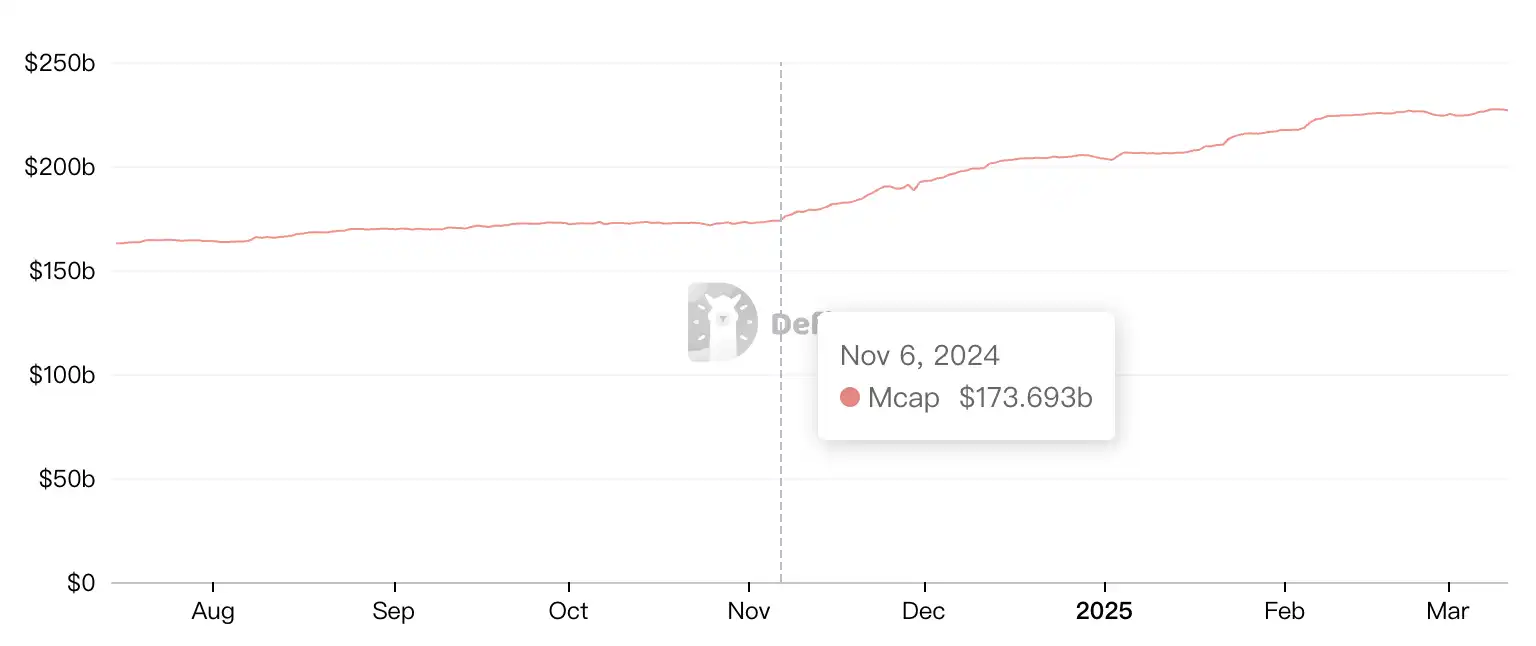
The total market value of stablecoins has surged by $500 billion since Trump's election; Source: DeFiLlama
On a policy level, the US has proposed two stablecoin bills—the House's \"Stablecoin Tethering and Bank Licensing Enforcement (STABLE) Act\" and the Senate's \"Guaranteeing Easy Access to Nurturing Investment in Stablecoins (GENIUS) Act\"—aimed at regulating stablecoin issuers through licensing requirements, risk management rules, and 1:1 reserve backing.
These two bills present different frameworks but converge on stringent compliance measures. Both support private, USD-backed stablecoins and prohibit central bank digital currencies (CBDCs).
Key differences include:
· Regulatory oversight (GENIUS allows states to regulate issuers until the market value reaches $10 billion; STABLE allows opting out of federal oversight if state-level rules meet the criteria)
· Reserve requirements (STABLE allows the use of Treasury bonds, bank deposits, and central bank reserves, while GENIUS also includes money market funds and reverse repurchase agreements)
· Consumer protection (GENIUS focuses on transparency and enforcement, while STABLE requires a one-to-one reserve and prohibits algorithmic stablecoins)
Stricter regulations could challenge Tether's dominant position, as both bills mandate monthly audits, asset segregation, and strict reporting, potentially forcing exchanges to delist non-compliant stablecoins, similar to the impact of the EU's MiCA. These laws would also pave the way for the legalization of stablecoins, attracting institutional adoption while creating barriers for less transparent issuers. If passed, they would provide clear guidelines for stablecoin issuers, ensuring market stability and compliance.
This morning, FOX Business reporter Eleanor Terrett posted on social media, saying, \"As far as I know, an updated version of US Republican Senator Bill Hagerty's stablecoin bill—the GENIUS Act—is set to be released tonight (local time). As of this morning, the US Senate Banking Committee still plans to mark up the bill on Thursday.\"
The new version of the document extends the mutual clause for overseas payment stablecoins, adding reserve requirements, regulation, anti-money laundering and counter-terrorism measures, sanctions compliance, liquidity requirements, and risk management standards, aiming to promote international transactions and achieve interoperability with overseas USD-priced payment stablecoins.
Stablecoin FOMO Wave is Coming, What Are the Future Opportunities?
Against the backdrop of Trump's explicit statement hoping to clarify stablecoin-related legislation by August, efforts have been made by countries including Japan, Thailand, and U.S. government departments for stablecoin adoption.
On March 10, the Thai Securities and Exchange Commission has designated stablecoins USDT and USDC as compliant cryptocurrencies. This approval means that USDT and USDC can be legally traded in Thailand, paving the way for the listing of stablecoins on regulated trading platforms in Thailand, and also laying the foundation for the widespread application of USDT and USDC in the Thai payment field.
On the same day, the Japanese Cabinet announced approval of a proposal to reform laws related to cryptocurrency brokers and stablecoins. According to the announcement by the Financial Services Agency (FSA) of Japan, the government has approved a cabinet resolution to amend the Payment Services Act. This legislation will allow crypto companies to operate as "intermediary businesses." This means brokers will no longer need to apply for the same type of license as cryptocurrency exchanges and wallet operators. The bill also provides more flexibility for stablecoin issuers in terms of the asset types supporting their tokens.
According to the Financial Times, some of the world's largest banks and fintech companies are eager to launch their stablecoins, aiming to capture the cross-border payment market share they expect to be reshaped by cryptocurrencies.
Last month, Bank of America stated its intention to issue its own stablecoin, joining established payment providers such as Standard Chartered, PayPal, Revolut, and Stripe in the race to compete with cryptocurrency groups led by Tether and Circle.
This shift comes six years after regulatory agencies strongly opposed Meta's Libra stablecoin, and it has received further support from U.S. President Trump endorsing cryptocurrency. "It's like selling shovels in a gold rush of stablecoins," said Simon Taylor, co-founder of the fintech consultancy 11:FS, likening it to FOMO.
In addition to Bank of America, other major Traditional Finance (TradFi) players are also gearing up for the development of stablecoins.
- Standard Chartered Bank: Advancing the Hong Kong Dollar stablecoin project
· PayPal: Plans to Expand the Issuance of PYUSD by 2025
· Stripe: Acquires Bridge Stablecoin Platform for $1.1 Billion
· Revolut: Exploring the Possibility of Issuing a Stablecoin
· Visa: Using Stablecoins for Payments and Global Business
Prior to this, the increase in stablecoin supply has often driven up cryptocurrency prices, as these tokens are primarily used as short-term holding instruments for transactional purposes. Now, the application of stablecoins is breaking through the realm of speculation—SpaceX uses stablecoins for refunds in Argentina and Nigeria through its Starlink service; ScaleAI uses them to pay overseas contractor wages.
The most direct trading opportunity lies in betting on which mainstream institutions will choose which public blockchains to issue new stablecoins on. Currently, Ethereum, Base, Tron, and Solana are the main alternative public blockchains. On February 26, Jesse Pollak, the head of the Base protocol, stated that this year they plan to launch a stablecoin for all global currencies on Base.
It is clear that both the on-chain world and traditional finance are strategizing around U.S. and USD-backed stablecoins. As for the altseason, it may be as CryptoQuant's CEO said—the capital flow cycle of past altseasons is outdated.
You may also like

a16z Leads $18M Seed Round for Catena Labs, Crypto Industry Bets on Stablecoin AI Payment
Never Underestimate the Significance of the US Stablecoin 'Infrastructure Bill'
If the US stablecoin bill, the "GENIUS Act," passes smoothly this time, its significance will be tremendous. I even think it's significant enough to enter the top five in Crypto history.
Although abbreviated as the GENIUS Act, which translates directly to the Genius Act, it is actually the Guiding and Establishing National Innovation for U.S. Stablecoins, which translates to "Guiding and Establishing National Innovation for US Dollar Stablecoins."
The proposal is lengthy, with several key points summarized for everyone:
· Mandatory 1:1 Full Asset Backing: Assets include cash, demand deposits, and short-term US Treasuries. At the same time, misappropriation and rehypothecation are strictly prohibited.
· High-Frequency Disclosure: Reserve reports must be published at least monthly, introducing external audits.
· Licensing Requirement: Once the circulating market cap of the issuer's stablecoin exceeds $100 billion, it must transition into the federal regulatory system within a specified timeframe, adopting banking-grade regulation.
· Introduction of Custody: The custodian of the stablecoin and its reserve assets must be a regulated qualified financial institution.
· Clear Definition as a Payment Medium: The bill explicitly defines stablecoin as a new type of payment medium, primarily regulated by the banking regulatory system, rather than restricted by the securities or commodities regulatory system.
· Embracing Existing Stablecoins: A maximum 18-month grace period after the bill's enactment, aimed at encouraging existing stablecoin issuers (such as USDT, USDC, etc.) to promptly obtain licenses or become compliant.
After finishing the main content, let's talk about the significance of this matter with an excited heart.
Over the years, when others asked, "After working in the Crypto industry for 16 years, what application have you created?"
In the future, you can confidently tell others—Stablecoins.
Some people have held opposing views. In the past, people's impression of stablecoins was that they were an opaque black box. Every few months, there would be FUD — whether Tether's assets were frozen or Circle had a significant black hole deficit.
In fact, if you think about it, Tether easily rakes in billions of dollars a year just from the interest on those underlying government bonds. Circle, slightly less, also made a $1.7 billion profit last year.
They basically made money while standing there. From a motivational standpoint, they have no malicious intentions. In fact, they are the most eager for compliance.
Now, this opaque black box will become a transparent white box.
In the past, the only complaint was that Tether's funds might have been frozen by the United States. Now, they will be directly placed into U.S. compliant custodial institutions, with high-frequency disclosures, so you can rest assured.
【No need to worry about a rug pull】 is such a huge advantage—I think especially all Crypto people understand this.
Stablecoins were once almost on the verge of being overtaken by CBDCs. In any country, if a central bank digital currency really exists, it is highly likely not built on a blockchain, at most it is built on some internal central bank consortium chain, which to be honest, is meaningless.
When CBDCs were at their peak, that was the most dangerous time for stablecoins.
If CBDCs had become a reality back then, stablecoins today would have been relentlessly suppressed into a dark corner, and blockchain would only be able to play a minimal role.
The remaining half-dead stablecoins would even have to learn the standards of central bank digital currencies, completely relinquishing their standard-setting power.
And now, stablecoins have won (or are about to).
Instead, everyone should learn the 【Blockchain + Token】 standard.
Nowadays, many blockchains actually have no meaningful applications on top, only stablecoin transfers. For example, with Aptos, the only scenario I use Aptos for is transfers between Binance and OKX.
And now, stablecoins will be legislated, what does that mean?
That's right, blockchain will become the only standard.
In the future, every stablecoin user will be the first to learn how to use a wallet.
As an aside, I actually think Ethereum's concerted push for EIP-7702 is quite forward-thinking. While other chains are all about memes, thank you Ethereum for sticking to account abstraction.
EIP-7702 is about Account Abstraction, which can support, for example:
· Social Account Registration Wallet
· Paying GAS with Native Coin
· And more
This paves the way for future new users to heavily use stablecoins, solving the last-mile problem.
Furthermore, once stablecoins receive legislative support, deposits and withdrawals will become even easier.
Let's imagine a scenario: previously, hindered by the gray nature of stablecoins, but after the bill passes, many traditional brokerages can support stablecoins themselves. The money from a US stock investor can be converted into stablecoins in minutes and instantly deposited into Coinbase. Believe it or not.
Let's imagine another scenario: if the brilliant bill smoothly passes through the House of Representatives, next, you will see:
Due to the extremely lucrative nature of this trading, existing stablecoin leaders and newly entering traditional giants will crazily start promoting their stablecoin products.
And an outsider, due to these promotions, will start using stablecoins. And then one day, after finding out that the wallet account has been created, will explore Bitcoin inside. Is mining Bitcoin difficult?
Stablecoins are a huge Trojan horse. The moment you start using stablecoins, you unwittingly step half a foot into the Crypto world.
As a large reservoir for digesting US debt, although stablecoins cannot directly absorb debt, they at least provide ammunition for the US debt secondary market. These functions are quite important, and slowly, stablecoins are becoming a part of the US debt market's body. Therefore, once the US legislation is passed and experiences the benefits, there is no turning back.
And, we are also confident that stablecoins are indeed one of the great innovations in our industry. People who have used stablecoins will find it hard to return to the traditional cash-banking system.
Once the bill is passed, users can't go back. In the future, concerns are about to be resolved, standards will be mastered, and the era of large deposits seems to be on the horizon.
Original Article Link
$COIN Joins S&P 500, but Coinbase Isn't Celebrating
On May 13, S&P Dow Jones Indices announced that Coinbase would officially replace Discover Financial Services in the S&P 500 on May 19. While other companies like Block and MicroStrategy, closely tied to Bitcoin, were already part of the S&P 500, Coinbase became the first cryptocurrency exchange whose primary business is in the index. This also signifies that cryptocurrency is gradually moving from the fringes to the mainstream in the U.S.
On the day of the announcement, Coinbase's stock price surged by 23%, surpassing the $250 mark. However, just 3 days later, Coinbase was hit by two consecutive events: a hack where employees were bribed to steal customer data and a demand for a $20 million ransom, and an investigation by the U.S. Securities and Exchange Commission (SEC) into the authenticity of its claim of having over 100 million "verified users" in its securities filings and marketing materials. These two events acted as mini-bombs, and at the time of writing, Coinbase's stock had already dropped by over 7.3%.
Coincidentally, Discover Financial Services, being replaced by Coinbase, can also be considered the "Coinbase" of the previous payment era. Discover is a U.S.-based digital banking and payment services company headquartered in Illinois, founded in 1960. Its payment network, Discover Network, is the fourth largest payment network apart from Visa, Mastercard, and American Express.
In April, after the approval of the acquisition of Discover by the sixth-largest U.S. bank, Capital One, this well-established digital banking company of over 60 years smoothly handed over its S&P 500 "seat" to this emerging cryptocurrency "bank." This unexpected coincidence also portrayed the handover between the new and old eras in Coinbase's entry into the S&P 500, resembling a relay race scene. However, this relay baton also brought Coinbase's accumulated "external troubles and internal strife" to a tipping point.
Over the past decade, cryptocurrency exchanges have been the most stable "profit machines." They play a role in providing liquidity to the entire industry and rely on trading fees to sustain their operations. However, with the comprehensive rollout of ETF products in the U.S. market, this profit model is facing unprecedented challenges. As the leader in the "American stack," with over 80% of its business coming from the U.S., Coinbase is most affected by this.
Starting from the approval of Bitcoin and Ethereum spot ETFs, traditional financial capital has significantly onboarded users and funds that originally belonged to exchanges in a more cost-effective, compliant, and transparent manner. The transaction fee revenue of cryptocurrency exchanges has started to decline, and this trend may further intensify in the coming months.
According to Coinbase's 2024 Q4 financial report, the platform's total trading revenue was $417 million, a 45% year-on-year decrease. The contribution of BTC and ETH's trading revenue dropped from 65% in the same period last year to less than 50%.
This decline is not a result of a decrease in market enthusiasm. In fact, since the approval of the Bitcoin ETF in January 2024, the inflow of BTC into the U.S. market has continued to reach new highs, with asset management giants like BlackRock and Fidelity rapidly expanding their management scale. Data shows that BlackRock's iShares Bitcoin ETF (IBIT) alone has surpassed $17 billion in assets under management. As of mid-May 2025, the cumulative net inflow of 11 major institutional Bitcoin spot ETFs on the market has exceeded $41.5 billion, with a total net asset value of $1214.69 billion, accounting for approximately 5.91% of the total Bitcoin market capitalization.
Institutional investors and some retail investors are shifting towards ETF products, partly due to compliance and tax considerations. On one hand, ETFs have much lower trading costs compared to cryptocurrency exchanges. While Coinbase's spot trading fee rate varies annually in a tiered manner but averages around 1.49%, for example, the management fee for IBIT ETF is only 0.25%, and the majority of ETF institution fees fluctuate around 0.15% to 0.25%.
In other words, the more rational users are, the more likely they are to move from exchanges to ETF products, especially for investors aiming for long-term holdings.
According to multiple sources, several institutions, including VanEck and Grayscale, have submitted applications to the SEC for a Solana (SOL) ETF, with some institutions also planning to submit an XRP ETF proposal. Once approved, this may trigger a new round of fund migration. According to a report submitted by Coinbase to the SEC, as of April, the platform's trading revenue from XRP and Solana accounted for 18% and 10%, nearly one-third of the platform's fee revenue.
However, the Bitcoin and Ethereum ETFs passed in 2024 also reduced the fees for these two tokens on Coinbase from 30% and 15% to 26% and 10%, respectively. If the SOL and XRP ETFs are approved, it will further undermine the core fee revenue of exchanges like Coinbase.
The expansion of ETF products is gradually weakening the financial intermediary status of cryptocurrency exchanges. From their original roles as matchmakers and clearers to now gradually becoming mere "on-ramps and off-ramps" for funds, exchanges are seeing their marginal value squeezed by ETFs.
On May 12, 2025, SEC Chairman Paul S. Atkins gave a keynote speech at the Tokenization and Cryptocurrency Working Group roundtable. The theme of his speech revolved around "It is a new day at the SEC," where he indicated that the SEC would not approach enforcement and regulation the same way as before but would instead pave the way for cryptocurrency assets in the U.S. market.
With signs of cryptocurrency compliance such as the SEC's "NEW DAY" declaration, an increasing number of traditional brokerages are attempting to enter the cryptocurrency industry. One of the most representative cases is the well-known U.S. brokerage Robinhood, which began expanding its crypto business in 2018. By the time of its IPO in 2021, Robinhood's crypto business revenue accounted for over 50% of the company, with a significant boost from the Dogecoin "moonshot" promoted by Musk.
In Q1 2025 earnings report, Robinhood showcased strong growth, especially in revenue from cryptocurrency and options trading. Fueled by Trump's Memecoin, cryptocurrency-related revenue reached $250 million, nearly doubling year-over-year. Consequently, Robinhood Gold subscription users reached 3.5 million, a 90% increase from the previous year, with the rapid growth of Robinhood Gold providing the company with a stable source of income.
Meanwhile, RobinHood is actively pursuing acquisitions in the cryptocurrency space. In 2024, it announced a $2 billion acquisition of the long-standing European cryptocurrency exchange Bitstamp. Additionally, Canada's largest cryptocurrency CEX, WonderFi, which recently went public on the Toronto Stock Exchange, also announced its integration with RobinHood Crypto. After obtaining virtual asset licenses in the UK, Canada, Singapore, and other markets, RobinHood has taken a proactive approach in the compliant cryptocurrency trading market.
Furthermore, an increasing number of brokerage firms are exploring the same path. Futu Securities, Tiger Brokers, and others are also dipping their toes into cryptocurrency trading, with some having applied for or obtained the VA license from the Hong Kong SFC. Although their user bases are currently small, traditional brokerages have a natural advantage in user trust, regulatory licenses, and low fee structures. This could pose a threat to native cryptocurrency platforms in the future.
In April 2025, security researchers discovered that some Coinbase user data was leaked on the dark web. While the platform initially responded by attributing it to a "technical misinformation," it still raised concerns among users regarding its security and privacy protection. Just two days before Dow Jones Indexes announced Coinbase's addition to the S&P 500 Index, on May 11, 2025, Coinbase received an email from an unknown threat actor claiming to have obtained customer account information and internal documents, demanding a $20 million ransom to keep the data private. Subsequent investigations confirmed the data breach.
Cybercriminals obtained the data by bribing overseas customer service agents and support staff, mainly in "non-U.S. regions such as India." These agents abused their access to Coinbase's internal customer support system and stole customer data. As early as February this year, blockchain detective ZachXBT revealed on X platform that between December 2024 and January 2025, Coinbase users lost over $65 million to social engineering scams, with the actual amount potentially higher.
Among the victims was a well-known figure, 67-year-old Ed Suman, an established artist in the art world for nearly two decades, having been involved in the creation of artworks such as Jeff Koons' "Balloon Dog" sculpture. Earlier this year, he fell victim to an impersonation scam involving fake Coinbase customer support, resulting in a loss of over $2 million in cryptocurrency. ZachXBT critiqued Coinbase for its inadequate handling of such scams, noting that other major exchanges have not faced similar issues and recommending Coinbase to enhance its security measures.
Amidst a series of ongoing social engineering incidents, although there has not been any impact on user assets at the technical level so far, it has raised concerns among many retail and institutional investors. Especially institutions holding massive assets on Coinbase. Just considering the U.S. BTC ETF institutions, as of mid-May 2025, they collectively hold nearly 840,000 BTC, and 75% of these are custodied by Coinbase. If we price BTC at $100,000, this amount reaches a staggering $63 billion, which is equivalent to the nominal GDP of two Iceland in the year 2024.
In addition, Coinbase Custody also serves over 300 institutional clients, including hedge funds, family offices, pension funds, and endowments. As of the Q1 2025 financial report, Coinbase's total assets under management (including institutional and retail clients) reached $404 billion. The specific amount of institutional custodied assets was not explicitly disclosed in the latest report, but it should still be over 50% based on the Q4 2024 report.
Once this security barrier is breached, not only could the rate of user attrition far exceed expectations, but more importantly, institutional trust in it would undermine the foundation of its business. Therefore, after a hacking event, Coinbase's stock price plummeted significantly.
Facing a decline in spot trading fee revenue, Coinbase is also accelerating its transformation, attempting to find growth opportunities in derivatives and emerging assets. Coinbase acquired a stake in the options platform Deribit at the end of 2024 and announced the official launch of perpetual contract products in 2025. This acquisition fills in Coinbase's gap in options trading and its relatively small global market share.
Deribit has a strong presence in non-U.S. markets, especially in Asia and Europe. The acquisition has enabled Coinbase to gain a dominant position in bitcoin and ethereum options trading on Deribit, accounting for approximately 80% of the global options trading volume, with daily trading volume remaining above $2 billion.
Meanwhile, 80-90% of Deribit's customer base consists of institutional investors, with their professionalism and liquidity in the Bitcoin and Ethereum options market highly favored by institutions. Coinbase's compliance advantage, coupled with its already robust institutional ecosystem, makes it even more suitable. By using institutions as an entry point, it can face the squeeze from giants like Binance and OKX in the derivatives market.
Facing a similar dilemma is Kraken, which is attempting to replicate Binance Futures' model in non-U.S. markets. Since the derivatives market relies more on professional users, fee rates are relatively higher and stickiness is stronger, making it a significant source of revenue for exchanges. In the first half of 2025, Kraken completed the acquisition of TradeStation Crypto and a futures exchange, aiming to build a complete derivatives trading ecosystem to hedge the risk of declining spot transaction fee income.
With the surge of Memecoin in 2024, Binance, OKX, and various CEX platforms began massively listing small-market-cap, highly volatile tokens to activate active trading users. Due to the wealth effect and trading activity of Memecoins, Coinbase was also forced to join the battle, successively listing popular tokens from the Solana ecosystem such as BOOK OF MEME and Dogwifhat. Although these coins are controversial, they are frequently traded, with fee rates several times higher than mainstream coins, serving as a "blood-boosting" method for spot trading.
However, due to its status as a publicly traded company, this practice is a riskier endeavor for Coinbase. Even in the current crypto-friendly environment, the SEC is still investigating whether tokens like SOL, ADA, and SAND constitute securities.
In addition to the forced transformation strategies carried out by the aforementioned CEXs, they are also starting to lay out RWAs and the most talked-about stablecoin payment fields, such as the PYUSD launched through a collaboration between Coinbase and Paypal, Coinbase's support for the Euro stablecoin EURC by Circle that complies with EU MiCA regulatory requirements, or the USD1 launched through a collaboration between Binance and WIFL. In the increasingly crowded trading field, many CEXs have shifted their focus from just the trading market to the application field.
The golden age of transaction fees has quietly ended, and the second half of the crypto exchange platform game has silently begun.
After CEX and Wallet, OKX enters the payment game
Why Are Crypto Projects Rushing to Issue Credit Cards? A Battle Between Web3 and the Real World
Launch on Binance Alpha, how much is your HAEDAL airdrop worth?
Taking Stock of the Top 10 Emerging Launchpad Platforms: Who Will Succeed in Disrupting Pump.fun?
Parse Haedal Protocol: Sui Liquidity Staking Gem Project, TVL Ratio Exceeds Sum of Competitors
Stablecoin Showdown: Six Rising Stars Enter the Fray, Will the Market Structure Shift?
Deep Dive into Dubai's Crypto Dream: Illusion, Capital, and Decentralized Empire
HTX Research Latest Research Report丨Sonic: A Case Study of the New DeFi Paradigm
While the industry was still embroiled in the Layer 2 scaling debate, Sonic offered a new answer through a "foundational revolution." Recently, HTX Research released its latest research report "Sonic: A Blueprint for the DeFi New Paradigm," detailing the new public chain Sonic. While fully compatible with the EVM, Sonic has achieved a throughput of over 2000 TPS, 0.7-second transaction finality, and a transaction cost of 0.0001 USD, outperforming mainstream Layer 1 solutions and even surpassing most Layer 2 solutions. The performance-boosting Sonic is reshaping public chain infrastructure, officially ushering in the "sub-second era" of public chains.
As a high-performance public chain based on a Directed Acyclic Graph (aDAG), Fantom Opera initially stood out for its high throughput and fast confirmation capabilities. However, as the on-chain ecosystem expanded, the limitations of its traditional EVM architecture became increasingly apparent: state storage expansion, slow node synchronization, and constrained execution efficiency. To address this, Fantom introduced the new upgrade solution Sonic, aimed at achieving performance leaps through fundamental reconstruction without relying on sharding or Layer 2.
Led by the restructured Sonic Labs, Sonic's core development team brought together top industry talents, including CEO Michael Kong, CTO Andre Cronje (founder of Yearn Finance), and Chief Research Officer Bernhard Scholz. Over a period of two and a half years, the team comprehensively optimized from the virtual machine, storage engine to the consensus mechanism, ultimately creating the standalone new chain Sonic. While being EVM-compatible, Sonic has achieved over 2000 TPS, 0.7-second finality, $0.0001 transaction cost, a 90% improvement in storage efficiency, and reduced node synchronization time from weeks to within two days.
· SonicVM: The new virtual machine dynamically compiles EVM bytecode, caches high-frequency operations (such as SHA3 hashing), and pre-analyzes jump instructions, improving execution efficiency several times over to support high-throughput demands.
· SonicDB: Using a layered storage design, it separates real-time state (LiveDB) from historical data (ArchiveDB), compressing storage space by 90%, reducing node maintenance thresholds, and enhancing decentralization.
· Sonic Gateway: A Layer 2-like cross-chain bridge to Ethereum, balancing security and efficiency through a batch processing mechanism, supporting bi-directional asset migration, and seamless integration with the Ethereum ecosystem.
Sonic introduces its native token S, exchanged 1:1 with the old token FTM, undertaking functions such as gas payment and governance staking. Its innovative mechanisms include:
· Gas Fee Monetization (FeeM): Developers can receive up to 90% of transaction fee sharing, incentivizing ecosystem app innovation; non-FeeM apps have 50% of fees burned to deter inflation.
· Point Airdrop System: Users earn points (Passive/Activity Points and Gems) through holding tokens, participating in DeFi, or ecosystem interactions, redeemable for a total of 200 million S tokens, creating a "usage is mining" positive feedback loop.
During the market downturn in 2025, Sonic's on-chain TVL grew over 500% against the trend, with stablecoin volume surpassing $260 million, driven by high-leverage yield strategies:
· Silo v2 Recurring Borrowing: Pledge S tokens to borrow stablecoins, leverage up to 20x, capturing multiple points and spread yields.
· Euler+Rings Combination: Deposit USDC to mint overcollateralized stablecoin scUSD, leverage up to 10x, while receiving Sonic points and protocol airdrops.
· Shadow DEX Liquidity Mining: Provide liquidity for mainstream trading pairs, earning up to 169% APY and receiving a share of trading fees.
The ecosystem's future plans involve introducing Real World Asset (RWA) yields and off-chain payment scenarios, expanding through compliant asset backing and consumer app integration, establishing a sustainable stablecoin utility loop.
Sonic's core DEX, FlyingTulip, designed by Andre Cronje, integrates trading, lending, and leverage functions, with key technological breakthroughs including:
· Adaptive AMM Curve: Combining Curve V2's liquidity aggregation advantage, introducing external oracle monitoring of volatility, dynamically adjusting the curve shape—close to a constant-product curve during low volatility (low slippage), and approaching a constant-product curve during high volatility (preventing liquidity depletion), reducing impermanent loss by 42%, and improving capital efficiency by 85%.
· Dynamic LTV Lending Model: Drawing inspiration from Curve's LLAMA liquidation mechanism but dynamically adjusting the loan-to-value (LTV) ratio based on market volatility. For example, the ETH collateral loan-to-value ratio can plummet from 80% during calm periods to 50% during volatile periods, reducing systemic risk.
With its triple advantage of "high performance + nested yield + low threshold," Sonic is expected to exceed $2 billion in TVL within 12 months, and its token S may impact billions of dollars in market capitalization. Its model has established a new paradigm for the industry: replacing liquidity speculation with on-chain efficiency and real returns, potentially triggering a fundamental shift in the logic of public chain competition.
Potential risks are concentrated at the technical level, including the Adaptive AMM relying on an external oracle, which could result in liquidity pool anomalies if the price feed is attacked. High-leverage strategies face liquidation risks during extreme market conditions and require hedging tools (such as perpetual contract shorts) to manage volatility.
From a macro perspective, Sonic is poised to be the dark horse in the 2025 DeFi revival wave, with the success of its stablecoin ecosystem creating broad upside potential for the ecosystem token S and overall network value. Sonic's rise validates a key proposition: even in a bear market, through mechanism innovation and performance breakthroughs, DeFi can still build a "yield fortress" to attract rational capital for long-term retention. Its nested yield model, developer incentive system, and efficient infrastructure provide the industry with a reusable template. If successfully integrated with RWAs and payment scenarios, Sonic may become a bridge connecting on-chain yield with real economic demand, propelling DeFi into a new stage of mass adoption.
To read the full report, please visit: https://square.htx.com/wp-content/uploads/2025/04/HTX-Research-Latest-Report.pdf
HTX Research is the dedicated research arm of HTX Group, responsible for in-depth analysis of a wide range of areas including cryptocurrency, blockchain technology, and emerging market trends. HTX Research produces comprehensive reports, offers professional evaluations, and is committed to providing data-driven insights and strategic foresight. It plays a key role in shaping industry perspectives and supporting informed decision-making in the digital asset space. With rigorous research methods and cutting-edge data analysis, HTX Research always remains at the forefront of innovation, driving industry thought leadership and facilitating a deep understanding of the evolving market dynamics.
From Cantor to Securitize, Crypto Industry Buys Up Washington
WLFI Holdings Token Analysis: Did the Trump Family's Crypto Investment Pay Off?
This Week in Review | Trump to Host Dinner for TRUMP Holders; Musk and US Treasury Secretary Engage in Heated Argument at the White House
Key Market Information Discrepancy on April 27th - A Must-Read! | Alpha Morning Report
Cryptocurrency Market Sentiment Warms Up, MCP Emerges as New AI Frontier
Dialogue Backpack CEO: Everything is a Meme, Bitcoin is always the ultimate value
Three-Day 54% Surge: Where Does SUI's Growth Momentum Come From?
a16z Leads $18M Seed Round for Catena Labs, Crypto Industry Bets on Stablecoin AI Payment
Never Underestimate the Significance of the US Stablecoin 'Infrastructure Bill'
If the US stablecoin bill, the "GENIUS Act," passes smoothly this time, its significance will be tremendous. I even think it's significant enough to enter the top five in Crypto history.
Although abbreviated as the GENIUS Act, which translates directly to the Genius Act, it is actually the Guiding and Establishing National Innovation for U.S. Stablecoins, which translates to "Guiding and Establishing National Innovation for US Dollar Stablecoins."
The proposal is lengthy, with several key points summarized for everyone:
· Mandatory 1:1 Full Asset Backing: Assets include cash, demand deposits, and short-term US Treasuries. At the same time, misappropriation and rehypothecation are strictly prohibited.
· High-Frequency Disclosure: Reserve reports must be published at least monthly, introducing external audits.
· Licensing Requirement: Once the circulating market cap of the issuer's stablecoin exceeds $100 billion, it must transition into the federal regulatory system within a specified timeframe, adopting banking-grade regulation.
· Introduction of Custody: The custodian of the stablecoin and its reserve assets must be a regulated qualified financial institution.
· Clear Definition as a Payment Medium: The bill explicitly defines stablecoin as a new type of payment medium, primarily regulated by the banking regulatory system, rather than restricted by the securities or commodities regulatory system.
· Embracing Existing Stablecoins: A maximum 18-month grace period after the bill's enactment, aimed at encouraging existing stablecoin issuers (such as USDT, USDC, etc.) to promptly obtain licenses or become compliant.
After finishing the main content, let's talk about the significance of this matter with an excited heart.
Over the years, when others asked, "After working in the Crypto industry for 16 years, what application have you created?"
In the future, you can confidently tell others—Stablecoins.
Some people have held opposing views. In the past, people's impression of stablecoins was that they were an opaque black box. Every few months, there would be FUD — whether Tether's assets were frozen or Circle had a significant black hole deficit.
In fact, if you think about it, Tether easily rakes in billions of dollars a year just from the interest on those underlying government bonds. Circle, slightly less, also made a $1.7 billion profit last year.
They basically made money while standing there. From a motivational standpoint, they have no malicious intentions. In fact, they are the most eager for compliance.
Now, this opaque black box will become a transparent white box.
In the past, the only complaint was that Tether's funds might have been frozen by the United States. Now, they will be directly placed into U.S. compliant custodial institutions, with high-frequency disclosures, so you can rest assured.
【No need to worry about a rug pull】 is such a huge advantage—I think especially all Crypto people understand this.
Stablecoins were once almost on the verge of being overtaken by CBDCs. In any country, if a central bank digital currency really exists, it is highly likely not built on a blockchain, at most it is built on some internal central bank consortium chain, which to be honest, is meaningless.
When CBDCs were at their peak, that was the most dangerous time for stablecoins.
If CBDCs had become a reality back then, stablecoins today would have been relentlessly suppressed into a dark corner, and blockchain would only be able to play a minimal role.
The remaining half-dead stablecoins would even have to learn the standards of central bank digital currencies, completely relinquishing their standard-setting power.
And now, stablecoins have won (or are about to).
Instead, everyone should learn the 【Blockchain + Token】 standard.
Nowadays, many blockchains actually have no meaningful applications on top, only stablecoin transfers. For example, with Aptos, the only scenario I use Aptos for is transfers between Binance and OKX.
And now, stablecoins will be legislated, what does that mean?
That's right, blockchain will become the only standard.
In the future, every stablecoin user will be the first to learn how to use a wallet.
As an aside, I actually think Ethereum's concerted push for EIP-7702 is quite forward-thinking. While other chains are all about memes, thank you Ethereum for sticking to account abstraction.
EIP-7702 is about Account Abstraction, which can support, for example:
· Social Account Registration Wallet
· Paying GAS with Native Coin
· And more
This paves the way for future new users to heavily use stablecoins, solving the last-mile problem.
Furthermore, once stablecoins receive legislative support, deposits and withdrawals will become even easier.
Let's imagine a scenario: previously, hindered by the gray nature of stablecoins, but after the bill passes, many traditional brokerages can support stablecoins themselves. The money from a US stock investor can be converted into stablecoins in minutes and instantly deposited into Coinbase. Believe it or not.
Let's imagine another scenario: if the brilliant bill smoothly passes through the House of Representatives, next, you will see:
Due to the extremely lucrative nature of this trading, existing stablecoin leaders and newly entering traditional giants will crazily start promoting their stablecoin products.
And an outsider, due to these promotions, will start using stablecoins. And then one day, after finding out that the wallet account has been created, will explore Bitcoin inside. Is mining Bitcoin difficult?
Stablecoins are a huge Trojan horse. The moment you start using stablecoins, you unwittingly step half a foot into the Crypto world.
As a large reservoir for digesting US debt, although stablecoins cannot directly absorb debt, they at least provide ammunition for the US debt secondary market. These functions are quite important, and slowly, stablecoins are becoming a part of the US debt market's body. Therefore, once the US legislation is passed and experiences the benefits, there is no turning back.
And, we are also confident that stablecoins are indeed one of the great innovations in our industry. People who have used stablecoins will find it hard to return to the traditional cash-banking system.
Once the bill is passed, users can't go back. In the future, concerns are about to be resolved, standards will be mastered, and the era of large deposits seems to be on the horizon.
Original Article Link
$COIN Joins S&P 500, but Coinbase Isn't Celebrating
On May 13, S&P Dow Jones Indices announced that Coinbase would officially replace Discover Financial Services in the S&P 500 on May 19. While other companies like Block and MicroStrategy, closely tied to Bitcoin, were already part of the S&P 500, Coinbase became the first cryptocurrency exchange whose primary business is in the index. This also signifies that cryptocurrency is gradually moving from the fringes to the mainstream in the U.S.
On the day of the announcement, Coinbase's stock price surged by 23%, surpassing the $250 mark. However, just 3 days later, Coinbase was hit by two consecutive events: a hack where employees were bribed to steal customer data and a demand for a $20 million ransom, and an investigation by the U.S. Securities and Exchange Commission (SEC) into the authenticity of its claim of having over 100 million "verified users" in its securities filings and marketing materials. These two events acted as mini-bombs, and at the time of writing, Coinbase's stock had already dropped by over 7.3%.
Coincidentally, Discover Financial Services, being replaced by Coinbase, can also be considered the "Coinbase" of the previous payment era. Discover is a U.S.-based digital banking and payment services company headquartered in Illinois, founded in 1960. Its payment network, Discover Network, is the fourth largest payment network apart from Visa, Mastercard, and American Express.
In April, after the approval of the acquisition of Discover by the sixth-largest U.S. bank, Capital One, this well-established digital banking company of over 60 years smoothly handed over its S&P 500 "seat" to this emerging cryptocurrency "bank." This unexpected coincidence also portrayed the handover between the new and old eras in Coinbase's entry into the S&P 500, resembling a relay race scene. However, this relay baton also brought Coinbase's accumulated "external troubles and internal strife" to a tipping point.
Over the past decade, cryptocurrency exchanges have been the most stable "profit machines." They play a role in providing liquidity to the entire industry and rely on trading fees to sustain their operations. However, with the comprehensive rollout of ETF products in the U.S. market, this profit model is facing unprecedented challenges. As the leader in the "American stack," with over 80% of its business coming from the U.S., Coinbase is most affected by this.
Starting from the approval of Bitcoin and Ethereum spot ETFs, traditional financial capital has significantly onboarded users and funds that originally belonged to exchanges in a more cost-effective, compliant, and transparent manner. The transaction fee revenue of cryptocurrency exchanges has started to decline, and this trend may further intensify in the coming months.
According to Coinbase's 2024 Q4 financial report, the platform's total trading revenue was $417 million, a 45% year-on-year decrease. The contribution of BTC and ETH's trading revenue dropped from 65% in the same period last year to less than 50%.
This decline is not a result of a decrease in market enthusiasm. In fact, since the approval of the Bitcoin ETF in January 2024, the inflow of BTC into the U.S. market has continued to reach new highs, with asset management giants like BlackRock and Fidelity rapidly expanding their management scale. Data shows that BlackRock's iShares Bitcoin ETF (IBIT) alone has surpassed $17 billion in assets under management. As of mid-May 2025, the cumulative net inflow of 11 major institutional Bitcoin spot ETFs on the market has exceeded $41.5 billion, with a total net asset value of $1214.69 billion, accounting for approximately 5.91% of the total Bitcoin market capitalization.
Institutional investors and some retail investors are shifting towards ETF products, partly due to compliance and tax considerations. On one hand, ETFs have much lower trading costs compared to cryptocurrency exchanges. While Coinbase's spot trading fee rate varies annually in a tiered manner but averages around 1.49%, for example, the management fee for IBIT ETF is only 0.25%, and the majority of ETF institution fees fluctuate around 0.15% to 0.25%.
In other words, the more rational users are, the more likely they are to move from exchanges to ETF products, especially for investors aiming for long-term holdings.
According to multiple sources, several institutions, including VanEck and Grayscale, have submitted applications to the SEC for a Solana (SOL) ETF, with some institutions also planning to submit an XRP ETF proposal. Once approved, this may trigger a new round of fund migration. According to a report submitted by Coinbase to the SEC, as of April, the platform's trading revenue from XRP and Solana accounted for 18% and 10%, nearly one-third of the platform's fee revenue.
However, the Bitcoin and Ethereum ETFs passed in 2024 also reduced the fees for these two tokens on Coinbase from 30% and 15% to 26% and 10%, respectively. If the SOL and XRP ETFs are approved, it will further undermine the core fee revenue of exchanges like Coinbase.
The expansion of ETF products is gradually weakening the financial intermediary status of cryptocurrency exchanges. From their original roles as matchmakers and clearers to now gradually becoming mere "on-ramps and off-ramps" for funds, exchanges are seeing their marginal value squeezed by ETFs.
On May 12, 2025, SEC Chairman Paul S. Atkins gave a keynote speech at the Tokenization and Cryptocurrency Working Group roundtable. The theme of his speech revolved around "It is a new day at the SEC," where he indicated that the SEC would not approach enforcement and regulation the same way as before but would instead pave the way for cryptocurrency assets in the U.S. market.
With signs of cryptocurrency compliance such as the SEC's "NEW DAY" declaration, an increasing number of traditional brokerages are attempting to enter the cryptocurrency industry. One of the most representative cases is the well-known U.S. brokerage Robinhood, which began expanding its crypto business in 2018. By the time of its IPO in 2021, Robinhood's crypto business revenue accounted for over 50% of the company, with a significant boost from the Dogecoin "moonshot" promoted by Musk.
In Q1 2025 earnings report, Robinhood showcased strong growth, especially in revenue from cryptocurrency and options trading. Fueled by Trump's Memecoin, cryptocurrency-related revenue reached $250 million, nearly doubling year-over-year. Consequently, Robinhood Gold subscription users reached 3.5 million, a 90% increase from the previous year, with the rapid growth of Robinhood Gold providing the company with a stable source of income.
Meanwhile, RobinHood is actively pursuing acquisitions in the cryptocurrency space. In 2024, it announced a $2 billion acquisition of the long-standing European cryptocurrency exchange Bitstamp. Additionally, Canada's largest cryptocurrency CEX, WonderFi, which recently went public on the Toronto Stock Exchange, also announced its integration with RobinHood Crypto. After obtaining virtual asset licenses in the UK, Canada, Singapore, and other markets, RobinHood has taken a proactive approach in the compliant cryptocurrency trading market.
Furthermore, an increasing number of brokerage firms are exploring the same path. Futu Securities, Tiger Brokers, and others are also dipping their toes into cryptocurrency trading, with some having applied for or obtained the VA license from the Hong Kong SFC. Although their user bases are currently small, traditional brokerages have a natural advantage in user trust, regulatory licenses, and low fee structures. This could pose a threat to native cryptocurrency platforms in the future.
In April 2025, security researchers discovered that some Coinbase user data was leaked on the dark web. While the platform initially responded by attributing it to a "technical misinformation," it still raised concerns among users regarding its security and privacy protection. Just two days before Dow Jones Indexes announced Coinbase's addition to the S&P 500 Index, on May 11, 2025, Coinbase received an email from an unknown threat actor claiming to have obtained customer account information and internal documents, demanding a $20 million ransom to keep the data private. Subsequent investigations confirmed the data breach.
Cybercriminals obtained the data by bribing overseas customer service agents and support staff, mainly in "non-U.S. regions such as India." These agents abused their access to Coinbase's internal customer support system and stole customer data. As early as February this year, blockchain detective ZachXBT revealed on X platform that between December 2024 and January 2025, Coinbase users lost over $65 million to social engineering scams, with the actual amount potentially higher.
Among the victims was a well-known figure, 67-year-old Ed Suman, an established artist in the art world for nearly two decades, having been involved in the creation of artworks such as Jeff Koons' "Balloon Dog" sculpture. Earlier this year, he fell victim to an impersonation scam involving fake Coinbase customer support, resulting in a loss of over $2 million in cryptocurrency. ZachXBT critiqued Coinbase for its inadequate handling of such scams, noting that other major exchanges have not faced similar issues and recommending Coinbase to enhance its security measures.
Amidst a series of ongoing social engineering incidents, although there has not been any impact on user assets at the technical level so far, it has raised concerns among many retail and institutional investors. Especially institutions holding massive assets on Coinbase. Just considering the U.S. BTC ETF institutions, as of mid-May 2025, they collectively hold nearly 840,000 BTC, and 75% of these are custodied by Coinbase. If we price BTC at $100,000, this amount reaches a staggering $63 billion, which is equivalent to the nominal GDP of two Iceland in the year 2024.
In addition, Coinbase Custody also serves over 300 institutional clients, including hedge funds, family offices, pension funds, and endowments. As of the Q1 2025 financial report, Coinbase's total assets under management (including institutional and retail clients) reached $404 billion. The specific amount of institutional custodied assets was not explicitly disclosed in the latest report, but it should still be over 50% based on the Q4 2024 report.
Once this security barrier is breached, not only could the rate of user attrition far exceed expectations, but more importantly, institutional trust in it would undermine the foundation of its business. Therefore, after a hacking event, Coinbase's stock price plummeted significantly.
Facing a decline in spot trading fee revenue, Coinbase is also accelerating its transformation, attempting to find growth opportunities in derivatives and emerging assets. Coinbase acquired a stake in the options platform Deribit at the end of 2024 and announced the official launch of perpetual contract products in 2025. This acquisition fills in Coinbase's gap in options trading and its relatively small global market share.
Deribit has a strong presence in non-U.S. markets, especially in Asia and Europe. The acquisition has enabled Coinbase to gain a dominant position in bitcoin and ethereum options trading on Deribit, accounting for approximately 80% of the global options trading volume, with daily trading volume remaining above $2 billion.
Meanwhile, 80-90% of Deribit's customer base consists of institutional investors, with their professionalism and liquidity in the Bitcoin and Ethereum options market highly favored by institutions. Coinbase's compliance advantage, coupled with its already robust institutional ecosystem, makes it even more suitable. By using institutions as an entry point, it can face the squeeze from giants like Binance and OKX in the derivatives market.
Facing a similar dilemma is Kraken, which is attempting to replicate Binance Futures' model in non-U.S. markets. Since the derivatives market relies more on professional users, fee rates are relatively higher and stickiness is stronger, making it a significant source of revenue for exchanges. In the first half of 2025, Kraken completed the acquisition of TradeStation Crypto and a futures exchange, aiming to build a complete derivatives trading ecosystem to hedge the risk of declining spot transaction fee income.
With the surge of Memecoin in 2024, Binance, OKX, and various CEX platforms began massively listing small-market-cap, highly volatile tokens to activate active trading users. Due to the wealth effect and trading activity of Memecoins, Coinbase was also forced to join the battle, successively listing popular tokens from the Solana ecosystem such as BOOK OF MEME and Dogwifhat. Although these coins are controversial, they are frequently traded, with fee rates several times higher than mainstream coins, serving as a "blood-boosting" method for spot trading.
However, due to its status as a publicly traded company, this practice is a riskier endeavor for Coinbase. Even in the current crypto-friendly environment, the SEC is still investigating whether tokens like SOL, ADA, and SAND constitute securities.
In addition to the forced transformation strategies carried out by the aforementioned CEXs, they are also starting to lay out RWAs and the most talked-about stablecoin payment fields, such as the PYUSD launched through a collaboration between Coinbase and Paypal, Coinbase's support for the Euro stablecoin EURC by Circle that complies with EU MiCA regulatory requirements, or the USD1 launched through a collaboration between Binance and WIFL. In the increasingly crowded trading field, many CEXs have shifted their focus from just the trading market to the application field.
The golden age of transaction fees has quietly ended, and the second half of the crypto exchange platform game has silently begun.
After CEX and Wallet, OKX enters the payment game
Why Are Crypto Projects Rushing to Issue Credit Cards? A Battle Between Web3 and the Real World
Launch on Binance Alpha, how much is your HAEDAL airdrop worth?
Popular coins
Latest Crypto News


Customer Support:@weikecs
Business Cooperation:@weikecs
Quant Trading & MM:bd@weex.com
VIP Services:support@weex.com
 App
App